Events
retrieve:
Return the details about the given Memento id.
list:
List all Memento objects.
GET /api/v1/mementos/204/events/?format=api&ordering=slug
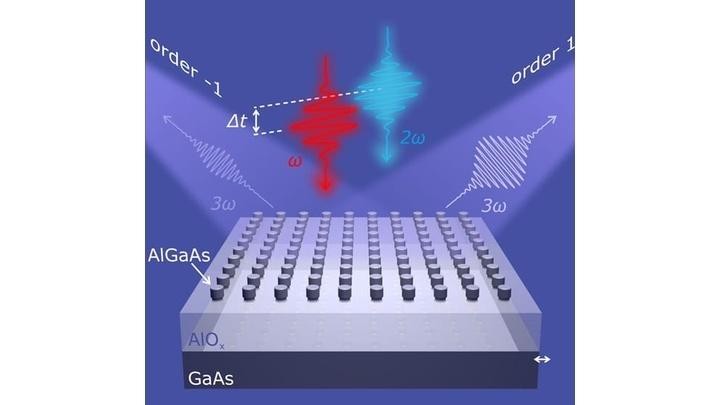
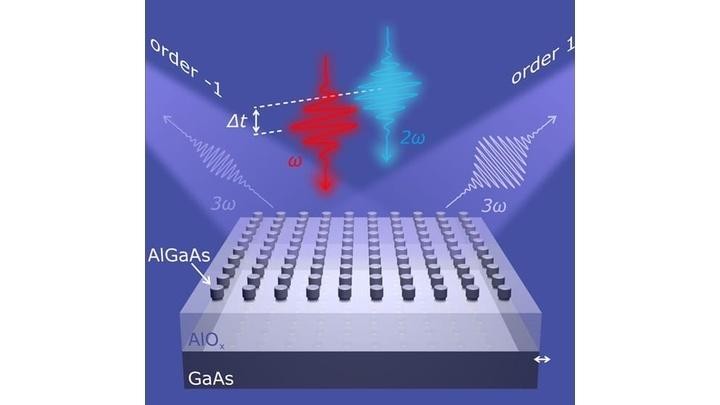
{ "count": 1, "next": null, "previous": null, "results": [ { "id": 71786, "title": "POB Seminar - Nonlinear and reconfigurable optical metasurfaces", "slug": "pob-seminar-nonlinear-and-reconfigurable-optical-m", "event_url": "https://memento.epfl.ch/event/pob-seminar-nonlinear-and-reconfigurable-optical-m", "visual_url": "https://memento.epfl.ch/image/33109/200x112.jpg", "visual_large_url": "https://memento.epfl.ch/image/33109/720x405.jpg", "visual_maxsize_url": "https://memento.epfl.ch/image/33109/max-size.jpg", "lang": "en", "start_date": "2026-05-28", "end_date": "2026-05-28", "start_time": "18:30:00", "end_time": "20:00:00", "description": "<p>The <a href=\"https://www.epfl.ch/campus/associations/list/photonics/epc/\" target=\"_blank\">EPFL Photonics Chapter</a> (EPC) is very pleased to announce and cordially invite you to our monthly ‘Pizza-Optics-Beer’ (POB) seminar on May 28th, at 18:30 in room <a href=\"https://plan.epfl.ch/?room==CO%20124\">CO 124</a>.<br>\r\n<br>\r\nThis month we will have the pleasure to host Agostino Di Francescantonio, postdoc in the Laboratory of Nanoscience for Energy Technologies (LNET) with the presentation entitled:<br>\r\n<br>\r\n<strong>\"Nonlinear and reconfigurable optical metasurfaces\"</strong><br>\r\n<br>\r\nFor organizational purposes (if you want to eat pizza!), please confirm your participation using this <a href=\"https://docs.google.com/forms/d/e/1FAIpQLScLUcHhI1k-3cWQBAsmo-t0lFAXvBfXQ1w1HLZrH_kVUKmXpw/viewform?usp=header\">google form</a>.<br>\r\nDon’t hesitate to extend the invitation to any postdoc and colleague!<br>\r\n<br>\r\nHope to see you there,<br>\r\nThe team of the EPFL Photonics Chapter<br>\r\n<br>\r\n<u><strong>Abstract:</strong></u><br>\r\nOptical metasurfaces -- periodic arrangement of subwavelength nanostructures -- are emerging as suitable platforms for manipulation of free-space optical signals in ultrathin devices. Particular interest is attracted by resonant metasurfaces, where optical modes provide extreme confinement of light in the nanostructures volume and subsequent enhancement of light-matter interaction. This aspect is essential to boost the efficiency of various phenomena, from optical nonlinearities (e.g., multiphoton interaction like in second-harmonic generation) to reconfiguration mechanisms (i.e., dynamic modulation of the refractive index). In this talk I will survey techniques of controlling light at the nanoscale, focusing on nonlinear and reconfiguration processes, what they offer and what are their limitations.<br>\r\n<br>\r\n<strong><u>You don't know POBs?</u></strong><br>\r\nPOBs (Pizza-Optics-Beer) are monthly seminars organized by the student association EPFL Photonics Chapter.<br>\r\nA PhD or a postdoc gives a 20-minutes presentation about his/her research in photonics. Discussions continue informally around pizza and beers!<br>\r\n<strong>The event is free and open to anyone.</strong><br>\r\n<br>\r\nWe thank the Doctoral Program in Photonics (<a href=\"https://www.epfl.ch/education/phd/edpo-photonics/\">EPDO</a>), the<strong> </strong>Society of Photo-Optical Instrumentation Engineers (<a href=\"https://spie.org/\">SPIE.</a>), <a href=\"https://www.optica.org/en-us/home/\">Optica</a> and <a href=\"https://www.swissphotonics.net/home\">SwissPhotonics</a> for their support.</p>", "image_description": "", "creation_date": "2026-05-04T11:29:20", "last_modification_date": "2026-05-04T11:45:37", "link_label": "", "link_url": "", "canceled": "False", "cancel_reason": "", "place_and_room": "CO 124", "url_place_and_room": "https://plan.epfl.ch/?room==CO%20124", "url_online_room": "", "spoken_languages": [ "https://memento.epfl.ch/api/v1/spoken_languages/2/?format=api" ], "speaker": "Agostino Di Francescantonio", "organizer": "EPFL Photonics Chapter (EPC)", "contact": " [email protected] [email protected] [email protected]<br>\r\n ", "is_internal": "False", "theme": "", "vulgarization": { "id": 1, "fr_label": "Tout public", "en_label": "General public" }, "registration": { "id": 3, "fr_label": "Entrée libre", "en_label": "Free" }, "keywords": "", "file": null, "icalendar_url": "https://memento.epfl.ch/event/export/120631/", "category": { "id": 1, "code": "CONF", "fr_label": "Conférences - Séminaires", "en_label": "Conferences - Seminars", "activated": true }, "academic_calendar_category": null, "domains": [], "mementos": [ "https://memento.epfl.ch/api/v1/mementos/1/?format=api", "https://memento.epfl.ch/api/v1/mementos/5/?format=api", "https://memento.epfl.ch/api/v1/mementos/6/?format=api", "https://memento.epfl.ch/api/v1/mementos/8/?format=api", "https://memento.epfl.ch/api/v1/mementos/10/?format=api", "https://memento.epfl.ch/api/v1/mementos/204/?format=api" ] } ] }