Events
retrieve:
Return the details about the given Memento id.
list:
List all Memento objects.
GET /api/v1/mementos/270/events/?format=api&ordering=-en_label
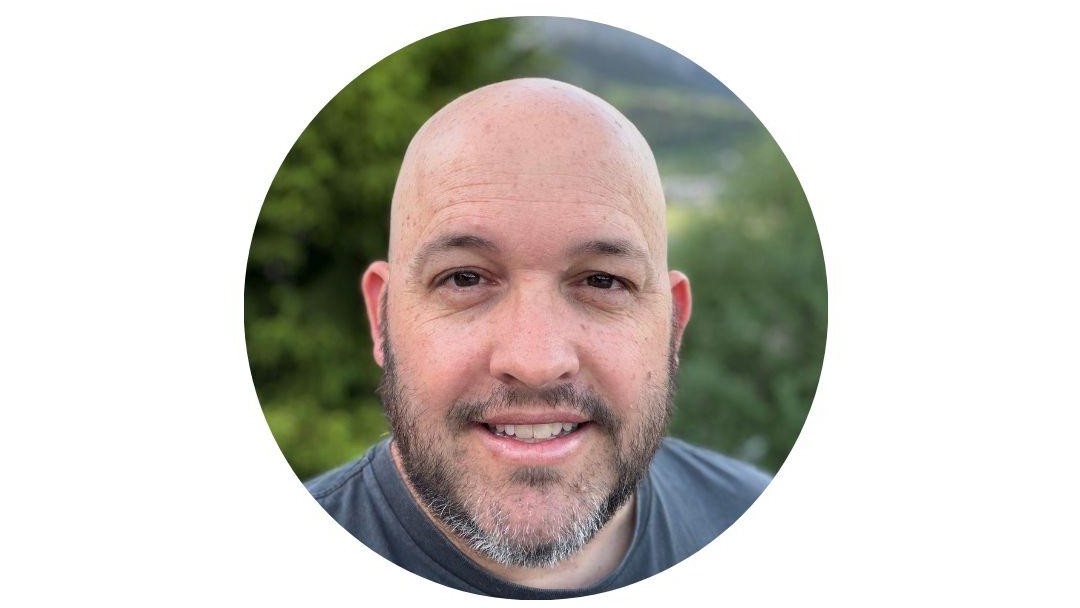
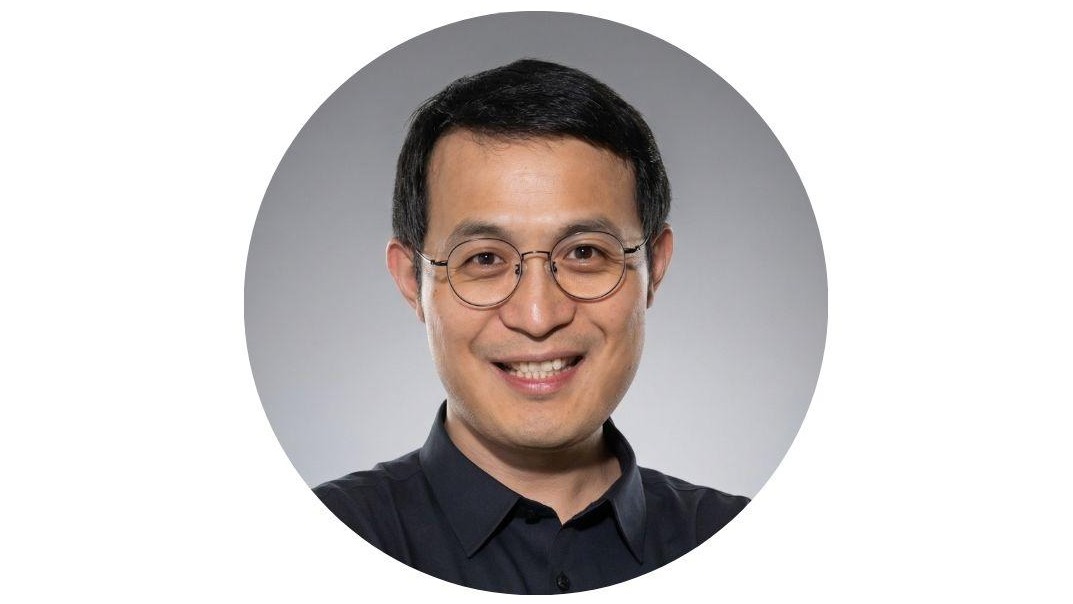
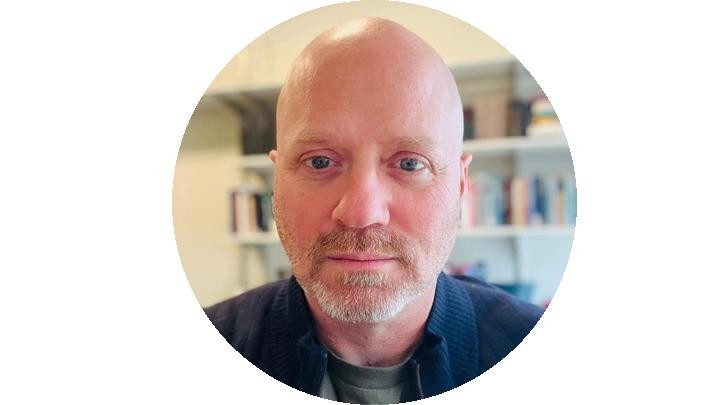
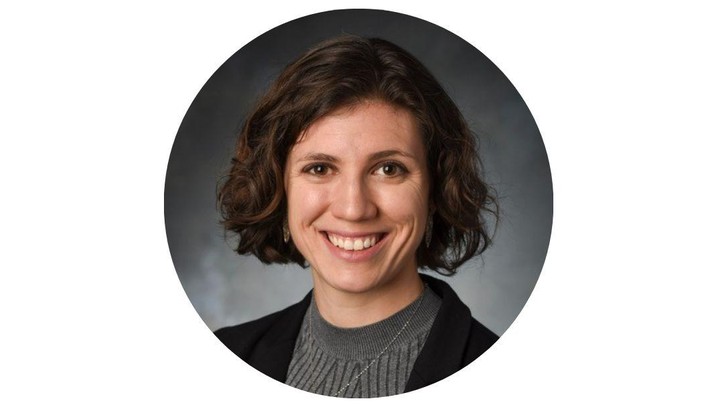
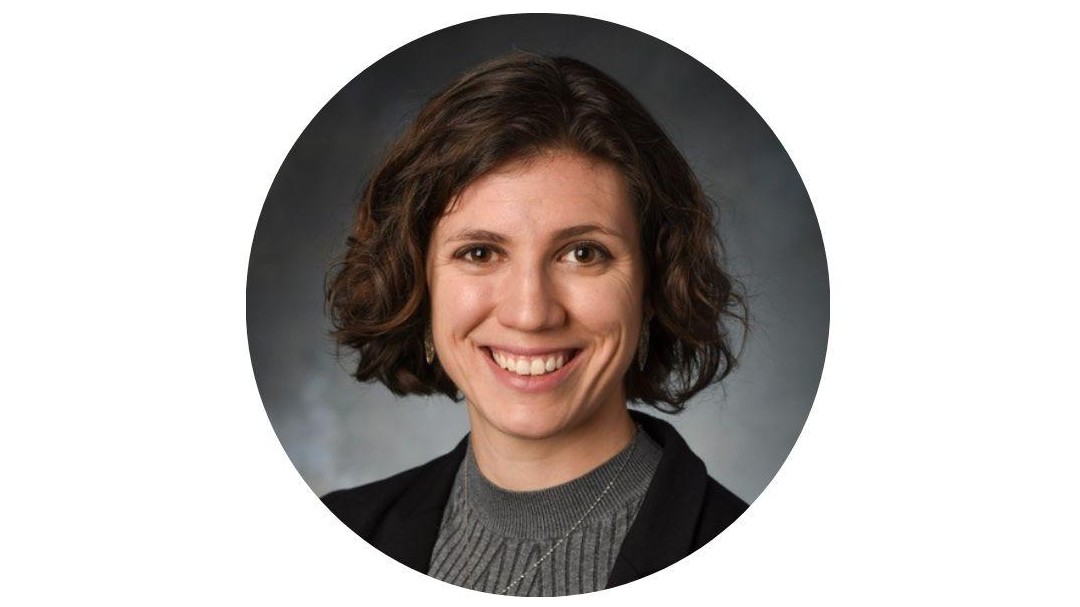
{ "count": 4, "next": null, "previous": null, "results": [ { "id": 72452, "title": "MechE Colloquium: From Motion to Mission Planning via Augmented Graphs of Convex Sets", "slug": "meche-colloquium-from-motion-to-mission-planning-v", "event_url": "https://memento.epfl.ch/event/meche-colloquium-from-motion-to-mission-planning-v", "visual_url": "https://memento.epfl.ch/image/33700/200x112.jpg", "visual_large_url": "https://memento.epfl.ch/image/33700/720x405.jpg", "visual_maxsize_url": "https://memento.epfl.ch/image/33700/max-size.jpg", "lang": "en", "start_date": "2026-10-06", "end_date": "2026-10-06", "start_time": "12:00:00", "end_time": "13:00:00", "description": "<strong>Abstract: </strong>Robot motion planning has traditionally focused on navigating obstacle-laden environments: computing smooth, collision-free trajectories from start to goal. Many real-world missions, however, require satisfying logical precedence constraints: collecting resources before accessing restricted zones, completing subtasks in a prescribed order, or acquiring tools before they can be used. This talk presents the augmented graph of convex sets (augmented GCS) framework, which unifies continuous trajectory optimization and combinatorial task sequencing within a single optimization problem.<br>\r\nThe key insight is that a layered augmented GCS, built on an exact convex partition of the free space, simultaneously selects an optimal task completion sequence and computes an optimal continuous trajectory. A shortest path in the augmented GCS solves both problems at once, yielding an exact solution up to a finite Bézier curve parameterization. The layered structure of the augmented GCS turns out to implement precisely the Bellman-Held-Karp (BHK) dynamic programming algorithm for the Traveling Salesman Problem, establishing a formal correspondence between our framework and the combinatorial TSP literature. This makes augmented GCS a continuous-geometry generalization of BHK, achieving the same singly exponential worst-case complexity, an exponential improvement over general-purpose temporal logic tools. We further develop a library of mission specification variations (including ordered collection, disjunctive keys, conjunctive doors, timed constraints, and conditional logic) each with proven correctness, substantially expanding the range of expressible mission types. Numerical experiments confirm exponential speedups in practice and near-global-optimality on a large benchmark suite.<br>\r\nTime permitting, I will briefly discuss ongoing extensions, including spacetime augmented GCS for dynamic environments, safety-aware planning via conformal prediction sets, and a galactic survey benchmark inspired by space mission planning that stress-tests the framework at scale.<br>\r\n<br>\r\n<br>\r\n<br>\r\n<strong>Biography: </strong>Tyler Summers is an associate professor at the University of Texas at Dallas. Prior to joining UT Dallas, he was an ETH Postdoctoral Fellow at the Automatic Control Laboratory at ETH Zurich from 2011 to 2015. He received a PhD degree in Aerospace Engineering at the University of Texas at Austin in 2010. He was a Fulbright Postgraduate Scholar at the Australian National University in Canberra, Australia in 2007-2008. He received the National Science Foundation CAREER Award in 2021 and a Young Investigator Program award from the US Army Research Office in 2017. His research interests are in feedback control, optimization, and learning in complex dynamical networks, with applications in robotics and power networks.", "image_description": "", "creation_date": "2026-08-26T16:15:39", "last_modification_date": "2026-08-26T16:19:15", "link_label": "", "link_url": "", "canceled": "False", "cancel_reason": "", "place_and_room": "MED 0 1418", "url_place_and_room": "https://plan.epfl.ch/?room==MED%200%201418", "url_online_room": "https://epfl.zoom.us/j/61360740951", "spoken_languages": [ "https://memento.epfl.ch/api/v1/spoken_languages/2/?format=api" ], "speaker": "<a href=\"https://me.utdallas.edu/faculty/tyler-summers/\">Prof. Tyler Summers</a>, <a href=\"https://me.utdallas.edu/\">Mechanical engineering,</a> <a href=\"https://www.utdallas.edu/\">The University of Texas at Dallas</a>", "organizer": "<a href=\"https://people.epfl.ch/maryam.kamgarpour\">Prof. Maryam Kamgarpour</a>", "contact": "<a href=\"mailto:[email protected]\">Institute of Mechanical Engineering</a>", "is_internal": "False", "theme": "", "vulgarization": { "id": 1, "fr_label": "Tout public", "en_label": "General public" }, "registration": { "id": 3, "fr_label": "Entrée libre", "en_label": "Free" }, "keywords": "MechE Colloquium: From Motion to Mission Planning via Augmented Graphs of Convex Sets", "file": null, "icalendar_url": "https://memento.epfl.ch/event/export/121601/", "category": { "id": 1, "code": "CONF", "fr_label": "Conférences - Séminaires", "en_label": "Conferences - Seminars", "activated": true }, "academic_calendar_category": null, "domains": [], "mementos": [ "https://memento.epfl.ch/api/v1/mementos/8/?format=api", "https://memento.epfl.ch/api/v1/mementos/1/?format=api", "https://memento.epfl.ch/api/v1/mementos/232/?format=api", "https://memento.epfl.ch/api/v1/mementos/270/?format=api", "https://memento.epfl.ch/api/v1/mementos/6/?format=api", "https://memento.epfl.ch/api/v1/mementos/417/?format=api", "https://memento.epfl.ch/api/v1/mementos/394/?format=api" ] }, { "id": 72524, "title": "[CANCELLED] MechE Colloquium: Engineering Net-Zero Transport: From Future Fuels to Carbon and Emissions Management", "slug": "cancelled-meche-colloquium-engineering-net-zero-tr", "event_url": "https://memento.epfl.ch/event/cancelled-meche-colloquium-engineering-net-zero-tr", "visual_url": "https://memento.epfl.ch/image/33763/200x112.jpg", "visual_large_url": "https://memento.epfl.ch/image/33763/720x405.jpg", "visual_maxsize_url": "https://memento.epfl.ch/image/33763/max-size.jpg", "lang": "en", "start_date": "2026-10-13", "end_date": "2026-10-13", "start_time": "12:00:00", "end_time": "13:00:00", "description": "<strong>Abstract: </strong>Transport systems underpin modern society, yet remain among the most challenging sectors to decarbonise. Achieving net-zero transport requires coordinated action across energy carriers, carbon flows and mitigation of other pollutants. This talk presents a multiscale engineering framework for sustainable mobility, organised around three complementary pathways: <u>f</u>uel development (F), <u>g</u>reenhouse-gas management (G) and mitigating <u>h</u>armful emissions beyond CO<sub>2</sub> (H). First, using solar-driven CO<sub>2</sub> conversion as an example, I will show how the precise transport of light, heat and fluids enables the coordinated design of materials, devices and systems, maximising solar-to-fuel conversion efficiency. Second, I will explore on-board carbon capture for road and maritime transport, together with distributed carbon-removal networks that use existing vehicles, ventilation systems and transport infrastructure. Third, I will discuss particulate matter generated by brake and tyre wear, illustrating how materials engineering can balance filtration efficiency, pressure drop and energy demand. Finally, the talk considers how techno-economic assessment and the interplay between technology, business and policy can move laboratory innovations towards industrial deployment.<br>\r\n<br>\r\n<br>\r\n<strong>Biography: </strong>Dr Xiangkun (Elvis) Cao (<a href=\"https://profiles.imperial.ac.uk/elvis.cao\">https://profiles.imperial.ac.uk/elvis.cao</a>) is currently an Assistant Professor at Imperial College London, holding joint appointments in Mechanical Engineering and the Grantham Institute. Cao leads the Laboratory for Integrated Green Harvesting & Transport, the LIGHT Lab, which seeks to engineer the physical systems for a sustainable future. Before joining Imperial, Cao was a Schmidt Science Fellow at MIT, where he pursued integrated carbon capture and utilisation under the guidance of Professor Ted Sargent. He received his PhD in Mechanical Engineering from Cornell University, his MEng in Materials Engineering from McGill University, and dual bachelor’s degrees in Energy and Power Engineering and English Literature from Xi’an Jiaotong University. He has published more than 30 first- or corresponding-author papers in journals including <em>Joule</em>, <em>Matter</em>, <em>Device</em> and <em>Advanced Materials</em>. Cao was named one of MIT Technology Review’s 35 Innovators Under 35 globally in 2024 and was previously recognised in Forbes 30 Under 30 in Energy for North America. His other honours include the Alexander von Humboldt Foundation’s German Chancellor Fellowship, the Activate Fellowship, the MIT Climate & Energy Prize, the Global Young Investigator Award in Separation Science, and the Carbon Capture Future Star Award, among others.", "image_description": "", "creation_date": "2026-09-04T10:07:53", "last_modification_date": "2026-09-30T13:59:39", "link_label": "", "link_url": "", "canceled": "False", "cancel_reason": "", "place_and_room": "MED 0 1418", "url_place_and_room": "https://plan.epfl.ch/?room==MED%200%201418", "url_online_room": "https://epfl.zoom.us/j/61360740951", "spoken_languages": [ "https://memento.epfl.ch/api/v1/spoken_languages/2/?format=api" ], "speaker": "<a href=\"https://profiles.imperial.ac.uk/elvis.cao\">Prof. Xiangkun (Elvis) Cao</a>, <a href=\"https://www.imperial.ac.uk/grantham/\">The Grantham Institute for Climate Change</a>, <a href=\"https://www.imperial.ac.uk/natural-sciences/\">Faculty of Natural Sciences</a>, <a href=\"https://www.imperial.ac.uk/\">Imperial College London</a>", "organizer": "<a href=\"https://people.epfl.ch/zhengmao.lu\">Prof. Zhengmao Lu</a>", "contact": "<a href=\"mailto:[email protected]\">Institute of Mechanical Engineering</a>", "is_internal": "False", "theme": "", "vulgarization": { "id": 1, "fr_label": "Tout public", "en_label": "General public" }, "registration": { "id": 3, "fr_label": "Entrée libre", "en_label": "Free" }, "keywords": "MechE Colloquium: Engineering Net-Zero Transport: From Future Fuels to Carbon and Emissions Management", "file": null, "icalendar_url": "https://memento.epfl.ch/event/export/121715/", "category": { "id": 1, "code": "CONF", "fr_label": "Conférences - Séminaires", "en_label": "Conferences - Seminars", "activated": true }, "academic_calendar_category": null, "domains": [], "mementos": [ "https://memento.epfl.ch/api/v1/mementos/1/?format=api", "https://memento.epfl.ch/api/v1/mementos/6/?format=api", "https://memento.epfl.ch/api/v1/mementos/232/?format=api", "https://memento.epfl.ch/api/v1/mementos/270/?format=api" ] }, { "id": 72460, "title": "MechE Colloquium: Local Rheological Probes of Stress Heterogeneities in Active and Passive Fluids", "slug": "meche-colloquium-local-rheological-probes-of-stres", "event_url": "https://memento.epfl.ch/event/meche-colloquium-local-rheological-probes-of-stres", "visual_url": "https://memento.epfl.ch/image/33708/200x112.jpg", "visual_large_url": "https://memento.epfl.ch/image/33708/720x405.jpg", "visual_maxsize_url": "https://memento.epfl.ch/image/33708/max-size.jpg", "lang": "en", "start_date": "2026-10-27", "end_date": "2026-10-27", "start_time": "12:00:00", "end_time": "13:00:00", "description": "<strong>Abstract: </strong>In this talk I will discuss our recent results on the microscopic physical origins of shear thickening in two vastly different materials: colloidal suspensions and active gels. In the first part of my talk, I will introduce a method we have developed that allows us to resolve the spatial distribution of stresses in sheared soft-materials, known as Boundary Stress Microscopy. We have applied this technique to suspensions undergoing shear thickening. I will present our results on the existence of clearly defined dynamically localized regions of substantially increased stress that appear intermittently at stresses well above the applied stress. Surprisingly, we find that these spatially distinct and dynamic phases quantitatively account for the observed shear thickening seen in sheared colloidal dispersions (e.g. Oobleck). In the second part of my talk I will discuss our results on the rheology of active matter. Our system is composed of microtubules and kinesin motor proteins that self-assemble to form complexes that propel themselves through the fluid. What results is a dramatic alteration in the measured viscosity. I will provide a simple physical model that fits the rheological response with zero fitting parameters. <br>\r\n<br>\r\n<strong>Biography: </strong>Daniel Blair is a Professor of physics and a co-founding member of the Institute for Soft Matter Synthesis and Metrology I(SM)2 at Georgetown University. Prior to joining Georgetown in 2007, Professor Blair was a postdoctoral fellow at Harvard University in the Paulson School of Engineering and the Department of Physics. In 2009, he was awarded the NSF Career Award and has done pioneering work into the structure and rheology of soft and biological materials. His group has developed a variety of tools and techniques centered on quantitative 4D microscopy coupled with microfluidic and rheometric methods. ", "image_description": "Prof. Daniel Blair", "creation_date": "2026-08-27T16:32:32", "last_modification_date": "2026-09-29T12:28:07", "link_label": "Prof. Sangwoo Kim - MESOBIO", "link_url": "https://www.epfl.ch/labs/mesobio/", "canceled": "False", "cancel_reason": "", "place_and_room": "MED 0 1418", "url_place_and_room": "https://plan.epfl.ch/?room==MED%200%201418", "url_online_room": "https://epfl.zoom.us/j/61360740951", "spoken_languages": [ "https://memento.epfl.ch/api/v1/spoken_languages/2/?format=api" ], "speaker": "<a href=\"https://physics.georgetown.edu/daniel-blair/\">Prof. Daniel Blair</a>, <a href=\"https://physics.georgetown.edu/\">Department of Physics</a>, <a href=\"https://www.georgetown.edu/\">University of Georgetown</a>, USA", "organizer": "<a href=\"mailto:[email protected]?subject=MechE%20Colloquium%20-%20Daniel%20Blair\">MechE Colloquium</a>", "contact": "<a href=\"mailto:[email protected]?subject=MechE%20Colloquium%20-%20Daniel%20Blair\">Prof. Sangwoo Kim</a>", "is_internal": "False", "theme": "", "vulgarization": { "id": 1, "fr_label": "Tout public", "en_label": "General public" }, "registration": { "id": 3, "fr_label": "Entrée libre", "en_label": "Free" }, "keywords": "MechE Colloquium: Local Rheological Probes of Stress Heterogeneities in Active and Passive Fluids", "file": null, "icalendar_url": "https://memento.epfl.ch/event/export/121614/", "category": { "id": 1, "code": "CONF", "fr_label": "Conférences - Séminaires", "en_label": "Conferences - Seminars", "activated": true }, "academic_calendar_category": null, "domains": [], "mementos": [ "https://memento.epfl.ch/api/v1/mementos/1/?format=api", "https://memento.epfl.ch/api/v1/mementos/6/?format=api", "https://memento.epfl.ch/api/v1/mementos/8/?format=api", "https://memento.epfl.ch/api/v1/mementos/111/?format=api", "https://memento.epfl.ch/api/v1/mementos/232/?format=api", "https://memento.epfl.ch/api/v1/mementos/270/?format=api" ] }, { "id": 72720, "title": "MechE Colloquium: Biomechanics and fluid dynamics of freshwater insects across walking, swimming, and flight", "slug": "meche-colloquium-biomechanics-and-fluid-dynamics-o", "event_url": "https://memento.epfl.ch/event/meche-colloquium-biomechanics-and-fluid-dynamics-o", "visual_url": "https://memento.epfl.ch/image/33937/200x112.jpg", "visual_large_url": "https://memento.epfl.ch/image/33937/720x405.jpg", "visual_maxsize_url": "https://memento.epfl.ch/image/33937/max-size.jpg", "lang": "en", "start_date": "2026-11-03", "end_date": "2026-11-03", "start_time": "12:00:00", "end_time": "13:00:00", "description": "<strong>Abstract: </strong>Many animals, including humans, can transition between multiple modes of locomotion between diverse environments (e.g., the transition from walking to swimming). Bimodality is common, but trimodality—that is, the ability to successfully navigate between aerial, aquatic, and terrestrial environments—is relatively rare. Multimodality is also challenging to achieve in engineered devices, vehicles, and robots; however, several animals are capable of regularly (and easily) traversing environmental boundaries. In this talk, we will outline several of the general adaptations that living organisms use to locomote between land, air, and water. We will then present recent work on the biomechanics and fluid dynamics of trimodal aquatic insects. These insects exhibit hybrid walking-swimming gaits when transitioning from land to shallow water; they also leverage surface tension, buoyancy, fluid drag, and aerodynamic forces to take off into flight directly from the water surface. They also display underwater agility, using their legs as paddles to propel themselves rapidly as they seek prey and/or escape from predators. They also have interesting morphological features to enable these transitions, including superhydrophobic wings and hemelytra, as well as dense setae lining the metathoracic legs. These bristle-like features create shape-morphing appendages for efficient swimming, and are also used to lever the insect’s body off the deforming water surface during takeoff. In this talk, we will present data from all three locomotor modes and discuss their implications for both fundamental biology and ecology as well as bioinspired engineering and technology development.<br>\r\n<br>\r\n<br>\r\n<strong>Biography: </strong>Dr. Margaret L. Byron is currently the Martin W. Trethewey Early Career Professor in Mechanical Engineering at Penn State University, and is a recipient of the NSF CAREER Award, the Beckman Young Investigator Award, and the American Chemical Society Doctoral New Investigator Award. She earned her B.S. in Mechanical and Aerospace Engineering from Princeton University in 2010 and her MS/PhD in Civil and Environmental Engineering from the University of California Berkeley in 2012/2015. She works at the interface of biology, physics, and engineering, with interests including the fluid dynamics of animal locomotion and the transport of irregularly shaped inertial particles in turbulent flows (including sediment, aggregates, and microplastics). She is currently on sabbatical at EPFL as a Visiting Professor in the UNFoLD lab.", "image_description": "", "creation_date": "2026-09-29T15:49:49", "last_modification_date": "2026-09-29T15:54:40", "link_label": "", "link_url": "", "canceled": "False", "cancel_reason": "", "place_and_room": "MED 0 1418", "url_place_and_room": "https://plan.epfl.ch/?room==MED%200%201418", "url_online_room": "https://epfl.zoom.us/j/61360740951", "spoken_languages": [ "https://memento.epfl.ch/api/v1/spoken_languages/2/?format=api" ], "speaker": "<a href=\"https://iee.psu.edu/people/margaret-byron\">Prof. Margaret Byron</a>, <a href=\"https://iee.psu.edu/home\">Institute of Energy and the Environment</a>, <a href=\"https://www.psu.edu/\">The Pennsylvania State University</a>", "organizer": "<a href=\"https://people.epfl.ch/karen.mulleners?lang=en\">Prof. Karen Mulleners</a>", "contact": "<a href=\"mailto:[email protected]\">Institute of Mechanical Engineering</a>", "is_internal": "False", "theme": "", "vulgarization": { "id": 1, "fr_label": "Tout public", "en_label": "General public" }, "registration": { "id": 3, "fr_label": "Entrée libre", "en_label": "Free" }, "keywords": "MechE Colloquium: Biomechanics and fluid dynamics of freshwater insects across walking, swimming, and flight", "file": null, "icalendar_url": "https://memento.epfl.ch/event/export/122000/", "category": { "id": 1, "code": "CONF", "fr_label": "Conférences - Séminaires", "en_label": "Conferences - Seminars", "activated": true }, "academic_calendar_category": null, "domains": [], "mementos": [ "https://memento.epfl.ch/api/v1/mementos/1/?format=api", "https://memento.epfl.ch/api/v1/mementos/6/?format=api", "https://memento.epfl.ch/api/v1/mementos/232/?format=api", "https://memento.epfl.ch/api/v1/mementos/270/?format=api" ] } ] }