Events
retrieve:
Return the details about the given Memento id.
list:
List all Memento objects.
GET /api/v1/mementos/5/events/?format=api&offset=20
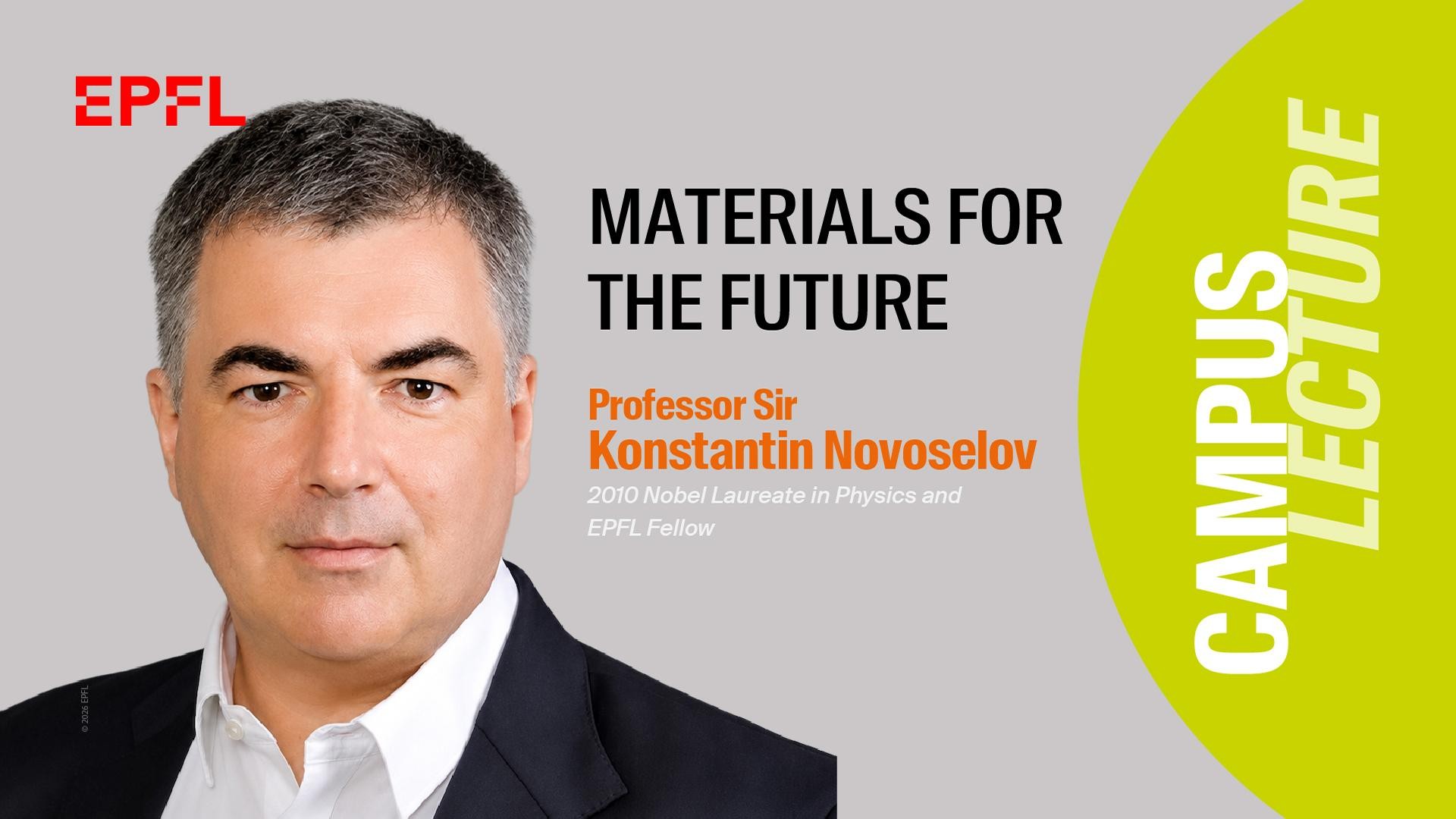
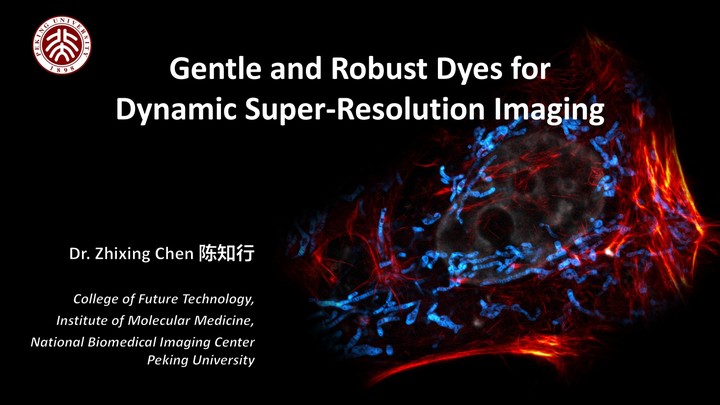
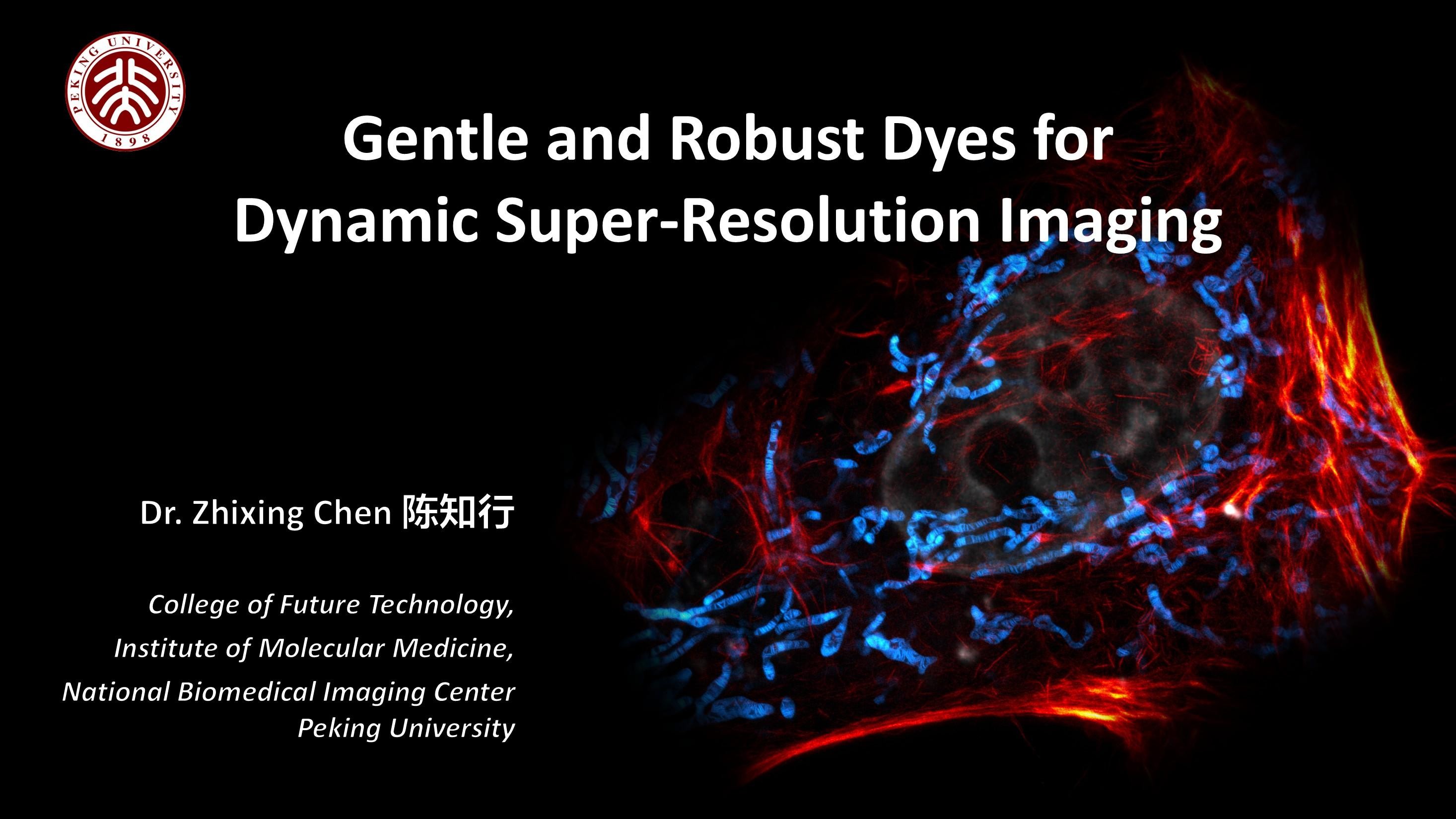
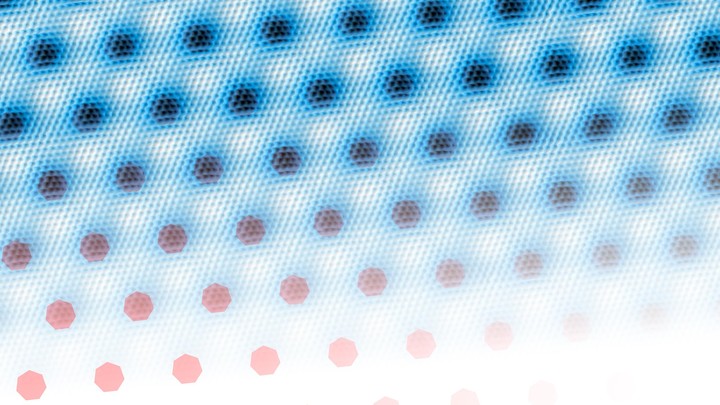
{ "count": 106, "next": "https://memento.epfl.ch/api/v1/mementos/5/events/?format=api&limit=10&offset=30", "previous": "https://memento.epfl.ch/api/v1/mementos/5/events/?format=api&limit=10&offset=10", "results": [ { "id": 72575, "title": "SYNTHETIC CHEMISTRY WITH NITROUS OXIDE AND NITROUS OXIDE-DERIVED COMPOUNDS", "slug": "synthetic-chemistry-with-nitrous-oxide-and-nitro-2", "event_url": "https://memento.epfl.ch/event/synthetic-chemistry-with-nitrous-oxide-and-nitro-2", "visual_url": "https://memento.epfl.ch/image/33824/200x112.jpg", "visual_large_url": "https://memento.epfl.ch/image/33824/720x405.jpg", "visual_maxsize_url": "https://memento.epfl.ch/image/33824/max-size.jpg", "lang": "en", "start_date": "2026-10-09", "end_date": "2026-10-09", "start_time": "17:00:00", "end_time": null, "description": "<p>Thesis Director: Prof. K. Severin,<br>\r\nChemistry and Chemical Engineering doctoral program<br>\r\nThesis Nr. 11719<br>\r\n<br>\r\nTo take part in the public defense, please contact directly the speaker</p>", "image_description": "", "creation_date": "2026-09-14T14:05:19", "last_modification_date": "2026-09-14T14:05:22", "link_label": "", "link_url": "", "canceled": "False", "cancel_reason": "", "place_and_room": "BCH 2201", "url_place_and_room": "https://plan.epfl.ch/?room==BCH%202201", "url_online_room": "", "spoken_languages": [], "speaker": "<a href=\"mailto:[email protected]\"><strong>Christeena MATHEW</strong></a>", "organizer": "", "contact": "<a href=\"mailto:[email protected]\"><strong>Christeena MATHEW</strong></a><br>\r\n ", "is_internal": "False", "theme": "", "vulgarization": { "id": 1, "fr_label": "Tout public", "en_label": "General public" }, "registration": { "id": 3, "fr_label": "Entrée libre", "en_label": "Free" }, "keywords": "EDCH", "file": null, "icalendar_url": "https://memento.epfl.ch/event/export/121793/", "category": { "id": 12, "code": "SOUTE", "fr_label": "Soutenances de thèses", "en_label": "Thesis defenses", "activated": true }, "academic_calendar_category": null, "domains": [], "mementos": [ "https://memento.epfl.ch/api/v1/mementos/1/?format=api", "https://memento.epfl.ch/api/v1/mementos/5/?format=api", "https://memento.epfl.ch/api/v1/mementos/6/?format=api" ] }, { "id": 72357, "title": "Materials for the Future", "slug": "materials-for-the-future", "event_url": "https://memento.epfl.ch/event/materials-for-the-future", "visual_url": "https://memento.epfl.ch/image/33729/200x112.jpg", "visual_large_url": "https://memento.epfl.ch/image/33729/720x405.jpg", "visual_maxsize_url": "https://memento.epfl.ch/image/33729/max-size.jpg", "lang": "en", "start_date": "2026-10-09", "end_date": "2026-10-09", "start_time": "18:00:00", "end_time": "19:30:00", "description": "<p>In 2026, EPFL named Professor Konstantin Novoselov its first-ever EPFL Fellow, a newly created honorary title recognising scientific personalities of exceptional international stature.<br>\r\n<br>\r\nEPFL is delighted to host a public lecture to celebrate this nomination of one of the most influential physicists of our time.<br>\r\n<br>\r\nKonstantin Novoselov was awarded the Nobel Prize in Physics in 2010 and is globally renowned for his pioneering work on graphene and two-dimensional materials. By isolating graphene for the first time, a sheet of carbon just one atom thick, he opened an entirely new field of research, with profound implications for electronics, energy and quantum technologies.<br>\r\n<br>\r\n<em>Picture this: it was from the graphite of an ordinary pencil lead that this \"super-material\" was first isolated. Using nothing more than a piece of adhesive tape to peel away a layer a single atom thick, Konstantin Novoselov revealed to the world a material with extraordinary properties. A million times thinner than a human hair, 200 times stronger than steel and remarkably conductive, graphene pushes every limit. From the lead of your pencil to the batteries of tomorrow, join us to discover how a deceptively simple gesture set off a genuine technological revolution.</em><br>\r\n<br>\r\nThis Campus Lecture offers an introduction to that revolution: how a two-dimensional material is transforming our understanding of matter and how today's fundamental discoveries become tomorrow's technologies.<br>\r\n<br>\r\n<strong>About Konstantin Novoselov</strong><br>\r\nKonstantin Novoselov is a physicist specialising in condensed matter and nanotechnology. He conducted his Nobel Prize–winning research at the University of Manchester, where, together with Professor Andre Geim, he isolated graphene for the first time. He has held academic positions in the United Kingdom as well as internationally and is currently based at the National University of Singapore. Widely recognised as a leading figure in the study and application of two-dimensional materials, he has received numerous honours for his contributions to science.</p>", "image_description": "", "creation_date": "2026-08-18T11:48:33", "last_modification_date": "2026-09-01T09:58:59", "link_label": "Inscription", "link_url": "https://forms.cloud.microsoft/e/8wFYA27p68", "canceled": "False", "cancel_reason": "", "place_and_room": "RLC E1 240", "url_place_and_room": "https://plan.epfl.ch/?room==RLC%20E1%20240", "url_online_room": "", "spoken_languages": [ "https://memento.epfl.ch/api/v1/spoken_languages/2/?format=api" ], "speaker": "Prof. Konstantin Novoselov", "organizer": "MédiaCom", "contact": "Nicolas Hocq", "is_internal": "False", "theme": "", "vulgarization": { "id": 1, "fr_label": "Tout public", "en_label": "General public" }, "registration": { "id": 1, "fr_label": "Sur inscription", "en_label": "Registration required" }, "keywords": "", "file": null, "icalendar_url": "https://memento.epfl.ch/event/export/121450/", "category": { "id": 1, "code": "CONF", "fr_label": "Conférences - Séminaires", "en_label": "Conferences - Seminars", "activated": true }, "academic_calendar_category": null, "domains": [], "mementos": [ "https://memento.epfl.ch/api/v1/mementos/1/?format=api", "https://memento.epfl.ch/api/v1/mementos/5/?format=api", "https://memento.epfl.ch/api/v1/mementos/6/?format=api", "https://memento.epfl.ch/api/v1/mementos/145/?format=api", "https://memento.epfl.ch/api/v1/mementos/389/?format=api", "https://memento.epfl.ch/api/v1/mementos/417/?format=api" ] }, { "id": 72499, "title": "Musical Composition: Playing with the Verbier Festival Archives", "slug": "musical-composition-playing-with-the-verbier-festi", "event_url": "https://memento.epfl.ch/event/musical-composition-playing-with-the-verbier-festi", "visual_url": "https://memento.epfl.ch/image/33787/200x112.jpg", "visual_large_url": "https://memento.epfl.ch/image/33787/720x405.jpg", "visual_maxsize_url": "https://memento.epfl.ch/image/33787/max-size.jpg", "lang": "en", "start_date": "2026-10-10", "end_date": "2026-10-10", "start_time": "16:00:00", "end_time": "20:00:00", "description": "<p>Thanks to a donation from the Claude Latour Foundation, the Pôle Culture (VPI) is organizing a master class followed by a public concert based on the Verbier Festival archives, which are being digitized at <a href=\"http://www.epfl.ch/research/domains/centre-innovation-patrimoines-culturels/\">EPFL by the EPFL Cultural Heritage & Conservation Platform (CHC)</a>.<br>\r\n<br>\r\nDuring the masterclass, the selected students are invited to create a musical piece lasting no more than 5 minutes in the style, aesthetic, and genre of their choice (jazz, rap, rock, metal, classical, etc.). At the end of the day, the pieces will be presented to the public, accompanied by comments from a panel of experts. <br>\r\n<br>\r\n<strong>PROGRAM:</strong>\r\n</p><ul>\r\n\t<li><strong>10:00–16:00: Masterclass</strong> (<a href=\"https://forms.cloud.microsoft/e/A0FMYfPjg1\">registration required</a>)<br>\r\n\t </li>\r\n\t<li><strong>16:00–16:15: Welcome for the audience</strong></li>\r\n\t<li>16:15–17:45: Listening to the compositions with commentary from experts</li>\r\n\t<li>17:45–18:15: Submit a music sample of your composition (max. 5 min, in MP3 format)</li>\r\n\t<li><strong>18:30: Aperitif with the audience</strong> (<a href=\"http://forms.cloud.microsoft/e/z8TTfURvwX\">registration required</a>)</li>\r\n</ul>\r\n---<br>\r\n<strong>MASTERCLASS:</strong><br>\r\nThe Verbier Festival is opening its archives and making audio tracks from classical music concerts available. Participants will be able to transform, reinterpret, and reinvent these tracks to create a personal, original 5-minute piece in any musical style.<br>\r\n<br>\r\nThroughout the process, four experts will guide the participants, sharing their advice and helping each person bring their project to life.<br>\r\n<br>\r\n<strong>The Experts:</strong><br>\r\n<a href=\"http://people.epfl.ch/alain.dufaux\">Alain Dufaux</a>, Director of the EPFL CHC Platform—Cultural Heritage & Conservation<br>\r\n<a href=\"https://edpub.unil.ch/interpub/noauth/php/Un/UnPers.php?PerNum=64542&LanCode=37\">Constance Frei</a>, musicologist, professor at UNIL/EPFL<br>\r\n<a href=\"http://hem.hesge.ch/la-hem/alumniae/portrait-alumniae/charlotte-graber-musicologue-bibliothecaire\">Charlotte Graber</a>, musicologist at HEM, Geneva <br>\r\n<a href=\"http://verbierfestival.com/musician/mcholm-stephen/\">Stephen McHolm</a>, Director of the Verbier Festival Academy <br>\r\n<br>\r\n<strong>Practical Information:</strong>\r\n\r\n<ul>\r\n\t<li>Open to a maximum of 6 EPFL students</li>\r\n\t<li>Saturday, October 10, from 10 a.m. to 8 p.m. at the Montreux Jazz Café</li>\r\n\t<li>Prerequisites: Submit a music sample of your composition (max. 5 min, in MP3 format)</li>\r\n\t<li>Technical requirements: bring your own computer and headphones</li>\r\n</ul>\r\n<a href=\"https://forms.cloud.microsoft/e/A0FMYfPjg1\"><strong>>>> Register for the Masterclass</strong></a> (deadline: October 5, at noon)<br>\r\n<br>\r\n---<br>\r\n<strong>EPFL CHC and the Verbier Festival:</strong><br>\r\nThe EPFL Cultural Heritage Conservation Platform (CHC) was established at EPFL in 2010 under the name “Metamedia Center.” For the past 16 years, it has pursued a dual mission: to digitize and preserve audiovisual collections and heritage of major significance in Switzerland and around the world, and to enrich and bring them to life through research and innovation projects conducted in EPFL’s laboratories, startups, and in collaboration with EPFL partners. The collections thus assembled become true research infrastructures: they provide a unique resource for education and research, accessible to students as well as to innovation communities at EPFL and around the world.<br>\r\n<br>\r\nIt was with this goal in mind that EPFL and the <a href=\"http://verbierfestival.com/\">Verbier Festival</a> launched the Verbier Festival Collection project in 2021. The project aims to preserve and promote the festival’s heritage, with the goal of rekindling younger generations’ interest in classical music.<br>\r\n<br>\r\nA pioneer since 1994, the Verbier Festival is the first festival in the world to have recorded all of its concerts. This exceptional collection now includes 3,000 hours of audio recordings, more than 1,000 hours of video, 12,000 historical photographs, archival documents, and a collection of annotated sheet music. It serves as a unique resource for research, innovation, and cultural transmission. As part of this collaboration, EPFL students are invited—upon registration and following a selection process—to participate in a master class during which they will draw on part of this heritage to create a musical work, which they will then present to an audience and a jury.<br>\r\n<br>\r\n---<br>\r\n<strong>Partners: </strong>Claude Latour Foundation, Verbier Festival, CHC Platform—Cultural Heritage & Conservation at EPFL, UNIL, Montreux Jazz Café, NAGRA <br>\r\n<br>\r\n<strong>>>> Free admission; <a href=\"http://forms.cloud.microsoft/e/z8TTfURvwX\">aperitif available with registration</a></strong><br>\r\n \r\n<figure class=\"image\"><a href=\"https://www.epfl.ch/campus/art-culture/fr/les-culturelles/les-culturelles-dautomne-2026/\"><img alt=\"Programme complet des Culturelles\" height=\"182\" src=\"https://www.epfl.ch/campus/art-culture/wp-content/uploads/2026/09/LES_CULTURELLES_1920x1080_programme_complet.png\" width=\"600\"></a>\r\n\r\n<figcaption>© 2026 EPFL, Laura Persat</figcaption>\r\n</figure>", "image_description": "", "creation_date": "2026-09-03T14:13:52", "last_modification_date": "2026-09-10T14:13:58", "link_label": "Inscription à l'apéritif", "link_url": "http://forms.cloud.microsoft/e/z8TTfURvwX", "canceled": "False", "cancel_reason": "", "place_and_room": "Montreux Jazz Café", "url_place_and_room": "https://plan.epfl.ch/?room==ART%20C0%20100", "url_online_room": "", "spoken_languages": [ "https://memento.epfl.ch/api/v1/spoken_languages/1/?format=api", "https://memento.epfl.ch/api/v1/spoken_languages/2/?format=api" ], "speaker": "<a href=\"https://people.epfl.ch/alain.dufaux\">Alain Dufaux</a>, directeur de la Plateforme EPFL CHC - Cultural Heritage & Conservation ; <a href=\"https://applicationspub.unil.ch/interpub/noauth/php/Un/UnPers.php?PerNum=64542&LanCode=37\">Constance Frei</a>, musicologue, professeure UNIL/EPFL ; <a href=\"https://hem.hesge.ch/la-hem/alumniae/portrait-alumniae/charlotte-graber-musicologue-bibliothecaire\">Charlotte Graber</a>, musicologue HEM, Genève ; <a href=\"https://verbierfestival.com/musician/mcholm-stephen/\">Stephen McHolm</a>, directeur de la Verbier Festival Academy ", "organizer": "<a href=\"https://www.epfl.ch/campus/art-culture/fr/les-culturelles/\">Festival Les Culturelles</a> (Pôle Culture VPI)", "contact": "<a href=\"https://people.epfl.ch/veronique.mauron\">Véronique Mauron Layaz</a>", "is_internal": "False", "theme": "", "vulgarization": { "id": 1, "fr_label": "Tout public", "en_label": "General public" }, "registration": { "id": 3, "fr_label": "Entrée libre", "en_label": "Free" }, "keywords": "", "file": null, "icalendar_url": "https://memento.epfl.ch/event/export/121682/", "category": { "id": 9, "code": "MANIF", "fr_label": "Événements festifs et culturels", "en_label": "Cultural events", "activated": true }, "academic_calendar_category": null, "domains": [], "mementos": [ "https://memento.epfl.ch/api/v1/mementos/1/?format=api", "https://memento.epfl.ch/api/v1/mementos/2/?format=api", "https://memento.epfl.ch/api/v1/mementos/4/?format=api", "https://memento.epfl.ch/api/v1/mementos/5/?format=api", "https://memento.epfl.ch/api/v1/mementos/6/?format=api", "https://memento.epfl.ch/api/v1/mementos/8/?format=api", "https://memento.epfl.ch/api/v1/mementos/21/?format=api", "https://memento.epfl.ch/api/v1/mementos/22/?format=api", "https://memento.epfl.ch/api/v1/mementos/79/?format=api", "https://memento.epfl.ch/api/v1/mementos/145/?format=api" ] }, { "id": 72513, "title": "Exploration Journals - Reading the Texts", "slug": "exploration-journals-reading-the-texts", "event_url": "https://memento.epfl.ch/event/exploration-journals-reading-the-texts", "visual_url": "https://memento.epfl.ch/image/33784/200x112.jpg", "visual_large_url": "https://memento.epfl.ch/image/33784/720x405.jpg", "visual_maxsize_url": "https://memento.epfl.ch/image/33784/max-size.jpg", "lang": "en", "start_date": "2026-10-12", "end_date": "2026-10-12", "start_time": "12:00:00", "end_time": "13:00:00", "description": "<div class=\"BCX2 Ltr OutlineElement SCXW195098754\"><strong>THIS EVENT HAD TO BE CANCELED, UNFORTUNATELY<br>\r\n<br>\r\nBy and with the <a href=\"http://www.instagram.com/plume_epfl/\">Plume</a> Association<br>\r\nDuration: 1 hour</strong><br>\r\n<br>\r\n<a href=\"http://www.instagram.com/plume_epfl/\">PLUME</a> is the UNIL-EPFL literature association. Its mission is to promote writing and literary activities among students. As part of the Les Culturelles festival, Plume presents a reading of the final texts from its “Carnets d’exploration” project.<br>\r\n<br>\r\n<strong>THE PROJECT:</strong><br>\r\nStudents are invited to write a text or create an illustration on the theme of “exploration and travel,” whether real or fantastical. A jury selects six authors, who are invited to spend a weekend in the mountains to write the next chapter of the adventure. The texts are read aloud during a public reading as part of the Les Culturelles Festival and then published in a final anthology.<br>\r\n<br>\r\n<strong>Dates:</strong></div>\r\n\r\n<ul>\r\n\t<li>September 17: Deadline for submitting texts and illustrations</li>\r\n\t<li>September 20: Announcement of the 6 winners</li>\r\n\t<li>September 26–27: Exploration weekend in the Swiss Alps</li>\r\n\t<li>October 9: Presentation of the exploration texte</li>\r\n</ul>\r\n\r\n<div class=\"BCX2 Ltr OutlineElement SCXW195098754\"><strong>PUBLIC READING:<br>\r\nMonday, October 12, at 12:00 p.m. in the <a href=\"http://plan.epfl.ch/?room==MED%200%2094.22\">MED Hall</a></strong><br>\r\nAs part of the <a href=\"http://www.epfl.ch/campus/art-culture/fr/les-culturelles/les-culturelles-dautomne-2026/\">Les Culturelles</a> festival, the texts will be read publicly during a dedicated event, followed by a complimentary snack (registration required). A publication containing all the texts will be released in late 2026.<br>\r\n<br>\r\n<em>Carnets d’exploration</em> is a project that received support from the Pôle Culture (VPI) as part of a <a href=\"http://www.epfl.ch/campus/art-culture/fr/bourses-pour-projets-artistiques/\">competition</a> held twice a year for student organizations involved in campus culture.<br>\r\n<br>\r\n<strong>>>> Unfortunately, the event had to be canceled...</strong></div>\r\n \r\n\r\n<figure class=\"image\"><a href=\"https://www.epfl.ch/campus/art-culture/fr/les-culturelles/les-culturelles-dautomne-2026/\"><img alt=\"Programme complet des Culturelles\" height=\"182\" src=\"https://www.epfl.ch/campus/art-culture/wp-content/uploads/2026/09/LES_CULTURELLES_1920x1080_programme_complet.png\" width=\"600\"></a>\r\n\r\n<figcaption>© 2026 EPFL, Laura Persat</figcaption>\r\n</figure>\r\n<br>\r\n ", "image_description": "", "creation_date": "2026-09-03T15:35:35", "last_modification_date": "2026-09-24T13:52:39", "link_label": "Inscription à la collation", "link_url": "https://forms.cloud.microsoft/e/hbqyrFkvFR", "canceled": "True", "cancel_reason": "", "place_and_room": "Hall MED", "url_place_and_room": "https://plan.epfl.ch/?room==MED%200%2094.22", "url_online_room": "", "spoken_languages": [ "https://memento.epfl.ch/api/v1/spoken_languages/1/?format=api", "https://memento.epfl.ch/api/v1/spoken_languages/2/?format=api" ], "speaker": "Plume, association de littérature UNIL-EPFL", "organizer": "<a href=\"https://www.epfl.ch/campus/art-culture/fr/les-culturelles/\">Festival Les Culturelles</a> (Pôle Culture VPI)", "contact": "<a href=\"https://people.epfl.ch/veronique.mauron\">Véronique Mauron Layaz</a>", "is_internal": "False", "theme": "", "vulgarization": { "id": 1, "fr_label": "Tout public", "en_label": "General public" }, "registration": { "id": 3, "fr_label": "Entrée libre", "en_label": "Free" }, "keywords": "littérature, association étudiante EPFL, lecture, écriture", "file": null, "icalendar_url": "https://memento.epfl.ch/event/export/121695/", "category": { "id": 9, "code": "MANIF", "fr_label": "Événements festifs et culturels", "en_label": "Cultural events", "activated": true }, "academic_calendar_category": null, "domains": [], "mementos": [ "https://memento.epfl.ch/api/v1/mementos/1/?format=api", "https://memento.epfl.ch/api/v1/mementos/2/?format=api", "https://memento.epfl.ch/api/v1/mementos/5/?format=api", "https://memento.epfl.ch/api/v1/mementos/6/?format=api", "https://memento.epfl.ch/api/v1/mementos/8/?format=api", "https://memento.epfl.ch/api/v1/mementos/21/?format=api", "https://memento.epfl.ch/api/v1/mementos/22/?format=api", "https://memento.epfl.ch/api/v1/mementos/79/?format=api", "https://memento.epfl.ch/api/v1/mementos/145/?format=api" ] }, { "id": 72640, "title": "EPFL BioEngineering Talks", "slug": "epfl-bioengineering-talks-11", "event_url": "https://memento.epfl.ch/event/epfl-bioengineering-talks-11", "visual_url": "https://memento.epfl.ch/image/33885/200x112.jpg", "visual_large_url": "https://memento.epfl.ch/image/33885/720x405.jpg", "visual_maxsize_url": "https://memento.epfl.ch/image/33885/max-size.jpg", "lang": "en", "start_date": "2026-10-12", "end_date": "2026-10-12", "start_time": "12:15:00", "end_time": "13:00:00", "description": "<p>Weekly BioEngineering Talks (Lunch Provided)<br>\r\n<br>\r\n<strong>INVITED SPEAKER:</strong><br>\r\n<br>\r\n<strong>De novo design of light-responsive proteins</strong><br>\r\n<a href=\"https://people.epfl.ch/alexander.hilditch?lang=en\"><strong>Dr. Alexander Hilditch</strong>,</a> EPFL Laboratory of Protein Design & Immunoengineering <br>\r\nHost: <a href=\"https://people.epfl.ch/bruno.correia?lang=en\">Prof. Bruno Correia</a><br>\r\n<br>\r\n<br>\r\n------------------------------------------------------------------------------<br>\r\n<br>\r\n<strong>BioEngineering Talks mandatory EDBB Seminar Attendance (1st-Year PhD Students)</strong>\r\n</p><ul>\r\n\t<li> Attendance sheet to print <a class=\"text-link\" href=\"https://docs.google.com/document/d/1kusGxCFPAvWaRD8eUGEBkSVzD1ppMf1g/edit\" target=\"_blank\">HERE </a></li>\r\n</ul>\r\n<strong>The BioEngineering Student Seminar Series</strong> is an official course for which students can register and earn credits.<br>\r\n \r\n<ul>\r\n\t<li>Register <a class=\"text-link\" href=\"https://edu.epfl.ch/studyplan/fr/ecole_doctorale/biotechnologie-et-genie-biologique/coursebook/bioengineering-student-seminar-series-BIOENG-613\" target=\"_blank\">HERE</a></li>\r\n\t<li>Attendance sheet to print <a class=\"text-link\" href=\"https://docs.google.com/document/d/1ZGrPnt8LlLuWOApzx32s6L5UPPH8Hyoo/edit\" target=\"_blank\">HERE</a></li>\r\n</ul>\r\n<strong>General information:</strong><br>\r\nIn-person attendance is preferred to support your fellow students. Zoom is mainly for students on remote campuses; please notify <a class=\"text-link\" href=\"mailto:[email protected]\" target=\"_blank\">Fiorella Ghisays</a> in advance and join using your full name.<br>\r\nIf attending in person, have your sheet signed after the talk and keep the original, as no copy is retained.<br>\r\n ", "image_description": "", "creation_date": "2026-09-22T15:48:04", "last_modification_date": "2026-09-29T15:50:23", "link_label": "", "link_url": "", "canceled": "False", "cancel_reason": "", "place_and_room": "SV 1717", "url_place_and_room": "https://plan.epfl.ch/?room==SV%201717", "url_online_room": "https://epfl.zoom.us/j/68746410793", "spoken_languages": [ "https://memento.epfl.ch/api/v1/spoken_languages/2/?format=api" ], "speaker": "Invited Speaker and Student Speaker", "organizer": "Institute of Bioengineering", "contact": "<a href=\"mailto:[email protected]?subject=EPFL%20BioE%20Talks%20Series\">Fiorella Ghisays</a>, Institute of Bioengineering", "is_internal": "False", "theme": "", "vulgarization": { "id": 2, "fr_label": "Public averti", "en_label": "Informed public" }, "registration": { "id": 3, "fr_label": "Entrée libre", "en_label": "Free" }, "keywords": "", "file": "https://memento.epfl.ch/public/upload/files/BioEngineeringTalkMemento_u0lzmcg.jpg", "icalendar_url": "https://memento.epfl.ch/event/export/121882/", "category": { "id": 1, "code": "CONF", "fr_label": "Conférences - Séminaires", "en_label": "Conferences - Seminars", "activated": true }, "academic_calendar_category": null, "domains": [], "mementos": [ "https://memento.epfl.ch/api/v1/mementos/1/?format=api", "https://memento.epfl.ch/api/v1/mementos/5/?format=api", "https://memento.epfl.ch/api/v1/mementos/6/?format=api", "https://memento.epfl.ch/api/v1/mementos/8/?format=api", "https://memento.epfl.ch/api/v1/mementos/9/?format=api", "https://memento.epfl.ch/api/v1/mementos/111/?format=api", "https://memento.epfl.ch/api/v1/mementos/434/?format=api" ] }, { "id": 72685, "title": "IMX Colloquium - Towards life-inspired soft matter dynamics and functionalities", "slug": "imx-colloquium-towards-life-inspired-soft-matter-d", "event_url": "https://memento.epfl.ch/event/imx-colloquium-towards-life-inspired-soft-matter-d", "visual_url": "https://memento.epfl.ch/image/33987/200x112.jpg", "visual_large_url": "https://memento.epfl.ch/image/33987/720x405.jpg", "visual_maxsize_url": "https://memento.epfl.ch/image/33987/max-size.jpg", "lang": "en", "start_date": "2026-10-12", "end_date": "2026-10-12", "start_time": "13:15:00", "end_time": "14:15:00", "description": "<p>Biological systems have already paved several routes for bioinspired materials, e.g., for structural colours, wetting, adhesion, and mechanical properties. They have largely involved equilibrium or kinetically trapped properties. By contrast, biological systems allowing multifunctional properties are characteristically dissipatively and dynamically adaptive and incorporate homeostatic feedback mechanisms to regulate the dynamic states. They also typically use signal transduction to mediate the signal from the sensory elements to the responsive sites, unlike the classic man-made stimuli responsive materials. These concept suggest avenues towards more complex life-like functions in soft matter. Herein, optically driven hydrogel systems are presented to drive homeostatically controlled thermal oscillations and to mediate signal transduction via thermal intermediate signalling (1). On the other hand, biological magnetoreception in elasmobranch organisms involves electromagnetic induction (EMI) and suggests avenues for bioinspired electrical signal transductions. We show magnetic profile recognition of translocated magnetically encoded soft matter objects using electrical intermediate signaling by EMI and decoding the magnetic information with machine learning (2). Combination of high stiffness and promoted dynamics for self-healing has turned challenging to combine. Self-healing hydrogels, still combining high tensile stiffness close to that of skin were shown by using polymers upon nanoconfinement in 2D-nanosheet layered confinements (3). Finally, we show trainable actuations in bilayer gel actuators (4). Ever more complex responses can be created, such as mimicking the Pavlovian classical conditioning (5), all paving ways for growingly life-like functions for soft robotics and interfacing with biology.<br>\r\n<br>\r\n1. H. Zhang, H. Zeng, A. Eklund, H. Guo, A. Priimagi, O. Ikkala, Feedback-controlled hydrogels with homeostatic oscillations and dissipative signal transduction, <em>Nat. Nano</em>, <strong>17</strong>, 1303 (2022).<br>\r\n2. Z. Miao, X. Hu, K. Liu, S. Hu, G. Yan, H. Tan, O. Ikkala, Z. P. Lv, B. Peng, Bioinspired sensory transduction for magnetic profile recognition and encryption, <em>Adv. Mat.</em> <strong>38</strong> e15994 (2026).<br>\r\n3. C. Liang, V. Dudko, O. Khoruzhenko, X. Hong, Z.-P. Lv, J. Breu, O. Ikkala, H. Zhang, Stiff and self-healing hydrogels by polymer entanglements in co-planar nanoconfinement, <em>Nat. Mater.</em> <strong>24</strong>, 599 (2025).<br>\r\n4. S. Hu, Y. Fang, C. Liang, M. Turunen, O. Ikkala, H. Zhang, Thermally trainable dual network hydrogels, <em>Nat. Commun.</em>, <strong>14</strong>, 3717 (2023).<br>\r\n5. H. Zhang, H. Zeng, A. Priimagi, O. Ikkala, Programmable responsive hydrogels with classical conditioning algorithm, <em>Nat. Commun.</em>, <strong>10</strong>, 3267 (2019).</p>", "image_description": "", "creation_date": "2026-09-28T09:13:29", "last_modification_date": "2026-10-06T10:29:12", "link_label": "", "link_url": "", "canceled": "False", "cancel_reason": "", "place_and_room": "MXF 1", "url_place_and_room": "https://plan.epfl.ch/?room==MXF%201", "url_online_room": "", "spoken_languages": [ "https://memento.epfl.ch/api/v1/spoken_languages/2/?format=api" ], "speaker": "Prof. Olli Ikkala, Aalto University, Department of Applied Physics, Espoo, Finland", "organizer": "Prof. Gregor Jotzu, Prof. Esther Amstad & Prof. Fabien Sorin", "contact": "Prof. Gregor Jotzu, Prof. Esther Amstad & Prof. Fabien Sorin", "is_internal": "False", "theme": "", "vulgarization": { "id": 1, "fr_label": "Tout public", "en_label": "General public" }, "registration": { "id": 3, "fr_label": "Entrée libre", "en_label": "Free" }, "keywords": "", "file": null, "icalendar_url": "https://memento.epfl.ch/event/export/121946/", "category": { "id": 1, "code": "CONF", "fr_label": "Conférences - Séminaires", "en_label": "Conferences - Seminars", "activated": true }, "academic_calendar_category": null, "domains": [], "mementos": [ "https://memento.epfl.ch/api/v1/mementos/5/?format=api", "https://memento.epfl.ch/api/v1/mementos/8/?format=api", "https://memento.epfl.ch/api/v1/mementos/9/?format=api", "https://memento.epfl.ch/api/v1/mementos/314/?format=api" ] }, { "id": 72749, "title": "Gentle and Robust Dyes for Dynamic Super-Resolution Imaging", "slug": "gentle-and-robust-dyes-for-dynamic-super-resolutio", "event_url": "https://memento.epfl.ch/event/gentle-and-robust-dyes-for-dynamic-super-resolutio", "visual_url": "https://memento.epfl.ch/image/33977/200x112.jpg", "visual_large_url": "https://memento.epfl.ch/image/33977/720x405.jpg", "visual_maxsize_url": "https://memento.epfl.ch/image/33977/max-size.jpg", "lang": "en", "start_date": "2026-10-12", "end_date": "2026-10-12", "start_time": "14:15:00", "end_time": "15:15:00", "description": "<strong>Abstract:</strong><br>\r\n<br>\r\nLive-cell imaging technology is advancing into the era of dynamic super-resolution imaging of organelles and specific proteins, placing new demands on the optical properties of fluorescent probes. Traditional live-cell fluorescent probes face two critical technical challenges:\r\n<ol>\r\n\t<li>How to make fluorescent probes brighter and more photostable.</li>\r\n\t<li>How to make fluorescent probes gentler to minimize the photodamage of organelles.</li>\r\n</ol>\r\nBased on the fundamental principles of photochemistry and biochemistry, we have developed a new generation of live-cell imaging probes that far surpass traditional probes in brightness, photostability, and biocompatibility. These probes enable long-term super-resolution imaging of mitochondria, insulin vesicle secretion, plasma membrane dynamics, lysosomes, and more. Our representative achievements include: The PK Mito and PK Zinc dye series, widely used in mitochondrial and insulin secretion imaging. The BD series of novel fluorophores, in conjunction with self-labeling tags, offer general protein labeling strategies with superior optical properties compared to fluorescent proteins.<br>\r\n<br>\r\n==================================================<br>\r\n<br>\r\n<strong>Brief Biography:<br>\r\n<br>\r\nDr. Zhixing Chen, Associate Professor</strong><br>\r\n<strong>College of Future Technology</strong><br>\r\n<strong>Peking University</strong><br>\r\n<br>\r\nDr. Zhixing Chen is a tenured associate professor at the College of Future Technology, Peking University. He received his BS from Tsinghua University in 2008 and his PhD from Columbia University in 2014. He subsequently completed postdoctoral training at Columbia University in 2015 and at Stanford University from 2016 to 2018.<br>\r\nThe Chen Lab at Peking University was established in 2018. The lab endeavors to integrate chemistry and biochemistry to develop new imaging tools with high brightness, specificity, and biocompatibility, with the goal of advancing bioimaging technologies and enabling new approaches in cell biology, metabolism, and biophysics.<br>\r\n<br>\r\n<strong>Website: </strong><a href=\"https://zhixingchenlab.mysxl.cn/\"><strong>https://zhixingchenlab.mysxl.cn/</strong></a>", "image_description": "", "creation_date": "2026-10-02T11:35:36", "last_modification_date": "2026-10-05T09:25:14", "link_label": "", "link_url": "", "canceled": "False", "cancel_reason": "", "place_and_room": "BM 5202", "url_place_and_room": "https://plan.epfl.ch/?baselayer_ref=grp_backgrounds&dim_floor=5&dim_lang=fr&lang=fr&map_x=2532981&map_y=1152490&map_zoom=12&room=%3DBM%205202&tree_group_layers_centres_nevralgiques=information_epfl%2Cguichet_etudiants&tree_group_layers_commerces_et_services=&tree_group_layers_enseignement=&tree_group_layers_mobilite_acces_grp=metro&tree_groups=centres_nevralgiques_grp%2Cmobilite_acces_grp%2Crestauration_et_commerces_grp%2Censeignement%2Cservices_campus_grp%2Cequipements_grp&tree_group_layers_centres_nevralgiques_grp=&tree_group_layers_restauration_et_commerces_grp=&tree_group_layers_services_campus_grp=information_epfl&tree_group_layers_equipements_grp=", "url_online_room": "", "spoken_languages": [ "https://memento.epfl.ch/api/v1/spoken_languages/2/?format=api" ], "speaker": "<strong><a href=\"https://zhixingchenlab.mysxl.cn/\">Dr. Zhixing Chen, Associate Professor,</a> College of Future Technology, Peking University</strong>", "organizer": "<a href=\"https://www.epfl.ch/labs/leb/professor-manley/\">Prof. Suliana Manley</a>, <a href=\"https://www.epfl.ch/labs/leb/\">Laboratory of Experimental Biophysics</a>", "contact": "<a href=\"mailto:[email protected]\">Qian Wang, Administrative Assistant for LEB</a>", "is_internal": "False", "theme": "", "vulgarization": { "id": 1, "fr_label": "Tout public", "en_label": "General public" }, "registration": { "id": 3, "fr_label": "Entrée libre", "en_label": "Free" }, "keywords": "", "file": null, "icalendar_url": "https://memento.epfl.ch/event/export/122038/", "category": { "id": 1, "code": "CONF", "fr_label": "Conférences - Séminaires", "en_label": "Conferences - Seminars", "activated": true }, "academic_calendar_category": null, "domains": [], "mementos": [ "https://memento.epfl.ch/api/v1/mementos/5/?format=api", "https://memento.epfl.ch/api/v1/mementos/8/?format=api", "https://memento.epfl.ch/api/v1/mementos/9/?format=api" ] }, { "id": 72689, "title": "Apprentissage sur des graphes, modèles d'attention.", "slug": "apprentissage-sur-des-graphes-modeles-d-attentio-2", "event_url": "https://memento.epfl.ch/event/apprentissage-sur-des-graphes-modeles-d-attentio-2", "visual_url": "https://memento.epfl.ch/image/33915/200x112.jpg", "visual_large_url": "https://memento.epfl.ch/image/33915/720x405.jpg", "visual_maxsize_url": "https://memento.epfl.ch/image/33915/max-size.jpg", "lang": "en", "start_date": "2026-10-12", "end_date": "2026-10-12", "start_time": "15:15:00", "end_time": null, "description": "<p>Thesis Director: Prof. L. Zdeborová,<br>\r\nComputer and Communication Sciences doctoral program<br>\r\nThesis Nr. 11792<br>\r\n<br>\r\nTo take part in the public defense, please contact directly the speaker</p>", "image_description": "", "creation_date": "2026-09-28T12:45:24", "last_modification_date": "2026-09-28T12:45:26", "link_label": "", "link_url": "", "canceled": "False", "cancel_reason": "", "place_and_room": "BCH 2201", "url_place_and_room": "https://plan.epfl.ch/?room==BCH%202201", "url_online_room": "", "spoken_languages": [], "speaker": "<a href=\"mailto:[email protected]\"><strong>Odilon DURANTHON</strong></a>", "organizer": "", "contact": "<a href=\"mailto:[email protected]\"><strong>Odilon DURANTHON</strong></a><br>\r\n ", "is_internal": "False", "theme": "", "vulgarization": { "id": 1, "fr_label": "Tout public", "en_label": "General public" }, "registration": { "id": 3, "fr_label": "Entrée libre", "en_label": "Free" }, "keywords": "EDIC", "file": null, "icalendar_url": "https://memento.epfl.ch/event/export/121953/", "category": { "id": 12, "code": "SOUTE", "fr_label": "Soutenances de thèses", "en_label": "Thesis defenses", "activated": true }, "academic_calendar_category": null, "domains": [], "mementos": [ "https://memento.epfl.ch/api/v1/mementos/1/?format=api", "https://memento.epfl.ch/api/v1/mementos/5/?format=api", "https://memento.epfl.ch/api/v1/mementos/6/?format=api" ] }, { "id": 72582, "title": "Chiraltronics: Exploring the interplay between spin and chirality", "slug": "chiraltronics-exploring-the-interplay-between-sp-2", "event_url": "https://memento.epfl.ch/event/chiraltronics-exploring-the-interplay-between-sp-2", "visual_url": "https://memento.epfl.ch/image/33943/200x112.jpg", "visual_large_url": "https://memento.epfl.ch/image/33943/720x405.jpg", "visual_maxsize_url": "https://memento.epfl.ch/image/33943/max-size.jpg", "lang": "en", "start_date": "2026-10-12", "end_date": "2026-10-12", "start_time": "16:15:00", "end_time": "17:15:00", "description": "<p>Chirality is omnipresent in nature through a fundamental coupling between chirality and angular momentum. Despite extensive experimental evidence, the underlying mechanisms of this coupling remain debated. Here, we will explore how chiral magnetic textures can be stabilized in altermagnets, a new class of magnetism. Turning to structurally chiral magnetic molecules, we will show that chirality is directly linked to their intrinsic magnetic moments. Bringing both together, we will discuss how molecular design can control spin phenomena at hybrid chiral molecule-magnet interfaces. Our findings pave a pathway towards functional \"chiraltronic\" devices – turning a fundamental puzzle into a technological opportunity.</p>", "image_description": "", "creation_date": "2026-10-01T09:59:25", "last_modification_date": "2026-10-01T10:00:49", "link_label": "", "link_url": "", "canceled": "False", "cancel_reason": "", "place_and_room": "CM 1 5", "url_place_and_room": "https://plan.epfl.ch/?room==CM%201%205", "url_online_room": "", "spoken_languages": [ "https://memento.epfl.ch/api/v1/spoken_languages/2/?format=api" ], "speaker": "Prof. Angela Wittmann, Johannes Gutenberg-Universität Mainz", "organizer": "Institut de Physique", "contact": "[email protected]", "is_internal": "False", "theme": "", "vulgarization": { "id": 1, "fr_label": "Tout public", "en_label": "General public" }, "registration": { "id": 3, "fr_label": "Entrée libre", "en_label": "Free" }, "keywords": "", "file": "https://memento.epfl.ch/public/upload/files/Wittmann12oct_Bl6EtiA.pdf", "icalendar_url": "https://memento.epfl.ch/event/export/122008/", "category": { "id": 1, "code": "CONF", "fr_label": "Conférences - Séminaires", "en_label": "Conferences - Seminars", "activated": true }, "academic_calendar_category": null, "domains": [], "mementos": [ "https://memento.epfl.ch/api/v1/mementos/1/?format=api", "https://memento.epfl.ch/api/v1/mementos/5/?format=api", "https://memento.epfl.ch/api/v1/mementos/6/?format=api", "https://memento.epfl.ch/api/v1/mementos/8/?format=api", "https://memento.epfl.ch/api/v1/mementos/81/?format=api", "https://memento.epfl.ch/api/v1/mementos/191/?format=api", "https://memento.epfl.ch/api/v1/mementos/389/?format=api" ] }, { "id": 72612, "title": "High-Energy Radiation and Electromagnetic Signatures in Upward Lightning: Physical Insights from Multi-band Measurements", "slug": "high-energy-radiation-and-electromagnetic-signat-2", "event_url": "https://memento.epfl.ch/event/high-energy-radiation-and-electromagnetic-signat-2", "visual_url": "https://memento.epfl.ch/image/33857/200x112.jpg", "visual_large_url": "https://memento.epfl.ch/image/33857/720x405.jpg", "visual_maxsize_url": "https://memento.epfl.ch/image/33857/max-size.jpg", "lang": "en", "start_date": "2026-10-12", "end_date": "2026-10-12", "start_time": "16:30:00", "end_time": null, "description": "<p>Thesis Directors: Prof. F. Rachidi-Haeri, Prof. M. Rubinstein<br>\r\nPhysics doctoral program<br>\r\nThesis Nr. 11764</p>", "image_description": "", "creation_date": "2026-09-17T15:39:24", "last_modification_date": "2026-09-17T15:40:25", "link_label": "", "link_url": "", "canceled": "False", "cancel_reason": "", "place_and_room": "MED 0 1418", "url_place_and_room": "https://plan.epfl.ch/?room==MED%200%201418", "url_online_room": "", "spoken_languages": [], "speaker": "Toma Chaumont Behrs", "organizer": "", "contact": "Toma Chaumont Behrs", "is_internal": "False", "theme": "", "vulgarization": { "id": 1, "fr_label": "Tout public", "en_label": "General public" }, "registration": { "id": 3, "fr_label": "Entrée libre", "en_label": "Free" }, "keywords": "EDPY", "file": null, "icalendar_url": "https://memento.epfl.ch/event/export/121849/", "category": { "id": 12, "code": "SOUTE", "fr_label": "Soutenances de thèses", "en_label": "Thesis defenses", "activated": true }, "academic_calendar_category": null, "domains": [], "mementos": [ "https://memento.epfl.ch/api/v1/mementos/1/?format=api", "https://memento.epfl.ch/api/v1/mementos/5/?format=api", "https://memento.epfl.ch/api/v1/mementos/6/?format=api" ] } ] }