Events
retrieve:
Return the details about the given Memento id.
list:
List all Memento objects.
GET /api/v1/mementos/5/events/?format=api&offset=30&ordering=is_active
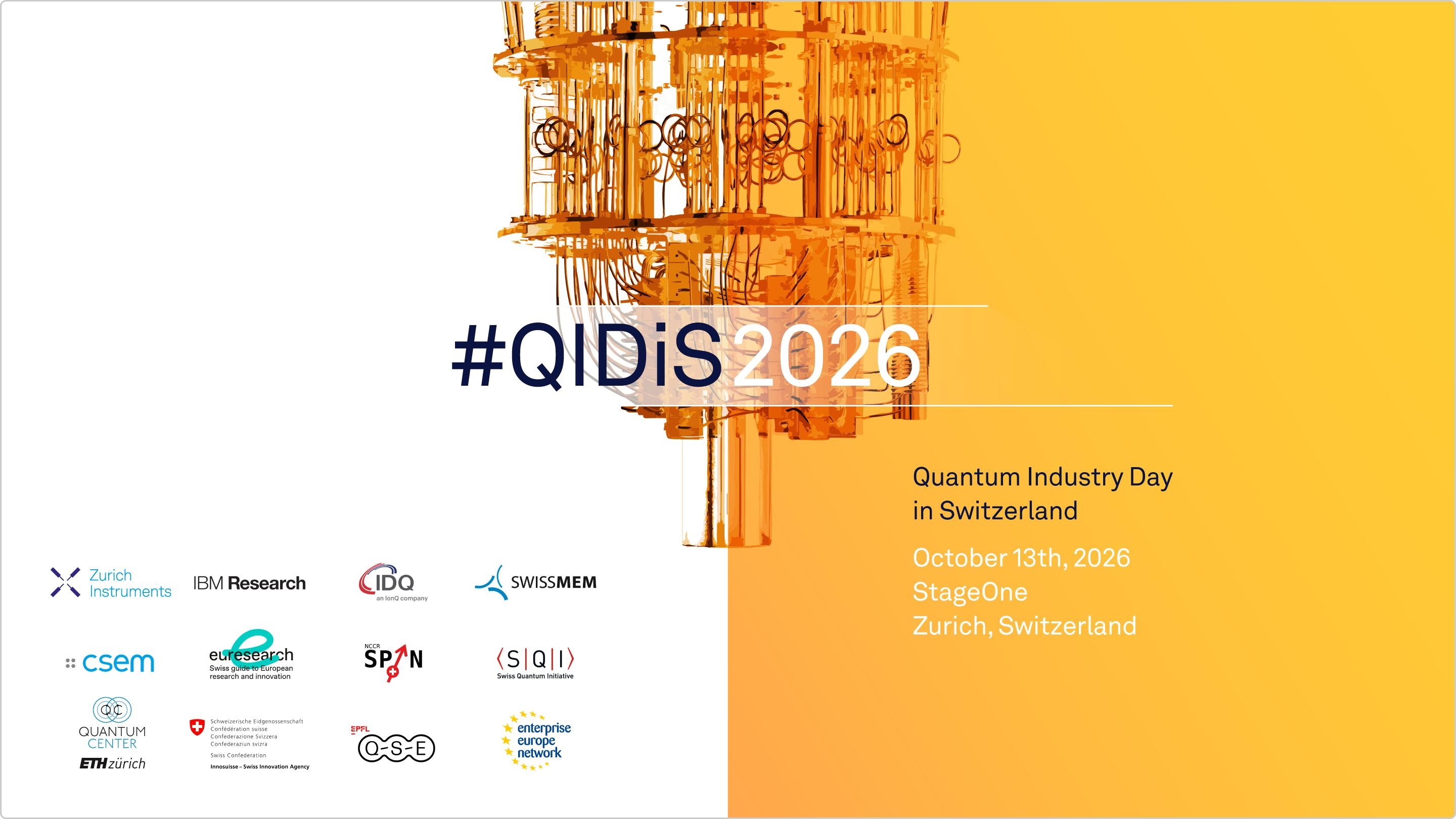
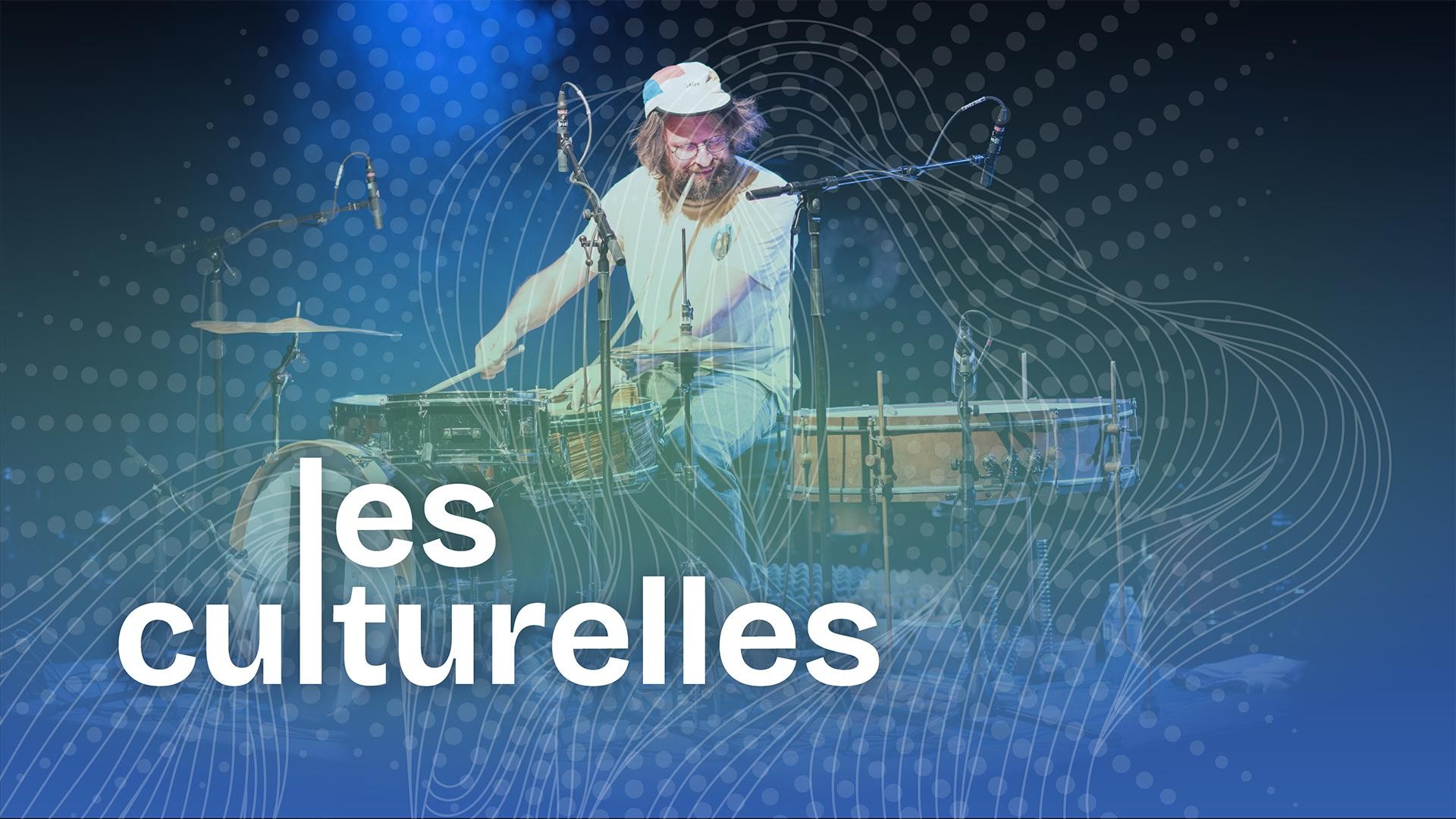
{ "count": 106, "next": "https://memento.epfl.ch/api/v1/mementos/5/events/?format=api&limit=10&offset=40&ordering=is_active", "previous": "https://memento.epfl.ch/api/v1/mementos/5/events/?format=api&limit=10&offset=20&ordering=is_active", "results": [ { "id": 72219, "title": "Quantum Industry Day in Switzerland (QIDiS) 2026", "slug": "quantum-industry-day-in-switzerland-qidis-2026", "event_url": "https://memento.epfl.ch/event/quantum-industry-day-in-switzerland-qidis-2026", "visual_url": "https://memento.epfl.ch/image/33499/200x112.jpg", "visual_large_url": "https://memento.epfl.ch/image/33499/720x405.jpg", "visual_maxsize_url": "https://memento.epfl.ch/image/33499/max-size.jpg", "lang": "en", "start_date": "2026-10-13", "end_date": "2026-10-13", "start_time": "08:15:00", "end_time": "19:30:00", "description": "<a href=\"https://www.qidis26.com\">The Quantum Industry Day in Switzerland (QIDiS)</a> gathers academic and industrial R&D to foster exchange and accelerate the development of new quantum products through inspiring keynote talks, panel discussions, and networking opportunities. Large private and public investments are rapidly pushing quantum technologies out of labs and into real-world applications. Industrial actors are playing a key role: they provide the <em>enabling technologies</em> as well as <em>the commercialization know-how</em> driving this development. The program covers the areas of quantum computing, quantum sensing, quantum instrumentation and quantum communication.<br>\r\n<br>\r\nThis event is part of the <a href=\"https://swissquantumweek.ch\">Swiss Quantum Week</a>.<br>\r\n<br>\r\n<strong>HIGHLIGHTS OF THE EVENT</strong>\r\n<ul>\r\n\t<li>Stay up-to-date with industry trends: The event showcases the latest products, services, innovations and trends in a particular industry or field. By attending it, participants can stay informed about what's new and what's on the horizon.</li>\r\n\t<li>Networking opportunities: Meet and connect with like-minded individuals, as well as experts in your field. You can make valuable connections that can help you grow your career or business.</li>\r\n\t<li>Build brand awareness: Publish and showcase your products, projects, services or business needs to event participants.</li>\r\n\t<li>Access to experts and thought leaders: Gain access to these individuals and learn from their experiences and insights.</li>\r\n</ul>\r\n<strong>REGISTRATION</strong><br>\r\nThis is a free event. Registration is required and participation must be confirmed by organizers. <br>\r\n<br>\r\n<strong>MORE INFORMATION </strong><br>\r\n<a href=\"https://www.qidis26.com\">QIDiS 2026 website</a><br>\r\n<br>\r\n<strong>ORGANIZERS</strong><br>\r\nIBM Research, ID Quantique, Zurich Instruments, CSEM, NCCR SPIN, Euresearch, the Quantum Center at ETH Zurich, the QSE Center at EPFL, Innosuisse and Swissmem ", "image_description": "", "creation_date": "2026-07-09T15:07:58", "last_modification_date": "2026-07-09T15:08:30", "link_label": "QIDis 2026", "link_url": "https://www.qidis26.com", "canceled": "False", "cancel_reason": "", "place_and_room": "StageOne, Zurich", "url_place_and_room": "https://stage-one.ch", "url_online_room": "", "spoken_languages": [ "https://memento.epfl.ch/api/v1/spoken_languages/2/?format=api" ], "speaker": "", "organizer": "", "contact": "[email protected]", "is_internal": "False", "theme": "", "vulgarization": { "id": 1, "fr_label": "Tout public", "en_label": "General public" }, "registration": { "id": 1, "fr_label": "Sur inscription", "en_label": "Registration required" }, "keywords": "", "file": null, "icalendar_url": "https://memento.epfl.ch/event/export/121243/", "category": { "id": 20, "code": "convention", "fr_label": "Congrès", "en_label": "Convention", "activated": true }, "academic_calendar_category": null, "domains": [], "mementos": [ "https://memento.epfl.ch/api/v1/mementos/1/?format=api", "https://memento.epfl.ch/api/v1/mementos/3/?format=api", "https://memento.epfl.ch/api/v1/mementos/5/?format=api", "https://memento.epfl.ch/api/v1/mementos/6/?format=api", "https://memento.epfl.ch/api/v1/mementos/8/?format=api", "https://memento.epfl.ch/api/v1/mementos/145/?format=api", "https://memento.epfl.ch/api/v1/mementos/191/?format=api", "https://memento.epfl.ch/api/v1/mementos/290/?format=api", "https://memento.epfl.ch/api/v1/mementos/318/?format=api", "https://memento.epfl.ch/api/v1/mementos/389/?format=api", "https://memento.epfl.ch/api/v1/mementos/442/?format=api" ] }, { "id": 72516, "title": "Julian Sartorius Concert - RLLRLRLLRRLRLRLRLLRLRLR", "slug": "julian-sartorius-concert-rllrlrllrrlrlrlrllrlrlr-2", "event_url": "https://memento.epfl.ch/event/julian-sartorius-concert-rllrlrllrrlrlrlrllrlrlr-2", "visual_url": "https://memento.epfl.ch/image/33782/200x112.jpg", "visual_large_url": "https://memento.epfl.ch/image/33782/720x405.jpg", "visual_maxsize_url": "https://memento.epfl.ch/image/33782/max-size.jpg", "lang": "en", "start_date": "2026-10-13", "end_date": "2026-10-13", "start_time": "12:00:00", "end_time": "13:00:00", "description": "<div class=\"BCX2 Ltr OutlineElement SCXW167897111\"><strong>Two concerts:</strong></div>\r\n\r\n<ul>\r\n\t<li><strong>Tuesday, October 13,</strong> <strong>at noon: <a href=\"https://juliansartorius.bandcamp.com/album/rllrlrllrrlrlrlrllrlrlr\">RLLRLRLLRRLRLRLRLLRLRLR </a></strong><br>\r\n\tDuration: 1 hour.<br>\r\n\tWith: Julian Sartorius, Romane Bouffioux, Jeanne Larrouturou, Julien Mégroz et Julien Annoni<br>\r\n\t </li>\r\n\t<li><strong>Tuesday, October 13,</strong> <strong>at 7:00 p.m.: solo </strong><br>\r\n\tDuration: 30 minutes<br>\r\n\tAs part of the opening for <a href=\"https://memento.epfl.ch/event/nonc-normally-open-normally-close-installation/\">NO/NC</a></li>\r\n</ul>\r\n\r\n<div class=\"BCX2 Ltr OutlineElement SCXW167897111\"><br>\r\nKnown for his unique, playful, and highly virtuosic approach to his instrument, internationally renowned drummer <a href=\"http://www.juliansartorius.com/\">Julian Sartorius</a> will present RLLRLRLLRRLRLRLRLLRLRLR, a score composed for a percussion ensemble in which “R” stands for right hand and “L” stands for left hand. Played continuously by the ensemble throughout the piece, the motif evolves under Julian Sartorius’s direction as he adapts the instrumentation (adding, substituting, or removing objects or instruments).<br>\r\n<br>\r\nA journey through minimalism, repetition, musical progression, and a deluge of sound. The concert stems from an experiment in which the addition, removal, or modification of basic elements generates new content. It also incorporates playfulness, the freedom to assemble elements, and the surprise of unexpected sound combinations. Much like many scientific protocols, this method—here applied to music—suggests avenues of convergence between scientific and creative practices.<br>\r\n<br>\r\n<iframe allow=\"accelerometer; autoplay; clipboard-write; encrypted-media; gyroscope; picture-in-picture; web-share\" allowfullscreen=\"\" frameborder=\"0\" height=\"315\" src=\"https://www.youtube.com/embed/hZ4HRiNTQC4?si=RXzPTogaFJIKH2dK\" width=\"560\"></iframe><br>\r\nAt 7 p.m. that evening, as part of the opening reception for the installation <strong>NO/NC (Normally Open/Normally Closed)</strong>, co-created with Archizoom, Julian Sartorius will give a solo concert.<br>\r\n---<br>\r\n<strong>Biography of <a href=\"http://www.juliansartorius.com/\">Julian Sartorius</a></strong><br>\r\nDrummer, percussionist, and artist Julian Sartorius shapes sounds into unique forms. His precise and rich rhythmic patterns are true explorations of the hidden sounds of found objects and prepared instruments, bridging the gap between organic timbres and the language of electronic music. Julian Sartorius has released numerous solo albums, created audiovisual works, collaborated with musicians, writers, and artists, and performed in everything from intimate venues to festival stages.</div>\r\n\r\n<div class=\"BCX2 Ltr OutlineElement SCXW167897111\"><br>\r\nTrained at the jazz schools in Bern and Lucerne under the guidance of musicians such as Fabian Kuratli, Pierre Favre, and Norbert Pfammatter, Julian Sartorius developed a unique musical approach at a very early age. Fascinated by small-scale variations, the interplay of tension and release, density, and vibration, he has created projects such as the 12-vinyl box set *Beat Diary* (Everest Records, 2012), comprising 365 rhythmic pieces accompanied by a book of photographs; the daily series of eight-second loops “Morphblog” (2013–2019); and “Depot,” an audiovisual installation for 16 speakers and 16 screens, presented at the Kunstmuseum in Thun. For his album “Hidden Tracks: Basel – Geneva” (Everest Records, 2017), Julian walked more than 200 kilometers with his drumsticks and recording equipment, playing and capturing a multitude of sounds and textures from objects he encountered along the way.<br>\r\n </div>\r\n\r\n<div class=\"BCX2 Ltr OutlineElement SCXW167897111\">In recent years, Julian Sartorius has collaborated with numerous musicians, including Sophie Hunger, Sylvie Courvoisier, Gyda Valtysdottir, Dimlite, Shahzad Ismaily, and Dan Carey. His instantly recognizable percussion work also appears on recent albums by Kate Tempest, Matthew Herbert, and James Zoo. Julian Sartorius has toured and performed in North and South America, Asia, and Europe, sharing the stage with artists such as Marc Ribot, Deerhoof, Faust, Jaki Liebezeit, and Arto Lindsay.<br>\r\n<br>\r\n--- <br>\r\n<a href=\"http://usinesonore.ch/\"><strong>Usinesonore</strong></a><br>\r\nThe Usinesonore association shares its passion for music by promoting it through various activities in the Canton of Bern and beyond. It was previously invited to EPFL in 2017.<br>\r\nFounded in 2006 by Julien Annoni and Olivier Membrez, two young Bernese Jura natives passionate about contemporary music, the Usinesonore association organizes events centered on today’s music.<br>\r\n<br>\r\nThe association’s activities focus on three main areas: organizing the Usinesonore Festival, the Ensemble We Spoke, and organizing parallel events (traveling concerts, custom-designed events, outreach activities, etc.).<br>\r\n<br>\r\nEach event is shaped by careful consideration of how to share it with the audience. Usinesonore devotes all its energy to ensuring that the audience can experience the artistic moment, that they do not leave indifferent, and that they feel heard and supported throughout their experience.<br>\r\n<br>\r\n<strong>Partner: <a href=\"http://usinesonore.ch/\">Usinesonore</a></strong><br>\r\n \r\n<figure class=\"image\"><a href=\"https://www.epfl.ch/campus/art-culture/fr/les-culturelles/les-culturelles-dautomne-2026/\"><img alt=\"Programme complet des Culturelles\" height=\"182\" src=\"https://www.epfl.ch/campus/art-culture/wp-content/uploads/2026/09/LES_CULTURELLES_1920x1080_programme_complet.png\" width=\"600\"></a>\r\n\r\n<figcaption>© 2026 EPFL, Laura Persat</figcaption>\r\n</figure>\r\n</div>", "image_description": "", "creation_date": "2026-09-03T16:34:42", "last_modification_date": "2026-09-28T15:15:03", "link_label": "Programme complet des Culturelles", "link_url": "https://www.epfl.ch/campus/art-culture/fr/les-culturelles/les-culturelles-dautomne-2026/", "canceled": "False", "cancel_reason": "", "place_and_room": "Hall SG", "url_place_and_room": "https://plan.epfl.ch/?room==SG%20094.11", "url_online_room": "", "spoken_languages": [ "https://memento.epfl.ch/api/v1/spoken_languages/1/?format=api", "https://memento.epfl.ch/api/v1/spoken_languages/2/?format=api" ], "speaker": "<a href=\"https://www.juliansartorius.com/\">Julian Sartorius</a>, batteur<strong> ; </strong><a href=\"https://usinesonore.ch/\">Usinesonore</a>", "organizer": "<a href=\"https://www.epfl.ch/campus/art-culture/fr/les-culturelles/\">Festival Les Culturelles</a> (Pôle Culture VPI)", "contact": "<a href=\"https://people.epfl.ch/veronique.mauron\">Véronique Mauron Layaz</a>", "is_internal": "False", "theme": "", "vulgarization": { "id": 1, "fr_label": "Tout public", "en_label": "General public" }, "registration": { "id": 3, "fr_label": "Entrée libre", "en_label": "Free" }, "keywords": "musique, concert, batterie", "file": null, "icalendar_url": "https://memento.epfl.ch/event/export/121701/", "category": { "id": 9, "code": "MANIF", "fr_label": "Événements festifs et culturels", "en_label": "Cultural events", "activated": true }, "academic_calendar_category": null, "domains": [], "mementos": [ "https://memento.epfl.ch/api/v1/mementos/1/?format=api", "https://memento.epfl.ch/api/v1/mementos/2/?format=api", "https://memento.epfl.ch/api/v1/mementos/5/?format=api", "https://memento.epfl.ch/api/v1/mementos/6/?format=api", "https://memento.epfl.ch/api/v1/mementos/8/?format=api", "https://memento.epfl.ch/api/v1/mementos/21/?format=api", "https://memento.epfl.ch/api/v1/mementos/22/?format=api", "https://memento.epfl.ch/api/v1/mementos/79/?format=api", "https://memento.epfl.ch/api/v1/mementos/145/?format=api" ] }, { "id": 72553, "title": "Spin Polarization Studies for the Future Circular Collider e-e+", "slug": "spin-polarization-studies-for-the-future-circula-2", "event_url": "https://memento.epfl.ch/event/spin-polarization-studies-for-the-future-circula-2", "visual_url": "https://memento.epfl.ch/image/33803/200x112.jpg", "visual_large_url": "https://memento.epfl.ch/image/33803/720x405.jpg", "visual_maxsize_url": "https://memento.epfl.ch/image/33803/max-size.jpg", "lang": "en", "start_date": "2026-10-13", "end_date": "2026-10-13", "start_time": "14:00:00", "end_time": null, "description": "<p>Thesis Directors: Prof. M. Seidel, Dr T. Pieloni<br>\r\nPhysics doctoral program<br>\r\nThesis Nr. 11803<br>\r\n<br>\r\nTo take part in the public defense, please contact directly the speaker</p>", "image_description": "", "creation_date": "2026-09-09T16:09:16", "last_modification_date": "2026-09-09T16:09:18", "link_label": "", "link_url": "", "canceled": "False", "cancel_reason": "", "place_and_room": "CERN", "url_place_and_room": "", "url_online_room": "", "spoken_languages": [], "speaker": "<strong>Yi WU</strong>", "organizer": "", "contact": "<strong>Yi WU</strong>", "is_internal": "False", "theme": "", "vulgarization": { "id": 1, "fr_label": "Tout public", "en_label": "General public" }, "registration": { "id": 3, "fr_label": "Entrée libre", "en_label": "Free" }, "keywords": "EDPY", "file": null, "icalendar_url": "https://memento.epfl.ch/event/export/121758/", "category": { "id": 12, "code": "SOUTE", "fr_label": "Soutenances de thèses", "en_label": "Thesis defenses", "activated": true }, "academic_calendar_category": null, "domains": [], "mementos": [ "https://memento.epfl.ch/api/v1/mementos/1/?format=api", "https://memento.epfl.ch/api/v1/mementos/5/?format=api", "https://memento.epfl.ch/api/v1/mementos/6/?format=api" ] }, { "id": 72517, "title": "NO/NC (Normally open/ Normally closed) - Installation", "slug": "nonc-normally-open-normally-closed-installation", "event_url": "https://memento.epfl.ch/event/nonc-normally-open-normally-closed-installation", "visual_url": "https://memento.epfl.ch/image/33783/200x112.jpg", "visual_large_url": "https://memento.epfl.ch/image/33783/720x405.jpg", "visual_maxsize_url": "https://memento.epfl.ch/image/33783/max-size.jpg", "lang": "en", "start_date": "2026-10-13", "end_date": "2026-10-13", "start_time": "18:30:00", "end_time": null, "description": "<div class=\"BCX2 Ltr OutlineElement SCXW57136668\"><strong>Opening reception on October 13 at 6:30 p.m. (<a href=\"https://memento.epfl.ch/event/julian-sartorius-concert-rllrlrllrrlrlrlrllrlrlr/\">with a concert at 7pm</a>)<br>\r\nExhibition on view October 13–24</strong><br>\r\n<br>\r\nThe Pôle Culture (VPI) and <a href=\"http://www.epfl.ch/campus/art-culture/museum-exhibitions/archizoom/fr/accueil/\">Archizoom </a>are collaborating on an installation by the artist duo <a href=\"http://aatb.ch/about/\">Andrea Anner & Thibault Brevet (AATB)</a> that extends Archizoom’s exhibition <a href=\"http://www.epfl.ch/campus/art-culture/museum-exhibitions/archizoom/fr/do-robots-dream-of-construction-sites/\">Do Robots Dream of Construction Sites?</a> and is part of the Les Culturelles festival.<br>\r\n<br>\r\nNO/NC is a new work by AATB featuring <strong>a swarm of inflatable barriers</strong> that move autonomously through the space to form temporary structures and barricades, preventing visitors from moving about and crossing the space freely.<br>\r\n<br>\r\nWhoever controls and decides where and for whom to build walls also decides how we form a cohesive society—a society cemented by fictitious boundaries—while fragmenting and dissolving those deemed undesirable.<br>\r\n<br>\r\nThe walls of the installation take on an almost ghostly quality. They are constantly changing, continually shifting. It seems as though today they possess a will of their own, a form of autonomy, their own logic, and their own survival instinct.<br>\r\n<br>\r\n<a href=\"http://www.aatb.ch/\">> AATB website</a><br>\r\n<br>\r\n<strong>Co-organized</strong> <strong>with <a href=\"http://www.epfl.ch/campus/art-culture/museum-exhibitions/archizoom/fr/accueil/\">Archizoom</a></strong><br>\r\nAs part of the exhibition <a href=\"http://www.epfl.ch/campus/art-culture/museum-exhibitions/archizoom/fr/do-robots-dream-of-construction-sites/\">*Do Robots Dream of Construction Sites?*</a> at Archizoom (guided tour of the exhibition at 5:30 p.m.)</div>\r\n\r\n<div class=\"BCX2 Ltr OutlineElement SCXW57136668\"> \r\n<figure class=\"image\"><a href=\"https://www.epfl.ch/campus/art-culture/fr/les-culturelles/les-culturelles-dautomne-2026/\"><img alt=\"Programme complet des Culturelles\" height=\"182\" src=\"https://www.epfl.ch/campus/art-culture/wp-content/uploads/2026/09/LES_CULTURELLES_1920x1080_programme_complet.png\" width=\"600\"></a>\r\n\r\n<figcaption>© 2026 EPFL, Laura Persat</figcaption>\r\n</figure>\r\n</div>", "image_description": "", "creation_date": "2026-09-03T16:46:06", "last_modification_date": "2026-09-23T15:40:42", "link_label": "Programme complet des Culturelles", "link_url": "https://www.epfl.ch/campus/art-culture/fr/les-culturelles/les-culturelles-dautomne-2026/", "canceled": "False", "cancel_reason": "", "place_and_room": "Hall SG", "url_place_and_room": "https://plan.epfl.ch/?room==SG%20094.11", "url_online_room": "", "spoken_languages": [ "https://memento.epfl.ch/api/v1/spoken_languages/1/?format=api", "https://memento.epfl.ch/api/v1/spoken_languages/2/?format=api" ], "speaker": "<a href=\"https://aatb.ch/about/\">Andrea Anner & Thibault Brevet (AATB)</a>", "organizer": "<a href=\"https://www.epfl.ch/campus/art-culture/fr/les-culturelles/\">Festival Les Culturelles</a> (Pôle Culture VPI)", "contact": "<a href=\"https://people.epfl.ch/veronique.mauron\">Véronique Mauron Layaz</a> ; <a href=\"https://www.epfl.ch/campus/art-culture/museum-exhibitions/archizoom/fr/accueil/\">Archizoom</a>", "is_internal": "False", "theme": "", "vulgarization": { "id": 1, "fr_label": "Tout public", "en_label": "General public" }, "registration": { "id": 3, "fr_label": "Entrée libre", "en_label": "Free" }, "keywords": "Installation artistique, robot, exposition", "file": null, "icalendar_url": "https://memento.epfl.ch/event/export/121703/", "category": { "id": 5, "code": "EXPO", "fr_label": "Expositions", "en_label": "Exhibitions", "activated": true }, "academic_calendar_category": null, "domains": [], "mementos": [ "https://memento.epfl.ch/api/v1/mementos/1/?format=api", "https://memento.epfl.ch/api/v1/mementos/2/?format=api", "https://memento.epfl.ch/api/v1/mementos/4/?format=api", "https://memento.epfl.ch/api/v1/mementos/5/?format=api", "https://memento.epfl.ch/api/v1/mementos/6/?format=api", "https://memento.epfl.ch/api/v1/mementos/8/?format=api", "https://memento.epfl.ch/api/v1/mementos/21/?format=api", "https://memento.epfl.ch/api/v1/mementos/22/?format=api", "https://memento.epfl.ch/api/v1/mementos/79/?format=api", "https://memento.epfl.ch/api/v1/mementos/145/?format=api" ] }, { "id": 72650, "title": "Sustainable Labs: Get Involved", "slug": "sustainable-labs-get-involved-11", "event_url": "https://memento.epfl.ch/event/sustainable-labs-get-involved-11", "visual_url": "https://memento.epfl.ch/image/33911/200x112.jpg", "visual_large_url": "https://memento.epfl.ch/image/33911/720x405.jpg", "visual_maxsize_url": "https://memento.epfl.ch/image/33911/max-size.jpg", "lang": "en", "start_date": "2026-10-13", "end_date": "2026-12-22", "start_time": "12:15:00", "end_time": "13:00:00", "description": "<br>\r\nThe <strong>EPFL Sustainable Labs team</strong> is pleased to welcome you to its recurring <strong>\"Sustainable Labs: Get Involved\"</strong> sessions. Held every week, alternating between <strong>Tuesdays and Thursdays</strong>, these sessions provide an opportunity for laboratories, platforms, centers, and units to receive guidance and support on implementing more sustainable laboratory practices.<br>\r\n<br>\r\nThe <strong>Sustainable Labs initiative</strong> is part of EPFL's <em>Climate & Sustainability Strategy 2030</em>, which aims to reduce greenhouse gas emissions by an average of <strong>40% compared to 2006/2019 levels</strong> and achieve <strong>climate neutrality by 2040</strong>.<br>\r\n<br>\r\n→<a href=\"https://www.epfl.ch/about/sustainability/sustainability/green-labs_draft_ag/\"> </a><strong><a href=\"https://www.epfl.ch/about/sustainability/sustainability/green-labs_draft_ag/\">Learn more about the EPFL Sustainable Labs initiative</a>.</strong><br>\r\n<br>\r\nResearch activities are a key lever for achieving these ambitious goals. However, while cutting-edge research drives innovation, it also carries a significant environmental footprint. Laboratories consume large amounts of energy, generate substantial quantities of plastic, chemical, and biological waste, and contribute considerably to greenhouse gas emissions. At EPFL, we are committed to understanding and reducing this impact. Through the development and deployment of the <strong>EPFL CO₂ Calculator</strong>, we help researchers measure, understand, and improve the environmental performance of their activities.<br>\r\n<br>\r\nFrom <strong>October 8 to December 17, 2026</strong>, the <strong>Sustainable Labs: Get Involved</strong> sessions will focus on training and supporting users in the use of the <strong>EPFL CO₂ Calculator</strong>. This tool enables laboratories, platforms, centers, and central units to estimate their carbon footprint, identify major emission hotspots, and support informed decision-making to reduce their environmental impact through targeted actions.<br>\r\n<br>\r\nHere are the planned sessions : \r\n<ul>\r\n\t<li>Thursday October 8th 12:15-13:00 (online) </li>\r\n\t<li>Tuesday October 13th 12:15-13:00 (MA A0 364)</li>\r\n\t<li>Thursday October 22th 12:15-13:00 (online) </li>\r\n\t<li>Tuesday October 27th 12:15-13:00 (MA A0 364)</li>\r\n\t<li>Thursday November 5th 12:15-13:00(online) </li>\r\n\t<li>Tuesday November 10th 12:15-13:00 (MA A0 364)</li>\r\n\t<li>Thursday November 19th 12:15-13:00 (online) </li>\r\n\t<li>Tuesday November 24th 12:15-13:00 (MA A0 364)</li>\r\n\t<li>Thursday December 3rd 12:15-13:00 (online) </li>\r\n\t<li>Tuesday December 8th 12:15-13:00 (MA A0 364)</li>\r\n\t<li>Thursday December 17th 12:15-13:00 (online) </li>\r\n</ul>\r\nSessions can be held in English and/ or French depending on the participants. <br>\r\n<br>\r\n→ Please register <a href=\"https://docs.google.com/forms/d/e/1FAIpQLSd7Cp6LevgtBLtsWIsKr2Ec_HPGjJgimmwEaGAN5U4M4-2rrg/viewform\">here</a>. For physical sessions, standing lunch will be provided!<br>\r\n<br>\r\nWhether you have questions about the EPFL CO₂ Calculator, need help interpreting your results, or would like advice on implementing more sustainable laboratory practices, our team will be happy to support you and answer your questions! <br>\r\n ", "image_description": "", "creation_date": "2026-09-23T10:53:52", "last_modification_date": "2026-09-28T09:54:43", "link_label": "", "link_url": "", "canceled": "False", "cancel_reason": "", "place_and_room": "MA A0 364", "url_place_and_room": "", "url_online_room": "https://epfl.zoom.us/j/63013630338", "spoken_languages": [ "https://memento.epfl.ch/api/v1/spoken_languages/1/?format=api", "https://memento.epfl.ch/api/v1/spoken_languages/2/?format=api" ], "speaker": "", "organizer": "Mai-Phuong Dinh", "contact": "[email protected] ", "is_internal": "True", "theme": "", "vulgarization": { "id": 1, "fr_label": "Tout public", "en_label": "General public" }, "registration": { "id": 3, "fr_label": "Entrée libre", "en_label": "Free" }, "keywords": "", "file": null, "icalendar_url": "https://memento.epfl.ch/event/export/121898/", "category": { "id": 15, "code": "FORM", "fr_label": "Formations internes", "en_label": "Internal trainings", "activated": true }, "academic_calendar_category": null, "domains": [], "mementos": [ "https://memento.epfl.ch/api/v1/mementos/1/?format=api", "https://memento.epfl.ch/api/v1/mementos/4/?format=api", "https://memento.epfl.ch/api/v1/mementos/5/?format=api", "https://memento.epfl.ch/api/v1/mementos/6/?format=api", "https://memento.epfl.ch/api/v1/mementos/8/?format=api", "https://memento.epfl.ch/api/v1/mementos/9/?format=api", "https://memento.epfl.ch/api/v1/mementos/79/?format=api" ] }, { "id": 72518, "title": "Secouons-nous les eaux - Performance", "slug": "secouons-nous-les-eaux-performance-2", "event_url": "https://memento.epfl.ch/event/secouons-nous-les-eaux-performance-2", "visual_url": "https://memento.epfl.ch/image/33780/200x112.jpg", "visual_large_url": "https://memento.epfl.ch/image/33780/720x405.jpg", "visual_maxsize_url": "https://memento.epfl.ch/image/33780/max-size.jpg", "lang": "en", "start_date": "2026-10-14", "end_date": "2026-10-14", "start_time": "12:00:00", "end_time": "13:00:00", "description": "<div class=\"BCX2 Ltr OutlineElement SCXW196505929\">The <a href=\"http://hydromondes.org/\">Hydromondes</a> collective invites the EPFL community <strong>to explore the relationship between science and the bodies of water</strong> that surround us, in an artistic and festive setting.<br>\r\n<br>\r\nOn stage: </div>\r\n\r\n<ul>\r\n\t<li>Marin Schaffner, ethnologist</li>\r\n\t<li>Jeanne Mermet, engineer </li>\r\n\t<li>Gabriel Cotte, hydrologist </li>\r\n\t<li>Clémence Mathieu, illustrator </li>\r\n</ul>\r\n\r\n<div class=\"BCX2 Ltr OutlineElement SCXW196505929\"><br>\r\nThe event, which could be called a “festive gathering,” is a mix of performance, lecture, and debate. It consists of three parts: <br>\r\n </div>\r\n\r\n<ol>\r\n\t<li>The first part presents <strong>the scientific, artistic, and sensory content</strong> developed by the Hydromondes collective to put ourselves in the shoes of Lake Geneva—a living entity—in order to understand the paths water takes through our bodies, through the pipes and faucets at EPFL, and more broadly throughout the region.<br>\r\n\t </li>\r\n\t<li>The second part is an opened <strong>discussion</strong> with the audience to gather testimonies, questions, and reflections on the issue of water stewardship, particularly in light of current and future socioeconomic challenges and climate disruptions.<br>\r\n\t </li>\r\n\t<li>The third part gets us <strong>moving</strong> to “stir up our waters,” drawing our attention to the health of Lake Geneva and all bodies of water. A mix of texts, live drawings (using water from Lake Geneva), and music turns this moment into a festive gathering.</li>\r\n</ol>\r\n\r\n<div class=\"BCX2 Ltr OutlineElement SCXW196505929\">---<br>\r\n<strong>The <a href=\"http://hydromondes.org/\">Hydromondes</a> Collective</strong><br>\r\nFor the past two years, the Hydromondes collective has been developing a research-creation project on Lake Geneva as a living entity, engaging with scientists, managers, activists, and artists from the Lake Geneva region to attempt to paint a dynamic portrait of this lake on which we depend—particularly through the waters that flow through us. The collective employs sensory cartography, creates drawings and texts, and composes music. On June 12 and 13, 2026, the Lake Geneva Bioregional Assemblies took place at the Vidy Theater, during which Hydromondes brought together a myriad of Franco-Swiss collectives to create a cross-border community dedicated to the care of the waters.<br>\r\n<br>\r\nThe collaboration between the collective and <a href=\"http://applicationspub.unil.ch/interpub/noauth/php/Un/UnPers.php?PerNum=1277309&LanCode=37\">Nathalia Capellini,</a> a historian at the University of Lausanne (UNIL) and instructor in the EPFL’s SHS program, gave rise to the performance *Le Léman Cyborg*, presented on May 7, 2026, as part of the *Culturelles de printemps* festival. Nathalia Capellini’s course titled “Infrastructures” had fueled the project. This collaboration between the collective and the academic community will therefore continue for the Culturelles in October 2026, with a more participatory format—somewhere between an artistic presentation and a town hall meeting—in a playful atmosphere.<br>\r\n<br>\r\n<strong>>>> Free admission; <a href=\"http://forms.cloud.microsoft/e/ffSBMqP21Y\">light refreshments provided upon registration</a></strong></div>\r\n\r\n<div class=\"BCX2 Ltr OutlineElement SCXW196505929\"> \r\n<figure class=\"image\"><a href=\"https://www.epfl.ch/campus/art-culture/fr/les-culturelles/les-culturelles-dautomne-2026/\"><img alt=\"Programme complet des Culturelles\" height=\"182\" src=\"https://www.epfl.ch/campus/art-culture/wp-content/uploads/2026/09/LES_CULTURELLES_1920x1080_programme_complet.png\" width=\"600\"></a>\r\n\r\n<figcaption>© 2026 EPFL, Laura Persat</figcaption>\r\n</figure>\r\n</div>", "image_description": "", "creation_date": "2026-09-03T16:58:47", "last_modification_date": "2026-09-29T18:00:01", "link_label": "Inscription à la collation", "link_url": "https://forms.cloud.microsoft/e/ffSBMqP21Y", "canceled": "False", "cancel_reason": "", "place_and_room": "Hall MED", "url_place_and_room": "https://plan.epfl.ch/?room==MED%200%2094.22", "url_online_room": "", "spoken_languages": [ "https://memento.epfl.ch/api/v1/spoken_languages/1/?format=api" ], "speaker": "Collectif <a href=\"https://hydromondes.org/\">Hydromondes</a> ; Marin Schaffner, ethnologue ; Jeanne Mermet, ingénieure ; Gabriel Cotte, hydrologue et Clémence Mathieu, dessinatrice ", "organizer": "<a href=\"https://www.epfl.ch/campus/art-culture/fr/les-culturelles/\">Festival Les Culturelles</a> (Pôle Culture VPI)", "contact": "<a href=\"https://people.epfl.ch/veronique.mauron\">Véronique Mauron Layaz</a>", "is_internal": "False", "theme": "", "vulgarization": { "id": 1, "fr_label": "Tout public", "en_label": "General public" }, "registration": { "id": 3, "fr_label": "Entrée libre", "en_label": "Free" }, "keywords": "Léman, corps aquatique, performance", "file": null, "icalendar_url": "https://memento.epfl.ch/event/export/121705/", "category": { "id": 9, "code": "MANIF", "fr_label": "Événements festifs et culturels", "en_label": "Cultural events", "activated": true }, "academic_calendar_category": null, "domains": [], "mementos": [ "https://memento.epfl.ch/api/v1/mementos/1/?format=api", "https://memento.epfl.ch/api/v1/mementos/2/?format=api", "https://memento.epfl.ch/api/v1/mementos/4/?format=api", "https://memento.epfl.ch/api/v1/mementos/5/?format=api", "https://memento.epfl.ch/api/v1/mementos/6/?format=api", "https://memento.epfl.ch/api/v1/mementos/8/?format=api", "https://memento.epfl.ch/api/v1/mementos/21/?format=api", "https://memento.epfl.ch/api/v1/mementos/22/?format=api", "https://memento.epfl.ch/api/v1/mementos/79/?format=api", "https://memento.epfl.ch/api/v1/mementos/145/?format=api" ] }, { "id": 72600, "title": "Strong Electronic Correlations at Solid--Liquid Interfaces", "slug": "strong-electronic-correlations-at-solid-liquid-i-2", "event_url": "https://memento.epfl.ch/event/strong-electronic-correlations-at-solid-liquid-i-2", "visual_url": "https://memento.epfl.ch/image/33844/200x112.jpg", "visual_large_url": "https://memento.epfl.ch/image/33844/720x405.jpg", "visual_maxsize_url": "https://memento.epfl.ch/image/33844/max-size.jpg", "lang": "en", "start_date": "2026-10-14", "end_date": "2026-10-14", "start_time": "17:00:00", "end_time": null, "description": "<p>Thesis Director: Prof. N. Kavokine,<br>\r\nPhysics doctoral program<br>\r\nThesis Nr. 13424<br>\r\n<br>\r\nTo take part in the public defense, please contact directly the speaker</p>", "image_description": "", "creation_date": "2026-09-16T14:59:30", "last_modification_date": "2026-09-16T14:59:32", "link_label": "", "link_url": "", "canceled": "False", "cancel_reason": "", "place_and_room": "ELA 1", "url_place_and_room": "https://plan.epfl.ch/?room==ELA%201", "url_online_room": "", "spoken_languages": [], "speaker": "<strong>Hao LU</strong>", "organizer": "", "contact": "<strong>Hao LU</strong>", "is_internal": "False", "theme": "", "vulgarization": { "id": 1, "fr_label": "Tout public", "en_label": "General public" }, "registration": { "id": 3, "fr_label": "Entrée libre", "en_label": "Free" }, "keywords": "EDPY", "file": null, "icalendar_url": "https://memento.epfl.ch/event/export/121828/", "category": { "id": 12, "code": "SOUTE", "fr_label": "Soutenances de thèses", "en_label": "Thesis defenses", "activated": true }, "academic_calendar_category": null, "domains": [], "mementos": [ "https://memento.epfl.ch/api/v1/mementos/1/?format=api", "https://memento.epfl.ch/api/v1/mementos/5/?format=api", "https://memento.epfl.ch/api/v1/mementos/6/?format=api" ] }, { "id": 72735, "title": "Nanomaterials and Device Engineering for Scalable Solar Fuels Production", "slug": "nanomaterials-and-device-engineering-for-scalabl-2", "event_url": "https://memento.epfl.ch/event/nanomaterials-and-device-engineering-for-scalabl-2", "visual_url": "https://memento.epfl.ch/image/33951/200x112.jpg", "visual_large_url": "https://memento.epfl.ch/image/33951/720x405.jpg", "visual_maxsize_url": "https://memento.epfl.ch/image/33951/max-size.jpg", "lang": "en", "start_date": "2026-10-14", "end_date": "2026-10-14", "start_time": "17:00:00", "end_time": null, "description": "<p>Thesis Director: Prof. K. Sivula,<br>\r\nChemistry and Chemical Engineering doctoral program<br>\r\nThesis Nr. 11708<br>\r\n<br>\r\nTo take part in the public defense, please contact directly the speaker</p>", "image_description": "", "creation_date": "2026-10-01T18:32:58", "last_modification_date": "2026-10-01T18:33:01", "link_label": "", "link_url": "", "canceled": "False", "cancel_reason": "", "place_and_room": "CM 1 4", "url_place_and_room": "https://plan.epfl.ch/?room==CM%201%204", "url_online_room": "https://epfl.zoom.us/j/66756994208?pwd=djaejEB0IObo1NCTZx2i7b9cQabbTc.1", "spoken_languages": [], "speaker": "<a href=\"mailto:[email protected]\"><strong>Nicolas Johannes DIERCKS</strong></a>", "organizer": "", "contact": "<a href=\"mailto:[email protected]\"><strong>Nicolas Johannes DIERCKS</strong></a><br>\r\n ", "is_internal": "False", "theme": "", "vulgarization": { "id": 1, "fr_label": "Tout public", "en_label": "General public" }, "registration": { "id": 3, "fr_label": "Entrée libre", "en_label": "Free" }, "keywords": "EDCH", "file": null, "icalendar_url": "https://memento.epfl.ch/event/export/122020/", "category": { "id": 12, "code": "SOUTE", "fr_label": "Soutenances de thèses", "en_label": "Thesis defenses", "activated": true }, "academic_calendar_category": null, "domains": [], "mementos": [ "https://memento.epfl.ch/api/v1/mementos/1/?format=api", "https://memento.epfl.ch/api/v1/mementos/5/?format=api", "https://memento.epfl.ch/api/v1/mementos/6/?format=api" ] }, { "id": 72519, "title": "White Shadow - Exhibition", "slug": "white-shadow-exhibition", "event_url": "https://memento.epfl.ch/event/white-shadow-exhibition", "visual_url": "https://memento.epfl.ch/image/33781/200x112.jpg", "visual_large_url": "https://memento.epfl.ch/image/33781/720x405.jpg", "visual_maxsize_url": "https://memento.epfl.ch/image/33781/max-size.jpg", "lang": "en", "start_date": "2026-10-14", "end_date": "2026-10-14", "start_time": "18:30:00", "end_time": "20:00:00", "description": "<div class=\"BCX2 Ltr OutlineElement SCXW254063798\"><strong>Opening Reception: Wednesday, October 14 at 6:30 p.m.<br>\r\nExhibition on view from October 14, 2026, through February 9, 2027</strong><br>\r\n<br>\r\nWhat if, one day, all our photographs suddenly transformed and became the very objects they depict? They would flood our living spaces with landscapes, selfies, cats, vehicles, and meals scattered as far as the eye can see.<br>\r\n<br>\r\nEvery day, we produce images, messages, and data that we store on servers and in the cloud. But what becomes of this digital output?<br>\r\n<em>White Shadow</em> is a series of photographs created by <a href=\"http://collectif-fact.ch/\">collectif_fact</a> (Annelore Schneider and Claude Piguet). It was produced using photogrammetry, a technology that transforms photographs into 3D models. The images are generated from data sourced from online libraries. The result is a dizzying architecture so pervasive that it erects barriers and isolates individuals from one another. A society is emerging, grappling with media saturation, sensory overload, and a crushing ecological impact. A world is emerging where images have taken over, colonizing and transforming space until they become the only reality still visible.<br>\r\nThis narrative is a metaphor that prompts reflection on our responsibility regarding our daily digital output and its consequences for the environment.<br>\r\n<br>\r\n<a href=\"http://collectif-fact.ch/\">collectif_fact</a><br>\r\ncollectif_fact, founded by Annelore Schneider (1979, Neuchâtel) and Claude Piguet (1977, Neuchâtel), explores the economics of the contemporary image through video and photography, drawing on speculative narratives and fiction. Their works have been exhibited at institutions such as the Maison européenne de la photographie (Paris), the Centre d’art contemporain (Geneva), the Swiss Cultural Center (Paris), the Hiroshima Museum of Contemporary Art, the Lianzhou Foto Festival, the Metropolis Art Center (Beijing), and the Fotomuseum Winterthur. They recently received the Landis & Gyr residency in London, the New Point of View Award from This is Short (European Short Film Network), and the Best Short Film Award at the International Festival of Films on Art (FIFA). They are represented by Galerie Wilde in Geneva.<br>\r\n<br>\r\nTheir works—videos, photographs, and installations—are part of the following collections: the City of Paris Municipal Contemporary Art Fund, Haus der Elektronischen Künste, Basel; the Lyon Museum of Contemporary Art; the Federal Office of Culture, Bern; the Fotomuseum Winterthur; the Neuchâtel Museum of Art and History; La Chaux-de-Fonds Museum of Fine Arts, Geneva Municipal Contemporary Art Collection, Geneva Cantonal Contemporary Art Collection, Museum of Communication, Bern, Visual Arts Collection, City of Biel, and Sion Art Museum.<br>\r\n<br>\r\n<a href=\"http://collectif-fact.ch/\">> Collectif-Fact website</a><br>\r\n \r\n<figure class=\"image\"><a href=\"https://www.epfl.ch/campus/art-culture/fr/les-culturelles/les-culturelles-dautomne-2026/\"><img alt=\"Programme complet des Culturelles\" height=\"182\" src=\"https://www.epfl.ch/campus/art-culture/wp-content/uploads/2026/09/LES_CULTURELLES_1920x1080_programme_complet.png\" width=\"600\"></a>\r\n<figcaption>© 2026 EPFL, Laura Persat</figcaption>\r\n</figure>\r\n</div>", "image_description": "", "creation_date": "2026-09-03T17:54:09", "last_modification_date": "2026-09-07T14:13:26", "link_label": "", "link_url": "", "canceled": "False", "cancel_reason": "", "place_and_room": "Hall du Rolex Learning Center", "url_place_and_room": "https://plan.epfl.ch/?room==RLC%20G1%2094.12", "url_online_room": "", "spoken_languages": [], "speaker": "<a href=\"https://collectif-fact.ch/\">collectif_fact</a> (Annelore Schneider et Claude Piguet)", "organizer": "<a href=\"https://www.epfl.ch/campus/art-culture/fr/les-culturelles/\">Festival Les Culturelles</a> (Pôle Culture VPI)", "contact": "<a href=\"https://people.epfl.ch/veronique.mauron\">Véronique Mauron Layaz</a>", "is_internal": "False", "theme": "", "vulgarization": { "id": 1, "fr_label": "Tout public", "en_label": "General public" }, "registration": { "id": 3, "fr_label": "Entrée libre", "en_label": "Free" }, "keywords": "", "file": null, "icalendar_url": "https://memento.epfl.ch/event/export/121707/", "category": { "id": 5, "code": "EXPO", "fr_label": "Expositions", "en_label": "Exhibitions", "activated": true }, "academic_calendar_category": null, "domains": [], "mementos": [ "https://memento.epfl.ch/api/v1/mementos/1/?format=api", "https://memento.epfl.ch/api/v1/mementos/2/?format=api", "https://memento.epfl.ch/api/v1/mementos/5/?format=api", "https://memento.epfl.ch/api/v1/mementos/6/?format=api", "https://memento.epfl.ch/api/v1/mementos/8/?format=api", "https://memento.epfl.ch/api/v1/mementos/21/?format=api", "https://memento.epfl.ch/api/v1/mementos/22/?format=api", "https://memento.epfl.ch/api/v1/mementos/145/?format=api" ] }, { "id": 70957, "title": "From Data to Dynamics: Machine Learning in Statistical Mechanics and Molecular Simulations", "slug": "from-data-to-dynamics-machine-learning-in-statis-2", "event_url": "https://memento.epfl.ch/event/from-data-to-dynamics-machine-learning-in-statis-2", "visual_url": "https://memento.epfl.ch/image/32346/200x112.jpg", "visual_large_url": "https://memento.epfl.ch/image/32346/720x405.jpg", "visual_maxsize_url": "https://memento.epfl.ch/image/32346/max-size.jpg", "lang": "en", "start_date": "2026-10-14", "end_date": "2026-10-16", "start_time": null, "end_time": null, "description": "<p>You can apply to participate and find all the relevant information (speakers, abstracts, program,...) on the event website: <a href=\"https://www.cecam.org/workshop-details/from-data-to-dynamics-machine-learning-in-statistical-mechanics-and-molecular-simulations-1487\">https://www.cecam.org/workshop-details/from-data-to-dynamics-machine-learning-in-statistical-mechanics-and-molecular-simulations-1487</a>.<br>\r\n<br>\r\nRegistration is required to attend the full event, take part in the social activities and present a poster at the poster session (if any). However, the EPFL community is welcome to attend specific lectures without registration if the topic is of interest to their research. Do not hesitate to contact the <a href=\"mailto:[email protected]\">CECAM Event Manager</a> if you have any question.<br>\r\n<br>\r\n<strong>Description</strong><br>\r\nSince its introduction in the 1970s, molecular dynamics (MD) has become an indispensable computational microscope for studying complex biological systems at atomic resolution. It has enabled detailed investigations into protein folding, conformational dynamics, and ligand binding and unbinding. Over the past decade, increasing computational power has made microsecond-scale simulations routine, producing massive datasets that demand sophisticated analysis strategies [1]. Despite these advances, conventional MD simulations still face a fundamental limitation: many biologically relevant events occur over milliseconds to seconds—timescales largely inaccessible to standard MD.<br>\r\nTo bridge this gap, researchers increasingly turn to enhanced sampling techniques—such as metadynamics and umbrella sampling [2,3]—and coarse-grained (CG) modeling approaches [4]. These methods enable more comprehensive exploration of the system’s free energy landscape, yet their success critically depends on the selection of appropriate reaction coordinates or collective variables (CVs). CVs must capture the slowest, most functionally relevant motions to accurately reflect thermodynamic and kinetic behavior. However, identifying suitable CVs remains one of the field’s most challenging tasks, typically requiring domain expertise and iterative refinement [5, 6].<br>\r\nThis complexity has fueled growing interest in machine learning (ML) techniques, which are now transforming how MD simulations are analyzed, interpreted, and even conducted. ML methods have been applied to automate CV discovery, perform dimensionality reduction, build thermodynamic and kinetic models, and enhance sampling efficiency [7]. These models often employ artificial neural networks or graph neural networks to map high-dimensional molecular configurations—such as Cartesian coordinates or molecular descriptors—into low-dimensional representations suitable for analysis [8].<br>\r\nDepending on the structure and type of data, ML algorithms can be broadly categorized into supervised, unsupervised, and reinforcement learning paradigms [9]. Supervised learning uses labeled input-output pairs to predict properties such as molecular energies or binding affinities [10], while unsupervised learning enables the identification of latent features, such as CVs, directly from data [11].<br>\r\nA cornerstone of modern ML-driven simulation is the development of symmetry-aware molecular representations. The predictive power of ML models hinges on encoding physical symmetries—like rotation and translation—directly into the model. E(3)-equivariant neural networks have emerged as powerful tools for this purpose, significantly improving data efficiency and generalization in learning potential energy surfaces [12]. Ongoing research continues to explore the optimal balance between enforcing strict symmetry and retaining model flexibility.<br>\r\nMeanwhile, breakthroughs in structural prediction—most notably the advent of AlphaFold 3—have revolutionized how researchers obtain initial molecular configurations. AlphaFold now provides remarkably accurate models of not only proteins but also their complexes with nucleic acids, ions, and small-molecule ligands [13]. However, these are static snapshots. They cannot capture dynamic behaviors, allosteric transitions, or binding kinetics—areas where physics-based simulations remain indispensable. Initial benchmarks suggest that even state-of-the-art predictors still fall short in modeling protein dynamics and ranking ligand binding affinities, further emphasizing the role of MD [14].<br>\r\nTo address the dimensionality and sampling bottlenecks, unsupervised ML approaches such as time-lagged autoencoders have reframed CV identification as a data-driven task. More recently, generative models—including diffusion models and variational autoencoders—have emerged as a new frontier. These models can learn the full conformational landscape of biomolecules and enable enhanced sampling, in some cases eliminating the need for predefined CVs altogether [15].<br>\r\nOnce accurate structural models and CVs are established, ML can significantly improve the estimation of thermodynamic and kinetic properties. In drug discovery, for instance, predicting protein–ligand binding affinity remains a central challenge. ML potentials trained on quantum mechanical data can be combined with enhanced sampling to yield highly accurate free energy landscapes and binding kinetics—results previously unattainable due to computational limitations [16]. However, challenges in data quality, model interpretability, and transferability remain critical areas of ongoing investigation [17].<br>\r\nFinally, ML is driving a renaissance in CG modeling. Deep neural networks can now learn many-body CG potentials directly from all-atom simulations, capturing emergent properties and enhancing transferability [18]. These models open the door to longer, larger-scale simulations with greater physical accuracy.<br>\r\nIn this rapidly evolving context, it becomes imperative to critically assess both the promise and limitations of ML in biomolecular simulation. The excitement surrounding these developments must be tempered by careful validation and benchmarking. This workshop thus serves as a timely opportunity—especially for early-career researchers—to explore these cutting-edge methods, engage in constructive dialogue, and chart new directions in the application of machine learning to molecular dynamics and drug discovery.<br>\r\n <br>\r\n<strong>References</strong><br>\r\n<br>\r\n<a href=\"https://doi.org/10.1103/physrevlett.98.146401\" target=\"_blank\">[1] J. Behler, M. Parrinello, Phys. Rev. Lett., <strong>98</strong>, 146401 (2007)</a><br>\r\n<a href=\"https://doi.org/10.1016/j.sbi.2024.102972\" target=\"_blank\">[2] P. Sahrmann, G. Voth, Current Opinion in Structural Biology, <strong>90</strong>, 102972 (2025)</a><br>\r\n<a href=\"https://doi.org/10.1021/acs.jcim.2c01127\" target=\"_blank\">[3] K. Kříž, L. Schmidt, A. Andersson, M. Walz, D. van der Spoel, J. Chem. Inf. Model., <strong>63</strong>, 412-431 (2023)</a><br>\r\n<a href=\"https://doi.org/10.3389/fmolb.2022.899805\" target=\"_blank\">[4] K. Ahmad, A. Rizzi, R. Capelli, D. Mandelli, W. Lyu, P. Carloni, Front. Mol. Biosci., <strong>9</strong>, (2022)</a><br>\r\n<a href=\"https://doi.org/10.1146/annurev-physchem-083122-125941\" target=\"_blank\">[5] S. Mehdi, Z. Smith, L. Herron, Z. Zou, P. Tiwary, Annual Review of Physical Chemistry, <strong>75</strong>, 347-370 (2024)</a><br>\r\n<a href=\"https://doi.org/10.1101/2025.04.07.647682\" target=\"_blank\">[6] H. Zheng, H. Lin, A. Alade, J. Chen, E. Monroy, M. Zhang, J. Wang, AlphaFold3 in Drug Discovery: A Comprehensive Assessment of Capabilities, Limitations, and Applications, 2025</a><br>\r\n<a href=\"https://doi.org/10.1038/s41586-024-07487-w\" target=\"_blank\">[7] J. Abramson, J. Adler, J. Dunger, R. Evans, T. Green, A. Pritzel, O. Ronneberger, L. Willmore, A. Ballard, J. Bambrick, S. Bodenstein, D. Evans, C. Hung, M. O’Neill, D. Reiman, K. Tunyasuvunakool, Z. Wu, A. Žemgulytė, E. Arvaniti, C. Beattie, O. Bertolli, A. Bridgland, A. Cherepanov, M. Congreve, A. Cowen-Rivers, A. Cowie, M. Figurnov, F. Fuchs, H. Gladman, R. Jain, Y. Khan, C. Low, K. Perlin, A. Potapenko, P. Savy, S. Singh, A. Stecula, A. Thillaisundaram, C. Tong, S. Yakneen, E. Zhong, M. Zielinski, A. Žídek, V. Bapst, P. Kohli, M. Jaderberg, D. Hassabis, J. Jumper, Nature, <strong>630</strong>, 493-500 (2024)</a><br>\r\n[8] Fabian B. Fuchs, Daniel E. Worrall, Volker Fischer, Max Welling, NIPS'20: Proceedings of the 34th International Conference on Neural Information Processing Systems, Article No.: 166, Pages 1970 - 1981 (2020)<br>\r\n<a href=\"https://doi.org/10.1080/00268976.2020.1737742\" target=\"_blank\">[9] H. Sidky, W. Chen, A. Ferguson, Molecular Physics, <strong>118</strong>, (2020)</a><br>\r\n<a href=\"https://doi.org/10.1016/j.sbi.2019.12.016\" target=\"_blank\">[10] Y. Wang, J. Lamim Ribeiro, P. Tiwary, Current Opinion in Structural Biology, <strong>61</strong>, 139-145 (2020)</a><br>\r\n<a href=\"https://doi.org/10.1038/s41586-018-0337-2\" target=\"_blank\">[11] K. Butler, D. Davies, H. Cartwright, O. Isayev, A. Walsh, Nature, <strong>559</strong>, 547-555 (2018)</a><br>\r\n<a href=\"https://doi.org/10.1146/annurev-physchem-042018-052331\" target=\"_blank\">[12] F. Noé, A. Tkatchenko, K. Müller, C. Clementi, Annu. Rev. Phys. Chem., <strong>71</strong>, 361-390 (2020)</a><br>\r\n<a href=\"https://doi.org/10.1080/23746149.2021.2006080\" target=\"_blank\">[13] S. Kaptan, I. Vattulainen, Advances in Physics: X, <strong>7</strong>, (2022)</a><br>\r\n<a href=\"https://doi.org/10.1002/wcms.1455\" target=\"_blank\">[14] V. Limongelli, WIREs. Comput. Mol. Sci., <strong>10</strong>, (2020)</a><br>\r\n<a href=\"https://doi.org/10.1021/acs.chemrev.0c01195\" target=\"_blank\">[15] A. Glielmo, B. Husic, A. Rodriguez, C. Clementi, F. Noé, A. Laio, Chem. Rev., <strong>121</strong>, 9722-9758 (2021)</a><br>\r\n<a href=\"https://doi.org/10.1016/j.sbi.2018.11.005\" target=\"_blank\">[16] A. Pak, G. Voth, Current Opinion in Structural Biology, <strong>52</strong>, 119-126 (2018)</a><br>\r\n<a href=\"https://doi.org/10.1021/jacs.6b05602\" target=\"_blank\">[17] M. Lelimousin, V. Limongelli, M. Sansom, J. Am. Chem. Soc., <strong>138</strong>, 10611-10622 (2016)</a><br>\r\n<a href=\"https://doi.org/10.3390/e16010163\" target=\"_blank\">[18] C. Abrams, G. Bussi, Entropy, <strong>16</strong>, 163-199 (2013)</a>\r\n</p><div class=\"active tab-pane\"> </div>", "image_description": "", "creation_date": "2026-01-26T16:07:22", "last_modification_date": "2026-01-26T16:45:31", "link_label": "From Data to Dynamics: Machine Learning in Statistical Mechanics and Molecular Simulations", "link_url": "https://www.cecam.org/workshop-details/from-data-to-dynamics-machine-learning-in-statistical-mechanics-and-molecular-simulations-1487", "canceled": "False", "cancel_reason": "", "place_and_room": "Aula Magna, USI Lugano", "url_place_and_room": "https://www.desk.usi.ch/en/lugano-campus-map-access-facilities", "url_online_room": "", "spoken_languages": [ "https://memento.epfl.ch/api/v1/spoken_languages/2/?format=api" ], "speaker": "", "organizer": "<strong>Daniele Angioletti, </strong>Università della Svizzera Italiana (USI) ; <strong>Vincenzo Maria D'Amore, </strong>University of Naples \"Federico II\" ; <strong>Marco De Vivo, </strong>Istituto Italiano di Tecnologia ; <strong>Francesco Saverio Di Leva, </strong>University of Naples Federico II ; <strong>Vittorio Limongelli, </strong>Università della Svizzera Italiana USI Lugano ; <strong>Gregory Voth, </strong>University of Chicago", "contact": "<a href=\"mailto:[email protected]\"><strong>Cornelia Bujenita</strong></a>, CECAM Events and Operations Manager", "is_internal": "False", "theme": "", "vulgarization": { "id": 2, "fr_label": "Public averti", "en_label": "Informed public" }, "registration": { "id": 1, "fr_label": "Sur inscription", "en_label": "Registration required" }, "keywords": "", "file": null, "icalendar_url": "https://memento.epfl.ch/event/export/119454/", "category": { "id": 1, "code": "CONF", "fr_label": "Conférences - Séminaires", "en_label": "Conferences - Seminars", "activated": true }, "academic_calendar_category": null, "domains": [], "mementos": [ "https://memento.epfl.ch/api/v1/mementos/1/?format=api", "https://memento.epfl.ch/api/v1/mementos/5/?format=api", "https://memento.epfl.ch/api/v1/mementos/6/?format=api", "https://memento.epfl.ch/api/v1/mementos/8/?format=api", "https://memento.epfl.ch/api/v1/mementos/27/?format=api" ] } ] }