Events
retrieve:
Return the details about the given Memento id.
list:
List all Memento objects.
GET /api/v1/mementos/8/events/?format=api&offset=70&ordering=-en_label
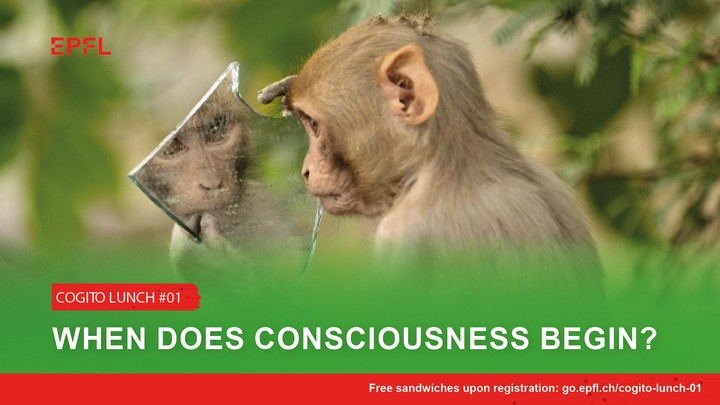
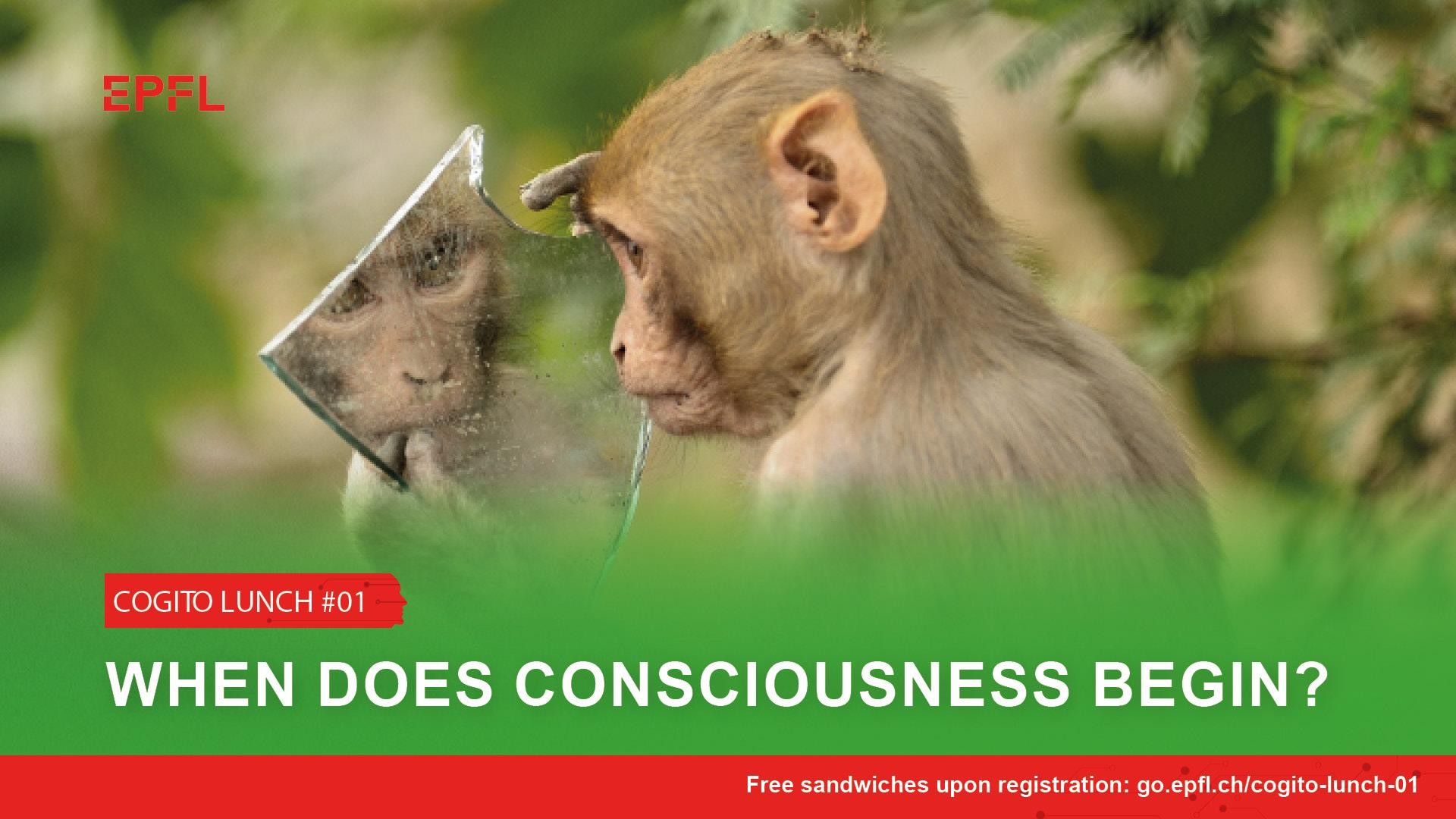
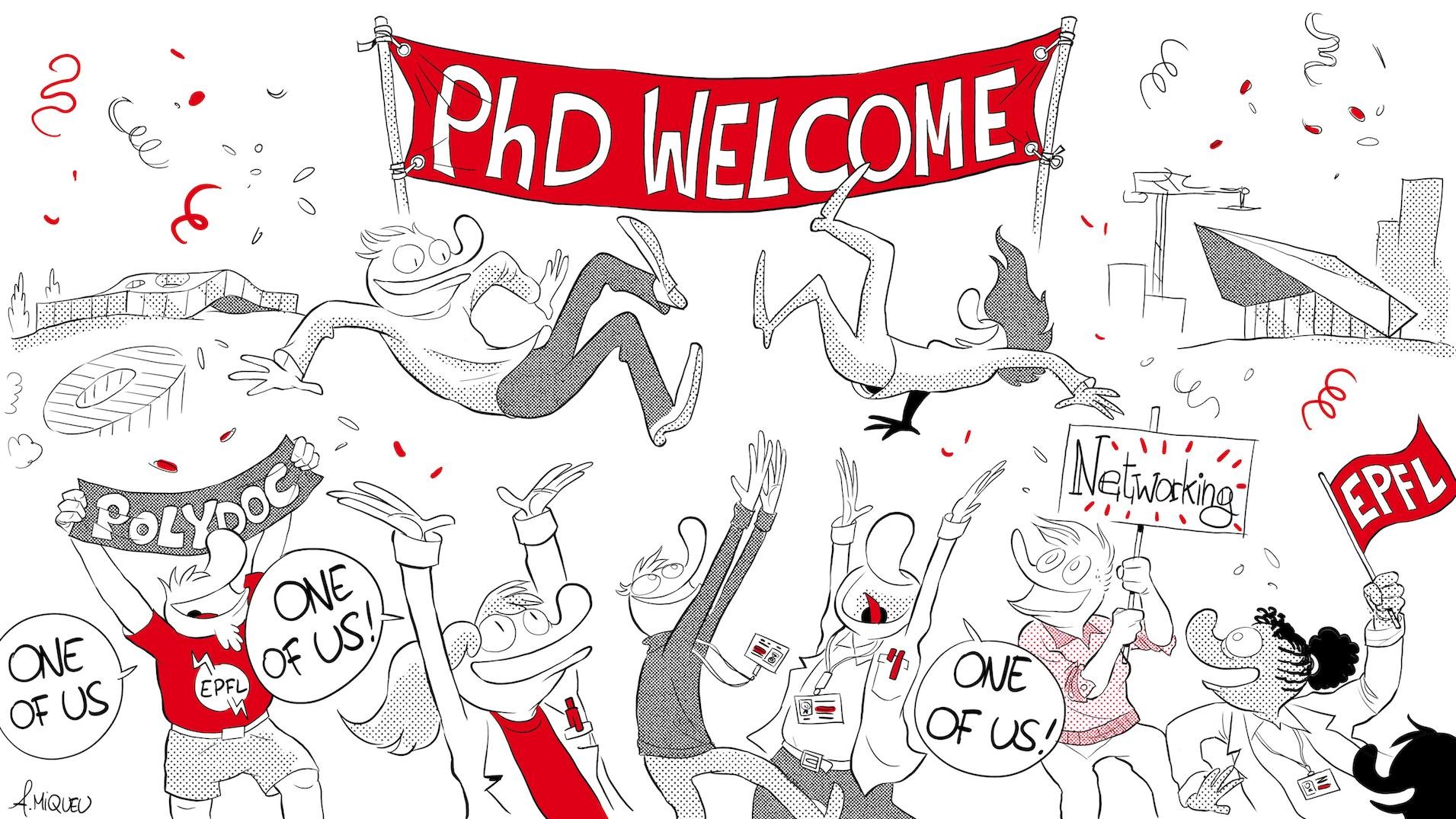
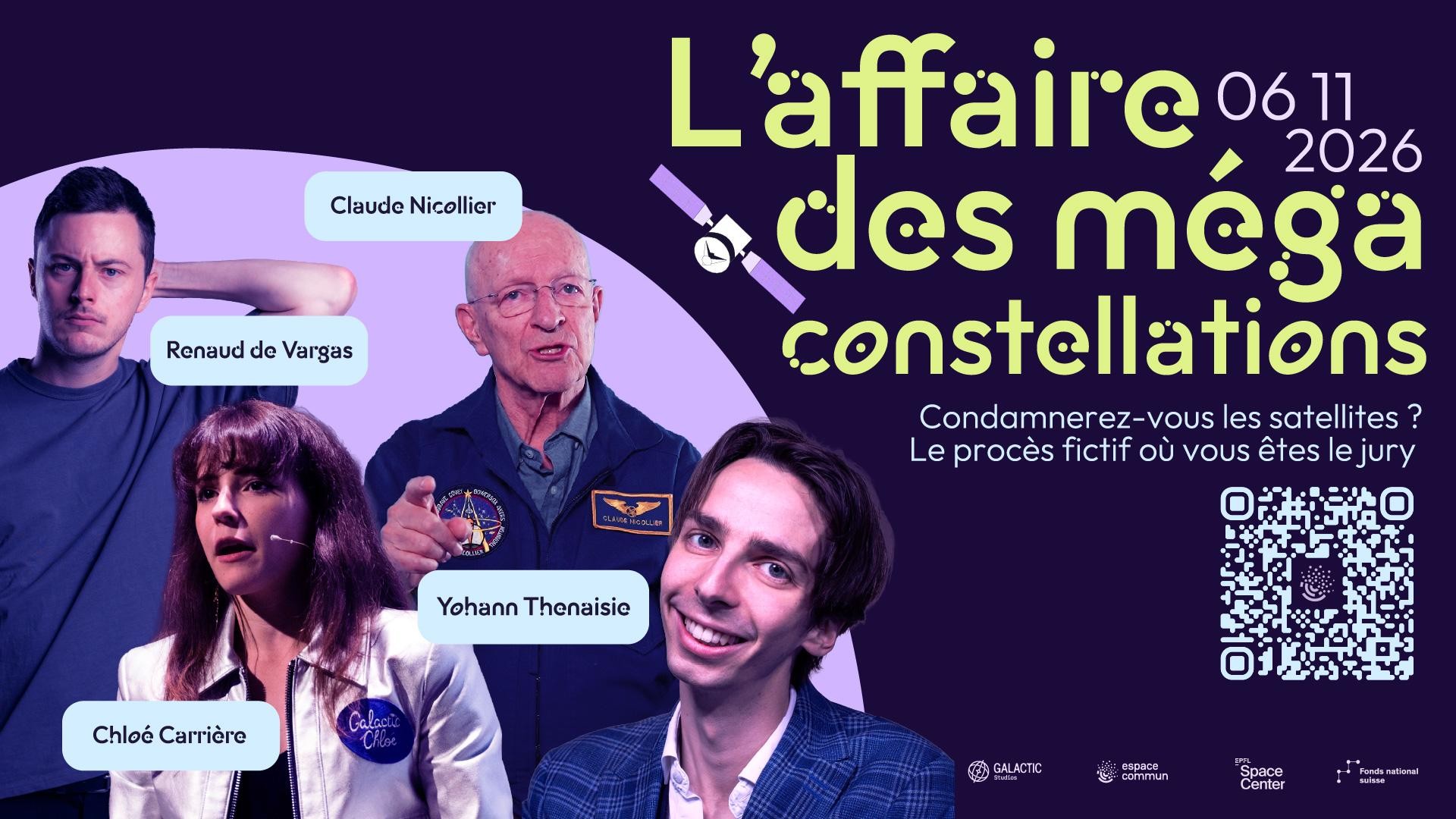
{ "count": 108, "next": "https://memento.epfl.ch/api/v1/mementos/8/events/?format=api&limit=10&offset=80&ordering=-en_label", "previous": "https://memento.epfl.ch/api/v1/mementos/8/events/?format=api&limit=10&offset=60&ordering=-en_label", "results": [ { "id": 72658, "title": "Sustainable Labs: Get Involved", "slug": "sustainable-labs-get-involved-9", "event_url": "https://memento.epfl.ch/event/sustainable-labs-get-involved-9", "visual_url": "https://memento.epfl.ch/image/33911/200x112.jpg", "visual_large_url": "https://memento.epfl.ch/image/33911/720x405.jpg", "visual_maxsize_url": "https://memento.epfl.ch/image/33911/max-size.jpg", "lang": "en", "start_date": "2026-11-03", "end_date": "2027-01-12", "start_time": "12:15:00", "end_time": "13:00:00", "description": "<br>\r\nThe <strong>EPFL Sustainable Labs team</strong> is pleased to welcome you to its recurring <strong>\"Sustainable Labs: Get Involved\"</strong> sessions. Held every week, alternating between <strong>Tuesdays and Thursdays</strong>, these sessions provide an opportunity for laboratories, platforms, centers, and units to receive guidance and support on implementing more sustainable laboratory practices.<br>\r\n<br>\r\nThe <strong>Sustainable Labs initiative</strong> is part of EPFL's <em>Climate & Sustainability Strategy 2030</em>, which aims to reduce greenhouse gas emissions by an average of <strong>40% compared to 2006/2019 levels</strong> and achieve <strong>climate neutrality by 2040</strong>.<br>\r\n<br>\r\n→<a href=\"https://www.epfl.ch/about/sustainability/sustainability/green-labs_draft_ag/\"> </a><strong><a href=\"https://www.epfl.ch/about/sustainability/sustainability/green-labs_draft_ag/\">Learn more about the EPFL Sustainable Labs initiative</a>.</strong><br>\r\n<br>\r\nResearch activities are a key lever for achieving these ambitious goals. However, while cutting-edge research drives innovation, it also carries a significant environmental footprint. Laboratories consume large amounts of energy, generate substantial quantities of plastic, chemical, and biological waste, and contribute considerably to greenhouse gas emissions. At EPFL, we are committed to understanding and reducing this impact. Through the development and deployment of the <strong>EPFL CO₂ Calculator</strong>, we help researchers measure, understand, and improve the environmental performance of their activities.<br>\r\n<br>\r\nFrom <strong>October 8 to December 17, 2026</strong>, the <strong>Sustainable Labs: Get Involved</strong> sessions will focus on training and supporting users in the use of the <strong>EPFL CO₂ Calculator</strong>. This tool enables laboratories, platforms, centers, and central units to estimate their carbon footprint, identify major emission hotspots, and support informed decision-making to reduce their environmental impact through targeted actions.<br>\r\n<br>\r\nHere are the planned sessions : \r\n<ul>\r\n\t<li>Thursday October 8th 12:15-13:00 (online) </li>\r\n\t<li>Tuesday October 13th 12:15-13:00 (MA A0 364)</li>\r\n\t<li>Thursday October 22th 12:15-13:00 (online) </li>\r\n\t<li>Tuesday October 27th 12:15-13:00 (MA A0 364)</li>\r\n\t<li>Thursday November 5th 12:15-13:00(online) </li>\r\n\t<li>Tuesday November 10th 12:15-13:00 (MA A0 364)</li>\r\n\t<li>Thursday November 19th 12:15-13:00 (online) </li>\r\n\t<li>Tuesday November 24th 12:15-13:00 (MA A0 364)</li>\r\n\t<li>Thursday December 3rd 12:15-13:00 (online) </li>\r\n\t<li>Tuesday December 8th 12:15-13:00 (MA A0 364)</li>\r\n\t<li>Thursday December 17th 12:15-13:00 (online) </li>\r\n</ul>\r\nSessions can be held in English and/ or French depending on the participants. <br>\r\n<br>\r\n→ Please register <a href=\"https://docs.google.com/forms/d/e/1FAIpQLSd7Cp6LevgtBLtsWIsKr2Ec_HPGjJgimmwEaGAN5U4M4-2rrg/viewform\">here</a>. For physical sessions, standing lunch will be provided!<br>\r\n<br>\r\nWhether you have questions about the EPFL CO₂ Calculator, need help interpreting your results, or would like advice on implementing more sustainable laboratory practices, our team will be happy to support you and answer your questions! <br>\r\n ", "image_description": "", "creation_date": "2026-09-23T10:53:52", "last_modification_date": "2026-09-23T10:53:51", "link_label": "", "link_url": "", "canceled": "True", "cancel_reason": "", "place_and_room": "MA A0 364", "url_place_and_room": "", "url_online_room": "https://epfl.zoom.us/j/63013630338", "spoken_languages": [ "https://memento.epfl.ch/api/v1/spoken_languages/1/?format=api", "https://memento.epfl.ch/api/v1/spoken_languages/2/?format=api" ], "speaker": "", "organizer": "Mai-Phuong Dinh", "contact": "[email protected] ", "is_internal": "True", "theme": "", "vulgarization": { "id": 1, "fr_label": "Tout public", "en_label": "General public" }, "registration": { "id": 3, "fr_label": "Entrée libre", "en_label": "Free" }, "keywords": "", "file": null, "icalendar_url": "https://memento.epfl.ch/event/export/121906/", "category": { "id": 15, "code": "FORM", "fr_label": "Formations internes", "en_label": "Internal trainings", "activated": true }, "academic_calendar_category": null, "domains": [], "mementos": [ "https://memento.epfl.ch/api/v1/mementos/1/?format=api", "https://memento.epfl.ch/api/v1/mementos/4/?format=api", "https://memento.epfl.ch/api/v1/mementos/5/?format=api", "https://memento.epfl.ch/api/v1/mementos/6/?format=api", "https://memento.epfl.ch/api/v1/mementos/8/?format=api", "https://memento.epfl.ch/api/v1/mementos/9/?format=api", "https://memento.epfl.ch/api/v1/mementos/79/?format=api" ] }, { "id": 72469, "title": "Trust, Sensing, and Learning for Provable Multi-Robot Performance", "slug": "trust-sensing-and-learning-for-provable-multi-robo", "event_url": "https://memento.epfl.ch/event/trust-sensing-and-learning-for-provable-multi-robo", "visual_url": "https://memento.epfl.ch/image/33717/200x112.jpg", "visual_large_url": "https://memento.epfl.ch/image/33717/720x405.jpg", "visual_maxsize_url": "https://memento.epfl.ch/image/33717/max-size.jpg", "lang": "en", "start_date": "2026-11-05", "end_date": "2026-11-05", "start_time": "11:00:00", "end_time": "12:00:00", "description": "<p>Multi-robot systems are physically embodied networks — they sense, move, and communicate through the physical world. The bar for safe decision-making rises as these systems enter safety-critical, real-world settings where they must perform well under uncertainty. Our work shows that physicality is a resource against the two kinds of uncertainty they face: intentional (or adversarial), where data is manipulated by malicious agents, and natural, where aspects of the environment are simply unknown. Most of this talk concerns intentional uncertainty. Here, one way to exploit physicality is by using communication as a sensor. Because the signals robots exchange are difficult to forge, they carry evidence that can be cross-validated to yield a quantifiable likelihood that an agent's data is trustworthy. This is the foundation of cy-trust, in which stochastic observations of trust model an agent's trustworthiness probabilistically from physical rather than cryptographic evidence. Each neighbor's contribution is then weighted by its trust value. Under this framework, we show that consensus, distributed optimization, and other core coordination tasks admit almost-sure convergence with bounded deviation from their nominal performance, even when malicious agents exceed half of a node's connectivity, past the classical Byzantine bound. We support this finding with both theory and hardware experiments under adversarial attack. Against natural uncertainty, we show that real-time sensing can be folded into rollout-based reinforcement learning, where the same machinery reweights futures rather than neighbors. We apply this idea to routing a fleet of robots to stochastically appearing demand and, with Project CETI, to the first autonomous robotic rendezvous with sperm whales at sea. Finally, we preview some of our future work combining trust with long-horizon sequential decision-making, targeting planning that stays provably resilient when the data informing the plan may itself be corrupted.<br>\r\n<br>\r\n<em>Stephanie Gil is the John L. Loeb Associate Professor of Engineering and Applied Sciences at Harvard University and an Associate Faculty member of the Kempner Institute. Her research focuses on trust and coordination in multi-robot systems, at the intersection of robotics, communication, and learning. Her contributions have been recognized through the DARPA Young Faculty Award (2024), the Office of Naval Research Young Investigator Award (2021), and the National Science Foundation CAREER Award (2019). She was named a 2020 Sloan Research Fellow for her work at the intersection of robotics and communication. She earned her Ph.D. at CSAIL at MIT, specializing in multi-robot coordination and control, and her B.S. at Cornell University.</em></p>", "image_description": "", "creation_date": "2026-08-31T09:19:27", "last_modification_date": "2026-09-03T18:05:52", "link_label": "", "link_url": "", "canceled": "False", "cancel_reason": "", "place_and_room": "MED 2 1124", "url_place_and_room": "https://plan.epfl.ch/?room==MED%202%201124", "url_online_room": "https://epfl.zoom.us/j/64474989189", "spoken_languages": [ "https://memento.epfl.ch/api/v1/spoken_languages/2/?format=api" ], "speaker": "<a href=\"https://www.linkedin.com/in/stephanie-gil/\">Stephanie Gil</a>", "organizer": "<a href=\"https://www.epfl.ch/research/domains/robotics/\">EPFL Robotics Center</a>", "contact": "<a href=\"https://people.epfl.ch/anca.rusu\">Anca Rusu</a>", "is_internal": "False", "theme": "", "vulgarization": { "id": 2, "fr_label": "Public averti", "en_label": "Informed public" }, "registration": { "id": 3, "fr_label": "Entrée libre", "en_label": "Free" }, "keywords": "", "file": null, "icalendar_url": "https://memento.epfl.ch/event/export/121626/", "category": { "id": 1, "code": "CONF", "fr_label": "Conférences - Séminaires", "en_label": "Conferences - Seminars", "activated": true }, "academic_calendar_category": null, "domains": [], "mementos": [ "https://memento.epfl.ch/api/v1/mementos/1/?format=api", "https://memento.epfl.ch/api/v1/mementos/6/?format=api", "https://memento.epfl.ch/api/v1/mementos/8/?format=api", "https://memento.epfl.ch/api/v1/mementos/417/?format=api" ] }, { "id": 69614, "title": "Cogito Lunch #01: When Does Consciousness Begin?", "slug": "cogito-lunch-01-when-does-consciousness-begin", "event_url": "https://memento.epfl.ch/event/cogito-lunch-01-when-does-consciousness-begin", "visual_url": "https://memento.epfl.ch/image/31112/200x112.jpg", "visual_large_url": "https://memento.epfl.ch/image/31112/720x405.jpg", "visual_maxsize_url": "https://memento.epfl.ch/image/31112/max-size.jpg", "lang": "en", "start_date": "2026-11-05", "end_date": "2026-11-05", "start_time": "12:15:00", "end_time": "13:15:00", "description": "<p>We are pleased to invite you to the first Cogito Lunch event, a new series building on the tradition of LUNCHenPHILO / L’heure H, those philosophical interludes that have been part of some of our lunch breaks since 2021.<br>\r\n<br>\r\nOrganized by the Vice-Presidency for Education (VPE), these sessions aim to foster dialogue between experts from various disciplines and the campus community, particularly students. We hope, therefore, to explore ideas and questions that stimulate our imagination, challenge our sensibilities, and shed light on our fears and expectations. The discussions will be moderated by journalist Anne Laure Gannac. <br>\r\n<br>\r\n<strong>For the session on Thursday, November 5</strong>, we’ll tackle a question that is as fascinating as it is mind-boggling: “When does consciousness begin?” Neuroscience, machine learning, and the humanities will come together to try to answer it.<br>\r\n<br>\r\n<strong>The discussion is open with:</strong>\r\n</p><ul>\r\n\t<li><strong><a href=\"https://www.epfl.ch/labs/lpsy/team/herzog/\">Michael Herzog</a></strong>, Professor in behavioral and cognitive neuroscience, EPFL</li>\r\n\t<li><strong><a href=\"https://people.epfl.ch/amir.zamir\">Amir Zamir</a></strong>, Professor in AI and machine Learning, EPFL</li>\r\n\t<li><strong><a href=\"https://people.epfl.ch/andre.ourednik\">André Ourednik</a></strong>, Geographer, fiction writer, and lecturer at EPFL</li>\r\n</ul>\r\n<strong>Moderation:</strong> <a href=\"https://people.epfl.ch/anne-laure.gannac/?lang=fr\">Anne Laure Gannac</a>, journalist at the RTS.<br>\r\n<br>\r\nThis event can also be followed live or recorded on our <strong>YouTube</strong> channel.<br>\r\n<br>\r\n<iframe allow=\";\" allowfullscreen=\"\" frameborder=\"0\" height=\"360\" src=\"https://www.youtube.com/embed/rRbMx6qgTFE?rel=0\" width=\"640\"></iframe><br>\r\n<br>\r\n<a href=\"https://docs.google.com/forms/d/e/1FAIpQLSd2dMMm1l72aWl6XOmO2mFeXU9WRBAvafNVQdO6_USkCBNo-w/viewform?usp=header\"><strong>> Free lunch on registration</strong></a>", "image_description": "", "creation_date": "2025-08-20T16:41:38", "last_modification_date": "2026-10-07T14:32:26", "link_label": "Registration form", "link_url": "http://docs.google.com/forms/d/e/1FAIpQLScwbk8Www4ZqIXHyDpJW3iJ3GbNlDTTKVw8ZkyM_4w-PfyoLQ/viewform?usp=publish-editor", "canceled": "False", "cancel_reason": "", "place_and_room": "Rolex Learning Center", "url_place_and_room": "https://plan.epfl.ch/?room==RLC%20G1%20350", "url_online_room": "", "spoken_languages": [ "https://memento.epfl.ch/api/v1/spoken_languages/1/?format=api", "https://memento.epfl.ch/api/v1/spoken_languages/2/?format=api" ], "speaker": "<a href=\"https://www.epfl.ch/labs/lpsy/team/herzog/\">Michael Herzog</a>, Professor in behavioral and cognitive neuroscience, EPFL; <a href=\"https://people.epfl.ch/amir.zamir\">Amir Zamir</a>, Professor in AI and machine Learning, EPFL and <a href=\"https://people.epfl.ch/andre.ourednik\">André Ourednik</a>, Geographer, fiction writer, and lecturer at EPFL.", "organizer": "<a href=\"https://www.epfl.ch/education/programme-shs/\">EPFL Social Science and Humanities (SHS) Program</a>", "contact": "<a href=\"https://people.epfl.ch/virginie.martin-nunez\">Virginie Martin</a>", "is_internal": "False", "theme": "", "vulgarization": { "id": 1, "fr_label": "Tout public", "en_label": "General public" }, "registration": { "id": 1, "fr_label": "Sur inscription", "en_label": "Registration required" }, "keywords": "Philosophy, ethics, AI, humanities, machine learning", "file": null, "icalendar_url": "https://memento.epfl.ch/event/export/117350/", "category": { "id": 1, "code": "CONF", "fr_label": "Conférences - Séminaires", "en_label": "Conferences - Seminars", "activated": true }, "academic_calendar_category": null, "domains": [], "mementos": [ "https://memento.epfl.ch/api/v1/mementos/1/?format=api", "https://memento.epfl.ch/api/v1/mementos/2/?format=api", "https://memento.epfl.ch/api/v1/mementos/3/?format=api", "https://memento.epfl.ch/api/v1/mementos/6/?format=api", "https://memento.epfl.ch/api/v1/mementos/8/?format=api", "https://memento.epfl.ch/api/v1/mementos/21/?format=api", "https://memento.epfl.ch/api/v1/mementos/22/?format=api", "https://memento.epfl.ch/api/v1/mementos/27/?format=api", "https://memento.epfl.ch/api/v1/mementos/123/?format=api", "https://memento.epfl.ch/api/v1/mementos/140/?format=api", "https://memento.epfl.ch/api/v1/mementos/145/?format=api", "https://memento.epfl.ch/api/v1/mementos/162/?format=api", "https://memento.epfl.ch/api/v1/mementos/175/?format=api" ] }, { "id": 72397, "title": "Training \"Ethics in Research Data Management: Anonymization and Best Practices\"", "slug": "training-ethics-in-research-data-management-anon-5", "event_url": "https://memento.epfl.ch/event/training-ethics-in-research-data-management-anon-5", "visual_url": "https://memento.epfl.ch/image/33648/200x112.jpg", "visual_large_url": "https://memento.epfl.ch/image/33648/720x405.jpg", "visual_maxsize_url": "https://memento.epfl.ch/image/33648/max-size.jpg", "lang": "en", "start_date": "2026-11-05", "end_date": "2026-11-05", "start_time": "15:00:00", "end_time": "16:30:00", "description": "<div class=\"all_text\">\r\n<div class=\"all_text\"><strong>Ethical-driven practices in data management are crucial for maintaining research integrity, protecting privacy, and collaborate with research partners, and fostering trust in research outputs. </strong><br>\r\n<br>\r\nThis short training focuses on the practices of ethical data management and the adoption of anonymization techniques for compliance with data protection laws.<br>\r\nThrough interactive discussions and case studies, participants will learn to:\r\n<ul>\r\n\t<li>Address ethical challenges in data collection and management in compliance with Swiss and European laws</li>\r\n\t<li>Understand how anonymization techniques and responsible data handling can protect subjects’ privacy</li>\r\n\t<li>Strengthen research integrity by applying best practices in everyday data management workflows.</li>\r\n</ul>\r\nWith a dedicated Q&A session featuring the EPFL Research Ethics Compliance Officer<strong> </strong>and Senior Legal Counsel for Education and Research, you will also have the occasion to discuss the ethical and related technical dimensions of managing your research data.<br>\r\nWhile not mandatory, basic knowledge of Research Data Management is recommended: for an introductory training, please register for the workshop <a href=\"https://bookwhen.com/fr/epfl_library/e/ev-s9esg-20260903150000\">ABC of Research Data Management.</a><br>\r\n<br>\r\n<a href=\"https://bookwhen.com/fr/epfl_library/e/ev-swksv-20261105150000\">Registration</a><br>\r\n<br>\r\nMore information about <a href=\"https://www.epfl.ch/campus/library/training/\">EPFL Library Training offer</a></div>\r\n</div>", "image_description": "", "creation_date": "2026-08-20T10:18:36", "last_modification_date": "2026-08-27T16:22:39", "link_label": "Registration", "link_url": "https://bookwhen.com/fr/epfl_library/e/ev-swksv-20261105150000", "canceled": "False", "cancel_reason": "", "place_and_room": "AAC 0 08", "url_place_and_room": "https://plan.epfl.ch/?room==AAC%200%2008", "url_online_room": "", "spoken_languages": [ "https://memento.epfl.ch/api/v1/spoken_languages/2/?format=api" ], "speaker": "EPFL Library Research Data Team", "organizer": "EPFL Library", "contact": "[email protected]", "is_internal": "False", "theme": "", "vulgarization": { "id": 1, "fr_label": "Tout public", "en_label": "General public" }, "registration": { "id": 1, "fr_label": "Sur inscription", "en_label": "Registration required" }, "keywords": "", "file": null, "icalendar_url": "https://memento.epfl.ch/event/export/121518/", "category": { "id": 15, "code": "FORM", "fr_label": "Formations internes", "en_label": "Internal trainings", "activated": true }, "academic_calendar_category": null, "domains": [], "mementos": [ "https://memento.epfl.ch/api/v1/mementos/1/?format=api", "https://memento.epfl.ch/api/v1/mementos/3/?format=api", "https://memento.epfl.ch/api/v1/mementos/5/?format=api", "https://memento.epfl.ch/api/v1/mementos/6/?format=api", "https://memento.epfl.ch/api/v1/mementos/8/?format=api", "https://memento.epfl.ch/api/v1/mementos/145/?format=api", "https://memento.epfl.ch/api/v1/mementos/269/?format=api", "https://memento.epfl.ch/api/v1/mementos/275/?format=api", "https://memento.epfl.ch/api/v1/mementos/291/?format=api" ] }, { "id": 72014, "title": "PhD Candidates: Welcome to EPFL!", "slug": "phd-candidates-welcome-to-epfl-3", "event_url": "https://memento.epfl.ch/event/phd-candidates-welcome-to-epfl-3", "visual_url": "https://memento.epfl.ch/image/33308/200x112.jpg", "visual_large_url": "https://memento.epfl.ch/image/33308/720x405.jpg", "visual_maxsize_url": "https://memento.epfl.ch/image/33308/max-size.jpg", "lang": "en", "start_date": "2026-11-05", "end_date": "2026-11-05", "start_time": "16:00:00", "end_time": "19:00:00", "description": "<p>The Doctoral School is glad to invite all first-year PhD candidates to join the annual <a href=\"https://www.epfl.ch/education/phd/events/phd-welcome-event/\">PhD Welcome Event</a>!<br>\r\n<br>\r\nWhat to expect:<br>\r\n- Meet the EPFL doctoral community, the administrators of the doctoral school and programs, the PhD associations<br>\r\n- Discover the many EPFL services dedicated to supporting and counseling students and researchers<br>\r\n- Get useful insights about your doctoral journey at EPFL, and the resources available to help you<br>\r\n- Enjoy free food & drinks, and connect with PhD candidates from all our programs and campuses!<br>\r\n<br>\r\nWho is it for?<br>\r\n- The event is open to EPFL PhD candidates who enrolled after November 2025. Registration is required.<br>\r\n<br>\r\nPhD candidates working outside Lausanne are especially encouraged to join. This event is a golden opportunity to discover the Lausanne campus and meet your peers! You may request travel support: please contact us via the registration form.<br>\r\n<br>\r\n<a href=\"https://forms.office.com/e/f2HkZ7HHAK\">Direct link to the registration form</a><br>\r\n<br>\r\nWe look forward to meeting you on November 5th!<br>\r\n<br>\r\nThe Doctoral School Administration Team (EDOC)<br>\r\n </p>", "image_description": "", "creation_date": "2026-06-02T15:06:45", "last_modification_date": "2026-06-09T11:31:23", "link_label": "REGISTRATION FORM", "link_url": "https://forms.office.com/e/f2HkZ7HHAK", "canceled": "False", "cancel_reason": "", "place_and_room": "RLC E1 240", "url_place_and_room": "https://plan.epfl.ch/?room==RLC%20E1%20240", "url_online_room": "", "spoken_languages": [ "https://memento.epfl.ch/api/v1/spoken_languages/2/?format=api" ], "speaker": "", "organizer": "The EPFL Doctoral School", "contact": "<a href=\"mailto:[email protected]?subject=Question%20about%20the%20PhD%20Welcome%20event\">Lucia Baldi</a>", "is_internal": "True", "theme": "", "vulgarization": { "id": 2, "fr_label": "Public averti", "en_label": "Informed public" }, "registration": { "id": 1, "fr_label": "Sur inscription", "en_label": "Registration required" }, "keywords": "PhD Welcome", "file": null, "icalendar_url": "https://memento.epfl.ch/event/export/120952/", "category": { "id": 20, "code": "convention", "fr_label": "Congrès", "en_label": "Convention", "activated": true }, "academic_calendar_category": null, "domains": [], "mementos": [ "https://memento.epfl.ch/api/v1/mementos/1/?format=api", "https://memento.epfl.ch/api/v1/mementos/3/?format=api", "https://memento.epfl.ch/api/v1/mementos/4/?format=api", "https://memento.epfl.ch/api/v1/mementos/5/?format=api", "https://memento.epfl.ch/api/v1/mementos/6/?format=api", "https://memento.epfl.ch/api/v1/mementos/8/?format=api", "https://memento.epfl.ch/api/v1/mementos/9/?format=api", "https://memento.epfl.ch/api/v1/mementos/21/?format=api", "https://memento.epfl.ch/api/v1/mementos/27/?format=api", "https://memento.epfl.ch/api/v1/mementos/110/?format=api", "https://memento.epfl.ch/api/v1/mementos/145/?format=api", "https://memento.epfl.ch/api/v1/mementos/275/?format=api", "https://memento.epfl.ch/api/v1/mementos/318/?format=api", "https://memento.epfl.ch/api/v1/mementos/396/?format=api", "https://memento.epfl.ch/api/v1/mementos/425/?format=api" ] }, { "id": 72651, "title": "Sustainable Labs: Get Involved", "slug": "sustainable-labs-get-involved-8", "event_url": "https://memento.epfl.ch/event/sustainable-labs-get-involved-8", "visual_url": "https://memento.epfl.ch/image/33911/200x112.jpg", "visual_large_url": "https://memento.epfl.ch/image/33911/720x405.jpg", "visual_maxsize_url": "https://memento.epfl.ch/image/33911/max-size.jpg", "lang": "en", "start_date": "2026-11-05", "end_date": "2027-01-14", "start_time": "12:15:00", "end_time": "13:00:00", "description": "<br>\r\nThe <strong>EPFL Sustainable Labs team</strong> is pleased to welcome you to its recurring <strong>\"Sustainable Labs: Get Involved\"</strong> sessions. Held every week, alternating between <strong>Tuesdays and Thursdays</strong>, these sessions provide an opportunity for laboratories, platforms, centers, and units to receive guidance and support on implementing more sustainable laboratory practices.<br>\r\n<br>\r\nThe <strong>Sustainable Labs initiative</strong> is part of EPFL's <em>Climate & Sustainability Strategy 2030</em>, which aims to reduce greenhouse gas emissions by an average of <strong>40% compared to 2006/2019 levels</strong> and achieve <strong>climate neutrality by 2040</strong>.<br>\r\n<br>\r\n→<a href=\"https://www.epfl.ch/about/sustainability/sustainability/green-labs_draft_ag/\"> </a><strong><a href=\"https://www.epfl.ch/about/sustainability/sustainability/green-labs_draft_ag/\">Learn more about the EPFL Sustainable Labs initiative</a>.</strong><br>\r\n<br>\r\nResearch activities are a key lever for achieving these ambitious goals. However, while cutting-edge research drives innovation, it also carries a significant environmental footprint. Laboratories consume large amounts of energy, generate substantial quantities of plastic, chemical, and biological waste, and contribute considerably to greenhouse gas emissions. At EPFL, we are committed to understanding and reducing this impact. Through the development and deployment of the <strong>EPFL CO₂ Calculator</strong>, we help researchers measure, understand, and improve the environmental performance of their activities.<br>\r\n<br>\r\nFrom <strong>October 8 to December 17, 2026</strong>, the <strong>Sustainable Labs: Get Involved</strong> sessions will focus on training and supporting users in the use of the <strong>EPFL CO₂ Calculator</strong>. This tool enables laboratories, platforms, centers, and central units to estimate their carbon footprint, identify major emission hotspots, and support informed decision-making to reduce their environmental impact through targeted actions.<br>\r\n<br>\r\nHere are the planned sessions : \r\n<ul>\r\n\t<li>Thursday October 8th 12:15-13:00 (online) </li>\r\n\t<li>Tuesday October 13th 12:15-13:00 (MA A0 364)</li>\r\n\t<li>Thursday October 22th 12:15-13:00 (online) </li>\r\n\t<li>Tuesday October 27th 12:15-13:00 (MA A0 364)</li>\r\n\t<li>Thursday November 5th 12:15-13:00(online) </li>\r\n\t<li>Tuesday November 10th 12:15-13:00 (MA A0 364)</li>\r\n\t<li>Thursday November 19th 12:15-13:00 (online) </li>\r\n\t<li>Tuesday November 24th 12:15-13:00 (MA A0 364)</li>\r\n\t<li>Thursday December 3rd 12:15-13:00 (online) </li>\r\n\t<li>Tuesday December 8th 12:15-13:00 (MA A0 364)</li>\r\n\t<li>Thursday December 17th 12:15-13:00 (online) </li>\r\n</ul>\r\nSessions can be held in English and/ or French depending on the participants. <br>\r\n<br>\r\n→ Please register <a href=\"https://docs.google.com/forms/d/e/1FAIpQLSd7Cp6LevgtBLtsWIsKr2Ec_HPGjJgimmwEaGAN5U4M4-2rrg/viewform\">here</a>. For physical sessions, standing lunch will be provided!<br>\r\n<br>\r\nWhether you have questions about the EPFL CO₂ Calculator, need help interpreting your results, or would like advice on implementing more sustainable laboratory practices, our team will be happy to support you and answer your questions! <br>\r\n ", "image_description": "", "creation_date": "2026-09-23T10:53:52", "last_modification_date": "2026-09-23T10:53:51", "link_label": "", "link_url": "", "canceled": "False", "cancel_reason": "", "place_and_room": "MA A0 364", "url_place_and_room": "", "url_online_room": "https://epfl.zoom.us/j/63013630338", "spoken_languages": [ "https://memento.epfl.ch/api/v1/spoken_languages/1/?format=api", "https://memento.epfl.ch/api/v1/spoken_languages/2/?format=api" ], "speaker": "", "organizer": "Mai-Phuong Dinh", "contact": "[email protected] ", "is_internal": "True", "theme": "", "vulgarization": { "id": 1, "fr_label": "Tout public", "en_label": "General public" }, "registration": { "id": 3, "fr_label": "Entrée libre", "en_label": "Free" }, "keywords": "", "file": null, "icalendar_url": "https://memento.epfl.ch/event/export/121899/", "category": { "id": 15, "code": "FORM", "fr_label": "Formations internes", "en_label": "Internal trainings", "activated": true }, "academic_calendar_category": null, "domains": [], "mementos": [ "https://memento.epfl.ch/api/v1/mementos/1/?format=api", "https://memento.epfl.ch/api/v1/mementos/4/?format=api", "https://memento.epfl.ch/api/v1/mementos/5/?format=api", "https://memento.epfl.ch/api/v1/mementos/6/?format=api", "https://memento.epfl.ch/api/v1/mementos/8/?format=api", "https://memento.epfl.ch/api/v1/mementos/9/?format=api", "https://memento.epfl.ch/api/v1/mementos/79/?format=api" ] }, { "id": 72451, "title": "L'Affaire des Méga-constellations", "slug": "l-affaire-des-mega-constellations", "event_url": "https://memento.epfl.ch/event/l-affaire-des-mega-constellations", "visual_url": "https://memento.epfl.ch/image/33699/200x112.jpg", "visual_large_url": "https://memento.epfl.ch/image/33699/720x405.jpg", "visual_maxsize_url": "https://memento.epfl.ch/image/33699/max-size.jpg", "lang": "en", "start_date": "2026-11-06", "end_date": "2026-11-06", "start_time": "20:00:00", "end_time": "22:00:00", "description": "<strong>L'espace s'invite au tribunal! Les satellites sauveront-ils le monde ou le rendront-ils invivable? C'est à VOUS d'en décider.</strong><br>\r\n <br>\r\nRejoignez le public qui officiera comme jurés de « L'Affaire des Méga-constellations », un tribunal fictif et participatif où l'accusé n'est autre qu'un concept: les méga-constellations de satellites. L’événement mêlera humour, improvisation, vulgarisation scientifique et participation citoyenne, autour d'une question centrale : les satellites sauveront-ils le monde… ou le rendront-ils invivable?<br>\r\n <br>\r\nAvec <a href=\"https://www.instagram.com/renauddevargas/?hl=fr\">Renaud de Vargas</a> dans le rôle du Juge impartial, Chloé Carrière à la défense, Yohann Thenaisie à l'accusation, des expert-e-s de la durabilité et du spatial pour témoins et l’astronaute Claude Nicollier en guest star cosmique !<br>\r\nMise en scène: Claire Nicolas / Musique: Loris Gomboso<br>\r\n <br>\r\nPour en savoir plus sur le projet, qui est à la base de cet événement et initié par l'<a href=\"https://space.epfl.ch/\">EPFL Space Center</a> et <a href=\"https://galactic-studios.ch/\">Galactic Studios</a>, avec le soutien du FNS: <a href=\"https://espace-commun.ch/\">Espace Commun</a>", "image_description": "Bannière L'Affaire des Méga-constellations", "creation_date": "2026-08-26T16:05:13", "last_modification_date": "2026-09-03T14:20:39", "link_label": "Billetterie", "link_url": "https://infomaniak.events/fr-ch/shop/espace-commun-K5SBZADWWJ", "canceled": "False", "cancel_reason": "", "place_and_room": "Casino de Montbenon - salle Paderewski, Lausanne", "url_place_and_room": "https://www.lausanne.ch/vie-pratique/loisirs/salles-et-refuges/casino-montbenon", "url_online_room": "", "spoken_languages": [ "https://memento.epfl.ch/api/v1/spoken_languages/1/?format=api" ], "speaker": "", "organizer": "<a href=\"https://space.epfl.ch/\">EPFL Space Center</a>, <a href=\"https://galactic-studios.ch/\">Galactic Studios</a>", "contact": "Lucie Ryser", "is_internal": "False", "theme": "", "vulgarization": { "id": 1, "fr_label": "Tout public", "en_label": "General public" }, "registration": { "id": 1, "fr_label": "Sur inscription", "en_label": "Registration required" }, "keywords": "mega-constellation, satellite, durabilité spatiale", "file": null, "icalendar_url": "https://memento.epfl.ch/event/export/121600/", "category": { "id": 9, "code": "MANIF", "fr_label": "Événements festifs et culturels", "en_label": "Cultural events", "activated": true }, "academic_calendar_category": null, "domains": [], "mementos": [ "https://memento.epfl.ch/api/v1/mementos/1/?format=api", "https://memento.epfl.ch/api/v1/mementos/3/?format=api", "https://memento.epfl.ch/api/v1/mementos/5/?format=api", "https://memento.epfl.ch/api/v1/mementos/6/?format=api", "https://memento.epfl.ch/api/v1/mementos/8/?format=api", "https://memento.epfl.ch/api/v1/mementos/21/?format=api", "https://memento.epfl.ch/api/v1/mementos/22/?format=api", "https://memento.epfl.ch/api/v1/mementos/79/?format=api", "https://memento.epfl.ch/api/v1/mementos/145/?format=api", "https://memento.epfl.ch/api/v1/mementos/179/?format=api", "https://memento.epfl.ch/api/v1/mementos/442/?format=api" ] }, { "id": 72290, "title": "Technologies for Healthcare / ARCHIZOOM", "slug": "technologies-for-healthcare-archizoom", "event_url": "https://memento.epfl.ch/event/technologies-for-healthcare-archizoom", "visual_url": "https://memento.epfl.ch/image/33556/200x112.jpg", "visual_large_url": "https://memento.epfl.ch/image/33556/720x405.jpg", "visual_maxsize_url": "https://memento.epfl.ch/image/33556/max-size.jpg", "lang": "en", "start_date": "2026-11-07", "end_date": "2026-11-08", "start_time": "10:00:00", "end_time": "17:00:00", "description": "<strong>Saturday 7 & Sunday 8 November 2026</strong><br>\r\n<strong>10am-5pm –</strong> <strong>exhibition open continuously </strong><br>\r\n<br>\r\nOn the occasion of the next <a href=\"https://scientastic.epfl.ch/\">Scientastic</a> event, which takes place on the weekend of 7 and 8 November 2026 on the EPFL campus, with a focus on health technologies, Archizoom invites you to take part in a range of activities linked to the exhibition <a href=\"https://www.epfl.ch/campus/art-culture/museum-exhibitions/archizoom/do-robots-dream-of-construction-sites-2/\"><em>Do Robots Dream of Construction Sites? </em></a><br>\r\n<br>\r\n<strong><a href=\"https://forms.gle/8mG39FYernNXnsJG6\">GUIDED TOURS </a><br>\r\n11am / 4pm – </strong><strong><em>Do Robots Dream of Construction Sites? </em>in French</strong><br>\r\nCan we trust a robot on a building site? This guided tour explores what it means to build alongside increasingly capable machines, and how collaboration between humans and robots could affect our buildings, our trades and, by extension, our daily lives and health.<br>\r\n<br>\r\n<em><strong>SOCIAL CONTRACT 4.0, </strong></em><strong>MADELINE GANNON</strong><br>\r\n<strong>10am-5pm – an interactive robotic installation by the artist Madeline Gannon</strong><br>\r\nThe robots that build our world do exactly what they are told, when they are told, where they are told. But that relationship is ending: physical AI is giving our machines the intelligence to explore our world for themselves. What should they do with their newfound curiosity? This installation explores a new social contract with autonomous, intelligent systems (4.0) — one built on convincing, not controlling, machines. As you approach, the machine may choose to interact with you, or it may be too busy having fun on its own. It gets to decide. This work asks what it means to share a world with technology whose trust we may need to earn first.", "image_description": "", "creation_date": "2026-08-03T09:25:54", "last_modification_date": "2026-08-03T09:25:56", "link_label": "Plus d'informations", "link_url": "https://www.epfl.ch/campus/art-culture/museum-exhibitions/archizoom/fr/scientastic-2/", "canceled": "False", "cancel_reason": "", "place_and_room": "Archizoom", "url_place_and_room": "https://plan.epfl.ch/?room==SG%201212", "url_online_room": "", "spoken_languages": [ "https://memento.epfl.ch/api/v1/spoken_languages/1/?format=api", "https://memento.epfl.ch/api/v1/spoken_languages/2/?format=api" ], "speaker": "Madeline Gannon", "organizer": "Archizoom, Scientastic", "contact": "Cyril Veillon, Solène Hoffmann", "is_internal": "False", "theme": "", "vulgarization": { "id": 1, "fr_label": "Tout public", "en_label": "General public" }, "registration": { "id": 3, "fr_label": "Entrée libre", "en_label": "Free" }, "keywords": "architecture, science, techonology, health, robots, robotics, durability", "file": null, "icalendar_url": "https://memento.epfl.ch/event/export/121351/", "category": { "id": 9, "code": "MANIF", "fr_label": "Événements festifs et culturels", "en_label": "Cultural events", "activated": true }, "academic_calendar_category": null, "domains": [], "mementos": [ "https://memento.epfl.ch/api/v1/mementos/32/?format=api", "https://memento.epfl.ch/api/v1/mementos/1/?format=api", "https://memento.epfl.ch/api/v1/mementos/4/?format=api", "https://memento.epfl.ch/api/v1/mementos/6/?format=api", "https://memento.epfl.ch/api/v1/mementos/8/?format=api", "https://memento.epfl.ch/api/v1/mementos/45/?format=api", "https://memento.epfl.ch/api/v1/mementos/145/?format=api", "https://memento.epfl.ch/api/v1/mementos/21/?format=api", "https://memento.epfl.ch/api/v1/mementos/22/?format=api", "https://memento.epfl.ch/api/v1/mementos/417/?format=api" ] }, { "id": 72571, "title": "IMX Colloquium - Designer Quantum Materials from Carbon", "slug": "imx-colloquium-designer-quantum-materials-from-c-2", "event_url": "https://memento.epfl.ch/event/imx-colloquium-designer-quantum-materials-from-c-2", "visual_url": "https://memento.epfl.ch/image/33820/200x112.jpg", "visual_large_url": "https://memento.epfl.ch/image/33820/720x405.jpg", "visual_maxsize_url": "https://memento.epfl.ch/image/33820/max-size.jpg", "lang": "en", "start_date": "2026-11-09", "end_date": "2026-11-09", "start_time": "13:15:00", "end_time": "14:15:00", "description": "<p>Atomically precise carbon nanostructures offer a new route to quantum systems built from the bottom up. By combining molecular design, on-surface synthesis and scanning probe microscopy, we can control atomic structure, electronic states and magnetic interactions within the same platform.<br>\r\nIn this talk, I will follow the path from bottom-up synthesized graphene nanoribbons [1,2] to open-shell nanographenes [3] and designer quantum spin systems [4]. I will discuss how atomic structure can determine electronic topology and how molecular spins can be coupled into well-defined quantum chains. Recent examples include Haldane chains [4], alternating-exchange spin chains [5] and antiferromagnetic Heisenberg chains [6], where collective and fractional excitations can be probed directly at the atomic scale.<br>\r\nMore broadly, this work illustrates a materials-science strategy in which structure, functionality and interactions are programmed at the level of molecular building blocks. Rather than optimizing properties in an existing material, the aim is to design the material and its quantum behavior together. Atomically precise carbon nanostructures therefore provide a model platform for exploring how synthesis, structure and emergent functionality can be linked in a predictive way, with implications for the future design of low-dimensional electronic, magnetic and quantum materials.\r\n</p><ol>\r\n\t<li>J. Cai, P. Ruffieux, R. Jaafar, <em>et al.</em>, <em>Nature</em> <strong>466</strong>, 470–473 (2010).</li>\r\n\t<li>F. Xiang, Y. Gu, A. Kinikar, <em>et al.</em>, <em>Nat. Chem</em>. <strong>17</strong>, 1356–1363 (2025).</li>\r\n\t<li>S. Mishra, D. Beyer, K. Eimre, <em>et al</em>., <em>Nat. </em><em>Nanotechnol</em>. <strong>15</strong>, 22–28 (2020).</li>\r\n\t<li>S. Mishra, G. Catarina, F. Wu, <em>et al</em>., <em>Nature</em> <strong>598</strong>, 287–292 (2021).</li>\r\n\t<li>C. Zhao, G. Catarina, J.-J. Zhang, <em>et al</em>., <em>Nat. </em><em>Nanotechnol</em>. <strong>19</strong>, 1789-1795<strong> </strong>(2024).</li>\r\n\t<li>C. Zhao, L. Yang, J. C. G. Henriques, <em>et al</em>., <em>Nat. Mater.</em> <strong>24,</strong> 722–727 (2025).</li>\r\n</ol>\r\nBio: Roman Fasel is a leading scientist in the field of atomically precise carbon nanostructures and surface-based quantum materials. He received his Ph.D. in Physics from the University of Fribourg in 1996 and then carried out postdoctoral research at La Trobe University in Melbourne and the Fritz Haber Institute in Berlin before joining Empa. Today, he heads Empa’s nanotech@surfaces Laboratory and is Adjunct Professor at the University of Bern. He pioneered the bottom-up synthesis of graphene nanoribbons, establishing on-surface synthesis as a major new direction in nanoscience, and has since extended this work to topological states, open-shell nanographenes and quantum spin chains.", "image_description": "", "creation_date": "2026-09-14T10:43:28", "last_modification_date": "2026-09-14T10:43:41", "link_label": "Website", "link_url": "https://www.empa.ch/web/s205/roman-fasel", "canceled": "False", "cancel_reason": "", "place_and_room": "MXF 1", "url_place_and_room": "https://plan.epfl.ch/?room==MXF%201", "url_online_room": "", "spoken_languages": [ "https://memento.epfl.ch/api/v1/spoken_languages/2/?format=api" ], "speaker": "Prof. Roman Fasel, EMPA, Zürich", "organizer": "Prof. Gregor Jotzu, Prof. Esther Amstad & Prof. Fabien Sorin", "contact": "Prof. Gregor Jotzu, Prof. Esther Amstad & Prof. Fabien Sorin", "is_internal": "False", "theme": "", "vulgarization": { "id": 1, "fr_label": "Tout public", "en_label": "General public" }, "registration": { "id": 3, "fr_label": "Entrée libre", "en_label": "Free" }, "keywords": "", "file": null, "icalendar_url": "https://memento.epfl.ch/event/export/121785/", "category": { "id": 1, "code": "CONF", "fr_label": "Conférences - Séminaires", "en_label": "Conferences - Seminars", "activated": true }, "academic_calendar_category": null, "domains": [], "mementos": [ "https://memento.epfl.ch/api/v1/mementos/8/?format=api", "https://memento.epfl.ch/api/v1/mementos/314/?format=api" ] }, { "id": 72728, "title": "When Control Changes the Data: Safety under Interaction-Driven Distribution Shifts", "slug": "when-control-changes-the-data-safety-under-interac", "event_url": "https://memento.epfl.ch/event/when-control-changes-the-data-safety-under-interac", "visual_url": "https://memento.epfl.ch/image/33946/200x112.jpg", "visual_large_url": "https://memento.epfl.ch/image/33946/720x405.jpg", "visual_maxsize_url": "https://memento.epfl.ch/image/33946/max-size.jpg", "lang": "en", "start_date": "2026-11-09", "end_date": "2026-11-09", "start_time": "14:00:00", "end_time": "15:00:00", "description": "<strong>This seminar is co-sponsored by the <a href=\"https://ieeecss.org\">IEEE-CSS</a>.</strong><br>\r\n<br>\r\n<strong>Abstract</strong>: <br>\r\nAccelerated by rapid advances in machine learning and AI, there has been tremendous success in the design of learning-enabled autonomous systems in areas such as autonomous driving and robotics. These exciting developments are accompanied by new fundamental challenges that arise regarding the safety and reliability of these increasingly complex systems due to imperfect learning, system unknowns, and uncertain environments. Statistical tools for uncertainty quantification have gained popularity due to their ability to deal with these challenges. However, their guarantees rely on i.i.d. data, an assumption that is violated when control actions change the underlying data distribution.<br>\r\n<br>\r\nIn this talk, I will provide new insight to design safe controllers under distribution shifts using robust conformal prediction (CP). I will begin by advocating for the use of CP due to its simplicity, generality, and efficiency as opposed to existing optimization-based verification techniques. I will then provide an introduction to CP and summarize existing work that uses CP to design probabilistically safe controllers in dynamic environments. Subsequently, we will look into interactive settings where the system’s behavior may change the environment's behavior, and vice versa. This circular dependency creates an interaction-driven distribution shift that invalidates existing CP guarantees. To deal with this problem, we propose an iterative framework that episodically updates the controller while robustly maintaining safety guarantees by quantifying the potential impact of a controller update on the environment's behavior. We realize this via adversarially robust CP where we perform a regular CP step in each episode using observed data under the current controller, but then transfer safety guarantees across controller updates by analytically adjusting the CP result to account for distribution shifts. Lastly, I will show how these ideas extend to handling policy-induced distribution shifts that arise when using barrier/Lyapunov functions to control uncertain systems.<br>\r\n<br>\r\n<strong>Biography</strong>:<br>\r\nLars Lindemann is currently an Assistant Professor for Algorithmic Systems Theory in the Automatic Control Laboratory at ETH Zürich. From 2023 to 2025 he was an Assistant Professor in the Thomas Lord Department of Computer Science at the University of Southern California. Before that, he was a Postdoctoral Fellow in the Department of Electrical and Systems Engineering at the University of Pennsylvania from 2020 to 2022. He received his Ph.D. degree in Electrical Engineering from KTH Royal Institute of Technology in 2020. Professor Lindemann's research interests include systems and control theory, formal methods, machine learning, and autonomous systems. He is a recipient of a European Research Council Starting Grant and two U.S. National Science Foundation Grants. He also received the Outstanding Student Paper Award at the 58th IEEE Conference on Decision and Control and the Student Best Paper Award (as an advisor) at the 60th IEEE Conference on Decision and Control, and has been a finalist for several other best paper awards.", "image_description": "", "creation_date": "2026-10-01T11:07:20", "last_modification_date": "2026-10-01T11:20:51", "link_label": "", "link_url": "", "canceled": "False", "cancel_reason": "", "place_and_room": "ME C2 405", "url_place_and_room": "https://plan.epfl.ch/?room==ME%20C2%20405", "url_online_room": "https://epfl.zoom.us/j/66361455244", "spoken_languages": [ "https://memento.epfl.ch/api/v1/spoken_languages/2/?format=api" ], "speaker": "<a href=\"https://ee.ethz.ch/the-department/faculty/professors/person-detail.MzY4OTYz.TGlzdC80MTEsMTA1ODA0MjU5.html\">Professor Lars Lindemann , Assistant Professor for Algorithmic Systems Theory in the Automatic Control Laboratory @ ETH Zürich</a>", "organizer": "<a href=\"https://people.epfl.ch/giancarlo.ferraritrecate\">Professor Giancarlo Ferrari Trecate</a>", "contact": "[email protected]", "is_internal": "False", "theme": "", "vulgarization": { "id": 1, "fr_label": "Tout public", "en_label": "General public" }, "registration": { "id": 3, "fr_label": "Entrée libre", "en_label": "Free" }, "keywords": "", "file": null, "icalendar_url": "https://memento.epfl.ch/event/export/122012/", "category": { "id": 1, "code": "CONF", "fr_label": "Conférences - Séminaires", "en_label": "Conferences - Seminars", "activated": true }, "academic_calendar_category": null, "domains": [], "mementos": [ "https://memento.epfl.ch/api/v1/mementos/8/?format=api", "https://memento.epfl.ch/api/v1/mementos/15/?format=api" ] } ] }