Event List
retrieve:
Return the details about the given Event id.
list:
List all Event objects.
GET /api/v1/events/?format=api&offset=10&ordering=-event__speaker
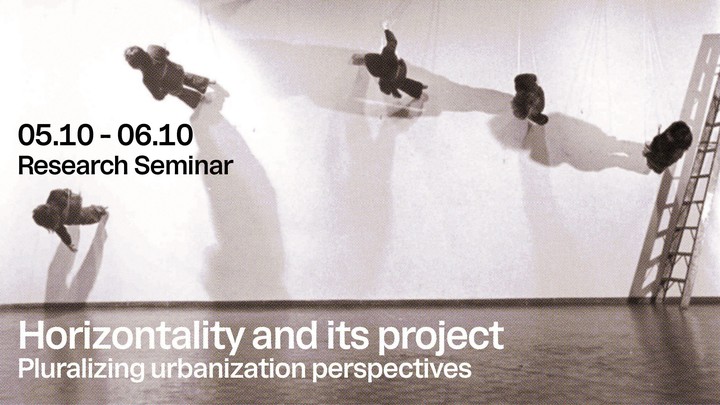
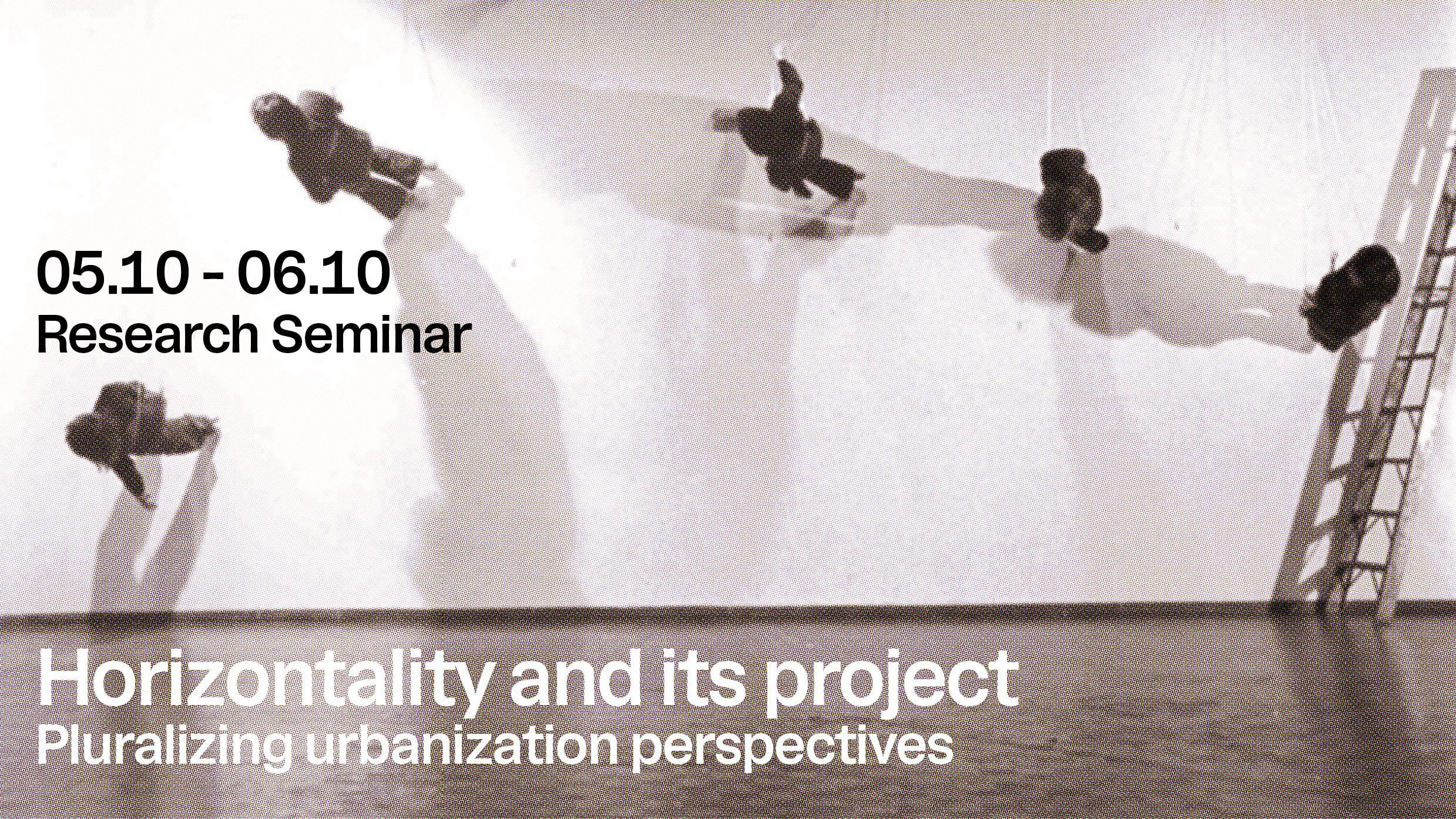
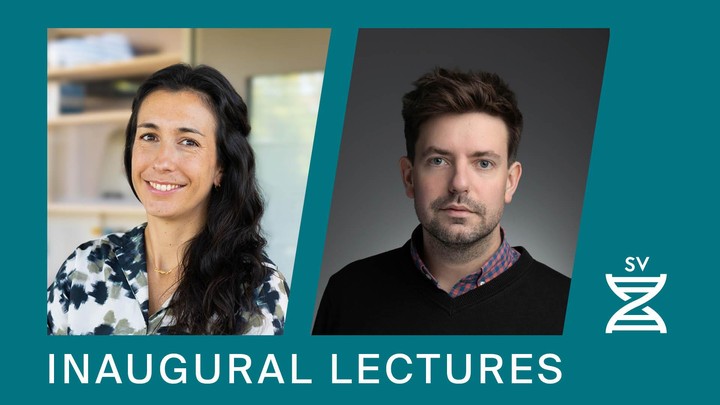
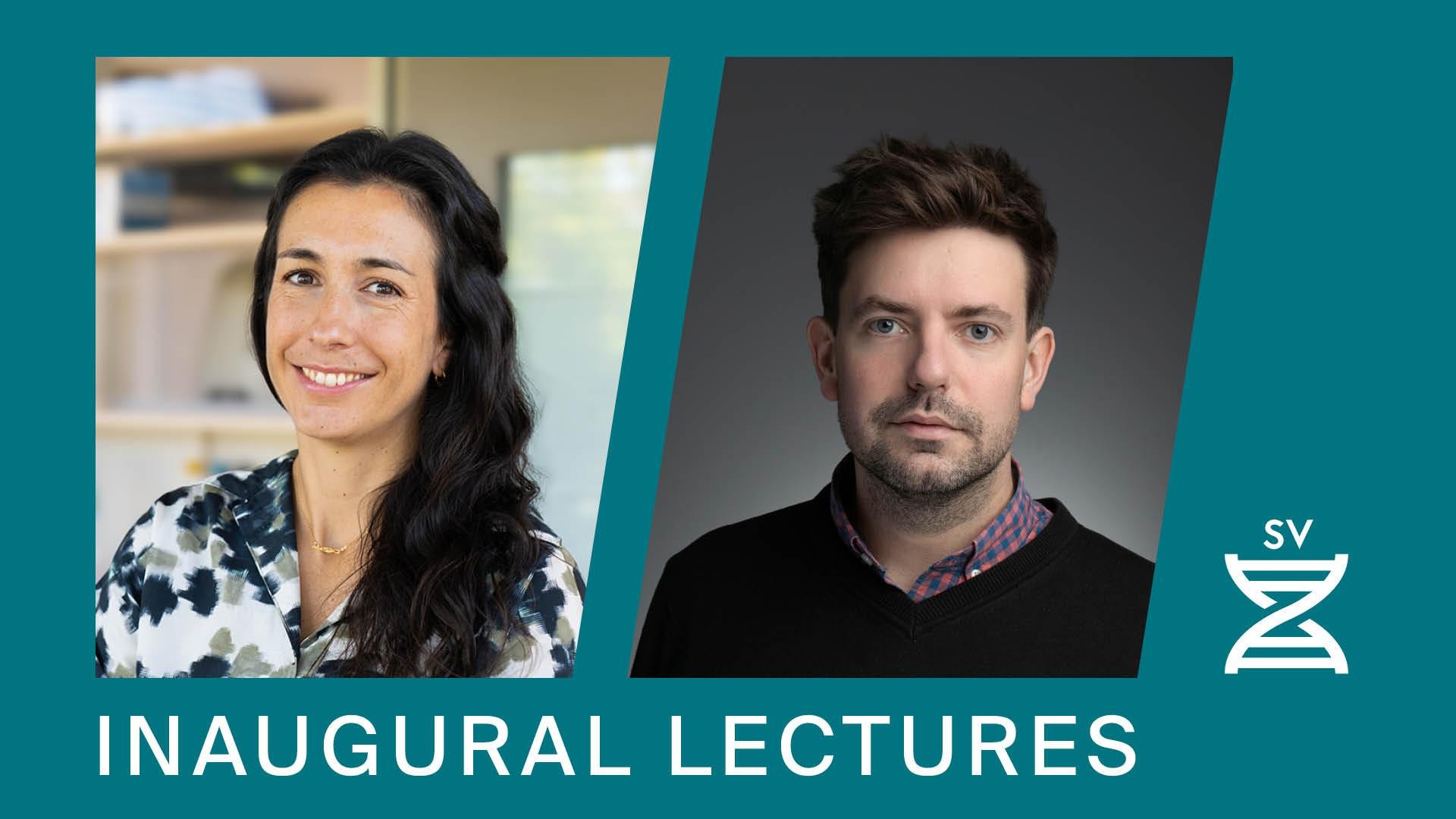
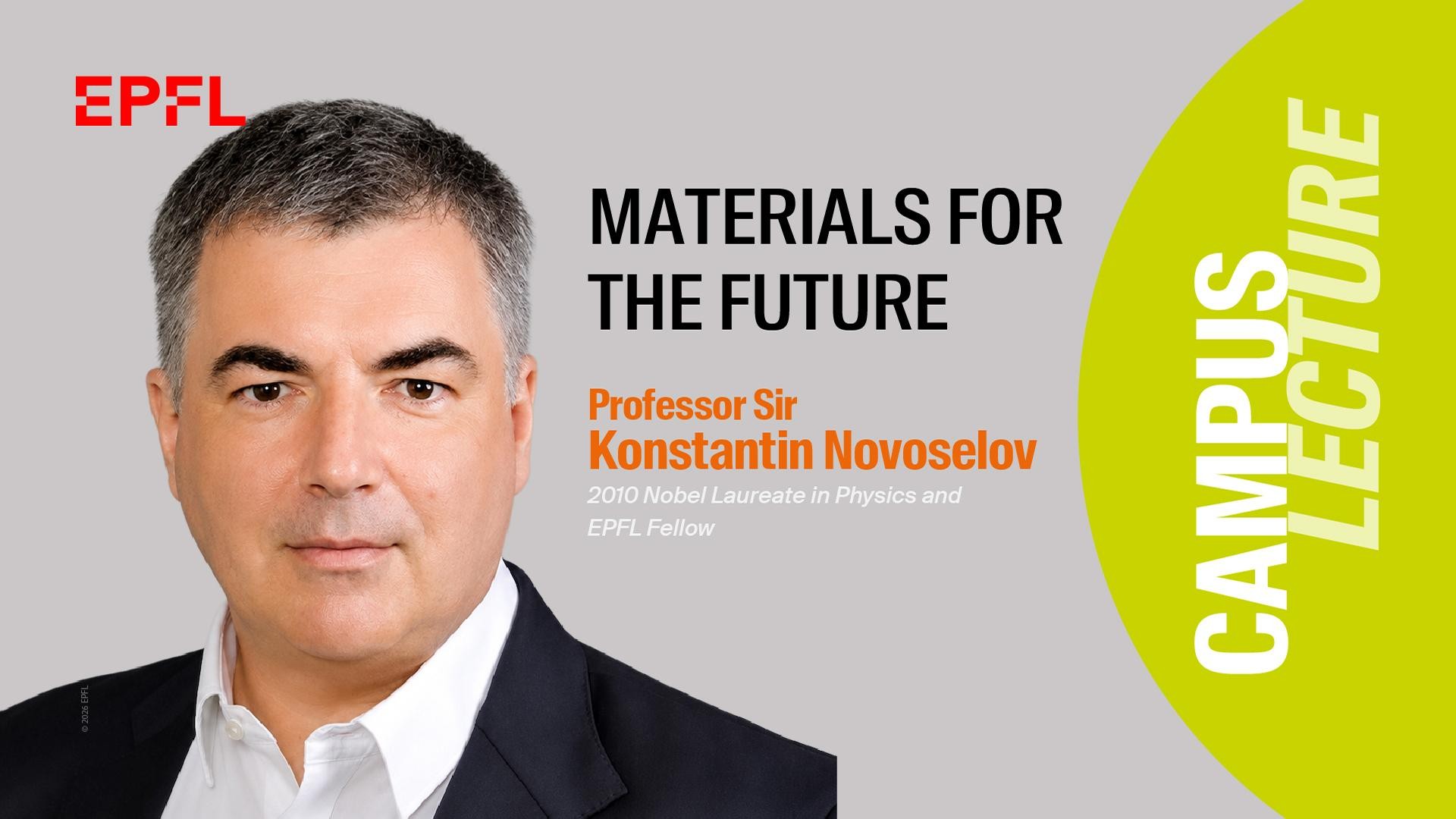
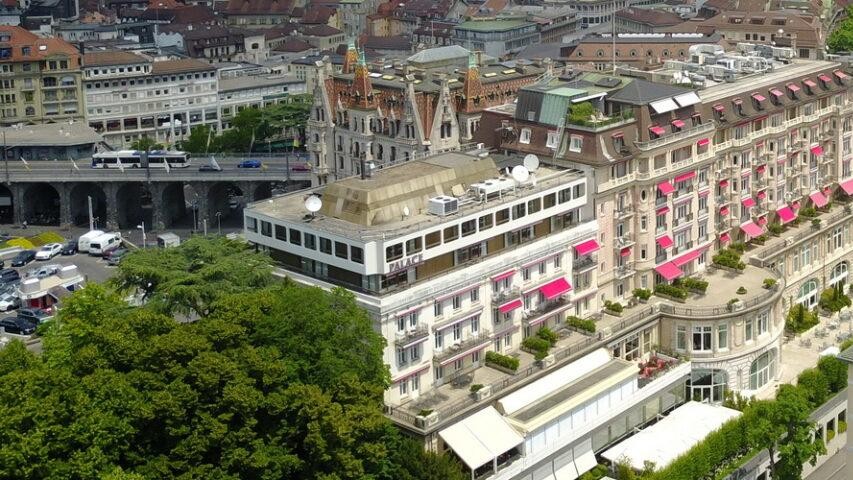
{ "count": 266, "next": "https://memento.epfl.ch/api/v1/events/?format=api&limit=10&offset=20&ordering=-event__speaker", "previous": "https://memento.epfl.ch/api/v1/events/?format=api&limit=10&ordering=-event__speaker", "results": [ { "id": 72565, "title": "IMX Colloquium - Does H2O transmute to H2O2 or HO• + H• at the Air–Water Interface of Microscale Droplets / Bubbles?", "slug": "imx-colloquium-does-h2o-transmute-to-h2o2-or-ho--2", "event_url": "https://memento.epfl.ch/event/imx-colloquium-does-h2o-transmute-to-h2o2-or-ho--2", "visual_url": "https://memento.epfl.ch/image/33816/200x112.jpg", "visual_large_url": "https://memento.epfl.ch/image/33816/720x405.jpg", "visual_maxsize_url": "https://memento.epfl.ch/image/33816/max-size.jpg", "lang": "en", "start_date": "2026-10-26", "end_date": "2026-10-26", "start_time": "13:15:00", "end_time": "14:15:00", "description": "<p>Recent reports claim that hydrogen peroxide (H2O2) is spontaneously generated – without external energy input or catalyst – at the air–water interface of microdroplets1, bubbles2, and soap films3. Several mechanisms have been proposed to explain this phenomenon, including: (i) ultrahigh instantaneous electric fields at the air–water interface driving HO− à HO• + e− radicals from hydroxide ions; (ii) water’s comproportionation into H2O•+ and H2O•−; and (iii) partial dehydration of interfacial H+ and HO− followed by radical formation. In contrast, our laboratory experiments reveal that H2O2 formation is due to the reduction of dissolved O2 at water– solid interfaces, i.e., with no role for the air–water interface beyond O2 mass transport4-6. Based on these findings, I will present four diagnostic criteria against which any existing or future mechanistic proposal should be assessed. Our approach reconciles the claims of spontaneous H2O2 formation within established physical chemistry and extends naturally to other claims of anomalous microdroplet reactivity. <br>\r\n<br>\r\nReferences:<br>\r\n(1) Mehrgardi, M. A.; Mofidfar, M.; Zare, R. N. Sprayed Water Microdroplets Are Able to Generate Hydrogen Peroxide Spontaneously. Journal of the American Chemical Society 2022, 144 (17), 7606-7609. DOI: 10.1021/jacs.2c02890.<br>\r\n(2) Nami-Ana, S. F.; Mehrgardi, M. A.; Mofidfar, M.; Zare, R. N. Sustained Regeneration of Hydrogen Peroxide at the Water-Gas Interface of Electrogenerated Microbubbles on an Electrode Surface. Journal of the American Chemical Society 2024, 146 (46), 31945-31949. DOI: 10.1021/jacs.4c11422 From NLM PubMed-not-MEDLINE.<br>\r\n(3) Eldeeb, A. M.; Berbille, A.; Dick, J. E. No Microdroplets? No Problem. Soap Films Amplify the Interface and Produce Hydrogen Peroxide. Journal of the American Chemical Society 2025, 147 (37), 33325-33329. DOI: 10.1021/jacs.5c05887.<br>\r\n(4) Eatoo, M. A.; Mishra, H. Busting the myth of spontaneous formation of H2O2 at the air-water interface: contributions of the liquid-solid interface and dissolved oxygen exposed. Chemical Science 2024, 15 (9), 3093-3103. DOI: 10.1039/d3sc06534k From NLM PubMed-not-MEDLINE.<br>\r\n(5) Eatoo, M. A.; Wehbe, N.; Kharbatia, N.; Guo, X.; Mishra, H. Why do some metal ions spontaneously form nanoparticles in water microdroplets? Disentangling the contributions of the air-water interface and bulk redox chemistry. Chemical Science 2025, 16 (3), 1115-1125. DOI: 10.1039/d4sc03217a From NLM PubMed-not-MEDLINE.<br>\r\n(6) Eatoo, M. A.; Mishra, H. Disentangling the Roles of Dissolved Oxygen, Common Salts, and pH on Spontaneous Hydrogen Peroxide Production in Water: No O2, No H2O2. Journal of the American Chemical Society 2025, 147 (39), 35392-35400. DOI: 10.1021/jacs.5c09028.<br>\r\n<br>\r\nPapers:<br>\r\n- <a href=\"https://pubs.rsc.org/sc/article/15/9/3093/828007/Busting-the-myth-of-spontaneous-formation-of-H2O2\">Busting the myth of spontaneous formation of H2O2 at the air–water interface: contributions of the liquid–solid interface and dissolved oxygen exposed</a> <br>\r\n- <a href=\"https://doi.org/10.1021/jacs.5c09028\">Disentangling the Roles of Dissolved Oxygen, Common Salts, and pH on Spontaneous Hydrogen Peroxide Production in Water: No O2, No H2O2</a><br>\r\n<br>\r\nBio: Himanshu Mishra is a scientist-entrepreneur from King Abdullah University of Science and Technology (KAUST), Saudi Arabia. His team has significantly contributed to resolving scientific debates surrounding the spontaneous H2O2 formation in water microdroplets, the electrification at water-hydrophobe interfaces, and liquid–solid adhesion forces. Mishra’s team has also pioneered Carbosoil™ technology to transform desert soils for sustainable greening, food production, and carbon sequestration. His start-up Terraxy is now scaling up Carbosoil™ production to advance sustainability projects in the Middle East and beyond. Mishra’s efforts have been featured by the World Economic Forum, Geneva Inventions, and CNN (LINK).<br>\r\n </p>", "image_description": "", "creation_date": "2026-09-14T09:02:26", "last_modification_date": "2026-09-14T10:31:03", "link_label": "Website", "link_url": "https://interfaciallab.kaust.edu.sa/people/detail/himanshu-mishra-ph.d", "canceled": "False", "cancel_reason": "", "place_and_room": "MXF 1", "url_place_and_room": "https://plan.epfl.ch/?room==MXF%201", "url_online_room": "", "spoken_languages": [ "https://memento.epfl.ch/api/v1/spoken_languages/2/?format=api" ], "speaker": "Prof. Himanshu Mishra, King Abdullah University of Science and Technology (KAUST), Saudi Arabia", "organizer": "Prof. Gregor Jotzu, Prof. Esther Amstad & Prof. Fabien Sorin", "contact": "Prof. Gregor Jotzu, Prof. Esther Amstad & Prof. Fabien Sorin", "is_internal": "False", "theme": "", "vulgarization": { "id": 1, "fr_label": "Tout public", "en_label": "General public" }, "registration": { "id": 3, "fr_label": "Entrée libre", "en_label": "Free" }, "keywords": "", "file": null, "icalendar_url": "https://memento.epfl.ch/event/export/121776/", "category": { "id": 1, "code": "CONF", "fr_label": "Conférences - Séminaires", "en_label": "Conferences - Seminars", "activated": true }, "academic_calendar_category": null, "domains": [], "mementos": [ "https://memento.epfl.ch/api/v1/mementos/8/?format=api", "https://memento.epfl.ch/api/v1/mementos/314/?format=api" ] }, { "id": 71445, "title": "Horizontality and its project: Pluralizing urbanization perspectives", "slug": "horizontality-and-its-project-pluralizing-urbaniza", "event_url": "https://memento.epfl.ch/event/horizontality-and-its-project-pluralizing-urbaniza", "visual_url": "https://memento.epfl.ch/image/32793/200x112.jpg", "visual_large_url": "https://memento.epfl.ch/image/32793/720x405.jpg", "visual_maxsize_url": "https://memento.epfl.ch/image/32793/max-size.jpg", "lang": "en", "start_date": "2026-10-05", "end_date": "2026-10-06", "start_time": "09:00:00", "end_time": "13:00:00", "description": "<p>Ten years ago, EPFL's Laboratory of Urbanism proposed horizontality as a critical lens for urban theory and practice. Since then, the concept has grown substantially richer through theoretical traditions developed across Europe and beyond.<br>\r\nThis year's seminar revisits horizontality not as a closed paradigm, but as a mode of critical engagement with the socio-political, ecological, and economic processes of urbanization. It is approached as a historical, ideological, conceptual, and political question — one intersecting with territorial redistribution, accessibility, solidarity, and spatial justice amid deep socio-ecological transformation. Neither purely top-down nor bottom-up, horizontality invites reflection on spatial organization, territorial governance, and the conflicts shaping contemporary urbanization.<br>\r\nRather than repeating critiques of vertical power and growth-oriented urbanization, the seminar aims to pluralize perspectives on horizontality as an open concept — one capable of generating new rationalities and spatial imaginaries for future design and socio-political agendas.</p>", "image_description": "", "creation_date": "2026-03-24T15:19:40", "last_modification_date": "2026-09-09T10:12:37", "link_label": "", "link_url": "", "canceled": "False", "cancel_reason": "", "place_and_room": "CO 0 11", "url_place_and_room": "", "url_online_room": "https://epfl.zoom.us/j/64557144123?pwd=fIqeb7t5TTUgEPzDPJiwuT5BmNnf9R.1", "spoken_languages": [ "https://memento.epfl.ch/api/v1/spoken_languages/2/?format=api" ], "speaker": "Prof.Michiel Dehane, Prof.Catherine Maumi, Prof.Tom Avermaete Tommaso Pietropolli, Mose Cometta. Prof.Charles Waldheim, Prof.Dean Almy, Prof.Great de Block, Andrea Palmioli, Adria Carbonell Rabassa, Elvira Pietrobon, Nikos Katsikis, Prof.Luca Pattaroni, Prof.Milica Topalovic, Prof.Antonio Di Campli", "organizer": "Prof.Elena Cogato Lanza, Flore Guichot, Prof. Paola Vigano,", "contact": "[email protected]", "is_internal": "False", "theme": "", "vulgarization": { "id": 1, "fr_label": "Tout public", "en_label": "General public" }, "registration": { "id": 3, "fr_label": "Entrée libre", "en_label": "Free" }, "keywords": "Pluralizing urbanization, Horizontality, Territorial project", "file": null, "icalendar_url": "https://memento.epfl.ch/event/export/120175/", "category": { "id": 1, "code": "CONF", "fr_label": "Conférences - Séminaires", "en_label": "Conferences - Seminars", "activated": true }, "academic_calendar_category": null, "domains": [], "mementos": [ "https://memento.epfl.ch/api/v1/mementos/1/?format=api", "https://memento.epfl.ch/api/v1/mementos/4/?format=api", "https://memento.epfl.ch/api/v1/mementos/6/?format=api" ] }, { "id": 72571, "title": "IMX Colloquium - Designer Quantum Materials from Carbon", "slug": "imx-colloquium-designer-quantum-materials-from-c-2", "event_url": "https://memento.epfl.ch/event/imx-colloquium-designer-quantum-materials-from-c-2", "visual_url": "https://memento.epfl.ch/image/33820/200x112.jpg", "visual_large_url": "https://memento.epfl.ch/image/33820/720x405.jpg", "visual_maxsize_url": "https://memento.epfl.ch/image/33820/max-size.jpg", "lang": "en", "start_date": "2026-11-09", "end_date": "2026-11-09", "start_time": "13:15:00", "end_time": "14:15:00", "description": "<p>Atomically precise carbon nanostructures offer a new route to quantum systems built from the bottom up. By combining molecular design, on-surface synthesis and scanning probe microscopy, we can control atomic structure, electronic states and magnetic interactions within the same platform.<br>\r\nIn this talk, I will follow the path from bottom-up synthesized graphene nanoribbons [1,2] to open-shell nanographenes [3] and designer quantum spin systems [4]. I will discuss how atomic structure can determine electronic topology and how molecular spins can be coupled into well-defined quantum chains. Recent examples include Haldane chains [4], alternating-exchange spin chains [5] and antiferromagnetic Heisenberg chains [6], where collective and fractional excitations can be probed directly at the atomic scale.<br>\r\nMore broadly, this work illustrates a materials-science strategy in which structure, functionality and interactions are programmed at the level of molecular building blocks. Rather than optimizing properties in an existing material, the aim is to design the material and its quantum behavior together. Atomically precise carbon nanostructures therefore provide a model platform for exploring how synthesis, structure and emergent functionality can be linked in a predictive way, with implications for the future design of low-dimensional electronic, magnetic and quantum materials.\r\n</p><ol>\r\n\t<li>J. Cai, P. Ruffieux, R. Jaafar, <em>et al.</em>, <em>Nature</em> <strong>466</strong>, 470–473 (2010).</li>\r\n\t<li>F. Xiang, Y. Gu, A. Kinikar, <em>et al.</em>, <em>Nat. Chem</em>. <strong>17</strong>, 1356–1363 (2025).</li>\r\n\t<li>S. Mishra, D. Beyer, K. Eimre, <em>et al</em>., <em>Nat. </em><em>Nanotechnol</em>. <strong>15</strong>, 22–28 (2020).</li>\r\n\t<li>S. Mishra, G. Catarina, F. Wu, <em>et al</em>., <em>Nature</em> <strong>598</strong>, 287–292 (2021).</li>\r\n\t<li>C. Zhao, G. Catarina, J.-J. Zhang, <em>et al</em>., <em>Nat. </em><em>Nanotechnol</em>. <strong>19</strong>, 1789-1795<strong> </strong>(2024).</li>\r\n\t<li>C. Zhao, L. Yang, J. C. G. Henriques, <em>et al</em>., <em>Nat. Mater.</em> <strong>24,</strong> 722–727 (2025).</li>\r\n</ol>\r\nBio: Roman Fasel is a leading scientist in the field of atomically precise carbon nanostructures and surface-based quantum materials. He received his Ph.D. in Physics from the University of Fribourg in 1996 and then carried out postdoctoral research at La Trobe University in Melbourne and the Fritz Haber Institute in Berlin before joining Empa. Today, he heads Empa’s nanotech@surfaces Laboratory and is Adjunct Professor at the University of Bern. He pioneered the bottom-up synthesis of graphene nanoribbons, establishing on-surface synthesis as a major new direction in nanoscience, and has since extended this work to topological states, open-shell nanographenes and quantum spin chains.", "image_description": "", "creation_date": "2026-09-14T10:43:28", "last_modification_date": "2026-09-14T10:43:41", "link_label": "Website", "link_url": "https://www.empa.ch/web/s205/roman-fasel", "canceled": "False", "cancel_reason": "", "place_and_room": "MXF 1", "url_place_and_room": "https://plan.epfl.ch/?room==MXF%201", "url_online_room": "", "spoken_languages": [ "https://memento.epfl.ch/api/v1/spoken_languages/2/?format=api" ], "speaker": "Prof. Roman Fasel, EMPA, Zürich", "organizer": "Prof. Gregor Jotzu, Prof. Esther Amstad & Prof. Fabien Sorin", "contact": "Prof. Gregor Jotzu, Prof. Esther Amstad & Prof. Fabien Sorin", "is_internal": "False", "theme": "", "vulgarization": { "id": 1, "fr_label": "Tout public", "en_label": "General public" }, "registration": { "id": 3, "fr_label": "Entrée libre", "en_label": "Free" }, "keywords": "", "file": null, "icalendar_url": "https://memento.epfl.ch/event/export/121785/", "category": { "id": 1, "code": "CONF", "fr_label": "Conférences - Séminaires", "en_label": "Conferences - Seminars", "activated": true }, "academic_calendar_category": null, "domains": [], "mementos": [ "https://memento.epfl.ch/api/v1/mementos/8/?format=api", "https://memento.epfl.ch/api/v1/mementos/314/?format=api" ] }, { "id": 72620, "title": "Inaugural Lectures SV - Paloma Navarro, Florian Schüder", "slug": "inaugural-lectures-sv-paloma-navarro-florian-schud", "event_url": "https://memento.epfl.ch/event/inaugural-lectures-sv-paloma-navarro-florian-schud", "visual_url": "https://memento.epfl.ch/image/33866/200x112.jpg", "visual_large_url": "https://memento.epfl.ch/image/33866/720x405.jpg", "visual_maxsize_url": "https://memento.epfl.ch/image/33866/max-size.jpg", "lang": "en", "start_date": "2026-11-11", "end_date": "2026-11-11", "start_time": "17:15:00", "end_time": "19:30:00", "description": "<strong>Date</strong>: Wednesday November 11, 2026<br>\r\n<strong>Program: </strong>\r\n<ul>\r\n\t<li>17:15 - 17:25 Introduction by the Dean and Director GHI</li>\r\n\t<li>17:25 - 17:55 Prof. Paloma Navarro</li>\r\n\t<li>18:00 - 18:10 Introduction by the Dean and Director IBI</li>\r\n\t<li>18:10 - 18:40 Prof. Florian Schüder</li>\r\n\t<li>18:40 - 18:45 Closure</li>\r\n\t<li>18:45 Apéritif in SV Hall</li>\r\n</ul>\r\n<strong>Location: </strong><a href=\"https://plan.epfl.ch/?room==SV%201717\">SV1717</a><br>\r\n<strong>Registration: </strong><a href=\"https://docs.google.com/forms/d/19YVR2xdBv4gBMi4XxhpOA5un_tXsvrm9NLebElAFQZc/edit\">Click here</a><br>\r\n<br>\r\n============================================<br>\r\n<strong>Prof. Paloma Navarro</strong><br>\r\n<br>\r\n<strong>Engineering Precision Immunotherapies for the Aging Brain</strong><br>\r\n<br>\r\n<strong>Abstract</strong><br>\r\nAs we age, our brains slowly change memory can falter, thinking can slow, and the risk of diseases like Alzheimer's rises. For decades, aging research has focused on the brain's own cells. But our bodies also carry a second, powerful system that changes with age: the immune system. Best known for fighting infections, the immune system also reaches into the brain and helps shape how it works. My research aims to answer a simple but underexplored question: as the immune system ages, does it stop protecting the brain and start harming it, and if so, can we intervene?<br>\r\n<br>\r\nI will share how I have used engineered proteins, delivered directly into the brain, to precisely target specific immune cells and rebalance their behavior. Building on this work, my lab is now developing a toolkit of precision tools, each aimed at a different brain immune cell type. The goal is to translate this work into \"aging immunotherapies\": treatments that restore balance to the aging immune system, strengthen the brain's resilience, and reduce the risk of neurodegenerative disease.<br>\r\n<br>\r\n<strong>About the speaker</strong><br>\r\nPaloma Navarro Negredo studied Natural Sciences with an emphasis in Pharmacology at St John's College, University of Cambridge, before earning her Master's and PhD in Clinical Biochemistry, also at Cambridge. In the laboratory of Prof. Margaret S. Robinson she studied how proteins are sorted and trafficked inside cells. She then moved to Stanford University for postdoctoral research in the laboratory of Prof. Anne Brunet, supported by a Human Frontier Science Program fellowship. At Stanford she investigated changes in the aging brain, with a particular focus on immune cells and strategies to target them using engineered proteins.<br>\r\nPaloma is now an Assistant Professor at the School of Life Sciences at EPFL, where she leads a research group investigating how the aging immune system contributes to the decline of brain function.<br>\r\n<br>\r\n============================================<br>\r\n<strong>Prof. Florian Schüder</strong><br>\r\n<br>\r\n<strong>Programming DNA for Multiplexed Super-Resolution Microscopy</strong><br>\r\n<br>\r\n<strong>Abstract</strong><br>\r\nFluorescence microscopy is one of the most widely used tools in biological research, allowing us to visualize the organization of cells and their molecular components. Over the past two decades, the development of super-resolution microscopy has revolutionized the field by making it possible to visualize structures far smaller than previously thought possible with light microscopy.<br>\r\nMy research combines these advanced imaging techniques with tools from DNA nanotechnology to further expand what we can see and measure inside cells. In this presentation, I will introduce recent developments in DNA-based super-resolution microscopy and show how these approaches can enable high-resolution imaging of many different molecular targets within the same sample, and discuss how these technologies can be used to address biological questions at the molecular scale.<br>\r\n<br>\r\n<strong>About the speaker</strong><br>\r\nFlorian Schueder studied Physics at Ludwig Maximilian University of Munich and the Wyss Institute at Harvard University from 2009 to 2015. He then pursued a Ph.D. in Biophysics at the Max Planck Institute of Biochemistry from 2015 to 2020. From 2021 to 2025, he was a Postdoctoral Fellow in the Department of Cell Biology and the Department of Microbial Pathogenesis at Yale School of Medicine. In 2025, he was a Visiting Scientist at ETH Zurich. In 2026, Florian started his own lab as an Assistant Professor in the School of Life Sciences at EPFL.", "image_description": "", "creation_date": "2026-09-18T11:27:16", "last_modification_date": "2026-09-23T15:49:52", "link_label": "", "link_url": "", "canceled": "False", "cancel_reason": "", "place_and_room": "SV 1717", "url_place_and_room": "https://plan.epfl.ch/?room==SV%201717", "url_online_room": "", "spoken_languages": [ "https://memento.epfl.ch/api/v1/spoken_languages/2/?format=api" ], "speaker": "Prof. Paloma Navarro<br>\r\nProf. Florian Schüder", "organizer": "SV-DO", "contact": "[email protected]", "is_internal": "False", "theme": "", "vulgarization": { "id": 1, "fr_label": "Tout public", "en_label": "General public" }, "registration": { "id": 3, "fr_label": "Entrée libre", "en_label": "Free" }, "keywords": "", "file": null, "icalendar_url": "https://memento.epfl.ch/event/export/121860/", "category": { "id": 8, "code": "LI", "fr_label": "Leçons inaugurales - Leçons d'honneur", "en_label": "Inaugural lectures - Honorary Lecture", "activated": true }, "academic_calendar_category": null, "domains": [], "mementos": [ "https://memento.epfl.ch/api/v1/mementos/6/?format=api", "https://memento.epfl.ch/api/v1/mementos/8/?format=api", "https://memento.epfl.ch/api/v1/mementos/9/?format=api", "https://memento.epfl.ch/api/v1/mementos/111/?format=api" ] }, { "id": 72688, "title": "Quantum maximum likelihood prediction via Hilbert space embeddings", "slug": "quantum-maximum-likelihood-prediction-via-hilbert", "event_url": "https://memento.epfl.ch/event/quantum-maximum-likelihood-prediction-via-hilbert", "visual_url": null, "visual_large_url": null, "visual_maxsize_url": null, "lang": "en", "start_date": "2026-10-05", "end_date": "2026-10-05", "start_time": "16:00:00", "end_time": "17:00:00", "description": "<p>Maximum likelihood prediction plays a major (hidden) role in modern large language models via the next token prediction task. In this talk, we propose and study a simplified version, based on an i.i.d. data model. The model is based on a quantum maximum likelihood predictor, which is obtained by embedding empirical distributions into quantum states and minimizing quantum relative entropy over a prescribed model class.<br>\r\nWe interpret this predictor via quantum reverse information projection and a quantum Pythagorean theorem, under structural assumptions such as unitary invariance and closure under pinching. We extend this theorem to non-self-adjoint mixture families in finite dimensions and establish a related infinite-dimensional inequality under additional regularity conditions. Finally, we present non-asymptotic guarantees, including convergence rates and concentration inequalities in trace norm and quantum relative entropy. <br>\r\nJoint work with Sreejith Sreekumar. <br>\r\n<br>\r\nBio : Nir Weinberger is an Associate Professor at the The Viterbi Faculty of Electrical and Computer Engineering, Technion - Israel Institute ofTechnology. Previously, from 2017 to 2018 he was a post-doctoral fellow at Tel-Aviv University, and from 2018-2020 he was a Technion-MIT post-doctoral fellow at the Massachusetts Institute of Technology, Cambridge, MA, USA. He has received the B.Sc. and M.Sc. degrees from Tel-Aviv University, Tel-Aviv, Israel, in 2006 and 2009, respectively, and his Ph.D.degree in 2017, from the Technion, Israel Institute of Technology.</p>", "image_description": "", "creation_date": "2026-09-28T11:10:45", "last_modification_date": "2026-09-29T08:43:24", "link_label": "", "link_url": "", "canceled": "False", "cancel_reason": "", "place_and_room": "BC 129", "url_place_and_room": "https://plan.epfl.ch/?room==BC%20129", "url_online_room": "", "spoken_languages": [], "speaker": "Prof. Nir Weinberger, Technion", "organizer": "IPG Seminar ", "contact": "[email protected] (host) [email protected] (admin)", "is_internal": "False", "theme": "", "vulgarization": { "id": 2, "fr_label": "Public averti", "en_label": "Informed public" }, "registration": { "id": 3, "fr_label": "Entrée libre", "en_label": "Free" }, "keywords": "", "file": null, "icalendar_url": "https://memento.epfl.ch/event/export/121951/", "category": { "id": 1, "code": "CONF", "fr_label": "Conférences - Séminaires", "en_label": "Conferences - Seminars", "activated": true }, "academic_calendar_category": null, "domains": [], "mementos": [ "https://memento.epfl.ch/api/v1/mementos/1/?format=api", "https://memento.epfl.ch/api/v1/mementos/5/?format=api", "https://memento.epfl.ch/api/v1/mementos/6/?format=api", "https://memento.epfl.ch/api/v1/mementos/151/?format=api", "https://memento.epfl.ch/api/v1/mementos/389/?format=api" ] }, { "id": 72764, "title": "IMX Talks - Resolving Hierarchical Structure with X-ray scattering imaging", "slug": "imx-talks-resolving-hierarchical-structure-with-x", "event_url": "https://memento.epfl.ch/event/imx-talks-resolving-hierarchical-structure-with-x", "visual_url": "https://memento.epfl.ch/image/33978/200x112.jpg", "visual_large_url": "https://memento.epfl.ch/image/33978/720x405.jpg", "visual_maxsize_url": "https://memento.epfl.ch/image/33978/max-size.jpg", "lang": "en", "start_date": "2026-11-02", "end_date": "2026-11-02", "start_time": "16:30:00", "end_time": "17:30:00", "description": "<p>The function of many materials, from biological tissues to industrial polymers, depends on how their nanoscale building blocks are arranged and aligned within a macroscopic structure, which is essential to understand but difficult to resolve: established high-resolution techniques typically access only small sample volumes, limiting the ability to capture structural or biological variability across extended, heterogeneous samples.<br>\r\nSmall-angle X-ray scattering (SAXS) imaging probes local nanostructure by raster-scanning a focused synchrotron beam across a sample. This can be extended to resolve nanostructure orientation voxel-by-voxel in three dimensions in a method called SAXS tensor tomography, which we implement in our open-source software package Mumott. In this presentation, I will show how this approach, and its continued development, can be applied across different material systems.<br>\r\nFor injection-molded polymer packaging, SAXS imaging has resolved the layered anisotropic nanostructure important for its mechanical properties, and, combined with industrial processing simulations, the structure formation during thermal processing. Another example is bone, where resolving structure requires both three-dimensional information and sufficient sampling to capture biological variability. Combining 2D and 3D SAXS imaging, we studied regional differences in the human femoral neck, an anatomical site relevant to hip fractures, and, at higher resolution, resolved alternating chirality between neighboring lamellae within individual osteons, a structural feature proposed on mechanical grounds over a century ago.<br>\r\nThese examples illustrate how tensor tomography, extended beyond X-ray scattering to wide-angle diffraction and visible-light polarimetry, provides a route to resolving hierarchical structure across a wide range of material systems.<br>\r\n<br>\r\nBio:<strong> </strong>Marianne Liebi studied food science at ETH Zurich, where she also completed her PhD in 2013, followed by postdoctoral research at the Paul Scherrer Institute and MAX IV Laboratory, Lund. In 2017, she started her own research group at Chalmers University of Technology, Gothenburg, and was appointed in 2021 as tenure-track Assistant Professor at EPFL, where she heads the Laboratory for X-ray Characterization of Materials (cam-X) within the Institute of Materials, in a joint position with the Paul Scherrer Institute (PSI). Her research develops advanced X-ray and optical imaging techniques, centered on small-angle X-ray scattering (SAXS) in 2D and 3D, to resolve the hierarchical structure of materials ranging from fiber composites to pharmaceutical formulations and bone.</p>", "image_description": "", "creation_date": "2026-10-05T09:26:03", "last_modification_date": "2026-10-05T10:29:57", "link_label": "Website", "link_url": "https://www.psi.ch/de/lsc/people/marianne-liebi", "canceled": "False", "cancel_reason": "", "place_and_room": "BM 5202", "url_place_and_room": "https://plan.epfl.ch/?room==BM%205202", "url_online_room": "https://epfl.zoom.us/j/63884474245", "spoken_languages": [ "https://memento.epfl.ch/api/v1/spoken_languages/2/?format=api" ], "speaker": "Prof. Marianne Liebi, EPFL STI IMX CAM-X", "organizer": "Prof. Michele Ceriotti", "contact": "Prof. Michele Ceriotti", "is_internal": "False", "theme": "", "vulgarization": { "id": 1, "fr_label": "Tout public", "en_label": "General public" }, "registration": { "id": 3, "fr_label": "Entrée libre", "en_label": "Free" }, "keywords": "", "file": null, "icalendar_url": "https://memento.epfl.ch/event/export/122060/", "category": { "id": 1, "code": "CONF", "fr_label": "Conférences - Séminaires", "en_label": "Conferences - Seminars", "activated": true }, "academic_calendar_category": null, "domains": [], "mementos": [ "https://memento.epfl.ch/api/v1/mementos/314/?format=api" ] }, { "id": 72538, "title": "IMX Colloquium - Unravelling how atomic motion takes place in molecules and materials", "slug": "imx-colloquium-unravelling-how-atomic-motion-tak-2", "event_url": "https://memento.epfl.ch/event/imx-colloquium-unravelling-how-atomic-motion-tak-2", "visual_url": "https://memento.epfl.ch/image/33789/200x112.jpg", "visual_large_url": "https://memento.epfl.ch/image/33789/720x405.jpg", "visual_maxsize_url": "https://memento.epfl.ch/image/33789/max-size.jpg", "lang": "en", "start_date": "2026-12-07", "end_date": "2026-12-07", "start_time": "13:15:00", "end_time": "14:15:00", "description": "", "image_description": "", "creation_date": "2026-09-08T11:44:57", "last_modification_date": "2026-09-08T11:45:30", "link_label": "Website", "link_url": "https://www.ch.cam.ac.uk/person/mr2102", "canceled": "False", "cancel_reason": "", "place_and_room": "MXF 1", "url_place_and_room": "https://plan.epfl.ch/?room==MXF%201", "url_online_room": "", "spoken_languages": [ "https://memento.epfl.ch/api/v1/spoken_languages/1/?format=api" ], "speaker": "Prof. Mariana Rossi, University of Cambridge, UK", "organizer": "Prof. Gregor Jotzu, Prof. Esther Amstad & Prof. Fabien Sorin", "contact": "Prof. Gregor Jotzu, Prof. Esther Amstad & Prof. Fabien Sorin", "is_internal": "False", "theme": "", "vulgarization": { "id": 1, "fr_label": "Tout public", "en_label": "General public" }, "registration": { "id": 3, "fr_label": "Entrée libre", "en_label": "Free" }, "keywords": "", "file": null, "icalendar_url": "https://memento.epfl.ch/event/export/121739/", "category": { "id": 1, "code": "CONF", "fr_label": "Conférences - Séminaires", "en_label": "Conferences - Seminars", "activated": true }, "academic_calendar_category": null, "domains": [], "mementos": [ "https://memento.epfl.ch/api/v1/mementos/8/?format=api", "https://memento.epfl.ch/api/v1/mementos/314/?format=api" ] }, { "id": 72357, "title": "Materials for the Future", "slug": "materials-for-the-future", "event_url": "https://memento.epfl.ch/event/materials-for-the-future", "visual_url": "https://memento.epfl.ch/image/33729/200x112.jpg", "visual_large_url": "https://memento.epfl.ch/image/33729/720x405.jpg", "visual_maxsize_url": "https://memento.epfl.ch/image/33729/max-size.jpg", "lang": "en", "start_date": "2026-10-09", "end_date": "2026-10-09", "start_time": "18:00:00", "end_time": "19:30:00", "description": "<p>In 2026, EPFL named Professor Konstantin Novoselov its first-ever EPFL Fellow, a newly created honorary title recognising scientific personalities of exceptional international stature.<br>\r\n<br>\r\nEPFL is delighted to host a public lecture to celebrate this nomination of one of the most influential physicists of our time.<br>\r\n<br>\r\nKonstantin Novoselov was awarded the Nobel Prize in Physics in 2010 and is globally renowned for his pioneering work on graphene and two-dimensional materials. By isolating graphene for the first time, a sheet of carbon just one atom thick, he opened an entirely new field of research, with profound implications for electronics, energy and quantum technologies.<br>\r\n<br>\r\n<em>Picture this: it was from the graphite of an ordinary pencil lead that this \"super-material\" was first isolated. Using nothing more than a piece of adhesive tape to peel away a layer a single atom thick, Konstantin Novoselov revealed to the world a material with extraordinary properties. A million times thinner than a human hair, 200 times stronger than steel and remarkably conductive, graphene pushes every limit. From the lead of your pencil to the batteries of tomorrow, join us to discover how a deceptively simple gesture set off a genuine technological revolution.</em><br>\r\n<br>\r\nThis Campus Lecture offers an introduction to that revolution: how a two-dimensional material is transforming our understanding of matter and how today's fundamental discoveries become tomorrow's technologies.<br>\r\n<br>\r\n<strong>About Konstantin Novoselov</strong><br>\r\nKonstantin Novoselov is a physicist specialising in condensed matter and nanotechnology. He conducted his Nobel Prize–winning research at the University of Manchester, where, together with Professor Andre Geim, he isolated graphene for the first time. He has held academic positions in the United Kingdom as well as internationally and is currently based at the National University of Singapore. Widely recognised as a leading figure in the study and application of two-dimensional materials, he has received numerous honours for his contributions to science.</p>", "image_description": "", "creation_date": "2026-08-18T11:48:33", "last_modification_date": "2026-09-01T09:58:59", "link_label": "Inscription", "link_url": "https://forms.cloud.microsoft/e/8wFYA27p68", "canceled": "False", "cancel_reason": "", "place_and_room": "RLC E1 240", "url_place_and_room": "https://plan.epfl.ch/?room==RLC%20E1%20240", "url_online_room": "", "spoken_languages": [ "https://memento.epfl.ch/api/v1/spoken_languages/2/?format=api" ], "speaker": "Prof. Konstantin Novoselov", "organizer": "MédiaCom", "contact": "Nicolas Hocq", "is_internal": "False", "theme": "", "vulgarization": { "id": 1, "fr_label": "Tout public", "en_label": "General public" }, "registration": { "id": 1, "fr_label": "Sur inscription", "en_label": "Registration required" }, "keywords": "", "file": null, "icalendar_url": "https://memento.epfl.ch/event/export/121450/", "category": { "id": 1, "code": "CONF", "fr_label": "Conférences - Séminaires", "en_label": "Conferences - Seminars", "activated": true }, "academic_calendar_category": null, "domains": [], "mementos": [ "https://memento.epfl.ch/api/v1/mementos/1/?format=api", "https://memento.epfl.ch/api/v1/mementos/5/?format=api", "https://memento.epfl.ch/api/v1/mementos/6/?format=api", "https://memento.epfl.ch/api/v1/mementos/145/?format=api", "https://memento.epfl.ch/api/v1/mementos/389/?format=api", "https://memento.epfl.ch/api/v1/mementos/417/?format=api" ] }, { "id": 72271, "title": "EcoCloud Annual Event", "slug": "ecocloud-annual-event-8", "event_url": "https://memento.epfl.ch/event/ecocloud-annual-event-8", "visual_url": "https://memento.epfl.ch/image/33542/200x112.jpg", "visual_large_url": "https://memento.epfl.ch/image/33542/720x405.jpg", "visual_maxsize_url": "https://memento.epfl.ch/image/33542/max-size.jpg", "lang": "en", "start_date": "2026-10-08", "end_date": "2026-10-08", "start_time": "08:15:00", "end_time": "18:30:00", "description": "<p>The EPFL EcoCloud Center is proud to invite you to the <a data-auth=\"NotApplicable\" data-linkindex=\"2\" href=\"https://ecocloud.epfl.ch/ecocloud-annual-event-program/\" title=\"https://ecocloud.epfl.ch/ecocloud-annual-event-program/\">Annual Event 2026</a>.<br>\r\n<br>\r\nOnce again we will be welcoming you to <a data-auth=\"NotApplicable\" data-linkindex=\"3\" href=\"https://www.lausanne-palace.ch/en/hotel/access/\" title=\"https://www.lausanne-palace.ch/en/hotel/access/\">Lausanne Palace</a>.<br>\r\n<br>\r\nThe Event will feature a keynote presentation:\r\n</p><ul>\r\n\t<li>Prof. Ayse K. Coskun Mitra (Boston University):<br>\r\n\t<a data-auth=\"NotApplicable\" data-linkindex=\"4\" href=\"https://ecocloud.epfl.ch/mcevents/keynote-ayse/\" title=\"https://ecocloud.epfl.ch/mcevents/keynote-ayse/\">AI Data Centers as Flexible Loads. Rethinking Power and Performance</a></li>\r\n</ul>\r\nThere will then be the three following sessions:\r\n\r\n<ul>\r\n\t<li>Hardware and software sustainable co-design</li>\r\n\t<li>Technologies for sustainable systems</li>\r\n\t<li>EcoCloud Experimental Data Center Facility</li>\r\n</ul>\r\nThe day will conclude with a poster session and a networking event.<br>\r\n<br>\r\nUseful links:<br>\r\n<a href=\"https://ecocloud.epfl.ch/ecocloud-annual-event-program/\">Program</a><br>\r\n<a href=\"https://indico.epfl.ch/event/28/registrations/19/\">Registration</a>", "image_description": "", "creation_date": "2026-07-24T08:46:12", "last_modification_date": "2026-07-24T08:46:12", "link_label": "Official Page", "link_url": "https://ecocloud.epfl.ch/event/ecocloud-annual-event/", "canceled": "False", "cancel_reason": "", "place_and_room": "Lausanne Palace", "url_place_and_room": "https://www.lausanne-palace.ch/en/welcome-page", "url_online_room": "", "spoken_languages": [ "https://memento.epfl.ch/api/v1/spoken_languages/2/?format=api" ], "speaker": "Prof. Giovanni De Micheli, Prof. Ayse K. Coskun (Boston University), Dr. Javier Picorel (Huawei), Dr. William Simon (IBM, alumnus IEL/ESL), Dr. Eugene van Rooyen (Eaton), Dr. Dimitri Voisin (BladeSENSE), Maurizio Miozza (GemaTEG), Frank Michaud (Cisco), Dr. Xavier Ouvrard (EcoCloud).", "organizer": "<a href=\"mailto:[email protected]?subject=EcoCloud%20Annual%20Event%202026\">Valérie Locca</a>", "contact": "<a href=\"mailto:[email protected]?subject=EcoCloud%20Annual%20Event%202026\">Valérie Locca</a>", "is_internal": "False", "theme": "", "vulgarization": { "id": 2, "fr_label": "Public averti", "en_label": "Informed public" }, "registration": { "id": 1, "fr_label": "Sur inscription", "en_label": "Registration required" }, "keywords": "", "file": null, "icalendar_url": "https://memento.epfl.ch/event/export/121321/", "category": { "id": 1, "code": "CONF", "fr_label": "Conférences - Séminaires", "en_label": "Conferences - Seminars", "activated": true }, "academic_calendar_category": null, "domains": [], "mementos": [ "https://memento.epfl.ch/api/v1/mementos/1/?format=api", "https://memento.epfl.ch/api/v1/mementos/6/?format=api", "https://memento.epfl.ch/api/v1/mementos/8/?format=api", "https://memento.epfl.ch/api/v1/mementos/247/?format=api", "https://memento.epfl.ch/api/v1/mementos/345/?format=api", "https://memento.epfl.ch/api/v1/mementos/416/?format=api" ] }, { "id": 72582, "title": "Chiraltronics: Exploring the interplay between spin and chirality", "slug": "chiraltronics-exploring-the-interplay-between-sp-2", "event_url": "https://memento.epfl.ch/event/chiraltronics-exploring-the-interplay-between-sp-2", "visual_url": "https://memento.epfl.ch/image/33943/200x112.jpg", "visual_large_url": "https://memento.epfl.ch/image/33943/720x405.jpg", "visual_maxsize_url": "https://memento.epfl.ch/image/33943/max-size.jpg", "lang": "en", "start_date": "2026-10-12", "end_date": "2026-10-12", "start_time": "16:15:00", "end_time": "17:15:00", "description": "<p>Chirality is omnipresent in nature through a fundamental coupling between chirality and angular momentum. Despite extensive experimental evidence, the underlying mechanisms of this coupling remain debated. Here, we will explore how chiral magnetic textures can be stabilized in altermagnets, a new class of magnetism. Turning to structurally chiral magnetic molecules, we will show that chirality is directly linked to their intrinsic magnetic moments. Bringing both together, we will discuss how molecular design can control spin phenomena at hybrid chiral molecule-magnet interfaces. Our findings pave a pathway towards functional \"chiraltronic\" devices – turning a fundamental puzzle into a technological opportunity.</p>", "image_description": "", "creation_date": "2026-10-01T09:59:25", "last_modification_date": "2026-10-01T10:00:49", "link_label": "", "link_url": "", "canceled": "False", "cancel_reason": "", "place_and_room": "CM 1 5", "url_place_and_room": "https://plan.epfl.ch/?room==CM%201%205", "url_online_room": "", "spoken_languages": [ "https://memento.epfl.ch/api/v1/spoken_languages/2/?format=api" ], "speaker": "Prof. Angela Wittmann, Johannes Gutenberg-Universität Mainz", "organizer": "Institut de Physique", "contact": "[email protected]", "is_internal": "False", "theme": "", "vulgarization": { "id": 1, "fr_label": "Tout public", "en_label": "General public" }, "registration": { "id": 3, "fr_label": "Entrée libre", "en_label": "Free" }, "keywords": "", "file": "https://memento.epfl.ch/public/upload/files/Wittmann12oct_Bl6EtiA.pdf", "icalendar_url": "https://memento.epfl.ch/event/export/122008/", "category": { "id": 1, "code": "CONF", "fr_label": "Conférences - Séminaires", "en_label": "Conferences - Seminars", "activated": true }, "academic_calendar_category": null, "domains": [], "mementos": [ "https://memento.epfl.ch/api/v1/mementos/1/?format=api", "https://memento.epfl.ch/api/v1/mementos/5/?format=api", "https://memento.epfl.ch/api/v1/mementos/6/?format=api", "https://memento.epfl.ch/api/v1/mementos/8/?format=api", "https://memento.epfl.ch/api/v1/mementos/81/?format=api", "https://memento.epfl.ch/api/v1/mementos/191/?format=api" ] } ] }