Event List
retrieve:
Return the details about the given Event id.
list:
List all Event objects.
GET /api/v1/events/?format=api&offset=130&ordering=description
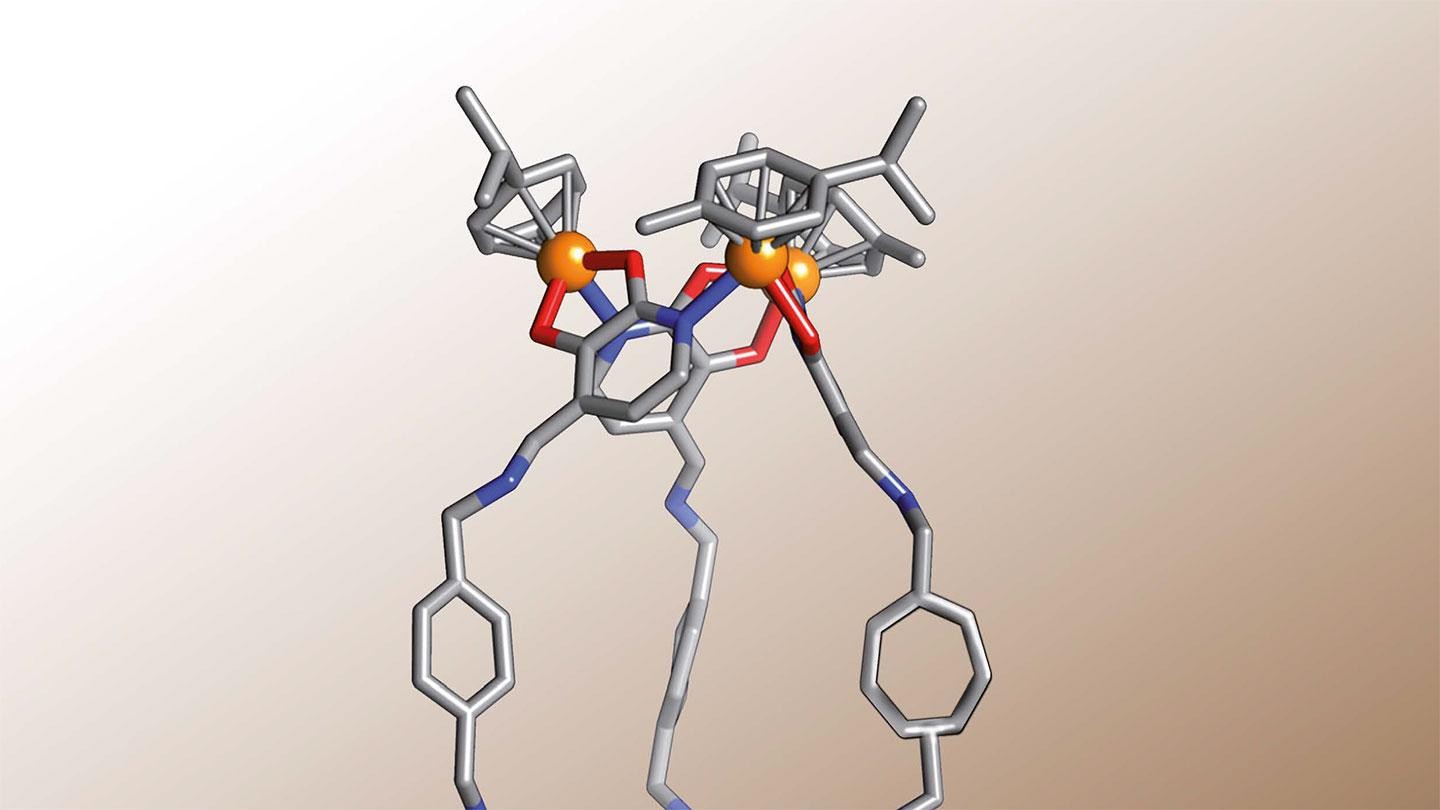
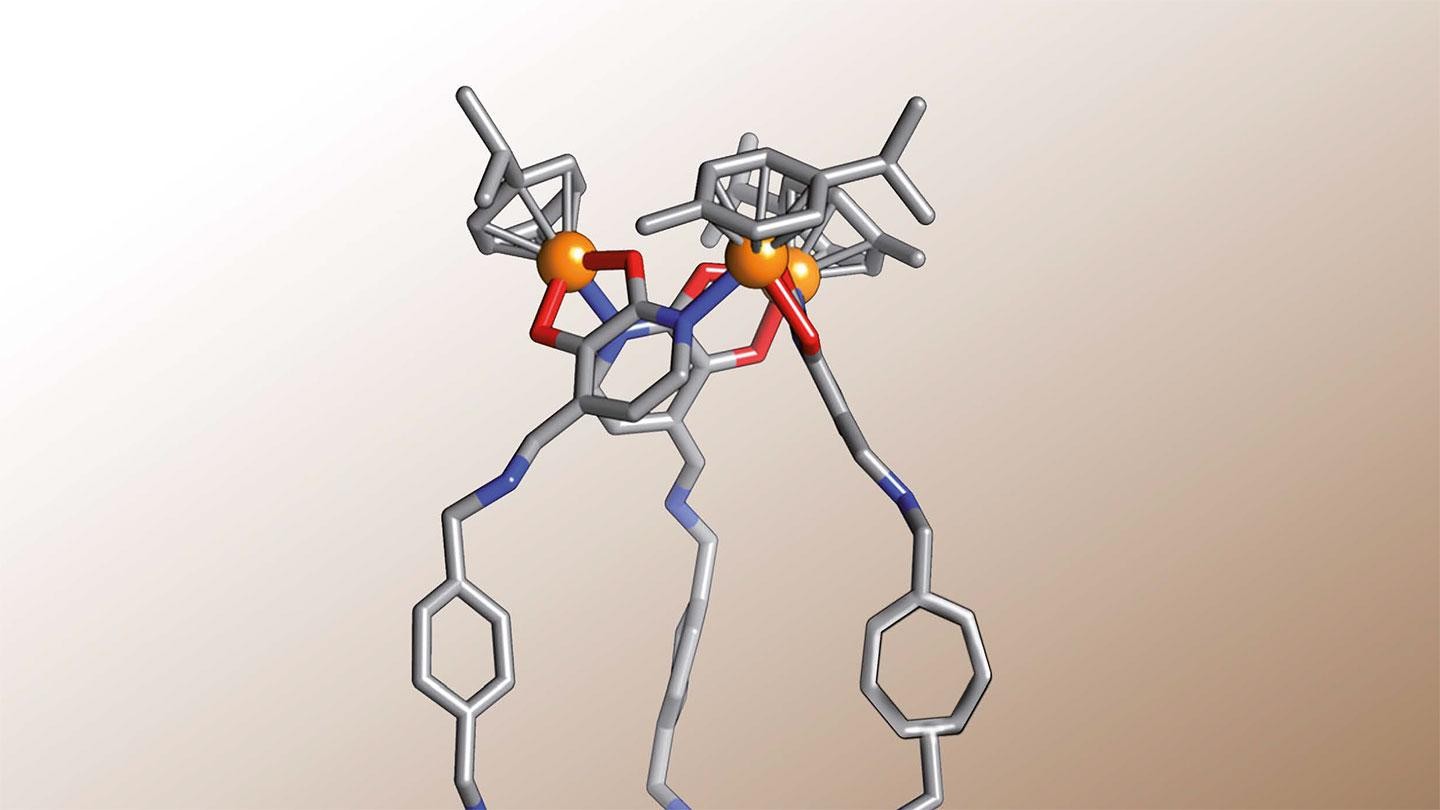
{ "count": 203, "next": "https://memento.epfl.ch/api/v1/events/?format=api&limit=10&offset=140&ordering=description", "previous": "https://memento.epfl.ch/api/v1/events/?format=api&limit=10&offset=120&ordering=description", "results": [ { "id": 70950, "title": "Theoretical Realisation of Quantum Phenomena In Computational Materials Discovery", "slug": "theoretical-realisation-of-quantum-phenomena-in--2", "event_url": "https://memento.epfl.ch/event/theoretical-realisation-of-quantum-phenomena-in--2", "visual_url": "https://memento.epfl.ch/image/32338/200x112.jpg", "visual_large_url": "https://memento.epfl.ch/image/32338/720x405.jpg", "visual_maxsize_url": "https://memento.epfl.ch/image/32338/max-size.jpg", "lang": "en", "start_date": "2026-06-22", "end_date": "2026-06-24", "start_time": null, "end_time": null, "description": "<p>You can apply to participate and find all the relevant information (speakers, abstracts, program,...) on the event website: <a href=\"https://www.cecam.org/workshop-details/theoretical-realisation-of-quantum-phenomena-in-computational-materials-discovery-1485\">https://www.cecam.org/workshop-details/theoretical-realisation-of-quantum-phenomena-in-computational-materials-discovery-1485</a>.<br>\r\n<br>\r\nRegistration is required to attend the full event, take part in the social activities and present a poster at the poster session (if any). However, the EPFL community is welcome to attend specific lectures without registration if the topic is of interest to their research. Do not hesitate to contact the <a href=\"mailto:[email protected]\">CECAM Event Manager</a> if you have any question.<br>\r\n<br>\r\n<strong>Description</strong><br>\r\n<br>\r\nQuantum phenomena in materials underpin a range of emerging technologies, including spin-based quantum technologies, efficient energy transport materials and ultra-narrow bandwidth lasers.<sup>1,2,3</sup> Emergent behaviour such as quantum magnetism, superconductivity and superradiance<sup>4</sup> arise from the complex interplay between electronic and structural properties; electronic features including strong electron correlation, spin-orbit coupling and reduced dimensionality can lead to phenomena such as unconventional superconductivity and room-temperature spin coherences, whilst structural factors such as crystal symmetry, doping concentrations and Moiré twist patterns are pivotal in shaping these quantum characteristics.<sup>5,6</sup> Computational quantum materials discovery requires both highly advanced theoretical models of the electronic structure and high-throughput approaches for identifying stable crystal structures and predicting their properties.<sup>3,7</sup><br>\r\nStrongly correlated electrons, ubiquitous in quantum materials, challenge conventional density functional theory (DFT). Quantum embedding methods, such as Density Matrix Embedding Theory (DMET) and Quantum Defect Embedding Theory (QDET), are powerful tools for describing strongly correlated electronic states in materials. QDET solves an effective Hamiltonian for a strongly-correlated subset of DFT orbitals using full configuration interaction, parameterized via a Green's function approach.<sup>8</sup> DMET, however, maps the solid-state problem onto a self-consistent quantum impurity coupled to a mean-field bath, with the impurity solved by high-level methods.<sup>9</sup> The application of these advanced techniques is rapidly growing, from analysing superconducting cuprates to describing quantum spin defects in semiconductors.<sup>8,9</sup><br>\r\nModel Hamiltonians, such as the multi-band Hubbard model, are increasingly used to describe the low-energy physics of quantum materials.<sup>10</sup> While the constrained random phase approximation is the traditional choice for parametrising these models,<sup>11</sup> the newly developed moment-conserved RPA may offer superior accuracy by conserving instantaneous two-point correlation functions.<sup>12,13</sup> Powerful numerical techniques like Determinant Quantum Monte Carlo have recently been pioneered for solving the model Hamiltonian and predicting quantum phenomena such as pairing susceptibilities.<sup>14</sup><br>\r\nSuch theoretical methods are also essential for computational discovery of spin defects in semiconductors, a promising platform for room-temperature qubits.<sup>3,15</sup> Advanced theoretical treatments are essential to predict defect electronic, magnetic, and optical properties, incorporating effects like spin-orbit and spin-phonon coupling which determine spin coherence and optical manipulation characteristics. The current state-of-the-art combines DFT studies of semiconductor bulk properties with ab initio treatments of the defect; quantum embedding methods are emerging as a promising alternative.<sup>16,17</sup><br>\r\nGiven the immense diversity of materials, high-throughput screening is a cornerstone of modern materials discovery. DFT, particularly with state-of-the-art approximations like r2SCAN+rVV10, remains the workhorse for reliably determining material structures; such calculations often offer critical insight into both a systems stability and electronic structure.<sup>7,18,19,20</sup> Machine learning (ML) is transforming materials discovery by slashing the computational cost of such calculations, allowing a wider exploration of composition space.<sup>21,22</sup><br>\r\nComputational quantum materials modelling is advancing rapidly, however reconciling methods treating strongly correlated electrons with computational workflows employed in modern materials discovery remains relatively unexploited. The synergy of advanced theory, high-performance computing and ML has the potential to drive breakthroughs in quantum materials discovery and accelerate development of emerging technologies, from novel qubit platforms to room-temperature superconductors.<br>\r\n<br>\r\n<strong>References</strong><br>\r\n<br>\r\n<a href=\"https://doi.org/10.1103/physrevlett.132.076401\" target=\"_blank\">[1] C. Scott, G. Booth, Phys. Rev. Lett., <strong>132</strong>, 076401 (2024)</a><br>\r\n<a href=\"https://doi.org/10.1038/s41524-025-01554-0\" target=\"_blank\">[2] X. Jiang, W. Wang, S. Tian, H. Wang, T. Lookman, Y. Su, npj. Comput. Mater., <strong>11</strong>, 79 (2025)</a><br>\r\n<a href=\"https://doi.org/10.1016/j.triboint.2024.110438\" target=\"_blank\">[3] S. Giaremis, M. Righi, Tribology International, <strong>204</strong>, 110438 (2025)</a><br>\r\n<a href=\"https://doi.org/10.1038/s41524-024-01437-w\" target=\"_blank\">[4] Z. Zhu, J. Park, H. Sahasrabuddhe, A. Ganose, R. Chang, J. Lawson, A. Jain, npj. Comput. Mater., <strong>10</strong>, 258 (2024)</a><br>\r\n<a href=\"https://doi.org/10.1002/jcc.26353\" target=\"_blank\">[5] R. Nelson, C. Ertural, J. George, V. Deringer, G. Hautier, R. Dronskowski, J. Comput. Chem., <strong>41</strong>, 1931-1940 (2020)</a><br>\r\n<a href=\"https://doi.org/10.1021/acsmaterialsau.2c00059\" target=\"_blank\">[6] M. Kothakonda, A. Kaplan, E. Isaacs, C. Bartel, J. Furness, J. Ning, C. Wolverton, J. Perdew, J. Sun, ACS Mater. Au, <strong>3</strong>, 102-111 (2022)</a><br>\r\n<a href=\"https://doi.org/10.1038/s41524-025-01547-z\" target=\"_blank\">[7] V. Briganti, A. Lunghi, npj. Comput. Mater., <strong>11</strong>, 62 (2025)</a><br>\r\n<a href=\"https://doi.org/10.1021/acs.jpclett.5c00355\" target=\"_blank\">[8] A. Kundu, F. Martinelli, G. Galli, J. Phys. Chem. Lett., <strong>16</strong>, 1973-1979 (2025)</a><br>\r\n<a href=\"https://doi.org/10.1557/s43577-023-00659-5\" target=\"_blank\">[9] A. Gali, A. Schleife, A. Heinrich, A. Laucht, B. Schuler, C. Chakraborty, C. Anderson, C. Déprez, J. McCallum, L. Bassett, M. Friesen, M. Flatté, P. Maurer, S. Coppersmith, T. Zhong, V. Begum-Hudde, Y. Ping, MRS Bulletin, <strong>49</strong>, 256-276 (2024)</a><br>\r\n<a href=\"https://doi.org/10.1073/pnas.2408717121\" target=\"_blank\">[10] P. Mai, B. Cohen-Stead, T. Maier, S. Johnston, Proc. Natl. Acad. Sci. U.S.A., <strong>121</strong>, (2024)</a><br>\r\n<a href=\"https://doi.org/10.1103/physrevb.108.064511\" target=\"_blank\">[11] C. Pellegrini, C. Kukkonen, A. Sanna, Phys. Rev. B, <strong>108</strong>, 064511 (2023)</a><br>\r\n<a href=\"https://doi.org/10.1186/s40712-024-00202-7\" target=\"_blank\">[12] R. Goyal, S. Maharaj, P. Kumar, M. Chandrasekhar, J Mater. Sci: Mater Eng., <strong>20</strong>, 4 (2025)</a><br>\r\n<a href=\"https://doi.org/10.1038/s41524-024-01314-6\" target=\"_blank\">[13] Y. Chang, E. van Loon, B. Eskridge, B. Busemeyer, M. Morales, C. Dreyer, A. Millis, S. Zhang, T. Wehling, L. Wagner, M. Rösner, npj. Comput. Mater., <strong>10</strong>, 129 (2024)</a><br>\r\n<a href=\"https://doi.org/10.1103/physrevx.15.021049\" target=\"_blank\">[14] H. Padma, J. Thomas, S. TenHuisen, W. He, Z. Guan, J. Li, B. Lee, Y. Wang, S. Lee, Z. Mao, H. Jang, V. Bisogni, J. Pelliciari, M. Dean, S. Johnston, M. Mitrano, Phys. Rev. X, <strong>15</strong>, 021049 (2025)</a><br>\r\n<a href=\"https://doi.org/10.1038/s41467-025-56883-x\" target=\"_blank\">[15] Z. Cui, J. Yang, J. Tölle, H. Ye, S. Yuan, H. Zhai, G. Park, R. Kim, X. Zhang, L. Lin, T. Berkelbach, G. Chan, Nat. Commun., <strong>16</strong>, 1845 (2025)</a><br>\r\n<a href=\"https://doi.org/10.1021/acs.jpclett.5c00287\" target=\"_blank\">[16] L. Otis, Y. Jin, V. Yu, S. Chen, L. Gagliardi, G. Galli, J. Phys. Chem. Lett., <strong>16</strong>, 3092-3099 (2025)</a><br>\r\n<a href=\"https://doi.org/10.1039/d5dd00019j\" target=\"_blank\">[17] A. Ganose, H. Sahasrabuddhe, M. Asta, K. Beck, T. Biswas, A. Bonkowski, J. Bustamante, X. Chen, Y. Chiang, D. Chrzan, J. Clary, O. Cohen, C. Ertural, M. Gallant, J. George, S. Gerits, R. Goodall, R. Guha, G. Hautier, M. Horton, T. Inizan, A. Kaplan, R. Kingsbury, M. Kuner, B. Li, X. Linn, M. McDermott, R. Mohanakrishnan, A. Naik, J. Neaton, S. Parmar, K. Persson, G. Petretto, T. Purcell, F. Ricci, B. Rich, J. Riebesell, G. Rignanese, A. Rosen, M. Scheffler, J. Schmidt, J. Shen, A. Sobolev, R. Sundararaman, C. Tezak, V. Trinquet, J. Varley, D. Vigil-Fowler, D. Wang, D. Waroquiers, M. Wen, H. Yang, H. Zheng, J. Zheng, Z. Zhu, A. Jain, Digital Discovery, (2025)</a><br>\r\n<a href=\"https://doi.org/10.1002/adma.202106909\" target=\"_blank\">[18] W. Ko, Z. Gai, A. Puretzky, L. Liang, T. Berlijn, J. Hachtel, K. Xiao, P. Ganesh, M. Yoon, A. Li, Advanced Materials, <strong>35</strong>, (2022)</a><br>\r\n<a href=\"https://doi.org/10.1126/science.adg0014\" target=\"_blank\">[19] L. Du, M. Molas, Z. Huang, G. Zhang, F. Wang, Z. Sun, Science, <strong>379</strong>, (2023)</a><br>\r\n<a href=\"https://doi.org/10.1038/s41586-023-07001-8\" target=\"_blank\">[20] C. Zhu, S. Boehme, L. Feld, A. Moskalenko, D. Dirin, R. Mahrt, T. Stöferle, M. Bodnarchuk, A. Efros, P. Sercel, M. Kovalenko, G. Rainò, Nature, <strong>626</strong>, 535-541 (2024)</a><br>\r\n<a href=\"https://doi.org/10.1515/nanoph-2022-0723\" target=\"_blank\">[21] Á. Gali, Nanophotonics, <strong>12</strong>, 359-397 (2023)</a><br>\r\n<a href=\"https://doi.org/10.3389/fmats.2024.1343005\" target=\"_blank\">[22] V. Harris, P. Andalib, Front. Mater., <strong>11</strong>, (2024)</a></p>", "image_description": "", "creation_date": "2026-01-26T14:46:04", "last_modification_date": "2026-01-26T16:42:30", "link_label": "Theoretical Realisation of Quantum Phenomena In Computational Materials Discovery", "link_url": "https://www.cecam.org/workshop-details/theoretical-realisation-of-quantum-phenomena-in-computational-materials-discovery-1485", "canceled": "False", "cancel_reason": "", "place_and_room": "BCH 2103", "url_place_and_room": "https://plan.epfl.ch/?room==BCH%202103", "url_online_room": "", "spoken_languages": [ "https://memento.epfl.ch/api/v1/spoken_languages/2/?format=api" ], "speaker": "", "organizer": "<strong>Petros-Panagis Filippatos, </strong>University of Nottingham ; <strong>Katherine Inzani, </strong>University of Nottingham ; <strong>Tom Irons, </strong>University of Nottingham ; <strong>Connor Williamson, </strong>University of Nottingham", "contact": "<a href=\"mailto:[email protected]\"><strong>Cornelia Bujenita</strong></a>, CECAM Events and Operations Manager", "is_internal": "False", "theme": "", "vulgarization": { "id": 2, "fr_label": "Public averti", "en_label": "Informed public" }, "registration": { "id": 1, "fr_label": "Sur inscription", "en_label": "Registration required" }, "keywords": "", "file": null, "icalendar_url": "https://memento.epfl.ch/event/export/119440/", "category": { "id": 1, "code": "CONF", "fr_label": "Conférences - Séminaires", "en_label": "Conferences - Seminars", "activated": true }, "academic_calendar_category": null, "domains": [], "mementos": [ "https://memento.epfl.ch/api/v1/mementos/1/?format=api", "https://memento.epfl.ch/api/v1/mementos/5/?format=api", "https://memento.epfl.ch/api/v1/mementos/6/?format=api", "https://memento.epfl.ch/api/v1/mementos/8/?format=api", "https://memento.epfl.ch/api/v1/mementos/27/?format=api", "https://memento.epfl.ch/api/v1/mementos/442/?format=api" ] }, { "id": 70951, "title": "Toward Intelligent Behavior in Macroscopic Active Matter", "slug": "toward-intelligent-behavior-in-macroscopic-active", "event_url": "https://memento.epfl.ch/event/toward-intelligent-behavior-in-macroscopic-active", "visual_url": "https://memento.epfl.ch/image/32339/200x112.jpg", "visual_large_url": "https://memento.epfl.ch/image/32339/720x405.jpg", "visual_maxsize_url": "https://memento.epfl.ch/image/32339/max-size.jpg", "lang": "en", "start_date": "2026-07-06", "end_date": "2026-07-10", "start_time": null, "end_time": null, "description": "<p>You can apply to participate and find all the relevant information (speakers, abstracts, program,...) on the event website: <a href=\"https://www.cecam.org/workshop-details/toward-intelligent-behavior-in-macroscopic-active-matter-1481\">https://www.cecam.org/workshop-details/toward-intelligent-behavior-in-macroscopic-active-matter-1481</a>.<br>\r\n<br>\r\nRegistration is required to attend the full event, take part in the social activities and present a poster at the poster session (if any). However, the EPFL community is welcome to attend specific lectures without registration if the topic is of interest to their research. Do not hesitate to contact the <a href=\"mailto:[email protected]\">CECAM Event Manager</a> if you have any question.<br>\r\n<br>\r\n<strong>Description</strong><br>\r\n<br>\r\nActive matter has emerged as a central framework for understanding systems composed of self-driven units across scales, ranging from molecular motors and cytoskeletal filaments to animal groups and robotic swarms. Initially, many foundational models focused on macroscopic agents – such as flocks, swarms, and driven granular particles – where simple interaction rules give rise to rich collective phenomena. However, over the past two decades, much of the focus has shifted toward microscopic and mesoscopic active systems, especially in soft and biological matter, supported by the technological development of high-resolution imaging, force measurement, and microfabrication. These advances have driven a more refined theoretical understanding, connecting microscopic dynamics with hydrodynamic and continuum-scale descriptions, and have found applications in biophysics, material science, and cellular biology. <br>\r\nIn parallel, yet often semi-independently, active matter concepts have flourished in ecological and robotic systems. In these domains, the agents – be they insects, birds, autonomous vehicles, or soft robots – not only self-propel and interact, but also sense their environments, make decisions, and adapt their behavior. These systems extend the classical framework of active matter by incorporating elements of intelligence, information processing, and environmental feedback. Notably, such systems can operate far from equilibrium and exhibit coordinated behavior that seems tuned for functional outcomes – navigation, foraging, or collective decision-making.<br>\r\nThese trends point toward a convergence: macroscopic active matter systems capable of intelligent, adaptive, or programmable behavior. This includes both natural systems (e.g., flocking insects, social insects, animal herds) and artificial systems (e.g., modular robots, programmable matter, active granular agents). The interplay of self-propulsion, interaction rules, information exchange, learning or memory, and system-level feedback opens exciting new directions for both fundamental science and applications. Recent efforts in this space combine techniques from statistical physics, nonlinear dynamics, robotics, and machine learning.<br>\r\nHowever, the communities working on these different aspects of active matter – soft matter physicists, ecologists, roboticists, and complexity scientists – remain fragmented, with limited opportunity for sustained dialogue. Bridging these communities is essential to develop a shared language, identify unifying principles, and guide the development of new experimental platforms and theoretical frameworks.<br>\r\n<br>\r\n<strong>References</strong><br>\r\n<br>\r\n<a href=\"https://doi.org/10.1038/s41586-024-08514-6\" target=\"_blank\">[1] F. Gu, B. Guiselin, N. Bain, I. Zuriguel, D. Bartolo, Nature, <strong>638</strong>, 112-119 (2025)</a><br>\r\n<a href=\"https://doi.org/10.1126/scirobotics.aav7874\" target=\"_blank\">[2] A. Rafsanjani, K. Bertoldi, A. Studart, Sci. Robot., <strong>4</strong>, (2019)</a><br>\r\n<a href=\"https://doi.org/10.34133/cbsystems.0301\" target=\"_blank\">[3] J. Tirado, A. Parvaresh, B. Seyidoğlu, D. Bedford, J. Jørgensen, A. Rafsanjani, Cyborg. Bionic. Syst., <strong>6</strong>, (2025)</a><br>\r\n<a href=\"https://doi.org/10.1038/s42254-021-00406-2\" target=\"_blank\">[4] J. O’Byrne, Y. Kafri, J. Tailleur, F. van Wijland, Nat. Rev. Phys., <strong>4</strong>, 167-183 (2022)</a><br>\r\n<a href=\"https://doi.org/10.1038/s41567-022-01704-x\" target=\"_blank\">[5] P. Baconnier, D. Shohat, C. López, C. Coulais, V. Démery, G. Düring, O. Dauchot, Nat. Phys., <strong>18</strong>, 1234-1239 (2022)</a><br>\r\n<a href=\"https://doi.org/10.1038/s41567-023-02028-0\" target=\"_blank\">[6] A. Cavagna, L. Di Carlo, I. Giardina, T. Grigera, S. Melillo, L. Parisi, G. Pisegna, M. Scandolo, Nat. Phys., <strong>19</strong>, 1043-1049 (2023)</a><br>\r\n<a href=\"https://doi.org/10.1155/2013/987549\" target=\"_blank\">[7] M. Bischof, E. Del Giudice, Molecular Biology International, <strong>2013</strong>, 1-19 (2013)</a><br>\r\n<a href=\"https://doi.org/10.1098/rstb.2019.0377\" target=\"_blank\">[8] A. Deutsch, P. Friedl, L. Preziosi, G. Theraulaz, Phil. Trans. R. Soc. B, <strong>375</strong>, 20190377 (2020)</a><br>\r\n<a href=\"https://doi.org/10.1038/ncomms5688\" target=\"_blank\">[9] N. Kumar, H. Soni, S. Ramaswamy, A. Sood, Nat. Commun., <strong>5</strong>, 4688 (2014)</a><br>\r\n<a href=\"https://doi.org/10.1111/j.1756-8765.2009.01028.x\" target=\"_blank\">[10] M. Moussaid, S. Garnier, G. Theraulaz, D. Helbing, Topics in Cognitive Science, <strong>1</strong>, 469-497 (2009)</a><br>\r\n<a href=\"https://doi.org/10.1103/physrevx.15.021050\" target=\"_blank\">[11] R. Bebon, J. Robinson, T. Speck, Phys. Rev. X, <strong>15</strong>, 021050 (2025)</a><br>\r\n<a href=\"https://doi.org/10.1126/scirobotics.abo6140\" target=\"_blank\">[12] M. Ben Zion, J. Fersula, N. Bredeche, O. Dauchot, Sci. Robot., <strong>8</strong>, (2023)</a><br>\r\n<a href=\"https://doi.org/10.1103/physreve.110.014606\" target=\"_blank\">[13] J. Fersula, N. Bredeche, O. Dauchot, Phys. Rev. E, <strong>110</strong>, 014606 (2024)</a><br>\r\n<a href=\"https://doi.org/10.1038/s42005-024-01540-w\" target=\"_blank\">[14] L. Caprini, A. Ldov, R. Gupta, H. Ellenberg, R. Wittmann, H. Löwen, C. Scholz, Commun. Phys., <strong>7</strong>, 52 (2024)</a><br>\r\n<a href=\"https://doi.org/10.1098/rspb.2021.0275\" target=\"_blank\">[15] T. Lengronne, D. Mlynski, S. Patalano, R. James, L. Keller, S. Sumner, Proc. R. Soc. B., <strong>288</strong>, rspb.2021.0275 (2021)</a><br>\r\n<a href=\"https://doi.org/10.1103/physrevlett.75.1226\" target=\"_blank\">[16] T. Vicsek, A. Czirók, E. Ben-Jacob, I. Cohen, O. Shochet, Phys. Rev. Lett., <strong>75</strong>, 1226-1229 (1995)</a><br>\r\n<a href=\"https://doi.org/10.1360/nso/20240005\" target=\"_blank\">[17] L. Ning, H. Zhu, J. Yang, Q. Zhang, P. Liu, R. Ni, N. Zheng, NSO., <strong>3</strong>, 20240005 (2024)</a><br>\r\n<a href=\"https://doi.org/10.1088/1361-648x/adebd3\" target=\"_blank\">[18] G. Volpe, N. Araújo, M. Guix, M. Miodownik, N. Martin, L. Alvarez, J. Simmchen, R. Leonardo, N. Pellicciotta, Q. Martinet, J. Palacci, W. Ng, D. Saxena, R. Sapienza, S. Nadine, J. Mano, R. Mahdavi, C. Beck Adiels, J. Forth, C. Santangelo, S. Palagi, J. Seok, V. Webster-Wood, S. Wang, L. Yao, A. Aghakhani, T. Barois, H. Kellay, C. Coulais, M. van Hecke, C. Pierce, T. Wang, B. Chong, D. Goldman, A. Reina, V. Trianni, G. Volpe, R. Beckett, S. Nair, R. Armstrong, J. Phys.: Condens. Matter, <strong>37</strong>, 333501 (2025)</a><br>\r\n<a href=\"https://doi.org/10.1088/1361-648x/ab6348\" target=\"_blank\">[19] G. Gompper, R. Winkler, T. Speck, A. Solon, C. Nardini, F. Peruani, H. Löwen, R. Golestanian, U. Kaupp, L. Alvarez, T. Kiørboe, E. Lauga, W. Poon, A. DeSimone, S. Muiños-Landin, A. Fischer, N. Söker, F. Cichos, R. Kapral, P. Gaspard, M. Ripoll, F. Sagues, A. Doostmohammadi, J. Yeomans, I. Aranson, C. Bechinger, H. Stark, C. Hemelrijk, F. Nedelec, T. Sarkar, T. Aryaksama, M. Lacroix, G. Duclos, V. Yashunsky, P. Silberzan, M. Arroyo, S. Kale, J. Phys.: Condens. Matter, <strong>32</strong>, 193001 (2020)</a><br>\r\n<a href=\"https://doi.org/10.1038/529016a\" target=\"_blank\">[20] G. Popkin, Nature, <strong>529</strong>, 16-18 (2016)</a></p>", "image_description": "", "creation_date": "2026-01-26T14:57:51", "last_modification_date": "2026-01-26T16:42:52", "link_label": "Toward Intelligent Behavior in Macroscopic Active Matter", "link_url": "https://www.cecam.org/workshop-details/toward-intelligent-behavior-in-macroscopic-active-matter-1481", "canceled": "False", "cancel_reason": "", "place_and_room": "BCH 2103", "url_place_and_room": "https://plan.epfl.ch/?room==BCH%202103", "url_online_room": "", "spoken_languages": [ "https://memento.epfl.ch/api/v1/spoken_languages/2/?format=api" ], "speaker": "", "organizer": "<strong>Wylie Ahmed, </strong>CNRS ; <strong>Laura Alvarez, </strong>University of Bordeaux ; <strong>Lorenzo Caprini, </strong>Heinrich-Heine University of Duesseldorf ; <strong>Matteo Paoluzzi, </strong>Sapienza University of Rome", "contact": "<a href=\"mailto:[email protected]\"><strong>Cornelia Bujenita</strong></a>, CECAM Events and Operations Manager", "is_internal": "False", "theme": "", "vulgarization": { "id": 2, "fr_label": "Public averti", "en_label": "Informed public" }, "registration": { "id": 1, "fr_label": "Sur inscription", "en_label": "Registration required" }, "keywords": "", "file": null, "icalendar_url": "https://memento.epfl.ch/event/export/119442/", "category": { "id": 1, "code": "CONF", "fr_label": "Conférences - Séminaires", "en_label": "Conferences - Seminars", "activated": true }, "academic_calendar_category": null, "domains": [], "mementos": [ "https://memento.epfl.ch/api/v1/mementos/1/?format=api", "https://memento.epfl.ch/api/v1/mementos/5/?format=api", "https://memento.epfl.ch/api/v1/mementos/6/?format=api", "https://memento.epfl.ch/api/v1/mementos/8/?format=api", "https://memento.epfl.ch/api/v1/mementos/27/?format=api", "https://memento.epfl.ch/api/v1/mementos/417/?format=api", "https://memento.epfl.ch/api/v1/mementos/442/?format=api" ] }, { "id": 71408, "title": "Dinitrogen N2 Activation and Transformation into N-Containing Organic Compounds", "slug": "dinitrogen-n2-activation-and-transformation-into-2", "event_url": "https://memento.epfl.ch/event/dinitrogen-n2-activation-and-transformation-into-2", "visual_url": "https://memento.epfl.ch/image/32756/200x112.jpg", "visual_large_url": "https://memento.epfl.ch/image/32756/720x405.jpg", "visual_maxsize_url": "https://memento.epfl.ch/image/32756/max-size.jpg", "lang": "en", "start_date": "2026-06-01", "end_date": "2026-06-01", "start_time": "17:15:00", "end_time": "18:30:00", "description": "<p>Zhenfeng Xi<br>\r\n<em>College of Chemistry, Peking University, Beijing 100871, China.</em><br>\r\n<br>\r\n<strong><em>Abstract:</em></strong><br>\r\nNowadays almost all artificial synthetic nitrogen-containing organic compounds (N-C bonding) are prepared via ammonia (NH<sub>3</sub>, the Haber-Bosch product). The ultimate research goal of our group is to synthesize nitrogen-containing organic compounds efficiently and directly from N<sub>2</sub> gas as the nitrogen source, bypassing the NH<sub>3</sub>-depended synthetic pathway, mainly via metal-mediated or catalyzed dinitrogen functionalization.<sup>1</sup><br>\r\n<br>\r\n<img alt=\"\" id=\"_x0000_i1025\" o:ole=\"\" src=\"file:///C:/Users/mborcard/AppData/Local/Temp/msohtmlclip1/01/clip_image001.emz\"><br>\r\n<img alt=\"\" id=\"图片_x0020_1\" src=\"file:///C:/Users/mborcard/AppData/Local/Temp/msohtmlclip1/01/clip_image002.emz\"><br>\r\n<br>\r\nAt this presentation, I will briefly introduce two results recently realized in my research group. One result is about the transformation and mechanism on efficient first-step and second-step N<sub>2</sub> electrophilic functionalization of L<sub>n</sub>Cr-N<sub>2</sub> metal dinitrogen complexes.<sup>2</sup> The other result is on the synthesis of nitrogen-containing organic compounds via LiNCNLi formed from N<sub>2</sub> gas and carbon by synergizing the heterogeneous synthetic approach with the homogeneous synthetic methodology.<sup>3</sup><br>\r\n<br>\r\n<strong><em>References</em></strong><strong><em>:</em></strong><br>\r\n<strong>1.</strong> Lv, Z.-J.; Wei, J.; Zhang, W.-X.; Chen, P.; Deng, D.; Shi, Z.-J.; Xi, Z. <em>Natl. Sci. Rev.</em> <strong>2020</strong>, <em>7</em>, 1564-1583.<br>\r\n<strong>2.</strong> (a) Wang, G.-X.; Wang, X.; Jiang, Y.; Chen, W.; Shan, C.; Zhang, P.; Wei, J.; Ye, S.; Xi, Z. <em>J. Am. Chem. Soc.</em> <strong>2023</strong>, <em>145</em>, 9746-9754; (b) Wang, X.; Wu, Y.; Wang, Y.; Sun, R.; Wei, J.; Xi, Z. <em>J. Am. Chem. Soc.</em> <strong>2025</strong>, <em>147</em>, 35413.<br>\r\n<strong>3.</strong> Wu, L.-J.; Wang, Q.; Guo, J.; Wei, J.; Chen, P.; Xi, Z. <em>Angew. Chem. Int. Ed.</em> <strong>2023</strong>, <em>62</em>, e202219298.<br>\r\n </p>", "image_description": "", "creation_date": "2026-03-19T14:33:36", "last_modification_date": "2026-04-20T14:28:58", "link_label": "", "link_url": "", "canceled": "False", "cancel_reason": "", "place_and_room": "Genopode A", "url_place_and_room": "", "url_online_room": "", "spoken_languages": [ "https://memento.epfl.ch/api/v1/spoken_languages/2/?format=api" ], "speaker": "Prof. Zhenfeng Xi, College of Chemistry, Peking University, Beijing, China <a href=\"https://www.chem.pku.edu.cn/en/People/AcademicStaff/efe292e2a4b94bb380a204aacf927901.htm\">https://www.chem.pku.edu.cn/en/People/AcademicStaff/efe292e2a4b94bb380a204aacf927901.htm</a>", "organizer": "Prof. Jieping Zhu <a href=\"https://www.epfl.ch/labs/lspn/\">https://www.epfl.ch/labs/lspn/</a>", "contact": "Prof. Jieping Zhu <a href=\"https://www.epfl.ch/labs/lspn/\">https://www.epfl.ch/labs/lspn/</a>", "is_internal": "False", "theme": "", "vulgarization": { "id": 1, "fr_label": "Tout public", "en_label": "General public" }, "registration": { "id": 3, "fr_label": "Entrée libre", "en_label": "Free" }, "keywords": "ocseminar", "file": "https://memento.epfl.ch/public/upload/files/XisTalkAbstractwithtalktitle.docx", "icalendar_url": "https://memento.epfl.ch/event/export/120126/", "category": { "id": 1, "code": "CONF", "fr_label": "Conférences - Séminaires", "en_label": "Conferences - Seminars", "activated": true }, "academic_calendar_category": null, "domains": [], "mementos": [ "https://memento.epfl.ch/api/v1/mementos/5/?format=api", "https://memento.epfl.ch/api/v1/mementos/14/?format=api" ] }, { "id": 70903, "title": "lunch&LEARN: Learning with AI: Designing AI Tutors that foster learning in robotics and CS courses", "slug": "lunchlearn-learning-with-ai-designing-ai-tutors-th", "event_url": "https://memento.epfl.ch/event/lunchlearn-learning-with-ai-designing-ai-tutors-th", "visual_url": "https://memento.epfl.ch/image/32313/200x112.jpg", "visual_large_url": "https://memento.epfl.ch/image/32313/720x405.jpg", "visual_maxsize_url": "https://memento.epfl.ch/image/32313/max-size.jpg", "lang": "en", "start_date": "2026-06-09", "end_date": "2026-06-09", "start_time": "12:15:00", "end_time": "13:00:00", "description": "<strong>// NEW DATE // This event has been rescheduled from 17 March to 9 June 2026!</strong><br>\r\n<br>\r\nHow can AI tutors be designed to support learning rather than shortcutting it?<br>\r\n<br>\r\nIn this presentation, Jérôme Brender (EPFL) will examine how undergraduate students learn with AI tutors in robotics and computer science courses.<br>\r\n<br>\r\nAcross multiple design iterations, he investigated how features such as course-grounded retrieval (RAG), Socratic questioning, and real-time prompt feedback, and debate chatbot, shape students’ engagement, prompting behavior, and learning outcomes.<br>\r\n<br>\r\nHis work focuses on how AI tutors can help students better understand course concepts and become more reflective and effective users of AI tools. The findings provide insights into designing AI tutors that foster critical thinking and support sustainable learning practices.", "image_description": "", "creation_date": "2026-01-21T13:49:42", "last_modification_date": "2026-03-10T14:15:23", "link_label": "Registration/zoom", "link_url": "https://epfl.zoom.us/meeting/register/4V57FBxZR-uhyymvvps-6g", "canceled": "False", "cancel_reason": "", "place_and_room": "ME B1 10", "url_place_and_room": "https://plan.epfl.ch/?room==ME%20B1%2010", "url_online_room": "https://epfl.zoom.us/meeting/register/4V57FBxZR-uhyymvvps-6g", "spoken_languages": [ "https://memento.epfl.ch/api/v1/spoken_languages/2/?format=api" ], "speaker": "<a href=\"https://people.epfl.ch/jerome.brender?lang=en\">Jérôme Brender</a>", "organizer": "Center LEARN", "contact": "[email protected]", "is_internal": "True", "theme": "", "vulgarization": { "id": 2, "fr_label": "Public averti", "en_label": "Informed public" }, "registration": { "id": 1, "fr_label": "Sur inscription", "en_label": "Registration required" }, "keywords": "lunch&LEARN, Center LEARN, teaching, learning", "file": null, "icalendar_url": "https://memento.epfl.ch/event/export/119400/", "category": { "id": 1, "code": "CONF", "fr_label": "Conférences - Séminaires", "en_label": "Conferences - Seminars", "activated": true }, "academic_calendar_category": null, "domains": [], "mementos": [ "https://memento.epfl.ch/api/v1/mementos/416/?format=api", "https://memento.epfl.ch/api/v1/mementos/1/?format=api", "https://memento.epfl.ch/api/v1/mementos/3/?format=api", "https://memento.epfl.ch/api/v1/mementos/5/?format=api", "https://memento.epfl.ch/api/v1/mementos/6/?format=api", "https://memento.epfl.ch/api/v1/mementos/323/?format=api", "https://memento.epfl.ch/api/v1/mementos/8/?format=api", "https://memento.epfl.ch/api/v1/mementos/85/?format=api", "https://memento.epfl.ch/api/v1/mementos/65/?format=api", "https://memento.epfl.ch/api/v1/mementos/27/?format=api", "https://memento.epfl.ch/api/v1/mementos/417/?format=api" ] }, { "id": 71880, "title": "Imaging Seminar: Mapping cellular function with 3D single-molecule tracking and super-resolution microscopy", "slug": "imaging-seminar-mapping-cellular-function-with-3-2", "event_url": "https://memento.epfl.ch/event/imaging-seminar-mapping-cellular-function-with-3-2", "visual_url": "https://memento.epfl.ch/image/33202/200x112.jpg", "visual_large_url": "https://memento.epfl.ch/image/33202/720x405.jpg", "visual_maxsize_url": "https://memento.epfl.ch/image/33202/max-size.jpg", "lang": "en", "start_date": "2026-06-25", "end_date": "2026-06-25", "start_time": "17:00:00", "end_time": "18:00:00", "description": "<strong><a href=\"https://docs.google.com/forms/d/e/1FAIpQLSepcadZ0LZTP-BpVwOnH2ljz6z4CtAFbXxIkfEL0Mpio-vrqQ/viewform?usp=header\">Registration</a><br>\r\n<br>\r\nAbstract</strong>: Cellular function is governed by the molecular organization and interactions at the nanoscale. In this talk, I will present our recent advances in 3D single-molecule tracking of dynamics and super-resolution imaging of nanoscale structures throughout mammalian cells, and showcase applications of our approaches for cellular imaging. I will describe our developments of light sheet microscopy platforms that reduce fluorescence background, photobleaching, and the risk of photodamaging sensitive samples. Combined with point spread function (PSF) engineering for nanoscale localization of individual molecules in 3D, deep learning for analysis of overlapping emitters, and a novel 3D nanoprinted microfluidic chip for environmental control, these platforms enable whole-cell multi-target 3D single-molecule super-resolution imaging with improved accuracy, precision, and imaging speed. I will also highlight our recent developments and applications of dCas9-based labels that enable flexible, long-term tracking of endogenous, non-repetitive genomic loci in live human cells with excellent spatiotemporal resolution. Using this approach, we demonstrate correlative tracking of gene dynamics and transcription for improved understanding of gene regulation. I will further showcase studies of disease mechanisms and novel therapies for the premature aging disorder Hutchinson-Gilford Progeria Syndrome. Together, these imaging technologies provide a versatile toolkit for quantitative studies of molecular dynamics, nanoscale structures, and molecular mechanisms, enabling new insights into a broad range of chemical, biological, and biomedical questions related to cellular function and pathogenesis.<br>\r\n<br>\r\n<strong>Bio: </strong>Dr. Gustavsson joined the faculty at Rice University in 2020 as a CPRIT Scholar in Cancer Research and the Norman Hackerman-Welch Young Investigator Chair. At Rice, she founded and serves as Director of the Center for Nanoscale Imaging Sciences. Her research group strives to gain detailed information about cellular nanoscale structures, dynamics, and molecular mechanisms by designing and applying innovative and versatile optical imaging tools. Dr. Gustavsson received her Ph.D. in Physics from the University of Gothenburg, Sweden. Her graduate work focused on studying rhythms and dynamic responses in single cells by combining and optimizing techniques such as fluorescence microscopy, optical tweezers, and microfluidics. Upon completion of her graduate work, Dr. Gustavsson joined the group of Nobel Laureate W. E. Moerner at Stanford University as a Postdoctoral Fellow. Her research focused on the development and application of 3D single-molecule super-resolution microscopy for cellular imaging and included the implementation of light sheet illumination for optical sectioning of mammalian cells. Her work has been recognized with multiple honors, awards, and fellowships, most notably the FEBS Journal Richard Perham Prize, the 3-year Swedish Research Council International Postdoctoral Fellowship, the PicoQuant Young Investigator Award, the NIH K99/R00 Pathway to Independence Award, the CPRIT Recruitment of First-Time Tenure-Track Faculty Members Award, the Scialog: Advancing Bioimaging Fellowship, the Edward S. and Fofo Lewis Chemistry Research Award, the NIH Maximizing Investigators' Research Award (MIRA), and the NSF CAREER Award.<br>\r\n<br>\r\n<strong>The seminar is followed by an aperitif. </strong>", "image_description": "", "creation_date": "2026-05-13T13:52:19", "last_modification_date": "2026-05-22T10:54:26", "link_label": "Registration", "link_url": "https://docs.google.com/forms/d/e/1FAIpQLSepcadZ0LZTP-BpVwOnH2ljz6z4CtAFbXxIkfEL0Mpio-vrqQ/viewform?usp=header", "canceled": "False", "cancel_reason": "", "place_and_room": "BM 5202", "url_place_and_room": "https://plan.epfl.ch/?room==BM%205202", "url_online_room": "", "spoken_languages": [ "https://memento.epfl.ch/api/v1/spoken_languages/2/?format=api" ], "speaker": "Anna-Karin Gustavsson", "organizer": "<a href=\"https://imaging.epfl.ch/\">Center for Imaging</a>", "contact": "<a href=\"https://people.epfl.ch/cecilia.carron\">Cecilia Carron</a>", "is_internal": "False", "theme": "", "vulgarization": { "id": 2, "fr_label": "Public averti", "en_label": "Informed public" }, "registration": { "id": 1, "fr_label": "Sur inscription", "en_label": "Registration required" }, "keywords": "", "file": null, "icalendar_url": "https://memento.epfl.ch/event/export/120768/", "category": { "id": 1, "code": "CONF", "fr_label": "Conférences - Séminaires", "en_label": "Conferences - Seminars", "activated": true }, "academic_calendar_category": null, "domains": [], "mementos": [ "https://memento.epfl.ch/api/v1/mementos/8/?format=api", "https://memento.epfl.ch/api/v1/mementos/1/?format=api", "https://memento.epfl.ch/api/v1/mementos/284/?format=api", "https://memento.epfl.ch/api/v1/mementos/9/?format=api", "https://memento.epfl.ch/api/v1/mementos/6/?format=api" ] }, { "id": 70782, "title": "“Mechanisms driving the rapid evolution of genomes”", "slug": "mechanisms-driving-the-rapid-evolution-of-genomes", "event_url": "https://memento.epfl.ch/event/mechanisms-driving-the-rapid-evolution-of-genomes", "visual_url": "https://memento.epfl.ch/image/32193/200x112.jpg", "visual_large_url": "https://memento.epfl.ch/image/32193/720x405.jpg", "visual_maxsize_url": "https://memento.epfl.ch/image/32193/max-size.jpg", "lang": "en", "start_date": "2026-06-04", "end_date": "2026-06-04", "start_time": "12:15:00", "end_time": "13:15:00", "description": "<strong>A Lola and John Grace Distinguished Lecture in Cancer Research</strong>\r\n<div class=\"elementor-element elementor-element-98cefd8 elementor-widget elementor-widget-heading\">\r\n<div class=\"elementor-widget-container\">\r\n<div class=\"is-active tabs-panel\">\r\n<div class=\"bundle--tabs paragraph paragraph--type--tabs paragraph--view-mode--default\">\r\n<div class=\"row\">\r\n<div class=\"columns small-12\">\r\n<div class=\"body field__item\">David Pellman, M.D. is the Margaret M. Dyson Professor of Pediatric Oncology at the Dana-Farber Cancer Institute, a Professor of Cell Biology at Harvard Medical School, an Investigator of the Howard Hughes Medical Institute, and the Associate Director for Basic Science at the Dana-Farber/Harvard Cancer Center. He received his undergraduate and medical degrees from the University of Chicago. During medical school, he did research at the Rockefeller University. His postdoctoral fellowship was at the Whitehead Institute/Massachusetts Institute of Technology.<br>\r\n<br>\r\nThe Pellman Lab works on the mechanism of cell division and how certain cell division errors drive rapid genome evolution. His research has contributed to the understanding of cell division, the origin of cell division errors in cancer, how cell division errors drive genetic instability and the mechanisms driving rapid evolution of cancer genomes. Our contributions include (1) the co-discovery of formin-dependent actin nucleation and a mechanism for spindle positioning during asymmetric cell division, (2) discoveries establishing that whole genome duplication can drive tumorigenesis, alter cell physiology, and accelerate evolutionary adaptation, and (3) the discovery of a mechanism explaining chromothripsis, a mutational process that generates rapid karyotype evolution in cancer and congenital disease.</div>\r\n</div>\r\n</div>\r\n</div>\r\n</div>\r\n</div>\r\n</div>\r\n\r\n<div class=\"elementor-element elementor-element-e552a16 elementor-widget elementor-widget-text-editor\">\r\n<div class=\"elementor-widget-container\"> </div>\r\n</div>", "image_description": "", "creation_date": "2026-01-06T16:10:28", "last_modification_date": "2026-01-28T14:34:52", "link_label": "", "link_url": "", "canceled": "False", "cancel_reason": "", "place_and_room": "SV 1717", "url_place_and_room": "https://plan.epfl.ch/?room==SV%201717", "url_online_room": "https://epfl.zoom.us/j/97039045251?pwd=WDFjUGV3Y1FxeG9rTUIrOGpiUXhLQT09", "spoken_languages": [ "https://memento.epfl.ch/api/v1/spoken_languages/2/?format=api" ], "speaker": "David Pellman, M.D., Margaret M. Dyson Professor of Pediatric Oncology, Dana-Farber Cancer Institute, a Professor of Cell Biology at Harvard Medical School, an Investigator of the Howard Hughes Medical Institute, and the Associate Director for Basic Science at the Dana-Farber/Harvard Cancer Center. ", "organizer": "Prof. Pierre Gönczy", "contact": "Lisa Smith, ISREC Administrative Assistant", "is_internal": "True", "theme": "", "vulgarization": { "id": 2, "fr_label": "Public averti", "en_label": "Informed public" }, "registration": { "id": 3, "fr_label": "Entrée libre", "en_label": "Free" }, "keywords": "Grace Lecture, cancer", "file": null, "icalendar_url": "https://memento.epfl.ch/event/export/119190/", "category": { "id": 1, "code": "CONF", "fr_label": "Conférences - Séminaires", "en_label": "Conferences - Seminars", "activated": true }, "academic_calendar_category": null, "domains": [], "mementos": [ "https://memento.epfl.ch/api/v1/mementos/1/?format=api", "https://memento.epfl.ch/api/v1/mementos/26/?format=api", "https://memento.epfl.ch/api/v1/mementos/9/?format=api", "https://memento.epfl.ch/api/v1/mementos/6/?format=api" ] }, { "id": 71840, "title": "Precision Oncology Beyond Genomics: Making the Case in Pediatric Leukemia", "slug": "precision-oncology-beyond-genomics-making-the-case", "event_url": "https://memento.epfl.ch/event/precision-oncology-beyond-genomics-making-the-case", "visual_url": "https://memento.epfl.ch/image/33160/200x112.jpg", "visual_large_url": "https://memento.epfl.ch/image/33160/720x405.jpg", "visual_maxsize_url": "https://memento.epfl.ch/image/33160/max-size.jpg", "lang": "en", "start_date": "2026-06-25", "end_date": "2026-06-25", "start_time": "12:15:00", "end_time": "13:15:00", "description": "<strong>A Lola and John Grace Distinguished Lecture in Cancer Research</strong>\r\n<div class=\"elementor-element elementor-element-98cefd8 elementor-widget elementor-widget-heading\">\r\n<div class=\"elementor-widget-container\"><br>\r\nDr. Jun J. Yang has a long-standing interest in human genetics, dating back to his early education in China where he received his undergrad and master’s degrees. He completed his PhD training at Purdue University and moved to St. Jude where he transitioned from postdoc training to faculty in 2010. Dr. Yang currently serves as Vice Chair for the Department of Pharmacy and Pharmaceutical Sciences and is the Associate Director of the Hematological Malignancies T32 Training Program at the St. Jude Comprehensive Cancer Center. He was elected President of the Pharmacogenomics Research Network in 2021. Dr. Yang has been continuously funded by the NIH since 2011 and receives funding from prestigious nonprofit organizations including the V Foundation. Dr. Yang is committed to genomic and pharmacogenomic research of pediatric leukemia and leverages multi-disciplinary collaborations to ask scientific questions on a global scale.</div>\r\n</div>\r\n\r\n<div class=\"elementor-element elementor-element-e552a16 elementor-widget elementor-widget-text-editor\">\r\n<div class=\"elementor-widget-container\"> </div>\r\n</div>", "image_description": "", "creation_date": "2026-05-11T11:31:31", "last_modification_date": "2026-05-22T09:27:05", "link_label": "", "link_url": "", "canceled": "False", "cancel_reason": "", "place_and_room": "SV 1717", "url_place_and_room": "https://plan.epfl.ch/?room==SV%201717", "url_online_room": "https://epfl.zoom.us/j/97039045251?pwd=WDFjUGV3Y1FxeG9rTUIrOGpiUXhLQT09", "spoken_languages": [ "https://memento.epfl.ch/api/v1/spoken_languages/2/?format=api" ], "speaker": "<strong>Dr Jun J. Yang PhD,</strong> Principal Investigator, St. Jude Faculty; Vice-Chair, Department of Pharmacy and Pharmaceutical Sciences & Endowed Chair in Pharmacogenomics, St. Jude Children's Research Hospital, Memphis, USA", "organizer": "Prof. Christoph Merten", "contact": "Lisa Smith, ISREC Administrative Assistant", "is_internal": "True", "theme": "", "vulgarization": { "id": 2, "fr_label": "Public averti", "en_label": "Informed public" }, "registration": { "id": 3, "fr_label": "Entrée libre", "en_label": "Free" }, "keywords": "Grace Lecture, cancer", "file": null, "icalendar_url": "https://memento.epfl.ch/event/export/120706/", "category": { "id": 1, "code": "CONF", "fr_label": "Conférences - Séminaires", "en_label": "Conferences - Seminars", "activated": true }, "academic_calendar_category": null, "domains": [], "mementos": [ "https://memento.epfl.ch/api/v1/mementos/9/?format=api", "https://memento.epfl.ch/api/v1/mementos/26/?format=api" ] }, { "id": 71919, "title": "MEchanics GAthering –MEGA- Seminar: Navigating the shift from academia to the industrial sector", "slug": "mechanics-gathering-mega-seminar-navigating-the-sh", "event_url": "https://memento.epfl.ch/event/mechanics-gathering-mega-seminar-navigating-the-sh", "visual_url": "https://memento.epfl.ch/image/33236/200x112.jpg", "visual_large_url": "https://memento.epfl.ch/image/33236/720x405.jpg", "visual_maxsize_url": "https://memento.epfl.ch/image/33236/max-size.jpg", "lang": "en", "start_date": "2026-05-28", "end_date": "2026-05-28", "start_time": "13:05:00", "end_time": "14:00:00", "description": "<strong>Abstract:</strong> What does it mean to move from an academic career into industry after a PhD or postdoctoral experience? Which skills transfer naturally, which challenges emerge along the way, and how can scientists prepare for the shift?<br>\r\nIn this seminar, two speakers from different scientific backgrounds will share their personal journeys from academia to industry.They will offer honest, complementary perspectives on leaving university research, exploring the practical realities, challenges, and distinct working cultures of the industry sector.<br>\r\nThrough their experiences, participants will gain practical insights into recruitment processes, workplace expectations, and the opportunities available to scientists in industry.<br>\r\n<br>\r\n<strong>Tristans's Bio: </strong>I got a PhD in aeronautical Engineering in 2011 from KTH, Stockholm, Sweden, with a thesis on Aerodynamics simulations of ground vehicles in unsteady crosswind.<br>\r\nAfter this, I worked with various Formula One teams from 2012 to 2025, starting as a CFD Engineer and moving to an Aerodynamicist role in 2014. Between 2022 and 2025, I have been involved in the development of the British Challenger for the 37th America’s Cup (iconic Yacht competition), leading the Fluid Dynamics team towards the end.<br>\r\nSince summer 2025, I am a scientist at LFMI on a FNS funded project “Why do albatrosses and pelicans morph to an arch-shaped wing configuration when gliding near the water surface?”.<strong> <br>\r\n<br>\r\nBertrand's Bio: </strong>After completing an Aerospace Engineering degree from ISAE-SUPAERO (Toulouse, France) and Université de Toulouse, where I specialized on Earth observation, numerical modeling and climate science, I completed my PhD at Météo-France's Center for Snow Studies (CEN, Grenoble, France). I worked for four years as a postdoc at the Snow and Avalanche Research Lab (SLF, Davos, Switzerland), at the interface between research and operational flood forecasting. Since 2025, I joined Hydrique Ingénieurs, in Lausanne, where I do numerical modeling for various projects related to water resources management and flood forecasting.<br>\r\n<br>\r\nThe talk will be followed by an informal apero!<br>\r\n ", "image_description": "", "creation_date": "2026-05-21T15:33:37", "last_modification_date": "2026-05-22T16:07:51", "link_label": "", "link_url": "", "canceled": "False", "cancel_reason": "", "place_and_room": "ME B1 10", "url_place_and_room": "https://plan.epfl.ch/?room==ME%20B1%2010", "url_online_room": "https://epfl.zoom.us/j/68096021948?pwd=DiE8amDIwYw1u3VtW2xWNGKtioKL2y.1", "spoken_languages": [ "https://memento.epfl.ch/api/v1/spoken_languages/2/?format=api" ], "speaker": "<a href=\"https://people.epfl.ch/tristan.favre?lang=en\">Tristan Favre</a> (<a href=\"https://lfmi.epfl.ch/\">LFMI</a>, EPFL), Bertrand Cluzet (<a href=\"https://hydrique.ch/fr\">Hydrique Ingénieurs</a>)", "organizer": "MEGA.Seminar Organizing Committee", "contact": "<a href=\"http://[email protected]/\">Aliénor Riviere</a>, <a href=\"http://[email protected]/\">Danick Lamoureux</a>, <a href=\"http://[email protected]/\">Jacopo Bilotto</a>", "is_internal": "False", "theme": "", "vulgarization": { "id": 1, "fr_label": "Tout public", "en_label": "General public" }, "registration": { "id": 3, "fr_label": "Entrée libre", "en_label": "Free" }, "keywords": "Career Development, Transferable Skills", "file": null, "icalendar_url": "https://memento.epfl.ch/event/export/120824/", "category": { "id": 1, "code": "CONF", "fr_label": "Conférences - Séminaires", "en_label": "Conferences - Seminars", "activated": true }, "academic_calendar_category": null, "domains": [], "mementos": [ "https://memento.epfl.ch/api/v1/mementos/232/?format=api", "https://memento.epfl.ch/api/v1/mementos/245/?format=api" ] }, { "id": 71836, "title": "Nanoscale analysis of membrane proteins in native milieu", "slug": "nanoscale-analysis-of-membrane-proteins-in-nativ-2", "event_url": "https://memento.epfl.ch/event/nanoscale-analysis-of-membrane-proteins-in-nativ-2", "visual_url": "https://memento.epfl.ch/image/33156/200x112.jpg", "visual_large_url": "https://memento.epfl.ch/image/33156/720x405.jpg", "visual_maxsize_url": "https://memento.epfl.ch/image/33156/max-size.jpg", "lang": "en", "start_date": "2026-07-07", "end_date": "2026-07-07", "start_time": "15:00:00", "end_time": "16:00:00", "description": "<strong>Abstract: </strong>In this seminar, Moitrayee Bhattacharyya will present her lab’s work on developing experimental platforms to resolve the molecular and functional organization of membrane proteins in their native environments and applying these tools to study membrane proteins that regulate neuronal signaling and neurodegeneration, chronic pain, and cancer. High-resolution quantitative measurements of the oligomeric organization of membrane proteins in native membranes, and how they change under different conditions, are indispensable for understanding membrane protein biology. Her lab reported a single-molecule technique, Native-nanoBleach, to determine the oligomeric distribution of membrane proteins from native membranes at ~10 nm spatial resolution and at endogenous levels of expression. They applied Native-nanoBleach to quantify the oligomerization status of structurally and functionally diverse membrane proteins. Her team has now extended this general technique to organellar membrane proteins and membrane contact sites in the context of neurodegeneration and rare developmental diseases. This general experimental pipeline will usher in a new era of studying membrane protein organization in their native membrane environments under various physiological and clinical conditions.<br>\r\n \r\n<div><strong>Bio</strong>: Moitrayee Bhattacharyya received her Ph.D. in Computational Biophysics at the Indian Institute of Science, Bangalore, where she used molecular dynamics simulations and network theory to study allosteric communication in protein complexes. She transitioned into experimental biology during her postdoctoral studies at the University of California, Berkeley, as a Human Frontiers Science Program Long Term Fellow. Here, she used structural biology and single-molecule microscopy to study the molecular mechanism of regulation in a calcium/calmodulin-dependent protein kinase that is critical for learning and memory. She started her lab at Yale University in the summer of 2020. One focus is to develop broad-impact technological platforms that enable high-resolution studies of membrane proteins in native membranes, in her lab and beyond. Her lab also applies these technologies in conjunction with established biophysical and structural methods to understand the molecular mechanisms of membrane-localized signaling in chronic pain and neurodegenerative diseases.</div>", "image_description": "", "creation_date": "2026-05-08T14:43:44", "last_modification_date": "2026-05-11T09:28:30", "link_label": "", "link_url": "https://medicine.yale.edu/profile/moitrayee-bhattacharyya/", "canceled": "False", "cancel_reason": "", "place_and_room": "Conference room SV.1717", "url_place_and_room": "https://www.epfl.ch/schools/sv/it/sv-rooms/#SV1717", "url_online_room": "", "spoken_languages": [ "https://memento.epfl.ch/api/v1/spoken_languages/2/?format=api" ], "speaker": "Moitrayee Bhattacharyya, Ph.D. Assistant Professor, Department of Pharmacology, Yale University School of Medicine ", "organizer": "Institute of Bioengineering, EPFL", "contact": "Prof. Florian Schueder", "is_internal": "False", "theme": "", "vulgarization": { "id": 1, "fr_label": "Tout public", "en_label": "General public" }, "registration": { "id": 3, "fr_label": "Entrée libre", "en_label": "Free" }, "keywords": "", "file": null, "icalendar_url": "https://memento.epfl.ch/event/export/120702/", "category": { "id": 1, "code": "CONF", "fr_label": "Conférences - Séminaires", "en_label": "Conferences - Seminars", "activated": true }, "academic_calendar_category": null, "domains": [], "mementos": [ "https://memento.epfl.ch/api/v1/mementos/1/?format=api", "https://memento.epfl.ch/api/v1/mementos/5/?format=api", "https://memento.epfl.ch/api/v1/mementos/6/?format=api", "https://memento.epfl.ch/api/v1/mementos/8/?format=api", "https://memento.epfl.ch/api/v1/mementos/9/?format=api", "https://memento.epfl.ch/api/v1/mementos/111/?format=api" ] }, { "id": 69172, "title": "Dynamic Decisions and Temporal Frictions in On-Demand Mobility", "slug": "dynamic-decisions-and-temporal-frictions-in-on-d-2", "event_url": "https://memento.epfl.ch/event/dynamic-decisions-and-temporal-frictions-in-on-d-2", "visual_url": "https://memento.epfl.ch/image/33200/200x112.jpg", "visual_large_url": "https://memento.epfl.ch/image/33200/720x405.jpg", "visual_maxsize_url": "https://memento.epfl.ch/image/33200/max-size.jpg", "lang": "en", "start_date": "2026-06-22", "end_date": "2026-06-22", "start_time": "10:30:00", "end_time": "11:30:00", "description": "<strong>ABSTRACT</strong><br>\r\nApp-based, on-demand transport systems have transformed urban mobility by enabling real-time coordination between vehicles and users. Yet behind this flexibility lies a fundamental tension: operational decisions that appear beneficial in the present can deteriorate the future state of the system. This talk explores these temporal frictions in assigned on-demand systems—where passengers and vehicles are matched before meeting—and how they shape the performance and reliability of shared mobility services.<br>\r\nFirst, we show how assignment decisions evolve through what we term the Increasing Gap Dynamics, a negative feedback cycle through which vehicles progressively concentrate in space, reducing system efficiency over time. We then examine how a tension between efficiency and reliability emerges: while highly dynamic operations can improve short-term efficiency and flexibility, they may also increase unreliability by exposing passengers to future, uncertain requests. We discuss how this tension manifests both in routing decisions and in the selection of pickup and dropoff locations, and show how carefully designed anticipatory techniques can help reconcile these competing objectives.<br>\r\n<br>\r\n <br>\r\n<strong>SHORT BIO</strong><br>\r\nDr Andrés Fielbaum is a Senior Lecturer in Transport Engineering at the University of Sydney and a DECRA Fellow of the Australian Research Council. His work lies at the intersection of transport systems and applied mathematics, with a focus on public transport, on-demand mobility, and developing analytical models to inform system design and operations. He completed his PhD in Systems Engineering at Universidad de Chile in 2019 and held a postdoctoral appointment at TU Delft between 2019-2023.<br>\r\n<br>\r\nDr Fielbaum has authored over 35 peer-reviewed journal articles in leading outlets and serves as an Associate Editor for Transportation Research Part B: Methodological, and the Journal of Intelligent Transportation Systems.<br>\r\n<br>\r\n ", "image_description": "", "creation_date": "2025-05-15T16:13:27", "last_modification_date": "2026-05-13T08:28:12", "link_label": "", "link_url": "", "canceled": "False", "cancel_reason": "", "place_and_room": "GC B1 10", "url_place_and_room": "https://plan.epfl.ch/?room==GC%20B1%2010", "url_online_room": "", "spoken_languages": [ "https://memento.epfl.ch/api/v1/spoken_languages/2/?format=api" ], "speaker": "Dr Andrés Fielbaum", "organizer": "HOMES - Prof. Kenan Zhang", "contact": "Prof. Kenan Zhang<br>\r\nAdministrative: Mélanie Thuillard", "is_internal": "False", "theme": "", "vulgarization": { "id": 2, "fr_label": "Public averti", "en_label": "Informed public" }, "registration": { "id": 3, "fr_label": "Entrée libre", "en_label": "Free" }, "keywords": "", "file": null, "icalendar_url": "https://memento.epfl.ch/event/export/116691/", "category": { "id": 1, "code": "CONF", "fr_label": "Conférences - Séminaires", "en_label": "Conferences - Seminars", "activated": true }, "academic_calendar_category": null, "domains": [], "mementos": [ "https://memento.epfl.ch/api/v1/mementos/4/?format=api", "https://memento.epfl.ch/api/v1/mementos/6/?format=api", "https://memento.epfl.ch/api/v1/mementos/8/?format=api", "https://memento.epfl.ch/api/v1/mementos/27/?format=api", "https://memento.epfl.ch/api/v1/mementos/433/?format=api" ] } ] }