Event List
retrieve:
Return the details about the given Event id.
list:
List all Event objects.
GET /api/v1/events/?format=api&offset=220&ordering=-event__end_date
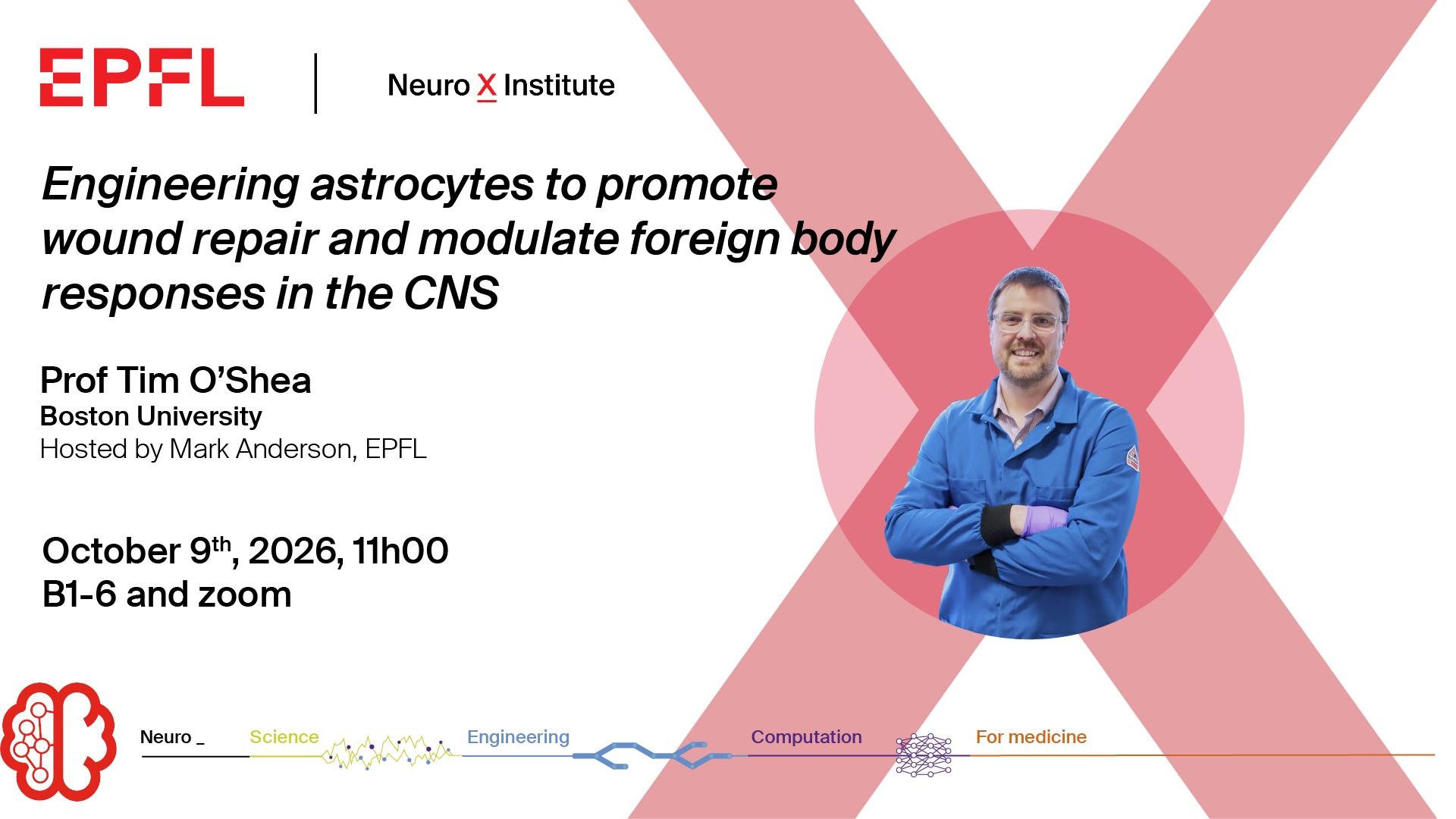
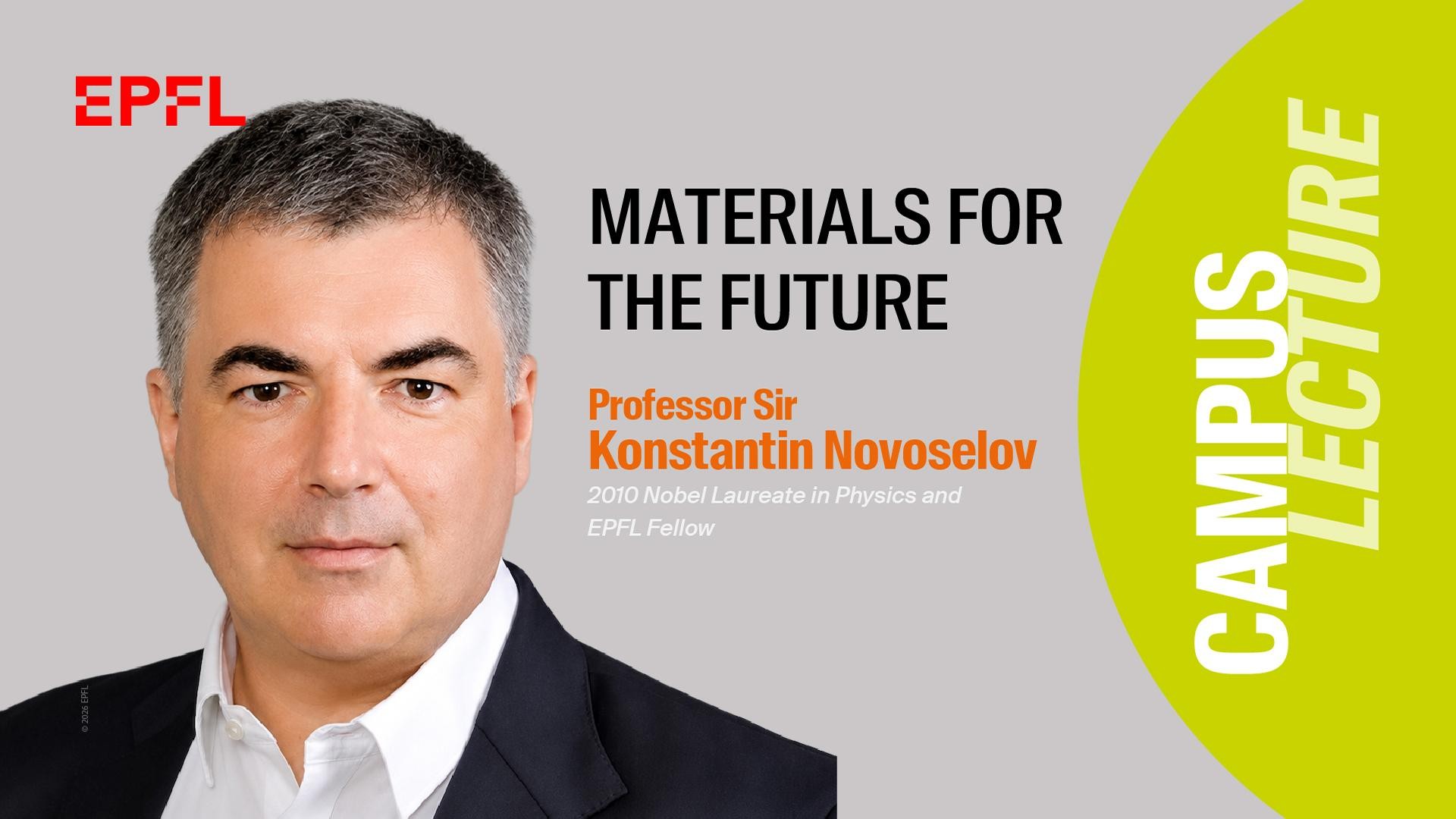
{ "count": 262, "next": "https://memento.epfl.ch/api/v1/events/?format=api&limit=10&offset=230&ordering=-event__end_date", "previous": "https://memento.epfl.ch/api/v1/events/?format=api&limit=10&offset=210&ordering=-event__end_date", "results": [ { "id": 72194, "title": "Neuro-X seminar: Prof Tim O'Shea - Engineering astrocytes to promote wound repair and modulate foreign body responses in the CNS", "slug": "neuro-x-seminar-prof-tim-o-shea-engineering-astroc", "event_url": "https://memento.epfl.ch/event/neuro-x-seminar-prof-tim-o-shea-engineering-astroc", "visual_url": "https://memento.epfl.ch/image/33474/200x112.jpg", "visual_large_url": "https://memento.epfl.ch/image/33474/720x405.jpg", "visual_maxsize_url": "https://memento.epfl.ch/image/33474/max-size.jpg", "lang": "en", "start_date": "2026-10-09", "end_date": "2026-10-09", "start_time": "11:00:00", "end_time": "12:00:00", "description": "<p>Astrocytes are the predominant glial cells in the mammalian central nervous system (CNS) and play essential roles in maintaining neural circuit activity and tissue homeostasis. In response to CNS insult, including traumatic injury or implantation of a medical device, astrocytes undergo a conserved, temporally regulated reprogramming that reshapes their prioritized functions to protect adjacent neural tissue. The nature and extent of astrocyte reprogramming critically influences outcomes after CNS insult. For example, regeneration after traumatic CNS injury in adult mammals is limited by local responding astrocytes lacking sufficient self-renewal capacity. By contrast, the CNS of neonate (newborn) mammals possesses exceptional parenchymal repair capacity owing to immature astrocytes with elevated proliferative and migratory potential. In the context of an implanted medical device, the spatial extent of astrocyte reprogramming and how impacted astrocytes respond to any further device micromotion, latent infection, or other persistent device-derived stimuli, dictates device performance and longevity. Engineering astrocyte responses to promote targeted functional gains while preserving key capabilities of healthy neural tissue astrocytes will be critical to enabling effective neural regeneration therapies and improving long-term performance of implanted devices. In this talk, I will outline our emerging understanding of how adult astrocytes adaptively reprogram in response to CNS injury and implanted foreign bodies, drawing insights from innovative astrocyte-specific transcriptomic bioassays. I will also provide an overview of biomaterial and cell-grafting strategies that we are exploring to direct astrocyte responses in preclinical models of stroke, spinal cord injury, and foreign body responses.<br>\r\n<br>\r\n<strong>Bio:</strong><br>\r\n<strong>Dr. Timothy O’Shea, PhD</strong> is an Assistant Professor in the Biomedical Engineering department at Boston University (BU). Tim grew up in Brisbane, Australia and completed a Bachelor of Medical Engineering (First Class Honours) and a Masters in Engineering Management at Queensland University of Technology (QUT) before moving to the US for graduate school. He completed his PhD study in Medical Engineering and Medical Physics within the collaborative Health Sciences and Technology program of the Harvard Medical School and the Massachusetts Institute of Technology where we conducted PhD thesis research with Institute Professor Robert Langer. As a Postdoctoral Fellow in Neurobiology at UCLA, he worked with Professors Michael Sofroniew (Neurobiology) and Timothy Deming (Bioengineering) developing and testing novel bioengineering tools to study biological mechanisms involved in CNS injury and repair as well as the CNS foreign body response to implants. Since Fall 2020 he has been leading the Glia Engineering Lab at BU where he has received numerous awards including the Maximizing Investigators' Research Award (MIRA) from NIH and grants from several spinal cord injury research foundations such as Craig H Neilsen, Paralyzed Veterans of America, Bryon Reisch, and Wings for Life.</p>", "image_description": "", "creation_date": "2026-07-01T12:06:17", "last_modification_date": "2026-09-29T15:26:49", "link_label": "", "link_url": "", "canceled": "False", "cancel_reason": "", "place_and_room": "B1-6", "url_place_and_room": "https://plan.epfl.ch/?room==B1%206%20272.043", "url_online_room": "https://epfl.zoom.us/j/62394730036?pwd=jz0K4NPrEtbqswaGBRIOJ0Kf64PwYm.1", "spoken_languages": [ "https://memento.epfl.ch/api/v1/spoken_languages/2/?format=api" ], "speaker": "<a href=\"https://www.bu.edu/eng/profile/timothy-oshea-ph-d/\">Tim O'Shea</a>", "organizer": "<a href=\"http://people.epfl.ch/mark.anderson\">Mark Anderson</a>", "contact": "<a href=\"https://people.epfl.ch/niels.lion?lang=en\">Niels Lion</a>", "is_internal": "False", "theme": "", "vulgarization": { "id": 2, "fr_label": "Public averti", "en_label": "Informed public" }, "registration": { "id": 3, "fr_label": "Entrée libre", "en_label": "Free" }, "keywords": "", "file": null, "icalendar_url": "https://memento.epfl.ch/event/export/121206/", "category": { "id": 1, "code": "CONF", "fr_label": "Conférences - Séminaires", "en_label": "Conferences - Seminars", "activated": true }, "academic_calendar_category": null, "domains": [], "mementos": [ "https://memento.epfl.ch/api/v1/mementos/19/?format=api", "https://memento.epfl.ch/api/v1/mementos/111/?format=api", "https://memento.epfl.ch/api/v1/mementos/392/?format=api" ] }, { "id": 72357, "title": "Materials for the Future", "slug": "materials-for-the-future", "event_url": "https://memento.epfl.ch/event/materials-for-the-future", "visual_url": "https://memento.epfl.ch/image/33729/200x112.jpg", "visual_large_url": "https://memento.epfl.ch/image/33729/720x405.jpg", "visual_maxsize_url": "https://memento.epfl.ch/image/33729/max-size.jpg", "lang": "en", "start_date": "2026-10-09", "end_date": "2026-10-09", "start_time": "18:00:00", "end_time": "19:30:00", "description": "<p>In 2026, EPFL named Professor Konstantin Novoselov its first-ever EPFL Fellow, a newly created honorary title recognising scientific personalities of exceptional international stature.<br>\r\n<br>\r\nEPFL is delighted to host a public lecture to celebrate this nomination of one of the most influential physicists of our time.<br>\r\n<br>\r\nKonstantin Novoselov was awarded the Nobel Prize in Physics in 2010 and is globally renowned for his pioneering work on graphene and two-dimensional materials. By isolating graphene for the first time, a sheet of carbon just one atom thick, he opened an entirely new field of research, with profound implications for electronics, energy and quantum technologies.<br>\r\n<br>\r\n<em>Picture this: it was from the graphite of an ordinary pencil lead that this \"super-material\" was first isolated. Using nothing more than a piece of adhesive tape to peel away a layer a single atom thick, Konstantin Novoselov revealed to the world a material with extraordinary properties. A million times thinner than a human hair, 200 times stronger than steel and remarkably conductive, graphene pushes every limit. From the lead of your pencil to the batteries of tomorrow, join us to discover how a deceptively simple gesture set off a genuine technological revolution.</em><br>\r\n<br>\r\nThis Campus Lecture offers an introduction to that revolution: how a two-dimensional material is transforming our understanding of matter and how today's fundamental discoveries become tomorrow's technologies.<br>\r\n<br>\r\n<strong>About Konstantin Novoselov</strong><br>\r\nKonstantin Novoselov is a physicist specialising in condensed matter and nanotechnology. He conducted his Nobel Prize–winning research at the University of Manchester, where, together with Professor Andre Geim, he isolated graphene for the first time. He has held academic positions in the United Kingdom as well as internationally and is currently based at the National University of Singapore. Widely recognised as a leading figure in the study and application of two-dimensional materials, he has received numerous honours for his contributions to science.</p>", "image_description": "", "creation_date": "2026-08-18T11:48:33", "last_modification_date": "2026-09-01T09:58:59", "link_label": "Inscription", "link_url": "https://forms.cloud.microsoft/e/8wFYA27p68", "canceled": "False", "cancel_reason": "", "place_and_room": "RLC E1 240", "url_place_and_room": "https://plan.epfl.ch/?room==RLC%20E1%20240", "url_online_room": "", "spoken_languages": [ "https://memento.epfl.ch/api/v1/spoken_languages/2/?format=api" ], "speaker": "Prof. Konstantin Novoselov", "organizer": "MédiaCom", "contact": "Nicolas Hocq", "is_internal": "False", "theme": "", "vulgarization": { "id": 1, "fr_label": "Tout public", "en_label": "General public" }, "registration": { "id": 1, "fr_label": "Sur inscription", "en_label": "Registration required" }, "keywords": "", "file": null, "icalendar_url": "https://memento.epfl.ch/event/export/121450/", "category": { "id": 1, "code": "CONF", "fr_label": "Conférences - Séminaires", "en_label": "Conferences - Seminars", "activated": true }, "academic_calendar_category": null, "domains": [], "mementos": [ "https://memento.epfl.ch/api/v1/mementos/1/?format=api", "https://memento.epfl.ch/api/v1/mementos/5/?format=api", "https://memento.epfl.ch/api/v1/mementos/6/?format=api", "https://memento.epfl.ch/api/v1/mementos/145/?format=api", "https://memento.epfl.ch/api/v1/mementos/389/?format=api", "https://memento.epfl.ch/api/v1/mementos/417/?format=api" ] }, { "id": 72378, "title": "Confluence workshop", "slug": "confluence-workshop", "event_url": "https://memento.epfl.ch/event/confluence-workshop", "visual_url": "https://memento.epfl.ch/image/33633/200x112.jpg", "visual_large_url": "https://memento.epfl.ch/image/33633/720x405.jpg", "visual_maxsize_url": "https://memento.epfl.ch/image/33633/max-size.jpg", "lang": "en", "start_date": "2026-10-08", "end_date": "2026-10-09", "start_time": "09:00:00", "end_time": "17:30:00", "description": "<div class=\"container-full my-3\">\r\n<div class=\"hero\">\r\n<div class=\"hero-img\"><u><strong>About</strong></u></div>\r\n</div>\r\n</div>\r\nThe Confluence Workshop will explore the future of computing, focusing on the ideas that emerge at the boundaries between traditional areas. The program will feature invited talks, brainstorming sessions, and open discussion. It should be a lot of fun.<br>\r\n<br>\r\n<strong><u>Speakers</u></strong><br>\r\nThe workshop will feature a mix of junior and senior speakers known for creative work that crosses disciplinary boundaries.<br>\r\n<br>\r\n<u><strong>Program</strong></u>\r\n\r\n<ul>\r\n\t<li>Thursday, 8 October : Talks, Panels, & Discussion</li>\r\n\t<li>Friday, 9 October: Talks, Brainstorming, & Social Activities</li>\r\n</ul>\r\n<strong><u>Support</u></strong><br>\r\nSponsored by the School of Computer and Communication Sciences<br>\r\n<br>\r\n<a href=\"https://confluence2026.epfl.ch/\">More information</a><br>\r\n ", "image_description": "", "creation_date": "2026-08-19T13:47:37", "last_modification_date": "2026-10-02T15:16:15", "link_label": "Confluence workshop", "link_url": "https://confluence2026.epfl.ch/", "canceled": "False", "cancel_reason": "", "place_and_room": "BC 420", "url_place_and_room": "https://plan.epfl.ch/?room==BC%20420", "url_online_room": "", "spoken_languages": [ "https://memento.epfl.ch/api/v1/spoken_languages/2/?format=api" ], "speaker": "", "organizer": "Thomas Bourgeat, George Candea, Nate Foster, Martin Jaggi, Ola Svensson, Thomas Vidick ", "contact": "Nate Foster", "is_internal": "False", "theme": "", "vulgarization": { "id": 2, "fr_label": "Public averti", "en_label": "Informed public" }, "registration": { "id": 2, "fr_label": "Sur invitation", "en_label": "Invitation required" }, "keywords": "", "file": null, "icalendar_url": "https://memento.epfl.ch/event/export/121485/", "category": { "id": 1, "code": "CONF", "fr_label": "Conférences - Séminaires", "en_label": "Conferences - Seminars", "activated": true }, "academic_calendar_category": null, "domains": [], "mementos": [ "https://memento.epfl.ch/api/v1/mementos/1/?format=api", "https://memento.epfl.ch/api/v1/mementos/6/?format=api" ] }, { "id": 72394, "title": "Training \"Intro to Overleaf Beginner & Intermediate Features\"", "slug": "training-intro-to-overleaf-beginner-intermediate-3", "event_url": "https://memento.epfl.ch/event/training-intro-to-overleaf-beginner-intermediate-3", "visual_url": "https://memento.epfl.ch/image/33645/200x112.jpg", "visual_large_url": "https://memento.epfl.ch/image/33645/720x405.jpg", "visual_maxsize_url": "https://memento.epfl.ch/image/33645/max-size.jpg", "lang": "en", "start_date": "2026-10-09", "end_date": "2026-10-09", "start_time": "16:00:00", "end_time": "17:00:00", "description": "<div class=\"all_text\"><strong>Whether you're new to working with LaTeX, Overleaf or both; or just want an insight into the best way to work with your projects in Overleaf, join us for this 60 minute webinar, where we'll cover:</strong><br>\r\n \r\n<ul>\r\n\t<li>Overleaf and LaTeX basics</li>\r\n\t<li>Creating a new project</li>\r\n\t<li>Using Visual Editor</li>\r\n\t<li>Editing your project</li>\r\n\t<li>Sharing your project</li>\r\n\t<li>Adding images and iables</li>\r\n\t<li>Uploading a bibliography</li>\r\n\t<li>Fixing errors</li>\r\n\t<li>Submitting your project to a journal</li>\r\n\t<li>Q&A</li>\r\n</ul>\r\nPlease note that this training will be provided by an <strong>Overleaf instructor</strong>.<br>\r\n<br>\r\n<a href=\"https://bookwhen.com/fr/epfl_library/e/ev-sl0ow-20261009160000\">Registration</a><br>\r\n<br>\r\nMore information about <a href=\"https://www.epfl.ch/campus/library/training/\">EPFL Library Training offer</a></div>", "image_description": "", "creation_date": "2026-08-20T09:42:06", "last_modification_date": "2026-08-20T15:43:06", "link_label": "Registration", "link_url": "https://bookwhen.com/fr/epfl_library/e/ev-sl0ow-20261009160000", "canceled": "False", "cancel_reason": "", "place_and_room": "", "url_place_and_room": "", "url_online_room": "", "spoken_languages": [ "https://memento.epfl.ch/api/v1/spoken_languages/2/?format=api" ], "speaker": "Overleaf instructor", "organizer": "EPFL Library", "contact": "[email protected]", "is_internal": "False", "theme": "", "vulgarization": { "id": 1, "fr_label": "Tout public", "en_label": "General public" }, "registration": { "id": 1, "fr_label": "Sur inscription", "en_label": "Registration required" }, "keywords": "LaTeX, Overleaf", "file": null, "icalendar_url": "https://memento.epfl.ch/event/export/121512/", "category": { "id": 15, "code": "FORM", "fr_label": "Formations internes", "en_label": "Internal trainings", "activated": true }, "academic_calendar_category": null, "domains": [], "mementos": [ "https://memento.epfl.ch/api/v1/mementos/1/?format=api", "https://memento.epfl.ch/api/v1/mementos/3/?format=api", "https://memento.epfl.ch/api/v1/mementos/5/?format=api", "https://memento.epfl.ch/api/v1/mementos/6/?format=api", "https://memento.epfl.ch/api/v1/mementos/8/?format=api", "https://memento.epfl.ch/api/v1/mementos/269/?format=api", "https://memento.epfl.ch/api/v1/mementos/275/?format=api" ] }, { "id": 72494, "title": "Autonomous discovery of materials for solid-state Li-ion batteries", "slug": "autonomous-discovery-of-materials-for-solid-stat-4", "event_url": "https://memento.epfl.ch/event/autonomous-discovery-of-materials-for-solid-stat-4", "visual_url": "https://memento.epfl.ch/image/33739/200x112.jpg", "visual_large_url": "https://memento.epfl.ch/image/33739/720x405.jpg", "visual_maxsize_url": "https://memento.epfl.ch/image/33739/max-size.jpg", "lang": "en", "start_date": "2026-10-09", "end_date": "2026-10-09", "start_time": "17:30:00", "end_time": null, "description": "<p>Thesis Director: Prof. N. Marzari,<br>\r\nMaterials Science and Engineering doctoral program<br>\r\nThesis Nr. 11813<br>\r\n<br>\r\nTo take part in the public defense, please contact directly the speaker</p>", "image_description": "", "creation_date": "2026-09-02T12:34:57", "last_modification_date": "2026-09-02T12:34:58", "link_label": "", "link_url": "", "canceled": "False", "cancel_reason": "", "place_and_room": "MXF 1", "url_place_and_room": "https://plan.epfl.ch/?room==MXF%201", "url_online_room": "", "spoken_languages": [], "speaker": "<a href=\"mailto:[email protected]\"><strong>Tushar Singh THAKUR</strong></a>", "organizer": "", "contact": "<a href=\"mailto:[email protected]\"><strong>Tushar Singh THAKUR</strong></a>", "is_internal": "False", "theme": "", "vulgarization": { "id": 1, "fr_label": "Tout public", "en_label": "General public" }, "registration": { "id": 3, "fr_label": "Entrée libre", "en_label": "Free" }, "keywords": "EDMX", "file": null, "icalendar_url": "https://memento.epfl.ch/event/export/121663/", "category": { "id": 12, "code": "SOUTE", "fr_label": "Soutenances de thèses", "en_label": "Thesis defenses", "activated": true }, "academic_calendar_category": null, "domains": [], "mementos": [ "https://memento.epfl.ch/api/v1/mementos/1/?format=api", "https://memento.epfl.ch/api/v1/mementos/6/?format=api", "https://memento.epfl.ch/api/v1/mementos/8/?format=api" ] }, { "id": 72495, "title": "In-vitro microtissue models to study uropathogenic Escherichia coli infections in the bladder", "slug": "in-vitro-microtissue-models-to-study-uropathogen-2", "event_url": "https://memento.epfl.ch/event/in-vitro-microtissue-models-to-study-uropathogen-2", "visual_url": "https://memento.epfl.ch/image/33740/200x112.jpg", "visual_large_url": "https://memento.epfl.ch/image/33740/720x405.jpg", "visual_maxsize_url": "https://memento.epfl.ch/image/33740/max-size.jpg", "lang": "en", "start_date": "2026-10-02", "end_date": "2026-10-09", "start_time": "16:30:00", "end_time": null, "description": "<p>Thesis Director: Prof. J. McKinney,<br>\r\nBiotechnology and Bioengineering doctoral program<br>\r\nThesis Nr. 11625<br>\r\n<br>\r\nTo take part in the public defense, please contact directly the speaker</p>", "image_description": "", "creation_date": "2026-09-02T12:41:48", "last_modification_date": "2026-09-02T12:41:49", "link_label": "", "link_url": "", "canceled": "False", "cancel_reason": "", "place_and_room": "SV 1717", "url_place_and_room": "https://plan.epfl.ch/?room==SV%201717", "url_online_room": "https://epfl.zoom.us/j/62139933877?pwd=RP39g0YodOGTTpRZHMa5aIeI78Ub1d.1", "spoken_languages": [], "speaker": "<a href=\"mailto:[email protected]\"><strong>Gauri Rshikesan PADUTHOL</strong></a>", "organizer": "", "contact": "<a href=\"mailto:[email protected]\"><strong>Gauri Rshikesan PADUTHOL</strong></a>", "is_internal": "False", "theme": "", "vulgarization": { "id": 1, "fr_label": "Tout public", "en_label": "General public" }, "registration": { "id": 3, "fr_label": "Entrée libre", "en_label": "Free" }, "keywords": "EDBB", "file": null, "icalendar_url": "https://memento.epfl.ch/event/export/121665/", "category": { "id": 12, "code": "SOUTE", "fr_label": "Soutenances de thèses", "en_label": "Thesis defenses", "activated": true }, "academic_calendar_category": null, "domains": [], "mementos": [ "https://memento.epfl.ch/api/v1/mementos/1/?format=api", "https://memento.epfl.ch/api/v1/mementos/6/?format=api", "https://memento.epfl.ch/api/v1/mementos/9/?format=api" ] }, { "id": 72537, "title": "Understanding and controlling diffusion models for image generation", "slug": "understanding-and-controlling-diffusion-models-f-2", "event_url": "https://memento.epfl.ch/event/understanding-and-controlling-diffusion-models-f-2", "visual_url": "https://memento.epfl.ch/image/33778/200x112.jpg", "visual_large_url": "https://memento.epfl.ch/image/33778/720x405.jpg", "visual_maxsize_url": "https://memento.epfl.ch/image/33778/max-size.jpg", "lang": "en", "start_date": "2026-10-09", "end_date": "2026-10-09", "start_time": "17:00:00", "end_time": null, "description": "<p>Thesis Directors: Prof. S. Süsstrunk, Dr R. Achanta<br>\r\nComputer and Communication Sciences doctoral program<br>\r\nThesis Nr. 11581<br>\r\n<br>\r\nTo take part in the public defense, please contact directly the speaker</p>", "image_description": "", "creation_date": "2026-09-07T16:16:07", "last_modification_date": "2026-09-07T16:16:09", "link_label": "", "link_url": "", "canceled": "False", "cancel_reason": "", "place_and_room": "INR 219", "url_place_and_room": "https://plan.epfl.ch/?room==INR%20219", "url_online_room": "", "spoken_languages": [], "speaker": "<a href=\"mailto:[email protected]\"><strong>Martin Nicolas EVERAERT</strong></a>", "organizer": "", "contact": "<a href=\"mailto:[email protected]\"><strong>Martin Nicolas EVERAERT</strong></a><br>\r\n ", "is_internal": "False", "theme": "", "vulgarization": { "id": 1, "fr_label": "Tout public", "en_label": "General public" }, "registration": { "id": 3, "fr_label": "Entrée libre", "en_label": "Free" }, "keywords": "EDIC", "file": null, "icalendar_url": "https://memento.epfl.ch/event/export/121736/", "category": { "id": 12, "code": "SOUTE", "fr_label": "Soutenances de thèses", "en_label": "Thesis defenses", "activated": true }, "academic_calendar_category": null, "domains": [], "mementos": [ "https://memento.epfl.ch/api/v1/mementos/1/?format=api", "https://memento.epfl.ch/api/v1/mementos/6/?format=api" ] }, { "id": 72575, "title": "SYNTHETIC CHEMISTRY WITH NITROUS OXIDE AND NITROUS OXIDE-DERIVED COMPOUNDS", "slug": "synthetic-chemistry-with-nitrous-oxide-and-nitro-2", "event_url": "https://memento.epfl.ch/event/synthetic-chemistry-with-nitrous-oxide-and-nitro-2", "visual_url": "https://memento.epfl.ch/image/33824/200x112.jpg", "visual_large_url": "https://memento.epfl.ch/image/33824/720x405.jpg", "visual_maxsize_url": "https://memento.epfl.ch/image/33824/max-size.jpg", "lang": "en", "start_date": "2026-10-09", "end_date": "2026-10-09", "start_time": "17:00:00", "end_time": null, "description": "<p>Thesis Director: Prof. K. Severin,<br>\r\nChemistry and Chemical Engineering doctoral program<br>\r\nThesis Nr. 11719<br>\r\n<br>\r\nTo take part in the public defense, please contact directly the speaker</p>", "image_description": "", "creation_date": "2026-09-14T14:05:19", "last_modification_date": "2026-09-14T14:05:22", "link_label": "", "link_url": "", "canceled": "False", "cancel_reason": "", "place_and_room": "BCH 2201", "url_place_and_room": "https://plan.epfl.ch/?room==BCH%202201", "url_online_room": "", "spoken_languages": [], "speaker": "<a href=\"mailto:[email protected]\"><strong>Christeena MATHEW</strong></a>", "organizer": "", "contact": "<a href=\"mailto:[email protected]\"><strong>Christeena MATHEW</strong></a><br>\r\n ", "is_internal": "False", "theme": "", "vulgarization": { "id": 1, "fr_label": "Tout public", "en_label": "General public" }, "registration": { "id": 3, "fr_label": "Entrée libre", "en_label": "Free" }, "keywords": "EDCH", "file": null, "icalendar_url": "https://memento.epfl.ch/event/export/121793/", "category": { "id": 12, "code": "SOUTE", "fr_label": "Soutenances de thèses", "en_label": "Thesis defenses", "activated": true }, "academic_calendar_category": null, "domains": [], "mementos": [ "https://memento.epfl.ch/api/v1/mementos/1/?format=api", "https://memento.epfl.ch/api/v1/mementos/5/?format=api", "https://memento.epfl.ch/api/v1/mementos/6/?format=api" ] }, { "id": 72587, "title": "Performance trade-offs and gait adaptation strategies in undulatory swimming characterised via bio-inspired robotics", "slug": "performance-trade-offs-and-gait-adaptation-strateg", "event_url": "https://memento.epfl.ch/event/performance-trade-offs-and-gait-adaptation-strateg", "visual_url": "https://memento.epfl.ch/image/33832/200x112.jpg", "visual_large_url": "https://memento.epfl.ch/image/33832/720x405.jpg", "visual_maxsize_url": "https://memento.epfl.ch/image/33832/max-size.jpg", "lang": "en", "start_date": "2026-10-09", "end_date": "2026-10-09", "start_time": "17:30:00", "end_time": null, "description": "<p>Thesis Directors: Prof. K. A. J. Mulleners, Prof. A. Ijspeert<br>\r\nMechanics doctoral program<br>\r\nThesis Nr. 11364<br>\r\n<br>\r\nTo take part in the public defense, please contact directly the speaker</p>", "image_description": "", "creation_date": "2026-09-16T08:49:55", "last_modification_date": "2026-09-16T08:49:55", "link_label": "", "link_url": "", "canceled": "False", "cancel_reason": "", "place_and_room": "MED 0 1418", "url_place_and_room": "https://plan.epfl.ch/?room==MED%200%201418", "url_online_room": "", "spoken_languages": [], "speaker": "<strong>Alexandros ANASTASIADIS</strong>", "organizer": "", "contact": "<strong>Alexandros ANASTASIADIS</strong>", "is_internal": "False", "theme": "", "vulgarization": { "id": 1, "fr_label": "Tout public", "en_label": "General public" }, "registration": { "id": 3, "fr_label": "Entrée libre", "en_label": "Free" }, "keywords": "EDME", "file": null, "icalendar_url": "https://memento.epfl.ch/event/export/121808/", "category": { "id": 12, "code": "SOUTE", "fr_label": "Soutenances de thèses", "en_label": "Thesis defenses", "activated": true }, "academic_calendar_category": null, "domains": [], "mementos": [ "https://memento.epfl.ch/api/v1/mementos/1/?format=api", "https://memento.epfl.ch/api/v1/mementos/6/?format=api", "https://memento.epfl.ch/api/v1/mementos/8/?format=api", "https://memento.epfl.ch/api/v1/mementos/417/?format=api" ] }, { "id": 72663, "title": "Systems for Knowledge Reuse in Distributed Machine Learning", "slug": "systems-for-knowledge-reuse-in-distributed-machi-2", "event_url": "https://memento.epfl.ch/event/systems-for-knowledge-reuse-in-distributed-machi-2", "visual_url": "https://memento.epfl.ch/image/33895/200x112.jpg", "visual_large_url": "https://memento.epfl.ch/image/33895/720x405.jpg", "visual_maxsize_url": "https://memento.epfl.ch/image/33895/max-size.jpg", "lang": "en", "start_date": "2026-10-09", "end_date": "2026-10-09", "start_time": "18:00:00", "end_time": null, "description": "<p>Thesis Directors: Prof. A.-M. Kermarrec, Prof. R. Guerraoui<br>\r\nComputer and Communication Sciences doctoral program<br>\r\nThesis Nr. 11716<br>\r\n<br>\r\nTo take part in the public defense, please contact directly the speaker</p>", "image_description": "", "creation_date": "2026-09-23T12:58:53", "last_modification_date": "2026-09-23T12:58:56", "link_label": "", "link_url": "", "canceled": "False", "cancel_reason": "", "place_and_room": "BC 420", "url_place_and_room": "https://plan.epfl.ch/?room==BC%20420", "url_online_room": "https://epfl.zoom.us/j/67510236624", "spoken_languages": [], "speaker": "<a href=\"mailto:[email protected]\"><strong>Diana Andreea PETRESCU</strong></a>", "organizer": "", "contact": "<a href=\"mailto:[email protected]\"><strong>Diana Andreea PETRESCU</strong></a><br>\r\n ", "is_internal": "False", "theme": "", "vulgarization": { "id": 1, "fr_label": "Tout public", "en_label": "General public" }, "registration": { "id": 3, "fr_label": "Entrée libre", "en_label": "Free" }, "keywords": "EDIC", "file": null, "icalendar_url": "https://memento.epfl.ch/event/export/121914/", "category": { "id": 12, "code": "SOUTE", "fr_label": "Soutenances de thèses", "en_label": "Thesis defenses", "activated": true }, "academic_calendar_category": null, "domains": [], "mementos": [ "https://memento.epfl.ch/api/v1/mementos/1/?format=api", "https://memento.epfl.ch/api/v1/mementos/6/?format=api" ] } ] }