Event List
retrieve:
Return the details about the given Event id.
list:
List all Event objects.
GET /api/v1/events/?format=api&offset=250&ordering=-event__end_date
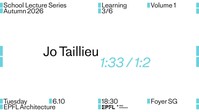
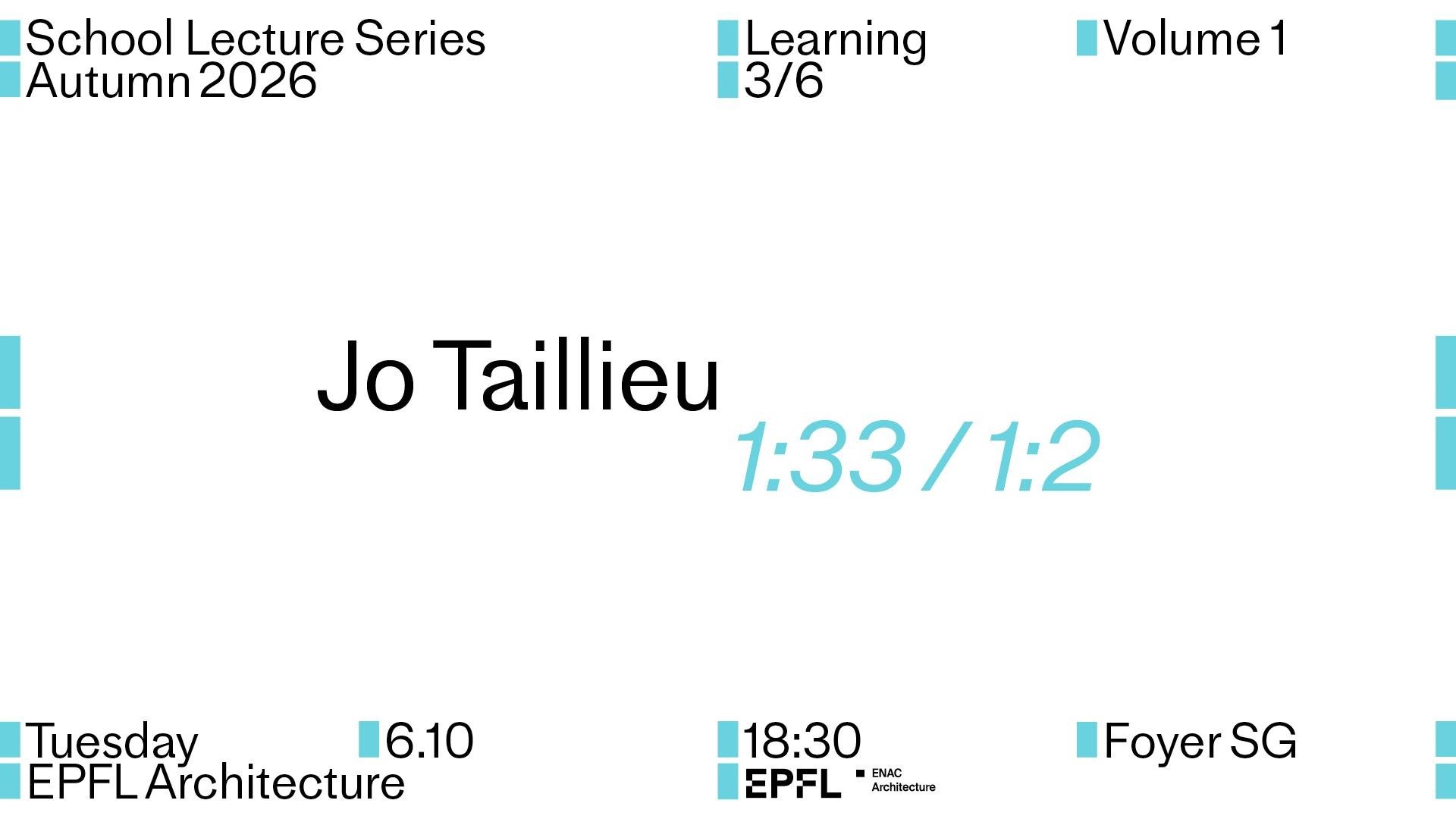
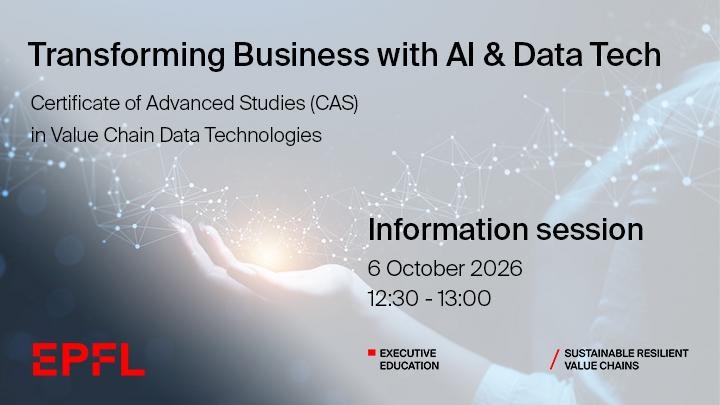
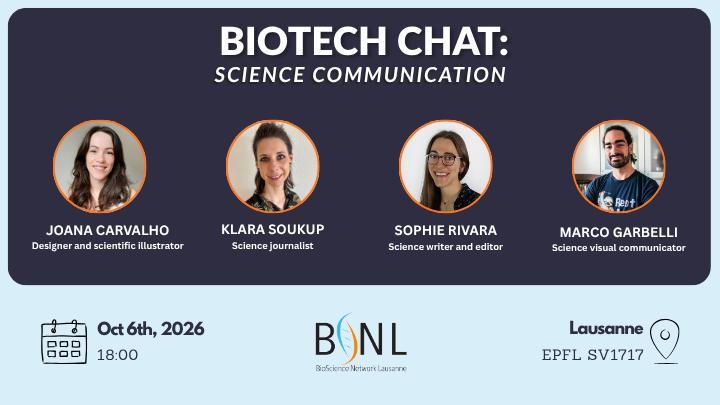
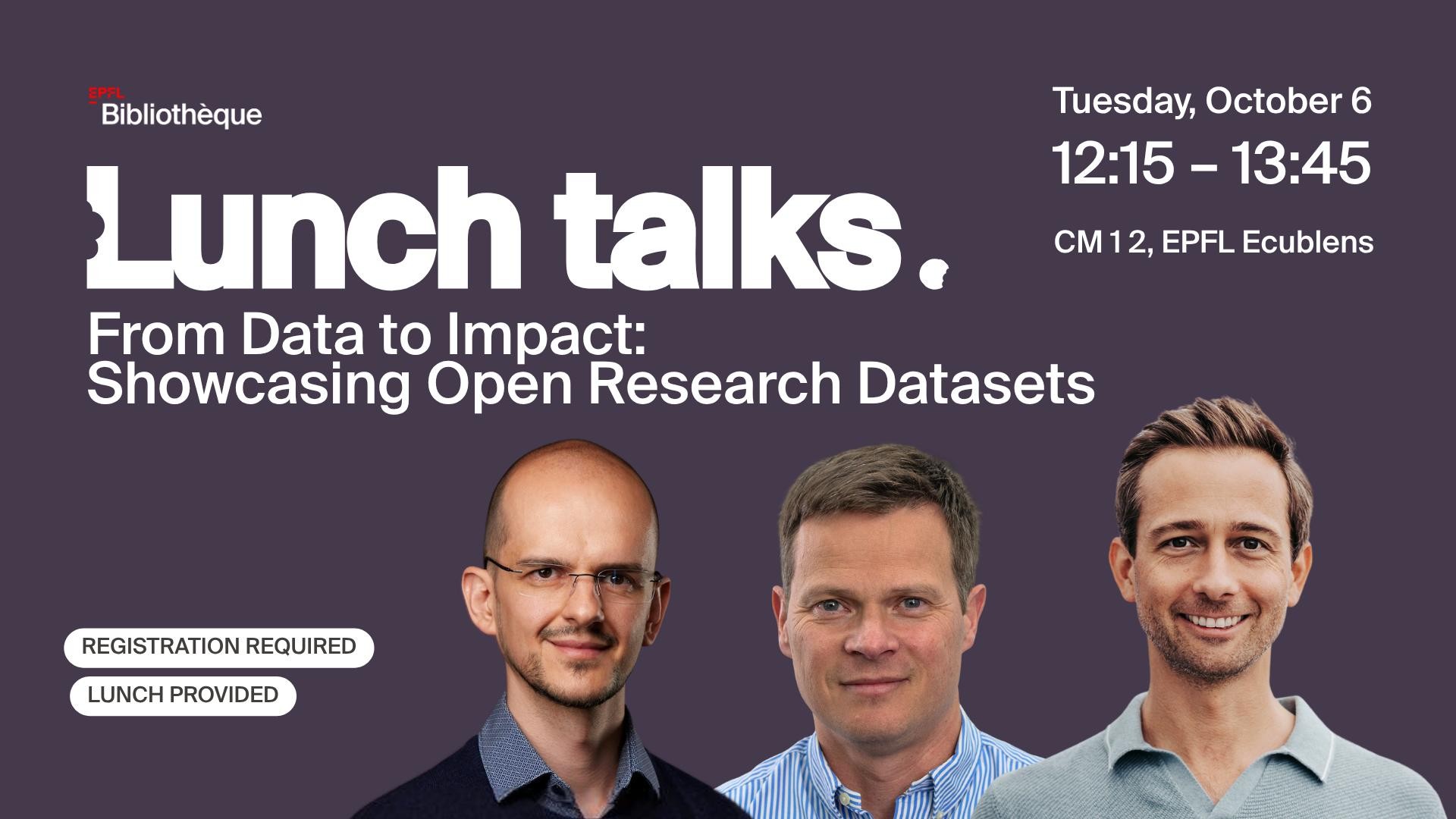
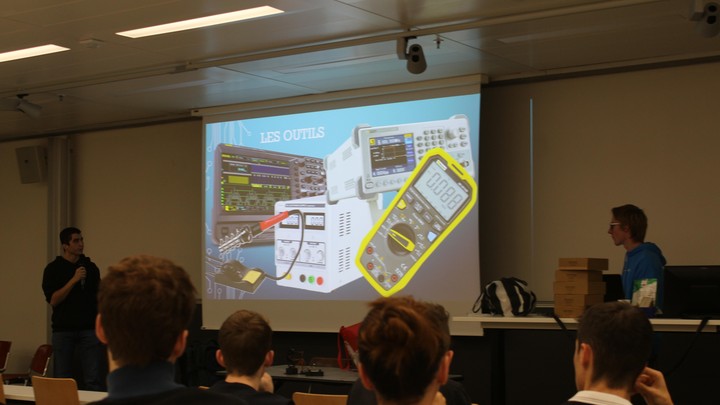
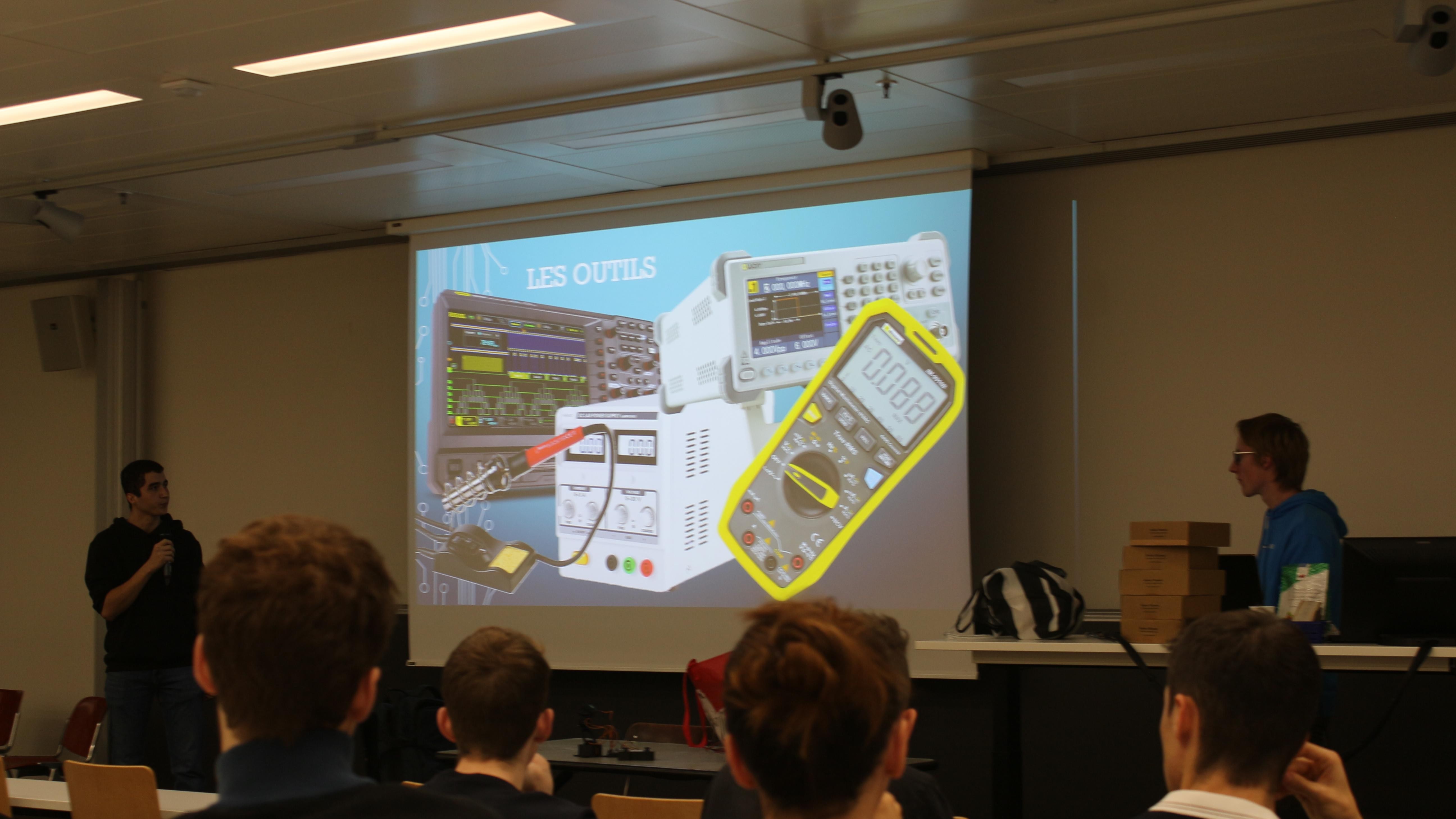
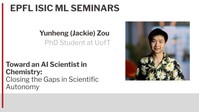
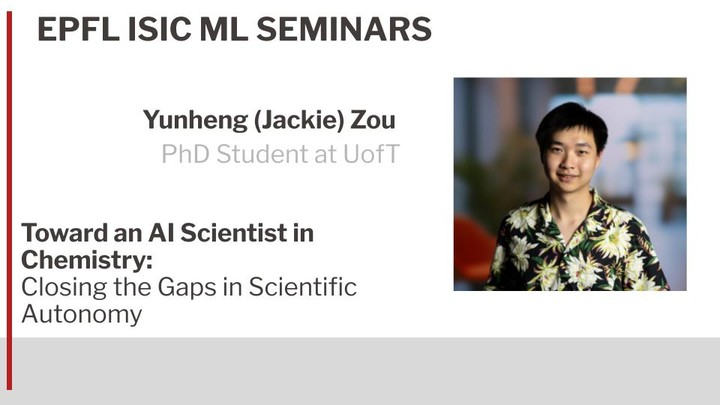
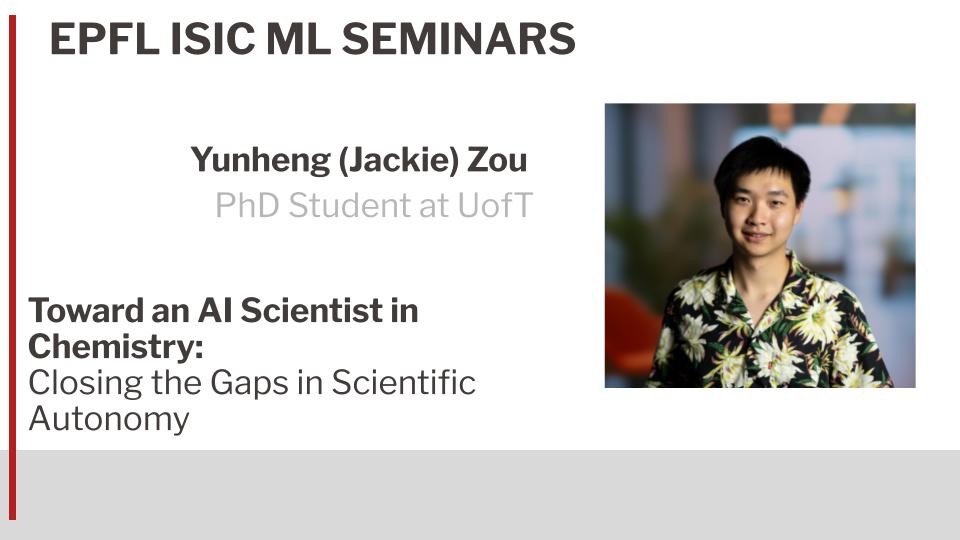
{ "count": 266, "next": "https://memento.epfl.ch/api/v1/events/?format=api&limit=10&offset=260&ordering=-event__end_date", "previous": "https://memento.epfl.ch/api/v1/events/?format=api&limit=10&offset=240&ordering=-event__end_date", "results": [ { "id": 72346, "title": "School Lecture Series: Jo Taillieu / EPFL Architecture", "slug": "school-lecture-series-jo-taillieu-epfl-architectur", "event_url": "https://memento.epfl.ch/event/school-lecture-series-jo-taillieu-epfl-architectur", "visual_url": "https://memento.epfl.ch/image/33606/200x112.jpg", "visual_large_url": "https://memento.epfl.ch/image/33606/720x405.jpg", "visual_maxsize_url": "https://memento.epfl.ch/image/33606/max-size.jpg", "lang": "en", "start_date": "2026-10-06", "end_date": "2026-10-06", "start_time": "18:30:00", "end_time": "20:00:00", "description": "<strong>1:33/1:2</strong><br>\r\nOne of the most interesting public manifestations of learning in architecture are books about student‘s work. This lecture will present 1:33/1:2 new publication that showcases work by EPFL students. This book is exemplary in representing how learning architecture can be both a school reality and something that continues to inspire the architectural community at large. “About architectural tomography, about the importance of the drawing, about the book presentation 1:33/1:2, and about a special bookselling”<br>\r\n<br>\r\n<strong>Special book sale</strong><br>\r\n1:33/1:2 will be available for purchase at a special reduced student price exclusively on the evening of the lecture. A special opportunity to discover the publication and take home a copy at student price.<br>\r\n<br>\r\n<strong>Jo Taillieu</strong><br>\r\nJo Taillieu is a Belgian architect and professor at EPFL / studio LIF. After early roles at leading European architecture firms, including Maxwan architects (Rotterdam, NL) and Beel-Achtergael architecten (Ghent, BE), he became project director at Stéphane Beel – Xaveer De Geyter, contributing to the design and realisation of several public and private buildings. He later co-led architecten de vylder vinck taillieu, earning international recognition, including the Silver Lion for Promising Young Participant at the 16th Biennale of Venice, before refocusing on his own practice, JTA, from 2019 onward. JTA is worldwide published and awarded.<br>\r\n<br>\r\n<strong>Part of School Lecture Series, Autumn 2026, Learning Vol.1</strong><br>\r\nWe are told that learning is no longer confined to the school or the university, but it has become a continuous process that involves the totality of life. Yet in accepting this reality, we take for granted several questions that loom large within the contemporary idea of learning. In a time when technology and information are ubiquitous, does it still make sense that for learning to happen or be confined within a place? Is learning still an asymmetrical relationship where there are teachers and a student? And above all, is learning accessible, or has it become too expensive a commodity? In this lecture series, we’ll attempt to answer these questions by investigating learning on different levels such as technology, construction systems, educational spaces, and above all, making architecture. Indeed, the question that is more than anything else crucial to us is whether architecture is still a place of learning and not only of empowering those who have capital to build it. We will look at schools, drawings, robots, and measuring devices. We will ponder whether these things are only ‘tools’ to achieve a result or can still be vital places for learning. <br>\r\n<br>\r\n<strong>Recordings available on YouTube</strong><br>\r\n@epflarchitectureschool<br>\r\n<br>\r\n<strong>Graphic Design</strong><br>\r\nRoman Karrer & Sandi Gazic", "image_description": "", "creation_date": "2026-08-14T16:36:48", "last_modification_date": "2026-08-17T13:15:17", "link_label": "Poster School Lecture Series Fall 2026", "link_url": "https://go.epfl.ch/school-lecture-series-fall-2026", "canceled": "False", "cancel_reason": "", "place_and_room": "Foyer SG", "url_place_and_room": "https://plan.epfl.ch/?room=%3DSG%20294.22&dim_floor=2&lang=fr&dim_lang=fr&tree_groups=centres_nevralgiques_grp%2Cmobilite_acces_grp%2Crestauration_et_commerces_grp%2Censeignement%2Cservices_campus_grp%2Cequipements_grp&tree_group_layers_centres_nevralgiques_grp=&tree_group_layers_mobilite_acces_grp=metro&tree_group_layers_restauration_et_commerces_grp=&tree_group_layers_enseignement=guichet_etudiants&tree_group_layers_services_campus_grp=information_epfl&tree_group_layers_equipements_grp=&baselayer_ref=grp_backgrounds&map_x=2532923&map_y=1152547&map_zoom=12", "url_online_room": "", "spoken_languages": [ "https://memento.epfl.ch/api/v1/spoken_languages/2/?format=api" ], "speaker": "Jo Taillieu", "organizer": "<a href=\"http://[email protected]\" target=\"_blank\">EPFL Architecture</a>", "contact": "<a href=\"http://[email protected]\" target=\"_blank\">EPFL Architecture</a>", "is_internal": "False", "theme": "", "vulgarization": { "id": 1, "fr_label": "Tout public", "en_label": "General public" }, "registration": { "id": 3, "fr_label": "Entrée libre", "en_label": "Free" }, "keywords": "", "file": null, "icalendar_url": "https://memento.epfl.ch/event/export/121434/", "category": { "id": 1, "code": "CONF", "fr_label": "Conférences - Séminaires", "en_label": "Conferences - Seminars", "activated": true }, "academic_calendar_category": null, "domains": [], "mementos": [ "https://memento.epfl.ch/api/v1/mementos/4/?format=api", "https://memento.epfl.ch/api/v1/mementos/32/?format=api" ] }, { "id": 72452, "title": "MechE Colloquium: From Motion to Mission Planning via Augmented Graphs of Convex Sets", "slug": "meche-colloquium-from-motion-to-mission-planning-v", "event_url": "https://memento.epfl.ch/event/meche-colloquium-from-motion-to-mission-planning-v", "visual_url": "https://memento.epfl.ch/image/33700/200x112.jpg", "visual_large_url": "https://memento.epfl.ch/image/33700/720x405.jpg", "visual_maxsize_url": "https://memento.epfl.ch/image/33700/max-size.jpg", "lang": "en", "start_date": "2026-10-06", "end_date": "2026-10-06", "start_time": "12:00:00", "end_time": "13:00:00", "description": "<strong>Abstract: </strong>Robot motion planning has traditionally focused on navigating obstacle-laden environments: computing smooth, collision-free trajectories from start to goal. Many real-world missions, however, require satisfying logical precedence constraints: collecting resources before accessing restricted zones, completing subtasks in a prescribed order, or acquiring tools before they can be used. This talk presents the augmented graph of convex sets (augmented GCS) framework, which unifies continuous trajectory optimization and combinatorial task sequencing within a single optimization problem.<br>\r\nThe key insight is that a layered augmented GCS, built on an exact convex partition of the free space, simultaneously selects an optimal task completion sequence and computes an optimal continuous trajectory. A shortest path in the augmented GCS solves both problems at once, yielding an exact solution up to a finite Bézier curve parameterization. The layered structure of the augmented GCS turns out to implement precisely the Bellman-Held-Karp (BHK) dynamic programming algorithm for the Traveling Salesman Problem, establishing a formal correspondence between our framework and the combinatorial TSP literature. This makes augmented GCS a continuous-geometry generalization of BHK, achieving the same singly exponential worst-case complexity, an exponential improvement over general-purpose temporal logic tools. We further develop a library of mission specification variations (including ordered collection, disjunctive keys, conjunctive doors, timed constraints, and conditional logic) each with proven correctness, substantially expanding the range of expressible mission types. Numerical experiments confirm exponential speedups in practice and near-global-optimality on a large benchmark suite.<br>\r\nTime permitting, I will briefly discuss ongoing extensions, including spacetime augmented GCS for dynamic environments, safety-aware planning via conformal prediction sets, and a galactic survey benchmark inspired by space mission planning that stress-tests the framework at scale.<br>\r\n<br>\r\n<br>\r\n<br>\r\n<strong>Biography: </strong>Tyler Summers is an associate professor at the University of Texas at Dallas. Prior to joining UT Dallas, he was an ETH Postdoctoral Fellow at the Automatic Control Laboratory at ETH Zurich from 2011 to 2015. He received a PhD degree in Aerospace Engineering at the University of Texas at Austin in 2010. He was a Fulbright Postgraduate Scholar at the Australian National University in Canberra, Australia in 2007-2008. He received the National Science Foundation CAREER Award in 2021 and a Young Investigator Program award from the US Army Research Office in 2017. His research interests are in feedback control, optimization, and learning in complex dynamical networks, with applications in robotics and power networks.", "image_description": "", "creation_date": "2026-08-26T16:15:39", "last_modification_date": "2026-08-26T16:19:15", "link_label": "", "link_url": "", "canceled": "False", "cancel_reason": "", "place_and_room": "MED 0 1418", "url_place_and_room": "https://plan.epfl.ch/?room==MED%200%201418", "url_online_room": "https://epfl.zoom.us/j/61360740951", "spoken_languages": [ "https://memento.epfl.ch/api/v1/spoken_languages/2/?format=api" ], "speaker": "<a href=\"https://me.utdallas.edu/faculty/tyler-summers/\">Prof. Tyler Summers</a>, <a href=\"https://me.utdallas.edu/\">Mechanical engineering,</a> <a href=\"https://www.utdallas.edu/\">The University of Texas at Dallas</a>", "organizer": "<a href=\"https://people.epfl.ch/maryam.kamgarpour\">Prof. Maryam Kamgarpour</a>", "contact": "<a href=\"mailto:[email protected]\">Institute of Mechanical Engineering</a>", "is_internal": "False", "theme": "", "vulgarization": { "id": 1, "fr_label": "Tout public", "en_label": "General public" }, "registration": { "id": 3, "fr_label": "Entrée libre", "en_label": "Free" }, "keywords": "MechE Colloquium: From Motion to Mission Planning via Augmented Graphs of Convex Sets", "file": null, "icalendar_url": "https://memento.epfl.ch/event/export/121601/", "category": { "id": 1, "code": "CONF", "fr_label": "Conférences - Séminaires", "en_label": "Conferences - Seminars", "activated": true }, "academic_calendar_category": null, "domains": [], "mementos": [ "https://memento.epfl.ch/api/v1/mementos/8/?format=api", "https://memento.epfl.ch/api/v1/mementos/1/?format=api", "https://memento.epfl.ch/api/v1/mementos/232/?format=api", "https://memento.epfl.ch/api/v1/mementos/270/?format=api", "https://memento.epfl.ch/api/v1/mementos/6/?format=api", "https://memento.epfl.ch/api/v1/mementos/417/?format=api", "https://memento.epfl.ch/api/v1/mementos/394/?format=api" ] }, { "id": 72482, "title": "Dynamic Capital Structure and Debt Market Equilibrium", "slug": "dynamic-capital-structure-and-debt-market-equilibr", "event_url": "https://memento.epfl.ch/event/dynamic-capital-structure-and-debt-market-equilibr", "visual_url": "https://memento.epfl.ch/image/33730/200x112.jpg", "visual_large_url": "https://memento.epfl.ch/image/33730/720x405.jpg", "visual_maxsize_url": "https://memento.epfl.ch/image/33730/max-size.jpg", "lang": "en", "start_date": "2026-10-06", "end_date": "2026-10-06", "start_time": "12:15:00", "end_time": "13:15:00", "description": "<p>I develop a dynamic capital structure framework in which many firms supply debt without commitment, and debt prices are determined by market clearing. Corporate debt is not a standard asset with fixed supply and exogenous cash flows. Its market valuation affects debt issuance, which in turn affects aggregate debt supply, default risk, and the cash flows delivered by debt. The model shows how debt demand is an important determinant of leverage dynamics and the cross-sectional distribution of leverage. Importantly, stronger debt demand is entirely absorbed by issuance and leads to lower long-run bond prices in equilibrium. I then extend the framework to allow for imperfect substitutability across bonds. Credit rating segmentation generates leverage dynamics around rating boundaries that are consistent with empirical evidence. When investors have preferred habitats, endogenous demand and supply jointly determine maturity premia. Correlation across cash-flow shocks affects the speed of leverage adjustment and can induce firms to repurchase debt optimally.</p>", "image_description": "", "creation_date": "2026-09-01T11:07:17", "last_modification_date": "2026-09-25T15:43:17", "link_label": "", "link_url": "", "canceled": "False", "cancel_reason": "", "place_and_room": "UNIL, Extranef, room 126", "url_place_and_room": "", "url_online_room": "", "spoken_languages": [ "https://memento.epfl.ch/api/v1/spoken_languages/2/?format=api" ], "speaker": "Darius Nik-Nejad - PhD, SFI@EPFL", "organizer": "", "contact": "[email protected]", "is_internal": "False", "theme": "", "vulgarization": { "id": 2, "fr_label": "Public averti", "en_label": "Informed public" }, "registration": { "id": 2, "fr_label": "Sur invitation", "en_label": "Invitation required" }, "keywords": "", "file": null, "icalendar_url": "https://memento.epfl.ch/event/export/121643/", "category": { "id": 1, "code": "CONF", "fr_label": "Conférences - Séminaires", "en_label": "Conferences - Seminars", "activated": true }, "academic_calendar_category": null, "domains": [], "mementos": [ "https://memento.epfl.ch/api/v1/mementos/3/?format=api", "https://memento.epfl.ch/api/v1/mementos/39/?format=api", "https://memento.epfl.ch/api/v1/mementos/105/?format=api", "https://memento.epfl.ch/api/v1/mementos/116/?format=api" ] }, { "id": 72506, "title": "Essays in Asset Pricing with Trading Frictions", "slug": "essays-in-asset-pricing-with-trading-frictions-2", "event_url": "https://memento.epfl.ch/event/essays-in-asset-pricing-with-trading-frictions-2", "visual_url": "https://memento.epfl.ch/image/33752/200x112.jpg", "visual_large_url": "https://memento.epfl.ch/image/33752/720x405.jpg", "visual_maxsize_url": "https://memento.epfl.ch/image/33752/max-size.jpg", "lang": "en", "start_date": "2026-10-06", "end_date": "2026-10-06", "start_time": "16:00:00", "end_time": null, "description": "<p>Thesis Directors: Prof. P. Collin-Dufresne, Prof. A. Fuster<br>\r\nFinance doctoral program<br>\r\nThesis Nr. 11152<br>\r\n<br>\r\nTo take part in the public defense, please contact directly the speaker</p>", "image_description": "", "creation_date": "2026-09-03T14:06:48", "last_modification_date": "2026-09-03T14:06:55", "link_label": "", "link_url": "", "canceled": "False", "cancel_reason": "", "place_and_room": "Extranef, UNIL", "url_place_and_room": "", "url_online_room": "", "spoken_languages": [], "speaker": "<a href=\"mailto:[email protected]\"><strong>Federico BALDI LANFRANCHI</strong></a>", "organizer": "", "contact": "<a href=\"mailto:[email protected]\"><strong>Federico BALDI LANFRANCHI</strong></a>", "is_internal": "False", "theme": "", "vulgarization": { "id": 1, "fr_label": "Tout public", "en_label": "General public" }, "registration": { "id": 3, "fr_label": "Entrée libre", "en_label": "Free" }, "keywords": "EDFI", "file": null, "icalendar_url": "https://memento.epfl.ch/event/export/121681/", "category": { "id": 12, "code": "SOUTE", "fr_label": "Soutenances de thèses", "en_label": "Thesis defenses", "activated": true }, "academic_calendar_category": null, "domains": [], "mementos": [ "https://memento.epfl.ch/api/v1/mementos/1/?format=api", "https://memento.epfl.ch/api/v1/mementos/6/?format=api" ] }, { "id": 72522, "title": "Information session - CAS in Technology", "slug": "information-session-cas-in-technology", "event_url": "https://memento.epfl.ch/event/information-session-cas-in-technology", "visual_url": "https://memento.epfl.ch/image/33761/200x112.jpg", "visual_large_url": "https://memento.epfl.ch/image/33761/720x405.jpg", "visual_maxsize_url": "https://memento.epfl.ch/image/33761/max-size.jpg", "lang": "en", "start_date": "2026-10-06", "end_date": "2026-10-06", "start_time": "12:30:00", "end_time": "13:00:00", "description": "<p>Join our online information to get to know the <strong>EPFL SRVC executive program for Transforming Business with AI & Data Tech (CAS in Value Chain Data Technologies)</strong> with Executive Director Ms. Elaine Moran.<br>\r\n<br>\r\nLearn how this program empowers professionals to drive sustainable innovation with AI, IoT & Digital Twins - and get all your questions answered.<br>\r\n<br>\r\n<strong>> <a href=\"https://epfl.zoom.us/meeting/register/FPwsHW4-QTSmN8kUVse2Mw\">Register here</a></strong></p>", "image_description": "", "creation_date": "2026-09-04T08:34:56", "last_modification_date": "2026-09-14T08:27:37", "link_label": "Registration", "link_url": "https://epfl.zoom.us/meeting/register/FPwsHW4-QTSmN8kUVse2Mw", "canceled": "False", "cancel_reason": "", "place_and_room": "", "url_place_and_room": "", "url_online_room": "https://epfl.zoom.us/meeting/register/FPwsHW4-QTSmN8kUVse2Mw", "spoken_languages": [ "https://memento.epfl.ch/api/v1/spoken_languages/2/?format=api" ], "speaker": "- Elaine Moran, <em>SRVC Executive Director</em>", "organizer": "EPFL Executive Education", "contact": "[email protected]", "is_internal": "False", "theme": "", "vulgarization": { "id": 1, "fr_label": "Tout public", "en_label": "General public" }, "registration": { "id": 1, "fr_label": "Sur inscription", "en_label": "Registration required" }, "keywords": "", "file": null, "icalendar_url": "https://memento.epfl.ch/event/export/121712/", "category": { "id": 4, "code": "DIVERS", "fr_label": "Autres types d’événement", "en_label": "Miscellaneous", "activated": true }, "academic_calendar_category": null, "domains": [], "mementos": [ "https://memento.epfl.ch/api/v1/mementos/1/?format=api", "https://memento.epfl.ch/api/v1/mementos/3/?format=api", "https://memento.epfl.ch/api/v1/mementos/6/?format=api", "https://memento.epfl.ch/api/v1/mementos/8/?format=api", "https://memento.epfl.ch/api/v1/mementos/416/?format=api", "https://memento.epfl.ch/api/v1/mementos/437/?format=api", "https://memento.epfl.ch/api/v1/mementos/438/?format=api" ] }, { "id": 72525, "title": "Biotech Chat: Science Communication", "slug": "biotech-chat-science-communication", "event_url": "https://memento.epfl.ch/event/biotech-chat-science-communication", "visual_url": "https://memento.epfl.ch/image/33765/200x112.jpg", "visual_large_url": "https://memento.epfl.ch/image/33765/720x405.jpg", "visual_maxsize_url": "https://memento.epfl.ch/image/33765/max-size.jpg", "lang": "en", "start_date": "2026-10-06", "end_date": "2026-10-06", "start_time": "06:00:00", "end_time": "08:30:00", "description": "<p>What happens when science meets illustration, journalism, writing, and visual communication?<br>\r\n<br>\r\nJoin us for the next <strong>Biotech Chats on Science Communication</strong>, organized by BSNL (BioScience Network Lausanne), and learn what career opportunities exist beyond the lab bench!<br>\r\n<br>\r\nEvent details:\r\n</p><ul>\r\n\t<li><strong>Date</strong>: Tuesday, October 6, 2026</li>\r\n\t<li><strong>Time</strong>: 6 p.m.</li>\r\n\t<li><strong>Location</strong>: EPFL Campus, SV building, Room 1717</li>\r\n\t<li><strong>Register <a href=\"https://forms.gle/tT8QcCJMMNhgmGzAA\">here</a></strong></li>\r\n</ul>\r\n<strong>Speakers</strong>:\r\n\r\n<ul>\r\n\t<li><a href=\"http://joanaccarvalho.com\">Joana Carvalho</a>, designer and scientific illustrator currently working at AITHYRA Research Institute for Biomedical Artificial Intelligence in Vienna.</li>\r\n\t<li><a href=\"http://www.klarasoukup.com\">Klara Soukup</a>, a freelance science journalist who also works in research communication at UNIL.</li>\r\n\t<li><a href=\"http://marcogarbelli-sciviz.com/about/\">Marco Garbelli</a>, a Switzerland-based researcher creating impactful graphical work to communicate science effectively. </li>\r\n\t<li><a href=\"http://ch.linkedin.com/in/sophie-rivara-624024189/en\">Sophie Rivara</a>, a science writer and editor responsible for scientific communication at the Swiss National Science Foundation (SNSF).</li>\r\n</ul>\r\n<br>\r\nIf you are a researcher who enjoys communicating science through writing, design, illustration, or visual storytelling and wondering what career opportunities exist beyond the wet lab, join us for October's Biotech Chat to discover how scientific expertise combined with communication skills can open the door to careers as a freelancer, entrepreneur, contractor, science writer, illustrator, or visual communicator.<br>\r\n<br>\r\nYou'll have the opportunity to <strong>ask questions</strong> in a Q&A session and <strong>discuss with the speakers over an apéro</strong> that will follow the event.<br>\r\n<br>\r\nWe look forward to seeing you there!", "image_description": "", "creation_date": "2026-09-04T13:34:30", "last_modification_date": "2026-09-07T08:38:00", "link_label": "", "link_url": "", "canceled": "False", "cancel_reason": "", "place_and_room": "SV 1717", "url_place_and_room": "https://plan.epfl.ch/?room==SV%201717", "url_online_room": "", "spoken_languages": [ "https://memento.epfl.ch/api/v1/spoken_languages/2/?format=api" ], "speaker": "<a href=\"https://joanaccarvalho.com\">Joana Carvalho</a>, <a href=\"https://www.klarasoukup.com\">Klara Soukup</a>, <a href=\"https://marcogarbelli-sciviz.com/about/\">Marco Garbelli</a>, <a href=\"https://ch.linkedin.com/in/sophie-rivara-624024189/en\">Sophie Rivara</a>", "organizer": "BioScience Network Lausanne (BSNL)", "contact": "[email protected]", "is_internal": "False", "theme": "", "vulgarization": { "id": 1, "fr_label": "Tout public", "en_label": "General public" }, "registration": { "id": 1, "fr_label": "Sur inscription", "en_label": "Registration required" }, "keywords": "career opportunities, science communication, science visualisation, writing, networking", "file": null, "icalendar_url": "https://memento.epfl.ch/event/export/121716/", "category": { "id": 1, "code": "CONF", "fr_label": "Conférences - Séminaires", "en_label": "Conferences - Seminars", "activated": true }, "academic_calendar_category": null, "domains": [], "mementos": [ "https://memento.epfl.ch/api/v1/mementos/1/?format=api", "https://memento.epfl.ch/api/v1/mementos/5/?format=api", "https://memento.epfl.ch/api/v1/mementos/6/?format=api", "https://memento.epfl.ch/api/v1/mementos/145/?format=api", "https://memento.epfl.ch/api/v1/mementos/392/?format=api" ] }, { "id": 72559, "title": "Lunch Talks \"From Data to Impact: Showcasing Open Research Datasets\"", "slug": "lunch-talks-from-data-to-impact-showcasing-open-re", "event_url": "https://memento.epfl.ch/event/lunch-talks-from-data-to-impact-showcasing-open-re", "visual_url": "https://memento.epfl.ch/image/33809/200x112.jpg", "visual_large_url": "https://memento.epfl.ch/image/33809/720x405.jpg", "visual_maxsize_url": "https://memento.epfl.ch/image/33809/max-size.jpg", "lang": "en", "start_date": "2026-10-06", "end_date": "2026-10-06", "start_time": "12:15:00", "end_time": "13:45:00", "description": "<strong>Join the next Lunch Talks session, \"From Data to Impact: Showcasing Open Research Datasets\", on October 6th, from 12:15 to 13:45, in <a href=\"https://plan.epfl.ch/?room==CM%201%202\">CM 1 2</a>.</strong><br>\r\n<br>\r\nLanguage: English<br>\r\nDoors open from 12:05<br>\r\nFree lunch bag for registered participants. Water not included: please bring your reusable bottle to help reduce environmental impact.\r\n<div> </div>\r\n<strong>PROGRAM </strong><br>\r\n \r\n<ul>\r\n\t<li><strong>Welcome and introduction</strong></li>\r\n</ul>\r\nBy <a href=\"https://people.epfl.ch/chiara.gabella?lang=en\">Dr. Chiara Gabella</a><strong> </strong>– Head of team, Research data management, Academic and research support at EPFL Library.<br>\r\n<br>\r\n \r\n<ul>\r\n\t<li><strong>Talk 1 | Beyond the Dataset: Turning One Project into an Open Research Ecosystem</strong></li>\r\n</ul>\r\nBy <a href=\"https://people.epfl.ch/robert.fonod\">Dr. Róbert Fónod</a> – Machine Learning and Computer Vision Engineer at senseFly (an EPFL spin-off, now EagleNXT) in Lausanne. Formerly Research Associate at EPFL's Urban Transportation Systems Laboratory (LUTS) and an EPFL Data Champion.<br>\r\n<br>\r\n\"In October 2022, a fleet of ten drones spent four days filming traffic across the smart city of Songdo, South Korea, producing terabytes of 4K aerial video. This talk follows what happened next: how that raw footage became a connected set of openly available research outputs. The project released two datasets (vehicle trajectories and annotated aerial imagery), three reusable software tools, a ready-to-use machine learning model, an interactive online demo, and a peer-reviewed open access paper tying everything together, each one cross-linked, citable, and archived for the long term. Using this as a worked example, I will share practical lessons on making research outputs findable, reusable, properly licensed, and cited, including a few surprises about which parts the community valued most.\"<br>\r\n<br>\r\n \r\n<ul>\r\n\t<li><strong>Talk 2 |</strong> <strong>DISDRODB: a decentralized data base of drop size distribution observations, and much more</strong></li>\r\n</ul>\r\nBy <a href=\"https://people.epfl.ch/alexis.berne\">Prof. Alexis Berne</a> – Associate Professor, Head of Environmental Remote Sensing Laboratory, EPFL ENAC<br>\r\n<br>\r\n\"The raindrop size distribution is a crucial information for atmospheric sciences, remote sensing and communications. Its current observations (from disdrometers) are rather spread between countries and institutions with heterogeneous variables and formats, hampering easy and broad access to public analysis-ready data sets. DISDRODB is an infrastructure (with associated softwares) aiming to provide a unified framework for the systematic sharing, standardization, and processing of disdrometer data. I will introduce DISDRODB and discuss the challenges to develop such tools.\"<br>\r\n<br>\r\n \r\n<ul>\r\n\t<li><strong>Talk 3 | Open data for better science policy</strong></li>\r\n</ul>\r\nBy <a href=\"https://people.epfl.ch/gaetan.derassenfosse?lang=fr\">Prof. Gaétan de Rassenfosse</a> – Associate Professor, Science, Technology and Innovation Policy Laboratory, EPFL CDM<br>\r\n<br>\r\n\"This talk will present several Science,Technology and Innovation Policy Laboratory initiatives aimed at producing open datasets to support more evidence-based policymaking in science and innovation.\"<br>\r\n<br>\r\n \r\n<ul>\r\n\t<li><strong>Panel for Q&A, open discussion</strong></li>\r\n</ul>\r\nModeration by <a href=\"https://people.epfl.ch/francesco.varrato?lang=en\">Dr. Francesco Varrato</a> – Research data management specialist, Academic and research support at EPFL Library.", "image_description": "", "creation_date": "2026-09-10T12:30:13", "last_modification_date": "2026-09-11T08:45:45", "link_label": "Registration", "link_url": "https://bookwhen.com/fr/epfl_library/e/ev-sy7q5-20261006121500", "canceled": "False", "cancel_reason": "", "place_and_room": "CM 1 2", "url_place_and_room": "http://plan.epfl.ch/?room==CM%201%202", "url_online_room": "", "spoken_languages": [ "https://memento.epfl.ch/api/v1/spoken_languages/2/?format=api" ], "speaker": "<a href=\"https://people.epfl.ch/gaetan.derassenfosse?lang=fr\">Gaétan de Rassenfosse</a>; <a href=\"https://people.epfl.ch/alexis.berne\">Alexis Berne</a>; <a href=\"https://people.epfl.ch/robert.fonod\">Róbert Fónod</a>", "organizer": "EPFL Library", "contact": "<a href=\"mailto:[email protected]\">[email protected]</a>", "is_internal": "False", "theme": "", "vulgarization": { "id": 1, "fr_label": "Tout public", "en_label": "General public" }, "registration": { "id": 1, "fr_label": "Sur inscription", "en_label": "Registration required" }, "keywords": "", "file": null, "icalendar_url": "https://memento.epfl.ch/event/export/121766/", "category": { "id": 1, "code": "CONF", "fr_label": "Conférences - Séminaires", "en_label": "Conferences - Seminars", "activated": true }, "academic_calendar_category": null, "domains": [], "mementos": [ "https://memento.epfl.ch/api/v1/mementos/1/?format=api", "https://memento.epfl.ch/api/v1/mementos/3/?format=api", "https://memento.epfl.ch/api/v1/mementos/4/?format=api", "https://memento.epfl.ch/api/v1/mementos/5/?format=api", "https://memento.epfl.ch/api/v1/mementos/6/?format=api", "https://memento.epfl.ch/api/v1/mementos/8/?format=api", "https://memento.epfl.ch/api/v1/mementos/79/?format=api", "https://memento.epfl.ch/api/v1/mementos/269/?format=api", "https://memento.epfl.ch/api/v1/mementos/275/?format=api", "https://memento.epfl.ch/api/v1/mementos/291/?format=api" ] }, { "id": 72690, "title": "Electronic Prototyping 1", "slug": "electronic-prototyping-1", "event_url": "https://memento.epfl.ch/event/electronic-prototyping-1", "visual_url": "https://memento.epfl.ch/image/33916/200x112.jpg", "visual_large_url": "https://memento.epfl.ch/image/33916/720x405.jpg", "visual_maxsize_url": "https://memento.epfl.ch/image/33916/max-size.jpg", "lang": "en", "start_date": "2026-10-06", "end_date": "2026-10-06", "start_time": "18:15:00", "end_time": "20:00:00", "description": "<p>Components, measurements, wiring, and first circuit builds: everything you need to quickly go from idea to circuit!</p>", "image_description": "", "creation_date": "2026-09-28T13:16:59", "last_modification_date": "2026-09-28T13:57:34", "link_label": "", "link_url": "", "canceled": "False", "cancel_reason": "", "place_and_room": "CM 1 5", "url_place_and_room": "https://plan.epfl.ch/?room==CM%201%205", "url_online_room": "", "spoken_languages": [ "https://memento.epfl.ch/api/v1/spoken_languages/1/?format=api", "https://memento.epfl.ch/api/v1/spoken_languages/2/?format=api" ], "speaker": "Olive Petroff <br>\r\nRobin Arthur Guillaume-Gentil", "organizer": "RoboPoly", "contact": "[email protected]", "is_internal": "False", "theme": "", "vulgarization": { "id": 1, "fr_label": "Tout public", "en_label": "General public" }, "registration": { "id": 3, "fr_label": "Entrée libre", "en_label": "Free" }, "keywords": "", "file": null, "icalendar_url": "https://memento.epfl.ch/event/export/121955/", "category": { "id": 1, "code": "CONF", "fr_label": "Conférences - Séminaires", "en_label": "Conferences - Seminars", "activated": true }, "academic_calendar_category": null, "domains": [], "mementos": [ "https://memento.epfl.ch/api/v1/mementos/123/?format=api" ] }, { "id": 72723, "title": "Toward an AI Scientist in Chemistry: Closing the Gaps in Scientific Autonomy", "slug": "toward-an-ai-scientist-in-chemistry-closing-the-ga", "event_url": "https://memento.epfl.ch/event/toward-an-ai-scientist-in-chemistry-closing-the-ga", "visual_url": "https://memento.epfl.ch/image/33941/200x112.jpg", "visual_large_url": "https://memento.epfl.ch/image/33941/720x405.jpg", "visual_maxsize_url": "https://memento.epfl.ch/image/33941/max-size.jpg", "lang": "en", "start_date": "2026-10-06", "end_date": "2026-10-06", "start_time": "15:15:00", "end_time": "16:15:00", "description": "<p>What does it take to build an AI scientist in chemistry that can carry out research and improve through experience? In this talk, I will explore scientific autonomy as a process of hill climbing: identifying the capabilities that limit autonomous research, addressing those gaps, and evaluating progress on increasingly demanding chemistry tasks.<br>\r\nDrawing on the El Agente family of systems, I will discuss how hierarchical teams of agents coordinate quantum chemistry workflows and how molecular structure generation addresses a critical gap between chemical reasoning and computational execution. I will consider how these capabilities could contribute to longer-term research goals, such as automated reaction pathway exploration. These examples illustrate how a single missing capability can interrupt an otherwise sophisticated research workflow.<br>\r\nI will also discuss the open challenge of enabling agents to learn continually from scientific literature, computational results, and failed attempts, and to acquire capabilities as new problems demand them. By examining current capabilities and remaining bottlenecks, I will outline a path toward AI systems that formulate and test chemical hypotheses with increasing independence.</p>", "image_description": "", "creation_date": "2026-09-30T16:11:47", "last_modification_date": "2026-09-30T16:21:18", "link_label": "", "link_url": "", "canceled": "False", "cancel_reason": "", "place_and_room": "", "url_place_and_room": "", "url_online_room": "https://epfl.zoom.us/j/68447908297?pwd=OU5JUGJUSUhZc0ZNYjQ2WENvYINRdz09", "spoken_languages": [ "https://memento.epfl.ch/api/v1/spoken_languages/2/?format=api" ], "speaker": "Yunheng (Jackie) Zou", "organizer": "Philippe Schwaller", "contact": "[email protected]", "is_internal": "False", "theme": "", "vulgarization": { "id": 1, "fr_label": "Tout public", "en_label": "General public" }, "registration": { "id": 3, "fr_label": "Entrée libre", "en_label": "Free" }, "keywords": "MLSeminar1", "file": null, "icalendar_url": "https://memento.epfl.ch/event/export/122003/", "category": { "id": 1, "code": "CONF", "fr_label": "Conférences - Séminaires", "en_label": "Conferences - Seminars", "activated": true }, "academic_calendar_category": null, "domains": [], "mementos": [ "https://memento.epfl.ch/api/v1/mementos/1/?format=api", "https://memento.epfl.ch/api/v1/mementos/5/?format=api", "https://memento.epfl.ch/api/v1/mementos/6/?format=api", "https://memento.epfl.ch/api/v1/mementos/9/?format=api", "https://memento.epfl.ch/api/v1/mementos/14/?format=api" ] }, { "id": 66915, "title": "Unlearning Center", "slug": "unlearning-center-7", "event_url": "https://memento.epfl.ch/event/unlearning-center-7", "visual_url": "https://memento.epfl.ch/image/28621/200x112.jpg", "visual_large_url": "https://memento.epfl.ch/image/28621/720x405.jpg", "visual_maxsize_url": "https://memento.epfl.ch/image/28621/max-size.jpg", "lang": "en", "start_date": "2026-10-05", "end_date": "2026-10-05", "start_time": "08:00:00", "end_time": "12:00:00", "description": "", "image_description": "", "creation_date": "2024-09-13T09:55:20", "last_modification_date": "2025-04-15T21:49:09", "link_label": "", "link_url": "", "canceled": "False", "cancel_reason": "", "place_and_room": "", "url_place_and_room": "", "url_online_room": "", "spoken_languages": [], "speaker": "", "organizer": "<a href=\"https://www.epfl.ch/campus/associations/asar/index-fr-html/tnt-transition-pour-une-nouvelle-culture-du-travail/\">TNT</a>, Transition pour une Nouvelle culture du Travail", "contact": "<a href=\"https://www.epfl.ch/campus/associations/asar/index-fr-html/tnt-transition-pour-une-nouvelle-culture-du-travail/\">TNT</a>", "is_internal": "False", "theme": "", "vulgarization": { "id": 1, "fr_label": "Tout public", "en_label": "General public" }, "registration": { "id": 3, "fr_label": "Entrée libre", "en_label": "Free" }, "keywords": "associations", "file": null, "icalendar_url": "https://memento.epfl.ch/event/export/113405/", "category": { "id": 4, "code": "DIVERS", "fr_label": "Autres types d’événement", "en_label": "Miscellaneous", "activated": true }, "academic_calendar_category": null, "domains": [], "mementos": [ "https://memento.epfl.ch/api/v1/mementos/391/?format=api" ] } ] }