Event List
retrieve:
Return the details about the given Event id.
list:
List all Event objects.
GET /api/v1/events/?format=api&offset=80&ordering=-description
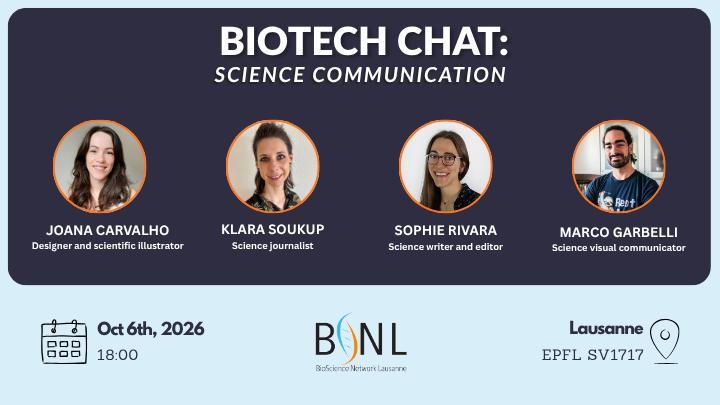
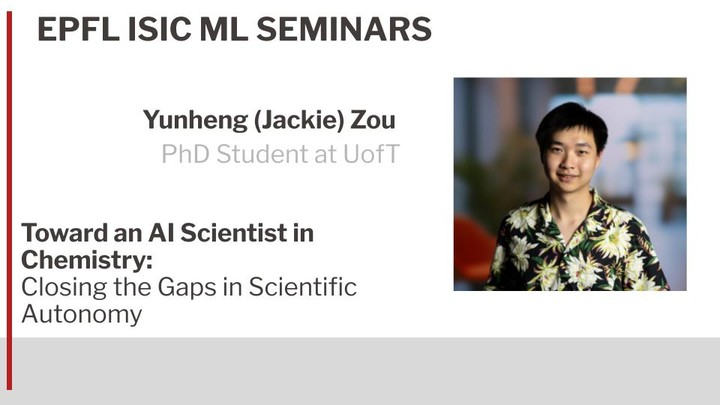
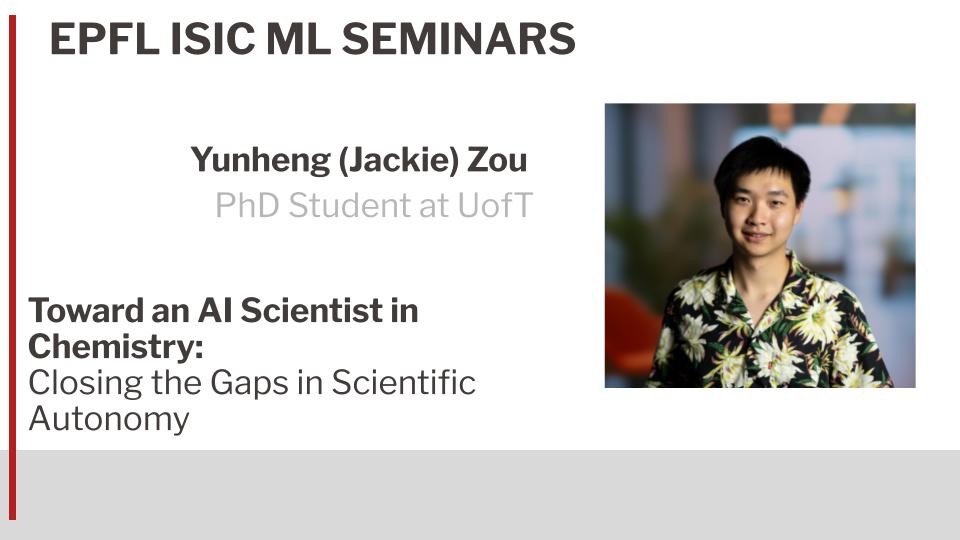
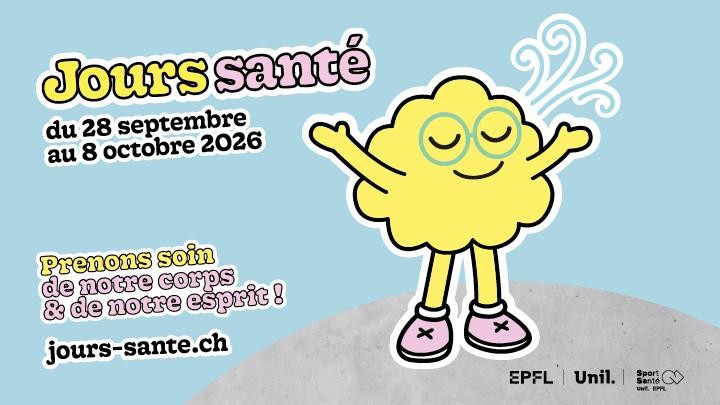
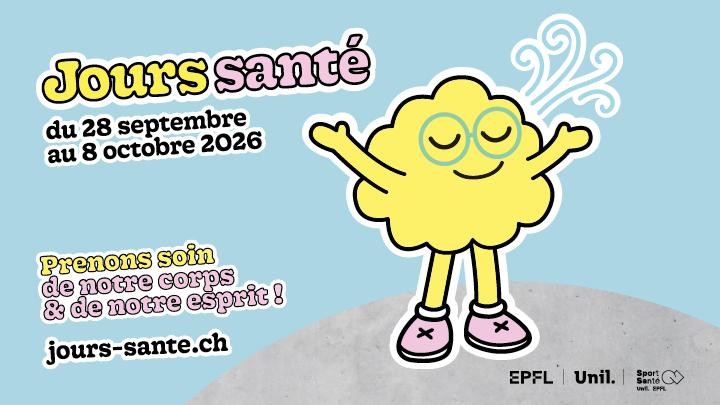
{ "count": 263, "next": "https://memento.epfl.ch/api/v1/events/?format=api&limit=10&offset=90&ordering=-description", "previous": "https://memento.epfl.ch/api/v1/events/?format=api&limit=10&offset=70&ordering=-description", "results": [ { "id": 72525, "title": "Biotech Chat: Science Communication", "slug": "biotech-chat-science-communication", "event_url": "https://memento.epfl.ch/event/biotech-chat-science-communication", "visual_url": "https://memento.epfl.ch/image/33765/200x112.jpg", "visual_large_url": "https://memento.epfl.ch/image/33765/720x405.jpg", "visual_maxsize_url": "https://memento.epfl.ch/image/33765/max-size.jpg", "lang": "en", "start_date": "2026-10-06", "end_date": "2026-10-06", "start_time": "06:00:00", "end_time": "08:30:00", "description": "<p>What happens when science meets illustration, journalism, writing, and visual communication?<br>\r\n<br>\r\nJoin us for the next <strong>Biotech Chats on Science Communication</strong>, organized by BSNL (BioScience Network Lausanne), and learn what career opportunities exist beyond the lab bench!<br>\r\n<br>\r\nEvent details:\r\n</p><ul>\r\n\t<li><strong>Date</strong>: Tuesday, October 6, 2026</li>\r\n\t<li><strong>Time</strong>: 6 p.m.</li>\r\n\t<li><strong>Location</strong>: EPFL Campus, SV building, Room 1717</li>\r\n\t<li><strong>Register <a href=\"https://forms.gle/tT8QcCJMMNhgmGzAA\">here</a></strong></li>\r\n</ul>\r\n<strong>Speakers</strong>:\r\n\r\n<ul>\r\n\t<li><a href=\"http://joanaccarvalho.com\">Joana Carvalho</a>, designer and scientific illustrator currently working at AITHYRA Research Institute for Biomedical Artificial Intelligence in Vienna.</li>\r\n\t<li><a href=\"http://www.klarasoukup.com\">Klara Soukup</a>, a freelance science journalist who also works in research communication at UNIL.</li>\r\n\t<li><a href=\"http://marcogarbelli-sciviz.com/about/\">Marco Garbelli</a>, a Switzerland-based researcher creating impactful graphical work to communicate science effectively. </li>\r\n\t<li><a href=\"http://ch.linkedin.com/in/sophie-rivara-624024189/en\">Sophie Rivara</a>, a science writer and editor responsible for scientific communication at the Swiss National Science Foundation (SNSF).</li>\r\n</ul>\r\n<br>\r\nIf you are a researcher who enjoys communicating science through writing, design, illustration, or visual storytelling and wondering what career opportunities exist beyond the wet lab, join us for October's Biotech Chat to discover how scientific expertise combined with communication skills can open the door to careers as a freelancer, entrepreneur, contractor, science writer, illustrator, or visual communicator.<br>\r\n<br>\r\nYou'll have the opportunity to <strong>ask questions</strong> in a Q&A session and <strong>discuss with the speakers over an apéro</strong> that will follow the event.<br>\r\n<br>\r\nWe look forward to seeing you there!", "image_description": "", "creation_date": "2026-09-04T13:34:30", "last_modification_date": "2026-09-07T08:38:00", "link_label": "", "link_url": "", "canceled": "False", "cancel_reason": "", "place_and_room": "SV 1717", "url_place_and_room": "https://plan.epfl.ch/?room==SV%201717", "url_online_room": "", "spoken_languages": [ "https://memento.epfl.ch/api/v1/spoken_languages/2/?format=api" ], "speaker": "<a href=\"https://joanaccarvalho.com\">Joana Carvalho</a>, <a href=\"https://www.klarasoukup.com\">Klara Soukup</a>, <a href=\"https://marcogarbelli-sciviz.com/about/\">Marco Garbelli</a>, <a href=\"https://ch.linkedin.com/in/sophie-rivara-624024189/en\">Sophie Rivara</a>", "organizer": "BioScience Network Lausanne (BSNL)", "contact": "[email protected]", "is_internal": "False", "theme": "", "vulgarization": { "id": 1, "fr_label": "Tout public", "en_label": "General public" }, "registration": { "id": 1, "fr_label": "Sur inscription", "en_label": "Registration required" }, "keywords": "career opportunities, science communication, science visualisation, writing, networking", "file": null, "icalendar_url": "https://memento.epfl.ch/event/export/121716/", "category": { "id": 1, "code": "CONF", "fr_label": "Conférences - Séminaires", "en_label": "Conferences - Seminars", "activated": true }, "academic_calendar_category": null, "domains": [], "mementos": [ "https://memento.epfl.ch/api/v1/mementos/1/?format=api", "https://memento.epfl.ch/api/v1/mementos/5/?format=api", "https://memento.epfl.ch/api/v1/mementos/6/?format=api", "https://memento.epfl.ch/api/v1/mementos/145/?format=api", "https://memento.epfl.ch/api/v1/mementos/392/?format=api" ] }, { "id": 72723, "title": "Toward an AI Scientist in Chemistry: Closing the Gaps in Scientific Autonomy", "slug": "toward-an-ai-scientist-in-chemistry-closing-the-ga", "event_url": "https://memento.epfl.ch/event/toward-an-ai-scientist-in-chemistry-closing-the-ga", "visual_url": "https://memento.epfl.ch/image/33941/200x112.jpg", "visual_large_url": "https://memento.epfl.ch/image/33941/720x405.jpg", "visual_maxsize_url": "https://memento.epfl.ch/image/33941/max-size.jpg", "lang": "en", "start_date": "2026-10-06", "end_date": "2026-10-06", "start_time": "15:15:00", "end_time": "16:15:00", "description": "<p>What does it take to build an AI scientist in chemistry that can carry out research and improve through experience? In this talk, I will explore scientific autonomy as a process of hill climbing: identifying the capabilities that limit autonomous research, addressing those gaps, and evaluating progress on increasingly demanding chemistry tasks.<br>\r\nDrawing on the El Agente family of systems, I will discuss how hierarchical teams of agents coordinate quantum chemistry workflows and how molecular structure generation addresses a critical gap between chemical reasoning and computational execution. I will consider how these capabilities could contribute to longer-term research goals, such as automated reaction pathway exploration. These examples illustrate how a single missing capability can interrupt an otherwise sophisticated research workflow.<br>\r\nI will also discuss the open challenge of enabling agents to learn continually from scientific literature, computational results, and failed attempts, and to acquire capabilities as new problems demand them. By examining current capabilities and remaining bottlenecks, I will outline a path toward AI systems that formulate and test chemical hypotheses with increasing independence.</p>", "image_description": "", "creation_date": "2026-09-30T16:11:47", "last_modification_date": "2026-09-30T16:21:18", "link_label": "", "link_url": "", "canceled": "False", "cancel_reason": "", "place_and_room": "", "url_place_and_room": "", "url_online_room": "https://epfl.zoom.us/j/68447908297?pwd=OU5JUGJUSUhZc0ZNYjQ2WENvYINRdz09", "spoken_languages": [ "https://memento.epfl.ch/api/v1/spoken_languages/2/?format=api" ], "speaker": "Yunheng (Jackie) Zou", "organizer": "Philippe Schwaller", "contact": "[email protected]", "is_internal": "False", "theme": "", "vulgarization": { "id": 1, "fr_label": "Tout public", "en_label": "General public" }, "registration": { "id": 3, "fr_label": "Entrée libre", "en_label": "Free" }, "keywords": "MLSeminar1", "file": null, "icalendar_url": "https://memento.epfl.ch/event/export/122003/", "category": { "id": 1, "code": "CONF", "fr_label": "Conférences - Séminaires", "en_label": "Conferences - Seminars", "activated": true }, "academic_calendar_category": null, "domains": [], "mementos": [ "https://memento.epfl.ch/api/v1/mementos/1/?format=api", "https://memento.epfl.ch/api/v1/mementos/5/?format=api", "https://memento.epfl.ch/api/v1/mementos/6/?format=api", "https://memento.epfl.ch/api/v1/mementos/9/?format=api", "https://memento.epfl.ch/api/v1/mementos/14/?format=api" ] }, { "id": 72462, "title": "EPFL BioEngineering Talks", "slug": "epfl-bioengineering-talks-4", "event_url": "https://memento.epfl.ch/event/epfl-bioengineering-talks-4", "visual_url": "https://memento.epfl.ch/image/33710/200x112.jpg", "visual_large_url": "https://memento.epfl.ch/image/33710/720x405.jpg", "visual_maxsize_url": "https://memento.epfl.ch/image/33710/max-size.jpg", "lang": "en", "start_date": "2026-10-19", "end_date": "2026-10-19", "start_time": "12:15:00", "end_time": "13:15:00", "description": "<p>Weekly BioEngineering Talks (Lunch Provided)<br>\r\n<br>\r\n<strong>INVITED SPEAKERS:</strong><br>\r\n<br>\r\n<strong>Organic electrochemical transistors for enhanced potentiometric sensing of neurochemicals</strong><br>\r\n<strong><a href=\"https://people.epfl.ch/emily.schafer?lang=en\">Dr. Emily Schafer,</a> </strong>EPFL Laboratory of Chemical Nanotechnology<br>\r\nHost: <a href=\"https://people.epfl.ch/nako.nakatsuka\">Prof. Nako Nakatsuka</a><br>\r\n<br>\r\nFollowed by<br>\r\n<br>\r\n<strong>Data-driven protein engineering for sensing and biosynthesis of new-to-nature thioesters</strong><br>\r\n<a href=\"https://people.epfl.ch/sebastian.barthel?lang=en\"><strong>Dr. Sebastian Barthel</strong>,</a> EPFL Laboratory of Synthetic and Applied Microbiology <br>\r\nHost: <a href=\"https://people.epfl.ch/markus.jeschek\">Prof. Markus Jeschek</a><br>\r\n<br>\r\n------------------------------------------------------------------------------<br>\r\n<br>\r\n<strong>BioEngineering Talks mandatory EDBB Seminar Attendance (1st-Year PhD Students)</strong>\r\n</p><ul>\r\n\t<li> Attendance sheet to print <a class=\"text-link\" href=\"https://docs.google.com/document/d/1kusGxCFPAvWaRD8eUGEBkSVzD1ppMf1g/edit\" target=\"_blank\">HERE </a></li>\r\n</ul>\r\n<strong>The BioEngineering Student Seminar Series</strong> is an official course for which students can register and earn credits.<br>\r\n \r\n<ul>\r\n\t<li>Register <a class=\"text-link\" href=\"https://edu.epfl.ch/studyplan/fr/ecole_doctorale/biotechnologie-et-genie-biologique/coursebook/bioengineering-student-seminar-series-BIOENG-613\" target=\"_blank\">HERE</a></li>\r\n\t<li>Attendance sheet to print <a class=\"text-link\" href=\"https://docs.google.com/document/d/1ZGrPnt8LlLuWOApzx32s6L5UPPH8Hyoo/edit\" target=\"_blank\">HERE</a></li>\r\n</ul>\r\n<strong>General information:</strong><br>\r\nIn-person attendance is preferred to support your fellow students. Zoom is mainly for students on remote campuses; please notify <a class=\"text-link\" href=\"mailto:[email protected]\" target=\"_blank\">Fiorella Ghisays</a> in advance and join using your full name.<br>\r\nIf attending in person, have your sheet signed after the talk and keep the original, as no copy is retained.<br>\r\n ", "image_description": "", "creation_date": "2026-08-28T08:14:49", "last_modification_date": "2026-09-22T15:58:20", "link_label": "", "link_url": "", "canceled": "False", "cancel_reason": "", "place_and_room": "SV 1717", "url_place_and_room": "https://plan.epfl.ch/?room==SV%201717", "url_online_room": "https://epfl.zoom.us/j/68746410793", "spoken_languages": [ "https://memento.epfl.ch/api/v1/spoken_languages/2/?format=api" ], "speaker": "Invited Speaker and Student Speaker", "organizer": "Institute of Bioengineering", "contact": "<a href=\"mailto:[email protected]?subject=EPFL%20BioE%20Talks%20Series\">Fiorella Ghisays</a>, Institute of Bioengineering", "is_internal": "False", "theme": "", "vulgarization": { "id": 2, "fr_label": "Public averti", "en_label": "Informed public" }, "registration": { "id": 3, "fr_label": "Entrée libre", "en_label": "Free" }, "keywords": "", "file": "https://memento.epfl.ch/public/upload/files/BioEngineeringTalkMemento_u0lzmcg.jpg", "icalendar_url": "https://memento.epfl.ch/event/export/121616/", "category": { "id": 1, "code": "CONF", "fr_label": "Conférences - Séminaires", "en_label": "Conferences - Seminars", "activated": true }, "academic_calendar_category": null, "domains": [], "mementos": [ "https://memento.epfl.ch/api/v1/mementos/1/?format=api", "https://memento.epfl.ch/api/v1/mementos/5/?format=api", "https://memento.epfl.ch/api/v1/mementos/6/?format=api", "https://memento.epfl.ch/api/v1/mementos/8/?format=api", "https://memento.epfl.ch/api/v1/mementos/9/?format=api", "https://memento.epfl.ch/api/v1/mementos/111/?format=api", "https://memento.epfl.ch/api/v1/mementos/434/?format=api" ] }, { "id": 72772, "title": "EPFL BioEngineering Talks", "slug": "epfl-bioengineering-talks-12", "event_url": "https://memento.epfl.ch/event/epfl-bioengineering-talks-12", "visual_url": "https://memento.epfl.ch/image/33988/200x112.jpg", "visual_large_url": "https://memento.epfl.ch/image/33988/720x405.jpg", "visual_maxsize_url": "https://memento.epfl.ch/image/33988/max-size.jpg", "lang": "en", "start_date": "2026-11-02", "end_date": "2026-11-02", "start_time": "12:15:00", "end_time": "13:45:00", "description": "<p>Weekly BioEngineering Talks (Lunch Provided)<br>\r\n<br>\r\n<strong>INVITED SPEAKER:</strong><br>\r\n<strong>From single-molecule biophysics with Graphene Energy Transfer to Brownian DNA computing</strong><br>\r\n<strong><a href=\"https://tinnefeld.cup.uni-muenchen.de/publications/group-theses/https-tinnefeld-cup-uni-muenchen-de-members/philip-tinnefeld/\">Prof. Dr. Philip Tinnefeld</a>,</strong> LMU Munich<br>\r\nHost: <a href=\"https://people.epfl.ch/aleksandra.radenovic?lang=en\">Prof. Aleksandra Radenovic</a><br>\r\n<br>\r\n<u><strong>Abstract:</strong></u><br>\r\nGraphene-on-glass coverslips are an emerging microscopy platform as resonant energy transfer to graphene offers an axial ruler in the 5-40 nm range. I present single molecule biophysics experiments of protein/DNA interactions using Graphene Energy Transfer (GET) in combination with the discovery that dsDNA adopts a vertical orientation on graphene. Axial information of DNA structure and protein positions is deduced from GET-efficiency and xy-information is obtained e.g. by photon-efficient pMINFLUX revealing simultaneous bending and torsion of enzyme induced DNA conformations. Finally, I discuss how multi-color smFRET with dark quenchers probes states of DNA nanorobots and Brownian DNA computers that work close to the thermodynamic optimum.<br>\r\n<br>\r\n<u><strong>Bio:</strong></u><br>\r\nPhilip Tinnefeld is a Professor of Physical Chemistry at Ludwig-Maximilians-Universität München, leading a highly interdisciplinary NanoBioSciences research group that brings together molecular biology, biophysics, nanophotonics, and physical chemistry. He specialises in single-molecule detection and super-resolution microscopy, and he uses DNA origami to build modular nanoscale devices—such as force sensors, fluorescence amplifiers, and molecular robots—that can sense, compute, and respond autonomously. Under his leadership, the lab is also developing advanced biosensing platforms and imaging tools by combining DNA nanotechnology with 2D materials like graphene, pushing the frontiers of how we observe and control biological processes at the molecular level.<br>\r\n<br>\r\n<strong>STUDENT SPEAKER:</strong><br>\r\n<br>\r\n<strong>Understanding oxidative stress response in animals - a case study of the essential enzyme adenosylhomocysteinase, AHCY</strong><br>\r\n<strong><a href=\"https://people.epfl.ch/yong-qi.gao?lang=en\">Yong-Qi Gao</a>, </strong><a href=\"https://www.epfl.ch/labs/upzenk/\">Zenk Lab</a><br>\r\n<br>\r\n<br>\r\n------------------------------------------------------------------------------<br>\r\n<br>\r\n<strong>BioEngineering Talks mandatory EDBB Seminar Attendance (1st-Year PhD Students)</strong>\r\n</p><ul>\r\n\t<li> Attendance sheet to print <a class=\"text-link\" href=\"https://docs.google.com/document/d/1kusGxCFPAvWaRD8eUGEBkSVzD1ppMf1g/edit\" target=\"_blank\">HERE </a></li>\r\n</ul>\r\n<strong>The BioEngineering Student Seminar Series</strong> is an official course for which students can register and earn credits.<br>\r\n \r\n<ul>\r\n\t<li>Register <a class=\"text-link\" href=\"https://edu.epfl.ch/studyplan/fr/ecole_doctorale/biotechnologie-et-genie-biologique/coursebook/bioengineering-student-seminar-series-BIOENG-613\" target=\"_blank\">HERE</a></li>\r\n\t<li>Attendance sheet to print <a class=\"text-link\" href=\"https://docs.google.com/document/d/1ZGrPnt8LlLuWOApzx32s6L5UPPH8Hyoo/edit\" target=\"_blank\">HERE</a></li>\r\n</ul>\r\n<strong>General information:</strong><br>\r\nIn-person attendance is preferred to support your fellow students. Zoom is mainly for students on remote campuses; please notify <a class=\"text-link\" href=\"mailto:[email protected]\" target=\"_blank\">Fiorella Ghisays</a> in advance and join using your full name.<br>\r\nIf attending in person, have your sheet signed after the talk and keep the original, as no copy is retained.<br>\r\n ", "image_description": "", "creation_date": "2026-10-06T10:24:19", "last_modification_date": "2026-10-06T10:33:07", "link_label": "", "link_url": "", "canceled": "False", "cancel_reason": "", "place_and_room": "SV 1717", "url_place_and_room": "https://plan.epfl.ch/?room==SV%201717", "url_online_room": "https://epfl.zoom.us/j/68746410793", "spoken_languages": [ "https://memento.epfl.ch/api/v1/spoken_languages/2/?format=api" ], "speaker": "Invited Speaker and Student Speaker", "organizer": "Institute of Bioengineering", "contact": "<a href=\"mailto:[email protected]?subject=EPFL%20BioE%20Talks%20Series\">Fiorella Ghisays</a>, Institute of Bioengineering", "is_internal": "False", "theme": "", "vulgarization": { "id": 2, "fr_label": "Public averti", "en_label": "Informed public" }, "registration": { "id": 3, "fr_label": "Entrée libre", "en_label": "Free" }, "keywords": "", "file": "https://memento.epfl.ch/public/upload/files/BioEngineeringTalkMemento_u0lzmcg.jpg", "icalendar_url": "https://memento.epfl.ch/event/export/122074/", "category": { "id": 1, "code": "CONF", "fr_label": "Conférences - Séminaires", "en_label": "Conferences - Seminars", "activated": true }, "academic_calendar_category": null, "domains": [], "mementos": [ "https://memento.epfl.ch/api/v1/mementos/5/?format=api", "https://memento.epfl.ch/api/v1/mementos/6/?format=api", "https://memento.epfl.ch/api/v1/mementos/8/?format=api", "https://memento.epfl.ch/api/v1/mementos/9/?format=api", "https://memento.epfl.ch/api/v1/mementos/111/?format=api", "https://memento.epfl.ch/api/v1/mementos/434/?format=api" ] }, { "id": 72640, "title": "EPFL BioEngineering Talks", "slug": "epfl-bioengineering-talks-11", "event_url": "https://memento.epfl.ch/event/epfl-bioengineering-talks-11", "visual_url": "https://memento.epfl.ch/image/33885/200x112.jpg", "visual_large_url": "https://memento.epfl.ch/image/33885/720x405.jpg", "visual_maxsize_url": "https://memento.epfl.ch/image/33885/max-size.jpg", "lang": "en", "start_date": "2026-10-12", "end_date": "2026-10-12", "start_time": "12:15:00", "end_time": "13:00:00", "description": "<p>Weekly BioEngineering Talks (Lunch Provided)<br>\r\n<br>\r\n<strong>INVITED SPEAKER:</strong><br>\r\n<br>\r\n<strong>De novo design of light-responsive proteins</strong><br>\r\n<a href=\"https://people.epfl.ch/alexander.hilditch?lang=en\"><strong>Dr. Alexander Hilditch</strong>,</a> EPFL Laboratory of Protein Design & Immunoengineering <br>\r\nHost: <a href=\"https://people.epfl.ch/bruno.correia?lang=en\">Prof. Bruno Correia</a><br>\r\n<br>\r\n<br>\r\n------------------------------------------------------------------------------<br>\r\n<br>\r\n<strong>BioEngineering Talks mandatory EDBB Seminar Attendance (1st-Year PhD Students)</strong>\r\n</p><ul>\r\n\t<li> Attendance sheet to print <a class=\"text-link\" href=\"https://docs.google.com/document/d/1kusGxCFPAvWaRD8eUGEBkSVzD1ppMf1g/edit\" target=\"_blank\">HERE </a></li>\r\n</ul>\r\n<strong>The BioEngineering Student Seminar Series</strong> is an official course for which students can register and earn credits.<br>\r\n \r\n<ul>\r\n\t<li>Register <a class=\"text-link\" href=\"https://edu.epfl.ch/studyplan/fr/ecole_doctorale/biotechnologie-et-genie-biologique/coursebook/bioengineering-student-seminar-series-BIOENG-613\" target=\"_blank\">HERE</a></li>\r\n\t<li>Attendance sheet to print <a class=\"text-link\" href=\"https://docs.google.com/document/d/1ZGrPnt8LlLuWOApzx32s6L5UPPH8Hyoo/edit\" target=\"_blank\">HERE</a></li>\r\n</ul>\r\n<strong>General information:</strong><br>\r\nIn-person attendance is preferred to support your fellow students. Zoom is mainly for students on remote campuses; please notify <a class=\"text-link\" href=\"mailto:[email protected]\" target=\"_blank\">Fiorella Ghisays</a> in advance and join using your full name.<br>\r\nIf attending in person, have your sheet signed after the talk and keep the original, as no copy is retained.<br>\r\n ", "image_description": "", "creation_date": "2026-09-22T15:48:04", "last_modification_date": "2026-09-29T15:50:23", "link_label": "", "link_url": "", "canceled": "False", "cancel_reason": "", "place_and_room": "SV 1717", "url_place_and_room": "https://plan.epfl.ch/?room==SV%201717", "url_online_room": "https://epfl.zoom.us/j/68746410793", "spoken_languages": [ "https://memento.epfl.ch/api/v1/spoken_languages/2/?format=api" ], "speaker": "Invited Speaker and Student Speaker", "organizer": "Institute of Bioengineering", "contact": "<a href=\"mailto:[email protected]?subject=EPFL%20BioE%20Talks%20Series\">Fiorella Ghisays</a>, Institute of Bioengineering", "is_internal": "False", "theme": "", "vulgarization": { "id": 2, "fr_label": "Public averti", "en_label": "Informed public" }, "registration": { "id": 3, "fr_label": "Entrée libre", "en_label": "Free" }, "keywords": "", "file": "https://memento.epfl.ch/public/upload/files/BioEngineeringTalkMemento_u0lzmcg.jpg", "icalendar_url": "https://memento.epfl.ch/event/export/121882/", "category": { "id": 1, "code": "CONF", "fr_label": "Conférences - Séminaires", "en_label": "Conferences - Seminars", "activated": true }, "academic_calendar_category": null, "domains": [], "mementos": [ "https://memento.epfl.ch/api/v1/mementos/1/?format=api", "https://memento.epfl.ch/api/v1/mementos/5/?format=api", "https://memento.epfl.ch/api/v1/mementos/6/?format=api", "https://memento.epfl.ch/api/v1/mementos/8/?format=api", "https://memento.epfl.ch/api/v1/mementos/9/?format=api", "https://memento.epfl.ch/api/v1/mementos/111/?format=api", "https://memento.epfl.ch/api/v1/mementos/434/?format=api" ] }, { "id": 72637, "title": "EPFL BioEngineering Talks", "slug": "epfl-bioengineering-talks-8", "event_url": "https://memento.epfl.ch/event/epfl-bioengineering-talks-8", "visual_url": "https://memento.epfl.ch/image/33882/200x112.jpg", "visual_large_url": "https://memento.epfl.ch/image/33882/720x405.jpg", "visual_maxsize_url": "https://memento.epfl.ch/image/33882/max-size.jpg", "lang": "en", "start_date": "2026-10-26", "end_date": "2026-10-26", "start_time": "12:15:00", "end_time": "13:45:00", "description": "<p>Weekly BioEngineering Talks (Lunch Provided)<br>\r\n<br>\r\n<strong>INVITED SPEAKER:</strong><br>\r\n<br>\r\n<strong>Advancing Multidimensional Single-Molecule localization microscopy: development and applications in nuclear organization</strong><br>\r\n<a href=\"http://institut-curie.org/person/bassam-hajj\"><strong>Dr. Bassam Hajj</strong></a>, Institut Curie, Paris<br>\r\nHost: <a href=\"https://people.epfl.ch/aleksandra.radenovic?lang=en\">Prof. Aleksandra Radenovic</a><br>\r\n<br>\r\n<u><strong>Abstract:</strong></u><br>\r\nSingle-molecule localization microscopy (SMLM) has revolutionized our understanding of biological processes by providing access to spatial scales beyond the diffraction limit of conventional optical microscopy. In the study of the cell nucleus, SMLM has offered unique insights into its organization and function at the nanoscale. Nuclear architecture is structured across multiple spatial scales in three dimensions and is highly dynamic. Understanding the mechanisms that govern nuclear organization therefore requires imaging approaches capable of capturing molecular dynamics across a broad range of spatial and temporal scales and in diverse biological contexts. Although SMLM can routinely achieve spatial resolutions in the tens-of-nanometers range, many biologically relevant structures and processes remain beyond its reach. For example, resolving the precise organization of DNA at the molecular scale remains challenging, as it would require a substantial improvement in spatial resolution over conventional SMLM, while also addressing the high density and degree of molecular compaction within the nucleus. <br>\r\nOver the years, we have developed complementary strategies to address these challenges by introducing additional dimensions and observables into SMLM measurements. In this presentation, I will first discuss our approaches to three-dimensional single-molecule imaging, including multifocus microscopy and volumetric light-sheet excitation, which enable fast and sensitive imaging over extended volumes and in complex biological samples such as cell colonies. While these approaches provide access to the three-dimensional and temporal dimensions required to investigate nuclear organization, spatial resolution alone is not always sufficient to distinguish molecular arrangements. We have therefore extended SMLM further by implementing polarization-resolved multifocus microscopy (PolMFM), which combines three-dimensional localization with information on molecular orientation.<br>\r\nI will illustrate how these multidimensional approaches can provide new insights into nuclear organization, with examples spanning different biological systems. In particular, I will present evidence for a long-range, crystal-like organization of DNA within the nuclei of mature sperm cells from crickets, demonstrating how multidimensional imaging can reveal structural features that remain inaccessible to conventional localization microscopy.<br>\r\nFinally, I will discuss the challenges and opportunities associated with visualizing, analyzing, and interactively exploring the multidimensional datasets generated by these approaches. Together, these developments illustrate how extending SMLM beyond conventional two-dimensional localization can provide new ways to interrogate the organization and dynamics of biological systems at the nanoscale.<br>\r\n<br>\r\n<br>\r\n<u><strong>Bio:</strong></u><br>\r\nBassam Hajj is a physicist and CNRS researcher at Institut Curie in Paris, where he is a member of the Physics of Cells and Cancer unit and co-leads the “Light-based Observation and Control of Cellular Organization” team. His research focuses on the development of advanced optical microscopy techniques, particularly single-molecule localization microscopy, 3D imaging, and multidimensional approaches for studying cellular organization at the nanoscale.<br>\r\nAfter completing his PhD at École Normale Supérieure de Cachan on electro-optical microscopy, Bassam joined Janelia Research Campus as a postdoctoral researcher, where he worked on multifocus microscopy for fast and sensitive single-molecule imaging. He subsequently returned to Institut Curie and joined the CNRS as a permanent researcher in 2016.<br>\r\nHis current research combines innovative microscopy, quantitative image analysis, and data visualization to investigate molecular organization and dynamics, with a particular focus on nuclear organization.<br>\r\n<br>\r\n<strong>STUDENT SPEAKER:</strong><br>\r\n<br>\r\n<strong>Transcription Factor Dose in Stem Cell Reprogramming: Insights from Single-Cell Multi-Omics</strong><br>\r\n<strong><a href=\"https://people.epfl.ch/angelika.gebhart?lang=en\">Angelika Gebhart</a>, </strong><a href=\"https://www.epfl.ch/labs/deplanckelab/\">Deplancke Lab</a><br>\r\n<br>\r\n<br>\r\n------------------------------------------------------------------------------<br>\r\n<br>\r\n<strong>BioEngineering Talks mandatory EDBB Seminar Attendance (1st-Year PhD Students)</strong>\r\n</p><ul>\r\n\t<li> Attendance sheet to print <a class=\"text-link\" href=\"https://docs.google.com/document/d/1kusGxCFPAvWaRD8eUGEBkSVzD1ppMf1g/edit\" target=\"_blank\">HERE </a></li>\r\n</ul>\r\n<strong>The BioEngineering Student Seminar Series</strong> is an official course for which students can register and earn credits.<br>\r\n \r\n<ul>\r\n\t<li>Register <a class=\"text-link\" href=\"https://edu.epfl.ch/studyplan/fr/ecole_doctorale/biotechnologie-et-genie-biologique/coursebook/bioengineering-student-seminar-series-BIOENG-613\" target=\"_blank\">HERE</a></li>\r\n\t<li>Attendance sheet to print <a class=\"text-link\" href=\"https://docs.google.com/document/d/1ZGrPnt8LlLuWOApzx32s6L5UPPH8Hyoo/edit\" target=\"_blank\">HERE</a></li>\r\n</ul>\r\n<strong>General information:</strong><br>\r\nIn-person attendance is preferred to support your fellow students. Zoom is mainly for students on remote campuses; please notify <a class=\"text-link\" href=\"mailto:[email protected]\" target=\"_blank\">Fiorella Ghisays</a> in advance and join using your full name.<br>\r\nIf attending in person, have your sheet signed after the talk and keep the original, as no copy is retained.<br>\r\n ", "image_description": "", "creation_date": "2026-09-22T14:23:42", "last_modification_date": "2026-09-22T14:43:05", "link_label": "", "link_url": "", "canceled": "False", "cancel_reason": "", "place_and_room": "SV 1717", "url_place_and_room": "https://plan.epfl.ch/?room==SV%201717", "url_online_room": "https://epfl.zoom.us/j/68746410793", "spoken_languages": [ "https://memento.epfl.ch/api/v1/spoken_languages/2/?format=api" ], "speaker": "Invited Speaker and Student Speaker", "organizer": "Institute of Bioengineering", "contact": "<a href=\"mailto:[email protected]?subject=EPFL%20BioE%20Talks%20Series\">Fiorella Ghisays</a>, Institute of Bioengineering", "is_internal": "False", "theme": "", "vulgarization": { "id": 2, "fr_label": "Public averti", "en_label": "Informed public" }, "registration": { "id": 3, "fr_label": "Entrée libre", "en_label": "Free" }, "keywords": "", "file": "https://memento.epfl.ch/public/upload/files/BioEngineeringTalkMemento_u0lzmcg.jpg", "icalendar_url": "https://memento.epfl.ch/event/export/121879/", "category": { "id": 1, "code": "CONF", "fr_label": "Conférences - Séminaires", "en_label": "Conferences - Seminars", "activated": true }, "academic_calendar_category": null, "domains": [], "mementos": [ "https://memento.epfl.ch/api/v1/mementos/1/?format=api", "https://memento.epfl.ch/api/v1/mementos/5/?format=api", "https://memento.epfl.ch/api/v1/mementos/6/?format=api", "https://memento.epfl.ch/api/v1/mementos/8/?format=api", "https://memento.epfl.ch/api/v1/mementos/9/?format=api", "https://memento.epfl.ch/api/v1/mementos/111/?format=api", "https://memento.epfl.ch/api/v1/mementos/434/?format=api" ] }, { "id": 72465, "title": "EPFL BioEngineering Talks", "slug": "epfl-bioengineering-talks-3", "event_url": "https://memento.epfl.ch/event/epfl-bioengineering-talks-3", "visual_url": "https://memento.epfl.ch/image/33744/200x112.jpg", "visual_large_url": "https://memento.epfl.ch/image/33744/720x405.jpg", "visual_maxsize_url": "https://memento.epfl.ch/image/33744/max-size.jpg", "lang": "en", "start_date": "2026-11-30", "end_date": "2026-11-30", "start_time": "12:15:00", "end_time": "13:15:00", "description": "<p>Weekly BioEngineering Talks ( Lunch Provided)<br>\r\n<br>\r\n<strong>INVITED SPEAKER:</strong><br>\r\n<br>\r\n<strong>A full-stack viral toolkit for systems neuroscience</strong><br>\r\n<strong><a href=\"https://dellmed.utexas.edu/directory/lief-fenno\">Prof. Lief Fenno</a></strong>, University of Texas at Austin<br>\r\nHost: <a href=\"https://people.epfl.ch/yoon.kim?lang=en\">Prof. Yoon Seok Kim</a><br>\r\n<br>\r\n<u><strong>Abstract:</strong></u><br>\r\n Understanding and manipulating neural circuits requires technologies enabling access to specific cells, manipulation of genome structure, and delivery of increasingly complex genetic programs. I will describe viral technologies developed by my group that address each of these challenges. These include INTRSECT, a Boolean viral targeting strategy for cell-type- and circuit-specific access; VESPA, a novel split-AAV platform that enables efficient reassembly and expression of genetic payloads too large for a single AAV; and CRISPR/Cas9-based strategies for precise, cell-type- and circuit-specific gene knockdown. Together, these tools form an integrated viral toolkit for programmable access to and manipulation of neural circuits across multiple levels of biological complexity.<br>\r\n<br>\r\n<u><strong>Bio:</strong></u><br>\r\nDr. Lief Fenno is a physician-scientist at The University of Texas at Austin and Dell Medical School. His research integrates systems neuroscience, synthetic biology, and bioengineering to develop genetic, viral, and neuromodulation technologies for programmable control of neural circuits in vivo. His laboratory develops molecular and viral platforms for selectively accessing and manipulating defined neural populations, alongside approaches for neural stimulation and emerging therapeutic applications. His work spans fundamental circuit neuroscience, neurotechnology, and the translation of biological tools to treatment of brain disorders. Dr. Fenno is also a board-certified addiction psychiatrist, Chair of the American Psychiatric Association Council on Addiction Psychiatry, and is active in commercial scientific translation and biotechnology innovation.<br>\r\n<br>\r\n<br>\r\n-------------------------------------------------------------------------<br>\r\n<br>\r\n<strong>BioEngineering Talks mandatory EDBB Seminar Attendance (1st-Year PhD Students)</strong>\r\n</p><ul>\r\n\t<li> Attendance sheet to print <a class=\"text-link\" href=\"https://docs.google.com/document/d/1kusGxCFPAvWaRD8eUGEBkSVzD1ppMf1g/edit\" target=\"_blank\">HERE </a></li>\r\n</ul>\r\n<strong>The BioEngineering Student Seminar Series</strong> is an official course for which students can register and earn credits.<br>\r\n \r\n<ul>\r\n\t<li>Register <a class=\"text-link\" href=\"https://edu.epfl.ch/studyplan/fr/ecole_doctorale/biotechnologie-et-genie-biologique/coursebook/bioengineering-student-seminar-series-BIOENG-613\" target=\"_blank\">HERE</a></li>\r\n\t<li>Attendance sheet to print <a class=\"text-link\" href=\"https://docs.google.com/document/d/1ZGrPnt8LlLuWOApzx32s6L5UPPH8Hyoo/edit\" target=\"_blank\">HERE</a></li>\r\n</ul>\r\n<strong>General information:</strong><br>\r\nIn-person attendance is preferred to support your fellow students. Zoom is mainly for students on remote campuses; please notify <a class=\"text-link\" href=\"mailto:[email protected]\" target=\"_blank\">Fiorella Ghisays</a> in advance and join using your full name.<br>\r\nIf attending in person, have your sheet signed after the talk and keep the original, as no copy is retained.<br>\r\n ", "image_description": "", "creation_date": "2026-08-28T12:37:36", "last_modification_date": "2026-10-06T11:12:13", "link_label": "", "link_url": "", "canceled": "False", "cancel_reason": "", "place_and_room": "SV 1717", "url_place_and_room": "https://plan.epfl.ch/?room==SV%201717", "url_online_room": "https://epfl.zoom.us/j/68746410793", "spoken_languages": [ "https://memento.epfl.ch/api/v1/spoken_languages/2/?format=api" ], "speaker": "Invited Speaker and Student Speaker", "organizer": "Institute of Bioengineering", "contact": "<a href=\"mailto:[email protected]?subject=EPFL%20BioE%20Talks%20Series\">Fiorella Ghisays</a>, Institute of Bioengineering", "is_internal": "False", "theme": "", "vulgarization": { "id": 2, "fr_label": "Public averti", "en_label": "Informed public" }, "registration": { "id": 3, "fr_label": "Entrée libre", "en_label": "Free" }, "keywords": "", "file": null, "icalendar_url": "https://memento.epfl.ch/event/export/121620/", "category": { "id": 1, "code": "CONF", "fr_label": "Conférences - Séminaires", "en_label": "Conferences - Seminars", "activated": true }, "academic_calendar_category": null, "domains": [], "mementos": [ "https://memento.epfl.ch/api/v1/mementos/1/?format=api", "https://memento.epfl.ch/api/v1/mementos/6/?format=api", "https://memento.epfl.ch/api/v1/mementos/8/?format=api", "https://memento.epfl.ch/api/v1/mementos/9/?format=api", "https://memento.epfl.ch/api/v1/mementos/111/?format=api" ] }, { "id": 72734, "title": "From Dimers to Maximal Surfaces in Minkowski Space R^{2,1}", "slug": "from-dimers-to-maximal-surfaces-in-minkowski-space", "event_url": "https://memento.epfl.ch/event/from-dimers-to-maximal-surfaces-in-minkowski-space", "visual_url": null, "visual_large_url": null, "visual_maxsize_url": null, "lang": "en", "start_date": "2026-10-07", "end_date": "2026-10-07", "start_time": "15:00:00", "end_time": null, "description": "<p>We discuss a class of graph embeddings into Minkowski space R^{2,2} = C^{1,1}, called t-surfaces, which arise in the study of the planar dimer model. A t-surface consists of a (perfect) t-embedding together with its associated origami map. Perfect t-embeddings were recently introduced as a key tool for proving that the gradient of the dimer height function converges to that of the Gaussian Free Field in a canonically associated metric, under suitable technical assumptions. After introducing the notion of a t-embedding, we will describe a construction of perfect t-embeddings for regular hexagons of the hexagonal lattice. In which the corresponding t-surfaces converge to space-like maximal surfaces in Minkowski space R^{2,1}. As a consequence, these constructions yield a new proof of convergence of fluctuations of the dimer height function to the Gaussian Free Field in the conformal structure induced by the limiting maximal surface.</p>", "image_description": "", "creation_date": "2026-10-01T16:38:56", "last_modification_date": "2026-10-01T16:38:56", "link_label": "", "link_url": "", "canceled": "False", "cancel_reason": "", "place_and_room": "CM 1 517", "url_place_and_room": "https://plan.epfl.ch/?room==CM%201%20517", "url_online_room": "", "spoken_languages": [ "https://memento.epfl.ch/api/v1/spoken_languages/2/?format=api" ], "speaker": "Marianna Russkikh", "organizer": "Prof. Martin Hairer", "contact": "Juliana Velasquez", "is_internal": "False", "theme": "", "vulgarization": { "id": 2, "fr_label": "Public averti", "en_label": "Informed public" }, "registration": { "id": 3, "fr_label": "Entrée libre", "en_label": "Free" }, "keywords": "", "file": null, "icalendar_url": "https://memento.epfl.ch/event/export/122018/", "category": { "id": 1, "code": "CONF", "fr_label": "Conférences - Séminaires", "en_label": "Conferences - Seminars", "activated": true }, "academic_calendar_category": null, "domains": [], "mementos": [ "https://memento.epfl.ch/api/v1/mementos/7/?format=api" ] }, { "id": 72430, "title": "Jastrow Factors and Barron Regularity of Electronic Wave Functions", "slug": "jastrow-factors-and-barron-regularity-of-electroni", "event_url": "https://memento.epfl.ch/event/jastrow-factors-and-barron-regularity-of-electroni", "visual_url": null, "visual_large_url": null, "visual_maxsize_url": null, "lang": "en", "start_date": "2026-10-08", "end_date": "2026-10-08", "start_time": "09:30:00", "end_time": "10:30:00", "description": "<p>Wave functions describing bound states of electronic systems satisfy high-dimensional Schrödinger equations whose potentials exhibit Coulomb singularities at particle-collision configurations. These singularities generate cusps that limit the global regularity of the wave function in spectral Barron spaces, which are particularly relevant to the analysis of Fourier-based approximation methods and neural networks.<br>\r\nIn this talk, we study the effect of extracting a truncated Jastrow factor designed to capture the leading coalescence singularities while preserving the asymptotic behavior of the wave function at infinity. We show that the resulting quotient gains one full order of spectral Barron regularity: whereas the original wave function typically belongs to spaces of order (s<1), the Jastrow quotient belongs to those of order (s<2). An explicit hydrogenic example shows that the threshold (s=2) is natural.<br>\r\nThe proof relies on conjugating the Hamiltonian by the Jastrow factor and carrying out a global Fourier-space analysis. It combines resolvent estimates, precise control of singular coefficients, and a fixed-point argument separating low and high frequencies.<br>\r\n<br>\r\n---<br>\r\nThe electronic structure reading group brings together researchers and students interested in mathematical aspects of electronic structure problems and adjacent topics, including:\r\n</p><ul>\r\n\t<li>Density Functional Theory</li>\r\n\t<li>Many-body Schrödinger equation for electrons</li>\r\n\t<li>Born-Oppenheimer Molecular Dynamics</li>\r\n\t<li>Numerical analysis and error control</li>\r\n</ul>\r\nWebsite: <a href=\"https://matmat.org/readinggroup/\">https://matmat.org/readinggroup/</a><br>\r\n ", "image_description": "", "creation_date": "2026-08-25T16:31:13", "last_modification_date": "2026-09-02T11:49:52", "link_label": "", "link_url": "", "canceled": "True", "cancel_reason": "", "place_and_room": "GC B3 31", "url_place_and_room": "https://plan.epfl.ch/?room==GC%20B3%2031", "url_online_room": "", "spoken_languages": [ "https://memento.epfl.ch/api/v1/spoken_languages/2/?format=api" ], "speaker": "<a href=\"https://team.inria.fr/matherials/team-members/virginie-ehrlacher-galland/\">Virginie Ehrlacher (ENPC)</a>", "organizer": "Michael Herbst, Noé Blassel, Niklas Schmitz", "contact": "Michael Herbst, Noé Blassel, Niklas Schmitz", "is_internal": "False", "theme": "", "vulgarization": { "id": 1, "fr_label": "Tout public", "en_label": "General public" }, "registration": { "id": 3, "fr_label": "Entrée libre", "en_label": "Free" }, "keywords": "", "file": null, "icalendar_url": "https://memento.epfl.ch/event/export/121568/", "category": { "id": 1, "code": "CONF", "fr_label": "Conférences - Séminaires", "en_label": "Conferences - Seminars", "activated": true }, "academic_calendar_category": null, "domains": [], "mementos": [ "https://memento.epfl.ch/api/v1/mementos/7/?format=api", "https://memento.epfl.ch/api/v1/mementos/8/?format=api", "https://memento.epfl.ch/api/v1/mementos/14/?format=api", "https://memento.epfl.ch/api/v1/mementos/191/?format=api", "https://memento.epfl.ch/api/v1/mementos/246/?format=api" ] }, { "id": 72259, "title": "Health Days 2026", "slug": "health-days-2026", "event_url": "https://memento.epfl.ch/event/health-days-2026", "visual_url": "https://memento.epfl.ch/image/33530/200x112.jpg", "visual_large_url": "https://memento.epfl.ch/image/33530/720x405.jpg", "visual_maxsize_url": "https://memento.epfl.ch/image/33530/max-size.jpg", "lang": "en", "start_date": "2026-09-28", "end_date": "2026-10-08", "start_time": null, "end_time": null, "description": "<p>UNIL+EPFL Health Days 2026 invite you to dedicate some time to your physical and mental well-being from 28 September to 8 October. Over the course of these two weeks, a wide range of inspiring <strong>conferences, workshops and activities</strong> will take place at various times throughout the day. Some events will be open to the general public and offered in French and/or English.<br>\r\n<br>\r\nMembers of the university community will be able to take advantage of the <strong>health screenings and assessments</strong> available at the Health Village, hosted during the first week on the EPFL campus and during the second week on the University of Lausanne campus. They will also have access to <strong>information stands</strong> run by services and partners committed to promoting a comprehensive, 360-degree approach to health and well-being.<br>\r\n<br>\r\nThe programme will be available at the end of August on the dedicated website: <a href=\"https://jours-sante.ch/.\"><strong>https://jours-sante.ch/</strong></a>.</p>", "image_description": "", "creation_date": "2026-07-20T15:54:23", "last_modification_date": "2026-07-20T15:58:58", "link_label": "Jours Santé", "link_url": "https://jours-sante.ch/", "canceled": "False", "cancel_reason": "", "place_and_room": "Rolex Learning Center et Unil-Amphipôle", "url_place_and_room": "", "url_online_room": "", "spoken_languages": [ "https://memento.epfl.ch/api/v1/spoken_languages/1/?format=api", "https://memento.epfl.ch/api/v1/spoken_languages/2/?format=api" ], "speaker": "", "organizer": "EPFL (VPH-WINC), Service Sport Santé Unil+EPFL (SSUE), Université de Lausanne", "contact": "<a href=\"mailto:[email protected]\">[email protected]</a>", "is_internal": "False", "theme": "", "vulgarization": { "id": 1, "fr_label": "Tout public", "en_label": "General public" }, "registration": { "id": 3, "fr_label": "Entrée libre", "en_label": "Free" }, "keywords": "santé, health, santé mentale, mental health, emotions, psychology, sophrologie, self-hypnose, mindfulness, aging", "file": null, "icalendar_url": "https://memento.epfl.ch/event/export/121300/", "category": { "id": 4, "code": "DIVERS", "fr_label": "Autres types d’événement", "en_label": "Miscellaneous", "activated": true }, "academic_calendar_category": null, "domains": [], "mementos": [ "https://memento.epfl.ch/api/v1/mementos/1/?format=api", "https://memento.epfl.ch/api/v1/mementos/3/?format=api", "https://memento.epfl.ch/api/v1/mementos/4/?format=api", "https://memento.epfl.ch/api/v1/mementos/5/?format=api", "https://memento.epfl.ch/api/v1/mementos/6/?format=api", "https://memento.epfl.ch/api/v1/mementos/8/?format=api", "https://memento.epfl.ch/api/v1/mementos/9/?format=api", "https://memento.epfl.ch/api/v1/mementos/21/?format=api", "https://memento.epfl.ch/api/v1/mementos/79/?format=api", "https://memento.epfl.ch/api/v1/mementos/145/?format=api", "https://memento.epfl.ch/api/v1/mementos/396/?format=api", "https://memento.epfl.ch/api/v1/mementos/425/?format=api" ] } ] }