Events
retrieve:
Return the details about the given Memento id.
list:
List all Memento objects.
GET /api/v1/mementos/15/events/?format=api
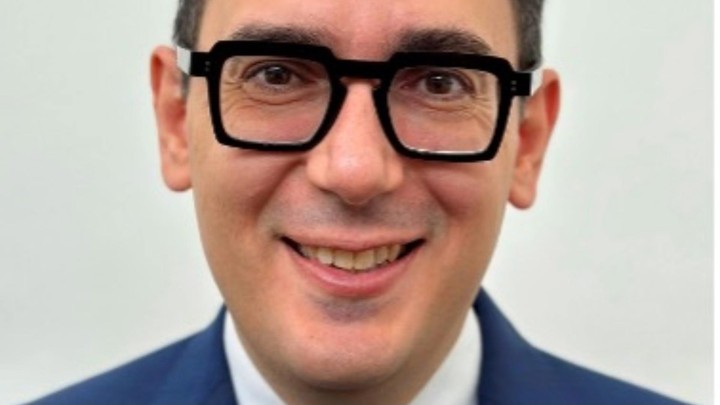
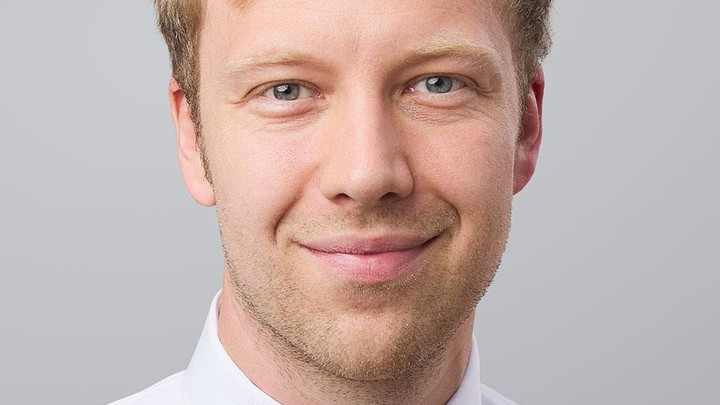
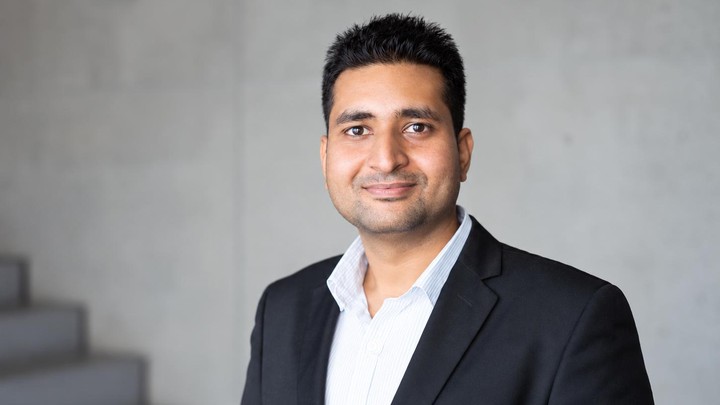
{ "count": 3, "next": null, "previous": null, "results": [ { "id": 72636, "title": "H∞boys and INDIans: Can they work together for flight control?", "slug": "hboys-and-indians-can-they-work-together-for-fligh", "event_url": "https://memento.epfl.ch/event/hboys-and-indians-can-they-work-together-for-fligh", "visual_url": "https://memento.epfl.ch/image/33880/200x112.jpg", "visual_large_url": "https://memento.epfl.ch/image/33880/720x405.jpg", "visual_maxsize_url": "https://memento.epfl.ch/image/33880/max-size.jpg", "lang": "en", "start_date": "2026-10-07", "end_date": "2026-10-07", "start_time": "11:00:00", "end_time": "12:00:00", "description": "<strong>Abstract</strong><br>\r\nSince the early days of aircraft autopilots, flight control law design has been dominated by gain scheduling: a family of linear controllers designed at trim points across the flight envelope and interpolated as the aerospace vehicle's operating condition changes. The approach is reliable and well understood, but it is also labor-intensive, requiring extensive linearization, controller interpolation, and lengthy re-tuning whenever the airframe or mission profile changes while its classical stability and performance guarantees hold only under restrictive assumptions.<br>\r\n<br>\r\n(Incremental) Nonlinear Dynamic Inversion — (I)NDI — emerged as an attractive alternative, first as full-state NDI in the 1980s–90s and later, in its incremental form, replacing much (though not all) of the reliance on an accurate onboard model with direct sensor feedback of angular acceleration. The result is a simple, largely envelope-independent control structure that (almost) eliminates the scheduling and interpolation burden. The price, however, is the loss of the a priori robustness guarantees that gain-scheduled designs, however cumbersome, were built to provide. Robust control theory, born in the same timeframe as NDI, offers exactly those guarantees, but has traditionally lived in a separate, frequency-domain world from INDI's incremental, time-domain philosophy.<br>\r\n<br>\r\nThis talk shows how the two could be brought closer or even work together. We present hybrid INDI architectures combining a sensor-based and a model-based inversion core and paired with an outer loop tuned via structured synthesis therefore combining the advantages of both worlds. We then generalize this bridge through a formal duality between (I)NDI and quasi-LPV control, unifying robust analysis and synthesis across both worlds and clarifying exactly where INDI's modularity is paid for in achievable robustness. These results are validated across various aerospace applications such as aircraft, space launchers and drones.<br>\r\n<br>\r\n<strong>Biography</strong><br>\r\n<br>\r\nDr. Spilios Theodoulis is an associate professor in the Aerospace GNC cluster within the Control & Simulation (C&S) section, at the Faculty of Aerospace Engineering (AE) of the Delft University of Technology (TU Delft). Before joining TU Delft, he spent fourteen years at the French-German Research Institute of Saint-Louis (ISL), where he was Deputy Head of the GNC department. He is the founder of the Aerospace dynamics and RObust Control (AEROCON) research group along with its advanced projects branch—the ∞-Lab, and also an adjunct professor at the University of Strasbourg, University of Paris-Saclay and Cranfield University teaching tensor-based flight dynamics and automatic (flight) control. He has been involved in the research and development of both civilian and defense projects with EU government agencies, industry and academia in the field of GNC for more than 20 years.<br>\r\n<br>\r\nHis research interests focus on two complementary fields. First, <em>modeling and flight dynamics</em> of complex aerospace systems, including uncertainty modeling and linear/nonlinear-parameter-varying dynamics. Second, (multivariable) <em>stability and</em> <em>control</em> systems spanning from robust/nonlinear control and analysis to control theory-inspired guidance algorithms. The algorithms developed are showcased in several classes of systems (including the facilities of the AE C&S section such as SIMONA, PH-LAB, etc.) such as civil and fighter aircraft, rotorcraft, drones, hypersonic vehicles, space launchers, as well as guided systems. He maintains active collaborations with leading research institutes, including ONERA, DLR, NLR, TNO, NASA, and ESA-ESTEC; academic partners such as ISAE-SUPAERO, Cranfield University, and NYU Abu Dhabi; and industrial partners including Dassault Aviation, Airbus Defence & Space, MBDA, Indra Deimos, PLD Space, Lockheed Martin Skunk Works, and others.<br>\r\n<br>\r\nHe is an Associate Fellow of the American Institute of Aeronautics and Astronautics (Class of 2023), co-recipient of both <em>1-Star</em> and <em>2-Star Innovation Awards</em> (2019) from MBDA, and his students have received (some) distinctions, including the best PhD award in the area of systems and control from the University of Strasbourg (2017). He also serves on various technical committees (AIAA GNC, IFAC Aerospace, CEAS GNC) as well as on the organizing and program conference committees related to the field of GNC (AIAA SciTech, IFAC WC/ACA, EuroGNC, etc.).<br>\r\n<br>\r\nHis most daunting challenge to date though, remains the robust stabilization of his two young daughters Iris and Hera, who are constantly reminding him that nature is neither linear nor time-invariant.<br>\r\n<br>\r\n<br>\r\n ", "image_description": "", "creation_date": "2026-09-22T11:05:26", "last_modification_date": "2026-09-22T16:45:19", "link_label": "", "link_url": "", "canceled": "False", "cancel_reason": "", "place_and_room": "ME C2 405", "url_place_and_room": "https://plan.epfl.ch/?room==ME%20C2%20405", "url_online_room": "", "spoken_languages": [ "https://memento.epfl.ch/api/v1/spoken_languages/2/?format=api" ], "speaker": "<a href=\"https://www.tudelft.nl/en/staff/s.theodoulis/\">Dr. Spilios Theodoulis, associate professor in the Aerospace GNC cluster within the Control & Simulation (C&S) section, at the Faculty of Aerospace Engineering (AE) of the Delft University of Technology (TUDelft), Netherlands</a>", "organizer": "Professor <a href=\"https://people.epfl.ch/alireza.karimi\">Alireza Karimi</a>", "contact": "[email protected]", "is_internal": "False", "theme": "", "vulgarization": { "id": 1, "fr_label": "Tout public", "en_label": "General public" }, "registration": { "id": 3, "fr_label": "Entrée libre", "en_label": "Free" }, "keywords": "", "file": null, "icalendar_url": "https://memento.epfl.ch/event/export/121878/", "category": { "id": 1, "code": "CONF", "fr_label": "Conférences - Séminaires", "en_label": "Conferences - Seminars", "activated": true }, "academic_calendar_category": null, "domains": [], "mementos": [ "https://memento.epfl.ch/api/v1/mementos/8/?format=api", "https://memento.epfl.ch/api/v1/mementos/15/?format=api" ] }, { "id": 72728, "title": "When Control Changes the Data: Safety under Interaction-Driven Distribution Shifts", "slug": "when-control-changes-the-data-safety-under-interac", "event_url": "https://memento.epfl.ch/event/when-control-changes-the-data-safety-under-interac", "visual_url": "https://memento.epfl.ch/image/33946/200x112.jpg", "visual_large_url": "https://memento.epfl.ch/image/33946/720x405.jpg", "visual_maxsize_url": "https://memento.epfl.ch/image/33946/max-size.jpg", "lang": "en", "start_date": "2026-11-09", "end_date": "2026-11-09", "start_time": "14:00:00", "end_time": "15:00:00", "description": "<strong>This seminar is co-sponsored by the <a href=\"https://ieeecss.org\">IEEE-CSS</a>.</strong><br>\r\n<br>\r\n<strong>Abstract</strong>: <br>\r\nAccelerated by rapid advances in machine learning and AI, there has been tremendous success in the design of learning-enabled autonomous systems in areas such as autonomous driving and robotics. These exciting developments are accompanied by new fundamental challenges that arise regarding the safety and reliability of these increasingly complex systems due to imperfect learning, system unknowns, and uncertain environments. Statistical tools for uncertainty quantification have gained popularity due to their ability to deal with these challenges. However, their guarantees rely on i.i.d. data, an assumption that is violated when control actions change the underlying data distribution.<br>\r\n<br>\r\nIn this talk, I will provide new insight to design safe controllers under distribution shifts using robust conformal prediction (CP). I will begin by advocating for the use of CP due to its simplicity, generality, and efficiency as opposed to existing optimization-based verification techniques. I will then provide an introduction to CP and summarize existing work that uses CP to design probabilistically safe controllers in dynamic environments. Subsequently, we will look into interactive settings where the system’s behavior may change the environment's behavior, and vice versa. This circular dependency creates an interaction-driven distribution shift that invalidates existing CP guarantees. To deal with this problem, we propose an iterative framework that episodically updates the controller while robustly maintaining safety guarantees by quantifying the potential impact of a controller update on the environment's behavior. We realize this via adversarially robust CP where we perform a regular CP step in each episode using observed data under the current controller, but then transfer safety guarantees across controller updates by analytically adjusting the CP result to account for distribution shifts. Lastly, I will show how these ideas extend to handling policy-induced distribution shifts that arise when using barrier/Lyapunov functions to control uncertain systems.<br>\r\n<br>\r\n<strong>Biography</strong>:<br>\r\nLars Lindemann is currently an Assistant Professor for Algorithmic Systems Theory in the Automatic Control Laboratory at ETH Zürich. From 2023 to 2025 he was an Assistant Professor in the Thomas Lord Department of Computer Science at the University of Southern California. Before that, he was a Postdoctoral Fellow in the Department of Electrical and Systems Engineering at the University of Pennsylvania from 2020 to 2022. He received his Ph.D. degree in Electrical Engineering from KTH Royal Institute of Technology in 2020. Professor Lindemann's research interests include systems and control theory, formal methods, machine learning, and autonomous systems. He is a recipient of a European Research Council Starting Grant and two U.S. National Science Foundation Grants. He also received the Outstanding Student Paper Award at the 58th IEEE Conference on Decision and Control and the Student Best Paper Award (as an advisor) at the 60th IEEE Conference on Decision and Control, and has been a finalist for several other best paper awards.", "image_description": "", "creation_date": "2026-10-01T11:07:20", "last_modification_date": "2026-10-01T11:20:51", "link_label": "", "link_url": "", "canceled": "False", "cancel_reason": "", "place_and_room": "ME C2 405", "url_place_and_room": "https://plan.epfl.ch/?room==ME%20C2%20405", "url_online_room": "https://epfl.zoom.us/j/66361455244", "spoken_languages": [ "https://memento.epfl.ch/api/v1/spoken_languages/2/?format=api" ], "speaker": "<a href=\"https://ee.ethz.ch/the-department/faculty/professors/person-detail.MzY4OTYz.TGlzdC80MTEsMTA1ODA0MjU5.html\">Professor Lars Lindemann , Assistant Professor for Algorithmic Systems Theory in the Automatic Control Laboratory @ ETH Zürich</a>", "organizer": "<a href=\"https://people.epfl.ch/giancarlo.ferraritrecate\">Professor Giancarlo Ferrari Trecate</a>", "contact": "[email protected]", "is_internal": "False", "theme": "", "vulgarization": { "id": 1, "fr_label": "Tout public", "en_label": "General public" }, "registration": { "id": 3, "fr_label": "Entrée libre", "en_label": "Free" }, "keywords": "", "file": null, "icalendar_url": "https://memento.epfl.ch/event/export/122012/", "category": { "id": 1, "code": "CONF", "fr_label": "Conférences - Séminaires", "en_label": "Conferences - Seminars", "activated": true }, "academic_calendar_category": null, "domains": [], "mementos": [ "https://memento.epfl.ch/api/v1/mementos/8/?format=api", "https://memento.epfl.ch/api/v1/mementos/15/?format=api" ] }, { "id": 72758, "title": "Safe Guaranteed Exploration for Non-linear Systems", "slug": "safe-guaranteed-exploration-for-non-linear-systems", "event_url": "https://memento.epfl.ch/event/safe-guaranteed-exploration-for-non-linear-systems", "visual_url": "https://memento.epfl.ch/image/33973/200x112.jpg", "visual_large_url": "https://memento.epfl.ch/image/33973/720x405.jpg", "visual_maxsize_url": "https://memento.epfl.ch/image/33973/max-size.jpg", "lang": "en", "start_date": "2026-12-04", "end_date": "2026-12-04", "start_time": "14:00:00", "end_time": "15:00:00", "description": "<strong>Abstract</strong>: <br>\r\nSafely exploring environments with a-priori unknown constraints is a fundamental challenge that restricts the autonomy of robots. While safety is paramount, guarantees on sufficient exploration are also crucial for ensuring autonomous task completion. To address these challenges, we propose a novel safe guaranteed exploration framework using optimal control, which achieves first-of-its-kind results: guaranteed exploration for non-linear systems with finite time sample complexity bounds, while being provably safe with arbitrarily high probability. The framework is general and applicable to many real-world scenarios with complex non-linear dynamics and unknown domains. For efficient implementation, we exploit goal-directed exploration, and receding-horizon replanning while preserving the framework’s guarantees, and demonstrate safe, efficient exploration in challenging unknown environments using a car model.<br>\r\n<br>\r\n<strong>Biography</strong>: <br>\r\nManish Prajapat earned his Ph.D. in reinforcement learning and control from ETH Zurich in May 2026. He was a Doctoral Fellow at the ETH AI Center working with Prof. Melanie Zeilinger and Prof. Andreas Krause. Previously, he earned his master’s degree in Robotics, Systems, and Control from ETH Zurich and was a visiting scholar at Caltech. He received his bachelor’s degree from the Indian Institute of Technology (IIT) Madras in 2017. At IIT Madras, he was honored as the Best Graduating Student (Co-curricular) in 2017 and received the Sivasailam Merit Prize for the best thesis. His research interests are sequential decision-making under complex scenarios, e.g., non-Markovian objectives, unknown constraints or unknown dynamics of non-linear systems.<br>\r\n<br>\r\n ", "image_description": "", "creation_date": "2026-10-02T16:39:32", "last_modification_date": "2026-10-02T16:47:13", "link_label": "", "link_url": "", "canceled": "False", "cancel_reason": "", "place_and_room": "ME C2 405", "url_place_and_room": "https://plan.epfl.ch/?room==ME%20C2%20405", "url_online_room": "https://epfl.zoom.us/j/69006439273", "spoken_languages": [ "https://memento.epfl.ch/api/v1/spoken_languages/2/?format=api" ], "speaker": "Dr Manish Prajapat Ph.D. reinforcement learning and control from <a href=\"https://control.ee.ethz.ch\">ETH Zurich</a>\r\n\r\n<a href=\"https://ieee.ch/chapters/control-systems-society/\">Winner of the IEEE CSS Young Author Best Journal Paper Award 2026</a>", "organizer": "<a href=\"https://people.epfl.ch/giancarlo.ferraritrecate\">Prof Giancarlo Ferrari Trecate</a> The seminar is sponsored by the Swiss chapter of the <a href=\"https://ieee.ch\">IEEE-CSS</a>", "contact": "[email protected]", "is_internal": "False", "theme": "", "vulgarization": { "id": 1, "fr_label": "Tout public", "en_label": "General public" }, "registration": { "id": 3, "fr_label": "Entrée libre", "en_label": "Free" }, "keywords": "", "file": null, "icalendar_url": "https://memento.epfl.ch/event/export/122052/", "category": { "id": 1, "code": "CONF", "fr_label": "Conférences - Séminaires", "en_label": "Conferences - Seminars", "activated": true }, "academic_calendar_category": null, "domains": [], "mementos": [ "https://memento.epfl.ch/api/v1/mementos/8/?format=api", "https://memento.epfl.ch/api/v1/mementos/15/?format=api", "https://memento.epfl.ch/api/v1/mementos/394/?format=api" ] } ] }