Events
retrieve:
Return the details about the given Memento id.
list:
List all Memento objects.
GET /api/v1/mementos/27/events/?format=api&ordering=is_main_memento
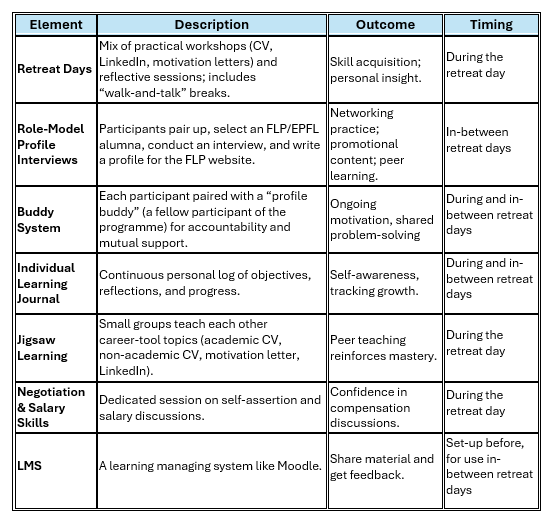
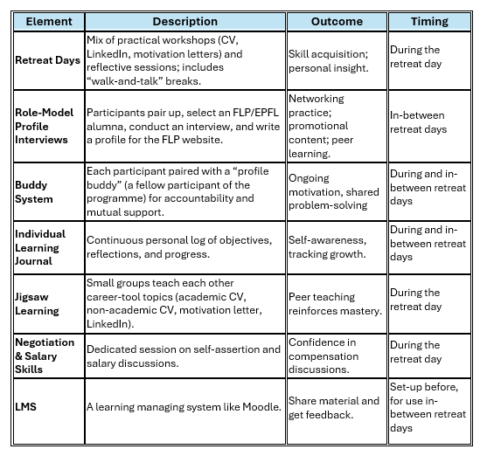
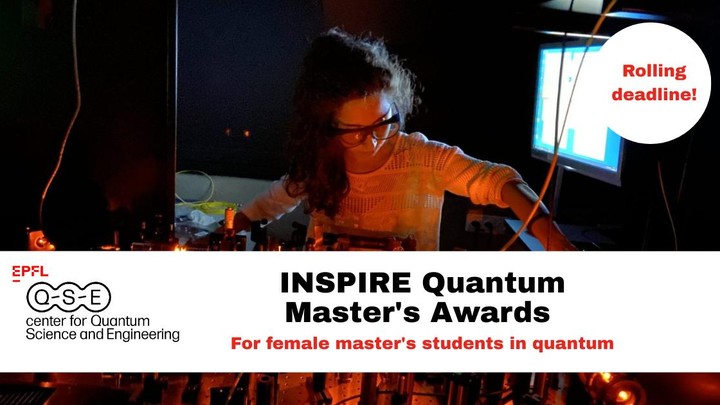
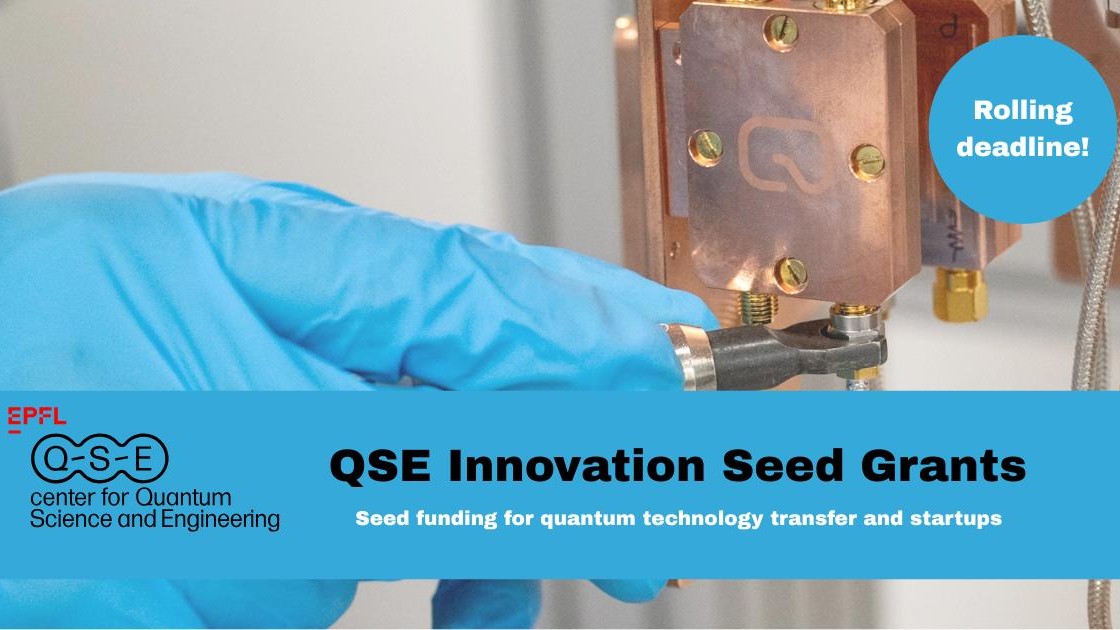
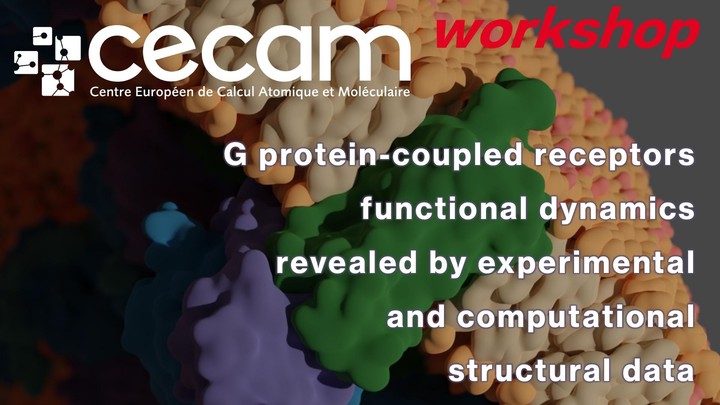
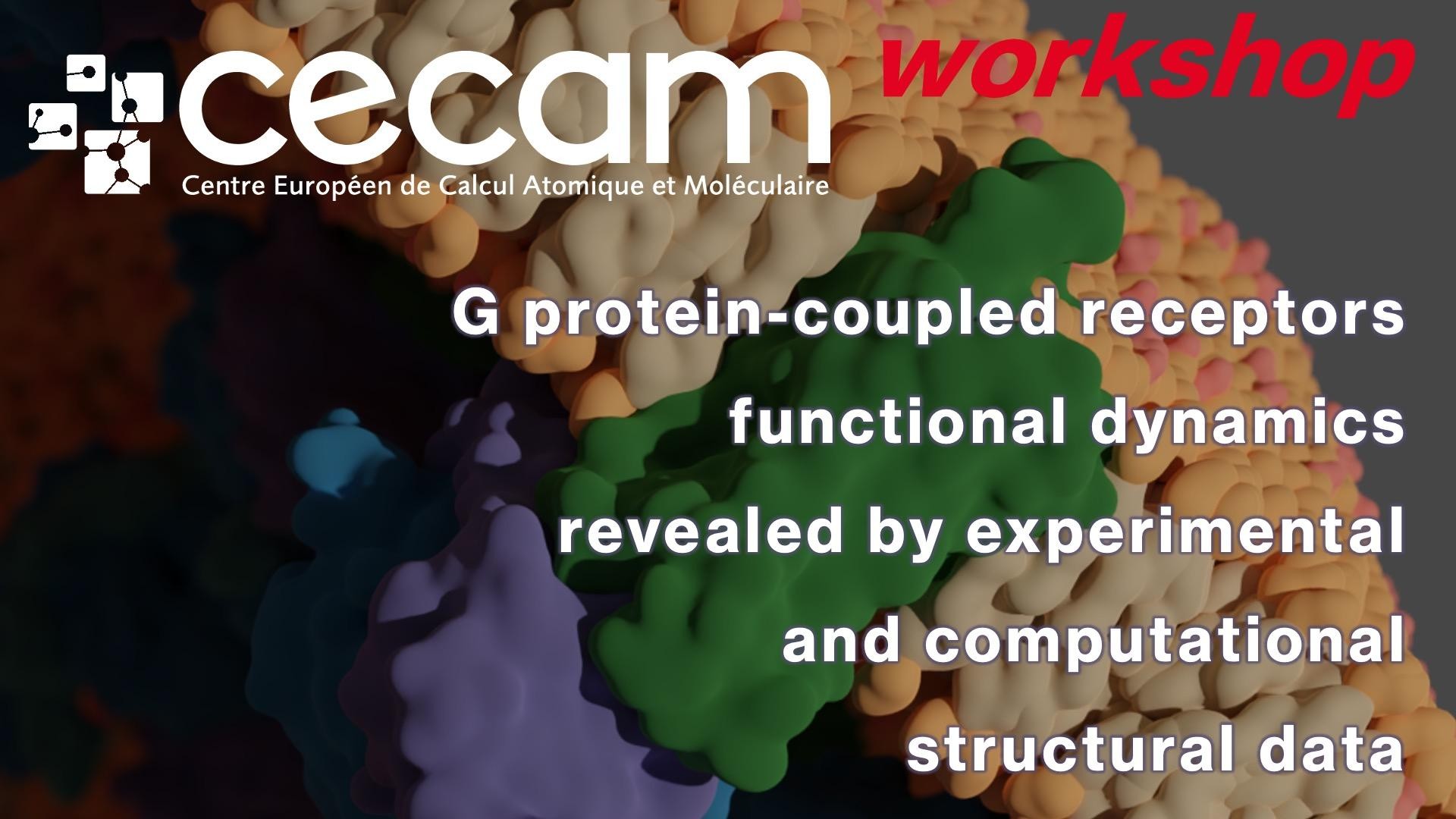
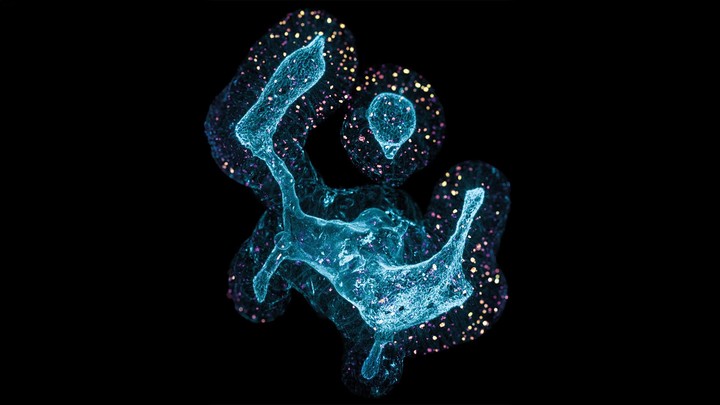
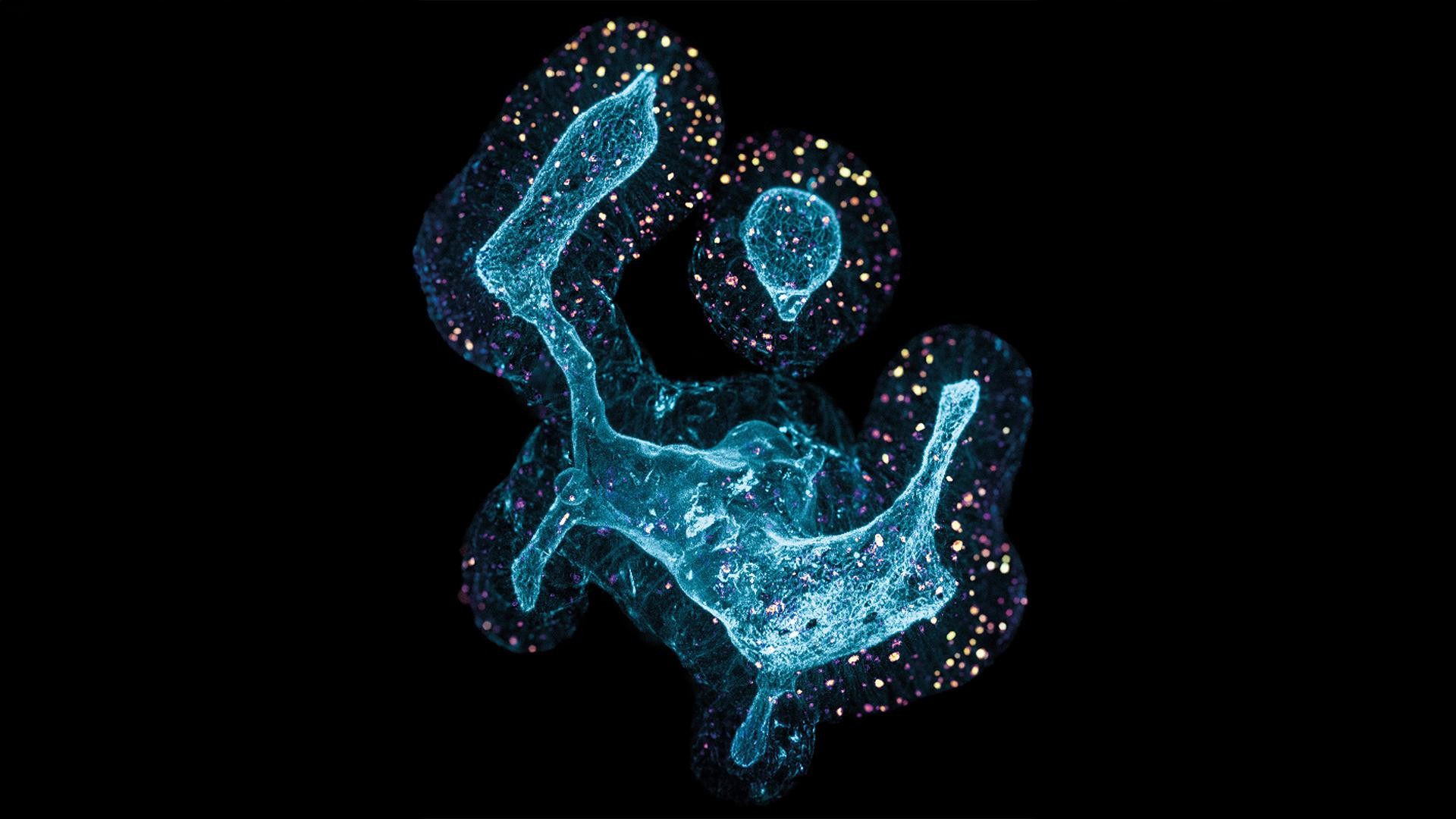
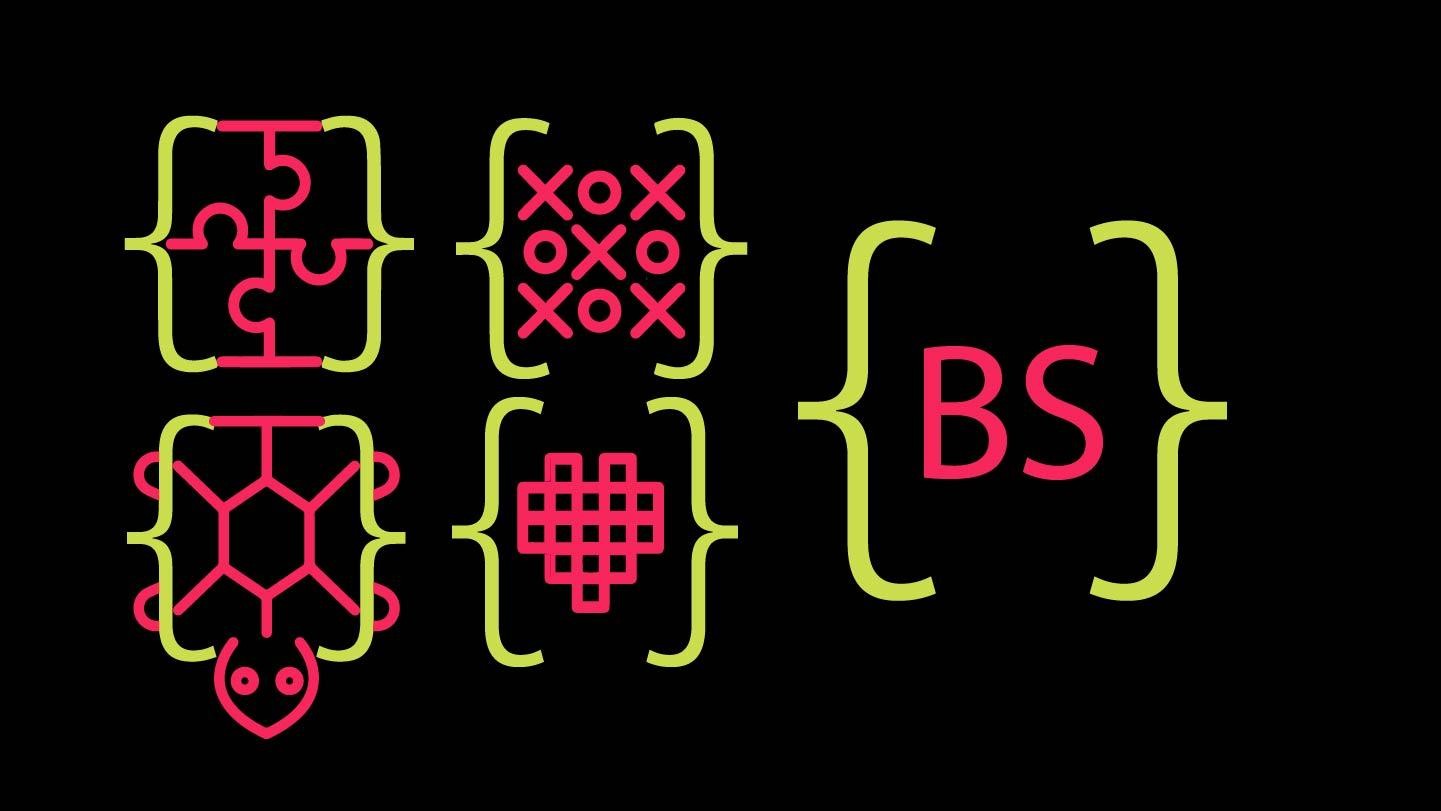
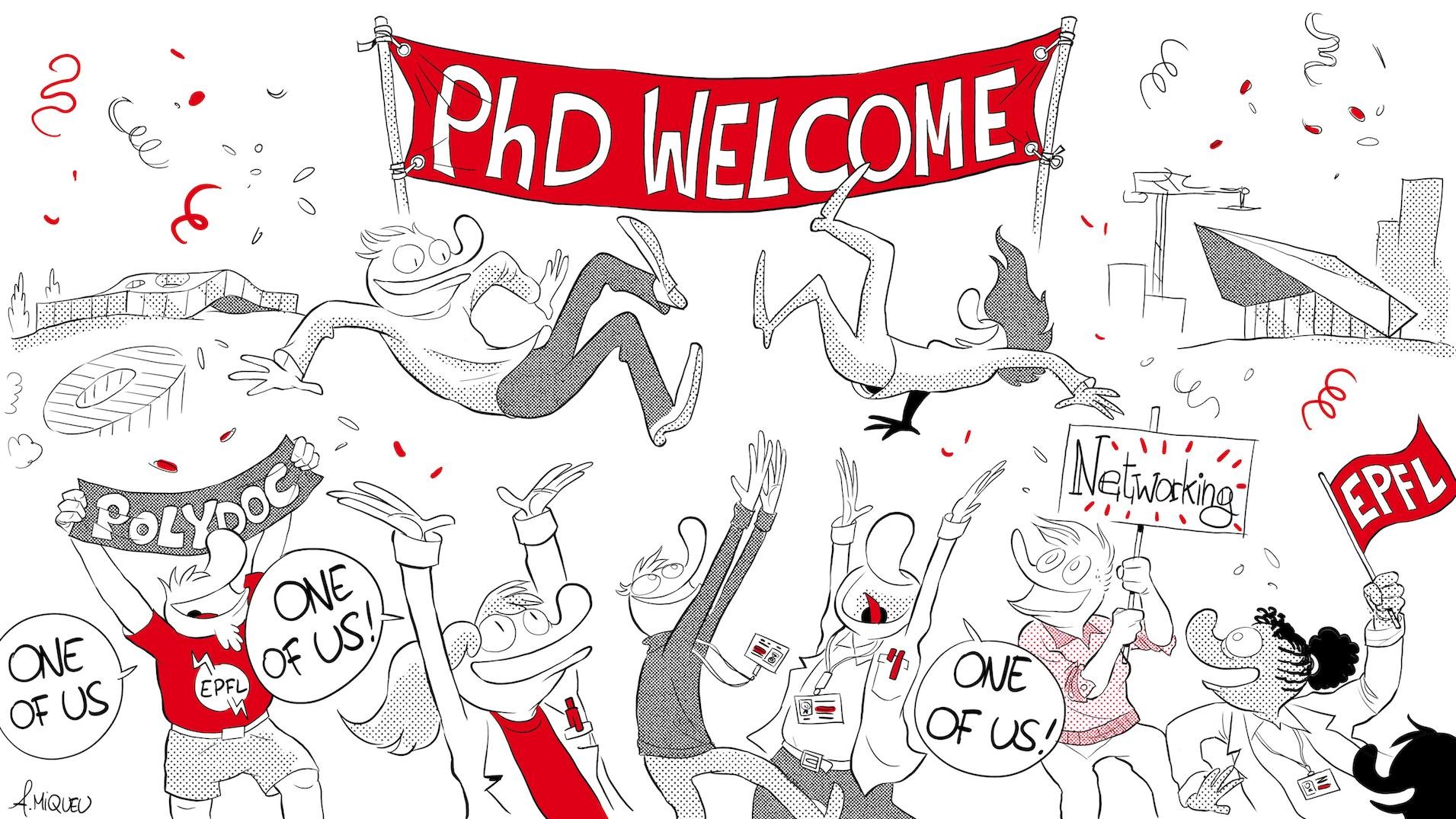
{ "count": 16, "next": "https://memento.epfl.ch/api/v1/mementos/27/events/?format=api&limit=10&offset=10&ordering=is_main_memento", "previous": null, "results": [ { "id": 71800, "title": "Coding Club for Girls in Bern", "slug": "coding-club-for-girls-in-bern-14", "event_url": "https://memento.epfl.ch/event/coding-club-for-girls-in-bern-14", "visual_url": "https://memento.epfl.ch/image/33171/200x112.jpg", "visual_large_url": "https://memento.epfl.ch/image/33171/720x405.jpg", "visual_maxsize_url": "https://memento.epfl.ch/image/33171/max-size.jpg", "lang": "en", "start_date": "2026-09-05", "end_date": "2026-10-24", "start_time": "09:30:00", "end_time": "16:00:00", "description": "<p>Eine App programmieren? Ein Computerspiel erfinden? Eine Animation gestalten?<br>\r\nWenn dich eines dieser Dinge interessiert, bist du hier am richtigen Ort! Tausche und teile deine Ideen, lerne zu programmieren und entdecke Informatikberufe.<br>\r\n<br>\r\nDie <a href=\"https://www.epfl.ch/education/education-and-science-outreach/de/jugendliche/coding-club/\">Coding Club for Girls</a> Workshops sind für Mädchen im Alter von 11 bis 15 Jahren und die Teilnahme ist kostenlos. Ab der Teilnahme an vier Workshops pro Jahr wird eine Teilnahmebestätigung ausgehändigt. <br>\r\n<br>\r\n<strong>Ort:</strong> Benedict Schule<strong>, </strong>Bern<br>\r\n<br>\r\n<strong>Datum und Zeit:</strong><br>\r\n<strong>05. September 2026 : 09:30 bis 12:00 oder 13:30 bis 16:00 Uhr</strong> <strong>// Scratch-me</strong><br>\r\n<strong>12. September 2026 : 09:30 bis 12:00 oder 13:30 bis 16:00 Uhr // Minitel<br>\r\n17. Oktober 2026 : 09:30 bis 12:00 oder 13:30 bis 16:00 Uhr // Snake-it<br>\r\n24. Oktober 2026 : 09:30 bis 12:00 oder 13:30 bis 16:00 Uhr // Webdesignerin</strong><br>\r\n<br>\r\nDie Inhalte der Workshops sind untenstehend beschrieben.<br>\r\n<br>\r\n<strong>Bedingungen</strong>\r\n</p><ul>\r\n\t<li>Gratis</li>\r\n\t<li><a href=\"https://forms.gle/9BzTgtaAvcLRQPwP7\">Anmeldung unter diesem Link </a></li>\r\n\t<li><a href=\"https://www.epfl.ch/education/education-and-science-outreach/de/teilnahmebedingungen/\">Allgemeine Teilnahmebedingungen EPFL - SPS Aktivitäten</a> </li>\r\n</ul>\r\n<strong>Workshops:</strong><br>\r\n<strong>Scratch-me - 05. September 2026</strong><br>\r\nEinführung in die Programmierlogik mit der Konzeption von Animationen, Spielen und vieles mehr! Codieren ist wie eine neue Sprache lernen. Worte zu kennen bedeutet nicht unbedingt, die Sprache zu beherrschen. Man muss die Worte auch in der richtigen Reihenfolge platzieren können. Bei diesem Workshop lernt ihr Scratch, eine vereinfachte Programmiersprache, die sich in der Form von Blöcken präsentiert, die man richtig zusammenstellen muss.<br>\r\n<br>\r\n<strong>Minitel - 12. September 2026</strong><br>\r\nBeschleunigungsmesser, elektromagnetische Wellen, Knöpfe, Bildschirm, … aber wie funktioniert eigentlich ein Handy? In diesem Workshop beantworten wir alle deine Fragen zu Smartphones und du wirst selber ein Spiel auf einem Mikrocomputer programmieren.<br>\r\n<br>\r\n<strong>Snake-it - 17. Oktober 2026</strong><br>\r\nJeder kennt die berühmte Snake, die vor Jahren als Handyspiel begonnen hat. Aber nur Wenige wissen, wie sie ihr persönliches Spiel gestalten können. Dank dieses Workshops wirst du zu diesen Leuten gehören. Programmiere mit uns deine eigene Apfelfresser-Schlange<br>\r\n<br>\r\n<strong>Webdesignerin t - 24. Oktober 2026</strong><br>\r\nEntdecke den Hintergrund einer Webseite und entwerfe deine eigene von A bis Z mit derselben Sprache wie die Profis! An diesem Workshop wirst du mit HTML vertraut und wirst verstehen, wie Webseiten gestaltet wurden und wie weit du selbst gehen kannst.<br>\r\n<br>\r\n<a href=\"https://forms.gle/9BzTgtaAvcLRQPwP7\"><strong>Anmeldung</strong></a><br>\r\n ", "image_description": "", "creation_date": "2026-05-05T13:13:16", "last_modification_date": "2026-05-19T08:48:49", "link_label": "Anmeldung", "link_url": "https://forms.gle/9BzTgtaAvcLRQPwP7", "canceled": "False", "cancel_reason": "", "place_and_room": "Benedict Schule Bern, Aarbergergasse 5", "url_place_and_room": "https://www.benedict.ch/standorte/bern/", "url_online_room": "", "spoken_languages": [ "https://memento.epfl.ch/api/v1/spoken_languages/3/?format=api" ], "speaker": "", "organizer": "<a href=\"https://www.epfl.ch/education/education-and-science-outreach/fr/index-fr-html/promotion-des-sciences/\">A</a><a href=\"https://www.epfl.ch/education/education-and-science-outreach/de/wissenschaftsfoerderung/\">bteilung für Wissenschaftsförderung (SPS) der EPFL</a> ", "contact": "[email protected] ", "is_internal": "False", "theme": "", "vulgarization": { "id": 1, "fr_label": "Tout public", "en_label": "General public" }, "registration": { "id": 1, "fr_label": "Sur inscription", "en_label": "Registration required" }, "keywords": "Coding Club for Girls, Deutsch, SPS, Jugendliche, Bern, BE", "file": null, "icalendar_url": "https://memento.epfl.ch/event/export/120652/", "category": { "id": 18, "code": "YOUTHSCIENCE", "fr_label": "Activités scientifiques pour les jeunes", "en_label": "Sciences Activities for Youth", "activated": true }, "academic_calendar_category": null, "domains": [], "mementos": [ "https://memento.epfl.ch/api/v1/mementos/1/?format=api", "https://memento.epfl.ch/api/v1/mementos/6/?format=api", "https://memento.epfl.ch/api/v1/mementos/27/?format=api", "https://memento.epfl.ch/api/v1/mementos/170/?format=api" ] }, { "id": 72212, "title": "FLP Coaching Group", "slug": "flp-coaching-group", "event_url": "https://memento.epfl.ch/event/flp-coaching-group", "visual_url": "https://memento.epfl.ch/image/33492/200x112.jpg", "visual_large_url": "https://memento.epfl.ch/image/33492/720x405.jpg", "visual_maxsize_url": "https://memento.epfl.ch/image/33492/max-size.jpg", "lang": "en", "start_date": "2026-09-25", "end_date": "2026-11-30", "start_time": null, "end_time": null, "description": "<ul>\r\n\t<li><strong>Purpose & Audience</strong><br>\r\n\tA structured,<strong> hybrid coaching</strong> programme for <strong>doctoral and postdoctoral researchers</strong> at EPFL, designed to boost both practical career skills and personal resilience. </li>\r\n\t<li> </li>\r\n\t<li><strong>Duration & Format</strong></li>\r\n</ul>\r\n\r\n<ul>\r\n\t<li><strong>Three months</strong> (June/September to October/November, depending on availabilities)</li>\r\n\t<li><strong>Three full‑day retreats</strong> (≈ 7 hrs each, plus lunch) spaced a month apart (or with the summer break, if start in June)</li>\r\n</ul>\r\n<strong>Interim work</strong>: team and individual assignments, role‑model interviews, reflective journaling<br>\r\nDates: Retreat days will take place on <strong>Friday, September 25, Friday October 30 and Friday November 27.</strong><br>\r\nOther dates and information soon\r\n<ul>\r\n\t<li><strong>Core elements</strong></li>\r\n</ul>\r\n<img alt=\"\" decoding=\"async\" height=\"522\" sizes=\"(min-width: 0px) and (max-width: 480px) 480px, (min-width: 481px) 550px, 100vw\" src=\"https://foster-lead-promote.ch/wp-content/uploads/2026/01/CG_EPFL_2026.png\" srcset=\"https://foster-lead-promote.ch/wp-content/uploads/2026/01/CG_EPFL_2026.png 550w, https://foster-lead-promote.ch/wp-content/uploads/2026/01/CG_EPFL_2026-480x456.png 480w\" width=\"550\">\r\n<ol>\r\n\t<li><strong>Deliverables & Benefits</strong></li>\r\n</ol>\r\n\r\n<ul>\r\n\t<li><strong>Concrete career artefacts</strong>: polished CVs, LinkedIn profiles, motivation letters.</li>\r\n\t<li><strong>Eight alumni portraits</strong> published on the FLP site, raising programme visibility.</li>\r\n\t<li><strong>Clear ROI for participants</strong>: venue, meals, professional development, and networking opportunities.</li>\r\n\t<li><strong>Team‑building outcomes</strong>: interview buddies, collaborative projects, shared reflections.</li>\r\n</ul>", "image_description": "", "creation_date": "2026-07-07T11:06:34", "last_modification_date": "2026-07-07T11:13:38", "link_label": "Website", "link_url": "https://foster-lead-promote.ch/our_services/coachinggroups/", "canceled": "False", "cancel_reason": "", "place_and_room": "EPFL", "url_place_and_room": "", "url_online_room": "", "spoken_languages": [ "https://memento.epfl.ch/api/v1/spoken_languages/2/?format=api" ], "speaker": "<strong><a href=\"https://foster-lead-promote.ch/coaches-and-trainers/#:~:text=About%20me-,Dr.%20Ingrid%20Le%20Duc,-%2C%20FLP%20Coach\">Dr. Ingrid Le Duc</a></strong> and <a href=\"https://foster-lead-promote.ch/coaches-and-trainers/#:~:text=Coaches%20%26%20Trainers-,Dr.%20Verity%20Elston,-%2C%20FLP%20Coach\">Dr. Verity Elston</a>", "organizer": "<a href=\"https://foster-lead-promote.ch/meet-our-experts/\">FLP</a> ", "contact": "<a href=\"mailto:[email protected]\">Chantal Mellier</a>", "is_internal": "False", "theme": "", "vulgarization": { "id": 2, "fr_label": "Public averti", "en_label": "Informed public" }, "registration": { "id": 1, "fr_label": "Sur inscription", "en_label": "Registration required" }, "keywords": "", "file": null, "icalendar_url": "https://memento.epfl.ch/event/export/121233/", "category": { "id": 15, "code": "FORM", "fr_label": "Formations internes", "en_label": "Internal trainings", "activated": true }, "academic_calendar_category": null, "domains": [], "mementos": [ "https://memento.epfl.ch/api/v1/mementos/3/?format=api", "https://memento.epfl.ch/api/v1/mementos/4/?format=api", "https://memento.epfl.ch/api/v1/mementos/5/?format=api", "https://memento.epfl.ch/api/v1/mementos/6/?format=api", "https://memento.epfl.ch/api/v1/mementos/8/?format=api", "https://memento.epfl.ch/api/v1/mementos/9/?format=api", "https://memento.epfl.ch/api/v1/mementos/21/?format=api", "https://memento.epfl.ch/api/v1/mementos/27/?format=api" ] }, { "id": 72206, "title": "QSE INSPIRE Quantum Master's Awards", "slug": "qse-inspire-quantum-master-s-awards", "event_url": "https://memento.epfl.ch/event/qse-inspire-quantum-master-s-awards", "visual_url": "https://memento.epfl.ch/image/33484/200x112.jpg", "visual_large_url": "https://memento.epfl.ch/image/33484/720x405.jpg", "visual_maxsize_url": "https://memento.epfl.ch/image/33484/max-size.jpg", "lang": "en", "start_date": "2026-07-06", "end_date": "2027-05-31", "start_time": null, "end_time": null, "description": "<strong>Applications are open for the QSE Center <a href=\"https://go.epfl.ch/qseinspire\">INSPIRE Quantum Master Award</a>!</strong><br>\r\n<br>\r\nOne of the QSE Center’s main missions is to attract excellent female students in the domain of quantum science and engineering, where they unfortunately still remain strongly underrepresented. To that end, the QSE Center has joined <a href=\"https://qc.ethz.ch/community-and-initiatives/inspire-potentials-quantum-center-master-award.html\" rel=\"noopener noreferrer\" target=\"_blank\">ETH Zurich</a>, <a href=\"https://www.nccr-spin.ch/inspire-potentials-application\" rel=\"noopener noreferrer\" target=\"_blank\">NCCR Spin</a> and <a href=\"https://nccr-marvel.ch/outreach/equal-opportunities/inspire-description\" rel=\"noopener noreferrer\" target=\"_blank\">NCCR Marvel</a> in launching the INSPIRE Quantum Master Awards. These awards aim to attract and empower excellent <strong>female students</strong> who will conduct their master’s project in the research areas represented at the QSE Center.<br>\r\n<br>\r\nThis initiative, recognizing that an ambitious master’s research project is a stepping stone to starting a career in research, seeks to increase the number of young women researchers in the QSE domain, as represented by the numerous research groups at EPFL.<br>\r\n<br>\r\n<strong>The awardee will receive 8,000 CHF paid to them directly.</strong> External applicants (i.e. students who are completing their master studies at another university than EPFL) are eligible for up to an additional 2,000 CHF for travel expenses.<br>\r\n<br>\r\n<strong>Candidates can submit their application at any time via email, but their submission must be at least two months before starting their master thesis.</strong>", "image_description": "", "creation_date": "2026-07-06T14:48:38", "last_modification_date": "2026-07-06T14:48:38", "link_label": "QSE INSPIRE Quantum Master's Awards", "link_url": "https://go.epfl.ch/qseinspire", "canceled": "False", "cancel_reason": "", "place_and_room": "", "url_place_and_room": "", "url_online_room": "", "spoken_languages": [], "speaker": "", "organizer": "", "contact": "Charlotte Vandenberghe<br>\r\[email protected]", "is_internal": "False", "theme": "", "vulgarization": { "id": 1, "fr_label": "Tout public", "en_label": "General public" }, "registration": { "id": 3, "fr_label": "Entrée libre", "en_label": "Free" }, "keywords": "", "file": null, "icalendar_url": "https://memento.epfl.ch/event/export/121224/", "category": { "id": 16, "code": "PROP", "fr_label": "Appel à proposition", "en_label": "Call for proposal", "activated": true }, "academic_calendar_category": null, "domains": [], "mementos": [ "https://memento.epfl.ch/api/v1/mementos/1/?format=api", "https://memento.epfl.ch/api/v1/mementos/5/?format=api", "https://memento.epfl.ch/api/v1/mementos/6/?format=api", "https://memento.epfl.ch/api/v1/mementos/8/?format=api", "https://memento.epfl.ch/api/v1/mementos/27/?format=api", "https://memento.epfl.ch/api/v1/mementos/140/?format=api", "https://memento.epfl.ch/api/v1/mementos/145/?format=api", "https://memento.epfl.ch/api/v1/mementos/191/?format=api", "https://memento.epfl.ch/api/v1/mementos/389/?format=api" ] }, { "id": 72211, "title": "QSE Innovation Seed Grants", "slug": "qse-innovation-seed-grants", "event_url": "https://memento.epfl.ch/event/qse-innovation-seed-grants", "visual_url": "https://memento.epfl.ch/image/33491/200x112.jpg", "visual_large_url": "https://memento.epfl.ch/image/33491/720x405.jpg", "visual_maxsize_url": "https://memento.epfl.ch/image/33491/max-size.jpg", "lang": "en", "start_date": "2026-07-07", "end_date": "2027-05-31", "start_time": null, "end_time": null, "description": "<strong>The <a href=\"https://www.epfl.ch/research/domains/quantum-center/funding/qse-innovation-seed-grants/\">QSE Innovation Seed Grant</a> is open for applications!</strong><br>\r\n<br>\r\nThis is a unique seed funding opportunity of up to CHF 25k to encourage the brightest ideas for cutting-edge applications, technology transfer, and start-up creation in the field of quantum science and engineering, open to master’s students and researchers, including PhD students and post docs, in the initial phase of developing a cutting-edge application, product or service with a real societal impact. <br>\r\n<br>\r\nAwardees of this QSE innovation seed grant will have a first opportunity, for example through coaching, workshops or mission trainings (e.g. <a href=\"https://www.epfl.ch/innovation/students-innovation-lab/epfl-changemakers/\">EPFL Changemakers</a>), to validate their project idea and get ready for future innovation funding programs.<br>\r\n<br>\r\nMain requirements\r\n<ul>\r\n\t<li>Only graduate students or researchers hosted or employed at an EPFL lab or unit are eligible to apply and act as Principal Investigator (PI). The head of the host lab has to co-sign the application form, and expressing as such their support of the project proposal.</li>\r\n\t<li>QSE innovation seed funding cannot be used for basic research or as general funding for the PI’s host lab. It can only be used for applicable planned projects in the field of quantum science and engineering with high innovation potential for business and society offering concrete solutions to problems. A main driver to determine eligible projects is the attractivity towards industrial partners and the technology transfer traction. We commit to considering all high potential translational projects and ideas, even if they have not yet filed Intellectual Property.</li>\r\n\t<li>Projects can be co-sponsored by third parties (e.g., federal government, cantons, foundations, business acting as a potential licensee).</li>\r\n</ul>\r\nHow to apply\r\n\r\n<ul>\r\n\t<li>PIs interested in submitting an application should contact, prior to drafting or submitting an application, the call coordinator Charlotte Vandenberghe (<a href=\"mailto:[email protected]\">[email protected]</a>). </li>\r\n\t<li>Candidates can submit their application on a continuous basis. \r\n\t<ul>\r\n\t\t<li>Applications will be reviewed in a timely manner; applicants will be informed about the outcome via email.</li>\r\n\t\t<li>The project should start within the 6 months after approval.</li>\r\n\t</ul>\r\n\t</li>\r\n\t<li>Please download and use the provided template from <a href=\"https://www.epfl.ch/research/domains/quantum-center/funding/qse-innovation-seed-grants/\">the website.</a></li>\r\n\t<li>Proposals should be submitted via email: <a href=\"mailto:[email protected]\">[email protected]</a></li>\r\n\t<li>Please add “QSE Innovation Seed Grant application_NAME PI” in the title of the email.</li>\r\n</ul>\r\n<strong>Rolling deadline</strong>", "image_description": "", "creation_date": "2026-07-07T10:29:17", "last_modification_date": "2026-07-07T10:29:17", "link_label": "", "link_url": "", "canceled": "False", "cancel_reason": "", "place_and_room": "", "url_place_and_room": "", "url_online_room": "", "spoken_languages": [], "speaker": "", "organizer": "", "contact": "Charlotte Vandenberghe<br>\r\[email protected]", "is_internal": "False", "theme": "", "vulgarization": { "id": 1, "fr_label": "Tout public", "en_label": "General public" }, "registration": { "id": 3, "fr_label": "Entrée libre", "en_label": "Free" }, "keywords": "", "file": null, "icalendar_url": "https://memento.epfl.ch/event/export/121232/", "category": { "id": 16, "code": "PROP", "fr_label": "Appel à proposition", "en_label": "Call for proposal", "activated": true }, "academic_calendar_category": null, "domains": [], "mementos": [ "https://memento.epfl.ch/api/v1/mementos/1/?format=api", "https://memento.epfl.ch/api/v1/mementos/5/?format=api", "https://memento.epfl.ch/api/v1/mementos/6/?format=api", "https://memento.epfl.ch/api/v1/mementos/8/?format=api", "https://memento.epfl.ch/api/v1/mementos/27/?format=api", "https://memento.epfl.ch/api/v1/mementos/140/?format=api", "https://memento.epfl.ch/api/v1/mementos/145/?format=api", "https://memento.epfl.ch/api/v1/mementos/191/?format=api", "https://memento.epfl.ch/api/v1/mementos/318/?format=api", "https://memento.epfl.ch/api/v1/mementos/389/?format=api" ] }, { "id": 71727, "title": "NovoNordisk Fonden – Challenge Programme 2027", "slug": "novonordisk-fonden-challenge-programme-2027", "event_url": "https://memento.epfl.ch/event/novonordisk-fonden-challenge-programme-2027", "visual_url": "https://memento.epfl.ch/image/33051/200x112.jpg", "visual_large_url": "https://memento.epfl.ch/image/33051/720x405.jpg", "visual_maxsize_url": "https://memento.epfl.ch/image/33051/max-size.jpg", "lang": "en", "start_date": "2026-10-07", "end_date": "2026-10-07", "start_time": null, "end_time": null, "description": "<strong>Aim: </strong> The The Novo Nordisk Foundation (NNF) Program aims to support outstanding, collaborative research projects addressing major challenges within human health and the sustainability of society and the planet. The program is designed to enable ambitious, long‑term, interdisciplinary research efforts that bring together leading researchers around a clearly defined scientific challenge within selected thematic areas.<br>\r\n<br>\r\nNNF is pleased to announce the release of the below calls on April, 22 (*):<br>\r\n \r\n<ul>\r\n\t<li><strong><a href=\"https://novonordiskfonden.dk/grant/challenge-programme-2027-advancing-next-generation-amr-diagnostics-for-lower-respiratory-tract-infections/\">Advancing Next Generation AMR Diagnostics for Lower Respiratory Tract Infections</a></strong><br>\r\n\tSupporting interdisciplinary proof‑of‑concept research aimed at developing rapid, accurate and affordable diagnostic solutions for lower respiratory tract infections, with a focus on improving clinical decision‑making and combating antimicrobial resistance.</li>\r\n\t<li><strong><a href=\"https://novonordiskfonden.dk/grant/challenge-programme-2027-heat-and-hypertension-understanding-the-mechanisms-of-interaction/\">Heat and Hypertension – Understanding the Mechanisms of Interaction</a></strong><br>\r\n\tFocusing on mechanistic research to elucidate how heat exposure affects individuals with hypertension, integrating cellular, animal and human studies with the aim of improving prevention, treatment and clinical management during extreme heat events.</li>\r\n\t<li><strong><a href=\"https://novonordiskfonden.dk/grant/challenge-programme-2027-unravelling-electron-transfer-mechanisms-in-hybrid-bio-electrocatalysis/\">Unravelling Electron Transfer Mechanisms in Hybrid Bio‑Electrocatalysis</a></strong><br>\r\n\tSupporting fundamental research to understand electron transfer between biological and synthetic systems, enabling new knowledge relevant for efficient bio‑electrocatalysis and future electro‑biotechnology applications.</li>\r\n\t<li><strong><a href=\"https://novonordiskfonden.dk/grant/challenge-programme-2027-harnessing-novel-earth-abundant-materials-for-sustainable-technologies/\">Harnessing Novel Earth‑Abundant Materials for Sustainable Technologies</a></strong><br>\r\n\tAiming to develop and understand novel materials based on Earth‑abundant elements, supporting sustainable technologies that reduce reliance on scarce or critical resources through interdisciplinary materials science and chemistry research.</li>\r\n</ul>\r\n(*) Applicants are only permitted to submit one proposal as main applicant across all four Challenge Programme 2027 calls.<br>\r\n<br>\r\n<strong>Funding</strong>: up to DKK 30 – 75 million ( ~ CHF 3.7-9.2 million)<br>\r\n<br>\r\n<strong>Duration</strong>: up to 6 years<br>\r\n<br>\r\n<strong>Eligibility:</strong> Applications must be submitted by an established research leader leading a consortium of 2–4 research groups (main applicant plus 1–3 co‑applicants), with the main applicant employed at a European (EU, Schengen Area or UK) host institution. At least one applicant (main or co‑applicant) must be employed at a Danish university, hospital or non‑profit research organisation.<br>\r\n<br>\r\n<strong>How to Apply</strong>: Applications should be submitted using the foundation’s online platform <a href=\"https://norma.novonordiskfonden.dk/\">NORMA</a>. The application process consists of two stages. Stage1 entails a short expression of interest limited to 10,000 characters with a preliminary budget and with a deadline of 07 October 2026. Several shortlisted applicants will be invited to Stage2 (notifications in December 2026), in which the applicants will be asked to submit an application with a detailed project proposal of 30,000 characters. These full proposals will be due on 10 February 2027.<br>\r\n<br>\r\n<strong>Deadline:</strong> 07-October-2026<br>\r\n<br>\r\n<strong>Further information</strong>\r\n\r\n<ul>\r\n\t<li>More detailed information is available via the links embedded in the titles of the individual calls</li>\r\n\t<li>The application portal can be found <a href=\"https://norma.novonordiskfonden.dk/\">here</a></li>\r\n\t<li>For any other questions, please contact the <a href=\"mailto:[email protected]\">Research Office</a></li>\r\n</ul>", "image_description": "", "creation_date": "2026-04-27T15:39:12", "last_modification_date": "2026-04-27T15:39:12", "link_label": "", "link_url": "", "canceled": "False", "cancel_reason": "", "place_and_room": "", "url_place_and_room": "", "url_online_room": "", "spoken_languages": [ "https://memento.epfl.ch/api/v1/spoken_languages/2/?format=api" ], "speaker": "", "organizer": "", "contact": "<a href=\"mailto:[email protected]\">Research Office</a>", "is_internal": "False", "theme": "", "vulgarization": { "id": 1, "fr_label": "Tout public", "en_label": "General public" }, "registration": { "id": 3, "fr_label": "Entrée libre", "en_label": "Free" }, "keywords": "", "file": null, "icalendar_url": "https://memento.epfl.ch/event/export/120556/", "category": { "id": 16, "code": "PROP", "fr_label": "Appel à proposition", "en_label": "Call for proposal", "activated": true }, "academic_calendar_category": null, "domains": [], "mementos": [ "https://memento.epfl.ch/api/v1/mementos/5/?format=api", "https://memento.epfl.ch/api/v1/mementos/6/?format=api", "https://memento.epfl.ch/api/v1/mementos/8/?format=api", "https://memento.epfl.ch/api/v1/mementos/27/?format=api", "https://memento.epfl.ch/api/v1/mementos/140/?format=api" ] }, { "id": 70956, "title": "G protein-coupled receptors functional dynamics revealed by experimental and computational structural data", "slug": "g-protein-coupled-receptors-functional-dynamics-re", "event_url": "https://memento.epfl.ch/event/g-protein-coupled-receptors-functional-dynamics-re", "visual_url": "https://memento.epfl.ch/image/32345/200x112.jpg", "visual_large_url": "https://memento.epfl.ch/image/32345/720x405.jpg", "visual_maxsize_url": "https://memento.epfl.ch/image/32345/max-size.jpg", "lang": "en", "start_date": "2026-10-07", "end_date": "2026-10-09", "start_time": null, "end_time": null, "description": "<p>You can apply to participate and find all the relevant information (speakers, abstracts, program,...) on the event website: <a href=\"https://www.cecam.org/workshop-details/g-protein-coupled-receptors-functional-dynamics-revealed-by-experimental-and-computational-structural-data-1488\">https://www.cecam.org/workshop-details/g-protein-coupled-receptors-functional-dynamics-revealed-by-experimental-and-computational-structural-data-1488</a>.<br>\r\n<br>\r\nRegistration is required to attend the full event, take part in the social activities and present a poster at the poster session (if any). However, the EPFL community is welcome to attend specific lectures without registration if the topic is of interest to their research. Do not hesitate to contact the <a href=\"mailto:[email protected]\">CECAM Event Manager</a> if you have any question.<br>\r\n<br>\r\n<strong>Description</strong><br>\r\n<br>\r\nG protein-coupled receptors (GPCRs) represent a vast and diverse class of transmembrane proteins that orchestrate a wide range of physiological processes by responding to both endogenous and exogenous ligands [1,2]. These receptors are essential to critical functions such as metabolism, immune regulation, neuronal signaling, and sensory perception - including vision and olfaction. Due to their physiological relevance and membrane accessibility, GPCRs are the targets of approximately 34% of all prescribed medications, accounting for nearly 27% of the global pharmaceutical market [3]. <br>\r\nDespite their pharmaceutical importance, key aspects of GPCR function remain elusive. The canonical activation model posits that agonist binding to the extracellular orthosteric site triggers allosteric changes - most notably, the outward displacement of transmembrane helices 5 (TM5) and 6 (TM6) on the intracellular side - ultimately leading to receptor activation [2-4]. However, recent evidence suggests a more nuanced mechanism. In several GPCRs, activation appears to involve cooperative engagement between the agonist and the G protein. For example, the G protein may disrupt an \"inactivating ionic lock\" - a salt bridge between TM3 and TM6 - while the agonist stabilizes the active conformation. In some receptors, this is complemented by the formation of an “activating ionic lock” between TM5 and TM6 [5-8]. These dual contributions are considered thermodynamically essential for full activation [7].<br>\r\nAdding further complexity, GPCR activity is regulated by conformational microswitches and finely tuned intra-protein interaction networks. These dynamic rearrangements are difficult to capture and often elude direct correlation with functional outcomes. Moreover, allosteric ligands - which bind sites distinct from the orthosteric pocket - are being increasingly identified [9-12], along with small molecules capable of biased signaling, i.e., preferential activation of specific intracellular pathways [11-13, 16, 17]. These findings reveal a rich and underexplored conformational landscape that governs GPCR signaling. In addition, native membrane components—such as lipids and interacting proteins, including GPCR oligomers—are known to significantly modulate receptor function [11, 18-22].<br>\r\nTo disentangle these intricacies, computational modeling has become indispensable, offering atomistic insight into GPCR conformational dynamics and mechanistic understanding [1-2, 7, 11, 14, 16–21, 23]. Nevertheless, key questions remain - particularly regarding the structural basis of biased signaling, strategies for leveraging allosteric networks in pharmacology, and the modulatory role of the lipid environment. Addressing these gaps is crucial for both fundamental biology and the rational design of next-generation GPCR-targeting drugs with improved selectivity and safety profiles. <br>\r\nThese scientific challenges form the foundation of our upcoming workshop, which will focus on the latest experimental and computational approaches for studying the functional dynamics of GPCRs. Given the profound health, economic, and societal implications of modulating these receptors with precision, we aim to strengthen the interdisciplinary nature of the event by increasing the representation of experimental research and integrating cutting-edge artificial intelligence applications into the program.<br>\r\nBuilding upon the success of the 2022 and 2024 editions - which led to new collaborations and a landmark publication in <em>Nature Reviews Drug Discovery</em> [24] - our goal is to further enhance communication and collaboration between experimentalists and theoreticians. The workshop will serve as a reference point for young scientists and students, offering a platform to interact with leading international experts. We are confident that this initiative will foster insightful discussions and contribute meaningfully to advancing the field of GPCR pharmacology.<br>\r\n<br>\r\n<strong>References</strong><br>\r\n<br>\r\n<a href=\"https://doi.org/10.1038/nrd.2017.229\" target=\"_blank\">[1] J. Smith, R. Lefkowitz, S. Rajagopal, Nat. Rev. Drug. Discov., <strong>17</strong>, 243-260 (2018)</a><br>\r\n<a href=\"https://doi.org/10.1038/s41573-024-01083-3\" target=\"_blank\">[2] P. Conflitti, E. Lyman, M. Sansom, P. Hildebrand, H. Gutiérrez-de-Terán, P. Carloni, T. Ansell, S. Yuan, P. Barth, A. Robinson, C. Tate, D. Gloriam, S. Grzesiek, M. Eddy, S. Prosser, V. Limongelli, Nat. Rev. Drug. Discov., <strong>24</strong>, 251-275 (2025)</a><br>\r\n<a href=\"https://doi.org/10.1038/s41589-024-01682-6\" target=\"_blank\">[3] L. Picard, A. Orazietti, D. Tran, A. Tucs, S. Hagimoto, Z. Qi, S. Huang, K. Tsuda, A. Kitao, A. Sljoka, R. Prosser, Nat. Chem. Biol., <strong>21</strong>, 71-79 (2024)</a><br>\r\n<a href=\"https://doi.org/10.1016/j.drudis.2020.10.006\" target=\"_blank\">[4] B. Huang, C. St. Onge, H. Ma, Y. Zhang, Drug Discovery Today, <strong>26</strong>, 189-199 (2021)</a><br>\r\n<a href=\"https://doi.org/10.1038/s41467-023-42082-z\" target=\"_blank\">[5] D. Di Marino, P. Conflitti, S. Motta, V. Limongelli, Nat. Commun., <strong>14</strong>, 6439 (2023)</a><br>\r\n<a href=\"https://doi.org/10.1016/j.ceb.2018.10.007\" target=\"_blank\">[6] G. Milligan, R. Ward, S. Marsango, Current Opinion in Cell Biology, <strong>57</strong>, 40-47 (2019)</a><br>\r\n<a href=\"https://doi.org/10.7554/elife.73901\" target=\"_blank\">[7] S. Huang, O. Almurad, R. Pejana, Z. Morrison, A. Pandey, L. Picard, M. Nitz, A. Sljoka, R. Prosser, eLife, <strong>11</strong>, (2022)</a><br>\r\n<a href=\"https://doi.org/10.1146/annurev-pharmtox-010919-023411\" target=\"_blank\">[8] A. Duncan, W. Song, M. Sansom, Annu. Rev. Pharmacol. Toxicol., <strong>60</strong>, 31-50 (2020)</a><br>\r\n<a href=\"https://doi.org/10.1038/s41467-025-60003-0\" target=\"_blank\">[9] A. Morales-Pastor, T. Miljuš, M. Dieguez-Eceolaza, T. Stępniewski, V. Ledesma-Martin, F. Heydenreich, T. Flock, B. Plouffe, C. Le Gouill, J. Duchaine, D. Sykes, C. Nicholson, E. Koers, W. Guba, A. Rufer, U. Grether, M. Bouvier, D. Veprintsev, J. Selent, Nat. Commun., <strong>16</strong>, 5265 (2025)</a><br>\r\n<a href=\"https://doi.org/10.1038/s41586-022-05588-y\" target=\"_blank\">[10] A. Faouzi, H. Wang, S. Zaidi, J. DiBerto, T. Che, Q. Qu, M. Robertson, M. Madasu, A. El Daibani, B. Varga, T. Zhang, C. Ruiz, S. Liu, J. Xu, K. Appourchaux, S. Slocum, S. Eans, M. Cameron, R. Al-Hasani, Y. Pan, B. Roth, J. McLaughlin, G. Skiniotis, V. Katritch, B. Kobilka, S. Majumdar, Nature, <strong>613</strong>, 767-774 (2022)</a><br>\r\n<a href=\"https://doi.org/10.1038/s41467-022-31652-2\" target=\"_blank\">[11] M. Wall, E. Hill, R. Huckstepp, K. Barkan, G. Deganutti, M. Leuenberger, B. Preti, I. Winfield, S. Carvalho, A. Suchankova, H. Wei, D. Safitri, X. Huang, W. Imlach, C. La Mache, E. Dean, C. Hume, S. Hayward, J. Oliver, F. Zhao, D. Spanswick, C. Reynolds, M. Lochner, G. Ladds, B. Frenguelli, Nat. Commun., <strong>13</strong>, 4150 (2022)</a><br>\r\n<a href=\"https://doi.org/10.1038/s41580-018-0049-3\" target=\"_blank\">[12] D. Wootten, A. Christopoulos, M. Marti-Solano, M. Babu, P. Sexton, Nat. Rev. Mol. Cell. Biol., <strong>19</strong>, 638-653 (2018)</a><br>\r\n<a href=\"https://doi.org/10.1038/s41594-017-0011-7\" target=\"_blank\">[13] D. Hilger, M. Masureel, B. Kobilka, Nat. Struct. Mol. Biol., <strong>25</strong>, 4-12 (2018)</a><br>\r\n<a href=\"https://doi.org/10.1038/s41467-025-57034-y\" target=\"_blank\">[14] D. Aranda-García, T. Stepniewski, M. Torrens-Fontanals, A. García-Recio, M. Lopez-Balastegui, B. Medel-Lacruz, A. Morales-Pastor, A. Peralta-García, M. Dieguez-Eceolaza, D. Sotillo-Nuñez, T. Ding, M. Drabek, C. Jacquemard, J. Jakowiecki, W. Jespers, M. Jiménez-Rosés, V. Jun-Yu-Lim, A. Nicoli, U. Orzel, A. Shahraki, J. Tiemann, V. Ledesma-Martin, F. Nerín-Fonz, S. Suárez-Dou, O. Canal, G. Pándy-Szekeres, J. Mao, D. Gloriam, E. Kellenberger, D. Latek, R. Guixà-González, H. Gutiérrez-de-Terán, I. Tikhonova, P. Hildebrand, M. Filizola, M. Babu, A. Di Pizio, S. Filipek, P. Kolb, A. Cordomi, T. Giorgino, M. Marti-Solano, J. Selent, Nat. Commun., <strong>16</strong>, 2020 (2025)</a><br>\r\n<a href=\"https://doi.org/10.1038/s41586-018-0259-z\" target=\"_blank\">[15] D. Thal, A. Glukhova, P. Sexton, A. Christopoulos, Nature, <strong>559</strong>, 45-53 (2018)</a><br>\r\n<a href=\"https://doi.org/10.1016/j.tips.2020.12.005\" target=\"_blank\">[16] L. Slosky, M. Caron, L. Barak, Trends in Pharmacological Sciences, <strong>42</strong>, 283-299 (2021)</a><br>\r\n<a href=\"https://doi.org/10.1016/j.apsb.2023.07.020\" target=\"_blank\">[17] C. Zhu, X. Lan, Z. Wei, J. Yu, J. Zhang, Acta Pharmaceutica Sinica B, <strong>14</strong>, 67-86 (2024)</a><br>\r\n<a href=\"https://doi.org/10.1016/j.chempr.2024.08.004\" target=\"_blank\">[18] V. D’Amore, P. Conflitti, L. Marinelli, V. Limongelli, Chem, <strong>10</strong>, 3678-3698 (2024)</a><br>\r\n<a href=\"https://doi.org/10.1038/s41557-023-01238-6\" target=\"_blank\">[19] A. Mafi, S. Kim, W. Goddard, Nat. Chem., <strong>15</strong>, 1127-1137 (2023)</a><br>\r\n<a href=\"https://doi.org/10.1038/s41594-024-01334-2\" target=\"_blank\">[20] H. Batebi, G. Pérez-Hernández, S. Rahman, B. Lan, A. Kamprad, M. Shi, D. Speck, J. Tiemann, R. Guixà-González, F. Reinhardt, P. Stadler, M. Papasergi-Scott, G. Skiniotis, P. Scheerer, B. Kobilka, J. Mathiesen, X. Liu, P. Hildebrand, Nat. Struct. Mol. Biol., <strong>31</strong>, 1692-1701 (2024)</a><br>\r\n<a href=\"https://doi.org/10.1016/j.cell.2015.04.043\" target=\"_blank\">[21] A. Manglik, T. Kim, M. Masureel, C. Altenbach, Z. Yang, D. Hilger, M. Lerch, T. Kobilka, F. Thian, W. Hubbell, R. Prosser, B. Kobilka, Cell, <strong>161</strong>, 1101-1111 (2015)</a><br>\r\n<a href=\"https://doi.org/10.1016/j.cell.2020.03.003\" target=\"_blank\">[22] M. Congreve, C. de Graaf, N. Swain, C. Tate, Cell, <strong>181</strong>, 81-91 (2020)</a><br>\r\n<a href=\"https://doi.org/10.1038/s41573-025-01139-y\" target=\"_blank\">[23] J. Lorente, A. Sokolov, G. Ferguson, H. Schiöth, A. Hauser, D. Gloriam, Nat. Rev. Drug. Discov., <strong>24</strong>, 458-479 (2025)</a><br>\r\n<a href=\"https://doi.org/10.1111/bph.16495\" target=\"_blank\">[24] M. Lopez‐Balastegui, T. Stepniewski, M. Kogut‐Günthel, A. Di Pizio, M. Rosenkilde, J. Mao, J. Selent, British. J. Pharmacology., <strong>182</strong>, 3211-3224 (2024)</a>\r\n</p><div class=\"active tab-pane\"> </div>", "image_description": "", "creation_date": "2026-01-26T16:00:31", "last_modification_date": "2026-01-26T16:45:08", "link_label": "G protein-coupled receptors functional dynamics revealed by experimental and computational structura", "link_url": "https://www.cecam.org/workshop-details/g-protein-coupled-receptors-functional-dynamics-revealed-by-experimental-and-computational-structural-data-1488", "canceled": "False", "cancel_reason": "", "place_and_room": "Aula Magna, USI Lugano", "url_place_and_room": "https://www.desk.usi.ch/en/lugano-campus-map-access-facilities", "url_online_room": "", "spoken_languages": [ "https://memento.epfl.ch/api/v1/spoken_languages/2/?format=api" ], "speaker": "", "organizer": "<strong>Vittorio Limongelli</strong>, Università della Svizzera Italiana USI Lugano ; <strong>Scott Prosser</strong>, University of Toronto ; <strong>Stefano Raniolo</strong>, Università della Svizzera Italiana ; <strong>Jana Selent</strong>, Hospital Del Mar Medical Research Institute", "contact": "<a href=\"mailto:[email protected]\"><strong>Cornelia Bujenita</strong></a>, CECAM Events and Operations Manager", "is_internal": "False", "theme": "", "vulgarization": { "id": 2, "fr_label": "Public averti", "en_label": "Informed public" }, "registration": { "id": 1, "fr_label": "Sur inscription", "en_label": "Registration required" }, "keywords": "", "file": null, "icalendar_url": "https://memento.epfl.ch/event/export/119453/", "category": { "id": 1, "code": "CONF", "fr_label": "Conférences - Séminaires", "en_label": "Conferences - Seminars", "activated": true }, "academic_calendar_category": null, "domains": [], "mementos": [ "https://memento.epfl.ch/api/v1/mementos/1/?format=api", "https://memento.epfl.ch/api/v1/mementos/5/?format=api", "https://memento.epfl.ch/api/v1/mementos/6/?format=api", "https://memento.epfl.ch/api/v1/mementos/8/?format=api", "https://memento.epfl.ch/api/v1/mementos/27/?format=api" ] }, { "id": 70957, "title": "From Data to Dynamics: Machine Learning in Statistical Mechanics and Molecular Simulations", "slug": "from-data-to-dynamics-machine-learning-in-statis-2", "event_url": "https://memento.epfl.ch/event/from-data-to-dynamics-machine-learning-in-statis-2", "visual_url": "https://memento.epfl.ch/image/32346/200x112.jpg", "visual_large_url": "https://memento.epfl.ch/image/32346/720x405.jpg", "visual_maxsize_url": "https://memento.epfl.ch/image/32346/max-size.jpg", "lang": "en", "start_date": "2026-10-14", "end_date": "2026-10-16", "start_time": null, "end_time": null, "description": "<p>You can apply to participate and find all the relevant information (speakers, abstracts, program,...) on the event website: <a href=\"https://www.cecam.org/workshop-details/from-data-to-dynamics-machine-learning-in-statistical-mechanics-and-molecular-simulations-1487\">https://www.cecam.org/workshop-details/from-data-to-dynamics-machine-learning-in-statistical-mechanics-and-molecular-simulations-1487</a>.<br>\r\n<br>\r\nRegistration is required to attend the full event, take part in the social activities and present a poster at the poster session (if any). However, the EPFL community is welcome to attend specific lectures without registration if the topic is of interest to their research. Do not hesitate to contact the <a href=\"mailto:[email protected]\">CECAM Event Manager</a> if you have any question.<br>\r\n<br>\r\n<strong>Description</strong><br>\r\nSince its introduction in the 1970s, molecular dynamics (MD) has become an indispensable computational microscope for studying complex biological systems at atomic resolution. It has enabled detailed investigations into protein folding, conformational dynamics, and ligand binding and unbinding. Over the past decade, increasing computational power has made microsecond-scale simulations routine, producing massive datasets that demand sophisticated analysis strategies [1]. Despite these advances, conventional MD simulations still face a fundamental limitation: many biologically relevant events occur over milliseconds to seconds—timescales largely inaccessible to standard MD.<br>\r\nTo bridge this gap, researchers increasingly turn to enhanced sampling techniques—such as metadynamics and umbrella sampling [2,3]—and coarse-grained (CG) modeling approaches [4]. These methods enable more comprehensive exploration of the system’s free energy landscape, yet their success critically depends on the selection of appropriate reaction coordinates or collective variables (CVs). CVs must capture the slowest, most functionally relevant motions to accurately reflect thermodynamic and kinetic behavior. However, identifying suitable CVs remains one of the field’s most challenging tasks, typically requiring domain expertise and iterative refinement [5, 6].<br>\r\nThis complexity has fueled growing interest in machine learning (ML) techniques, which are now transforming how MD simulations are analyzed, interpreted, and even conducted. ML methods have been applied to automate CV discovery, perform dimensionality reduction, build thermodynamic and kinetic models, and enhance sampling efficiency [7]. These models often employ artificial neural networks or graph neural networks to map high-dimensional molecular configurations—such as Cartesian coordinates or molecular descriptors—into low-dimensional representations suitable for analysis [8].<br>\r\nDepending on the structure and type of data, ML algorithms can be broadly categorized into supervised, unsupervised, and reinforcement learning paradigms [9]. Supervised learning uses labeled input-output pairs to predict properties such as molecular energies or binding affinities [10], while unsupervised learning enables the identification of latent features, such as CVs, directly from data [11].<br>\r\nA cornerstone of modern ML-driven simulation is the development of symmetry-aware molecular representations. The predictive power of ML models hinges on encoding physical symmetries—like rotation and translation—directly into the model. E(3)-equivariant neural networks have emerged as powerful tools for this purpose, significantly improving data efficiency and generalization in learning potential energy surfaces [12]. Ongoing research continues to explore the optimal balance between enforcing strict symmetry and retaining model flexibility.<br>\r\nMeanwhile, breakthroughs in structural prediction—most notably the advent of AlphaFold 3—have revolutionized how researchers obtain initial molecular configurations. AlphaFold now provides remarkably accurate models of not only proteins but also their complexes with nucleic acids, ions, and small-molecule ligands [13]. However, these are static snapshots. They cannot capture dynamic behaviors, allosteric transitions, or binding kinetics—areas where physics-based simulations remain indispensable. Initial benchmarks suggest that even state-of-the-art predictors still fall short in modeling protein dynamics and ranking ligand binding affinities, further emphasizing the role of MD [14].<br>\r\nTo address the dimensionality and sampling bottlenecks, unsupervised ML approaches such as time-lagged autoencoders have reframed CV identification as a data-driven task. More recently, generative models—including diffusion models and variational autoencoders—have emerged as a new frontier. These models can learn the full conformational landscape of biomolecules and enable enhanced sampling, in some cases eliminating the need for predefined CVs altogether [15].<br>\r\nOnce accurate structural models and CVs are established, ML can significantly improve the estimation of thermodynamic and kinetic properties. In drug discovery, for instance, predicting protein–ligand binding affinity remains a central challenge. ML potentials trained on quantum mechanical data can be combined with enhanced sampling to yield highly accurate free energy landscapes and binding kinetics—results previously unattainable due to computational limitations [16]. However, challenges in data quality, model interpretability, and transferability remain critical areas of ongoing investigation [17].<br>\r\nFinally, ML is driving a renaissance in CG modeling. Deep neural networks can now learn many-body CG potentials directly from all-atom simulations, capturing emergent properties and enhancing transferability [18]. These models open the door to longer, larger-scale simulations with greater physical accuracy.<br>\r\nIn this rapidly evolving context, it becomes imperative to critically assess both the promise and limitations of ML in biomolecular simulation. The excitement surrounding these developments must be tempered by careful validation and benchmarking. This workshop thus serves as a timely opportunity—especially for early-career researchers—to explore these cutting-edge methods, engage in constructive dialogue, and chart new directions in the application of machine learning to molecular dynamics and drug discovery.<br>\r\n <br>\r\n<strong>References</strong><br>\r\n<br>\r\n<a href=\"https://doi.org/10.1103/physrevlett.98.146401\" target=\"_blank\">[1] J. Behler, M. Parrinello, Phys. Rev. Lett., <strong>98</strong>, 146401 (2007)</a><br>\r\n<a href=\"https://doi.org/10.1016/j.sbi.2024.102972\" target=\"_blank\">[2] P. Sahrmann, G. Voth, Current Opinion in Structural Biology, <strong>90</strong>, 102972 (2025)</a><br>\r\n<a href=\"https://doi.org/10.1021/acs.jcim.2c01127\" target=\"_blank\">[3] K. Kříž, L. Schmidt, A. Andersson, M. Walz, D. van der Spoel, J. Chem. Inf. Model., <strong>63</strong>, 412-431 (2023)</a><br>\r\n<a href=\"https://doi.org/10.3389/fmolb.2022.899805\" target=\"_blank\">[4] K. Ahmad, A. Rizzi, R. Capelli, D. Mandelli, W. Lyu, P. Carloni, Front. Mol. Biosci., <strong>9</strong>, (2022)</a><br>\r\n<a href=\"https://doi.org/10.1146/annurev-physchem-083122-125941\" target=\"_blank\">[5] S. Mehdi, Z. Smith, L. Herron, Z. Zou, P. Tiwary, Annual Review of Physical Chemistry, <strong>75</strong>, 347-370 (2024)</a><br>\r\n<a href=\"https://doi.org/10.1101/2025.04.07.647682\" target=\"_blank\">[6] H. Zheng, H. Lin, A. Alade, J. Chen, E. Monroy, M. Zhang, J. Wang, AlphaFold3 in Drug Discovery: A Comprehensive Assessment of Capabilities, Limitations, and Applications, 2025</a><br>\r\n<a href=\"https://doi.org/10.1038/s41586-024-07487-w\" target=\"_blank\">[7] J. Abramson, J. Adler, J. Dunger, R. Evans, T. Green, A. Pritzel, O. Ronneberger, L. Willmore, A. Ballard, J. Bambrick, S. Bodenstein, D. Evans, C. Hung, M. O’Neill, D. Reiman, K. Tunyasuvunakool, Z. Wu, A. Žemgulytė, E. Arvaniti, C. Beattie, O. Bertolli, A. Bridgland, A. Cherepanov, M. Congreve, A. Cowen-Rivers, A. Cowie, M. Figurnov, F. Fuchs, H. Gladman, R. Jain, Y. Khan, C. Low, K. Perlin, A. Potapenko, P. Savy, S. Singh, A. Stecula, A. Thillaisundaram, C. Tong, S. Yakneen, E. Zhong, M. Zielinski, A. Žídek, V. Bapst, P. Kohli, M. Jaderberg, D. Hassabis, J. Jumper, Nature, <strong>630</strong>, 493-500 (2024)</a><br>\r\n[8] Fabian B. Fuchs, Daniel E. Worrall, Volker Fischer, Max Welling, NIPS'20: Proceedings of the 34th International Conference on Neural Information Processing Systems, Article No.: 166, Pages 1970 - 1981 (2020)<br>\r\n<a href=\"https://doi.org/10.1080/00268976.2020.1737742\" target=\"_blank\">[9] H. Sidky, W. Chen, A. Ferguson, Molecular Physics, <strong>118</strong>, (2020)</a><br>\r\n<a href=\"https://doi.org/10.1016/j.sbi.2019.12.016\" target=\"_blank\">[10] Y. Wang, J. Lamim Ribeiro, P. Tiwary, Current Opinion in Structural Biology, <strong>61</strong>, 139-145 (2020)</a><br>\r\n<a href=\"https://doi.org/10.1038/s41586-018-0337-2\" target=\"_blank\">[11] K. Butler, D. Davies, H. Cartwright, O. Isayev, A. Walsh, Nature, <strong>559</strong>, 547-555 (2018)</a><br>\r\n<a href=\"https://doi.org/10.1146/annurev-physchem-042018-052331\" target=\"_blank\">[12] F. Noé, A. Tkatchenko, K. Müller, C. Clementi, Annu. Rev. Phys. Chem., <strong>71</strong>, 361-390 (2020)</a><br>\r\n<a href=\"https://doi.org/10.1080/23746149.2021.2006080\" target=\"_blank\">[13] S. Kaptan, I. Vattulainen, Advances in Physics: X, <strong>7</strong>, (2022)</a><br>\r\n<a href=\"https://doi.org/10.1002/wcms.1455\" target=\"_blank\">[14] V. Limongelli, WIREs. Comput. Mol. Sci., <strong>10</strong>, (2020)</a><br>\r\n<a href=\"https://doi.org/10.1021/acs.chemrev.0c01195\" target=\"_blank\">[15] A. Glielmo, B. Husic, A. Rodriguez, C. Clementi, F. Noé, A. Laio, Chem. Rev., <strong>121</strong>, 9722-9758 (2021)</a><br>\r\n<a href=\"https://doi.org/10.1016/j.sbi.2018.11.005\" target=\"_blank\">[16] A. Pak, G. Voth, Current Opinion in Structural Biology, <strong>52</strong>, 119-126 (2018)</a><br>\r\n<a href=\"https://doi.org/10.1021/jacs.6b05602\" target=\"_blank\">[17] M. Lelimousin, V. Limongelli, M. Sansom, J. Am. Chem. Soc., <strong>138</strong>, 10611-10622 (2016)</a><br>\r\n<a href=\"https://doi.org/10.3390/e16010163\" target=\"_blank\">[18] C. Abrams, G. Bussi, Entropy, <strong>16</strong>, 163-199 (2013)</a>\r\n</p><div class=\"active tab-pane\"> </div>", "image_description": "", "creation_date": "2026-01-26T16:07:22", "last_modification_date": "2026-01-26T16:45:31", "link_label": "From Data to Dynamics: Machine Learning in Statistical Mechanics and Molecular Simulations", "link_url": "https://www.cecam.org/workshop-details/from-data-to-dynamics-machine-learning-in-statistical-mechanics-and-molecular-simulations-1487", "canceled": "False", "cancel_reason": "", "place_and_room": "Aula Magna, USI Lugano", "url_place_and_room": "https://www.desk.usi.ch/en/lugano-campus-map-access-facilities", "url_online_room": "", "spoken_languages": [ "https://memento.epfl.ch/api/v1/spoken_languages/2/?format=api" ], "speaker": "", "organizer": "<strong>Daniele Angioletti, </strong>Università della Svizzera Italiana (USI) ; <strong>Vincenzo Maria D'Amore, </strong>University of Naples \"Federico II\" ; <strong>Marco De Vivo, </strong>Istituto Italiano di Tecnologia ; <strong>Francesco Saverio Di Leva, </strong>University of Naples Federico II ; <strong>Vittorio Limongelli, </strong>Università della Svizzera Italiana USI Lugano ; <strong>Gregory Voth, </strong>University of Chicago", "contact": "<a href=\"mailto:[email protected]\"><strong>Cornelia Bujenita</strong></a>, CECAM Events and Operations Manager", "is_internal": "False", "theme": "", "vulgarization": { "id": 2, "fr_label": "Public averti", "en_label": "Informed public" }, "registration": { "id": 1, "fr_label": "Sur inscription", "en_label": "Registration required" }, "keywords": "", "file": null, "icalendar_url": "https://memento.epfl.ch/event/export/119454/", "category": { "id": 1, "code": "CONF", "fr_label": "Conférences - Séminaires", "en_label": "Conferences - Seminars", "activated": true }, "academic_calendar_category": null, "domains": [], "mementos": [ "https://memento.epfl.ch/api/v1/mementos/1/?format=api", "https://memento.epfl.ch/api/v1/mementos/5/?format=api", "https://memento.epfl.ch/api/v1/mementos/6/?format=api", "https://memento.epfl.ch/api/v1/mementos/8/?format=api", "https://memento.epfl.ch/api/v1/mementos/27/?format=api" ] }, { "id": 71376, "title": "EPFL Latsis Symposium 2026: “Decoding the Cell: Modeling, Predicting, and Engineering Cellular States”", "slug": "epfl-latsis-symposium-2026-decoding-the-cell-model", "event_url": "https://memento.epfl.ch/event/epfl-latsis-symposium-2026-decoding-the-cell-model", "visual_url": "https://memento.epfl.ch/image/32724/200x112.jpg", "visual_large_url": "https://memento.epfl.ch/image/32724/720x405.jpg", "visual_maxsize_url": "https://memento.epfl.ch/image/32724/max-size.jpg", "lang": "en", "start_date": "2026-10-29", "end_date": "2026-10-30", "start_time": null, "end_time": null, "description": "<div class=\"ms-outlook-mobile-reference-message skipProofing\">The <strong>EPFL Latsis Symposium 2026<em>: “Decoding the Cell: Modeling, Predicting, and Engineering Cellular States”</em></strong> will be held on <strong>October 29-30, 2026</strong>, at the <strong>Olympic Museum in Lausanne</strong>.<br>\r\n<br>\r\nThis international gathering will bring together leading scientists in single-cell analysis, computational modeling, and cellular engineering to explore how recent breakthroughs in multi-omics technologies, predictive algorithms, and synthetic biology are reshaping our understanding of cellular function.<br>\r\n<br>\r\nThrough interdisciplinary talks and discussions, the symposium will spotlight advances in single-cell multi-modal data integration, predictive modeling of cell identity and behavior, and the engineering of synthetic cell states. By connecting researchers across experimental and computational domains, the event aims to establish new conceptual and technological frameworks for modeling and controlling cellular systems.<br>\r\n<br>\r\nHosted by EPFL, the symposium will foster scientific exchange, spark new collaborations, and accelerate progress toward next-generation cell-based therapies, disease models, and synthetic biological innovations.<br>\r\n<br>\r\nJoin us in Lausanne to connect with the global community shaping the future of cell understanding and engineering.<br>\r\n<br>\r\n<strong><a href=\"https://latsis2026.epfl.ch/event/1/\">Abstract submission deadline: September 15, 2026</a><br>\r\n<a href=\"https://latsis2026.epfl.ch/event/1/\">Registration deadline: September 30, 2026</a></strong><br>\r\n<br>\r\n<strong>CALL FOR ABSTRACTS IS OPEN</strong><br>\r\nA few reasons it is worth submitting an abstract:</div>\r\n\r\n<div>\r\n<ul>\r\n\t<li>Direct, in-depth conversations with attendees and our invited speakers</li>\r\n\t<li>A chance to network and spark new collaborations</li>\r\n\t<li>Ideal for sharing ongoing or preliminary results and getting early feedback</li>\r\n\t<li>Possibility to be selected for an abstract talk</li>\r\n\t<li>Eligible for our Best Poster Prize worth CHF 500, voted by symposium participants</li>\r\n</ul>\r\n</div>\r\n<strong>WHY ATTEND</strong>\r\n\r\n<ul>\r\n\t<li> World-class science - 11 invited experts, including speakers from Stanford, Cambridge, the Wellcome Sanger Institute, ETH Zurich, the Allen Institute, and other leading institutions</li>\r\n\t<li> Intimate format - a curated, discussion-driven programme with direct access to speakers</li>\r\n\t<li> Cross-disciplinary by design - connecting computational, experimental, and engineering approaches to cellular states</li>\r\n\t<li> Best poster prize - voted by participants</li>\r\n\t<li> A full conference experience - coffee breaks, lunches, dinner on Day 1, and complimentary access to the museum's exhibition at the close of the symposium</li>\r\n</ul>\r\n<strong>VENUE</strong><br>\r\nThe Olympic Museum is perched on the shores of Lake Geneva, with panoramic views of the Alps. It offers an exceptional setting for scientific exchange and networking.<br>\r\n<br>\r\n<strong>CONFIRMED SPEAKERS INCLUDE</strong>\r\n\r\n<ul>\r\n\t<li> <strong>Gray Camp </strong>- Roche Institute for Translational Bioengineering, Basel</li>\r\n\t<li> <strong> Barbara Engelhardt </strong>- Stanford University</li>\r\n\t<li> <strong>Jeremy Gunawardena</strong> - Pompeu Fabra University</li>\r\n\t<li> <strong>Muzlifah Haniffa </strong>- Wellcome Sanger Institute & University of Cambridge</li>\r\n\t<li><strong> Prisca Liberali</strong> - ETH Zurich & Friedrich Miescher Institute for Biomedical Research</li>\r\n\t<li> <strong> Steve Quake </strong>- Stanford University</li>\r\n\t<li> <strong>Susanne Rafelski</strong> - Allen Institute for Cell Science</li>\r\n\t<li> <strong> Kevin Tsia </strong>- University of Hong Kong</li>\r\n\t<li> <strong>Bo Wang </strong>- University Health Network & University of Toronto</li>\r\n</ul>\r\n<br>\r\n<em>We gratefully acknowledge the support of the Latsis International Foundation, Alithea Genomics, Cytosurge, 10x Genomics, and Stemcell Technologies, whose contributions help make this symposium possible.</em>", "image_description": "In a galaxy not so far, far away… Jakob J. Langer, Postdoctoral researcher, Lutolf Lab.", "creation_date": "2026-03-13T14:52:09", "last_modification_date": "2026-09-07T13:25:04", "link_label": "Registration & abstract submission", "link_url": "https://latsis2026.epfl.ch/event/1/", "canceled": "False", "cancel_reason": "", "place_and_room": "Olympic Museum", "url_place_and_room": "", "url_online_room": "", "spoken_languages": [ "https://memento.epfl.ch/api/v1/spoken_languages/2/?format=api" ], "speaker": "<a href=\"https://www.epfl.ch/labs/deplanckelab/latsis-symposium-2026/epfl-latsis-symposium-2026-invited-speakers/\">SPEAKERS</a>", "organizer": "LATSIS Symposium 2026 Organizing Committee:<br>\r\nProf. Bart Deplancke, Prof. Maria Brbić and Prof. Giovanni D’Angelo", "contact": "<a href=\"mailto:[email protected]\">[email protected]</a>", "is_internal": "False", "theme": "", "vulgarization": { "id": 2, "fr_label": "Public averti", "en_label": "Informed public" }, "registration": { "id": 1, "fr_label": "Sur inscription", "en_label": "Registration required" }, "keywords": "", "file": null, "icalendar_url": "https://memento.epfl.ch/event/export/120078/", "category": { "id": 1, "code": "CONF", "fr_label": "Conférences - Séminaires", "en_label": "Conferences - Seminars", "activated": true }, "academic_calendar_category": null, "domains": [], "mementos": [ "https://memento.epfl.ch/api/v1/mementos/8/?format=api", "https://memento.epfl.ch/api/v1/mementos/1/?format=api", "https://memento.epfl.ch/api/v1/mementos/111/?format=api", "https://memento.epfl.ch/api/v1/mementos/9/?format=api", "https://memento.epfl.ch/api/v1/mementos/416/?format=api", "https://memento.epfl.ch/api/v1/mementos/5/?format=api", "https://memento.epfl.ch/api/v1/mementos/6/?format=api", "https://memento.epfl.ch/api/v1/mementos/27/?format=api" ] }, { "id": 71803, "title": "Coding Club for Girls in Basel", "slug": "coding-club-for-girls-in-basel-9", "event_url": "https://memento.epfl.ch/event/coding-club-for-girls-in-basel-9", "visual_url": "https://memento.epfl.ch/image/33172/200x112.jpg", "visual_large_url": "https://memento.epfl.ch/image/33172/720x405.jpg", "visual_maxsize_url": "https://memento.epfl.ch/image/33172/max-size.jpg", "lang": "en", "start_date": "2026-10-31", "end_date": "2026-11-21", "start_time": "09:30:00", "end_time": "16:00:00", "description": "<p>Eine App programmieren? Ein Computerspiel erfinden? Eine Animation gestalten?<br>\r\nWenn dich eines dieser Dinge interessiert, bist du hier am richtigen Ort! Tausche und teile deine Ideen, lerne zu programmieren und entdecke Informatikberufe.<br>\r\n<br>\r\nDie <a href=\"https://www.epfl.ch/education/education-and-science-outreach/de/jugendliche/coding-club/\">Coding Club for Girls</a> Workshops sind für Mädchen im Alter von 11 bis 15 Jahren und die Teilnahme ist kostenlos. Ab der Teilnahme an vier Workshops pro Jahr wird eine Teilnahmebestätigung ausgehändigt. <br>\r\n<br>\r\n<strong>Ort:</strong> Brunnmatt - Schule, Basel<br>\r\n<br>\r\n<strong>Datum und Zeit:</strong><br>\r\n<strong>31. Oktober 2026 : 09:30 bis 12:00 oder 13:30 bis 16:00 Uhr // GameDesign<br>\r\n07. November 2026 : 09:30 bis 12:00 oder 13:30 bis 16:00 Uhr // Pixel Art<br>\r\n14. November 2026 : 09:30 bis 12:00 oder 13:30 bis 16:00 Uhr // Scratch-me<br>\r\n21. November 2026 : 09:30 bis 12:00 oder 13:30 bis 16:00 Uhr // Schildkröte in Python</strong><br>\r\nDie Inhalte der Workshops sind untenstehend beschrieben.<br>\r\n<br>\r\n<strong>Bedingungen</strong>\r\n</p><ul>\r\n\t<li>Gratis</li>\r\n\t<li><a href=\"https://forms.gle/RmtySRRtMtQrZRcMA\">Anmeldung unter diesem Link </a></li>\r\n\t<li><a href=\"https://www.epfl.ch/education/education-and-science-outreach/de/teilnahmebedingungen/\">Allgemeine Teilnahmebedingungen EPFL - SPS Aktivitäten</a> </li>\r\n</ul>\r\n<strong>Workshops:</strong><br>\r\n<strong>GameDesign - Samstag, 31. Oktober 2026</strong><br>\r\nErlebe neue Abenteuer mit unserem Lieblingskater! Egal ob du Anfängerin oder bereits Scratch-Expertin bist, es warten neuen Aufgaben auf dich! <br>\r\n<br>\r\n<strong>Pixel Art - Samstag, 07. November 2026</strong><br>\r\nEntdecke zwei neue Programmiersprachen, JavaScript und HTML, indem du deine eigenen pixelisierten Kunstwerke gestaltest. Du wirst mit deinem Zeichenprogramm auch ein Rätselspiel für zwei Spielerinnen entwickeln.<br>\r\n<br>\r\n<strong>Scratch-me - Samstag, 14. November 2026</strong><br>\r\nEinführung in die Programmierlogik mit der Konzeption von Animationen, Spielen und vieles mehr! Codieren ist wie eine neue Sprache lernen. Worte zu kennen bedeutet nicht unbedingt, die Sprache zu beherrschen. Man muss die Worte auch in der richtigen Reihenfolge platzieren können. Bei diesem Workshop lernt ihr Scratch, eine vereinfachte Programmiersprache, die sich in der Form von Blöcken präsentiert, die man richtig zusammenstellen muss.<br>\r\n<br>\r\n<strong>Schildkröte in Python - Samstag, 21. November 2026</strong><br>\r\nEinführung in die Programmierlogik mit der Konzeption von Animationen, Spielen und vieles mehr! Codieren ist wie eine neue Sprache lernen. Worte zu kennen bedeutet nicht unbedingt, die Sprache zu beherrschen. Man muss die Worte auch in der richtigen Reihenfolge platzieren können. Bei diesem Workshop lernt ihr Scratch, eine vereinfachte Programmiersprache, die sich in der Form von Blöcken präsentiert, die man richtig zusammenstellen muss.<br>\r\n<br>\r\n<a href=\"https://forms.gle/RmtySRRtMtQrZRcMA\"><strong>Anmeldung</strong></a><br>\r\n ", "image_description": "", "creation_date": "2026-05-05T13:26:11", "last_modification_date": "2026-08-04T10:11:43", "link_label": "Anmeldung", "link_url": "https://forms.gle/RmtySRRtMtQrZRcMA", "canceled": "False", "cancel_reason": "", "place_and_room": "Schule Brunnmatt, Ingelsteinweg 6 · 4053 Basel", "url_place_and_room": "https://www.bing.com/maps/search?mepi=0%7E%7EEmbedded%7EAddress_Link&ty=18&v=2&sV=1&FORM=MPSRPL&q=Brunnmatt-Schule&ss=id.ypid%3AYN47136F006BD8BCD1&ppois=47.53946304321289_7.592767715454102_Brunnmatt-Schule_YN47136F006BD8BCD1%7E&cp=47.539463%7E7.592768&lvl=11&style=r", "url_online_room": "", "spoken_languages": [ "https://memento.epfl.ch/api/v1/spoken_languages/3/?format=api" ], "speaker": "", "organizer": "<a href=\"https://www.epfl.ch/education/education-and-science-outreach/fr/index-fr-html/promotion-des-sciences/\">A</a><a href=\"https://www.epfl.ch/education/education-and-science-outreach/de/wissenschaftsfoerderung/\">bteilung für Wissenschaftsförderung (SPS) der EPFL</a> ", "contact": "[email protected] ", "is_internal": "False", "theme": "", "vulgarization": { "id": 1, "fr_label": "Tout public", "en_label": "General public" }, "registration": { "id": 1, "fr_label": "Sur inscription", "en_label": "Registration required" }, "keywords": "Coding Club for Girls, Deutsch, SPS, Jugendliche, Basel, BS, BL", "file": null, "icalendar_url": "https://memento.epfl.ch/event/export/120656/", "category": { "id": 18, "code": "YOUTHSCIENCE", "fr_label": "Activités scientifiques pour les jeunes", "en_label": "Sciences Activities for Youth", "activated": true }, "academic_calendar_category": null, "domains": [], "mementos": [ "https://memento.epfl.ch/api/v1/mementos/1/?format=api", "https://memento.epfl.ch/api/v1/mementos/6/?format=api", "https://memento.epfl.ch/api/v1/mementos/27/?format=api", "https://memento.epfl.ch/api/v1/mementos/170/?format=api" ] }, { "id": 72014, "title": "PhD Candidates: Welcome to EPFL!", "slug": "phd-candidates-welcome-to-epfl-3", "event_url": "https://memento.epfl.ch/event/phd-candidates-welcome-to-epfl-3", "visual_url": "https://memento.epfl.ch/image/33308/200x112.jpg", "visual_large_url": "https://memento.epfl.ch/image/33308/720x405.jpg", "visual_maxsize_url": "https://memento.epfl.ch/image/33308/max-size.jpg", "lang": "en", "start_date": "2026-11-05", "end_date": "2026-11-05", "start_time": "16:00:00", "end_time": "19:00:00", "description": "<p>The Doctoral School is glad to invite all first-year PhD candidates to join the annual <a href=\"https://www.epfl.ch/education/phd/events/phd-welcome-event/\">PhD Welcome Event</a>!<br>\r\n<br>\r\nWhat to expect:<br>\r\n- Meet the EPFL doctoral community, the administrators of the doctoral school and programs, the PhD associations<br>\r\n- Discover the many EPFL services dedicated to supporting and counseling students and researchers<br>\r\n- Get useful insights about your doctoral journey at EPFL, and the resources available to help you<br>\r\n- Enjoy free food & drinks, and connect with PhD candidates from all our programs and campuses!<br>\r\n<br>\r\nWho is it for?<br>\r\n- The event is open to EPFL PhD candidates who enrolled after November 2025. Registration is required.<br>\r\n<br>\r\nPhD candidates working outside Lausanne are especially encouraged to join. This event is a golden opportunity to discover the Lausanne campus and meet your peers! You may request travel support: please contact us via the registration form.<br>\r\n<br>\r\n<a href=\"https://forms.office.com/e/f2HkZ7HHAK\">Direct link to the registration form</a><br>\r\n<br>\r\nWe look forward to meeting you on November 5th!<br>\r\n<br>\r\nThe Doctoral School Administration Team (EDOC)<br>\r\n </p>", "image_description": "", "creation_date": "2026-06-02T15:06:45", "last_modification_date": "2026-06-09T11:31:23", "link_label": "REGISTRATION FORM", "link_url": "https://forms.office.com/e/f2HkZ7HHAK", "canceled": "False", "cancel_reason": "", "place_and_room": "RLC E1 240", "url_place_and_room": "https://plan.epfl.ch/?room==RLC%20E1%20240", "url_online_room": "", "spoken_languages": [ "https://memento.epfl.ch/api/v1/spoken_languages/2/?format=api" ], "speaker": "", "organizer": "The EPFL Doctoral School", "contact": "<a href=\"mailto:[email protected]?subject=Question%20about%20the%20PhD%20Welcome%20event\">Lucia Baldi</a>", "is_internal": "True", "theme": "", "vulgarization": { "id": 2, "fr_label": "Public averti", "en_label": "Informed public" }, "registration": { "id": 1, "fr_label": "Sur inscription", "en_label": "Registration required" }, "keywords": "PhD Welcome", "file": null, "icalendar_url": "https://memento.epfl.ch/event/export/120952/", "category": { "id": 20, "code": "convention", "fr_label": "Congrès", "en_label": "Convention", "activated": true }, "academic_calendar_category": null, "domains": [], "mementos": [ "https://memento.epfl.ch/api/v1/mementos/1/?format=api", "https://memento.epfl.ch/api/v1/mementos/3/?format=api", "https://memento.epfl.ch/api/v1/mementos/4/?format=api", "https://memento.epfl.ch/api/v1/mementos/5/?format=api", "https://memento.epfl.ch/api/v1/mementos/6/?format=api", "https://memento.epfl.ch/api/v1/mementos/8/?format=api", "https://memento.epfl.ch/api/v1/mementos/9/?format=api", "https://memento.epfl.ch/api/v1/mementos/21/?format=api", "https://memento.epfl.ch/api/v1/mementos/27/?format=api", "https://memento.epfl.ch/api/v1/mementos/110/?format=api", "https://memento.epfl.ch/api/v1/mementos/145/?format=api", "https://memento.epfl.ch/api/v1/mementos/275/?format=api", "https://memento.epfl.ch/api/v1/mementos/318/?format=api", "https://memento.epfl.ch/api/v1/mementos/396/?format=api", "https://memento.epfl.ch/api/v1/mementos/425/?format=api" ] } ] }