Event List
retrieve:
Return the details about the given Event id.
list:
List all Event objects.
GET /api/v1/events/?format=api&offset=120&ordering=event__label_link
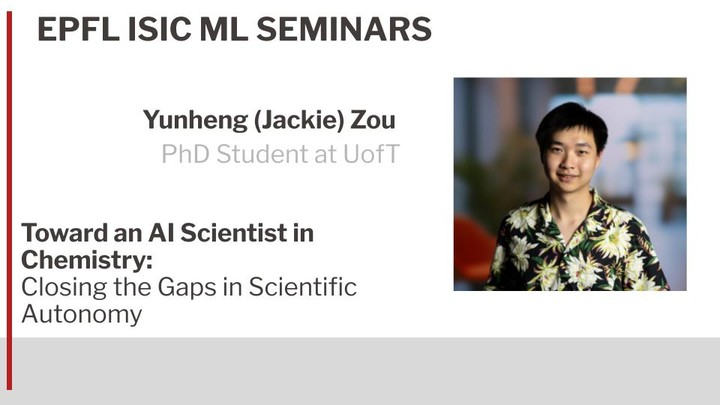
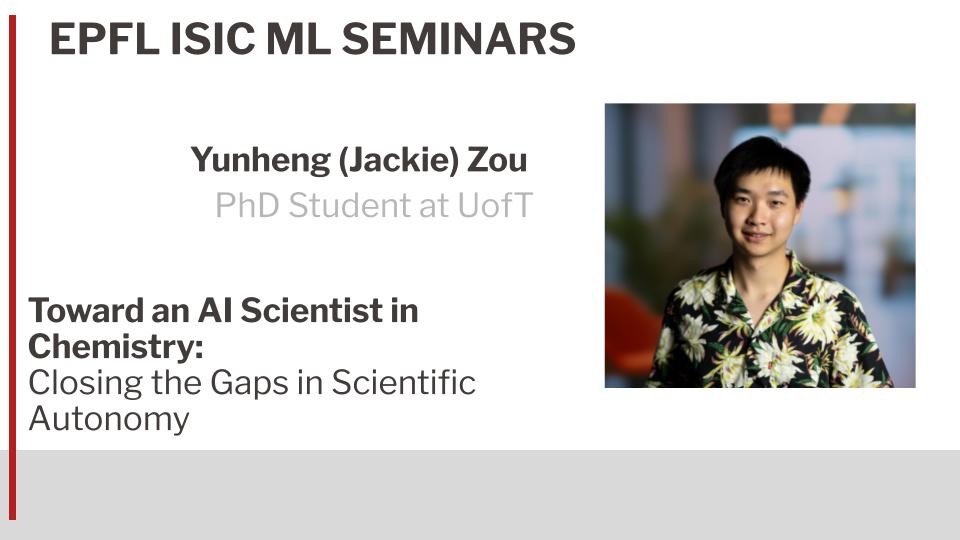
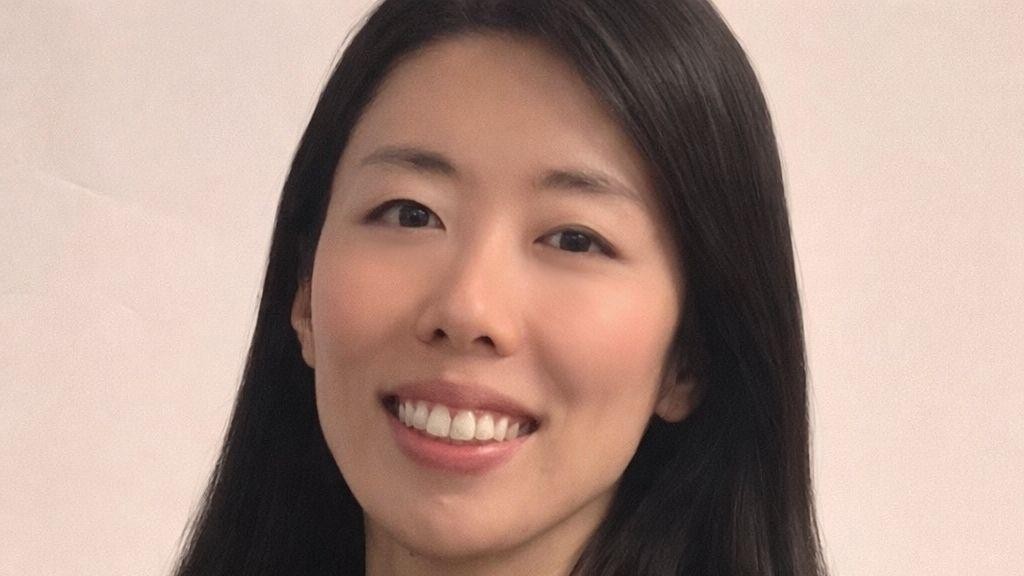
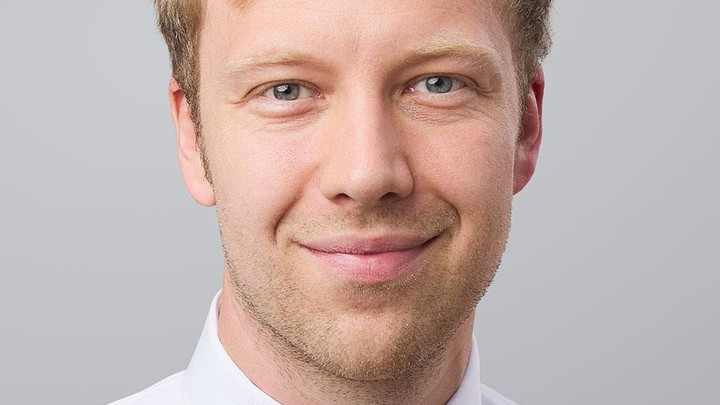
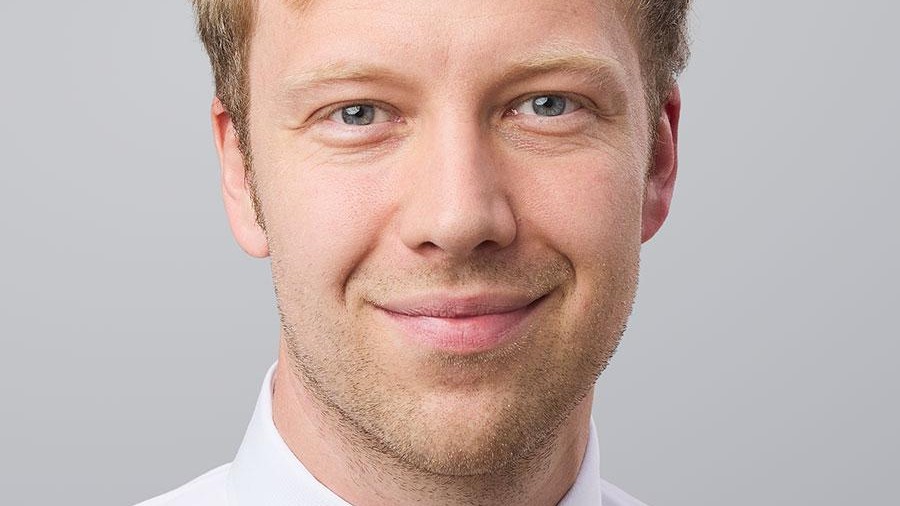
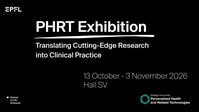
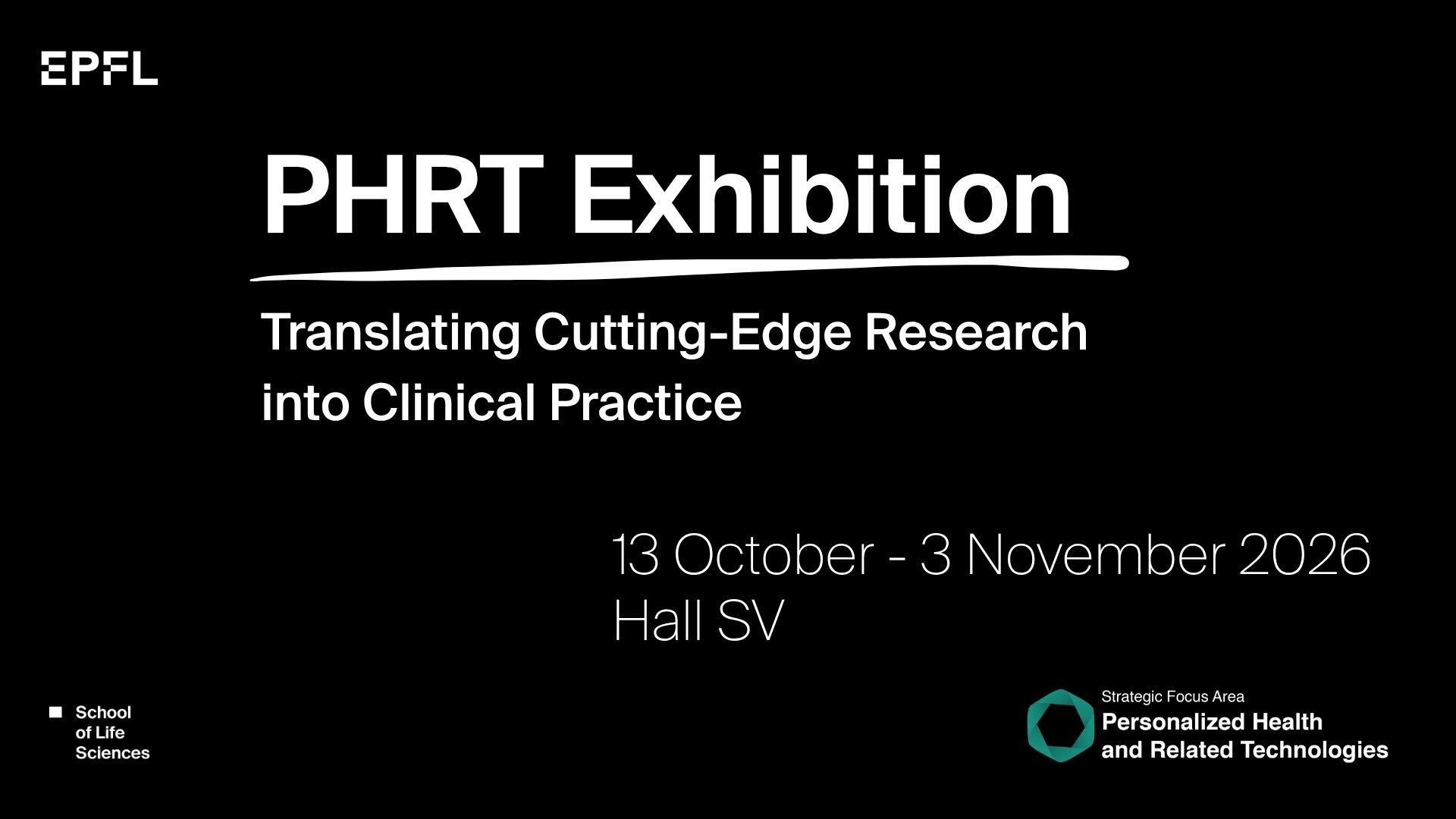
{ "count": 266, "next": "https://memento.epfl.ch/api/v1/events/?format=api&limit=10&offset=130&ordering=event__label_link", "previous": "https://memento.epfl.ch/api/v1/events/?format=api&limit=10&offset=110&ordering=event__label_link", "results": [ { "id": 72722, "title": "Kissick Family Foundation | Frontotemporal Dementia (FTD) Grant Program 2026–2027", "slug": "kissick-family-foundation-frontotemporal-dementia", "event_url": "https://memento.epfl.ch/event/kissick-family-foundation-frontotemporal-dementia", "visual_url": "https://memento.epfl.ch/image/33939/200x112.jpg", "visual_large_url": "https://memento.epfl.ch/image/33939/720x405.jpg", "visual_maxsize_url": "https://memento.epfl.ch/image/33939/max-size.jpg", "lang": "en", "start_date": "2026-11-04", "end_date": "2026-11-04", "start_time": null, "end_time": null, "description": "<strong>Aim: </strong>This call for proposals solicits basic or early-stage translational research addressing the fundamental aetiologies and mechanisms of sporadic FTD. For this RFP, sporadic FTD is defined as FTD that develops without an identified known causal gene mutation. Projects must have clear relevance to sporadic FTD; studies using <em>GRN</em>, <em>MAPT</em>, or <em>C9orf72</em> models must explain how their findings will inform sporadic FTD beyond known genetic causes.<br>\r\n<br>\r\nThe program will fund its fourth annual cohort and seeks bold, rigorous, collaborative, and catalytic projects that broaden foundational knowledge of FTD and spur diagnostic and therapeutic advances. Responsive topics include basic biology; computational, AI, and data-driven approaches; biomarker discovery and validation; neuroimaging; proteinopathies; neuroinflammation and non-neuronal cells; environmental factors; novel risk factors and disease pathways; and innovative experimental models. Investigators from outside traditional FTD research fields are encouraged to apply, provided the team includes sufficient expertise in FTD biology.<br>\r\n<br>\r\n<strong>Duration</strong>: 2 years<br>\r\n<br>\r\n<strong>Funding</strong>: up to $500,000<br>\r\n<br>\r\n<strong>Eligibility: </strong>Applicants can be based at eligible nonprofit academic or research institutions worldwide, including public or private universities and related research institutions; certain governmental agencies with active biomedical research programs may also apply. The PI must hold a PhD, MD, or related research doctorate and be an <strong>independent investigator </strong>as defined by the host institution. Early-career and newly independent investigators are strongly encouraged. Multidisciplinary collaborations are welcome, but one corresponding PI and one submitting institution must be designated. Institutions may submit multiple proposals, provided each is led by a different PI. Current Kissick Family Foundation FTD grantees may not apply as PIs or co-investigators.<br>\r\n<br>\r\n<strong>How to Apply</strong>: Applicants must first submit a letter of intent through the <a href=\"https://milken.smapply.io/prog/ftd_grant_program/\">SPARC</a> online grant portal. <strong>LOIs can be maximum 750 words</strong> and should include the project title and PI name, indicate the scientific priority area, and present a succinct description of the proposed research approach. LOIs must be single-spaced, use a legible font of at least 11 points, and have one-inch margins.. Projects that are in scope and that propose rigorous, innovative research studies with significant potential to further our understanding of sporadic FTD may be invited to submit a full proposal; notifications will be sent around mid-December. Full proposals would be due in February and require an institutional letter of commitment; for this letter, please contact the <a href=\"mailto:[email protected]?subject=Kissick%20Family%20Foundation%20FTD%20request%20for%20proposals\">Research Office</a>. Eventual awardees may be notified as early as June 2027.<br>\r\n<br>\r\n<strong>Deadline, Letter of Intent: </strong>04 November 2026, 11:59 p.m. ET<br>\r\n<br>\r\n<strong>Further information</strong>\r\n<ul>\r\n\t<li>An <strong>online information session</strong> will be held on 13 October 2026 at 17:00 Swiss time; <a href=\"https://milkeninstitute-org.zoom.us/meeting/register/pkUaoNaURZujsWbcjIQ-uQ\">registration</a> is required.</li>\r\n\t<li>More information about the call is available <a href=\"https://sciencephilanthropy.org/wp-content/uploads/2026/09/MI-KissickFamilyFoundationRFP-2.pdf\">here</a></li>\r\n\t<li>The online portal can be found <a href=\"https://milken.smapply.io/prog/ftd_grant_program/\">here</a></li>\r\n</ul>\r\nFor any other questions, please contact the <a href=\"mailto:[email protected]\">Research Office</a>", "image_description": "", "creation_date": "2026-09-30T15:42:19", "last_modification_date": "2026-09-30T15:43:02", "link_label": "", "link_url": "", "canceled": "False", "cancel_reason": "", "place_and_room": "", "url_place_and_room": "", "url_online_room": "", "spoken_languages": [], "speaker": "", "organizer": "", "contact": "<a href=\"mailto:[email protected]?subject=Kissick%20Family%20Foundation%20-%20FTD%20request%20for%20proposals\">Research Office</a>", "is_internal": "False", "theme": "", "vulgarization": { "id": 1, "fr_label": "Tout public", "en_label": "General public" }, "registration": { "id": 3, "fr_label": "Entrée libre", "en_label": "Free" }, "keywords": "", "file": null, "icalendar_url": "https://memento.epfl.ch/event/export/122002/", "category": { "id": 16, "code": "PROP", "fr_label": "Appel à proposition", "en_label": "Call for proposal", "activated": true }, "academic_calendar_category": null, "domains": [], "mementos": [ "https://memento.epfl.ch/api/v1/mementos/140/?format=api" ] }, { "id": 72723, "title": "Toward an AI Scientist in Chemistry: Closing the Gaps in Scientific Autonomy", "slug": "toward-an-ai-scientist-in-chemistry-closing-the-ga", "event_url": "https://memento.epfl.ch/event/toward-an-ai-scientist-in-chemistry-closing-the-ga", "visual_url": "https://memento.epfl.ch/image/33941/200x112.jpg", "visual_large_url": "https://memento.epfl.ch/image/33941/720x405.jpg", "visual_maxsize_url": "https://memento.epfl.ch/image/33941/max-size.jpg", "lang": "en", "start_date": "2026-10-06", "end_date": "2026-10-06", "start_time": "15:15:00", "end_time": "16:15:00", "description": "<p>What does it take to build an AI scientist in chemistry that can carry out research and improve through experience? In this talk, I will explore scientific autonomy as a process of hill climbing: identifying the capabilities that limit autonomous research, addressing those gaps, and evaluating progress on increasingly demanding chemistry tasks.<br>\r\nDrawing on the El Agente family of systems, I will discuss how hierarchical teams of agents coordinate quantum chemistry workflows and how molecular structure generation addresses a critical gap between chemical reasoning and computational execution. I will consider how these capabilities could contribute to longer-term research goals, such as automated reaction pathway exploration. These examples illustrate how a single missing capability can interrupt an otherwise sophisticated research workflow.<br>\r\nI will also discuss the open challenge of enabling agents to learn continually from scientific literature, computational results, and failed attempts, and to acquire capabilities as new problems demand them. By examining current capabilities and remaining bottlenecks, I will outline a path toward AI systems that formulate and test chemical hypotheses with increasing independence.</p>", "image_description": "", "creation_date": "2026-09-30T16:11:47", "last_modification_date": "2026-09-30T16:21:18", "link_label": "", "link_url": "", "canceled": "False", "cancel_reason": "", "place_and_room": "", "url_place_and_room": "", "url_online_room": "https://epfl.zoom.us/j/68447908297?pwd=OU5JUGJUSUhZc0ZNYjQ2WENvYINRdz09", "spoken_languages": [ "https://memento.epfl.ch/api/v1/spoken_languages/2/?format=api" ], "speaker": "Yunheng (Jackie) Zou", "organizer": "Philippe Schwaller", "contact": "[email protected]", "is_internal": "False", "theme": "", "vulgarization": { "id": 1, "fr_label": "Tout public", "en_label": "General public" }, "registration": { "id": 3, "fr_label": "Entrée libre", "en_label": "Free" }, "keywords": "MLSeminar1", "file": null, "icalendar_url": "https://memento.epfl.ch/event/export/122003/", "category": { "id": 1, "code": "CONF", "fr_label": "Conférences - Séminaires", "en_label": "Conferences - Seminars", "activated": true }, "academic_calendar_category": null, "domains": [], "mementos": [ "https://memento.epfl.ch/api/v1/mementos/1/?format=api", "https://memento.epfl.ch/api/v1/mementos/5/?format=api", "https://memento.epfl.ch/api/v1/mementos/6/?format=api", "https://memento.epfl.ch/api/v1/mementos/9/?format=api", "https://memento.epfl.ch/api/v1/mementos/14/?format=api" ] }, { "id": 72724, "title": "Designing Social Robots with Older Adults: Context, Adaptation, and Dignity", "slug": "designing-social-robots-with-older-adults-context", "event_url": "https://memento.epfl.ch/event/designing-social-robots-with-older-adults-context", "visual_url": "https://memento.epfl.ch/image/33940/200x112.jpg", "visual_large_url": "https://memento.epfl.ch/image/33940/720x405.jpg", "visual_maxsize_url": "https://memento.epfl.ch/image/33940/max-size.jpg", "lang": "en", "start_date": "2026-11-11", "end_date": "2026-11-11", "start_time": "11:00:00", "end_time": "12:00:00", "description": "<p>How social robots look, behave, and offer support should reflect the people and environments they encounter. Drawing on studies with older adults in rural Indiana and urban Houston, this talk examines how individual needs, preferences, everyday surroundings, and care relationships can inform the physical forms and interaction styles of future social robots.<br>\r\n<br>\r\nThrough participatory design, observations, and interviews, I center older adults’ perspectives on meaningful support, acceptable interaction, and personal boundaries. Encounters with robot companions have brought moments of enjoyment, surprise, and support, while revealing challenges involving communication, expectations, privacy, and control. I explore how embodiment, movement, voice, and interaction pacing shape these experiences, and how caregivers can support engagement while preserving older adults’ choices and dignity.<br>\r\n<br>\r\nThese findings inform design requirements for robots that people can understand, guide, and adjust as their circumstances change. I connect them to opportunities for adaptive robot behavior, accessible interaction, and shared control, including how robots might recognize when assistance is welcome and make their actions easier to interpret or interrupt. The talk positions older adults as active contributors to robotics research, whose lived expertise can shape both future robot companions and the broader systems of support surrounding them.<br>\r\n<br>\r\n<br>\r\n<strong>Biography</strong><br>\r\nChorong Park, Ph.D., is an Assistant Professor and Presidential Frontier Faculty at the University of Houston’s Gerald D. Hines College of Architecture and Design, where she leads the Empathetic Lifespan AI & Robotics for Aging (ELARA) Lab. Her research connects human–robot interaction, human-centered AI, and participatory design to develop social robots and supportive technologies with older adults and caregivers.<br>\r\n<br>\r\nDrawing on studies in rural Indiana and urban Houston, she investigates how robots’ physical forms and interactions can fit older adults’ needs, surroundings, and everyday lives. Her work centers older adults’ perspectives on companionship, support, privacy, personal boundaries, and dignity, including how caregiver involvement can preserve individual choice and control.<br>\r\n<br>\r\nHer research is informed by more than 500 hours of volunteer technology support with older adults and people with disabilities and has appeared at ACM CHI, ACM ASSETS, and IEEE robotics venues. She earned her Ph.D. in Technology, with a graduate minor in Gerontology, and her master’s degree in UX Design from Purdue University.<br>\r\n<br>\r\n<u>Further information</u>:<br>\r\nUniversity of Houston research feature<br>\r\n(<a href=\"https://stories.uh.edu/2026-ai-robots-for-older-adults/index.html\">https://stories.uh.edu/2026-ai-robots-for-older-adults/index.html</a>)<br>\r\nELARA Lab website<br>\r\n(<a href=\"https://elaralab.org/\">https://elaralab.org</a>/)<br>\r\n </p>", "image_description": "", "creation_date": "2026-09-30T16:15:15", "last_modification_date": "2026-09-30T16:25:59", "link_label": "", "link_url": "", "canceled": "False", "cancel_reason": "", "place_and_room": "ME A3 31", "url_place_and_room": "https://plan.epfl.ch/?room==ME%20A3%2031", "url_online_room": "https://epfl.zoom.us/j/69492652047", "spoken_languages": [ "https://memento.epfl.ch/api/v1/spoken_languages/2/?format=api" ], "speaker": "<a href=\"https://elaralab.org/\">Prof. Chorong Park</a>", "organizer": "<a href=\"https://www.epfl.ch/research/domains/robotics/\">Robotics Center</a>", "contact": "<a href=\"https://people.epfl.ch/anca.rusu?lang=en\">Anca Rusu</a>", "is_internal": "False", "theme": "", "vulgarization": { "id": 2, "fr_label": "Public averti", "en_label": "Informed public" }, "registration": { "id": 3, "fr_label": "Entrée libre", "en_label": "Free" }, "keywords": "", "file": null, "icalendar_url": "https://memento.epfl.ch/event/export/122004/", "category": { "id": 1, "code": "CONF", "fr_label": "Conférences - Séminaires", "en_label": "Conferences - Seminars", "activated": true }, "academic_calendar_category": null, "domains": [], "mementos": [ "https://memento.epfl.ch/api/v1/mementos/1/?format=api", "https://memento.epfl.ch/api/v1/mementos/6/?format=api", "https://memento.epfl.ch/api/v1/mementos/8/?format=api", "https://memento.epfl.ch/api/v1/mementos/416/?format=api" ] }, { "id": 72728, "title": "When Control Changes the Data: Safety under Interaction-Driven Distribution Shifts", "slug": "when-control-changes-the-data-safety-under-interac", "event_url": "https://memento.epfl.ch/event/when-control-changes-the-data-safety-under-interac", "visual_url": "https://memento.epfl.ch/image/33946/200x112.jpg", "visual_large_url": "https://memento.epfl.ch/image/33946/720x405.jpg", "visual_maxsize_url": "https://memento.epfl.ch/image/33946/max-size.jpg", "lang": "en", "start_date": "2026-11-09", "end_date": "2026-11-09", "start_time": "14:00:00", "end_time": "15:00:00", "description": "<strong>This seminar is co-sponsored by the <a href=\"https://ieeecss.org\">IEEE-CSS</a>.</strong><br>\r\n<br>\r\n<strong>Abstract</strong>: <br>\r\nAccelerated by rapid advances in machine learning and AI, there has been tremendous success in the design of learning-enabled autonomous systems in areas such as autonomous driving and robotics. These exciting developments are accompanied by new fundamental challenges that arise regarding the safety and reliability of these increasingly complex systems due to imperfect learning, system unknowns, and uncertain environments. Statistical tools for uncertainty quantification have gained popularity due to their ability to deal with these challenges. However, their guarantees rely on i.i.d. data, an assumption that is violated when control actions change the underlying data distribution.<br>\r\n<br>\r\nIn this talk, I will provide new insight to design safe controllers under distribution shifts using robust conformal prediction (CP). I will begin by advocating for the use of CP due to its simplicity, generality, and efficiency as opposed to existing optimization-based verification techniques. I will then provide an introduction to CP and summarize existing work that uses CP to design probabilistically safe controllers in dynamic environments. Subsequently, we will look into interactive settings where the system’s behavior may change the environment's behavior, and vice versa. This circular dependency creates an interaction-driven distribution shift that invalidates existing CP guarantees. To deal with this problem, we propose an iterative framework that episodically updates the controller while robustly maintaining safety guarantees by quantifying the potential impact of a controller update on the environment's behavior. We realize this via adversarially robust CP where we perform a regular CP step in each episode using observed data under the current controller, but then transfer safety guarantees across controller updates by analytically adjusting the CP result to account for distribution shifts. Lastly, I will show how these ideas extend to handling policy-induced distribution shifts that arise when using barrier/Lyapunov functions to control uncertain systems.<br>\r\n<br>\r\n<strong>Biography</strong>:<br>\r\nLars Lindemann is currently an Assistant Professor for Algorithmic Systems Theory in the Automatic Control Laboratory at ETH Zürich. From 2023 to 2025 he was an Assistant Professor in the Thomas Lord Department of Computer Science at the University of Southern California. Before that, he was a Postdoctoral Fellow in the Department of Electrical and Systems Engineering at the University of Pennsylvania from 2020 to 2022. He received his Ph.D. degree in Electrical Engineering from KTH Royal Institute of Technology in 2020. Professor Lindemann's research interests include systems and control theory, formal methods, machine learning, and autonomous systems. He is a recipient of a European Research Council Starting Grant and two U.S. National Science Foundation Grants. He also received the Outstanding Student Paper Award at the 58th IEEE Conference on Decision and Control and the Student Best Paper Award (as an advisor) at the 60th IEEE Conference on Decision and Control, and has been a finalist for several other best paper awards.", "image_description": "", "creation_date": "2026-10-01T11:07:20", "last_modification_date": "2026-10-01T11:20:51", "link_label": "", "link_url": "", "canceled": "False", "cancel_reason": "", "place_and_room": "ME C2 405", "url_place_and_room": "https://plan.epfl.ch/?room==ME%20C2%20405", "url_online_room": "https://epfl.zoom.us/j/66361455244", "spoken_languages": [ "https://memento.epfl.ch/api/v1/spoken_languages/2/?format=api" ], "speaker": "<a href=\"https://ee.ethz.ch/the-department/faculty/professors/person-detail.MzY4OTYz.TGlzdC80MTEsMTA1ODA0MjU5.html\">Professor Lars Lindemann , Assistant Professor for Algorithmic Systems Theory in the Automatic Control Laboratory @ ETH Zürich</a>", "organizer": "<a href=\"https://people.epfl.ch/giancarlo.ferraritrecate\">Professor Giancarlo Ferrari Trecate</a>", "contact": "[email protected]", "is_internal": "False", "theme": "", "vulgarization": { "id": 1, "fr_label": "Tout public", "en_label": "General public" }, "registration": { "id": 3, "fr_label": "Entrée libre", "en_label": "Free" }, "keywords": "", "file": null, "icalendar_url": "https://memento.epfl.ch/event/export/122012/", "category": { "id": 1, "code": "CONF", "fr_label": "Conférences - Séminaires", "en_label": "Conferences - Seminars", "activated": true }, "academic_calendar_category": null, "domains": [], "mementos": [ "https://memento.epfl.ch/api/v1/mementos/8/?format=api", "https://memento.epfl.ch/api/v1/mementos/15/?format=api" ] }, { "id": 72730, "title": "Johnson & Johnson – Reimagining Human Model Systems QuickFire Challenge", "slug": "johnson-johnson-reimagining-human-model-systems-qu", "event_url": "https://memento.epfl.ch/event/johnson-johnson-reimagining-human-model-systems-qu", "visual_url": "https://memento.epfl.ch/image/33947/200x112.jpg", "visual_large_url": "https://memento.epfl.ch/image/33947/720x405.jpg", "visual_maxsize_url": "https://memento.epfl.ch/image/33947/max-size.jpg", "lang": "en", "start_date": "2026-10-23", "end_date": "2026-10-23", "start_time": null, "end_time": null, "description": "<strong>Aim: </strong>Johnson & Johnson has launched the <strong>Reimagining Human Model Systems QuickFire Challenge</strong> to identify novel, scalable and physiologically relevant human tissue model systems that can improve the translatability, predictability and reliability of preclinical safety and pharmacology evaluations. Innovators worldwide with an interest in leveraging the Singapore ecosystem are invited to propose qualified alternatives to traditional animal models that more accurately mimic human biology.<br>\r\n<br>\r\nAreas of interest include:\r\n<ul>\r\n\t<li>Models of the liver, heart, gastrointestinal tract, bone marrow, immune system and nervous systems, including the CNS, PNS and blood-brain barrier</li>\r\n\t<li>In vitro and ex vivo human-relevant models, organoids, organ-on-a-chip and lab-on-a-chip platforms, bioprinted tissues, iPSC-derived 3D-cell systems, tissue explants and other scalable, automated and AI-ready New Approach Methodologies</li>\r\n\t<li>Biologically characterized and reproducible systems that demonstrate pharmacological or toxicological relevance and, ideally, correlation with human clinical outcomes</li>\r\n</ul>\r\nAdditional priorities:\r\n\r\n<ul>\r\n\t<li>Multicellular models with a functional immune component for complex modalities such as T-cell engagers, immune modulators and CAR-T therapies, including lymph-node models capable of producing a verifiable primary immune response to a neoantigen</li>\r\n\t<li>Cross-species models using preclinical-species and human primary or iPSC-derived cells as in vitro-to-in vivo comparators</li>\r\n\t<li>Systems supporting high-throughput functional, imaging, molecular or multimodal assessment of human-relevant pharmacological and toxicological responses</li>\r\n\t<li>Models and workflows integrating AI/ML for virtual-cell models and predictive capabilities</li>\r\n</ul>\r\n<br>\r\n<strong>Funding</strong>: Up to $100,000 in award funding. Selected finalists will also be invited to present at a poster showcase in San Francisco during the week of 10–14 January 2027; travel costs will not be reimbursed.<br>\r\n<br>\r\n<strong>How to Apply</strong>: Applications should be submitted through the <a href=\"https://juniverseadmin.jnjinnovation.com/qfc-user-login?destination=/reimagining-human-model-systems-qfc\">QuickFire Challenge webpage</a>. Proposals will be assessed for strategic alignment, novelty and differentiation, proof-of-concept feasibility and supporting data, key resources and development roadmap, team strengths and capabilities, and demonstrated interest in the Singapore innovation ecosystem. Proposal contents will not be treated as confidential; therefore, <strong>confidential information should not be submitted</strong>.<br>\r\n<br>\r\n<strong>Deadline:</strong> 23 October 2026<br>\r\n<br>\r\n<strong>Further information</strong>\r\n\r\n<ul>\r\n\t<li>More information can be found <a href=\"https://jnjinnovation.com/innovation-challenges/Reimagining-Human-Model-Systems-QuickFire-Challenge\">here</a></li>\r\n\t<li>For any other questions, please contact the <a href=\"mailto:[email protected]\">Research Office</a></li>\r\n</ul>", "image_description": "", "creation_date": "2026-10-01T15:17:36", "last_modification_date": "2026-10-01T15:17:36", "link_label": "", "link_url": "", "canceled": "False", "cancel_reason": "", "place_and_room": "", "url_place_and_room": "", "url_online_room": "", "spoken_languages": [], "speaker": "", "organizer": "", "contact": "<a href=\"mailto:[email protected]?subject=J%26J%20Quickfire%20challenge\">Research Office</a>", "is_internal": "False", "theme": "", "vulgarization": { "id": 1, "fr_label": "Tout public", "en_label": "General public" }, "registration": { "id": 3, "fr_label": "Entrée libre", "en_label": "Free" }, "keywords": "", "file": null, "icalendar_url": "https://memento.epfl.ch/event/export/122014/", "category": { "id": 16, "code": "PROP", "fr_label": "Appel à proposition", "en_label": "Call for proposal", "activated": true }, "academic_calendar_category": null, "domains": [], "mementos": [ "https://memento.epfl.ch/api/v1/mementos/140/?format=api" ] }, { "id": 72731, "title": "Personalized Health and Related Technolgies (PHRT) Exhibition", "slug": "personalized-health-and-related-technolgies-phrt-e", "event_url": "https://memento.epfl.ch/event/personalized-health-and-related-technolgies-phrt-e", "visual_url": "https://memento.epfl.ch/image/33948/200x112.jpg", "visual_large_url": "https://memento.epfl.ch/image/33948/720x405.jpg", "visual_maxsize_url": "https://memento.epfl.ch/image/33948/max-size.jpg", "lang": "en", "start_date": "2026-10-13", "end_date": "2026-11-03", "start_time": "18:00:00", "end_time": "10:00:00", "description": "<strong>Engineering the Future of Health</strong><br>\r\n<br>\r\nA look back at 14 of 133 pioneering projects and the emergence of the DeepHealth-movement. A tribute to the subversive power of science.<br>\r\n<br>\r\nThe year is 2047: many of today’s medical standards seemed utopian, too costly or simply unachievable in the 2020s. The exhibition looks back at the beginnings of the DeepHealth-movement, which laid the foundation for medical breakthroughs and improved the health of millions of people. <br>\r\n<br>\r\nThrough artifacts, art prints, texts, videos, and an audio guide, the exhibition takes visitors on a journey back in time to the 14 projects and their revolutionary beginnings in personalized medicine.<br>\r\n<br>\r\n<strong>Vernissage Tuesday, October 13, 2026 - 17:00 - SV 1717</strong><br>\r\n17:00 Presentation of the initiative - Dr Daniel Vonder Mühll<br>\r\n17:20 Personalize Oncology from the Lab to the Clinic - Prof. Elisa Oricchio<br>\r\n17:40 Introduction and guided tour of the exhibition follow by an apéro in SV Hall<br>\r\n<a href=\"http://mailto:[email protected]\">Registration</a><br>\r\n ", "image_description": "", "creation_date": "2026-10-01T15:29:44", "last_modification_date": "2026-10-06T11:17:22", "link_label": "", "link_url": "", "canceled": "False", "cancel_reason": "", "place_and_room": "SV 1204", "url_place_and_room": "https://plan.epfl.ch/?room==SV%201204", "url_online_room": "", "spoken_languages": [ "https://memento.epfl.ch/api/v1/spoken_languages/2/?format=api" ], "speaker": "", "organizer": "School of Life Sciences", "contact": "SV Communications", "is_internal": "False", "theme": "", "vulgarization": { "id": 1, "fr_label": "Tout public", "en_label": "General public" }, "registration": { "id": 1, "fr_label": "Sur inscription", "en_label": "Registration required" }, "keywords": "Personalized Health, Technology, Research, Clinical Practice", "file": null, "icalendar_url": "https://memento.epfl.ch/event/export/122015/", "category": { "id": 5, "code": "EXPO", "fr_label": "Expositions", "en_label": "Exhibitions", "activated": true }, "academic_calendar_category": null, "domains": [], "mementos": [ "https://memento.epfl.ch/api/v1/mementos/1/?format=api", "https://memento.epfl.ch/api/v1/mementos/6/?format=api", "https://memento.epfl.ch/api/v1/mementos/8/?format=api", "https://memento.epfl.ch/api/v1/mementos/9/?format=api" ] }, { "id": 72732, "title": "armasuisse – Research Program Security – Call for proposals", "slug": "armasuisse-research-program-security-call-for-pr-3", "event_url": "https://memento.epfl.ch/event/armasuisse-research-program-security-call-for-pr-3", "visual_url": "https://memento.epfl.ch/image/33949/200x112.jpg", "visual_large_url": "https://memento.epfl.ch/image/33949/720x405.jpg", "visual_maxsize_url": "https://memento.epfl.ch/image/33949/max-size.jpg", "lang": "en", "start_date": "2026-10-01", "end_date": "2026-11-30", "start_time": null, "end_time": "17:00:00", "description": "<a href=\"https://www.epfl.ch/en/\">EPFL</a> and <a href=\"https://www.ar.admin.ch/en/armasuisse-science-and-technology\">armasuisse S+T</a> have jointly launched the new <strong>Research Program Security</strong> in 2025. This program is open to all institutions within the ETH Domain through a series of calls for proposals. The goal is to identify and develop innovative ideas and solutions to address current and future security and defense challenges.<br>\r\n<br>\r\nThe <strong>2nd call</strong> will support research projects in the following thematic challenges: \r\n<ul>\r\n\t<li>Agent-agnostic Detection of unknown Biological and Chemical Agents</li>\r\n\t<li>Resilient Mobile Energy Supply and Decentralized Energy Logistics</li>\r\n</ul>\r\n<strong>Funding and duration:</strong>\r\n\r\n<ul>\r\n\t<li>Project duration: 12 to 18 months</li>\r\n\t<li>Maximum funding: CHF 250k (incl. overheads) per project</li>\r\n</ul>\r\n<strong>Who can apply:</strong><br>\r\nThe call for proposals is open to the <strong>ETH Domain community</strong> as follows:\r\n\r\n<ul>\r\n\t<li>Open to faculty members or unit head/ group leaders as main applicants. Other scientits (excl. PhDs) can apply as co-applicants.</li>\r\n\t<li>Projects must be hosted by an ETH Domain laboratory or research group and supported by at least one faculty member (Prof. tit., MER, PATT, PA or PO) or unit head/ group leader.</li>\r\n\t<li>There are no restrictions on the number of applicants involved; proposals may be submitted by individual applicants or consortia (collaboration between ETH Domain institutions is possible)</li>\r\n\t<li>Projects should not involve third parties (as main/co-applicant or project partner).</li>\r\n</ul>\r\n<strong>Deadline:</strong>\r\n\r\n<ul>\r\n\t<li>The application deadline for this call for proposals is<strong> Monday 30 November 2026 (17:00 CET).</strong></li>\r\n</ul>\r\n<strong>For further information</strong>, please have a look at the <a href=\"https://www.epfl.ch/research/funding/research-program-security-call-2/\">Research Program Security website</a>. <br>\r\n<br>\r\nAn <strong>online applicant workshop</strong> will take place on <strong>Tuesday 20 October 2026 from 11:00 to 12:00 CET</strong>. The registration form is available <a href=\"https://forms.gle/Cikqx9UBXj83D6GFA\">here</a>.<br>\r\n<br>\r\nFor additional questions, please contact the Research Office via [email protected]. <br>\r\n ", "image_description": "", "creation_date": "2026-10-01T16:03:46", "last_modification_date": "2026-10-01T16:09:05", "link_label": "", "link_url": "https://www.epfl.ch/research/funding/research-program-security-call-2/", "canceled": "False", "cancel_reason": "", "place_and_room": "", "url_place_and_room": "", "url_online_room": "", "spoken_languages": [], "speaker": "", "organizer": "", "contact": "[email protected]", "is_internal": "False", "theme": "", "vulgarization": { "id": 1, "fr_label": "Tout public", "en_label": "General public" }, "registration": { "id": 3, "fr_label": "Entrée libre", "en_label": "Free" }, "keywords": "", "file": null, "icalendar_url": "https://memento.epfl.ch/event/export/122016/", "category": { "id": 16, "code": "PROP", "fr_label": "Appel à proposition", "en_label": "Call for proposal", "activated": true }, "academic_calendar_category": null, "domains": [], "mementos": [ "https://memento.epfl.ch/api/v1/mementos/1/?format=api", "https://memento.epfl.ch/api/v1/mementos/3/?format=api", "https://memento.epfl.ch/api/v1/mementos/5/?format=api", "https://memento.epfl.ch/api/v1/mementos/6/?format=api", "https://memento.epfl.ch/api/v1/mementos/8/?format=api", "https://memento.epfl.ch/api/v1/mementos/9/?format=api" ] }, { "id": 72734, "title": "From Dimers to Maximal Surfaces in Minkowski Space R^{2,1}", "slug": "from-dimers-to-maximal-surfaces-in-minkowski-space", "event_url": "https://memento.epfl.ch/event/from-dimers-to-maximal-surfaces-in-minkowski-space", "visual_url": null, "visual_large_url": null, "visual_maxsize_url": null, "lang": "en", "start_date": "2026-10-07", "end_date": "2026-10-07", "start_time": "15:00:00", "end_time": null, "description": "<p>We discuss a class of graph embeddings into Minkowski space R^{2,2} = C^{1,1}, called t-surfaces, which arise in the study of the planar dimer model. A t-surface consists of a (perfect) t-embedding together with its associated origami map. Perfect t-embeddings were recently introduced as a key tool for proving that the gradient of the dimer height function converges to that of the Gaussian Free Field in a canonically associated metric, under suitable technical assumptions. After introducing the notion of a t-embedding, we will describe a construction of perfect t-embeddings for regular hexagons of the hexagonal lattice. In which the corresponding t-surfaces converge to space-like maximal surfaces in Minkowski space R^{2,1}. As a consequence, these constructions yield a new proof of convergence of fluctuations of the dimer height function to the Gaussian Free Field in the conformal structure induced by the limiting maximal surface.</p>", "image_description": "", "creation_date": "2026-10-01T16:38:56", "last_modification_date": "2026-10-01T16:38:56", "link_label": "", "link_url": "", "canceled": "False", "cancel_reason": "", "place_and_room": "CM 1 517", "url_place_and_room": "https://plan.epfl.ch/?room==CM%201%20517", "url_online_room": "", "spoken_languages": [ "https://memento.epfl.ch/api/v1/spoken_languages/2/?format=api" ], "speaker": "Marianna Russkikh", "organizer": "Prof. Martin Hairer", "contact": "Juliana Velasquez", "is_internal": "False", "theme": "", "vulgarization": { "id": 2, "fr_label": "Public averti", "en_label": "Informed public" }, "registration": { "id": 3, "fr_label": "Entrée libre", "en_label": "Free" }, "keywords": "", "file": null, "icalendar_url": "https://memento.epfl.ch/event/export/122018/", "category": { "id": 1, "code": "CONF", "fr_label": "Conférences - Séminaires", "en_label": "Conferences - Seminars", "activated": true }, "academic_calendar_category": null, "domains": [], "mementos": [ "https://memento.epfl.ch/api/v1/mementos/7/?format=api", "https://memento.epfl.ch/api/v1/mementos/403/?format=api" ] }, { "id": 72735, "title": "Nanomaterials and Device Engineering for Scalable Solar Fuels Production", "slug": "nanomaterials-and-device-engineering-for-scalabl-2", "event_url": "https://memento.epfl.ch/event/nanomaterials-and-device-engineering-for-scalabl-2", "visual_url": "https://memento.epfl.ch/image/33951/200x112.jpg", "visual_large_url": "https://memento.epfl.ch/image/33951/720x405.jpg", "visual_maxsize_url": "https://memento.epfl.ch/image/33951/max-size.jpg", "lang": "en", "start_date": "2026-10-14", "end_date": "2026-10-14", "start_time": "17:00:00", "end_time": null, "description": "<p>Thesis Director: Prof. K. Sivula,<br>\r\nChemistry and Chemical Engineering doctoral program<br>\r\nThesis Nr. 11708<br>\r\n<br>\r\nTo take part in the public defense, please contact directly the speaker</p>", "image_description": "", "creation_date": "2026-10-01T18:32:58", "last_modification_date": "2026-10-01T18:33:01", "link_label": "", "link_url": "", "canceled": "False", "cancel_reason": "", "place_and_room": "CM 1 4", "url_place_and_room": "https://plan.epfl.ch/?room==CM%201%204", "url_online_room": "https://epfl.zoom.us/j/66756994208?pwd=djaejEB0IObo1NCTZx2i7b9cQabbTc.1", "spoken_languages": [], "speaker": "<a href=\"mailto:[email protected]\"><strong>Nicolas Johannes DIERCKS</strong></a>", "organizer": "", "contact": "<a href=\"mailto:[email protected]\"><strong>Nicolas Johannes DIERCKS</strong></a><br>\r\n ", "is_internal": "False", "theme": "", "vulgarization": { "id": 1, "fr_label": "Tout public", "en_label": "General public" }, "registration": { "id": 3, "fr_label": "Entrée libre", "en_label": "Free" }, "keywords": "EDCH", "file": null, "icalendar_url": "https://memento.epfl.ch/event/export/122020/", "category": { "id": 12, "code": "SOUTE", "fr_label": "Soutenances de thèses", "en_label": "Thesis defenses", "activated": true }, "academic_calendar_category": null, "domains": [], "mementos": [ "https://memento.epfl.ch/api/v1/mementos/1/?format=api", "https://memento.epfl.ch/api/v1/mementos/5/?format=api", "https://memento.epfl.ch/api/v1/mementos/6/?format=api" ] }, { "id": 72736, "title": "PChem Seminar - Karl-Heinz Ernst", "slug": "pchem-seminar-karl-heinz-ernst", "event_url": "https://memento.epfl.ch/event/pchem-seminar-karl-heinz-ernst", "visual_url": "https://memento.epfl.ch/image/33952/200x112.jpg", "visual_large_url": "https://memento.epfl.ch/image/33952/720x405.jpg", "visual_maxsize_url": "https://memento.epfl.ch/image/33952/max-size.jpg", "lang": "en", "start_date": "2026-10-22", "end_date": "2026-10-22", "start_time": "17:00:00", "end_time": "19:00:00", "description": "<strong>Chirality Meets Magnetism: Spin Selectivity and Molecular Organization</strong><br>\r\n<br>\r\nSince Pasteur's discovery of molecular chirality, understanding how molecular handedness couples to its physical environment has remained a fundamental challenge. Of particular interest is its interplay with magnetism, anticipated already by Pierre Curie in 1894, as well as the emergence and propagation of chirality through molecular organization. Here, we explore these connections at surfaces, from the interaction of individual chiral molecules with magnetic substrates and spin-polarized electrons to the collective organization of molecular chirality in extended two-dimensional structures. First, we demonstrate enantioselective adsorption of individual helicene molecules on ferromagnetic cobalt surfaces. Spin- and chirality-resolved scanning tunneling microscopy reveals that left- and right-handed helicenes preferentially adsorb on Co islands with opposite out-of-plane magnetization, establishing a direct correlation between molecular handedness and substrate magnetization. Second, tunneling-conductance measurements through individual enantiomers reveal magnetochiral asymmetries of up to 50%, demonstrating spin-selective electron transport at the single-molecule level and excluding ensemble effects as the sole origin of chirality-induced spin selectivity (CISS). Finally, we report the first observation of aperiodic chiral molecular tiling arising from topological self-assembly on a silver surface, demonstrating how molecular chirality can propagate from individual building blocks into complex collective organization.", "image_description": "", "creation_date": "2026-10-01T19:17:53", "last_modification_date": "2026-10-02T08:39:11", "link_label": "", "link_url": "", "canceled": "False", "cancel_reason": "", "place_and_room": "CH G1 495", "url_place_and_room": "https://plan.epfl.ch/?room==CH%20G1%20495", "url_online_room": "", "spoken_languages": [ "https://memento.epfl.ch/api/v1/spoken_languages/2/?format=api" ], "speaker": "Karl-Heinz Ernst (EMPA)", "organizer": "Sascha Feldmann", "contact": "[email protected]", "is_internal": "False", "theme": "", "vulgarization": { "id": 2, "fr_label": "Public averti", "en_label": "Informed public" }, "registration": { "id": 3, "fr_label": "Entrée libre", "en_label": "Free" }, "keywords": "pcseminar", "file": null, "icalendar_url": "https://memento.epfl.ch/event/export/122021/", "category": { "id": 1, "code": "CONF", "fr_label": "Conférences - Séminaires", "en_label": "Conferences - Seminars", "activated": true }, "academic_calendar_category": null, "domains": [], "mementos": [ "https://memento.epfl.ch/api/v1/mementos/5/?format=api", "https://memento.epfl.ch/api/v1/mementos/14/?format=api" ] } ] }