Event List
retrieve:
Return the details about the given Event id.
list:
List all Event objects.
GET /api/v1/events/?format=api&offset=180&ordering=description
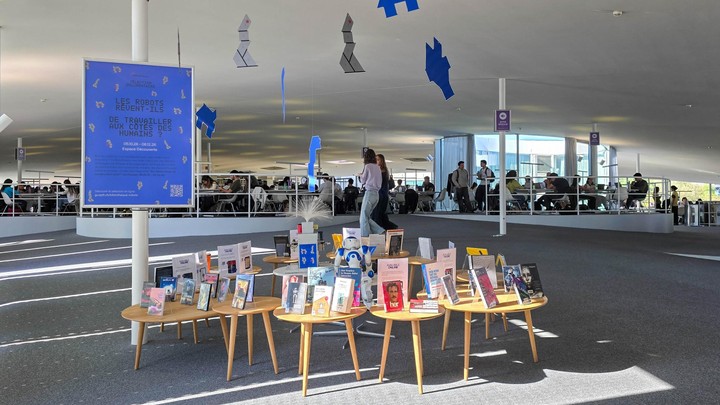
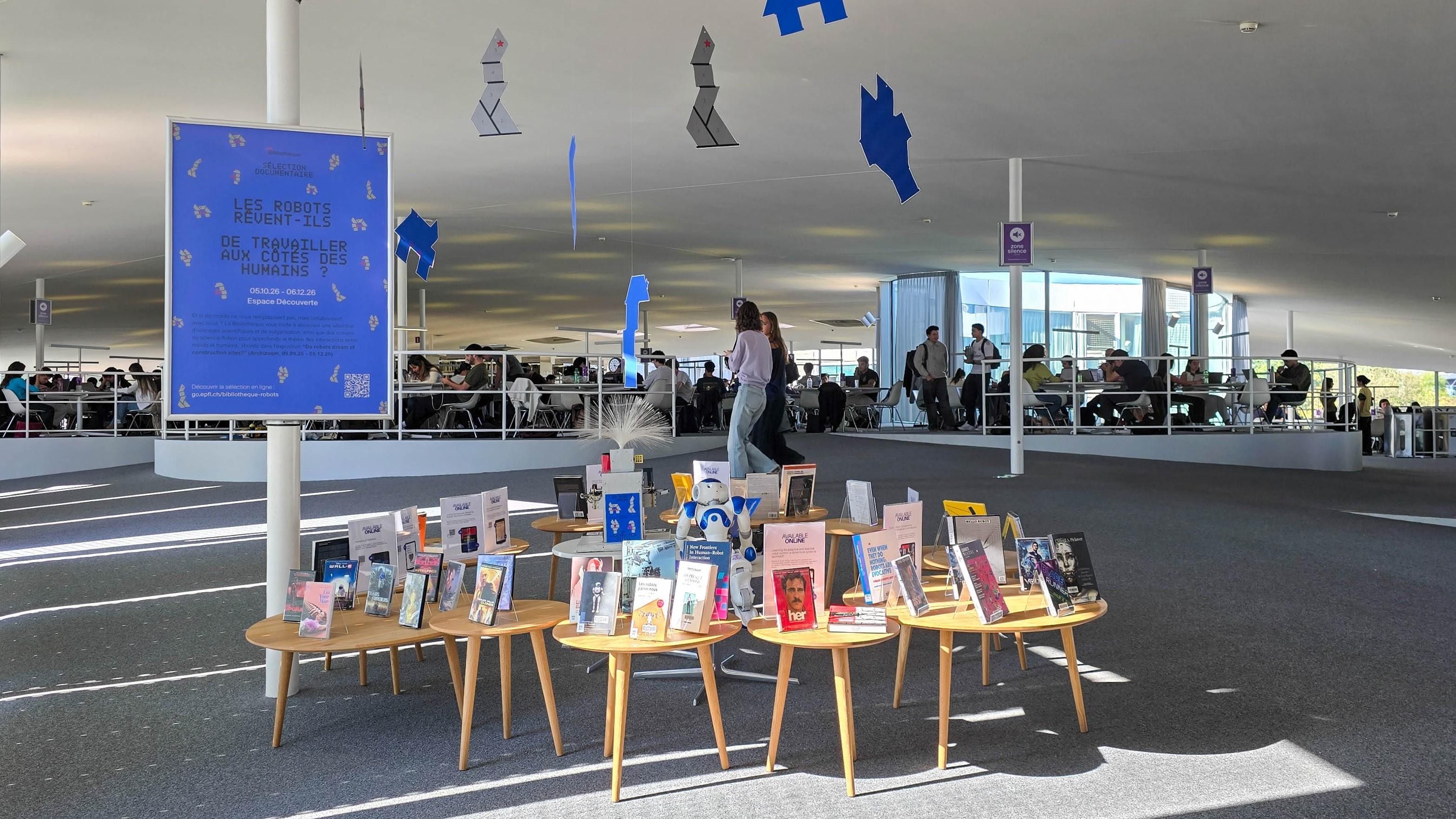
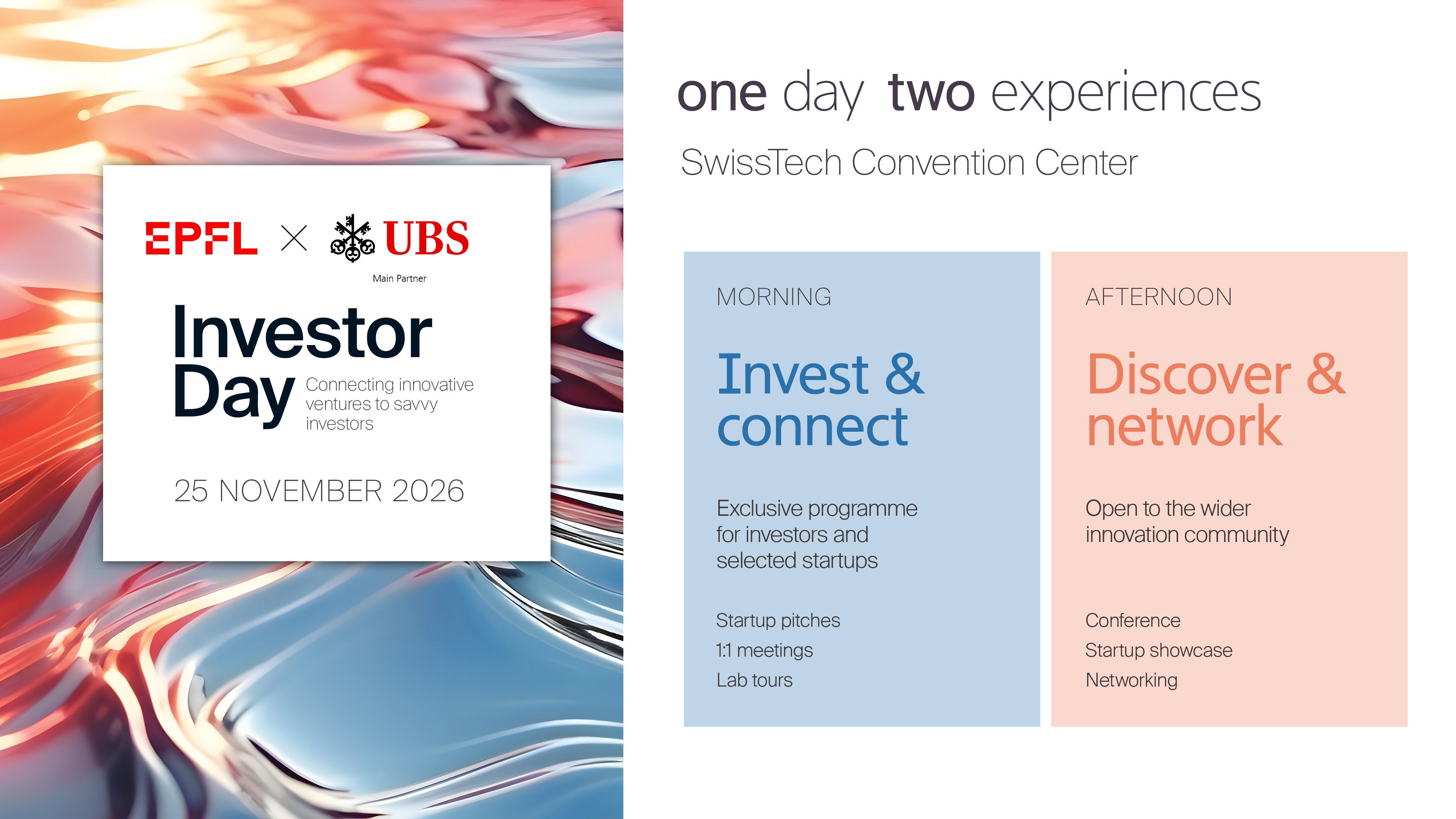
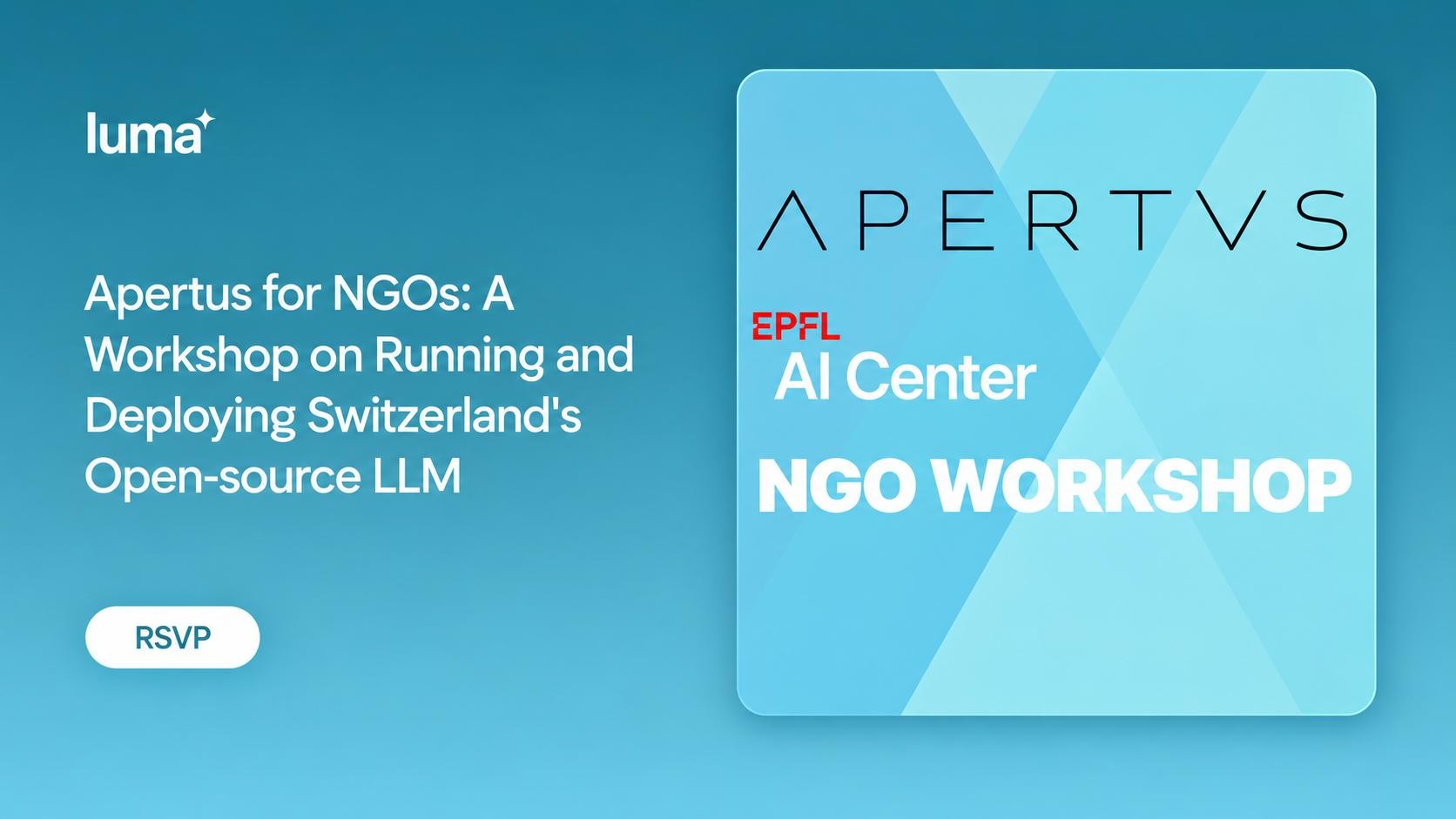
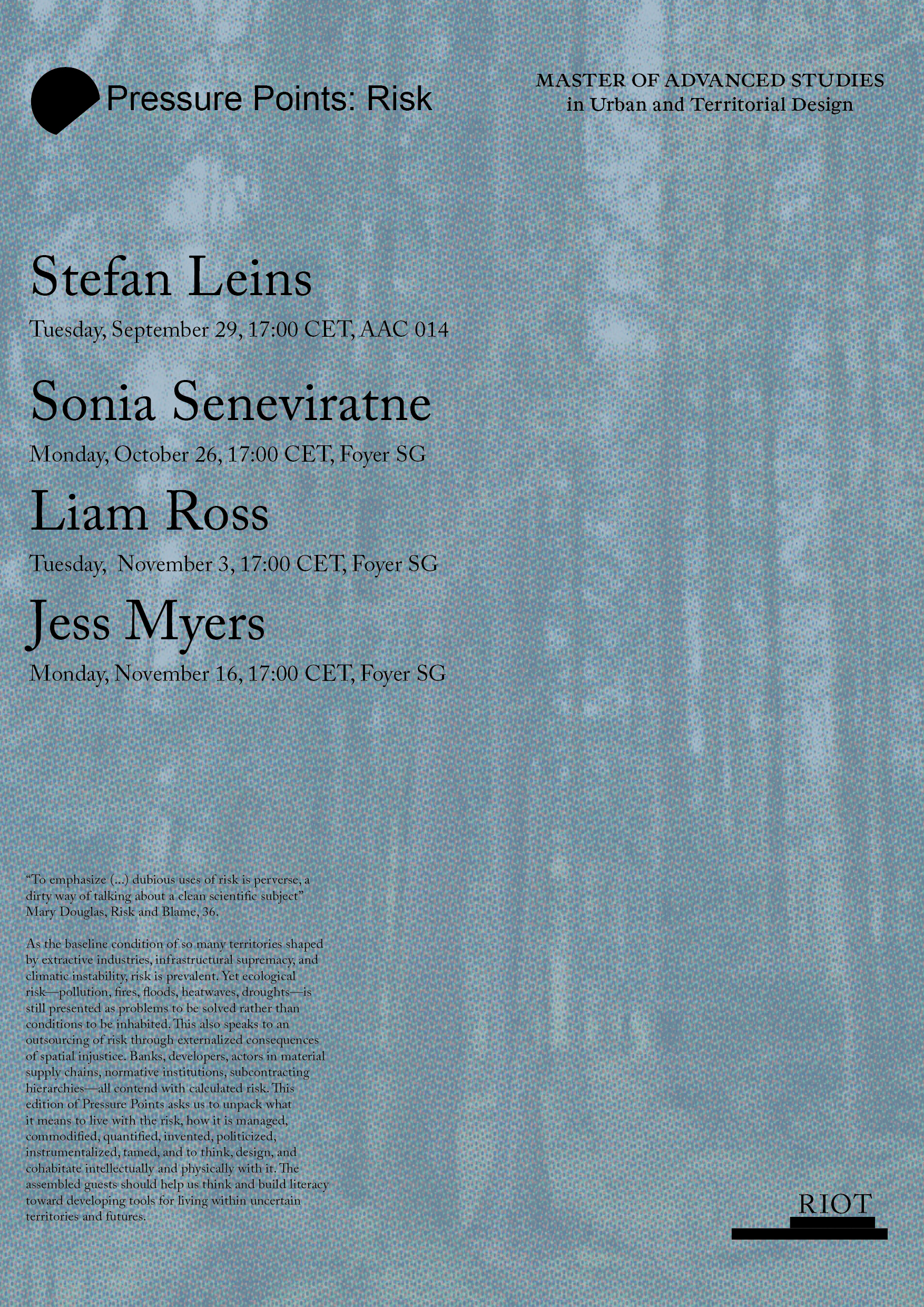
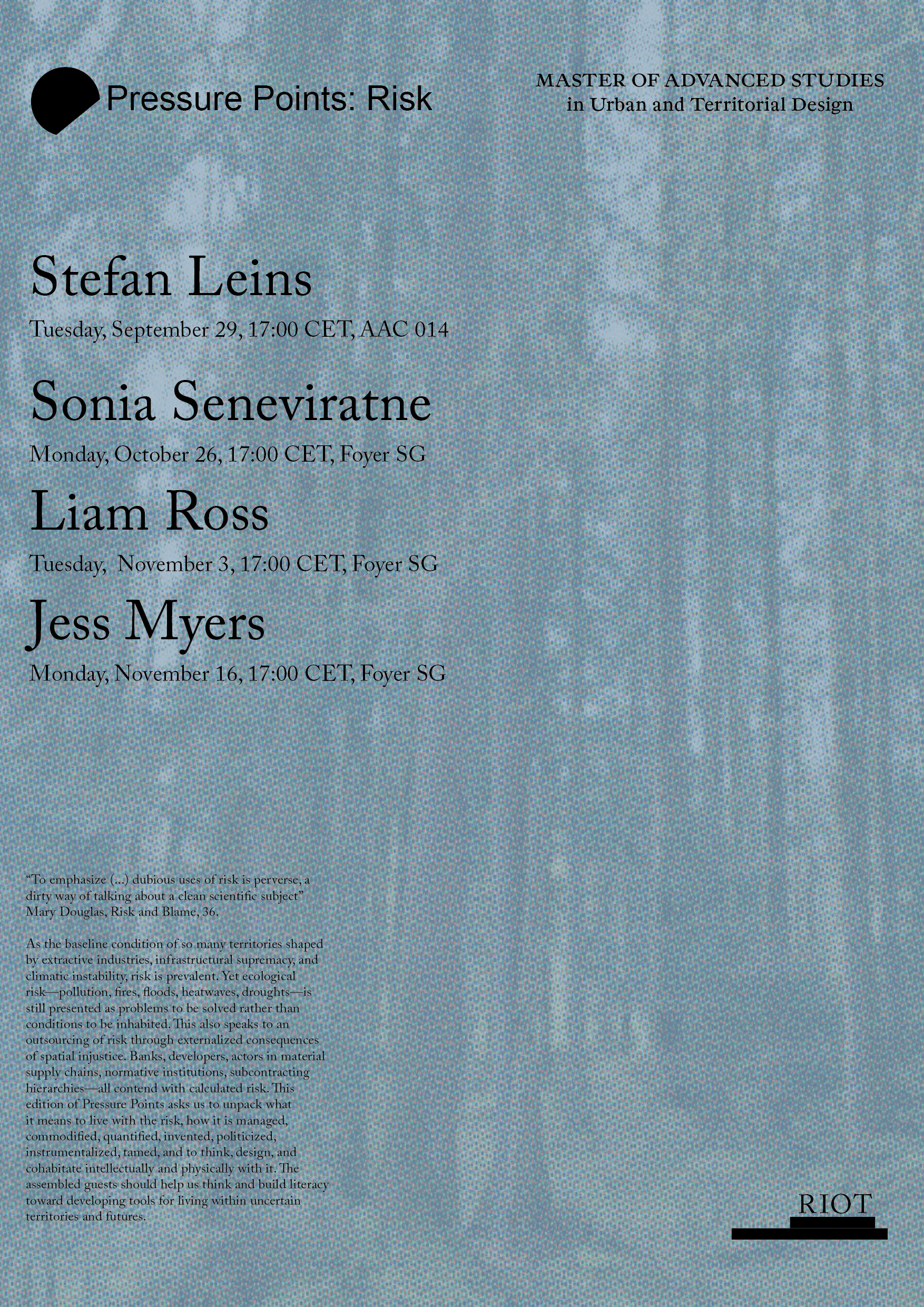
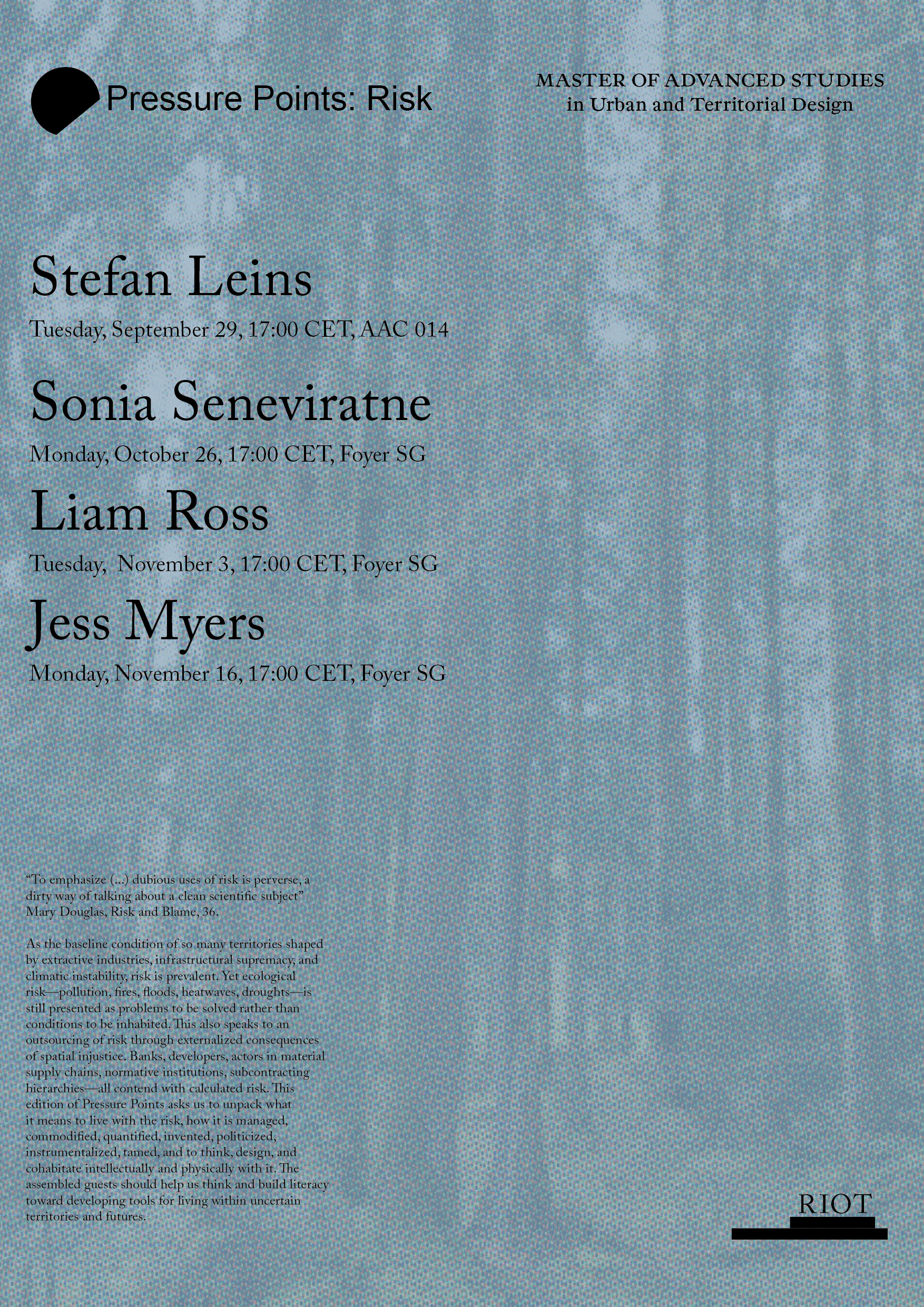
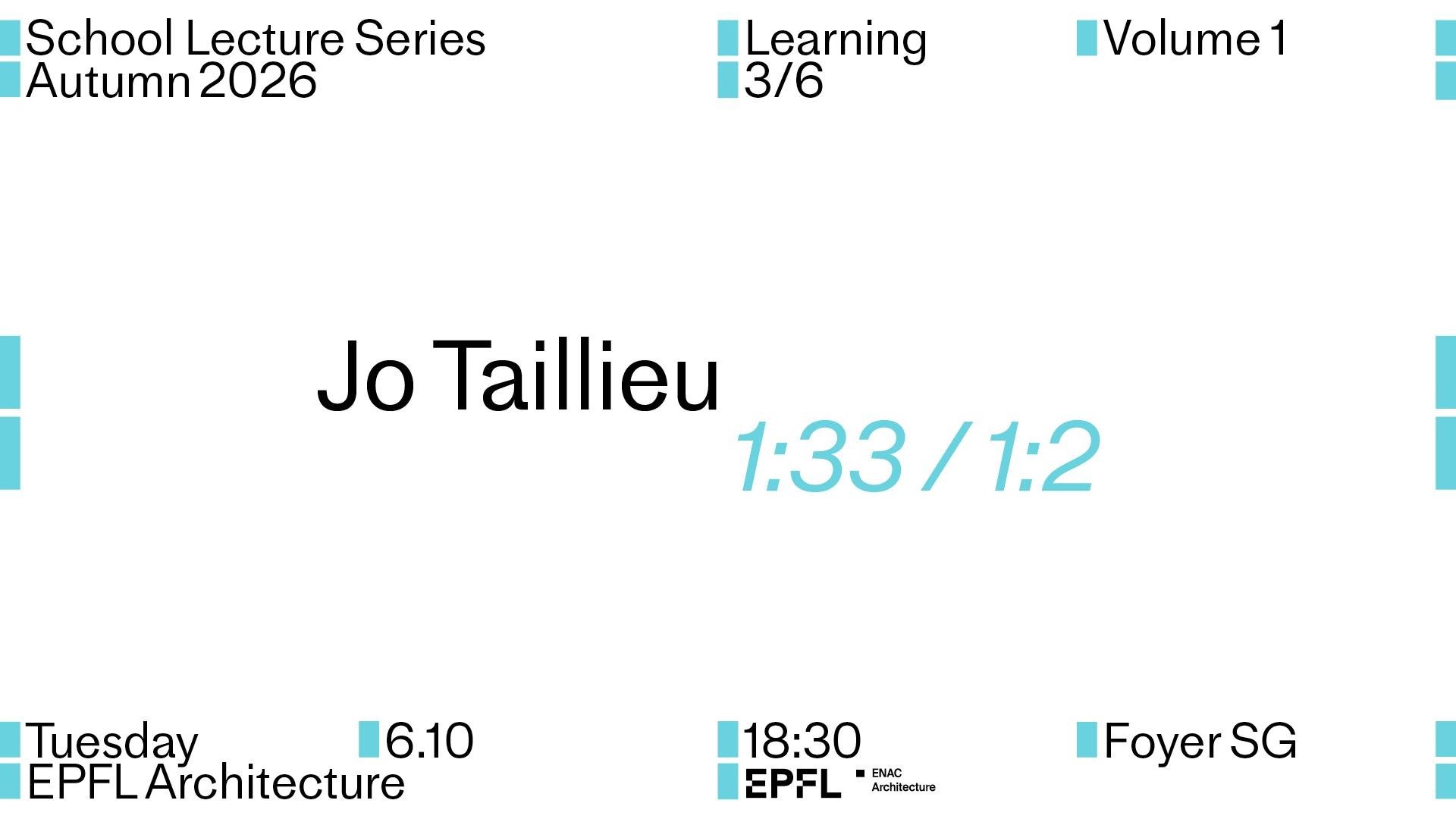
{ "count": 259, "next": "https://memento.epfl.ch/api/v1/events/?format=api&limit=10&offset=190&ordering=description", "previous": "https://memento.epfl.ch/api/v1/events/?format=api&limit=10&offset=170&ordering=description", "results": [ { "id": 72771, "title": "Document selection: Do robots dream of working alongside humans?", "slug": "document-selection-do-robots-dream-of-working-alon", "event_url": "https://memento.epfl.ch/event/document-selection-do-robots-dream-of-working-alon", "visual_url": "https://memento.epfl.ch/image/33986/200x112.jpg", "visual_large_url": "https://memento.epfl.ch/image/33986/720x405.jpg", "visual_maxsize_url": "https://memento.epfl.ch/image/33986/max-size.jpg", "lang": "en", "start_date": "2026-10-05", "end_date": "2026-12-07", "start_time": "07:00:00", "end_time": "23:45:00", "description": "<p>What if robots didn’t replace humans, but collaborated with us?<br>\r\n<br>\r\n<strong>On the occasion of the exhibition <a href=\"http://memento.epfl.ch/event/do-robots-dream-of-construction-sites-archizoom--4/\"><em>Do Robots Dream of Construction Sites?</em></a>, </strong><strong>on view</strong> <strong>at Archizoom from 9 September to 5 December 2026, we invite you to explore a selection of scientific and popular science books, as well as science fiction novels dedicated to human-robot interactions, a theme at the heart of the exhibition.</strong><br>\r\n<br>\r\nThis selection offers different perspectives on robotics, automation, work, and the future forms of collaboration between humans and machines.<br>\r\n<br>\r\nAll documents can be borrowed according to the <a href=\"https://www.epfl.ch/campus/library/fr/prets-reservations/#emprunter\">Library’s standard borrowing conditions</a>.<br>\r\n<br>\r\nDiscover the selection at the Espace Découverte from 5 October to 7 December 2026, as well as <a href=\"https://go.epfl.ch/library-robots\">online</a>.<br>\r\n<br>\r\n<strong>Browse the Library's online reading selection:</strong> <strong><a href=\"https://go.epfl.ch/library-robots\">go.epfl.ch/library-robots</a></strong><br>\r\n<br>\r\n<strong>Learn more about the Archizoom exhibition: <a href=\"https://memento.epfl.ch/event/do-robots-dream-of-construction-sites-archizoom--4/\">memento.epfl.ch/event/do-robots-dream-of-construction-sites-archizoom</a></strong><br>\r\n </p>", "image_description": "", "creation_date": "2026-10-05T16:19:16", "last_modification_date": "2026-10-05T16:41:04", "link_label": "Online selection", "link_url": "https://go.epfl.ch/library-robots", "canceled": "False", "cancel_reason": "", "place_and_room": "Espace Découverte", "url_place_and_room": "", "url_online_room": "", "spoken_languages": [ "https://memento.epfl.ch/api/v1/spoken_languages/1/?format=api", "https://memento.epfl.ch/api/v1/spoken_languages/2/?format=api" ], "speaker": "", "organizer": "EPFL Library", "contact": "<a href=\"mailto:[email protected]\">[email protected]</a>", "is_internal": "False", "theme": "", "vulgarization": { "id": 1, "fr_label": "Tout public", "en_label": "General public" }, "registration": { "id": 3, "fr_label": "Entrée libre", "en_label": "Free" }, "keywords": "robots", "file": null, "icalendar_url": "https://memento.epfl.ch/event/export/122072/", "category": { "id": 5, "code": "EXPO", "fr_label": "Expositions", "en_label": "Exhibitions", "activated": true }, "academic_calendar_category": null, "domains": [], "mementos": [ "https://memento.epfl.ch/api/v1/mementos/1/?format=api", "https://memento.epfl.ch/api/v1/mementos/3/?format=api", "https://memento.epfl.ch/api/v1/mementos/4/?format=api", "https://memento.epfl.ch/api/v1/mementos/6/?format=api", "https://memento.epfl.ch/api/v1/mementos/8/?format=api", "https://memento.epfl.ch/api/v1/mementos/45/?format=api", "https://memento.epfl.ch/api/v1/mementos/275/?format=api" ] }, { "id": 70957, "title": "From Data to Dynamics: Machine Learning in Statistical Mechanics and Molecular Simulations", "slug": "from-data-to-dynamics-machine-learning-in-statis-2", "event_url": "https://memento.epfl.ch/event/from-data-to-dynamics-machine-learning-in-statis-2", "visual_url": "https://memento.epfl.ch/image/32346/200x112.jpg", "visual_large_url": "https://memento.epfl.ch/image/32346/720x405.jpg", "visual_maxsize_url": "https://memento.epfl.ch/image/32346/max-size.jpg", "lang": "en", "start_date": "2026-10-14", "end_date": "2026-10-16", "start_time": null, "end_time": null, "description": "<p>You can apply to participate and find all the relevant information (speakers, abstracts, program,...) on the event website: <a href=\"https://www.cecam.org/workshop-details/from-data-to-dynamics-machine-learning-in-statistical-mechanics-and-molecular-simulations-1487\">https://www.cecam.org/workshop-details/from-data-to-dynamics-machine-learning-in-statistical-mechanics-and-molecular-simulations-1487</a>.<br>\r\n<br>\r\nRegistration is required to attend the full event, take part in the social activities and present a poster at the poster session (if any). However, the EPFL community is welcome to attend specific lectures without registration if the topic is of interest to their research. Do not hesitate to contact the <a href=\"mailto:[email protected]\">CECAM Event Manager</a> if you have any question.<br>\r\n<br>\r\n<strong>Description</strong><br>\r\nSince its introduction in the 1970s, molecular dynamics (MD) has become an indispensable computational microscope for studying complex biological systems at atomic resolution. It has enabled detailed investigations into protein folding, conformational dynamics, and ligand binding and unbinding. Over the past decade, increasing computational power has made microsecond-scale simulations routine, producing massive datasets that demand sophisticated analysis strategies [1]. Despite these advances, conventional MD simulations still face a fundamental limitation: many biologically relevant events occur over milliseconds to seconds—timescales largely inaccessible to standard MD.<br>\r\nTo bridge this gap, researchers increasingly turn to enhanced sampling techniques—such as metadynamics and umbrella sampling [2,3]—and coarse-grained (CG) modeling approaches [4]. These methods enable more comprehensive exploration of the system’s free energy landscape, yet their success critically depends on the selection of appropriate reaction coordinates or collective variables (CVs). CVs must capture the slowest, most functionally relevant motions to accurately reflect thermodynamic and kinetic behavior. However, identifying suitable CVs remains one of the field’s most challenging tasks, typically requiring domain expertise and iterative refinement [5, 6].<br>\r\nThis complexity has fueled growing interest in machine learning (ML) techniques, which are now transforming how MD simulations are analyzed, interpreted, and even conducted. ML methods have been applied to automate CV discovery, perform dimensionality reduction, build thermodynamic and kinetic models, and enhance sampling efficiency [7]. These models often employ artificial neural networks or graph neural networks to map high-dimensional molecular configurations—such as Cartesian coordinates or molecular descriptors—into low-dimensional representations suitable for analysis [8].<br>\r\nDepending on the structure and type of data, ML algorithms can be broadly categorized into supervised, unsupervised, and reinforcement learning paradigms [9]. Supervised learning uses labeled input-output pairs to predict properties such as molecular energies or binding affinities [10], while unsupervised learning enables the identification of latent features, such as CVs, directly from data [11].<br>\r\nA cornerstone of modern ML-driven simulation is the development of symmetry-aware molecular representations. The predictive power of ML models hinges on encoding physical symmetries—like rotation and translation—directly into the model. E(3)-equivariant neural networks have emerged as powerful tools for this purpose, significantly improving data efficiency and generalization in learning potential energy surfaces [12]. Ongoing research continues to explore the optimal balance between enforcing strict symmetry and retaining model flexibility.<br>\r\nMeanwhile, breakthroughs in structural prediction—most notably the advent of AlphaFold 3—have revolutionized how researchers obtain initial molecular configurations. AlphaFold now provides remarkably accurate models of not only proteins but also their complexes with nucleic acids, ions, and small-molecule ligands [13]. However, these are static snapshots. They cannot capture dynamic behaviors, allosteric transitions, or binding kinetics—areas where physics-based simulations remain indispensable. Initial benchmarks suggest that even state-of-the-art predictors still fall short in modeling protein dynamics and ranking ligand binding affinities, further emphasizing the role of MD [14].<br>\r\nTo address the dimensionality and sampling bottlenecks, unsupervised ML approaches such as time-lagged autoencoders have reframed CV identification as a data-driven task. More recently, generative models—including diffusion models and variational autoencoders—have emerged as a new frontier. These models can learn the full conformational landscape of biomolecules and enable enhanced sampling, in some cases eliminating the need for predefined CVs altogether [15].<br>\r\nOnce accurate structural models and CVs are established, ML can significantly improve the estimation of thermodynamic and kinetic properties. In drug discovery, for instance, predicting protein–ligand binding affinity remains a central challenge. ML potentials trained on quantum mechanical data can be combined with enhanced sampling to yield highly accurate free energy landscapes and binding kinetics—results previously unattainable due to computational limitations [16]. However, challenges in data quality, model interpretability, and transferability remain critical areas of ongoing investigation [17].<br>\r\nFinally, ML is driving a renaissance in CG modeling. Deep neural networks can now learn many-body CG potentials directly from all-atom simulations, capturing emergent properties and enhancing transferability [18]. These models open the door to longer, larger-scale simulations with greater physical accuracy.<br>\r\nIn this rapidly evolving context, it becomes imperative to critically assess both the promise and limitations of ML in biomolecular simulation. The excitement surrounding these developments must be tempered by careful validation and benchmarking. This workshop thus serves as a timely opportunity—especially for early-career researchers—to explore these cutting-edge methods, engage in constructive dialogue, and chart new directions in the application of machine learning to molecular dynamics and drug discovery.<br>\r\n <br>\r\n<strong>References</strong><br>\r\n<br>\r\n<a href=\"https://doi.org/10.1103/physrevlett.98.146401\" target=\"_blank\">[1] J. Behler, M. Parrinello, Phys. Rev. Lett., <strong>98</strong>, 146401 (2007)</a><br>\r\n<a href=\"https://doi.org/10.1016/j.sbi.2024.102972\" target=\"_blank\">[2] P. Sahrmann, G. Voth, Current Opinion in Structural Biology, <strong>90</strong>, 102972 (2025)</a><br>\r\n<a href=\"https://doi.org/10.1021/acs.jcim.2c01127\" target=\"_blank\">[3] K. Kříž, L. Schmidt, A. Andersson, M. Walz, D. van der Spoel, J. Chem. Inf. Model., <strong>63</strong>, 412-431 (2023)</a><br>\r\n<a href=\"https://doi.org/10.3389/fmolb.2022.899805\" target=\"_blank\">[4] K. Ahmad, A. Rizzi, R. Capelli, D. Mandelli, W. Lyu, P. Carloni, Front. Mol. Biosci., <strong>9</strong>, (2022)</a><br>\r\n<a href=\"https://doi.org/10.1146/annurev-physchem-083122-125941\" target=\"_blank\">[5] S. Mehdi, Z. Smith, L. Herron, Z. Zou, P. Tiwary, Annual Review of Physical Chemistry, <strong>75</strong>, 347-370 (2024)</a><br>\r\n<a href=\"https://doi.org/10.1101/2025.04.07.647682\" target=\"_blank\">[6] H. Zheng, H. Lin, A. Alade, J. Chen, E. Monroy, M. Zhang, J. Wang, AlphaFold3 in Drug Discovery: A Comprehensive Assessment of Capabilities, Limitations, and Applications, 2025</a><br>\r\n<a href=\"https://doi.org/10.1038/s41586-024-07487-w\" target=\"_blank\">[7] J. Abramson, J. Adler, J. Dunger, R. Evans, T. Green, A. Pritzel, O. Ronneberger, L. Willmore, A. Ballard, J. Bambrick, S. Bodenstein, D. Evans, C. Hung, M. O’Neill, D. Reiman, K. Tunyasuvunakool, Z. Wu, A. Žemgulytė, E. Arvaniti, C. Beattie, O. Bertolli, A. Bridgland, A. Cherepanov, M. Congreve, A. Cowen-Rivers, A. Cowie, M. Figurnov, F. Fuchs, H. Gladman, R. Jain, Y. Khan, C. Low, K. Perlin, A. Potapenko, P. Savy, S. Singh, A. Stecula, A. Thillaisundaram, C. Tong, S. Yakneen, E. Zhong, M. Zielinski, A. Žídek, V. Bapst, P. Kohli, M. Jaderberg, D. Hassabis, J. Jumper, Nature, <strong>630</strong>, 493-500 (2024)</a><br>\r\n[8] Fabian B. Fuchs, Daniel E. Worrall, Volker Fischer, Max Welling, NIPS'20: Proceedings of the 34th International Conference on Neural Information Processing Systems, Article No.: 166, Pages 1970 - 1981 (2020)<br>\r\n<a href=\"https://doi.org/10.1080/00268976.2020.1737742\" target=\"_blank\">[9] H. Sidky, W. Chen, A. Ferguson, Molecular Physics, <strong>118</strong>, (2020)</a><br>\r\n<a href=\"https://doi.org/10.1016/j.sbi.2019.12.016\" target=\"_blank\">[10] Y. Wang, J. Lamim Ribeiro, P. Tiwary, Current Opinion in Structural Biology, <strong>61</strong>, 139-145 (2020)</a><br>\r\n<a href=\"https://doi.org/10.1038/s41586-018-0337-2\" target=\"_blank\">[11] K. Butler, D. Davies, H. Cartwright, O. Isayev, A. Walsh, Nature, <strong>559</strong>, 547-555 (2018)</a><br>\r\n<a href=\"https://doi.org/10.1146/annurev-physchem-042018-052331\" target=\"_blank\">[12] F. Noé, A. Tkatchenko, K. Müller, C. Clementi, Annu. Rev. Phys. Chem., <strong>71</strong>, 361-390 (2020)</a><br>\r\n<a href=\"https://doi.org/10.1080/23746149.2021.2006080\" target=\"_blank\">[13] S. Kaptan, I. Vattulainen, Advances in Physics: X, <strong>7</strong>, (2022)</a><br>\r\n<a href=\"https://doi.org/10.1002/wcms.1455\" target=\"_blank\">[14] V. Limongelli, WIREs. Comput. Mol. Sci., <strong>10</strong>, (2020)</a><br>\r\n<a href=\"https://doi.org/10.1021/acs.chemrev.0c01195\" target=\"_blank\">[15] A. Glielmo, B. Husic, A. Rodriguez, C. Clementi, F. Noé, A. Laio, Chem. Rev., <strong>121</strong>, 9722-9758 (2021)</a><br>\r\n<a href=\"https://doi.org/10.1016/j.sbi.2018.11.005\" target=\"_blank\">[16] A. Pak, G. Voth, Current Opinion in Structural Biology, <strong>52</strong>, 119-126 (2018)</a><br>\r\n<a href=\"https://doi.org/10.1021/jacs.6b05602\" target=\"_blank\">[17] M. Lelimousin, V. Limongelli, M. Sansom, J. Am. Chem. Soc., <strong>138</strong>, 10611-10622 (2016)</a><br>\r\n<a href=\"https://doi.org/10.3390/e16010163\" target=\"_blank\">[18] C. Abrams, G. Bussi, Entropy, <strong>16</strong>, 163-199 (2013)</a>\r\n</p><div class=\"active tab-pane\"> </div>", "image_description": "", "creation_date": "2026-01-26T16:07:22", "last_modification_date": "2026-01-26T16:45:31", "link_label": "From Data to Dynamics: Machine Learning in Statistical Mechanics and Molecular Simulations", "link_url": "https://www.cecam.org/workshop-details/from-data-to-dynamics-machine-learning-in-statistical-mechanics-and-molecular-simulations-1487", "canceled": "False", "cancel_reason": "", "place_and_room": "Aula Magna, USI Lugano", "url_place_and_room": "https://www.desk.usi.ch/en/lugano-campus-map-access-facilities", "url_online_room": "", "spoken_languages": [ "https://memento.epfl.ch/api/v1/spoken_languages/2/?format=api" ], "speaker": "", "organizer": "<strong>Daniele Angioletti, </strong>Università della Svizzera Italiana (USI) ; <strong>Vincenzo Maria D'Amore, </strong>University of Naples \"Federico II\" ; <strong>Marco De Vivo, </strong>Istituto Italiano di Tecnologia ; <strong>Francesco Saverio Di Leva, </strong>University of Naples Federico II ; <strong>Vittorio Limongelli, </strong>Università della Svizzera Italiana USI Lugano ; <strong>Gregory Voth, </strong>University of Chicago", "contact": "<a href=\"mailto:[email protected]\"><strong>Cornelia Bujenita</strong></a>, CECAM Events and Operations Manager", "is_internal": "False", "theme": "", "vulgarization": { "id": 2, "fr_label": "Public averti", "en_label": "Informed public" }, "registration": { "id": 1, "fr_label": "Sur inscription", "en_label": "Registration required" }, "keywords": "", "file": null, "icalendar_url": "https://memento.epfl.ch/event/export/119454/", "category": { "id": 1, "code": "CONF", "fr_label": "Conférences - Séminaires", "en_label": "Conferences - Seminars", "activated": true }, "academic_calendar_category": null, "domains": [], "mementos": [ "https://memento.epfl.ch/api/v1/mementos/1/?format=api", "https://memento.epfl.ch/api/v1/mementos/5/?format=api", "https://memento.epfl.ch/api/v1/mementos/6/?format=api", "https://memento.epfl.ch/api/v1/mementos/8/?format=api", "https://memento.epfl.ch/api/v1/mementos/27/?format=api" ] }, { "id": 70956, "title": "G protein-coupled receptors functional dynamics revealed by experimental and computational structural data", "slug": "g-protein-coupled-receptors-functional-dynamics-re", "event_url": "https://memento.epfl.ch/event/g-protein-coupled-receptors-functional-dynamics-re", "visual_url": "https://memento.epfl.ch/image/32345/200x112.jpg", "visual_large_url": "https://memento.epfl.ch/image/32345/720x405.jpg", "visual_maxsize_url": "https://memento.epfl.ch/image/32345/max-size.jpg", "lang": "en", "start_date": "2026-10-07", "end_date": "2026-10-09", "start_time": null, "end_time": null, "description": "<p>You can apply to participate and find all the relevant information (speakers, abstracts, program,...) on the event website: <a href=\"https://www.cecam.org/workshop-details/g-protein-coupled-receptors-functional-dynamics-revealed-by-experimental-and-computational-structural-data-1488\">https://www.cecam.org/workshop-details/g-protein-coupled-receptors-functional-dynamics-revealed-by-experimental-and-computational-structural-data-1488</a>.<br>\r\n<br>\r\nRegistration is required to attend the full event, take part in the social activities and present a poster at the poster session (if any). However, the EPFL community is welcome to attend specific lectures without registration if the topic is of interest to their research. Do not hesitate to contact the <a href=\"mailto:[email protected]\">CECAM Event Manager</a> if you have any question.<br>\r\n<br>\r\n<strong>Description</strong><br>\r\n<br>\r\nG protein-coupled receptors (GPCRs) represent a vast and diverse class of transmembrane proteins that orchestrate a wide range of physiological processes by responding to both endogenous and exogenous ligands [1,2]. These receptors are essential to critical functions such as metabolism, immune regulation, neuronal signaling, and sensory perception - including vision and olfaction. Due to their physiological relevance and membrane accessibility, GPCRs are the targets of approximately 34% of all prescribed medications, accounting for nearly 27% of the global pharmaceutical market [3]. <br>\r\nDespite their pharmaceutical importance, key aspects of GPCR function remain elusive. The canonical activation model posits that agonist binding to the extracellular orthosteric site triggers allosteric changes - most notably, the outward displacement of transmembrane helices 5 (TM5) and 6 (TM6) on the intracellular side - ultimately leading to receptor activation [2-4]. However, recent evidence suggests a more nuanced mechanism. In several GPCRs, activation appears to involve cooperative engagement between the agonist and the G protein. For example, the G protein may disrupt an \"inactivating ionic lock\" - a salt bridge between TM3 and TM6 - while the agonist stabilizes the active conformation. In some receptors, this is complemented by the formation of an “activating ionic lock” between TM5 and TM6 [5-8]. These dual contributions are considered thermodynamically essential for full activation [7].<br>\r\nAdding further complexity, GPCR activity is regulated by conformational microswitches and finely tuned intra-protein interaction networks. These dynamic rearrangements are difficult to capture and often elude direct correlation with functional outcomes. Moreover, allosteric ligands - which bind sites distinct from the orthosteric pocket - are being increasingly identified [9-12], along with small molecules capable of biased signaling, i.e., preferential activation of specific intracellular pathways [11-13, 16, 17]. These findings reveal a rich and underexplored conformational landscape that governs GPCR signaling. In addition, native membrane components—such as lipids and interacting proteins, including GPCR oligomers—are known to significantly modulate receptor function [11, 18-22].<br>\r\nTo disentangle these intricacies, computational modeling has become indispensable, offering atomistic insight into GPCR conformational dynamics and mechanistic understanding [1-2, 7, 11, 14, 16–21, 23]. Nevertheless, key questions remain - particularly regarding the structural basis of biased signaling, strategies for leveraging allosteric networks in pharmacology, and the modulatory role of the lipid environment. Addressing these gaps is crucial for both fundamental biology and the rational design of next-generation GPCR-targeting drugs with improved selectivity and safety profiles. <br>\r\nThese scientific challenges form the foundation of our upcoming workshop, which will focus on the latest experimental and computational approaches for studying the functional dynamics of GPCRs. Given the profound health, economic, and societal implications of modulating these receptors with precision, we aim to strengthen the interdisciplinary nature of the event by increasing the representation of experimental research and integrating cutting-edge artificial intelligence applications into the program.<br>\r\nBuilding upon the success of the 2022 and 2024 editions - which led to new collaborations and a landmark publication in <em>Nature Reviews Drug Discovery</em> [24] - our goal is to further enhance communication and collaboration between experimentalists and theoreticians. The workshop will serve as a reference point for young scientists and students, offering a platform to interact with leading international experts. We are confident that this initiative will foster insightful discussions and contribute meaningfully to advancing the field of GPCR pharmacology.<br>\r\n<br>\r\n<strong>References</strong><br>\r\n<br>\r\n<a href=\"https://doi.org/10.1038/nrd.2017.229\" target=\"_blank\">[1] J. Smith, R. Lefkowitz, S. Rajagopal, Nat. Rev. Drug. Discov., <strong>17</strong>, 243-260 (2018)</a><br>\r\n<a href=\"https://doi.org/10.1038/s41573-024-01083-3\" target=\"_blank\">[2] P. Conflitti, E. Lyman, M. Sansom, P. Hildebrand, H. Gutiérrez-de-Terán, P. Carloni, T. Ansell, S. Yuan, P. Barth, A. Robinson, C. Tate, D. Gloriam, S. Grzesiek, M. Eddy, S. Prosser, V. Limongelli, Nat. Rev. Drug. Discov., <strong>24</strong>, 251-275 (2025)</a><br>\r\n<a href=\"https://doi.org/10.1038/s41589-024-01682-6\" target=\"_blank\">[3] L. Picard, A. Orazietti, D. Tran, A. Tucs, S. Hagimoto, Z. Qi, S. Huang, K. Tsuda, A. Kitao, A. Sljoka, R. Prosser, Nat. Chem. Biol., <strong>21</strong>, 71-79 (2024)</a><br>\r\n<a href=\"https://doi.org/10.1016/j.drudis.2020.10.006\" target=\"_blank\">[4] B. Huang, C. St. Onge, H. Ma, Y. Zhang, Drug Discovery Today, <strong>26</strong>, 189-199 (2021)</a><br>\r\n<a href=\"https://doi.org/10.1038/s41467-023-42082-z\" target=\"_blank\">[5] D. Di Marino, P. Conflitti, S. Motta, V. Limongelli, Nat. Commun., <strong>14</strong>, 6439 (2023)</a><br>\r\n<a href=\"https://doi.org/10.1016/j.ceb.2018.10.007\" target=\"_blank\">[6] G. Milligan, R. Ward, S. Marsango, Current Opinion in Cell Biology, <strong>57</strong>, 40-47 (2019)</a><br>\r\n<a href=\"https://doi.org/10.7554/elife.73901\" target=\"_blank\">[7] S. Huang, O. Almurad, R. Pejana, Z. Morrison, A. Pandey, L. Picard, M. Nitz, A. Sljoka, R. Prosser, eLife, <strong>11</strong>, (2022)</a><br>\r\n<a href=\"https://doi.org/10.1146/annurev-pharmtox-010919-023411\" target=\"_blank\">[8] A. Duncan, W. Song, M. Sansom, Annu. Rev. Pharmacol. Toxicol., <strong>60</strong>, 31-50 (2020)</a><br>\r\n<a href=\"https://doi.org/10.1038/s41467-025-60003-0\" target=\"_blank\">[9] A. Morales-Pastor, T. Miljuš, M. Dieguez-Eceolaza, T. Stępniewski, V. Ledesma-Martin, F. Heydenreich, T. Flock, B. Plouffe, C. Le Gouill, J. Duchaine, D. Sykes, C. Nicholson, E. Koers, W. Guba, A. Rufer, U. Grether, M. Bouvier, D. Veprintsev, J. Selent, Nat. Commun., <strong>16</strong>, 5265 (2025)</a><br>\r\n<a href=\"https://doi.org/10.1038/s41586-022-05588-y\" target=\"_blank\">[10] A. Faouzi, H. Wang, S. Zaidi, J. DiBerto, T. Che, Q. Qu, M. Robertson, M. Madasu, A. El Daibani, B. Varga, T. Zhang, C. Ruiz, S. Liu, J. Xu, K. Appourchaux, S. Slocum, S. Eans, M. Cameron, R. Al-Hasani, Y. Pan, B. Roth, J. McLaughlin, G. Skiniotis, V. Katritch, B. Kobilka, S. Majumdar, Nature, <strong>613</strong>, 767-774 (2022)</a><br>\r\n<a href=\"https://doi.org/10.1038/s41467-022-31652-2\" target=\"_blank\">[11] M. Wall, E. Hill, R. Huckstepp, K. Barkan, G. Deganutti, M. Leuenberger, B. Preti, I. Winfield, S. Carvalho, A. Suchankova, H. Wei, D. Safitri, X. Huang, W. Imlach, C. La Mache, E. Dean, C. Hume, S. Hayward, J. Oliver, F. Zhao, D. Spanswick, C. Reynolds, M. Lochner, G. Ladds, B. Frenguelli, Nat. Commun., <strong>13</strong>, 4150 (2022)</a><br>\r\n<a href=\"https://doi.org/10.1038/s41580-018-0049-3\" target=\"_blank\">[12] D. Wootten, A. Christopoulos, M. Marti-Solano, M. Babu, P. Sexton, Nat. Rev. Mol. Cell. Biol., <strong>19</strong>, 638-653 (2018)</a><br>\r\n<a href=\"https://doi.org/10.1038/s41594-017-0011-7\" target=\"_blank\">[13] D. Hilger, M. Masureel, B. Kobilka, Nat. Struct. Mol. Biol., <strong>25</strong>, 4-12 (2018)</a><br>\r\n<a href=\"https://doi.org/10.1038/s41467-025-57034-y\" target=\"_blank\">[14] D. Aranda-García, T. Stepniewski, M. Torrens-Fontanals, A. García-Recio, M. Lopez-Balastegui, B. Medel-Lacruz, A. Morales-Pastor, A. Peralta-García, M. Dieguez-Eceolaza, D. Sotillo-Nuñez, T. Ding, M. Drabek, C. Jacquemard, J. Jakowiecki, W. Jespers, M. Jiménez-Rosés, V. Jun-Yu-Lim, A. Nicoli, U. Orzel, A. Shahraki, J. Tiemann, V. Ledesma-Martin, F. Nerín-Fonz, S. Suárez-Dou, O. Canal, G. Pándy-Szekeres, J. Mao, D. Gloriam, E. Kellenberger, D. Latek, R. Guixà-González, H. Gutiérrez-de-Terán, I. Tikhonova, P. Hildebrand, M. Filizola, M. Babu, A. Di Pizio, S. Filipek, P. Kolb, A. Cordomi, T. Giorgino, M. Marti-Solano, J. Selent, Nat. Commun., <strong>16</strong>, 2020 (2025)</a><br>\r\n<a href=\"https://doi.org/10.1038/s41586-018-0259-z\" target=\"_blank\">[15] D. Thal, A. Glukhova, P. Sexton, A. Christopoulos, Nature, <strong>559</strong>, 45-53 (2018)</a><br>\r\n<a href=\"https://doi.org/10.1016/j.tips.2020.12.005\" target=\"_blank\">[16] L. Slosky, M. Caron, L. Barak, Trends in Pharmacological Sciences, <strong>42</strong>, 283-299 (2021)</a><br>\r\n<a href=\"https://doi.org/10.1016/j.apsb.2023.07.020\" target=\"_blank\">[17] C. Zhu, X. Lan, Z. Wei, J. Yu, J. Zhang, Acta Pharmaceutica Sinica B, <strong>14</strong>, 67-86 (2024)</a><br>\r\n<a href=\"https://doi.org/10.1016/j.chempr.2024.08.004\" target=\"_blank\">[18] V. D’Amore, P. Conflitti, L. Marinelli, V. Limongelli, Chem, <strong>10</strong>, 3678-3698 (2024)</a><br>\r\n<a href=\"https://doi.org/10.1038/s41557-023-01238-6\" target=\"_blank\">[19] A. Mafi, S. Kim, W. Goddard, Nat. Chem., <strong>15</strong>, 1127-1137 (2023)</a><br>\r\n<a href=\"https://doi.org/10.1038/s41594-024-01334-2\" target=\"_blank\">[20] H. Batebi, G. Pérez-Hernández, S. Rahman, B. Lan, A. Kamprad, M. Shi, D. Speck, J. Tiemann, R. Guixà-González, F. Reinhardt, P. Stadler, M. Papasergi-Scott, G. Skiniotis, P. Scheerer, B. Kobilka, J. Mathiesen, X. Liu, P. Hildebrand, Nat. Struct. Mol. Biol., <strong>31</strong>, 1692-1701 (2024)</a><br>\r\n<a href=\"https://doi.org/10.1016/j.cell.2015.04.043\" target=\"_blank\">[21] A. Manglik, T. Kim, M. Masureel, C. Altenbach, Z. Yang, D. Hilger, M. Lerch, T. Kobilka, F. Thian, W. Hubbell, R. Prosser, B. Kobilka, Cell, <strong>161</strong>, 1101-1111 (2015)</a><br>\r\n<a href=\"https://doi.org/10.1016/j.cell.2020.03.003\" target=\"_blank\">[22] M. Congreve, C. de Graaf, N. Swain, C. Tate, Cell, <strong>181</strong>, 81-91 (2020)</a><br>\r\n<a href=\"https://doi.org/10.1038/s41573-025-01139-y\" target=\"_blank\">[23] J. Lorente, A. Sokolov, G. Ferguson, H. Schiöth, A. Hauser, D. Gloriam, Nat. Rev. Drug. Discov., <strong>24</strong>, 458-479 (2025)</a><br>\r\n<a href=\"https://doi.org/10.1111/bph.16495\" target=\"_blank\">[24] M. Lopez‐Balastegui, T. Stepniewski, M. Kogut‐Günthel, A. Di Pizio, M. Rosenkilde, J. Mao, J. Selent, British. J. Pharmacology., <strong>182</strong>, 3211-3224 (2024)</a>\r\n</p><div class=\"active tab-pane\"> </div>", "image_description": "", "creation_date": "2026-01-26T16:00:31", "last_modification_date": "2026-01-26T16:45:08", "link_label": "G protein-coupled receptors functional dynamics revealed by experimental and computational structura", "link_url": "https://www.cecam.org/workshop-details/g-protein-coupled-receptors-functional-dynamics-revealed-by-experimental-and-computational-structural-data-1488", "canceled": "False", "cancel_reason": "", "place_and_room": "Aula Magna, USI Lugano", "url_place_and_room": "https://www.desk.usi.ch/en/lugano-campus-map-access-facilities", "url_online_room": "", "spoken_languages": [ "https://memento.epfl.ch/api/v1/spoken_languages/2/?format=api" ], "speaker": "", "organizer": "<strong>Vittorio Limongelli</strong>, Università della Svizzera Italiana USI Lugano ; <strong>Scott Prosser</strong>, University of Toronto ; <strong>Stefano Raniolo</strong>, Università della Svizzera Italiana ; <strong>Jana Selent</strong>, Hospital Del Mar Medical Research Institute", "contact": "<a href=\"mailto:[email protected]\"><strong>Cornelia Bujenita</strong></a>, CECAM Events and Operations Manager", "is_internal": "False", "theme": "", "vulgarization": { "id": 2, "fr_label": "Public averti", "en_label": "Informed public" }, "registration": { "id": 1, "fr_label": "Sur inscription", "en_label": "Registration required" }, "keywords": "", "file": null, "icalendar_url": "https://memento.epfl.ch/event/export/119453/", "category": { "id": 1, "code": "CONF", "fr_label": "Conférences - Séminaires", "en_label": "Conferences - Seminars", "activated": true }, "academic_calendar_category": null, "domains": [], "mementos": [ "https://memento.epfl.ch/api/v1/mementos/1/?format=api", "https://memento.epfl.ch/api/v1/mementos/5/?format=api", "https://memento.epfl.ch/api/v1/mementos/6/?format=api", "https://memento.epfl.ch/api/v1/mementos/8/?format=api", "https://memento.epfl.ch/api/v1/mementos/27/?format=api" ] }, { "id": 72315, "title": "EPFL Investor Day 2026", "slug": "epfl-investor-day-2026-2", "event_url": "https://memento.epfl.ch/event/epfl-investor-day-2026-2", "visual_url": "https://memento.epfl.ch/image/33578/200x112.jpg", "visual_large_url": "https://memento.epfl.ch/image/33578/720x405.jpg", "visual_maxsize_url": "https://memento.epfl.ch/image/33578/max-size.jpg", "lang": "en", "start_date": "2026-11-25", "end_date": "2026-11-25", "start_time": "15:15:00", "end_time": "19:00:00", "description": "<p> <br>\r\nEPFL Investor Day 2026 brings together leading investors and ambitious deeptech startups from EPFL and across Western Switzerland.<br>\r\n<br>\r\nTaking place on Wednesday, <strong>25 November 2026</strong> at the SwissTech Convention Center, the event is structured in two parts:\r\n</p><ul>\r\n\t<li><u>A private morning session</u>: reserved for invited investors and selected entrepreneurs,\r\n\t<ul>\r\n\t\t<li>featuring startup pitches, curated one-on-one meetings and targeted networking opportunities.</li>\r\n\t</ul>\r\n\t</li>\r\n\t<li><u>An afternoon session:</u> open to everyone,\r\n\t<ul>\r\n\t\t<li>featuring inspiring keynotes, panel discussions and pitches from promising EPFL projects and startups in creation.</li>\r\n\t</ul>\r\n\t</li>\r\n</ul>\r\nWhether you are an investor, entrepreneur, researcher, student or innovation enthusiast, the afternoon programme offers a unique opportunity to discover emerging technologies and meet the people shaping tomorrow’s industries.<br>\r\n<br>\r\n<strong>Programme</strong><br>\r\nMorning session - By invitation only - Reserved for investors and selected entrepreneurs.\r\n<ul>\r\n\t<li>08:45 - Registration and welcome coffee</li>\r\n\t<li>09:30 - Opening address</li>\r\n\t<li>09:45 - Startup pitch sessions</li>\r\n\t<li>12:30 - Networking lunch</li>\r\n\t<li>From 13:00 - One-on-one meetings</li>\r\n\t<li>14:30 - Lab discovery tour for investors</li>\r\n</ul>\r\nAfternoon session - Open to everyone<br>\r\n<a href=\"https://www.b2match.com/e/investor-day-2026\">Registere here</a>, use this code: <strong>PlenaryID26</strong>\r\n\r\n<ul>\r\n\t<li>15:15 - Doors open</li>\r\n\t<li>15:30 - Conference: European Spinout Report</li>\r\n\t<li>16:00 - Keynotes and panel discussions</li>\r\n\t<li>17:30 - Startups in Creation pitch session</li>\r\n\t<li>18:00 - Closing remarks and networking aperitif</li>\r\n</ul>\r\n<br>\r\n<a href=\"https://www.epfl.ch/innovation/startup/community/events/investor-day/\">Programme and further information</a><br>\r\n<br>\r\nEPFL Investor Day 2026 is organised with <a href=\"https://www.ubs.com/ch/en/wealth-management/investment/products/private-investor-circle.html\">UBS </a>as main partner and with the support of <a href=\"https://ventures.swisscom.com/\">Swisscom Ventures</a> and the <a href=\"https://www.invest-vaud.ch/\">Canton of Vaud</a>.<br>\r\n<br>\r\n ", "image_description": "", "creation_date": "2026-08-07T16:24:50", "last_modification_date": "2026-09-23T09:16:06", "link_label": "Webpage", "link_url": "https://www.epfl.ch/innovation/startup/community/events/investor-day/", "canceled": "False", "cancel_reason": "", "place_and_room": "SwissTech Convention Center", "url_place_and_room": "https://plan.epfl.ch/?room==STCC%200%209407", "url_online_room": "", "spoken_languages": [ "https://memento.epfl.ch/api/v1/spoken_languages/2/?format=api" ], "speaker": "", "organizer": "Vice Presidency for Innovation and Impact", "contact": "<a href=\"mailto:[email protected]\">Aurelie Schick</a>", "is_internal": "False", "theme": "", "vulgarization": { "id": 2, "fr_label": "Public averti", "en_label": "Informed public" }, "registration": { "id": 1, "fr_label": "Sur inscription", "en_label": "Registration required" }, "keywords": "", "file": null, "icalendar_url": "https://memento.epfl.ch/event/export/121390/", "category": { "id": 1, "code": "CONF", "fr_label": "Conférences - Séminaires", "en_label": "Conferences - Seminars", "activated": true }, "academic_calendar_category": null, "domains": [], "mementos": [ "https://memento.epfl.ch/api/v1/mementos/1/?format=api", "https://memento.epfl.ch/api/v1/mementos/6/?format=api", "https://memento.epfl.ch/api/v1/mementos/119/?format=api", "https://memento.epfl.ch/api/v1/mementos/290/?format=api", "https://memento.epfl.ch/api/v1/mementos/416/?format=api", "https://memento.epfl.ch/api/v1/mementos/422/?format=api" ] }, { "id": 72691, "title": "Apertus for NGOs: A Workshop on Running and Deploying Switzerland's Open-source LLM", "slug": "apertus-for-ngos-a-workshop-on-running-and-deplo-2", "event_url": "https://memento.epfl.ch/event/apertus-for-ngos-a-workshop-on-running-and-deplo-2", "visual_url": "https://memento.epfl.ch/image/33918/200x112.jpg", "visual_large_url": "https://memento.epfl.ch/image/33918/720x405.jpg", "visual_maxsize_url": "https://memento.epfl.ch/image/33918/max-size.jpg", "lang": "en", "start_date": "2026-11-10", "end_date": "2026-11-10", "start_time": "09:00:00", "end_time": "12:30:00", "description": "<p>This workshop is for staff and researchers working in NGOs and non-profits who aim to bring AI into their workflows with an ethical, careful approach. Join us for a hands-on morning of using and deploying the flagship model of the Swiss AI Initiative, learn first hand from the engineers and scientists working on Apertus.<br>\r\n<br>\r\nThe workshop runs from <strong>9:30 to 12:30</strong> at the EPFL AI Center Lounge in Lausanne. Doors open at 9:00.<br>\r\n<br>\r\n<strong>Background</strong>: Apertus is a fully open large language model built in Switzerland, which is fully reproducible and can run on your own infrastructure. As a Foundation Model, it has already been adapted to specific contexts through post-training and fine-tuning processes. In addition to open access at all Swiss academic institutions, a growing number of Swiss and international commercial providers support Apertus for production deployment.<br>\r\n<br>\r\nThis workshop is also designed as a two-way conversation: alongside learning how to use and deploy Apertus, we want to hear how your organization is already working with AI, and where today's tools still fall short for you. We would like to hear about the languages, legal contexts, and use cases you operate in. This input will give us the opportunity to prioritize improvements for non-profit organizations on the Apertus roadmap.<br>\r\n<br>\r\nAt this workshop, you will have the chance to:\r\n</p><ul>\r\n\t<li>See how Apertus, a fully open, Swiss-built LLM, can be deployed on your own infrastructure</li>\r\n\t<li>Get hands-on experience using the technology itself, not just a description of it</li>\r\n\t<li>Tell the team building Apertus where it's falling short for your work, and help shape where it goes next</li>\r\n</ul>\r\nThe morning will include:\r\n\r\n<ul>\r\n\t<li>An introduction to Apertus: what it is, how it works, and why self-hosting is possible</li>\r\n\t<li>A live walkthrough of deploying Apertus on your own infrastructure</li>\r\n\t<li>Hands-on exercises applying Apertus to tasks relevant to your organization</li>\r\n</ul>\r\nExact schedule will be sent to participants closer to the event.<br>\r\n<br>\r\n<u><strong>! <a href=\"https://luma.com/k910o3e1\">REGISTRATION REQUIRED !</a></strong></u>", "image_description": "", "creation_date": "2026-09-28T13:24:00", "last_modification_date": "2026-09-28T13:29:08", "link_label": "Registration required", "link_url": "https://luma.com/k910o3e1", "canceled": "False", "cancel_reason": "", "place_and_room": "ELE 117", "url_place_and_room": "https://plan.epfl.ch/?room==ELE%20117", "url_online_room": "", "spoken_languages": [ "https://memento.epfl.ch/api/v1/spoken_languages/2/?format=api" ], "speaker": "<a href=\"https://luma.com/k910o3e1\">See program</a>", "organizer": "<a href=\"https://www.swiss-ai.org/\">Swiss AI Initiative</a>", "contact": "<a href=\"https://luma.com/user/usr-N7kyqdDP9T2cIhr\">Clara Meister</a> & <a href=\"https://luma.com/user/loleg\">Oleg Lavrovsky</a>", "is_internal": "False", "theme": "", "vulgarization": { "id": 1, "fr_label": "Tout public", "en_label": "General public" }, "registration": { "id": 1, "fr_label": "Sur inscription", "en_label": "Registration required" }, "keywords": "", "file": null, "icalendar_url": "https://memento.epfl.ch/event/export/121957/", "category": { "id": 1, "code": "CONF", "fr_label": "Conférences - Séminaires", "en_label": "Conferences - Seminars", "activated": true }, "academic_calendar_category": null, "domains": [], "mementos": [ "https://memento.epfl.ch/api/v1/mementos/1/?format=api", "https://memento.epfl.ch/api/v1/mementos/5/?format=api", "https://memento.epfl.ch/api/v1/mementos/6/?format=api", "https://memento.epfl.ch/api/v1/mementos/8/?format=api", "https://memento.epfl.ch/api/v1/mementos/416/?format=api" ] }, { "id": 72598, "title": "Pressure Points: Risk - Sonia Seneviratne / RIOT, MAS UTD", "slug": "pressure-points-risk-sonia-seneviratne-riot-mas-ut", "event_url": "https://memento.epfl.ch/event/pressure-points-risk-sonia-seneviratne-riot-mas-ut", "visual_url": "https://memento.epfl.ch/image/33842/200x112.jpg", "visual_large_url": "https://memento.epfl.ch/image/33842/720x405.jpg", "visual_maxsize_url": "https://memento.epfl.ch/image/33842/max-size.jpg", "lang": "en", "start_date": "2026-10-26", "end_date": "2026-10-26", "start_time": "17:00:00", "end_time": "19:00:00", "description": "<p>“To emphasize (...) dubious uses of risk is perverse, a dirty way of talking about a<br>\r\nclean scientific subject”<br>\r\nMary Douglas, <em>Risk and Blame,</em> 36.<br>\r\n<br>\r\nAs the baseline condition of so many territories shaped by extractive industries, administrative delay, and climatic instability, risk is prevalent. Yet ecological risk—pollution, fires, floods, heatwaves, droughts—is still presented as problems to be solved rather than conditions to be inhabited. This also speaks to an outsourcing of risk through externalized consequences of spatial injustice. Banks, developers, material supply chains, normative institutions, subcontracting hierarchies —all contend with calculated risk. This edition of <u>Pressure Points</u> asks us to unpack what it means to live with the risk, how it is managed, commodified, quantified, invented, politicized, instrumentalized, tamed, and to think, design, cohabitate intellectually and physically with it. The assembled guests should help us think and build literacy toward developing tools for living within uncertain territories and futures. <br>\r\n<br>\r\n<u>Sonia Seneviratne</u><br>\r\nMonday, October 26, 17:00 CET<br>\r\n<br>\r\n<a href=\"https://usys.ethz.ch/en/people/profile.seneviratne.html\"><u>Sonia Seneviratne</u></a> is a Full Professor in Land-Climate Dynamics at ETH Zurich, with a focus on climate science and environmental physics. She conducts research on climate extremes such as droughts, land-climate processes, and human-induced climate change, based on climate modelling and data analyses. Listed among the Highly Cited Researchers of Web of Science (Clarivate) since 2014, she was a Coordinating Lead Author and Lead Author on several reports of the Intergovernmental Panel on Climate Change (IPCC), including the Special Report on Extreme Events, the Special Report on Global Warming of 1.5°C, and the Sixth Assessment Report in 2021. Seneviratne has received the Macelwane Medal of the American Geophysical Union in 2013 and the Hans-Oeschger Medal of the European Geosciences Union. Since July 2023, she serves as IPCC Working Group I Vice-Chair for the seventh assessment cycle (2023–2030). Her most recent contribution, published in June 2026, is the release of MESMER v1.0.0, an open-source climate model emulator she helped develop as part of her research group. It reproduces the spatial climate patterns of complex Earth System Models, including temperature and several climate-extreme indicators, making detailed climate information accessible to the wider research community.<br>\r\n<br>\r\n<a href=\"https://www.riot.today/\">RIOT (Research and Innovation on Territory)</a> is a laboratory engaged in pedagogy and research within the Institute of Architecture (ENAC) at the Swiss Federal Institute of Technology–EPFL, led by Charlotte Malterre-Barthes with Elif Erez, Flore Guichot, Jeremy Ratib, Summer Islam, Antoine Iweins, Kathy Kao, Nathalie Marj, Romain Dubetier-Grenier, Sylvie Clavel, and Saira Mohammed. Believing that the construction sector and design disciplines must pivot and wholeheartedly engage in the current social and climatic urgencies by rewiring themselves to face and repair the harm, RIOT utilizes tactics and strategies to decarbonize, decolonize, and depatriarchalize space production–by design. <br>\r\n<br>\r\n </p>", "image_description": "Event poster", "creation_date": "2026-09-16T14:49:25", "last_modification_date": "2026-09-25T13:42:32", "link_label": "", "link_url": "", "canceled": "False", "cancel_reason": "", "place_and_room": "Foyer SG", "url_place_and_room": "", "url_online_room": "", "spoken_languages": [ "https://memento.epfl.ch/api/v1/spoken_languages/2/?format=api" ], "speaker": "<a href=\"https://usys.ethz.ch/en/people/profile.seneviratne.html\"><u>Sonia Seneviratne</u></a> is a Full Professor in Land-Climate Dynamics at ETH Zurich, with a focus on climate science and environmental physics. She conducts research on climate extremes such as droughts, land-climate processes, and human-induced climate change, based on climate modelling and data analyses. Listed among the Highly Cited Researchers of Web of Science (Clarivate) since 2014, she was a Coordinating Lead Author and Lead Author on several reports of the Intergovernmental Panel on Climate Change (IPCC), including the Special Report on Extreme Events, the Special Report on Global Warming of 1.5°C, and the Sixth Assessment Report in 2021. Seneviratne has received the Macelwane Medal of the American Geophysical Union in 2013 and the Hans-Oeschger Medal of the European Geosciences Union. Since July 2023, she serves as IPCC Working Group I Vice-Chair for the seventh assessment cycle (2023–2030). Her most recent contribution, published in June 2026, is the release of MESMER v1.0.0, an open-source climate model emulator she helped develop as part of her research group. It reproduces the spatial climate patterns of complex Earth System Models, including temperature and several climate-extreme indicators, making detailed climate information accessible to the wider research community.", "organizer": "RIOT, MAS UTD", "contact": "Elif Erez, [email protected]", "is_internal": "False", "theme": "", "vulgarization": { "id": 2, "fr_label": "Public averti", "en_label": "Informed public" }, "registration": { "id": 3, "fr_label": "Entrée libre", "en_label": "Free" }, "keywords": "risk, territory, ecology, architecture, spatial justice, material supply chains, extraction", "file": "https://memento.epfl.ch/public/upload/files/2026PressurePointsPosterA3UPDATED_6ceJTqi.jpg", "icalendar_url": "https://memento.epfl.ch/event/export/121825/", "category": { "id": 1, "code": "CONF", "fr_label": "Conférences - Séminaires", "en_label": "Conferences - Seminars", "activated": true }, "academic_calendar_category": null, "domains": [], "mementos": [ "https://memento.epfl.ch/api/v1/mementos/4/?format=api", "https://memento.epfl.ch/api/v1/mementos/32/?format=api" ] }, { "id": 72599, "title": "Pressure Points: Risk - Liam Ross / RIOT, MAS UTD", "slug": "pressure-points-risk-liam-ross-riot-mas-utd", "event_url": "https://memento.epfl.ch/event/pressure-points-risk-liam-ross-riot-mas-utd", "visual_url": "https://memento.epfl.ch/image/33843/200x112.jpg", "visual_large_url": "https://memento.epfl.ch/image/33843/720x405.jpg", "visual_maxsize_url": "https://memento.epfl.ch/image/33843/max-size.jpg", "lang": "en", "start_date": "2026-11-03", "end_date": "2026-11-03", "start_time": "17:00:00", "end_time": "19:00:00", "description": "<p>“To emphasize (...) dubious uses of risk is perverse, a dirty way of talking about a<br>\r\nclean scientific subject”<br>\r\nMary Douglas, <em>Risk and Blame,</em> 36.<br>\r\n<br>\r\nAs the baseline condition of so many territories shaped by extractive industries, administrative delay, and climatic instability, risk is prevalent. Yet ecological risk—pollution, fires, floods, heatwaves, droughts—is still presented as problems to be solved rather than conditions to be inhabited. This also speaks to an outsourcing of risk through externalized consequences of spatial injustice. Banks, developers, material supply chains, normative institutions, subcontracting hierarchies —all contend with calculated risk. This edition of <u>Pressure Points</u> asks us to unpack what it means to live with the risk, how it is managed, commodified, quantified, invented, politicized, instrumentalized, tamed, and to think, design, cohabitate intellectually and physically with it. The assembled guests should help us think and build literacy toward developing tools for living within uncertain territories and futures. <br>\r\n<br>\r\n<u>Liam Ross </u><br>\r\nTuesday, November 3, 17:00 CET<br>\r\n<br>\r\n<a href=\"https://www.eca.ed.ac.uk/profile/dr-liam-ross\"><u>Liam Ross</u></a> is an architect and senior lecturer in Architectural Design at the University of Edinburgh, with a focus on building standardisation as a mode of architectural design, and in particular on fire-safety regulation. He also examines how those standards produce surprising side-effects as they are reinterpreted in practice. His book Pyrotechnic Cities: Architecture, Fire-Safety and Standardisation was published by Routledge in 2022, and describes the way that architectural design is an instrument of political agency. <br>\r\nHis work has been exhibited and published widely, including in Architectural Research Quarterly (arq), Arch+, and journalistic outlets such as Blueprint, Prospect, and Volume.<br>\r\nRoss has experience of practice in the UK and US, including a period of 5 years with Malcolm Fraser Architects, and maintains a relationship with professional practice as co-founder of ESALA Projects, a consultancy offering pro-bono and for-fee design services to public and third-sector clients. His most recent work, published in January 2026 in Architectural Research Quarterly, includes a co-authored article with Jon Goodbun entitled ‘Design and the extended building site: Ecologies of production and the production of ecologies’, which reframes the building site as an 'extended' socioecological system reaching across the global supply chains, material extraction, and labour that construction depends on, arguing that building is an ecological and political process rather than a purely material one.<br>\r\n<br>\r\n<a href=\"https://www.riot.today/\">RIOT (Research and Innovation on Territory)</a> is a laboratory engaged in pedagogy and research within the Institute of Architecture (ENAC) at the Swiss Federal Institute of Technology–EPFL, led by Charlotte Malterre-Barthes with Elif Erez, Flore Guichot, Jeremy Ratib, Summer Islam, Antoine Iweins, Kathy Kao, Nathalie Marj, Romain Dubetier-Grenier, Sylvie Clavel, and Saira Mohammed. Believing that the construction sector and design disciplines must pivot and wholeheartedly engage in the current social and climatic urgencies by rewiring themselves to face and repair the harm, RIOT utilizes tactics and strategies to decarbonize, decolonize, and depatriarchalize space production–by design. <br>\r\n </p>", "image_description": "Event poster", "creation_date": "2026-09-16T14:54:57", "last_modification_date": "2026-09-25T13:42:02", "link_label": "", "link_url": "", "canceled": "False", "cancel_reason": "", "place_and_room": "Foyer SG", "url_place_and_room": "", "url_online_room": "", "spoken_languages": [ "https://memento.epfl.ch/api/v1/spoken_languages/2/?format=api" ], "speaker": "<a href=\"https://www.eca.ed.ac.uk/profile/dr-liam-ross\"><u>Liam Ross</u></a> is an architect and senior lecturer in Architectural Design at the University of Edinburgh, with a focus on building standardisation as a mode of architectural design, and in particular on fire-safety regulation. He also examines how those standards produce surprising side-effects as they are reinterpreted in practice. His book Pyrotechnic Cities: Architecture, Fire-Safety and Standardisation was published by Routledge in 2022, and describes the way that architectural design is an instrument of political agency. His work has been exhibited and published widely, including in Architectural Research Quarterly (arq), Arch+, and journalistic outlets such as Blueprint, Prospect, and Volume. Ross has experience of practice in the UK and US, including a period of 5 years with Malcolm Fraser Architects, and maintains a relationship with professional practice as co-founder of ESALA Projects, a consultancy offering pro-bono and for-fee design services to public and third-sector clients. His most recent work, published in January 2026 in Architectural Research Quarterly, includes a co-authored article with Jon Goodbun entitled ‘Design and the extended building site: Ecologies of production and the production of ecologies’, which reframes the building site as an 'extended' socioecological system reaching across the global supply chains, material extraction, and labour that construction depends on, arguing that building is an ecological and political process rather than a purely material one.", "organizer": "RIOT, MAS UTD", "contact": "Elif Erez, [email protected]", "is_internal": "False", "theme": "", "vulgarization": { "id": 2, "fr_label": "Public averti", "en_label": "Informed public" }, "registration": { "id": 3, "fr_label": "Entrée libre", "en_label": "Free" }, "keywords": "risk, territory, ecology, architecture, spatial justice, material supply chains, extraction", "file": "https://memento.epfl.ch/public/upload/files/2026PressurePointsPosterA3UPDATED_a2BW9qX.jpg", "icalendar_url": "https://memento.epfl.ch/event/export/121826/", "category": { "id": 1, "code": "CONF", "fr_label": "Conférences - Séminaires", "en_label": "Conferences - Seminars", "activated": true }, "academic_calendar_category": null, "domains": [], "mementos": [ "https://memento.epfl.ch/api/v1/mementos/4/?format=api", "https://memento.epfl.ch/api/v1/mementos/32/?format=api" ] }, { "id": 72602, "title": "Pressure Points: Risk - Jess Myers / RIOT, MAS UTD", "slug": "pressure-points-risk-jess-myers-riot-mas-utd", "event_url": "https://memento.epfl.ch/event/pressure-points-risk-jess-myers-riot-mas-utd", "visual_url": "https://memento.epfl.ch/image/33846/200x112.jpg", "visual_large_url": "https://memento.epfl.ch/image/33846/720x405.jpg", "visual_maxsize_url": "https://memento.epfl.ch/image/33846/max-size.jpg", "lang": "en", "start_date": "2026-11-16", "end_date": "2026-11-16", "start_time": "17:00:00", "end_time": "19:00:00", "description": "<p>“To emphasize (...) dubious uses of risk is perverse, a dirty way of talking about a<br>\r\nclean scientific subject”<br>\r\nMary Douglas, <em>Risk and Blame,</em> 36.<br>\r\n<br>\r\nAs the baseline condition of so many territories shaped by extractive industries, administrative delay, and climatic instability, risk is prevalent. Yet ecological risk—pollution, fires, floods, heatwaves, droughts—is still presented as problems to be solved rather than conditions to be inhabited. This also speaks to an outsourcing of risk through externalized consequences of spatial injustice. Banks, developers, material supply chains, normative institutions, subcontracting hierarchies —all contend with calculated risk. This edition of <u>Pressure Points</u> asks us to unpack what it means to live with the risk, how it is managed, commodified, quantified, invented, politicized, instrumentalized, tamed, and to think, design, cohabitate intellectually and physically with it. The assembled guests should help us think and build literacy toward developing tools for living within uncertain territories and futures.<br>\r\n<br>\r\n<u>Jess Myers</u><br>\r\nMonday, November 16, 17:00 CET<br>\r\n<br>\r\n<a href=\"https://soa.syr.edu/live/profiles/1181-jess-myers\"><u>Jess Myers</u></a> is an urbanist whose practice includes work as an editor, writer, podcaster and curator, and is a tenure-track Assistant Professor at Syracuse University. Previously, Myers was an assistant professor of architecture at the Rhode Island School of Design. She has worked as an archivist, translator and analyst in New York and Paris. Myers served as a co-steward of the Architecture Lobby’s New York chapter and as the series editor for SEIU’s book series, Taking Freedom. Her research takes many forms, including a variety of multimedia platforms, which she uses to explore politics and residency in urban conditions. Myers’ podcast, Here There Be Dragons focuses on the intersection of identity politics and security policy in public space through the eyes of New Yorkers, Parisians and Stockholmers. Myers’ work has been published in The Architect’s Newspaper, Log, The Funambulist Magazine, Failed Architecture, Avery Review, Dwell and l’Architecture d’Aujourd’hui. Her most recent exhibition, “A Pause Is Not A Break,“ was exhibited widely, including at the Rhode Island School of Design, the University of Iowa and Carleton University.<br>\r\n<br>\r\n<a href=\"https://www.riot.today/\">RIOT (Research and Innovation on Territory)</a> is a laboratory engaged in pedagogy and research within the Institute of Architecture (ENAC) at the Swiss Federal Institute of Technology–EPFL, led by Charlotte Malterre-Barthes with Elif Erez, Flore Guichot, Jeremy Ratib, Summer Islam, Antoine Iweins, Kathy Kao, Nathalie Marj, Romain Dubetier-Grenier, Sylvie Clavel, and Saira Mohammed. Believing that the construction sector and design disciplines must pivot and wholeheartedly engage in the current social and climatic urgencies by rewiring themselves to face and repair the harm, RIOT utilizes tactics and strategies to decarbonize, decolonize, and depatriarchalize space production–by design.<br>\r\n </p>", "image_description": "Event Poster", "creation_date": "2026-09-16T15:33:36", "last_modification_date": "2026-09-25T13:41:15", "link_label": "", "link_url": "", "canceled": "False", "cancel_reason": "", "place_and_room": "Foyer SG", "url_place_and_room": "", "url_online_room": "", "spoken_languages": [ "https://memento.epfl.ch/api/v1/spoken_languages/2/?format=api" ], "speaker": "<a href=\"https://soa.syr.edu/live/profiles/1181-jess-myers\"><u>Jess Myers</u></a> is an urbanist whose practice includes work as an editor, writer, podcaster and curator, and is a tenure-track Assistant Professor at Syracuse University. Previously, Myers was an assistant professor of architecture at the Rhode Island School of Design. She has worked as an archivist, translator and analyst in New York and Paris. Myers served as a co-steward of the Architecture Lobby’s New York chapter and as the series editor for SEIU’s book series, Taking Freedom. Her research takes many forms, including a variety of multimedia platforms, which she uses to explore politics and residency in urban conditions. Myers’ podcast, Here There Be Dragons focuses on the intersection of identity politics and security policy in public space through the eyes of New Yorkers, Parisians and Stockholmers. Myers’ work has been published in The Architect’s Newspaper, Log, The Funambulist Magazine, Failed Architecture, Avery Review, Dwell and l’Architecture d’Aujourd’hui. Her most recent exhibition, “A Pause Is Not A Break,“ was exhibited widely, including at the Rhode Island School of Design, the University of Iowa and Carleton University.", "organizer": "RIOT, MAS UTD", "contact": "Elif Erez, [email protected]", "is_internal": "False", "theme": "", "vulgarization": { "id": 2, "fr_label": "Public averti", "en_label": "Informed public" }, "registration": { "id": 3, "fr_label": "Entrée libre", "en_label": "Free" }, "keywords": "risk, territory, ecology, architecture, spatial justice, material supply chains, extraction", "file": "https://memento.epfl.ch/public/upload/files/2026PressurePointsPosterA3UPDATED.jpg", "icalendar_url": "https://memento.epfl.ch/event/export/121831/", "category": { "id": 1, "code": "CONF", "fr_label": "Conférences - Séminaires", "en_label": "Conferences - Seminars", "activated": true }, "academic_calendar_category": null, "domains": [], "mementos": [ "https://memento.epfl.ch/api/v1/mementos/4/?format=api", "https://memento.epfl.ch/api/v1/mementos/32/?format=api" ] }, { "id": 72346, "title": "School Lecture Series: Jo Taillieu / EPFL Architecture", "slug": "school-lecture-series-jo-taillieu-epfl-architectur", "event_url": "https://memento.epfl.ch/event/school-lecture-series-jo-taillieu-epfl-architectur", "visual_url": "https://memento.epfl.ch/image/33606/200x112.jpg", "visual_large_url": "https://memento.epfl.ch/image/33606/720x405.jpg", "visual_maxsize_url": "https://memento.epfl.ch/image/33606/max-size.jpg", "lang": "en", "start_date": "2026-10-06", "end_date": "2026-10-06", "start_time": "18:30:00", "end_time": "20:00:00", "description": "<strong>1:33/1:2</strong><br>\r\nOne of the most interesting public manifestations of learning in architecture are books about student‘s work. This lecture will present 1:33/1:2 new publication that showcases work by EPFL students. This book is exemplary in representing how learning architecture can be both a school reality and something that continues to inspire the architectural community at large. “About architectural tomography, about the importance of the drawing, about the book presentation 1:33/1:2, and about a special bookselling”<br>\r\n<br>\r\n<strong>Special book sale</strong><br>\r\n1:33/1:2 will be available for purchase at a special reduced student price exclusively on the evening of the lecture. A special opportunity to discover the publication and take home a copy at student price.<br>\r\n<br>\r\n<strong>Jo Taillieu</strong><br>\r\nJo Taillieu is a Belgian architect and professor at EPFL / studio LIF. After early roles at leading European architecture firms, including Maxwan architects (Rotterdam, NL) and Beel-Achtergael architecten (Ghent, BE), he became project director at Stéphane Beel – Xaveer De Geyter, contributing to the design and realisation of several public and private buildings. He later co-led architecten de vylder vinck taillieu, earning international recognition, including the Silver Lion for Promising Young Participant at the 16th Biennale of Venice, before refocusing on his own practice, JTA, from 2019 onward. JTA is worldwide published and awarded.<br>\r\n<br>\r\n<strong>Part of School Lecture Series, Autumn 2026, Learning Vol.1</strong><br>\r\nWe are told that learning is no longer confined to the school or the university, but it has become a continuous process that involves the totality of life. Yet in accepting this reality, we take for granted several questions that loom large within the contemporary idea of learning. In a time when technology and information are ubiquitous, does it still make sense that for learning to happen or be confined within a place? Is learning still an asymmetrical relationship where there are teachers and a student? And above all, is learning accessible, or has it become too expensive a commodity? In this lecture series, we’ll attempt to answer these questions by investigating learning on different levels such as technology, construction systems, educational spaces, and above all, making architecture. Indeed, the question that is more than anything else crucial to us is whether architecture is still a place of learning and not only of empowering those who have capital to build it. We will look at schools, drawings, robots, and measuring devices. We will ponder whether these things are only ‘tools’ to achieve a result or can still be vital places for learning. <br>\r\n<br>\r\n<strong>Recordings available on YouTube</strong><br>\r\n@epflarchitectureschool<br>\r\n<br>\r\n<strong>Graphic Design</strong><br>\r\nRoman Karrer & Sandi Gazic", "image_description": "", "creation_date": "2026-08-14T16:36:48", "last_modification_date": "2026-08-17T13:15:17", "link_label": "Poster School Lecture Series Fall 2026", "link_url": "https://go.epfl.ch/school-lecture-series-fall-2026", "canceled": "False", "cancel_reason": "", "place_and_room": "Foyer SG", "url_place_and_room": "https://plan.epfl.ch/?room=%3DSG%20294.22&dim_floor=2&lang=fr&dim_lang=fr&tree_groups=centres_nevralgiques_grp%2Cmobilite_acces_grp%2Crestauration_et_commerces_grp%2Censeignement%2Cservices_campus_grp%2Cequipements_grp&tree_group_layers_centres_nevralgiques_grp=&tree_group_layers_mobilite_acces_grp=metro&tree_group_layers_restauration_et_commerces_grp=&tree_group_layers_enseignement=guichet_etudiants&tree_group_layers_services_campus_grp=information_epfl&tree_group_layers_equipements_grp=&baselayer_ref=grp_backgrounds&map_x=2532923&map_y=1152547&map_zoom=12", "url_online_room": "", "spoken_languages": [ "https://memento.epfl.ch/api/v1/spoken_languages/2/?format=api" ], "speaker": "Jo Taillieu", "organizer": "<a href=\"http://[email protected]\" target=\"_blank\">EPFL Architecture</a>", "contact": "<a href=\"http://[email protected]\" target=\"_blank\">EPFL Architecture</a>", "is_internal": "False", "theme": "", "vulgarization": { "id": 1, "fr_label": "Tout public", "en_label": "General public" }, "registration": { "id": 3, "fr_label": "Entrée libre", "en_label": "Free" }, "keywords": "", "file": null, "icalendar_url": "https://memento.epfl.ch/event/export/121434/", "category": { "id": 1, "code": "CONF", "fr_label": "Conférences - Séminaires", "en_label": "Conferences - Seminars", "activated": true }, "academic_calendar_category": null, "domains": [], "mementos": [ "https://memento.epfl.ch/api/v1/mementos/4/?format=api", "https://memento.epfl.ch/api/v1/mementos/32/?format=api" ] }, { "id": 72747, "title": "2 Billion years of shelterin and t-loops: from telomere protection to tumor suppression", "slug": "2-billion-years-of-shelterin-and-t-loops-from-telo", "event_url": "https://memento.epfl.ch/event/2-billion-years-of-shelterin-and-t-loops-from-telo", "visual_url": "https://memento.epfl.ch/image/33962/200x112.jpg", "visual_large_url": "https://memento.epfl.ch/image/33962/720x405.jpg", "visual_maxsize_url": "https://memento.epfl.ch/image/33962/max-size.jpg", "lang": "en", "start_date": "2026-11-26", "end_date": "2026-11-26", "start_time": "12:15:00", "end_time": "13:15:00", "description": "<strong>A Lola and John Grace Distinguished Lecture in Cancer Research</strong>\r\n<div class=\"elementor-element elementor-element-98cefd8 elementor-widget elementor-widget-heading\">\r\n<div class=\"elementor-widget-container\">\r\n<div class=\"vita\">Dr. Titia de Lange received training in molecular biology and biochemistry at the University of Amsterdam. As an undergraduate, she did research in Richard Flavell’s lab at the MRC in Mill Hill, UK. She was a graduate student in Piet Borst’s lab in the Department of Biochemistry at the University of Amsterdam and moved with Borst to the Dutch Cancer Center where she first developed an interest in telomeres. After receiving her PhD in 1985, de Lange joined Harold Varmus at UCSF for postdoctoral studies. With Varmus, she isolated human telomeric DNA and was the first to show that human telomeres shorten during tumorigenesis. In 1990, she moved to the Rockefeller to take a position as a University Fellow and was appointed as Assistant Professor in 1991. She was promoted to Associate Professor in 1994 and to Professor in 1997. She currently is the Leon Hess Professor and the Director of the Anderson Center for Cancer Research at the Rockefeller University.<br>\r\n<br>\r\nShe is a member of EMBO, the US National Academy of Science, both Dutch Royal Academies, the American Academy of Arts and Sciences, the US National Academy of Medicine. She is an foreign member of the Royal Society of London and received honorary degrees from the University of Utrecht, the University of Chicago, and the University of Groningen.<br>\r\n<br>\r\nDe Lange’s awards include the inaugural Paul Marks Prize for Cancer Research in 2001, the Massachusetts General Hospital Cancer Center Prize, the Judd award from MSKCC, the AACR’s Charlotte Friend and G.H.A. Clowes Awards, the 2011 Vilcek Prize, the 2012 Vanderbilt Prize, the 2012 Dr. Heineken Prize for Biochemistry and Biophysics, the Breakthrough Prize in Life Sciences in 2013, the 2014 Canada Gairdner International Award, the 2018 Lewis S. Rosenstiel Award, and the 2024 Pezcoller AACR International Award.\r\n<div> </div>\r\n</div>\r\n</div>\r\n</div>\r\n\r\n<div class=\"elementor-element elementor-element-e552a16 elementor-widget elementor-widget-text-editor\">\r\n<div class=\"elementor-widget-container\"> </div>\r\n</div>", "image_description": "", "creation_date": "2026-10-02T09:46:26", "last_modification_date": "2026-10-02T10:44:54", "link_label": "", "link_url": "", "canceled": "False", "cancel_reason": "", "place_and_room": "SV 1717", "url_place_and_room": "https://plan.epfl.ch/?room==SV%201717", "url_online_room": "https://epfl.zoom.us/j/97039045251?pwd=WDFjUGV3Y1FxeG9rTUIrOGpiUXhLQT09", "spoken_languages": [ "https://memento.epfl.ch/api/v1/spoken_languages/2/?format=api" ], "speaker": "<strong>Dr Titia De Lange, </strong>Leon Hess Professor and Director, Anderson Center for Cancer Research, Rockefeller University, USA", "organizer": "Prof. Joachim Lingner", "contact": "Lisa Smith, ISREC Administrative Assistant", "is_internal": "True", "theme": "", "vulgarization": { "id": 2, "fr_label": "Public averti", "en_label": "Informed public" }, "registration": { "id": 3, "fr_label": "Entrée libre", "en_label": "Free" }, "keywords": "Grace Lecture, cancer", "file": null, "icalendar_url": "https://memento.epfl.ch/event/export/122035/", "category": { "id": 1, "code": "CONF", "fr_label": "Conférences - Séminaires", "en_label": "Conferences - Seminars", "activated": true }, "academic_calendar_category": null, "domains": [], "mementos": [ "https://memento.epfl.ch/api/v1/mementos/1/?format=api", "https://memento.epfl.ch/api/v1/mementos/6/?format=api", "https://memento.epfl.ch/api/v1/mementos/9/?format=api", "https://memento.epfl.ch/api/v1/mementos/26/?format=api" ] } ] }