Event List
retrieve:
Return the details about the given Event id.
list:
List all Event objects.
GET /api/v1/events/?format=api&ordering=-last_modification_date
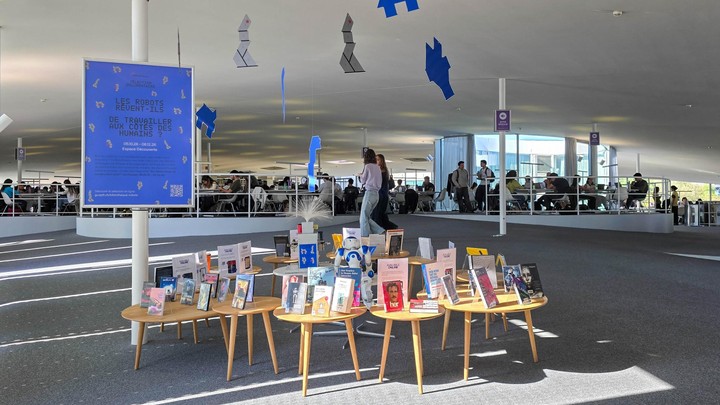
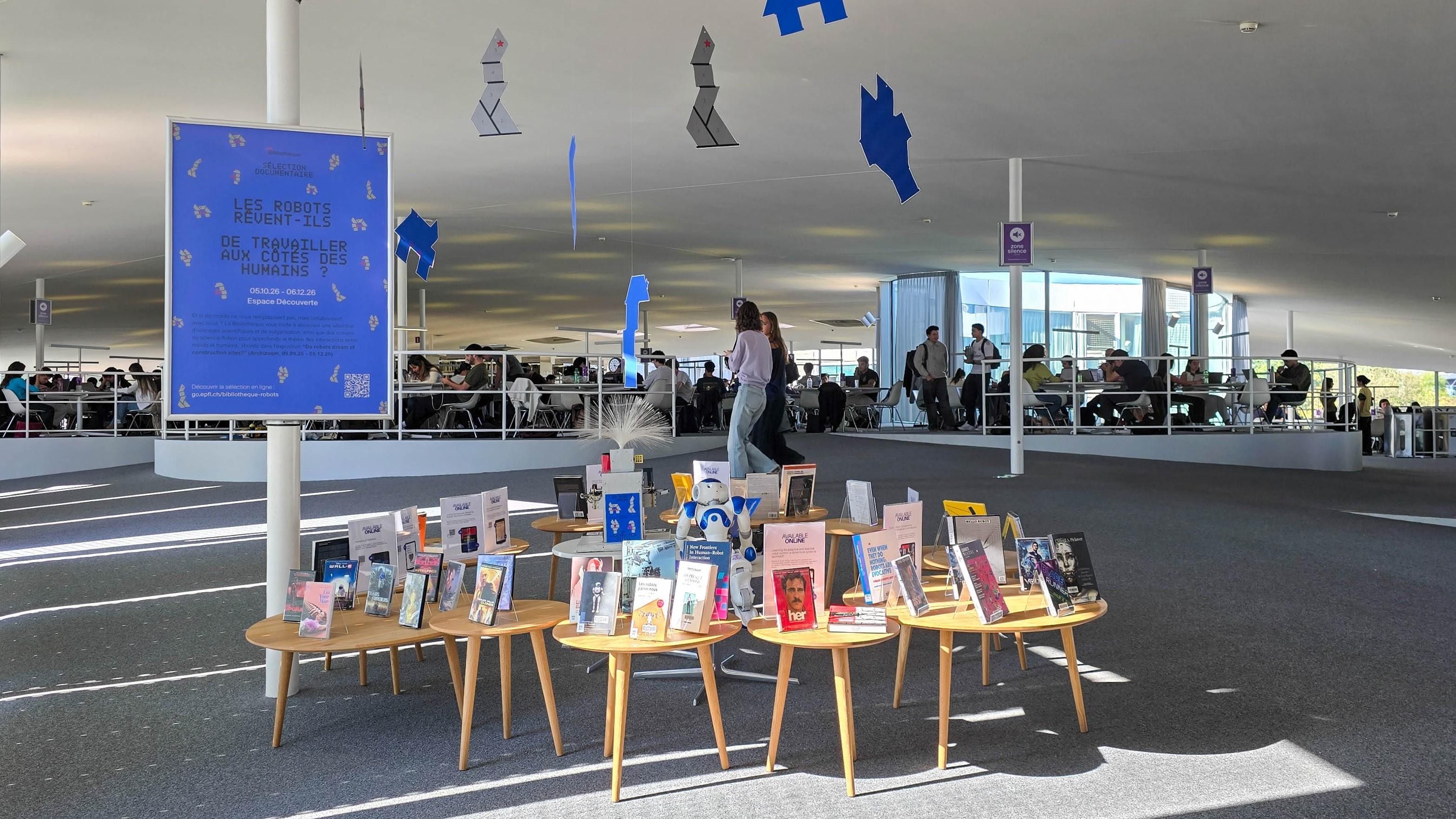
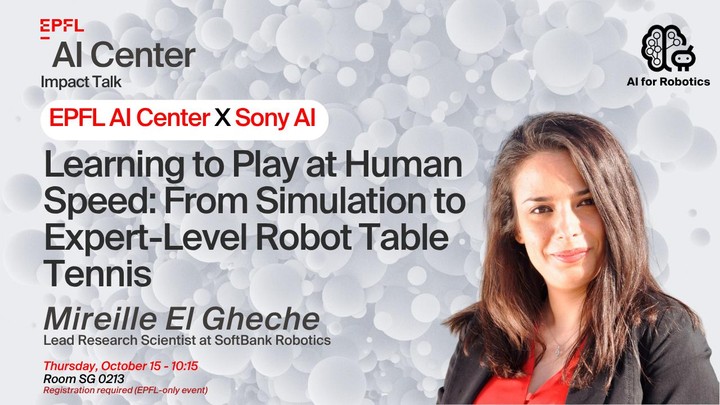
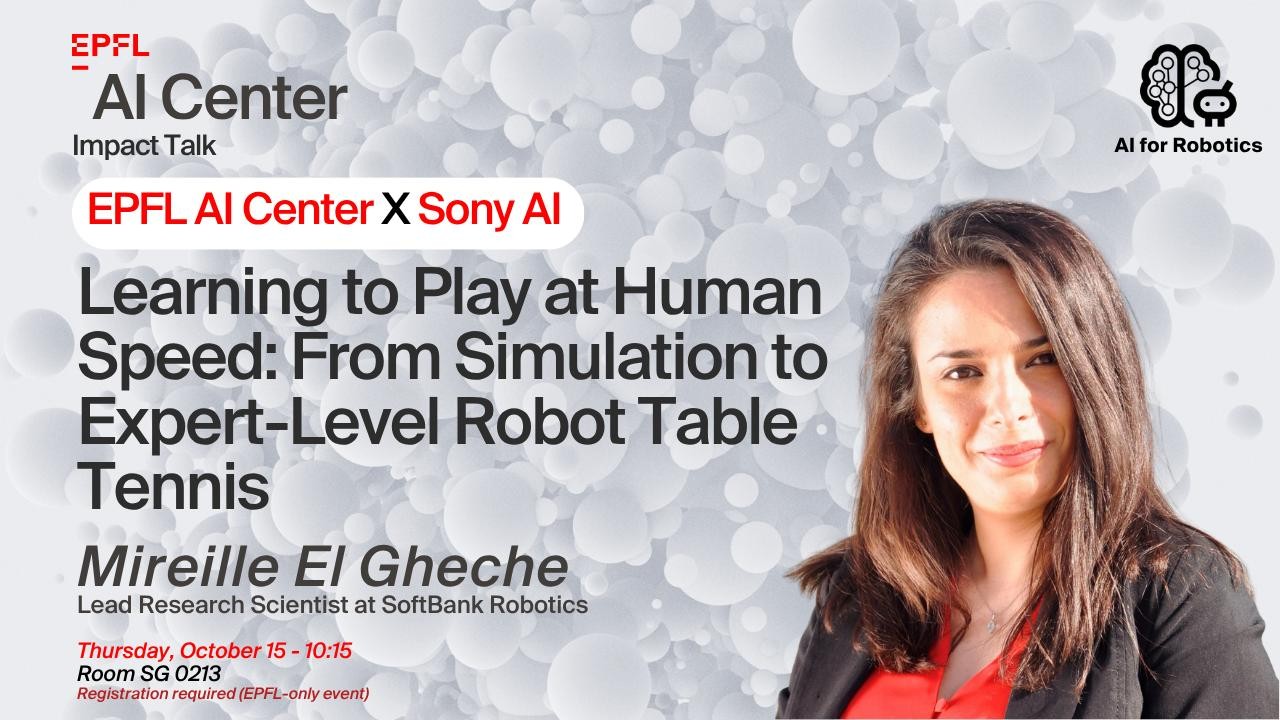
{ "count": 259, "next": "https://memento.epfl.ch/api/v1/events/?format=api&limit=10&offset=10&ordering=-last_modification_date", "previous": null, "results": [ { "id": 72731, "title": "Personalized Health and Related Technolgies (PHRT) Exhibition", "slug": "personalized-health-and-related-technolgies-phrt-e", "event_url": "https://memento.epfl.ch/event/personalized-health-and-related-technolgies-phrt-e", "visual_url": "https://memento.epfl.ch/image/33948/200x112.jpg", "visual_large_url": "https://memento.epfl.ch/image/33948/720x405.jpg", "visual_maxsize_url": "https://memento.epfl.ch/image/33948/max-size.jpg", "lang": "en", "start_date": "2026-10-13", "end_date": "2026-11-03", "start_time": "18:00:00", "end_time": "10:00:00", "description": "<strong>Engineering the Future of Health</strong><br>\r\n<br>\r\nA look back at 14 of 133 pioneering projects and the emergence of the DeepHealth-movement. A tribute to the subversive power of science.<br>\r\n<br>\r\nThe year is 2047: many of today’s medical standards seemed utopian, too costly or simply unachievable in the 2020s. The exhibition looks back at the beginnings of the DeepHealth-movement, which laid the foundation for medical breakthroughs and improved the health of millions of people. <br>\r\n<br>\r\nThrough artifacts, art prints, texts, videos, and an audio guide, the exhibition takes visitors on a journey back in time to the 14 projects and their revolutionary beginnings in personalized medicine.<br>\r\n<br>\r\n<strong>Vernissage Tuesday, October 13, 2026 - 17:00 - SV 1717</strong><br>\r\n17:00 Presentation of the initiative - Dr Daniel Vonder Mühll<br>\r\n17:20 Personalize Oncology from the Lab to the Clinic - Prof. Elisa Oricchio<br>\r\n17:40 Introduction and guided tour of the exhibition follow by an apéro in SV Hall<br>\r\n<br>\r\n ", "image_description": "", "creation_date": "2026-10-01T15:29:44", "last_modification_date": "2026-10-06T10:08:49", "link_label": "", "link_url": "", "canceled": "False", "cancel_reason": "", "place_and_room": "SV 1204", "url_place_and_room": "https://plan.epfl.ch/?room==SV%201204", "url_online_room": "", "spoken_languages": [ "https://memento.epfl.ch/api/v1/spoken_languages/2/?format=api" ], "speaker": "", "organizer": "School of Life Sciences", "contact": "SV Communications", "is_internal": "False", "theme": "", "vulgarization": { "id": 1, "fr_label": "Tout public", "en_label": "General public" }, "registration": { "id": 3, "fr_label": "Entrée libre", "en_label": "Free" }, "keywords": "Personalized Health, Technology, Research, Clinical Practice", "file": null, "icalendar_url": "https://memento.epfl.ch/event/export/122015/", "category": { "id": 5, "code": "EXPO", "fr_label": "Expositions", "en_label": "Exhibitions", "activated": true }, "academic_calendar_category": null, "domains": [], "mementos": [ "https://memento.epfl.ch/api/v1/mementos/1/?format=api", "https://memento.epfl.ch/api/v1/mementos/6/?format=api", "https://memento.epfl.ch/api/v1/mementos/8/?format=api", "https://memento.epfl.ch/api/v1/mementos/9/?format=api" ] }, { "id": 72700, "title": "The Case for Collaboration and a New Paradigm for Machine Learning", "slug": "the-case-for-collaboration-and-a-new-paradigm-for", "event_url": "https://memento.epfl.ch/event/the-case-for-collaboration-and-a-new-paradigm-for", "visual_url": "https://memento.epfl.ch/image/33928/200x112.jpg", "visual_large_url": "https://memento.epfl.ch/image/33928/720x405.jpg", "visual_maxsize_url": "https://memento.epfl.ch/image/33928/max-size.jpg", "lang": "en", "start_date": "2026-11-11", "end_date": "2026-11-11", "start_time": "18:30:00", "end_time": "21:00:00", "description": "<p>Since 2006, the Erna Hamburger Prize is awarded by the EPFL-WISH Foundation (Women In Science and Humanities) and distinguishes influential, leading women scientists who are transforming their field and executing change.<br>\r\n<br>\r\nThe Erna Hamburger Prize 2026 will be awarded to Prof. Margo Seltzer. The award ceremony will be held on November 11th 2026 at 6:30 pm at SG 1138. On this occasion, the awardee will give a conference on the EPFL Campus. Don’t miss this exceptional opportunity to hear from one of the most influential figures in contemporary computer science.<br>\r\n<br>\r\n<strong>Conference abstract</strong><br>\r\n<em>It's 2026, and the answer to every problem today seems to be a multiple choice exercise of selecting answers from: AI, Agents, LLMs or machine learning. Is our future really just all about prompt engineering?</em><br>\r\n<br>\r\nAt a time when artificial intelligence, autonomous agents and large language models seem to be presented as the answer to every challenge, <strong>Margo Seltzer</strong> offers a thought-provoking perspective on the value of simplicity in computer science and machine learning. She will demonstrate how simpler and more transparent approaches can deliver performance comparable to that of the most sophisticated models, while providing greater interpretability, more efficient use of resources and a more natural way of addressing issues of fairness and privacy. The lecture will also explore a theme that lies at the heart of her career: <strong>collaboration</strong>. Drawing on her own experience of collaborative research, Margo Seltzer will explain how working together can broaden one’s impact, help overcome imposter syndrome, and enable individuals to discover and develop their unique strengths.<br>\r\n<br>\r\n<strong>About Prof. Margo Seltzer</strong><br>\r\n<a href=\"https://www.seltzer.com/margo\">Prof. Margo Seltzer</a> is Co-Head of the Department of Computer Science at the University of British Columbia (Vancouver), where she moved after two decades as a Full Professor at Harvard University. She earned her Ph.D. in Computer Science in 1992 from the University of California, Berkeley. A pioneering computer systems researcher, she is the recipient of numerous prestigious honors, including the 2023 ACM Athena Lecturer Award and the USENIX Lifetime Achievement Award. She is a Member of the National Academy of Engineering. Alongside her academic career, Margo Seltzer is an entrepreneur: she co-founded Sleepycat Software, maker of Berkeley DB, a widely used embedded database engine later acquired by Oracle. A recognized leader in her field, she is also a devoted mentor to young women in computer science and founded the \"Systers Lunch,\" the original diversity gathering at SOSP, the flagship conference of the systems research community.</p>", "image_description": "", "creation_date": "2026-09-28T19:19:24", "last_modification_date": "2026-10-06T09:01:31", "link_label": "REGISTRATION", "link_url": "https://forms.cloud.microsoft/e/29LjxMdyae", "canceled": "False", "cancel_reason": "", "place_and_room": "SG 1138", "url_place_and_room": "https://plan.epfl.ch/?room==SG%201138", "url_online_room": "", "spoken_languages": [ "https://memento.epfl.ch/api/v1/spoken_languages/2/?format=api" ], "speaker": "", "organizer": "", "contact": "Nicolas Hocq", "is_internal": "False", "theme": "", "vulgarization": { "id": 1, "fr_label": "Tout public", "en_label": "General public" }, "registration": { "id": 3, "fr_label": "Entrée libre", "en_label": "Free" }, "keywords": "", "file": null, "icalendar_url": "https://memento.epfl.ch/event/export/121974/", "category": { "id": 1, "code": "CONF", "fr_label": "Conférences - Séminaires", "en_label": "Conferences - Seminars", "activated": true }, "academic_calendar_category": null, "domains": [], "mementos": [ "https://memento.epfl.ch/api/v1/mementos/1/?format=api", "https://memento.epfl.ch/api/v1/mementos/6/?format=api", "https://memento.epfl.ch/api/v1/mementos/145/?format=api" ] }, { "id": 72685, "title": "IMX Colloquium - Towards life-inspired soft matter dynamics and functionalities", "slug": "imx-colloquium-towards-life-inspired-soft-matter-d", "event_url": "https://memento.epfl.ch/event/imx-colloquium-towards-life-inspired-soft-matter-d", "visual_url": "https://memento.epfl.ch/image/33987/200x112.jpg", "visual_large_url": "https://memento.epfl.ch/image/33987/720x405.jpg", "visual_maxsize_url": "https://memento.epfl.ch/image/33987/max-size.jpg", "lang": "en", "start_date": "2026-10-12", "end_date": "2026-10-12", "start_time": "13:15:00", "end_time": "14:15:00", "description": "<p>Biological systems have already paved several routes for bioinspired materials, e.g., for structural colours, wetting, adhesion, and mechanical properties. They have largely involved equilibrium or kinetically trapped properties. By contrast, biological systems allowing multifunctional properties are characteristically dissipatively and dynamically adaptive and incorporate homeostatic feedback mechanisms to regulate the dynamic states. They also typically use signal transduction to mediate the signal from the sensory elements to the responsive sites, unlike the classic man-made stimuli responsive materials. These concept suggest avenues towards more complex life-like functions in soft matter. Herein, optically driven hydrogel systems are presented to drive homeostatically controlled thermal oscillations and to mediate signal transduction via thermal intermediate signalling (1). On the other hand, biological magnetoreception in elasmobranch organisms involves electromagnetic induction (EMI) and suggests avenues for bioinspired electrical signal transductions. We show magnetic profile recognition of translocated magnetically encoded soft matter objects using electrical intermediate signaling by EMI and decoding the magnetic information with machine learning (2). Combination of high stiffness and promoted dynamics for self-healing has turned challenging to combine. Self-healing hydrogels, still combining high tensile stiffness close to that of skin were shown by using polymers upon nanoconfinement in 2D-nanosheet layered confinements (3). Finally, we show trainable actuations in bilayer gel actuators (4). Ever more complex responses can be created, such as mimicking the Pavlovian classical conditioning (5), all paving ways for growingly life-like functions for soft robotics and interfacing with biology.<br>\r\n<br>\r\n1. H. Zhang, H. Zeng, A. Eklund, H. Guo, A. Priimagi, O. Ikkala, Feedback-controlled hydrogels with homeostatic oscillations and dissipative signal transduction, <em>Nat. Nano</em>, <strong>17</strong>, 1303 (2022).<br>\r\n2. Z. Miao, X. Hu, K. Liu, S. Hu, G. Yan, H. Tan, O. Ikkala, Z. P. Lv, B. Peng, Bioinspired sensory transduction for magnetic profile recognition and encryption, <em>Adv. Mat.</em> <strong>38</strong> e15994 (2026).<br>\r\n3. C. Liang, V. Dudko, O. Khoruzhenko, X. Hong, Z.-P. Lv, J. Breu, O. Ikkala, H. Zhang, Stiff and self-healing hydrogels by polymer entanglements in co-planar nanoconfinement, <em>Nat. Mater.</em> <strong>24</strong>, 599 (2025).<br>\r\n4. S. Hu, Y. Fang, C. Liang, M. Turunen, O. Ikkala, H. Zhang, Thermally trainable dual network hydrogels, <em>Nat. Commun.</em>, <strong>14</strong>, 3717 (2023).<br>\r\n5. H. Zhang, H. Zeng, A. Priimagi, O. Ikkala, Programmable responsive hydrogels with classical conditioning algorithm, <em>Nat. Commun.</em>, <strong>10</strong>, 3267 (2019).</p>", "image_description": "", "creation_date": "2026-09-28T09:13:29", "last_modification_date": "2026-10-06T08:54:13", "link_label": "", "link_url": "", "canceled": "False", "cancel_reason": "", "place_and_room": "MXF 312", "url_place_and_room": "https://plan.epfl.ch/?room==MXF%20312", "url_online_room": "", "spoken_languages": [ "https://memento.epfl.ch/api/v1/spoken_languages/2/?format=api" ], "speaker": "Prof. Olli Ikkala, Aalto University, Department of Applied Physics, Espoo, Finland", "organizer": "Prof. Gregor Jotzu, Prof. Esther Amstad & Prof. Fabien Sorin", "contact": "Prof. Gregor Jotzu, Prof. Esther Amstad & Prof. Fabien Sorin", "is_internal": "False", "theme": "", "vulgarization": { "id": 1, "fr_label": "Tout public", "en_label": "General public" }, "registration": { "id": 3, "fr_label": "Entrée libre", "en_label": "Free" }, "keywords": "", "file": null, "icalendar_url": "https://memento.epfl.ch/event/export/121946/", "category": { "id": 1, "code": "CONF", "fr_label": "Conférences - Séminaires", "en_label": "Conferences - Seminars", "activated": true }, "academic_calendar_category": null, "domains": [], "mementos": [ "https://memento.epfl.ch/api/v1/mementos/8/?format=api", "https://memento.epfl.ch/api/v1/mementos/314/?format=api" ] }, { "id": 72771, "title": "Document selection: Do robots dream of working alongside humans?", "slug": "document-selection-do-robots-dream-of-working-alon", "event_url": "https://memento.epfl.ch/event/document-selection-do-robots-dream-of-working-alon", "visual_url": "https://memento.epfl.ch/image/33986/200x112.jpg", "visual_large_url": "https://memento.epfl.ch/image/33986/720x405.jpg", "visual_maxsize_url": "https://memento.epfl.ch/image/33986/max-size.jpg", "lang": "en", "start_date": "2026-10-05", "end_date": "2026-12-07", "start_time": "07:00:00", "end_time": "23:45:00", "description": "<p>What if robots didn’t replace humans, but collaborated with us?<br>\r\n<br>\r\n<strong>On the occasion of the exhibition <a href=\"http://memento.epfl.ch/event/do-robots-dream-of-construction-sites-archizoom--4/\"><em>Do Robots Dream of Construction Sites?</em></a>, </strong><strong>on view</strong> <strong>at Archizoom from 9 September to 5 December 2026, we invite you to explore a selection of scientific and popular science books, as well as science fiction novels dedicated to human-robot interactions, a theme at the heart of the exhibition.</strong><br>\r\n<br>\r\nThis selection offers different perspectives on robotics, automation, work, and the future forms of collaboration between humans and machines.<br>\r\n<br>\r\nAll documents can be borrowed according to the <a href=\"https://www.epfl.ch/campus/library/fr/prets-reservations/#emprunter\">Library’s standard borrowing conditions</a>.<br>\r\n<br>\r\nDiscover the selection at the Espace Découverte from 5 October to 7 December 2026, as well as <a href=\"https://go.epfl.ch/library-robots\">online</a>.<br>\r\n<br>\r\n<strong>Browse the Library's online reading selection:</strong> <strong><a href=\"https://go.epfl.ch/library-robots\">go.epfl.ch/library-robots</a></strong><br>\r\n<br>\r\n<strong>Learn more about the Archizoom exhibition: <a href=\"https://memento.epfl.ch/event/do-robots-dream-of-construction-sites-archizoom--4/\">memento.epfl.ch/event/do-robots-dream-of-construction-sites-archizoom</a></strong><br>\r\n </p>", "image_description": "", "creation_date": "2026-10-05T16:19:16", "last_modification_date": "2026-10-05T16:41:04", "link_label": "Online selection", "link_url": "https://go.epfl.ch/library-robots", "canceled": "False", "cancel_reason": "", "place_and_room": "Espace Découverte", "url_place_and_room": "", "url_online_room": "", "spoken_languages": [ "https://memento.epfl.ch/api/v1/spoken_languages/1/?format=api", "https://memento.epfl.ch/api/v1/spoken_languages/2/?format=api" ], "speaker": "", "organizer": "EPFL Library", "contact": "<a href=\"mailto:[email protected]\">[email protected]</a>", "is_internal": "False", "theme": "", "vulgarization": { "id": 1, "fr_label": "Tout public", "en_label": "General public" }, "registration": { "id": 3, "fr_label": "Entrée libre", "en_label": "Free" }, "keywords": "robots", "file": null, "icalendar_url": "https://memento.epfl.ch/event/export/122072/", "category": { "id": 5, "code": "EXPO", "fr_label": "Expositions", "en_label": "Exhibitions", "activated": true }, "academic_calendar_category": null, "domains": [], "mementos": [ "https://memento.epfl.ch/api/v1/mementos/3/?format=api", "https://memento.epfl.ch/api/v1/mementos/4/?format=api", "https://memento.epfl.ch/api/v1/mementos/6/?format=api", "https://memento.epfl.ch/api/v1/mementos/8/?format=api", "https://memento.epfl.ch/api/v1/mementos/45/?format=api", "https://memento.epfl.ch/api/v1/mementos/275/?format=api" ] }, { "id": 72770, "title": "Exploiting Structure in Nonconvex Stochastic Optimization: Auxiliary Information, Second-Order Methods, and Compositional Objectives", "slug": "exploiting-structure-in-nonconvex-stochastic-opt-2", "event_url": "https://memento.epfl.ch/event/exploiting-structure-in-nonconvex-stochastic-opt-2", "visual_url": "https://memento.epfl.ch/image/33985/200x112.jpg", "visual_large_url": "https://memento.epfl.ch/image/33985/720x405.jpg", "visual_maxsize_url": "https://memento.epfl.ch/image/33985/max-size.jpg", "lang": "en", "start_date": "2026-10-16", "end_date": "2026-10-16", "start_time": "17:00:00", "end_time": null, "description": "<p>Thesis Director: Prof. M. Jaggi,<br>\r\nComputer and Communication Sciences doctoral program<br>\r\nThesis Nr. 10949<br>\r\n<br>\r\nTo take part in the public defense, please contact directly the speaker</p>", "image_description": "", "creation_date": "2026-10-05T16:13:36", "last_modification_date": "2026-10-05T16:13:38", "link_label": "", "link_url": "", "canceled": "False", "cancel_reason": "", "place_and_room": "BC 010", "url_place_and_room": "https://plan.epfl.ch/?room==BC%20010", "url_online_room": "https://epfl.zoom.us/j/62739766043?pwd=p8yKL25d1VSaj4yhpcgUFnOebdXI5p.1", "spoken_languages": [], "speaker": "<a href=\"mailto:[email protected]\"><strong>El Mahdi CHAYTI</strong></a>", "organizer": "", "contact": "<a href=\"mailto:[email protected]\"><strong>El Mahdi CHAYTI</strong></a><br>\r\n ", "is_internal": "False", "theme": "", "vulgarization": { "id": 1, "fr_label": "Tout public", "en_label": "General public" }, "registration": { "id": 3, "fr_label": "Entrée libre", "en_label": "Free" }, "keywords": "EDIC", "file": null, "icalendar_url": "https://memento.epfl.ch/event/export/122071/", "category": { "id": 12, "code": "SOUTE", "fr_label": "Soutenances de thèses", "en_label": "Thesis defenses", "activated": true }, "academic_calendar_category": null, "domains": [], "mementos": [ "https://memento.epfl.ch/api/v1/mementos/1/?format=api", "https://memento.epfl.ch/api/v1/mementos/6/?format=api" ] }, { "id": 72769, "title": "Locality-Aware and Recoverable Synchronization Primitives", "slug": "locality-aware-and-recoverable-synchronization-p-2", "event_url": "https://memento.epfl.ch/event/locality-aware-and-recoverable-synchronization-p-2", "visual_url": "https://memento.epfl.ch/image/33984/200x112.jpg", "visual_large_url": "https://memento.epfl.ch/image/33984/720x405.jpg", "visual_maxsize_url": "https://memento.epfl.ch/image/33984/max-size.jpg", "lang": "en", "start_date": "2026-12-16", "end_date": "2026-12-16", "start_time": "17:00:00", "end_time": null, "description": "<p>Thesis Director: Prof. S. Kashyap,<br>\r\nComputer and Communication Sciences doctoral program<br>\r\nThesis Nr. 11376<br>\r\n<br>\r\nTo take part in the public defense, please contact directly the speaker</p>", "image_description": "", "creation_date": "2026-10-05T15:51:26", "last_modification_date": "2026-10-05T15:51:29", "link_label": "", "link_url": "", "canceled": "False", "cancel_reason": "", "place_and_room": "BC 420", "url_place_and_room": "https://plan.epfl.ch/?room==BC%20420", "url_online_room": "https://epfl.zoom.us/my/vishal.gupta", "spoken_languages": [], "speaker": "<a href=\"mailto:[email protected]\"><strong>Vishal GUPTA</strong></a>", "organizer": "", "contact": "<a href=\"mailto:[email protected]\"><strong>Vishal GUPTA</strong></a><br>\r\n ", "is_internal": "False", "theme": "", "vulgarization": { "id": 1, "fr_label": "Tout public", "en_label": "General public" }, "registration": { "id": 3, "fr_label": "Entrée libre", "en_label": "Free" }, "keywords": "EDIC", "file": null, "icalendar_url": "https://memento.epfl.ch/event/export/122069/", "category": { "id": 12, "code": "SOUTE", "fr_label": "Soutenances de thèses", "en_label": "Thesis defenses", "activated": true }, "academic_calendar_category": null, "domains": [], "mementos": [ "https://memento.epfl.ch/api/v1/mementos/6/?format=api" ] }, { "id": 72719, "title": "CDM Seminar: Scoring Rules for a Theory of AI", "slug": "cdm-seminar-scoring-rules-for-a-theory-of-ai", "event_url": "https://memento.epfl.ch/event/cdm-seminar-scoring-rules-for-a-theory-of-ai", "visual_url": "https://memento.epfl.ch/image/33936/200x112.jpg", "visual_large_url": "https://memento.epfl.ch/image/33936/720x405.jpg", "visual_maxsize_url": "https://memento.epfl.ch/image/33936/max-size.jpg", "lang": "en", "start_date": "2026-10-08", "end_date": "2026-10-08", "start_time": "14:00:00", "end_time": "15:15:00", "description": "<strong>Abstract</strong>:<br>\r\nScoring rules are foundational in decision theory and, therefore, are foundational for a developing theory of artificial intelligence. Just as simple models from decision theory provide context for understanding the decisions of complex humans, so too can they for complex AI systems. Bayesian decision theory considers an agent receiving a signal that is correlated with the state, choosing an action, and obtaining a payoff that depends on both the state and action. With Bayesian updating and the revelation principle, the signal becomes a posterior belief and the decision problem becomes a scoring rule. Given a scoring rule, baseline performance is the optimal score under the prior; benchmark performance is the optimal score under the posterior; and the optimal scoring rule — framed as a mechanism design problem — maximizes the difference between them. The talk reviews this theory and applies it to (a) evaluate prediction as a service, (b) behavioral experiments on human-AI decision making, (c) develop proper scoring rules for text (e.g. for training language models to hallucinate less).<br>\r\n<br>\r\n<br>\r\n<strong>Short bio:</strong><br>\r\nProf. Hartline’s research introduces design and analysis methodologies from computer science to understand and improve outcomes of economic, legal, and AI systems. Optimal behavior and outcomes in complex environments are complex and, therefore, should not be expected; instead, the theory of approximation can show that simple and natural behaviors are approximately optimal in complex environments. This approach is applied to auction theory and mechanism design in his graduate textbook Mechanism Design and Approximation which is under preparation.<br>\r\n<br>\r\nProf. Hartline received his Ph.D. in 2003 from the University of Washington under the supervision of Anna Karlin. He was a postdoctoral fellow at Carnegie Mellon University under the supervision of Avrim Blum; and subsequently a researcher at Microsoft Research in Silicon Valley. He joined Northwestern University in 2008 where he is a professor of computer science. He was on sabbatical at Harvard University in the Economics Department during the 2014 calendar year and visiting Microsoft Research, New England for the Spring of 2015. He was on sabbatical at Stanford University for the 2023-2024 academic year. He is visiting ENS Paris-Saclay during the 2026-2027 academic year.<br>\r\n<br>\r\nProf. Hartline is the director of Northwestern’s Online Markets Lab, he was a founding codirector of the Institute for Data, Econometrics, Algorithms, and Learning from 2019-2022, and is a cofounder of virtual conference organizing platform Virtual Chair.<br>\r\n ", "image_description": "", "creation_date": "2026-09-29T15:47:25", "last_modification_date": "2026-10-05T14:43:49", "link_label": "", "link_url": "", "canceled": "False", "cancel_reason": "", "place_and_room": "ODY 4 03", "url_place_and_room": "https://plan.epfl.ch/?room==ODY%204%2003", "url_online_room": "https://epfl.zoom.us/j/62755895565", "spoken_languages": [ "https://memento.epfl.ch/api/v1/spoken_languages/2/?format=api" ], "speaker": "<strong>Prof. Jason Hartline</strong> Northwestern University, Evanston, Illinois", "organizer": "<strong>Prof Andres Cristi</strong> ", "contact": "[email protected] ", "is_internal": "False", "theme": "", "vulgarization": { "id": 2, "fr_label": "Public averti", "en_label": "Informed public" }, "registration": { "id": 3, "fr_label": "Entrée libre", "en_label": "Free" }, "keywords": "", "file": null, "icalendar_url": "https://memento.epfl.ch/event/export/121999/", "category": { "id": 1, "code": "CONF", "fr_label": "Conférences - Séminaires", "en_label": "Conferences - Seminars", "activated": true }, "academic_calendar_category": null, "domains": [], "mementos": [ "https://memento.epfl.ch/api/v1/mementos/1/?format=api", "https://memento.epfl.ch/api/v1/mementos/3/?format=api", "https://memento.epfl.ch/api/v1/mementos/6/?format=api", "https://memento.epfl.ch/api/v1/mementos/38/?format=api" ] }, { "id": 72737, "title": "PChem Seminar - Adriana Pietropaolo", "slug": "pchem-seminar-adriana-pietropaolo", "event_url": "https://memento.epfl.ch/event/pchem-seminar-adriana-pietropaolo", "visual_url": "https://memento.epfl.ch/image/33982/200x112.jpg", "visual_large_url": "https://memento.epfl.ch/image/33982/720x405.jpg", "visual_maxsize_url": "https://memento.epfl.ch/image/33982/max-size.jpg", "lang": "en", "start_date": "2026-11-12", "end_date": "2026-11-12", "start_time": "17:00:00", "end_time": "18:00:00", "description": "<strong>Theory-Guided Design of Chiral Hybrid Perovskites</strong><br>\r\n<br>\r\nChiral halide perovskites combine the outstanding optoelectronic properties of the inorganic<br>\r\noctahedra with the chirality of the organic cations, enabling control over light polarization and electron<br>\r\nspin<sup>1</sup>. This makes them promising platforms for spin-optoelectronics and quantum technologies<sup>2,3</sup>.<br>\r\nDesigning them rationally, however, requires understanding how chirality is transferred from the<br>\r\norganic cations to the inorganic framework, and how this transfer governs their chiroptical and spin<br>\r\nproperties<sup>4</sup>.<br>\r\nIn this seminar I will present a simulation framework that combines ab initio molecular dynamics, freeenergy<br>\r\nmethods and time-dependent density functional theory to predict circular dichroism (CD),<br>\r\ncircularly polarized luminescence (CPL), absorption and emission dissymmetry factors (gabs, glum) in<br>\r\nchiral perovskites. Applied to (R/S-MBA)2PbI4 and its tin analogue, this approach shows that<br>\r\nenantiomeric excess acts as a continuous dial for chiroptical properties<sup>5</sup>. The response follows a<br>\r\ncooperative majority-rule mechanism, which we validated against experiments across the full<br>\r\nenantiomeric series. Electronic-structure analysis links the two characteristic CD bands to distinct<br>\r\nband-edge and organic–inorganic transitions.<br>\r\nI will also discuss how chemical strain and hydrostatic pressure can tune the intensity and sign of CPL<br>\r\nemission<sup>6</sup>, and how structural chirality, spin-orbit coupling and lattice distortions may shape spin<br>\r\npolarization. Together, these results outline predictive design rules for chiral perovskites with tailored<br>\r\noptical and spin functionalities.<br>\r\n<br>\r\n<strong>References</strong><br>\r\n1. Long, G.; Sabatini, R.; Saidaminov, M. I.; Lakhwani, G.; Rasmita, A.; Liu, X.; Sargent, E. H.; Gao,<br>\r\nW. Nat. Rev. Mater. 2020, 5, 423-439.<br>\r\n2. Crassous, J.; Fuchter, M.J.; Freedman, D. E.; Kotov N. A.; Moon, J.; Beard, M.C. Nat. Rev. Mat.,<br>\r\n2023, 8, 365-371.<br>\r\n3. Lu, H.; Xiao, C.; Song, R.; Li, T.; Maughan, A. E.; Levin, A.; Brunecky, R.; Berry, J. J.; Mitzi, D. B. ;<br>\r\nBlum, V.; Beard, M. C. J. Am. Chem. Soc., 2020, 142, 13030-13040.<br>\r\n4. Pietropaolo, A. ; Mattoni, A. ; Pica, G.; Fortino, M.; Schifino, G.; Grancini, G. Chem, 2022, 8,<br>\r\n1231-1253.<br>\r\n5. Fortino, M.; Mattoni, A.; Pietropaolo, A. J. Mater. Chem. C, 2023, 11, 9135-9143.<br>\r\n6. Fortino,M.; Mattoni, A.; Feldmann, S.; Pietropaolo, A. J. Phys. Chem. Lett. 2025, 16, 10234-<br>\r\n10239.", "image_description": "", "creation_date": "2026-10-01T19:23:30", "last_modification_date": "2026-10-05T13:44:39", "link_label": "", "link_url": "", "canceled": "False", "cancel_reason": "", "place_and_room": "CH G1 495", "url_place_and_room": "", "url_online_room": "", "spoken_languages": [ "https://memento.epfl.ch/api/v1/spoken_languages/2/?format=api" ], "speaker": "Adriana Pietropaolo (Università di Catanzaro, Italy)", "organizer": "Sascha Feldmann ", "contact": "[email protected]", "is_internal": "False", "theme": "", "vulgarization": { "id": 2, "fr_label": "Public averti", "en_label": "Informed public" }, "registration": { "id": 3, "fr_label": "Entrée libre", "en_label": "Free" }, "keywords": "pcseminar", "file": null, "icalendar_url": "https://memento.epfl.ch/event/export/122022/", "category": { "id": 1, "code": "CONF", "fr_label": "Conférences - Séminaires", "en_label": "Conferences - Seminars", "activated": true }, "academic_calendar_category": null, "domains": [], "mementos": [ "https://memento.epfl.ch/api/v1/mementos/5/?format=api", "https://memento.epfl.ch/api/v1/mementos/14/?format=api" ] }, { "id": 72646, "title": "AI Center x Sony AI Impact Talk Mireille El Gheche - Learning to Play at Human Speed: From Simulation to Expert-Level Robot Table Tennis", "slug": "ai-center-x-sony-ai-impact-talk-mireille-el-ghec-2", "event_url": "https://memento.epfl.ch/event/ai-center-x-sony-ai-impact-talk-mireille-el-ghec-2", "visual_url": "https://memento.epfl.ch/image/33898/200x112.jpg", "visual_large_url": "https://memento.epfl.ch/image/33898/720x405.jpg", "visual_maxsize_url": "https://memento.epfl.ch/image/33898/max-size.jpg", "lang": "en", "start_date": "2026-10-15", "end_date": "2026-10-15", "start_time": "10:15:00", "end_time": "11:15:00", "description": "<em><strong>Registration with an EPFL email is required: <a href=\"https://forms.cloud.microsoft/e/HbwUm7bFrd\">HERE</a>.</strong></em><br>\r\n<br>\r\n<u><strong>! This event is restricted to the EPFL community !</strong></u><br>\r\n<br>\r\n<strong>Title</strong><br>\r\nLearning to Play at Human Speed: From Simulation to Expert-Level Robot Table Tennis<br>\r\n<br>\r\n<strong>Abstract</strong><br>\r\nWhat does it take for a robot to compete with a human in one of the fastest and most dynamic sports?<br>\r\nTable tennis compresses many of the fundamental challenges of physical AI into just a few hundred milliseconds. The robot must perceive a ball travelling at high speed, estimate its position and spin, predict its trajectory, decide how to respond, and execute a precise motion, all while interacting with an intelligent and unpredictable opponent.<br>\r\nIn this talk, I will present Project ACE, an autonomous table tennis robot developed at Sony AI that progressed from learning basic racket skills to competing with elite human players. I will discuss the complete system behind this progression: high-speed visual perception, reinforcement learning, simulation, robot control, and the iterative sim-to-real process that enabled policies trained in simulation to perform on a real robot. Beyond table tennis, ACE provides a case study in what it takes to move from impressive robotic demonstrations to robust physical intelligence. I will share some of the lessons we learned about combining learning with control, using real-world failures to improve simulation, and designing AI systems that can adapt and act under the speed, uncertainty, and constraints of the physical world.<br>\r\n<br>\r\n<strong>Bio</strong><br>\r\nMireille El Gheche is a Lead Research Scientist at SoftBank Robotics, working at the intersection of artificial intelligence and robotics. Her expertise spans reinforcement learning, computer vision and perception, simulation, optimization, and real-world robotic systems, with a strong focus on translating research advances into robust physical systems.<br>\r\nPrior to joining SoftBank Robotics, Mireille was a Staff Research Scientist at Sony AI in Zurich, where she led research on Project ACE, an autonomous table tennis robot developed to compete with elite and professional human players. Before joining Sony AI, Mireille conducted academic research at EPFL and the University of Bordeaux, working across computer vision, and applied AI, including applications in medical AI. Her broader research interests lie in physical AI and intelligent robotic systems that can perceive, learn, adapt, and act in complex real-world environments.<br>\r\n ", "image_description": "", "creation_date": "2026-09-23T10:33:38", "last_modification_date": "2026-10-05T11:59:06", "link_label": "Registration required", "link_url": "https://forms.cloud.microsoft/e/HbwUm7bFrd", "canceled": "False", "cancel_reason": "", "place_and_room": "SG 0213", "url_place_and_room": "https://plan.epfl.ch/?room==SG%200213", "url_online_room": "https://epfl.zoom.us/j/63790840787?pwd=OHuE2cuqmmbEZ5yeZiGhkDpQpZqjLx.1", "spoken_languages": [ "https://memento.epfl.ch/api/v1/spoken_languages/2/?format=api" ], "speaker": "Dr. Mireille El Gheche", "organizer": "EPFL AI Center", "contact": "<a href=\"mailto:[email protected]\">Nicolas Machado</a>", "is_internal": "False", "theme": "", "vulgarization": { "id": 1, "fr_label": "Tout public", "en_label": "General public" }, "registration": { "id": 1, "fr_label": "Sur inscription", "en_label": "Registration required" }, "keywords": "AI, Robotics", "file": null, "icalendar_url": "https://memento.epfl.ch/event/export/121895/", "category": { "id": 1, "code": "CONF", "fr_label": "Conférences - Séminaires", "en_label": "Conferences - Seminars", "activated": true }, "academic_calendar_category": null, "domains": [], "mementos": [ "https://memento.epfl.ch/api/v1/mementos/1/?format=api", "https://memento.epfl.ch/api/v1/mementos/6/?format=api", "https://memento.epfl.ch/api/v1/mementos/8/?format=api", "https://memento.epfl.ch/api/v1/mementos/416/?format=api", "https://memento.epfl.ch/api/v1/mementos/417/?format=api" ] }, { "id": 72707, "title": "2026 SMX Master's Thesis Poster Exhibition", "slug": "2026-smx-master-s-thesis-poster-exhibition", "event_url": "https://memento.epfl.ch/event/2026-smx-master-s-thesis-poster-exhibition", "visual_url": null, "visual_large_url": null, "visual_maxsize_url": null, "lang": "en", "start_date": "2026-10-01", "end_date": "2026-10-21", "start_time": null, "end_time": null, "description": "<p>Poster Exhibition of Materials Science and Engineering Graduate Students, featuring their 2025–2026 Master’s Projects, in the MXF Entrance (MXF-194.0) from October 1st to 21st, 2026.</p>", "image_description": "", "creation_date": "2026-09-29T10:27:30", "last_modification_date": "2026-10-05T10:56:23", "link_label": "", "link_url": "", "canceled": "False", "cancel_reason": "", "place_and_room": "MXF 194.0", "url_place_and_room": "https://plan.epfl.ch/?room==MXF%20194.0", "url_online_room": "", "spoken_languages": [ "https://memento.epfl.ch/api/v1/spoken_languages/1/?format=api", "https://memento.epfl.ch/api/v1/spoken_languages/2/?format=api" ], "speaker": "", "organizer": "Materials Science and Engineering Section", "contact": "Chrystelle Demierre", "is_internal": "False", "theme": "", "vulgarization": { "id": 1, "fr_label": "Tout public", "en_label": "General public" }, "registration": { "id": 3, "fr_label": "Entrée libre", "en_label": "Free" }, "keywords": "Materials Science and Engineering Section Science et Génie des matériaux Posters", "file": null, "icalendar_url": "https://memento.epfl.ch/event/export/121985/", "category": { "id": 5, "code": "EXPO", "fr_label": "Expositions", "en_label": "Exhibitions", "activated": true }, "academic_calendar_category": null, "domains": [], "mementos": [ "https://memento.epfl.ch/api/v1/mementos/8/?format=api" ] } ] }