Events
retrieve:
Return the details about the given Memento id.
list:
List all Memento objects.
GET /api/v1/mementos/435/events/?format=api
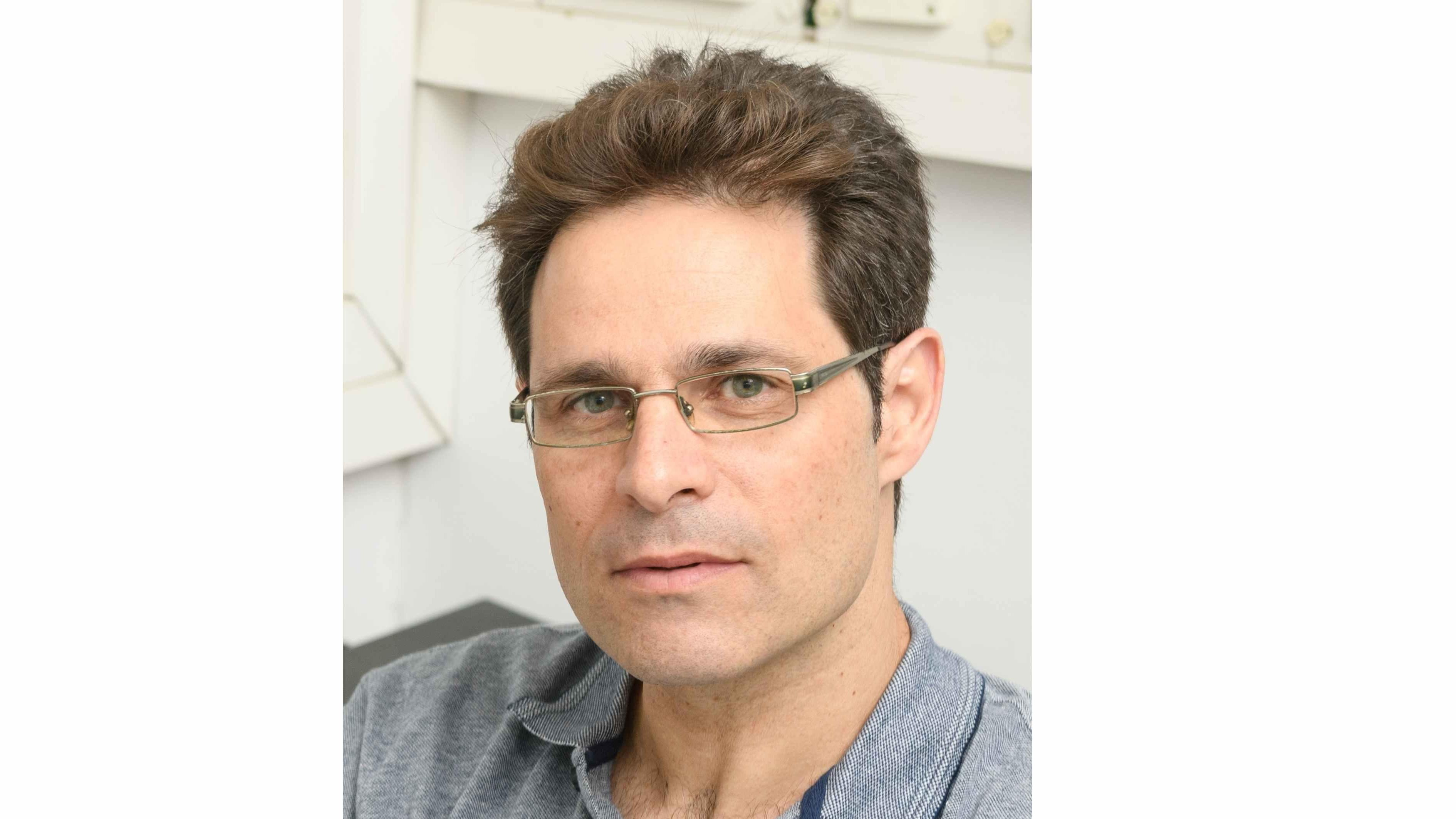
{ "count": 1, "next": null, "previous": null, "results": [ { "id": 72531, "title": "Slip pulse earthquakes", "slug": "slip-pulse-earthquakes", "event_url": "https://memento.epfl.ch/event/slip-pulse-earthquakes", "visual_url": "https://memento.epfl.ch/image/33771/200x112.jpg", "visual_large_url": "https://memento.epfl.ch/image/33771/720x405.jpg", "visual_maxsize_url": "https://memento.epfl.ch/image/33771/max-size.jpg", "lang": "en", "start_date": "2026-10-12", "end_date": "2026-10-12", "start_time": "12:15:00", "end_time": "13:15:00", "description": "<strong>Abstract</strong>:<br>\r\nThe spatiotemporal dynamics of frictional systems, ranging from engineering interfaces in mechanical joints to tectonic faults that host earthquakes, are governed by the propagation of interfacial rupture. A prominent rupture mode is self-healing slip pulses, which feature a finite slipping zone. The physics of slip pulses is qualitatively different from their expanding crack-like counterparts, as they involve the interplay between leading-edge contact breakage and trailing-edge re-strengthening (healing). The latter is intrinsically related to generic properties of frictional interactions at contacting interfaces, absent in ordinary fracture of bulk materials. In this talk, I will review a recently developed theory of two-dimensional slip pulses, which revealed intriguing dynamical properties of slip pulses and provided extensive predictions for their spatiotemporal evolution. The theoretical predictions are supported by large-scale numerical simulations and, more recently, by extensive laboratory experiments. The implications and potential applications of the theory will be discussed as time permits. <br>\r\n<br>\r\n<strong>References</strong>:\r\n<ol>\r\n\t<li><a href=\"https://www.pnas.org/doi/10.1073/pnas.2309374120\" target=\"_blank\" title=\"open in new window\">The dynamics of unsteady frictional slip pulses</a> [PNAS 120, e2309374120 (2023)]</li>\r\n\t<li><a href=\"https://www.sciencedirect.com/science/article/pii/S0012821X26000142\" target=\"_blank\" title=\"open in a new window\">An equation of motion for unsteady frictional slip pulses</a> [EPSL 678, 119831 (2026)]</li>\r\n\t<li><a href=\"https://arxiv.org/abs/2608.26065\" target=\"_blank\" title=\"open in a new window\">Lab earthquakes confirm the theory of frictional slip pulses</a> [arXiv:2608.26065 (2026)]</li>\r\n</ol>\r\n<br>\r\n<strong>Biography:</strong><br>\r\nEran Bouchbinder is a Professor at Weizmann Institute of Science, Israel. He leads a theoretical physics group who studies various non-equilibrium phenomena in spatially extended systems, addressing basic problems in statistical physic, condensed-matter physics, biophysics, materials physics, and geophysics. His work also involves close collaborations with computational and experimental groups.<br>\r\n<br>\r\n ", "image_description": "", "creation_date": "2026-09-07T09:12:38", "last_modification_date": "2026-09-07T10:35:20", "link_label": "", "link_url": "", "canceled": "False", "cancel_reason": "", "place_and_room": "GC B1 10", "url_place_and_room": "", "url_online_room": "", "spoken_languages": [ "https://memento.epfl.ch/api/v1/spoken_languages/2/?format=api" ], "speaker": "Eran Bouchbinder, Professor at Weizmann Institute of Science, Israel", "organizer": "LSMS", "contact": "Prof. Jean-François Molinari", "is_internal": "False", "theme": "", "vulgarization": { "id": 2, "fr_label": "Public averti", "en_label": "Informed public" }, "registration": { "id": 3, "fr_label": "Entrée libre", "en_label": "Free" }, "keywords": "", "file": null, "icalendar_url": "https://memento.epfl.ch/event/export/121725/", "category": { "id": 1, "code": "CONF", "fr_label": "Conférences - Séminaires", "en_label": "Conferences - Seminars", "activated": true }, "academic_calendar_category": null, "domains": [], "mementos": [ "https://memento.epfl.ch/api/v1/mementos/435/?format=api" ] } ] }