Events
retrieve:
Return the details about the given Memento id.
list:
List all Memento objects.
GET /api/v1/mementos/5/events/?format=api&offset=40&ordering=fr_label
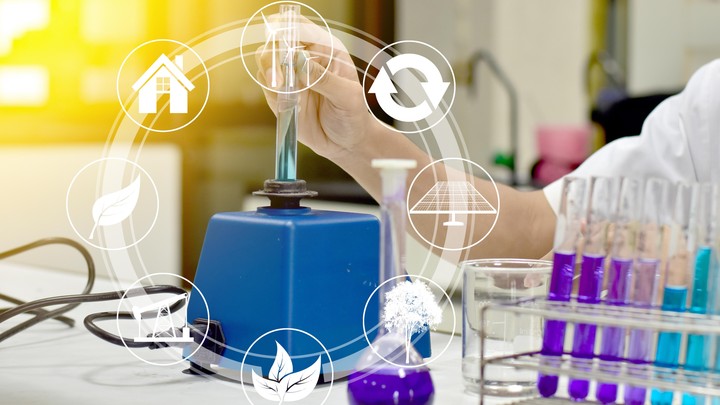
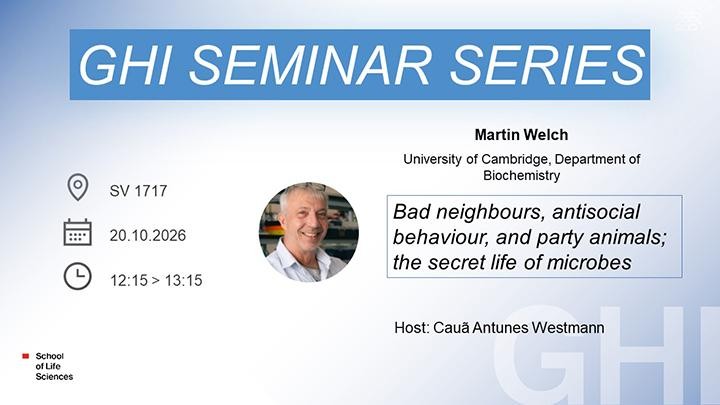
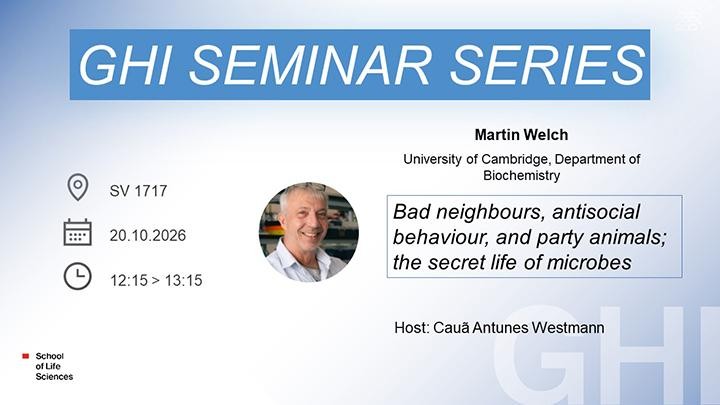
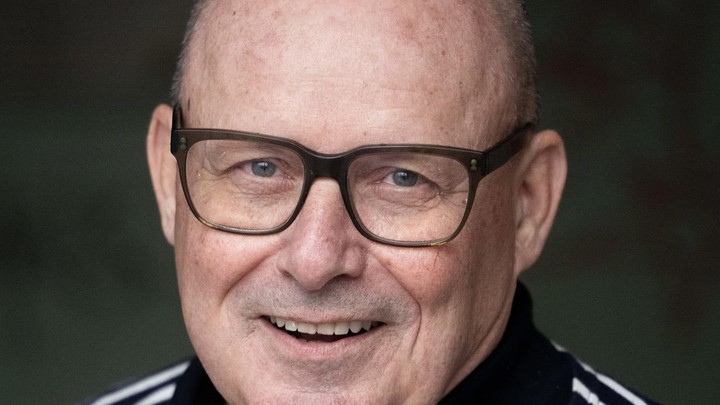
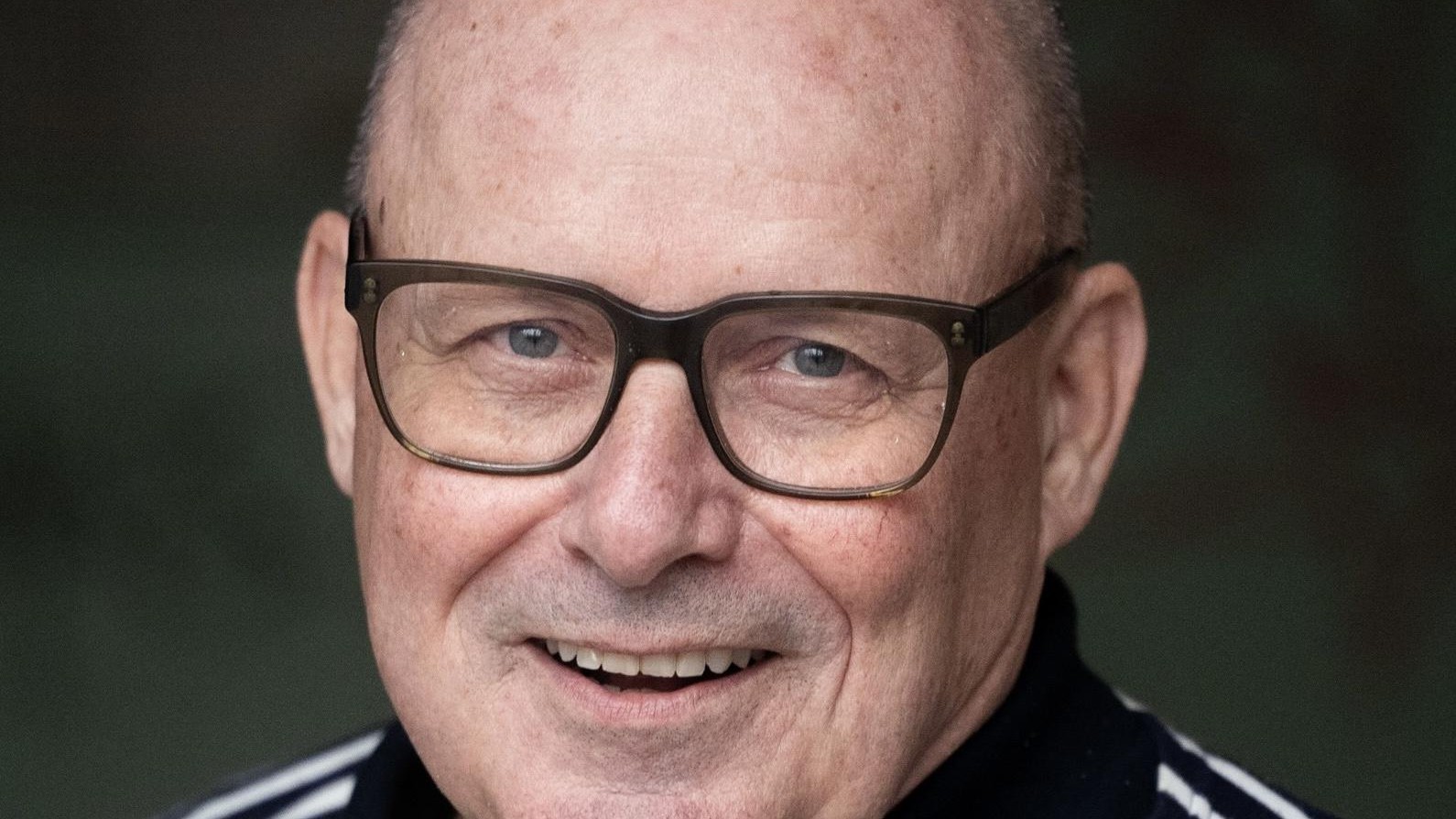
{ "count": 104, "next": "https://memento.epfl.ch/api/v1/mementos/5/events/?format=api&limit=10&offset=50&ordering=fr_label", "previous": "https://memento.epfl.ch/api/v1/mementos/5/events/?format=api&limit=10&offset=30&ordering=fr_label", "results": [ { "id": 72521, "title": "Le Chantier - Film screening and discussion with director Jean-Stéphane Bron", "slug": "le-chantier-film-screening-and-discussion-with-dir", "event_url": "https://memento.epfl.ch/event/le-chantier-film-screening-and-discussion-with-dir", "visual_url": "https://memento.epfl.ch/image/33779/200x112.jpg", "visual_large_url": "https://memento.epfl.ch/image/33779/720x405.jpg", "visual_maxsize_url": "https://memento.epfl.ch/image/33779/max-size.jpg", "lang": "en", "start_date": "2026-10-15", "end_date": "2026-10-15", "start_time": "18:15:00", "end_time": "20:15:00", "description": "<div class=\"BCX2 Ltr OutlineElement SCXW74632052\"><strong>France / Switzerland, August 2025<br>\r\nFilm, documentary, 94 min. / VOSTEN<br>\r\nFollowing the film, <a href=\"http://www.visionsdureel.ch/anne-delseth-nouvelle-directrice-artistique-de-visions-du-reel/\">Anne Delseth</a>, artistic director of <a href=\"http://www.visionsdureel.ch/\">Visions du Réel</a>, will lead a discussion with director <a href=\"http://en.wikipedia.org/wiki/Jean-St%C3%A9phane_Bron\">Jean-Stéphane Bron</a> and the audience.</strong><br>\r\n<br>\r\nBehind the closed doors of an extraordinary construction site, filmmaker <a href=\"http://en.wikipedia.org/wiki/Jean-St%C3%A9phane_Bron\">Jean-Stéphane Bron</a> spent four years documenting the construction in Paris of the <a href=\"http://fr.wikipedia.org/wiki/Path%C3%A9_Palace_(Paris)\">Pathé Palace cinema</a>, a luxury theater designed by Italian architect Renzo Piano for the group led by producer Jérôme Seydoux, one of the most influential figures in French cinema.<br>\r\n<br>\r\nHis documentary <a href=\"http://www.swissfilms.ch/fr/movie/le-chantier/4d8f6696d1d740e392cf73c68db29f15\">Le Chantier</a> chronicles an extraordinary architectural adventure by offering a real-time portrait of a society in miniature, driven by a common goal: the construction of movie theaters for the coming century. From the architect to the master carpenters, from the construction foreman to the head of the Pathé Group, from the sound system designer to the future projectionists, the documentary paints a vivid, human-scale portrait of this community.<br>\r\n<br>\r\nLe Chantier premiered in 2025 at the Locarno Film Festival and was released in theaters in the spring of 2026. This film, screened at EPFL, echoes the Double Deck construction project currently underway in plain view of everyone. It raises questions about how to tell the story of complex realities. Ultimately, it also symbolizes a world yet to be built. Following the screening, there will be a discussion with director Jean-Stéphane Bron.<br>\r\n---</div>\r\n\r\n<div class=\"BCX2 Ltr OutlineElement SCXW74632052\"><strong><a href=\"https://en.wikipedia.org/wiki/Jean-St%C3%A9phane_Bron\">Jean-Stéphane Bron</a> </strong><br>\r\nJean-Stéphane Bron (born 1969 in Lausanne) is a graduate of the École Cantonale d’Art de Lausanne (ECAL). His documentaries address contemporary issues such as the crisis of democracy, the economic crisis, and the rise of populism, using dramatic techniques similar to those found in fiction. Among them, *Connu de nos services* (1997) addresses the scandal surrounding the political dossiers compiled by the Federal Police in the 1970s and 1980s. *Mais im Bundeshuus / Le Génie helvétique* (2003), one of Swiss cinema’s major box-office hits, follows the work of a parliamentary commission tasked with drafting a law on genetic engineering. *The Blocher Experiment* (2013) sparked intense controversy. *Cleveland vs. Wall Street* (2010), about the subprime mortgage crisis, was presented at the Cannes Film Festival (Directors’ Fortnight) and nominated for a César Award in France. His film *The Paris Opera* (2017) was subsequently widely distributed around the world. With this film, which drew more than 200,000 viewers to theaters, Jean-Stéphane Bron won the Swiss Film Award in the Best Documentary category for the third time in 2018. In 2021, Jean-Stéphane Bron released *Cinq nouvelles du cerveau*, a feature-length film that explores various mind-boggling questions related to advances in the fields of neuroscience and artificial intelligence. Between December 2021 and May 2022, he filmed the series *Ma rue de l’Ale* for RTS on his own street in Lausanne; the series was a huge hit with audiences.<br>\r\n<br>\r\nExploring reality through the eyes of those who shape it. Jean-Stéphane Bron’s unique art lies not merely in presenting the facts, but in understanding both the people involved and the systems within which they operate—systems that shape their actions.<br>\r\n<br>\r\n<strong>Partner: <a href=\"http://www.visionsdureel.ch/\">Visions du réel</a></strong><br>\r\n \r\n<figure class=\"image\"><a href=\"https://www.epfl.ch/campus/art-culture/fr/les-culturelles/les-culturelles-dautomne-2026/\"><img alt=\"Programme complet des Culturelles\" height=\"182\" src=\"https://www.epfl.ch/campus/art-culture/wp-content/uploads/2026/09/LES_CULTURELLES_1920x1080_programme_complet.png\" width=\"600\"></a>\r\n\r\n<figcaption>© 2026 EPFL, Laura Persat</figcaption>\r\n</figure>\r\n</div>", "image_description": "", "creation_date": "2026-09-03T18:19:57", "last_modification_date": "2026-09-22T13:55:33", "link_label": "Programme complet des Culturelles", "link_url": "https://www.epfl.ch/campus/art-culture/fr/les-culturelles/les-culturelles-dautomne-2026/", "canceled": "False", "cancel_reason": "", "place_and_room": "Forum Rolex", "url_place_and_room": "https://plan.epfl.ch/?room==RLC%20E1%20240", "url_online_room": "", "spoken_languages": [ "https://memento.epfl.ch/api/v1/spoken_languages/1/?format=api", "https://memento.epfl.ch/api/v1/spoken_languages/2/?format=api", "https://memento.epfl.ch/api/v1/spoken_languages/3/?format=api" ], "speaker": "<a href=\"https://en.wikipedia.org/wiki/Jean-St%C3%A9phane_Bron\">Jean-Stéphane Bron</a>, réalisateur ", "organizer": "<a href=\"https://www.epfl.ch/campus/art-culture/fr/les-culturelles/\">Festival Les Culturelles</a> (Pôle Culture VPI)", "contact": "<a href=\"https://people.epfl.ch/veronique.mauron\">Véronique Mauron Layaz</a>", "is_internal": "False", "theme": "", "vulgarization": { "id": 1, "fr_label": "Tout public", "en_label": "General public" }, "registration": { "id": 3, "fr_label": "Entrée libre", "en_label": "Free" }, "keywords": "cinéma, documentaire, jean-stéphane bron", "file": null, "icalendar_url": "https://memento.epfl.ch/event/export/121711/", "category": { "id": 9, "code": "MANIF", "fr_label": "Événements festifs et culturels", "en_label": "Cultural events", "activated": true }, "academic_calendar_category": null, "domains": [], "mementos": [ "https://memento.epfl.ch/api/v1/mementos/1/?format=api", "https://memento.epfl.ch/api/v1/mementos/2/?format=api", "https://memento.epfl.ch/api/v1/mementos/4/?format=api", "https://memento.epfl.ch/api/v1/mementos/5/?format=api", "https://memento.epfl.ch/api/v1/mementos/6/?format=api", "https://memento.epfl.ch/api/v1/mementos/8/?format=api", "https://memento.epfl.ch/api/v1/mementos/21/?format=api", "https://memento.epfl.ch/api/v1/mementos/22/?format=api", "https://memento.epfl.ch/api/v1/mementos/32/?format=api", "https://memento.epfl.ch/api/v1/mementos/145/?format=api" ] }, { "id": 72649, "title": "Sustainable Labs: Get Involved", "slug": "sustainable-labs-get-involved-3", "event_url": "https://memento.epfl.ch/event/sustainable-labs-get-involved-3", "visual_url": "https://memento.epfl.ch/image/33911/200x112.jpg", "visual_large_url": "https://memento.epfl.ch/image/33911/720x405.jpg", "visual_maxsize_url": "https://memento.epfl.ch/image/33911/max-size.jpg", "lang": "en", "start_date": "2026-10-15", "end_date": "2026-12-24", "start_time": "12:15:00", "end_time": "13:00:00", "description": "<br>\r\nThe <strong>EPFL Sustainable Labs team</strong> is pleased to welcome you to its recurring <strong>\"Sustainable Labs: Get Involved\"</strong> sessions. Held every week, alternating between <strong>Tuesdays and Thursdays</strong>, these sessions provide an opportunity for laboratories, platforms, centers, and units to receive guidance and support on implementing more sustainable laboratory practices.<br>\r\n<br>\r\nThe <strong>Sustainable Labs initiative</strong> is part of EPFL's <em>Climate & Sustainability Strategy 2030</em>, which aims to reduce greenhouse gas emissions by an average of <strong>40% compared to 2006/2019 levels</strong> and achieve <strong>climate neutrality by 2040</strong>.<br>\r\n<br>\r\n→<a href=\"https://www.epfl.ch/about/sustainability/sustainability/green-labs_draft_ag/\"> </a><strong><a href=\"https://www.epfl.ch/about/sustainability/sustainability/green-labs_draft_ag/\">Learn more about the EPFL Sustainable Labs initiative</a>.</strong><br>\r\n<br>\r\nResearch activities are a key lever for achieving these ambitious goals. However, while cutting-edge research drives innovation, it also carries a significant environmental footprint. Laboratories consume large amounts of energy, generate substantial quantities of plastic, chemical, and biological waste, and contribute considerably to greenhouse gas emissions. At EPFL, we are committed to understanding and reducing this impact. Through the development and deployment of the <strong>EPFL CO₂ Calculator</strong>, we help researchers measure, understand, and improve the environmental performance of their activities.<br>\r\n<br>\r\nFrom <strong>October 8 to December 17, 2026</strong>, the <strong>Sustainable Labs: Get Involved</strong> sessions will focus on training and supporting users in the use of the <strong>EPFL CO₂ Calculator</strong>. This tool enables laboratories, platforms, centers, and central units to estimate their carbon footprint, identify major emission hotspots, and support informed decision-making to reduce their environmental impact through targeted actions.<br>\r\n<br>\r\nHere are the planned sessions : \r\n<ul>\r\n\t<li>Thursday October 8th 12:15-13:00 (online) </li>\r\n\t<li>Tuesday October 13th 12:15-13:00 (MA A0 364)</li>\r\n\t<li>Thursday October 22th 12:15-13:00 (online) </li>\r\n\t<li>Tuesday October 27th 12:15-13:00 (MA A0 364)</li>\r\n\t<li>Thursday November 5th 12:15-13:00(online) </li>\r\n\t<li>Tuesday November 10th 12:15-13:00 (MA A0 364)</li>\r\n\t<li>Thursday November 19th 12:15-13:00 (online) </li>\r\n\t<li>Tuesday November 24th 12:15-13:00 (MA A0 364)</li>\r\n\t<li>Thursday December 3rd 12:15-13:00 (online) </li>\r\n\t<li>Tuesday December 8th 12:15-13:00 (MA A0 364)</li>\r\n\t<li>Thursday December 17th 12:15-13:00 (online) </li>\r\n</ul>\r\nSessions can be held in English and/ or French depending on the participants. <br>\r\n<br>\r\n→ Please register <a href=\"https://docs.google.com/forms/d/e/1FAIpQLSd7Cp6LevgtBLtsWIsKr2Ec_HPGjJgimmwEaGAN5U4M4-2rrg/viewform\">here</a>. For physical sessions, standing lunch will be provided!<br>\r\n<br>\r\nWhether you have questions about the EPFL CO₂ Calculator, need help interpreting your results, or would like advice on implementing more sustainable laboratory practices, our team will be happy to support you and answer your questions! <br>\r\n ", "image_description": "", "creation_date": "2026-09-23T10:53:52", "last_modification_date": "2026-09-23T10:53:51", "link_label": "", "link_url": "", "canceled": "True", "cancel_reason": "", "place_and_room": "MA A0 364", "url_place_and_room": "", "url_online_room": "https://epfl.zoom.us/j/63013630338", "spoken_languages": [ "https://memento.epfl.ch/api/v1/spoken_languages/1/?format=api", "https://memento.epfl.ch/api/v1/spoken_languages/2/?format=api" ], "speaker": "", "organizer": "Mai-Phuong Dinh", "contact": "[email protected] ", "is_internal": "True", "theme": "", "vulgarization": { "id": 1, "fr_label": "Tout public", "en_label": "General public" }, "registration": { "id": 3, "fr_label": "Entrée libre", "en_label": "Free" }, "keywords": "", "file": null, "icalendar_url": "https://memento.epfl.ch/event/export/121897/", "category": { "id": 15, "code": "FORM", "fr_label": "Formations internes", "en_label": "Internal trainings", "activated": true }, "academic_calendar_category": null, "domains": [], "mementos": [ "https://memento.epfl.ch/api/v1/mementos/1/?format=api", "https://memento.epfl.ch/api/v1/mementos/4/?format=api", "https://memento.epfl.ch/api/v1/mementos/5/?format=api", "https://memento.epfl.ch/api/v1/mementos/6/?format=api", "https://memento.epfl.ch/api/v1/mementos/8/?format=api", "https://memento.epfl.ch/api/v1/mementos/9/?format=api", "https://memento.epfl.ch/api/v1/mementos/79/?format=api" ] }, { "id": 72679, "title": "Dissipative Phase Transitions and Qubit Readout with Nonlinear Superconducting Resonators", "slug": "dissipative-phase-transitions-and-qubit-readout--2", "event_url": "https://memento.epfl.ch/event/dissipative-phase-transitions-and-qubit-readout--2", "visual_url": "https://memento.epfl.ch/image/33905/200x112.jpg", "visual_large_url": "https://memento.epfl.ch/image/33905/720x405.jpg", "visual_maxsize_url": "https://memento.epfl.ch/image/33905/max-size.jpg", "lang": "en", "start_date": "2026-10-16", "end_date": "2026-10-16", "start_time": "17:00:00", "end_time": null, "description": "<p>Thesis Director: Prof. P. Scarlino,<br>\r\nPhysics doctoral program<br>\r\nThesis Nr. 11801<br>\r\n<br>\r\nTo take part in the public defense, please contact directly the speaker</p>", "image_description": "", "creation_date": "2026-09-25T12:20:56", "last_modification_date": "2026-09-25T12:20:57", "link_label": "", "link_url": "", "canceled": "False", "cancel_reason": "", "place_and_room": "MXF 1", "url_place_and_room": "https://plan.epfl.ch/?room==MXF%201", "url_online_room": "", "spoken_languages": [], "speaker": "<strong>Guillaume BEAULIEU</strong>", "organizer": "", "contact": "<strong>Guillaume BEAULIEU</strong>", "is_internal": "False", "theme": "", "vulgarization": { "id": 1, "fr_label": "Tout public", "en_label": "General public" }, "registration": { "id": 3, "fr_label": "Entrée libre", "en_label": "Free" }, "keywords": "EDPY", "file": null, "icalendar_url": "https://memento.epfl.ch/event/export/121937/", "category": { "id": 12, "code": "SOUTE", "fr_label": "Soutenances de thèses", "en_label": "Thesis defenses", "activated": true }, "academic_calendar_category": null, "domains": [], "mementos": [ "https://memento.epfl.ch/api/v1/mementos/1/?format=api", "https://memento.epfl.ch/api/v1/mementos/5/?format=api", "https://memento.epfl.ch/api/v1/mementos/6/?format=api" ] }, { "id": 72462, "title": "EPFL BioEngineering Talks", "slug": "epfl-bioengineering-talks-4", "event_url": "https://memento.epfl.ch/event/epfl-bioengineering-talks-4", "visual_url": "https://memento.epfl.ch/image/33710/200x112.jpg", "visual_large_url": "https://memento.epfl.ch/image/33710/720x405.jpg", "visual_maxsize_url": "https://memento.epfl.ch/image/33710/max-size.jpg", "lang": "en", "start_date": "2026-10-19", "end_date": "2026-10-19", "start_time": "12:15:00", "end_time": "13:15:00", "description": "<p>Weekly BioEngineering Talks (Lunch Provided)<br>\r\n<br>\r\n<strong>INVITED SPEAKERS:</strong><br>\r\n<br>\r\n<strong>Organic electrochemical transistors for enhanced potentiometric sensing of neurochemicals</strong><br>\r\n<strong><a href=\"https://people.epfl.ch/emily.schafer?lang=en\">Dr. Emily Schafer,</a> </strong>EPFL Laboratory of Chemical Nanotechnology<br>\r\nHost: <a href=\"https://people.epfl.ch/nako.nakatsuka\">Prof. Nako Nakatsuka</a><br>\r\n<br>\r\nFollowed by<br>\r\n<br>\r\n<strong>Data-driven protein engineering for sensing and biosynthesis of new-to-nature thioesters</strong><br>\r\n<a href=\"https://people.epfl.ch/sebastian.barthel?lang=en\"><strong>Dr. Sebastian Barthel</strong>,</a> EPFL Laboratory of Synthetic and Applied Microbiology <br>\r\nHost: <a href=\"https://people.epfl.ch/markus.jeschek\">Prof. Markus Jeschek</a><br>\r\n<br>\r\n------------------------------------------------------------------------------<br>\r\n<br>\r\n<strong>BioEngineering Talks mandatory EDBB Seminar Attendance (1st-Year PhD Students)</strong>\r\n</p><ul>\r\n\t<li> Attendance sheet to print <a class=\"text-link\" href=\"https://docs.google.com/document/d/1kusGxCFPAvWaRD8eUGEBkSVzD1ppMf1g/edit\" target=\"_blank\">HERE </a></li>\r\n</ul>\r\n<strong>The BioEngineering Student Seminar Series</strong> is an official course for which students can register and earn credits.<br>\r\n \r\n<ul>\r\n\t<li>Register <a class=\"text-link\" href=\"https://edu.epfl.ch/studyplan/fr/ecole_doctorale/biotechnologie-et-genie-biologique/coursebook/bioengineering-student-seminar-series-BIOENG-613\" target=\"_blank\">HERE</a></li>\r\n\t<li>Attendance sheet to print <a class=\"text-link\" href=\"https://docs.google.com/document/d/1ZGrPnt8LlLuWOApzx32s6L5UPPH8Hyoo/edit\" target=\"_blank\">HERE</a></li>\r\n</ul>\r\n<strong>General information:</strong><br>\r\nIn-person attendance is preferred to support your fellow students. Zoom is mainly for students on remote campuses; please notify <a class=\"text-link\" href=\"mailto:[email protected]\" target=\"_blank\">Fiorella Ghisays</a> in advance and join using your full name.<br>\r\nIf attending in person, have your sheet signed after the talk and keep the original, as no copy is retained.<br>\r\n ", "image_description": "", "creation_date": "2026-08-28T08:14:49", "last_modification_date": "2026-09-22T15:58:20", "link_label": "", "link_url": "", "canceled": "False", "cancel_reason": "", "place_and_room": "SV 1717", "url_place_and_room": "https://plan.epfl.ch/?room==SV%201717", "url_online_room": "https://epfl.zoom.us/j/68746410793", "spoken_languages": [ "https://memento.epfl.ch/api/v1/spoken_languages/2/?format=api" ], "speaker": "Invited Speaker and Student Speaker", "organizer": "Institute of Bioengineering", "contact": "<a href=\"mailto:[email protected]?subject=EPFL%20BioE%20Talks%20Series\">Fiorella Ghisays</a>, Institute of Bioengineering", "is_internal": "False", "theme": "", "vulgarization": { "id": 2, "fr_label": "Public averti", "en_label": "Informed public" }, "registration": { "id": 3, "fr_label": "Entrée libre", "en_label": "Free" }, "keywords": "", "file": "https://memento.epfl.ch/public/upload/files/BioEngineeringTalkMemento_u0lzmcg.jpg", "icalendar_url": "https://memento.epfl.ch/event/export/121616/", "category": { "id": 1, "code": "CONF", "fr_label": "Conférences - Séminaires", "en_label": "Conferences - Seminars", "activated": true }, "academic_calendar_category": null, "domains": [], "mementos": [ "https://memento.epfl.ch/api/v1/mementos/1/?format=api", "https://memento.epfl.ch/api/v1/mementos/5/?format=api", "https://memento.epfl.ch/api/v1/mementos/6/?format=api", "https://memento.epfl.ch/api/v1/mementos/8/?format=api", "https://memento.epfl.ch/api/v1/mementos/9/?format=api", "https://memento.epfl.ch/api/v1/mementos/111/?format=api", "https://memento.epfl.ch/api/v1/mementos/434/?format=api" ] }, { "id": 72726, "title": "Bad neighbours, antisocial behaviour, and party animals; the secret life of microbes", "slug": "bad-neighbours-antisocial-behaviour-and-party-anim", "event_url": "https://memento.epfl.ch/event/bad-neighbours-antisocial-behaviour-and-party-anim", "visual_url": "https://memento.epfl.ch/image/33944/200x112.jpg", "visual_large_url": "https://memento.epfl.ch/image/33944/720x405.jpg", "visual_maxsize_url": "https://memento.epfl.ch/image/33944/max-size.jpg", "lang": "en", "start_date": "2026-10-20", "end_date": "2026-10-20", "start_time": "12:15:00", "end_time": "13:15:00", "description": "<p>In this talk, I'll take a look at three \"microbial vignettes\". In the first, I'll examine how the presence of co-habiting microbes profoundly affects the biology of a human pathogen, Pseudomonas aeruginosa. This is important, because in diseased human airways - where P. aeruginosa is an unwelcome, but common inhabitant - the pathogen invariably shares the infection site with a variety of other microbes. It turns out that these microbial neighbours interact with one another and that these interactions are perturbed by the loss of a quorum sensing \"master regulator\" (LasR) in P. aeruginosa. In the second \"short\", I'll talk about how we are now able to manipulate the rate of evolution of the organism, either by \"stepping on the gas pedal\" or by \"slamming on the brakes\". The ability to do this, in an experimentally-controlled manner, is allowing us to access some novel evolutionary trajectories, and to address some truly fundamental biological questions. Finally, I'll take a fresh look at bacterial biofilms and in particular, examine whether the exopolysaccharide \"bioglue\" that holds these structures together might have additional - possibly more important roles. It turns out that it does, and that the exopolysaccharide matrix acts as a \"net\" to selectively sequester secreted proteins, potentially conferring novel functionalities on the biofilm.<br>\r\n<br>\r\nBrief Speaker Bio. <br>\r\nAfter reading for a degree in Biochemistry at the University of Oxford, Martin completed a PhD on bacterial chemotaxis at the Weizmann Institute of Science (Israel), where he was awarded the Wolf Prize for his contributions to the field. Leavuing Israel with a PhD and a [German] wife, he then moved to Toulouse (supported by a long-term EMBO fellowship) where he learned the dark art of x-ray crystallography and solved the structure of a signaling complex involved in bacterial chemotaxis. He then moved back to the UK to take up a post-doctoral position at the University of Cambridge working on quorum sensing in the fascinating plant pathogen, Pectobacterium atrosepticum. There, he developed skills in molecular genetics and demonstrated (for the first time) that quorum sensing molecules bind directly to their cognate LuxR homologs in a range of bacteria. This advance allowed him to secure a Royal Society University Research Fellowship to start his own group - where he learned the hard way that prospective students don't like any project with the word \"plant\" in, and when offered projects on the plant pathogen <em>versus </em>a mammalian pathogen, always went for the latter. Since around 2000, his team's focus has been on understanding better the link between metabolism and virulence in the opportunistic human pathogen, <em>Pseudomonas aeruginosa</em>. He is now Professor of Microbial Physiology and Metabolism at the University of Cambridge.</p>", "image_description": "Welch", "creation_date": "2026-10-01T10:27:10", "last_modification_date": "2026-10-01T10:27:10", "link_label": "", "link_url": "", "canceled": "False", "cancel_reason": "", "place_and_room": "SV 1717", "url_place_and_room": "https://plan.epfl.ch/?room==SV%201717", "url_online_room": "", "spoken_languages": [ "https://memento.epfl.ch/api/v1/spoken_languages/2/?format=api" ], "speaker": "<strong>Martin Welch</strong>, University of Cambridge, Department of Biochemistry", "organizer": "Cauã Antunes Westmann", "contact": "[email protected]", "is_internal": "False", "theme": "", "vulgarization": { "id": 2, "fr_label": "Public averti", "en_label": "Informed public" }, "registration": { "id": 3, "fr_label": "Entrée libre", "en_label": "Free" }, "keywords": "", "file": null, "icalendar_url": "https://memento.epfl.ch/event/export/122009/", "category": { "id": 1, "code": "CONF", "fr_label": "Conférences - Séminaires", "en_label": "Conferences - Seminars", "activated": true }, "academic_calendar_category": null, "domains": [], "mementos": [ "https://memento.epfl.ch/api/v1/mementos/1/?format=api", "https://memento.epfl.ch/api/v1/mementos/4/?format=api", "https://memento.epfl.ch/api/v1/mementos/5/?format=api", "https://memento.epfl.ch/api/v1/mementos/6/?format=api", "https://memento.epfl.ch/api/v1/mementos/8/?format=api", "https://memento.epfl.ch/api/v1/mementos/9/?format=api", "https://memento.epfl.ch/api/v1/mementos/53/?format=api" ] }, { "id": 72395, "title": "Training \"Research Visibility: Impact beyond citation\"", "slug": "training-research-visibility-impact-beyond-citat-4", "event_url": "https://memento.epfl.ch/event/training-research-visibility-impact-beyond-citat-4", "visual_url": "https://memento.epfl.ch/image/33646/200x112.jpg", "visual_large_url": "https://memento.epfl.ch/image/33646/720x405.jpg", "visual_maxsize_url": "https://memento.epfl.ch/image/33646/max-size.jpg", "lang": "en", "start_date": "2026-10-20", "end_date": "2026-10-20", "start_time": "14:00:00", "end_time": "16:00:00", "description": "<div class=\"all_text\"><strong>In this short workshop, we will address visibility in the academic context.</strong> <strong>How can you manage your visibility as a researcher? How can you ensure that your research output makes an impact? </strong><br>\r\n<br>\r\nLet's explore some of the tools you have at your disposal.<br>\r\n<br>\r\nAfter the workshop, you will:\r\n<ul>\r\n\t<li>Know different ways to be visible as a researcher.</li>\r\n\t<li>Grasp the limits and the benefits of visibility.</li>\r\n\t<li>Learn about the steps to take and the people to contact as an EPFL researcher.</li>\r\n</ul>\r\nAs a BONUS content: we will help everyone interested to setup their ORCID account after the training.<br>\r\n<br>\r\n<a href=\"https://bookwhen.com/fr/epfl_library/e/ev-s7di8-20261020140000\">Registration</a><br>\r\n<br>\r\nMore information about <a href=\"https://www.epfl.ch/campus/library/training/\">EPFL Library Training offer</a><br>\r\n<br>\r\n </div>", "image_description": "", "creation_date": "2026-08-20T09:50:49", "last_modification_date": "2026-08-20T15:44:43", "link_label": "Registration", "link_url": "https://bookwhen.com/fr/epfl_library/e/ev-s7di8-20261020140000", "canceled": "False", "cancel_reason": "", "place_and_room": "", "url_place_and_room": "", "url_online_room": "https://epfl.zoom.us/j/64493491008", "spoken_languages": [ "https://memento.epfl.ch/api/v1/spoken_languages/2/?format=api" ], "speaker": "EPFL Library Training Team", "organizer": "EPFL Library", "contact": "[email protected]", "is_internal": "False", "theme": "", "vulgarization": { "id": 1, "fr_label": "Tout public", "en_label": "General public" }, "registration": { "id": 1, "fr_label": "Sur inscription", "en_label": "Registration required" }, "keywords": "", "file": null, "icalendar_url": "https://memento.epfl.ch/event/export/121514/", "category": { "id": 15, "code": "FORM", "fr_label": "Formations internes", "en_label": "Internal trainings", "activated": true }, "academic_calendar_category": null, "domains": [], "mementos": [ "https://memento.epfl.ch/api/v1/mementos/1/?format=api", "https://memento.epfl.ch/api/v1/mementos/3/?format=api", "https://memento.epfl.ch/api/v1/mementos/5/?format=api", "https://memento.epfl.ch/api/v1/mementos/6/?format=api", "https://memento.epfl.ch/api/v1/mementos/8/?format=api", "https://memento.epfl.ch/api/v1/mementos/145/?format=api", "https://memento.epfl.ch/api/v1/mementos/269/?format=api", "https://memento.epfl.ch/api/v1/mementos/275/?format=api" ] }, { "id": 72653, "title": "Sustainable Labs: Get Involved", "slug": "sustainable-labs-get-involved-13", "event_url": "https://memento.epfl.ch/event/sustainable-labs-get-involved-13", "visual_url": "https://memento.epfl.ch/image/33911/200x112.jpg", "visual_large_url": "https://memento.epfl.ch/image/33911/720x405.jpg", "visual_maxsize_url": "https://memento.epfl.ch/image/33911/max-size.jpg", "lang": "en", "start_date": "2026-10-20", "end_date": "2026-12-29", "start_time": "12:15:00", "end_time": "13:00:00", "description": "<br>\r\nThe <strong>EPFL Sustainable Labs team</strong> is pleased to welcome you to its recurring <strong>\"Sustainable Labs: Get Involved\"</strong> sessions. Held every week, alternating between <strong>Tuesdays and Thursdays</strong>, these sessions provide an opportunity for laboratories, platforms, centers, and units to receive guidance and support on implementing more sustainable laboratory practices.<br>\r\n<br>\r\nThe <strong>Sustainable Labs initiative</strong> is part of EPFL's <em>Climate & Sustainability Strategy 2030</em>, which aims to reduce greenhouse gas emissions by an average of <strong>40% compared to 2006/2019 levels</strong> and achieve <strong>climate neutrality by 2040</strong>.<br>\r\n<br>\r\n→<a href=\"https://www.epfl.ch/about/sustainability/sustainability/green-labs_draft_ag/\"> </a><strong><a href=\"https://www.epfl.ch/about/sustainability/sustainability/green-labs_draft_ag/\">Learn more about the EPFL Sustainable Labs initiative</a>.</strong><br>\r\n<br>\r\nResearch activities are a key lever for achieving these ambitious goals. However, while cutting-edge research drives innovation, it also carries a significant environmental footprint. Laboratories consume large amounts of energy, generate substantial quantities of plastic, chemical, and biological waste, and contribute considerably to greenhouse gas emissions. At EPFL, we are committed to understanding and reducing this impact. Through the development and deployment of the <strong>EPFL CO₂ Calculator</strong>, we help researchers measure, understand, and improve the environmental performance of their activities.<br>\r\n<br>\r\nFrom <strong>October 8 to December 17, 2026</strong>, the <strong>Sustainable Labs: Get Involved</strong> sessions will focus on training and supporting users in the use of the <strong>EPFL CO₂ Calculator</strong>. This tool enables laboratories, platforms, centers, and central units to estimate their carbon footprint, identify major emission hotspots, and support informed decision-making to reduce their environmental impact through targeted actions.<br>\r\n<br>\r\nHere are the planned sessions : \r\n<ul>\r\n\t<li>Thursday October 8th 12:15-13:00 (online) </li>\r\n\t<li>Tuesday October 13th 12:15-13:00 (MA A0 364)</li>\r\n\t<li>Thursday October 22th 12:15-13:00 (online) </li>\r\n\t<li>Tuesday October 27th 12:15-13:00 (MA A0 364)</li>\r\n\t<li>Thursday November 5th 12:15-13:00(online) </li>\r\n\t<li>Tuesday November 10th 12:15-13:00 (MA A0 364)</li>\r\n\t<li>Thursday November 19th 12:15-13:00 (online) </li>\r\n\t<li>Tuesday November 24th 12:15-13:00 (MA A0 364)</li>\r\n\t<li>Thursday December 3rd 12:15-13:00 (online) </li>\r\n\t<li>Tuesday December 8th 12:15-13:00 (MA A0 364)</li>\r\n\t<li>Thursday December 17th 12:15-13:00 (online) </li>\r\n</ul>\r\nSessions can be held in English and/ or French depending on the participants. <br>\r\n<br>\r\n→ Please register <a href=\"https://docs.google.com/forms/d/e/1FAIpQLSd7Cp6LevgtBLtsWIsKr2Ec_HPGjJgimmwEaGAN5U4M4-2rrg/viewform\">here</a>. For physical sessions, standing lunch will be provided!<br>\r\n<br>\r\nWhether you have questions about the EPFL CO₂ Calculator, need help interpreting your results, or would like advice on implementing more sustainable laboratory practices, our team will be happy to support you and answer your questions! <br>\r\n ", "image_description": "", "creation_date": "2026-09-23T10:53:52", "last_modification_date": "2026-09-23T10:53:51", "link_label": "", "link_url": "", "canceled": "True", "cancel_reason": "", "place_and_room": "MA A0 364", "url_place_and_room": "", "url_online_room": "https://epfl.zoom.us/j/63013630338", "spoken_languages": [ "https://memento.epfl.ch/api/v1/spoken_languages/1/?format=api", "https://memento.epfl.ch/api/v1/spoken_languages/2/?format=api" ], "speaker": "", "organizer": "Mai-Phuong Dinh", "contact": "[email protected] ", "is_internal": "True", "theme": "", "vulgarization": { "id": 1, "fr_label": "Tout public", "en_label": "General public" }, "registration": { "id": 3, "fr_label": "Entrée libre", "en_label": "Free" }, "keywords": "", "file": null, "icalendar_url": "https://memento.epfl.ch/event/export/121901/", "category": { "id": 15, "code": "FORM", "fr_label": "Formations internes", "en_label": "Internal trainings", "activated": true }, "academic_calendar_category": null, "domains": [], "mementos": [ "https://memento.epfl.ch/api/v1/mementos/1/?format=api", "https://memento.epfl.ch/api/v1/mementos/4/?format=api", "https://memento.epfl.ch/api/v1/mementos/5/?format=api", "https://memento.epfl.ch/api/v1/mementos/6/?format=api", "https://memento.epfl.ch/api/v1/mementos/8/?format=api", "https://memento.epfl.ch/api/v1/mementos/9/?format=api", "https://memento.epfl.ch/api/v1/mementos/79/?format=api" ] }, { "id": 72725, "title": "Photonics Day 2026", "slug": "photonics-day-2026", "event_url": "https://memento.epfl.ch/event/photonics-day-2026", "visual_url": "https://memento.epfl.ch/image/33942/200x112.jpg", "visual_large_url": "https://memento.epfl.ch/image/33942/720x405.jpg", "visual_maxsize_url": "https://memento.epfl.ch/image/33942/max-size.jpg", "lang": "en", "start_date": "2026-10-22", "end_date": "2026-10-22", "start_time": "09:00:00", "end_time": "17:00:00", "description": "<p>Photonics Day is a yearly event that aims to promote research discussions and networking among members of the EPFL photonics community, as well as researchers and industry players in the photonics sector. The program includes invited talks from world leaders in the field, a thesis presentation by the winner of the Best EDPO distinction, a scientific picture contest organised by EPC, as well as presentations by students in the Doctoral Program in Photonics, who will compete in the 180-Second Thesis Competition.<br>\r\n<br>\r\nThis year the Photonics Day will take place on Thursday October 22, 2026 at the EPFL Forum Rolex.<br>\r\n<br>\r\nParticipation is free and includes lunch. <strong>Registration opens in September and is mandatory by October 12, 2026</strong>. You’ll find both the <a href=\"http://www.epfl.ch/education/phd/edpo-photonics/edpo-news-and-events/\">registration form</a> and the full <a href=\"http://www.epfl.ch/education/phd/edpo-photonics/edpo-news-and-events/\">program </a>on the same page.</p>", "image_description": "", "creation_date": "2026-09-30T17:09:30", "last_modification_date": "2026-09-30T17:21:57", "link_label": "EDPO News and Events", "link_url": "https://www.epfl.ch/education/phd/edpo-photonics/edpo-news-and-events/", "canceled": "False", "cancel_reason": "", "place_and_room": "RLC E1 240", "url_place_and_room": "https://plan.epfl.ch/?room==RLC%20E1%20240", "url_online_room": "", "spoken_languages": [ "https://memento.epfl.ch/api/v1/spoken_languages/2/?format=api" ], "speaker": "", "organizer": "Doctoral Program in Photonics", "contact": "Prof. Camille Brès", "is_internal": "False", "theme": "", "vulgarization": { "id": 2, "fr_label": "Public averti", "en_label": "Informed public" }, "registration": { "id": 1, "fr_label": "Sur inscription", "en_label": "Registration required" }, "keywords": "", "file": null, "icalendar_url": "https://memento.epfl.ch/event/export/122005/", "category": { "id": 1, "code": "CONF", "fr_label": "Conférences - Séminaires", "en_label": "Conferences - Seminars", "activated": true }, "academic_calendar_category": null, "domains": [], "mementos": [ "https://memento.epfl.ch/api/v1/mementos/1/?format=api", "https://memento.epfl.ch/api/v1/mementos/5/?format=api", "https://memento.epfl.ch/api/v1/mementos/6/?format=api", "https://memento.epfl.ch/api/v1/mementos/8/?format=api" ] }, { "id": 72736, "title": "PChem Seminar - Karl-Heinz Ernst", "slug": "pchem-seminar-karl-heinz-ernst", "event_url": "https://memento.epfl.ch/event/pchem-seminar-karl-heinz-ernst", "visual_url": "https://memento.epfl.ch/image/33952/200x112.jpg", "visual_large_url": "https://memento.epfl.ch/image/33952/720x405.jpg", "visual_maxsize_url": "https://memento.epfl.ch/image/33952/max-size.jpg", "lang": "en", "start_date": "2026-10-22", "end_date": "2026-10-22", "start_time": "17:00:00", "end_time": "19:00:00", "description": "<strong>Chirality Meets Magnetism: Spin Selectivity and Molecular Organization</strong><br>\r\n<br>\r\nSince Pasteur's discovery of molecular chirality, understanding how molecular handedness couples to its physical environment has remained a fundamental challenge. Of particular interest is its interplay with magnetism, anticipated already by Pierre Curie in 1894, as well as the emergence and propagation of chirality through molecular organization. Here, we explore these connections at surfaces, from the interaction of individual chiral molecules with magnetic substrates and spin-polarized electrons to the collective organization of molecular chirality in extended two-dimensional structures. First, we demonstrate enantioselective adsorption of individual helicene molecules on ferromagnetic cobalt surfaces. Spin- and chirality-resolved scanning tunneling microscopy reveals that left- and right-handed helicenes preferentially adsorb on Co islands with opposite out-of-plane magnetization, establishing a direct correlation between molecular handedness and substrate magnetization. Second, tunneling-conductance measurements through individual enantiomers reveal magnetochiral asymmetries of up to 50%, demonstrating spin-selective electron transport at the single-molecule level and excluding ensemble effects as the sole origin of chirality-induced spin selectivity (CISS). Finally, we report the first observation of aperiodic chiral molecular tiling arising from topological self-assembly on a silver surface, demonstrating how molecular chirality can propagate from individual building blocks into complex collective organization.", "image_description": "", "creation_date": "2026-10-01T19:17:53", "last_modification_date": "2026-10-02T08:39:11", "link_label": "", "link_url": "", "canceled": "False", "cancel_reason": "", "place_and_room": "CH G1 495", "url_place_and_room": "https://plan.epfl.ch/?room==CH%20G1%20495", "url_online_room": "", "spoken_languages": [ "https://memento.epfl.ch/api/v1/spoken_languages/2/?format=api" ], "speaker": "Karl-Heinz Ernst (EMPA)", "organizer": "Sascha Feldmann", "contact": "[email protected]", "is_internal": "False", "theme": "", "vulgarization": { "id": 2, "fr_label": "Public averti", "en_label": "Informed public" }, "registration": { "id": 3, "fr_label": "Entrée libre", "en_label": "Free" }, "keywords": "pcseminar", "file": null, "icalendar_url": "https://memento.epfl.ch/event/export/122021/", "category": { "id": 1, "code": "CONF", "fr_label": "Conférences - Séminaires", "en_label": "Conferences - Seminars", "activated": true }, "academic_calendar_category": null, "domains": [], "mementos": [ "https://memento.epfl.ch/api/v1/mementos/5/?format=api", "https://memento.epfl.ch/api/v1/mementos/14/?format=api" ] }, { "id": 72654, "title": "Sustainable Labs: Get Involved", "slug": "sustainable-labs-get-involved-10", "event_url": "https://memento.epfl.ch/event/sustainable-labs-get-involved-10", "visual_url": "https://memento.epfl.ch/image/33911/200x112.jpg", "visual_large_url": "https://memento.epfl.ch/image/33911/720x405.jpg", "visual_maxsize_url": "https://memento.epfl.ch/image/33911/max-size.jpg", "lang": "en", "start_date": "2026-10-22", "end_date": "2026-12-31", "start_time": "12:15:00", "end_time": "13:00:00", "description": "<br>\r\nThe <strong>EPFL Sustainable Labs team</strong> is pleased to welcome you to its recurring <strong>\"Sustainable Labs: Get Involved\"</strong> sessions. Held every week, alternating between <strong>Tuesdays and Thursdays</strong>, these sessions provide an opportunity for laboratories, platforms, centers, and units to receive guidance and support on implementing more sustainable laboratory practices.<br>\r\n<br>\r\nThe <strong>Sustainable Labs initiative</strong> is part of EPFL's <em>Climate & Sustainability Strategy 2030</em>, which aims to reduce greenhouse gas emissions by an average of <strong>40% compared to 2006/2019 levels</strong> and achieve <strong>climate neutrality by 2040</strong>.<br>\r\n<br>\r\n→<a href=\"https://www.epfl.ch/about/sustainability/sustainability/green-labs_draft_ag/\"> </a><strong><a href=\"https://www.epfl.ch/about/sustainability/sustainability/green-labs_draft_ag/\">Learn more about the EPFL Sustainable Labs initiative</a>.</strong><br>\r\n<br>\r\nResearch activities are a key lever for achieving these ambitious goals. However, while cutting-edge research drives innovation, it also carries a significant environmental footprint. Laboratories consume large amounts of energy, generate substantial quantities of plastic, chemical, and biological waste, and contribute considerably to greenhouse gas emissions. At EPFL, we are committed to understanding and reducing this impact. Through the development and deployment of the <strong>EPFL CO₂ Calculator</strong>, we help researchers measure, understand, and improve the environmental performance of their activities.<br>\r\n<br>\r\nFrom <strong>October 8 to December 17, 2026</strong>, the <strong>Sustainable Labs: Get Involved</strong> sessions will focus on training and supporting users in the use of the <strong>EPFL CO₂ Calculator</strong>. This tool enables laboratories, platforms, centers, and central units to estimate their carbon footprint, identify major emission hotspots, and support informed decision-making to reduce their environmental impact through targeted actions.<br>\r\n<br>\r\nHere are the planned sessions : \r\n<ul>\r\n\t<li>Thursday October 8th 12:15-13:00 (online) </li>\r\n\t<li>Tuesday October 13th 12:15-13:00 (MA A0 364)</li>\r\n\t<li>Thursday October 22th 12:15-13:00 (online) </li>\r\n\t<li>Tuesday October 27th 12:15-13:00 (MA A0 364)</li>\r\n\t<li>Thursday November 5th 12:15-13:00(online) </li>\r\n\t<li>Tuesday November 10th 12:15-13:00 (MA A0 364)</li>\r\n\t<li>Thursday November 19th 12:15-13:00 (online) </li>\r\n\t<li>Tuesday November 24th 12:15-13:00 (MA A0 364)</li>\r\n\t<li>Thursday December 3rd 12:15-13:00 (online) </li>\r\n\t<li>Tuesday December 8th 12:15-13:00 (MA A0 364)</li>\r\n\t<li>Thursday December 17th 12:15-13:00 (online) </li>\r\n</ul>\r\nSessions can be held in English and/ or French depending on the participants. <br>\r\n<br>\r\n→ Please register <a href=\"https://docs.google.com/forms/d/e/1FAIpQLSd7Cp6LevgtBLtsWIsKr2Ec_HPGjJgimmwEaGAN5U4M4-2rrg/viewform\">here</a>. For physical sessions, standing lunch will be provided!<br>\r\n<br>\r\nWhether you have questions about the EPFL CO₂ Calculator, need help interpreting your results, or would like advice on implementing more sustainable laboratory practices, our team will be happy to support you and answer your questions! <br>\r\n ", "image_description": "", "creation_date": "2026-09-23T10:53:52", "last_modification_date": "2026-09-23T10:53:51", "link_label": "", "link_url": "", "canceled": "False", "cancel_reason": "", "place_and_room": "MA A0 364", "url_place_and_room": "", "url_online_room": "https://epfl.zoom.us/j/63013630338", "spoken_languages": [ "https://memento.epfl.ch/api/v1/spoken_languages/1/?format=api", "https://memento.epfl.ch/api/v1/spoken_languages/2/?format=api" ], "speaker": "", "organizer": "Mai-Phuong Dinh", "contact": "[email protected] ", "is_internal": "True", "theme": "", "vulgarization": { "id": 1, "fr_label": "Tout public", "en_label": "General public" }, "registration": { "id": 3, "fr_label": "Entrée libre", "en_label": "Free" }, "keywords": "", "file": null, "icalendar_url": "https://memento.epfl.ch/event/export/121902/", "category": { "id": 15, "code": "FORM", "fr_label": "Formations internes", "en_label": "Internal trainings", "activated": true }, "academic_calendar_category": null, "domains": [], "mementos": [ "https://memento.epfl.ch/api/v1/mementos/1/?format=api", "https://memento.epfl.ch/api/v1/mementos/4/?format=api", "https://memento.epfl.ch/api/v1/mementos/5/?format=api", "https://memento.epfl.ch/api/v1/mementos/6/?format=api", "https://memento.epfl.ch/api/v1/mementos/8/?format=api", "https://memento.epfl.ch/api/v1/mementos/9/?format=api", "https://memento.epfl.ch/api/v1/mementos/79/?format=api" ] } ] }