Events
retrieve:
Return the details about the given Memento id.
list:
List all Memento objects.
GET /api/v1/mementos/5/events/?format=api&offset=50
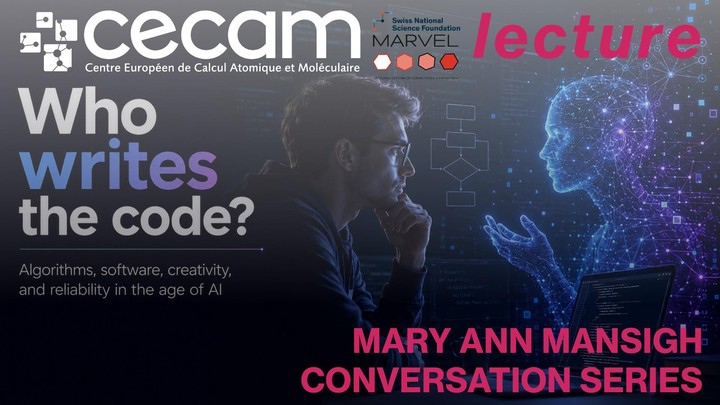
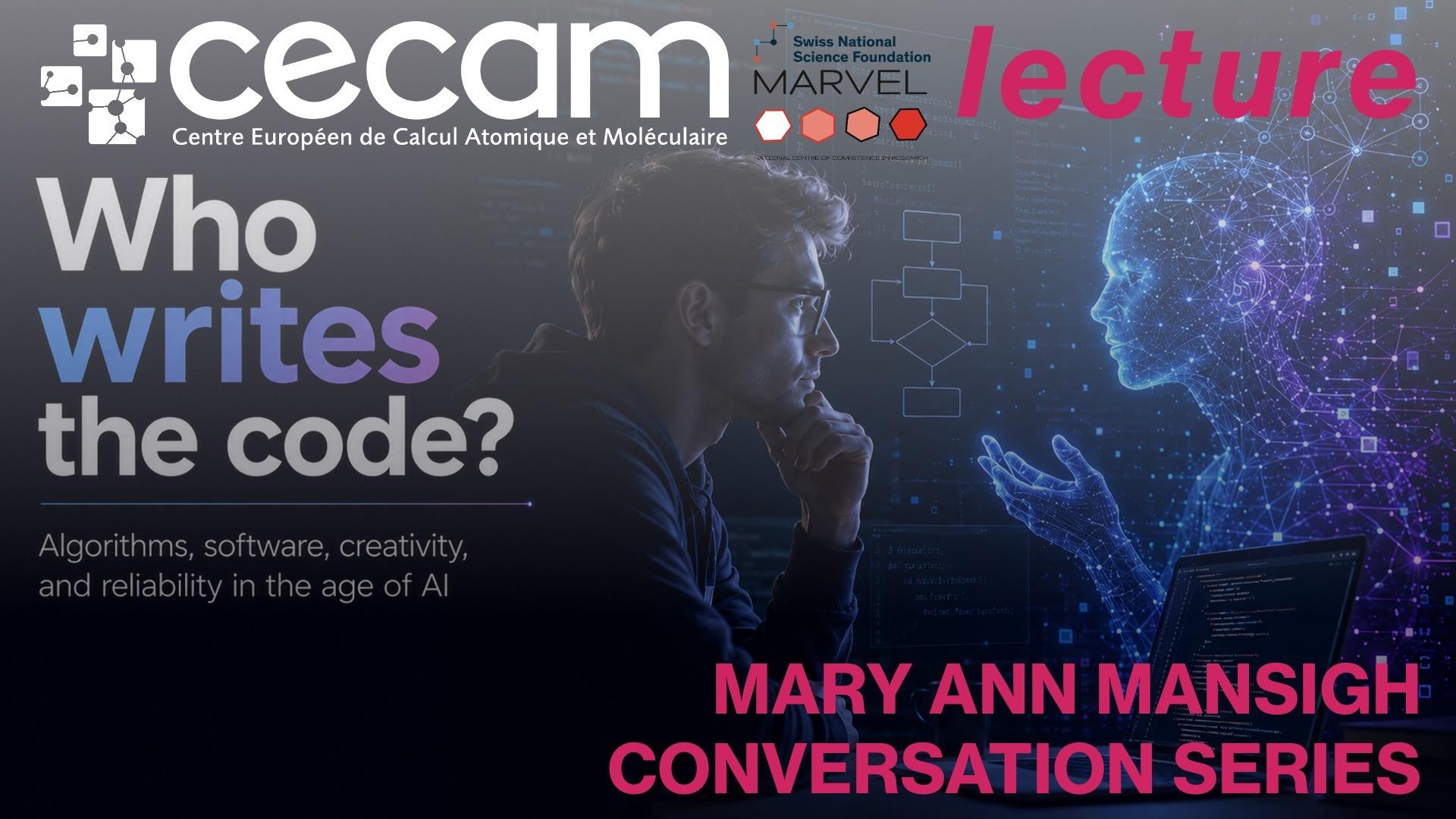
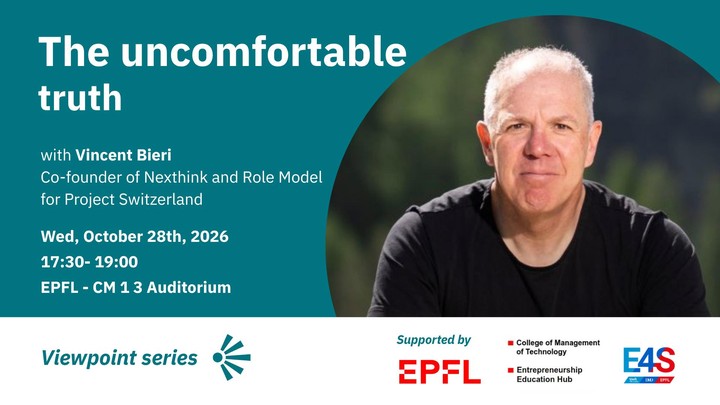
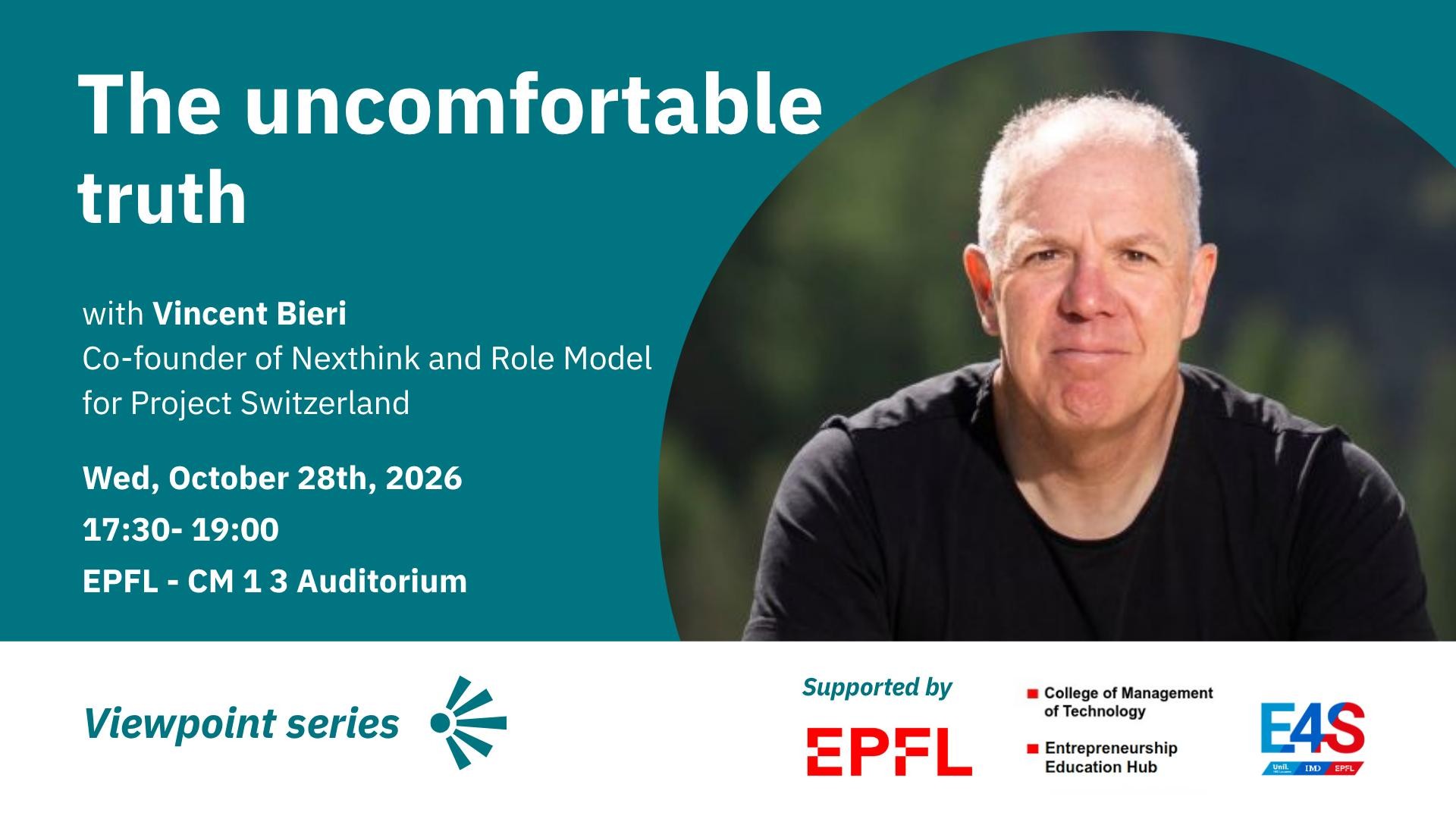
{ "count": 107, "next": "https://memento.epfl.ch/api/v1/mementos/5/events/?format=api&limit=10&offset=60", "previous": "https://memento.epfl.ch/api/v1/mementos/5/events/?format=api&limit=10&offset=40", "results": [ { "id": 72725, "title": "Photonics Day 2026", "slug": "photonics-day-2026", "event_url": "https://memento.epfl.ch/event/photonics-day-2026", "visual_url": "https://memento.epfl.ch/image/33942/200x112.jpg", "visual_large_url": "https://memento.epfl.ch/image/33942/720x405.jpg", "visual_maxsize_url": "https://memento.epfl.ch/image/33942/max-size.jpg", "lang": "en", "start_date": "2026-10-22", "end_date": "2026-10-22", "start_time": "09:00:00", "end_time": "17:00:00", "description": "<p>Photonics Day is a yearly event that aims to promote research discussions and networking among members of the EPFL photonics community, as well as researchers and industry players in the photonics sector. The program includes invited talks from world leaders in the field, a thesis presentation by the winner of the Best EDPO distinction, a scientific picture contest organised by EPC, as well as presentations by students in the Doctoral Program in Photonics, who will compete in the 180-Second Thesis Competition.<br>\r\n<br>\r\nThis year the Photonics Day will take place on Thursday October 22, 2026 at the EPFL Forum Rolex.<br>\r\n<br>\r\nParticipation is free and includes lunch. <strong>Registration opens in September and is mandatory by October 12, 2026</strong>. You’ll find both the <a href=\"http://www.epfl.ch/education/phd/edpo-photonics/edpo-news-and-events/\">registration form</a> and the full <a href=\"http://www.epfl.ch/education/phd/edpo-photonics/edpo-news-and-events/\">program </a>on the same page.</p>", "image_description": "", "creation_date": "2026-09-30T17:09:30", "last_modification_date": "2026-09-30T17:21:57", "link_label": "EDPO News and Events", "link_url": "https://www.epfl.ch/education/phd/edpo-photonics/edpo-news-and-events/", "canceled": "False", "cancel_reason": "", "place_and_room": "RLC E1 240", "url_place_and_room": "https://plan.epfl.ch/?room==RLC%20E1%20240", "url_online_room": "", "spoken_languages": [ "https://memento.epfl.ch/api/v1/spoken_languages/2/?format=api" ], "speaker": "", "organizer": "Doctoral Program in Photonics", "contact": "Prof. Camille Brès", "is_internal": "False", "theme": "", "vulgarization": { "id": 2, "fr_label": "Public averti", "en_label": "Informed public" }, "registration": { "id": 1, "fr_label": "Sur inscription", "en_label": "Registration required" }, "keywords": "", "file": null, "icalendar_url": "https://memento.epfl.ch/event/export/122005/", "category": { "id": 1, "code": "CONF", "fr_label": "Conférences - Séminaires", "en_label": "Conferences - Seminars", "activated": true }, "academic_calendar_category": null, "domains": [], "mementos": [ "https://memento.epfl.ch/api/v1/mementos/1/?format=api", "https://memento.epfl.ch/api/v1/mementos/5/?format=api", "https://memento.epfl.ch/api/v1/mementos/6/?format=api", "https://memento.epfl.ch/api/v1/mementos/8/?format=api" ] }, { "id": 72736, "title": "PChem Seminar - Karl-Heinz Ernst", "slug": "pchem-seminar-karl-heinz-ernst", "event_url": "https://memento.epfl.ch/event/pchem-seminar-karl-heinz-ernst", "visual_url": "https://memento.epfl.ch/image/33952/200x112.jpg", "visual_large_url": "https://memento.epfl.ch/image/33952/720x405.jpg", "visual_maxsize_url": "https://memento.epfl.ch/image/33952/max-size.jpg", "lang": "en", "start_date": "2026-10-22", "end_date": "2026-10-22", "start_time": "17:00:00", "end_time": "19:00:00", "description": "<strong>Chirality Meets Magnetism: Spin Selectivity and Molecular Organization</strong><br>\r\n<br>\r\nSince Pasteur's discovery of molecular chirality, understanding how molecular handedness couples to its physical environment has remained a fundamental challenge. Of particular interest is its interplay with magnetism, anticipated already by Pierre Curie in 1894, as well as the emergence and propagation of chirality through molecular organization. Here, we explore these connections at surfaces, from the interaction of individual chiral molecules with magnetic substrates and spin-polarized electrons to the collective organization of molecular chirality in extended two-dimensional structures. First, we demonstrate enantioselective adsorption of individual helicene molecules on ferromagnetic cobalt surfaces. Spin- and chirality-resolved scanning tunneling microscopy reveals that left- and right-handed helicenes preferentially adsorb on Co islands with opposite out-of-plane magnetization, establishing a direct correlation between molecular handedness and substrate magnetization. Second, tunneling-conductance measurements through individual enantiomers reveal magnetochiral asymmetries of up to 50%, demonstrating spin-selective electron transport at the single-molecule level and excluding ensemble effects as the sole origin of chirality-induced spin selectivity (CISS). Finally, we report the first observation of aperiodic chiral molecular tiling arising from topological self-assembly on a silver surface, demonstrating how molecular chirality can propagate from individual building blocks into complex collective organization.", "image_description": "", "creation_date": "2026-10-01T19:17:53", "last_modification_date": "2026-10-02T08:39:11", "link_label": "", "link_url": "", "canceled": "False", "cancel_reason": "", "place_and_room": "CH G1 495", "url_place_and_room": "https://plan.epfl.ch/?room==CH%20G1%20495", "url_online_room": "", "spoken_languages": [ "https://memento.epfl.ch/api/v1/spoken_languages/2/?format=api" ], "speaker": "Karl-Heinz Ernst (EMPA)", "organizer": "Sascha Feldmann", "contact": "[email protected]", "is_internal": "False", "theme": "", "vulgarization": { "id": 2, "fr_label": "Public averti", "en_label": "Informed public" }, "registration": { "id": 3, "fr_label": "Entrée libre", "en_label": "Free" }, "keywords": "pcseminar", "file": null, "icalendar_url": "https://memento.epfl.ch/event/export/122021/", "category": { "id": 1, "code": "CONF", "fr_label": "Conférences - Séminaires", "en_label": "Conferences - Seminars", "activated": true }, "academic_calendar_category": null, "domains": [], "mementos": [ "https://memento.epfl.ch/api/v1/mementos/5/?format=api", "https://memento.epfl.ch/api/v1/mementos/14/?format=api" ] }, { "id": 72654, "title": "Sustainable Labs: Get Involved", "slug": "sustainable-labs-get-involved-10", "event_url": "https://memento.epfl.ch/event/sustainable-labs-get-involved-10", "visual_url": "https://memento.epfl.ch/image/33911/200x112.jpg", "visual_large_url": "https://memento.epfl.ch/image/33911/720x405.jpg", "visual_maxsize_url": "https://memento.epfl.ch/image/33911/max-size.jpg", "lang": "en", "start_date": "2026-10-22", "end_date": "2026-12-31", "start_time": "12:15:00", "end_time": "13:00:00", "description": "<br>\r\nThe <strong>EPFL Sustainable Labs team</strong> is pleased to welcome you to its recurring <strong>\"Sustainable Labs: Get Involved\"</strong> sessions. Held every week, alternating between <strong>Tuesdays and Thursdays</strong>, these sessions provide an opportunity for laboratories, platforms, centers, and units to receive guidance and support on implementing more sustainable laboratory practices.<br>\r\n<br>\r\nThe <strong>Sustainable Labs initiative</strong> is part of EPFL's <em>Climate & Sustainability Strategy 2030</em>, which aims to reduce greenhouse gas emissions by an average of <strong>40% compared to 2006/2019 levels</strong> and achieve <strong>climate neutrality by 2040</strong>.<br>\r\n<br>\r\n→<a href=\"https://www.epfl.ch/about/sustainability/sustainability/green-labs_draft_ag/\"> </a><strong><a href=\"https://www.epfl.ch/about/sustainability/sustainability/green-labs_draft_ag/\">Learn more about the EPFL Sustainable Labs initiative</a>.</strong><br>\r\n<br>\r\nResearch activities are a key lever for achieving these ambitious goals. However, while cutting-edge research drives innovation, it also carries a significant environmental footprint. Laboratories consume large amounts of energy, generate substantial quantities of plastic, chemical, and biological waste, and contribute considerably to greenhouse gas emissions. At EPFL, we are committed to understanding and reducing this impact. Through the development and deployment of the <strong>EPFL CO₂ Calculator</strong>, we help researchers measure, understand, and improve the environmental performance of their activities.<br>\r\n<br>\r\nFrom <strong>October 8 to December 17, 2026</strong>, the <strong>Sustainable Labs: Get Involved</strong> sessions will focus on training and supporting users in the use of the <strong>EPFL CO₂ Calculator</strong>. This tool enables laboratories, platforms, centers, and central units to estimate their carbon footprint, identify major emission hotspots, and support informed decision-making to reduce their environmental impact through targeted actions.<br>\r\n<br>\r\nHere are the planned sessions : \r\n<ul>\r\n\t<li>Thursday October 8th 12:15-13:00 (online) </li>\r\n\t<li>Tuesday October 13th 12:15-13:00 (MA A0 364)</li>\r\n\t<li>Thursday October 22th 12:15-13:00 (online) </li>\r\n\t<li>Tuesday October 27th 12:15-13:00 (MA A0 364)</li>\r\n\t<li>Thursday November 5th 12:15-13:00(online) </li>\r\n\t<li>Tuesday November 10th 12:15-13:00 (MA A0 364)</li>\r\n\t<li>Thursday November 19th 12:15-13:00 (online) </li>\r\n\t<li>Tuesday November 24th 12:15-13:00 (MA A0 364)</li>\r\n\t<li>Thursday December 3rd 12:15-13:00 (online) </li>\r\n\t<li>Tuesday December 8th 12:15-13:00 (MA A0 364)</li>\r\n\t<li>Thursday December 17th 12:15-13:00 (online) </li>\r\n</ul>\r\nSessions can be held in English and/ or French depending on the participants. <br>\r\n<br>\r\n→ Please register <a href=\"https://docs.google.com/forms/d/e/1FAIpQLSd7Cp6LevgtBLtsWIsKr2Ec_HPGjJgimmwEaGAN5U4M4-2rrg/viewform\">here</a>. For physical sessions, standing lunch will be provided!<br>\r\n<br>\r\nWhether you have questions about the EPFL CO₂ Calculator, need help interpreting your results, or would like advice on implementing more sustainable laboratory practices, our team will be happy to support you and answer your questions! <br>\r\n ", "image_description": "", "creation_date": "2026-09-23T10:53:52", "last_modification_date": "2026-09-23T10:53:51", "link_label": "", "link_url": "", "canceled": "False", "cancel_reason": "", "place_and_room": "MA A0 364", "url_place_and_room": "", "url_online_room": "https://epfl.zoom.us/j/63013630338", "spoken_languages": [ "https://memento.epfl.ch/api/v1/spoken_languages/1/?format=api", "https://memento.epfl.ch/api/v1/spoken_languages/2/?format=api" ], "speaker": "", "organizer": "Mai-Phuong Dinh", "contact": "[email protected] ", "is_internal": "True", "theme": "", "vulgarization": { "id": 1, "fr_label": "Tout public", "en_label": "General public" }, "registration": { "id": 3, "fr_label": "Entrée libre", "en_label": "Free" }, "keywords": "", "file": null, "icalendar_url": "https://memento.epfl.ch/event/export/121902/", "category": { "id": 15, "code": "FORM", "fr_label": "Formations internes", "en_label": "Internal trainings", "activated": true }, "academic_calendar_category": null, "domains": [], "mementos": [ "https://memento.epfl.ch/api/v1/mementos/1/?format=api", "https://memento.epfl.ch/api/v1/mementos/4/?format=api", "https://memento.epfl.ch/api/v1/mementos/5/?format=api", "https://memento.epfl.ch/api/v1/mementos/6/?format=api", "https://memento.epfl.ch/api/v1/mementos/8/?format=api", "https://memento.epfl.ch/api/v1/mementos/9/?format=api", "https://memento.epfl.ch/api/v1/mementos/79/?format=api" ] }, { "id": 72637, "title": "EPFL BioEngineering Talks", "slug": "epfl-bioengineering-talks-8", "event_url": "https://memento.epfl.ch/event/epfl-bioengineering-talks-8", "visual_url": "https://memento.epfl.ch/image/33882/200x112.jpg", "visual_large_url": "https://memento.epfl.ch/image/33882/720x405.jpg", "visual_maxsize_url": "https://memento.epfl.ch/image/33882/max-size.jpg", "lang": "en", "start_date": "2026-10-26", "end_date": "2026-10-26", "start_time": "12:15:00", "end_time": "13:45:00", "description": "<p>Weekly BioEngineering Talks (Lunch Provided)<br>\r\n<br>\r\n<strong>INVITED SPEAKER:</strong><br>\r\n<br>\r\n<strong>Advancing Multidimensional Single-Molecule localization microscopy: development and applications in nuclear organization</strong><br>\r\n<a href=\"http://institut-curie.org/person/bassam-hajj\"><strong>Dr. Bassam Hajj</strong></a>, Institut Curie, Paris<br>\r\nHost: <a href=\"https://people.epfl.ch/aleksandra.radenovic?lang=en\">Prof. Aleksandra Radenovic</a><br>\r\n<br>\r\n<u><strong>Abstract:</strong></u><br>\r\nSingle-molecule localization microscopy (SMLM) has revolutionized our understanding of biological processes by providing access to spatial scales beyond the diffraction limit of conventional optical microscopy. In the study of the cell nucleus, SMLM has offered unique insights into its organization and function at the nanoscale. Nuclear architecture is structured across multiple spatial scales in three dimensions and is highly dynamic. Understanding the mechanisms that govern nuclear organization therefore requires imaging approaches capable of capturing molecular dynamics across a broad range of spatial and temporal scales and in diverse biological contexts. Although SMLM can routinely achieve spatial resolutions in the tens-of-nanometers range, many biologically relevant structures and processes remain beyond its reach. For example, resolving the precise organization of DNA at the molecular scale remains challenging, as it would require a substantial improvement in spatial resolution over conventional SMLM, while also addressing the high density and degree of molecular compaction within the nucleus. <br>\r\nOver the years, we have developed complementary strategies to address these challenges by introducing additional dimensions and observables into SMLM measurements. In this presentation, I will first discuss our approaches to three-dimensional single-molecule imaging, including multifocus microscopy and volumetric light-sheet excitation, which enable fast and sensitive imaging over extended volumes and in complex biological samples such as cell colonies. While these approaches provide access to the three-dimensional and temporal dimensions required to investigate nuclear organization, spatial resolution alone is not always sufficient to distinguish molecular arrangements. We have therefore extended SMLM further by implementing polarization-resolved multifocus microscopy (PolMFM), which combines three-dimensional localization with information on molecular orientation.<br>\r\nI will illustrate how these multidimensional approaches can provide new insights into nuclear organization, with examples spanning different biological systems. In particular, I will present evidence for a long-range, crystal-like organization of DNA within the nuclei of mature sperm cells from crickets, demonstrating how multidimensional imaging can reveal structural features that remain inaccessible to conventional localization microscopy.<br>\r\nFinally, I will discuss the challenges and opportunities associated with visualizing, analyzing, and interactively exploring the multidimensional datasets generated by these approaches. Together, these developments illustrate how extending SMLM beyond conventional two-dimensional localization can provide new ways to interrogate the organization and dynamics of biological systems at the nanoscale.<br>\r\n<br>\r\n<br>\r\n<u><strong>Bio:</strong></u><br>\r\nBassam Hajj is a physicist and CNRS researcher at Institut Curie in Paris, where he is a member of the Physics of Cells and Cancer unit and co-leads the “Light-based Observation and Control of Cellular Organization” team. His research focuses on the development of advanced optical microscopy techniques, particularly single-molecule localization microscopy, 3D imaging, and multidimensional approaches for studying cellular organization at the nanoscale.<br>\r\nAfter completing his PhD at École Normale Supérieure de Cachan on electro-optical microscopy, Bassam joined Janelia Research Campus as a postdoctoral researcher, where he worked on multifocus microscopy for fast and sensitive single-molecule imaging. He subsequently returned to Institut Curie and joined the CNRS as a permanent researcher in 2016.<br>\r\nHis current research combines innovative microscopy, quantitative image analysis, and data visualization to investigate molecular organization and dynamics, with a particular focus on nuclear organization.<br>\r\n<br>\r\n<strong>STUDENT SPEAKER:</strong><br>\r\n<br>\r\n<strong>Transcription Factor Dose in Stem Cell Reprogramming: Insights from Single-Cell Multi-Omics</strong><br>\r\n<strong><a href=\"https://people.epfl.ch/angelika.gebhart?lang=en\">Angelika Gebhart</a>, </strong><a href=\"https://www.epfl.ch/labs/deplanckelab/\">Deplancke Lab</a><br>\r\n<br>\r\n<br>\r\n------------------------------------------------------------------------------<br>\r\n<br>\r\n<strong>BioEngineering Talks mandatory EDBB Seminar Attendance (1st-Year PhD Students)</strong>\r\n</p><ul>\r\n\t<li> Attendance sheet to print <a class=\"text-link\" href=\"https://docs.google.com/document/d/1kusGxCFPAvWaRD8eUGEBkSVzD1ppMf1g/edit\" target=\"_blank\">HERE </a></li>\r\n</ul>\r\n<strong>The BioEngineering Student Seminar Series</strong> is an official course for which students can register and earn credits.<br>\r\n \r\n<ul>\r\n\t<li>Register <a class=\"text-link\" href=\"https://edu.epfl.ch/studyplan/fr/ecole_doctorale/biotechnologie-et-genie-biologique/coursebook/bioengineering-student-seminar-series-BIOENG-613\" target=\"_blank\">HERE</a></li>\r\n\t<li>Attendance sheet to print <a class=\"text-link\" href=\"https://docs.google.com/document/d/1ZGrPnt8LlLuWOApzx32s6L5UPPH8Hyoo/edit\" target=\"_blank\">HERE</a></li>\r\n</ul>\r\n<strong>General information:</strong><br>\r\nIn-person attendance is preferred to support your fellow students. Zoom is mainly for students on remote campuses; please notify <a class=\"text-link\" href=\"mailto:[email protected]\" target=\"_blank\">Fiorella Ghisays</a> in advance and join using your full name.<br>\r\nIf attending in person, have your sheet signed after the talk and keep the original, as no copy is retained.<br>\r\n ", "image_description": "", "creation_date": "2026-09-22T14:23:42", "last_modification_date": "2026-09-22T14:43:05", "link_label": "", "link_url": "", "canceled": "False", "cancel_reason": "", "place_and_room": "SV 1717", "url_place_and_room": "https://plan.epfl.ch/?room==SV%201717", "url_online_room": "https://epfl.zoom.us/j/68746410793", "spoken_languages": [ "https://memento.epfl.ch/api/v1/spoken_languages/2/?format=api" ], "speaker": "Invited Speaker and Student Speaker", "organizer": "Institute of Bioengineering", "contact": "<a href=\"mailto:[email protected]?subject=EPFL%20BioE%20Talks%20Series\">Fiorella Ghisays</a>, Institute of Bioengineering", "is_internal": "False", "theme": "", "vulgarization": { "id": 2, "fr_label": "Public averti", "en_label": "Informed public" }, "registration": { "id": 3, "fr_label": "Entrée libre", "en_label": "Free" }, "keywords": "", "file": "https://memento.epfl.ch/public/upload/files/BioEngineeringTalkMemento_u0lzmcg.jpg", "icalendar_url": "https://memento.epfl.ch/event/export/121879/", "category": { "id": 1, "code": "CONF", "fr_label": "Conférences - Séminaires", "en_label": "Conferences - Seminars", "activated": true }, "academic_calendar_category": null, "domains": [], "mementos": [ "https://memento.epfl.ch/api/v1/mementos/1/?format=api", "https://memento.epfl.ch/api/v1/mementos/5/?format=api", "https://memento.epfl.ch/api/v1/mementos/6/?format=api", "https://memento.epfl.ch/api/v1/mementos/8/?format=api", "https://memento.epfl.ch/api/v1/mementos/9/?format=api", "https://memento.epfl.ch/api/v1/mementos/111/?format=api", "https://memento.epfl.ch/api/v1/mementos/434/?format=api" ] }, { "id": 72608, "title": "MAMCS : Who writes the code? Algorithms, software, creativity, and reliability in the age of AI", "slug": "mamcs-who-writes-the-code-algorithms-software-cr-2", "event_url": "https://memento.epfl.ch/event/mamcs-who-writes-the-code-algorithms-software-cr-2", "visual_url": "https://memento.epfl.ch/image/33852/200x112.jpg", "visual_large_url": "https://memento.epfl.ch/image/33852/720x405.jpg", "visual_maxsize_url": "https://memento.epfl.ch/image/33852/max-size.jpg", "lang": "en", "start_date": "2026-10-27", "end_date": "2026-10-27", "start_time": "15:00:00", "end_time": "18:00:00", "description": "<p>The Mary Ann Mansigh Conversation series focuses of non-strictly technical topics of cultural interest for the simulation and modelling community. The format reflects the informative and informal nature of these sessions, with talks introducing the subject followed by a conversation between the speakers and the audience.<br>\r\nThe lecture series \"<a href=\"https://www.cecam.org/lectures-categories/mary-ann-mansigh-series\">Mary Ann Mansigh Conversation series</a>\" is co-organized by CECAM (<a href=\"https://www.cecam.org/lectures-categories/www.cecam.org\">https://www.cecam.org</a>) and MARVEL (<a href=\"http://nccr-marvel.ch/\" target=\"_blank\">http://nccr-marvel.ch/</a>) at EPFL.<br>\r\n<br>\r\n<strong>Tuesday October 27, 2026, 15:00-18:00 CET</strong><br>\r\n<br>\r\nArtificial intelligence is changing how algorithms are conceived, how software is written, and how its outputs are verified. This conversation takes stock of where the field of simulation and modelling stands today and opens a discussion on future directions and best practices — how to safeguard reliability and scientific creativity, how to adapt notions of authorship and ownership for AI-assisted code, and how to preserve and ideally enhance the rich commercial and academic software ecosystem that has driven the growth of computational science in research and development.<br>\r\n<br>\r\n<strong>We invite submissions for contributed talks. If you would like to propose a contribution, please submit your abstract using this <a href=\"https://forms.gle/AXmRQWYvYY3g9wPWA\" rel=\"noopener noreferrer\" target=\"_blank\">form</a>. Deadline October 13, 2026.</strong><br>\r\n<br>\r\nThe conversation will take place at EPFL, in <a href=\"https://plan.epfl.ch/?room==BCH%202103\" target=\"_blank\">room BCH 2103</a> and online.<br>\r\n<br>\r\nZoom link <a href=\"https://epfl.zoom.us/j/68443642155?pwd=ZPjdZw2KmHzeQ9Pu376iLb0OyMXCV8.1\">https://epfl.zoom.us/j/68443642155?pwd=ZPjdZw2KmHzeQ9Pu376iLb0OyMXCV8.1</a><br>\r\n<br>\r\n<strong>Tentative program</strong><br>\r\n15:00 Welcome and introduction<br>\r\n15:10 Georg Kresse, University of Vienna, Austria<br>\r\n15:30 Miguel Marques Ruhr, University Bochum, Germany<br>\r\n15:50 Michele Ceriotti, EPFL, Switzerland<br>\r\n16:10 Short break<br>\r\n16:20 Contributed speaker 1<br>\r\n16:35 Contributed speaker 2<br>\r\n16:50 Contributed speaker 3<br>\r\n17:05 Discussion<br>\r\n17:30 Apero for in person participants<br>\r\n<br>\r\n<strong>Previous CECAM and MARVEL lectures can be found at</strong><br>\r\n<a contenteditable=\"false\" href=\"http://www.materialscloud.org/learn/sections/Btmngu/marvel-events\" target=\"_blank\" title=\"http://www.materialscloud.org/learn/sections/Btmngu/marvel-events\">https://www.materialscloud.org/learn/sections/Btmngu/marvel-events</a><br>\r\n<a contenteditable=\"false\" href=\"http://www.cecam.org/lectures\" target=\"_blank\" title=\"http://www.cecam.org/lectures\">https://www.cecam.org/lectures</a></p>", "image_description": "", "creation_date": "2026-09-17T11:29:02", "last_modification_date": "2026-09-17T11:39:28", "link_label": "Mary Ann Mansigh Conversation Series", "link_url": "https://www.cecam.org/lecture-details/who-writes-code-algorithms-software-creativity-and-reliability-age-ai", "canceled": "False", "cancel_reason": "", "place_and_room": "BCH 2103", "url_place_and_room": "https://plan.epfl.ch/?room==BCH%202103", "url_online_room": "https://epfl.zoom.us/j/68443642155?pwd=ZPjdZw2KmHzeQ9Pu376iLb0OyMXCV8.1", "spoken_languages": [ "https://memento.epfl.ch/api/v1/spoken_languages/2/?format=api" ], "speaker": "", "organizer": "CECAM ; MARVEL", "contact": "<a href=\"mailto:[email protected]\"><strong>Cornelia Bujenita</strong></a>, CECAM Events & Operations Manager", "is_internal": "False", "theme": "", "vulgarization": { "id": 2, "fr_label": "Public averti", "en_label": "Informed public" }, "registration": { "id": 3, "fr_label": "Entrée libre", "en_label": "Free" }, "keywords": "", "file": null, "icalendar_url": "https://memento.epfl.ch/event/export/121841/", "category": { "id": 1, "code": "CONF", "fr_label": "Conférences - Séminaires", "en_label": "Conferences - Seminars", "activated": true }, "academic_calendar_category": null, "domains": [], "mementos": [ "https://memento.epfl.ch/api/v1/mementos/1/?format=api", "https://memento.epfl.ch/api/v1/mementos/5/?format=api", "https://memento.epfl.ch/api/v1/mementos/6/?format=api", "https://memento.epfl.ch/api/v1/mementos/8/?format=api" ] }, { "id": 72298, "title": "Innosuisse-Armasuisse Flagship Initiative 2026", "slug": "innosuisse-armasuisse-flagship-initiative-2026", "event_url": "https://memento.epfl.ch/event/innosuisse-armasuisse-flagship-initiative-2026", "visual_url": "https://memento.epfl.ch/image/33565/200x112.jpg", "visual_large_url": "https://memento.epfl.ch/image/33565/720x405.jpg", "visual_maxsize_url": "https://memento.epfl.ch/image/33565/max-size.jpg", "lang": "en", "start_date": "2026-10-27", "end_date": "2026-10-27", "start_time": null, "end_time": null, "description": "<p>The <strong><a href=\"https://www.innosuisse.admin.ch/en/flagship-initiative-call-for-projects\">2026 Flagship call by Innosuisse and armasuisse</a></strong> supports research and innovation in security and defence, with a focus on dual-use technologies that benefit both civilian and defence applications.<br>\r\n<br>\r\nThe 2026 call focuses on three complementary technology areas critical to defence and secure mobility:\r\n</p><ul>\r\n\t<li>Precise and reliable positioning, navigation and timing (PNT)</li>\r\n\t<li>Photonics for communication and sensorapplications</li>\r\n\t<li>Innovative technologies to counteract drones (C-UAV)</li>\r\n</ul>\r\n<strong>Dual-use requirement:</strong> Flagship proposals must target innovations with clear civilian and defence applications. Projects with only civilian or only defence objectives are not eligible. Applicants must demonstrate the dual-use character in their (pre-)proposal.<br>\r\n<br>\r\n<strong>Eligibility Checklist:</strong>\r\n\r\n<ul>\r\n\t<li>Consortium includes at least 3 eligible research partners, including at least 1 University of Applied Sciences (UAS).</li>\r\n\t<li>Consortium includes at least 2 implementation partners.</li>\r\n\t<li>A HEI or eligible non-commercial research institution acts as Host Institution.</li>\r\n\t<li>Proposal demonstrates systemic innovation and transdisciplinary collaboration.</li>\r\n</ul>\r\n<strong>Mandatory Pre-Proposal Content:</strong>\r\n\r\n<ul>\r\n\t<li>Executive summary and abstract.</li>\r\n\t<li>Partnership and consortium structure.</li>\r\n\t<li>Visual organisation chart of flagship and subprojects.</li>\r\n\t<li>Objectives, milestones, deliverables and systemic innovation rationale.</li>\r\n\t<li>High-level budget estimate.</li>\r\n</ul>\r\n<strong>Key Dates:</strong>\r\n\r\n<ul>\r\n\t<li><strong>Online information session: </strong>The recording from the 13 August 2026 event is available<strong> <a href=\"https://www.youtube.com/watch?v=drt29R1cU94\">HERE</a>.</strong></li>\r\n\t<li><strong>Pre-proposal deadline: 27 October 2026 (12:00 CET).</strong></li>\r\n\t<li>Recommendation letters: February 2027.</li>\r\n\t<li>Full proposal deadline: 4 May 2027 (12:00 CET).</li>\r\n\t<li>Funding decision: July 2027.</li>\r\n</ul>\r\nEPFL members initiating collaborations and partnerships should follow the <a href=\"https://epflch.sharepoint.com/sites/VPA-AVP-R-Gestion/Documents%20partages/Forms/AllItems.aspx?id=%2Fsites%2FVPA%2DAVP%2DR%2DGestion%2FDocuments%20partages%2FCOMMITTEES%2FGEP%2F07%5FRevision%20of%20the%20GEP%2Fworking%20documents%2Fnew%20GEP%20core%20documents%2FDoc%20versions%20for%20implementation%20202605%2FNew%20design%20%2D%20PDF%20%2D%20Alex%2FGuidelines%20toward%20Responsible%20Collaborations%20and%20Partnerships%2Epdf&parent=%2Fsites%2FVPA%2DAVP%2DR%2DGestion%2FDocuments%20partages%2FCOMMITTEES%2FGEP%2F07%5FRevision%20of%20the%20GEP%2Fworking%20documents%2Fnew%20GEP%20core%20documents%2FDoc%20versions%20for%20implementation%20202605%2FNew%20design%20%2D%20PDF%20%2D%20Alex&p=true&ga=1\">GEP Guidelines</a>. We strongly recommend completing the <a href=\"https://epflch.sharepoint.com/sites/VPA-AVP-R-Gestion/Documents%20partages/Forms/AllItems.aspx?id=%2Fsites%2FVPA%2DAVP%2DR%2DGestion%2FDocuments%20partages%2FCOMMITTEES%2FGEP%2F07%5FRevision%20of%20the%20GEP%2Fworking%20documents%2Fnew%20GEP%20core%20documents%2FDoc%20versions%20for%20implementation%20202605%2FNew%20design%20%2D%20PDF%20%2D%20Alex%2FQuestionnaire%20on%20collaborations%20for%20PI%2Epdf&parent=%2Fsites%2FVPA%2DAVP%2DR%2DGestion%2FDocuments%20partages%2FCOMMITTEES%2FGEP%2F07%5FRevision%20of%20the%20GEP%2Fworking%20documents%2Fnew%20GEP%20core%20documents%2FDoc%20versions%20for%20implementation%20202605%2FNew%20design%20%2D%20PDF%20%2D%20Alex&p=true&ga=1\">GEP self-assessment questionnaire </a>to support safe and responsible collaborations. Further information is available on the <a href=\"https://www.epfl.ch/about/vice-presidencies/vice-presidency-for-academic-affairs-vpa/academic-committees/choosing-fair-and-responsible-partnerships/\">GEP webpage</a>.<br>\r\n<br>\r\nFor further information, please refer to the <a href=\"https://drive.google.com/drive/u/1/folders/12joFEiOTRsHRKp2YRL5KKbkahmBJ9uQJ\">EPFL Application Toolkit</a> and the <a href=\"https://www.innosuisse.admin.ch/en/flagship-initiative-call-for-projects\">call website</a>, or contact the EPFL Research Office via <a href=\"mailto:[email protected]\">[email protected]</a>.", "image_description": "", "creation_date": "2026-08-04T15:12:24", "last_modification_date": "2026-08-25T08:32:57", "link_label": "", "link_url": "", "canceled": "False", "cancel_reason": "", "place_and_room": "", "url_place_and_room": "", "url_online_room": "", "spoken_languages": [], "speaker": "", "organizer": "", "contact": "<a href=\"mailto:[email protected]\">EPFL Research Office</a>", "is_internal": "False", "theme": "", "vulgarization": { "id": 1, "fr_label": "Tout public", "en_label": "General public" }, "registration": { "id": 3, "fr_label": "Entrée libre", "en_label": "Free" }, "keywords": "", "file": null, "icalendar_url": "https://memento.epfl.ch/event/export/121363/", "category": { "id": 16, "code": "PROP", "fr_label": "Appel à proposition", "en_label": "Call for proposal", "activated": true }, "academic_calendar_category": null, "domains": [], "mementos": [ "https://memento.epfl.ch/api/v1/mementos/1/?format=api", "https://memento.epfl.ch/api/v1/mementos/3/?format=api", "https://memento.epfl.ch/api/v1/mementos/4/?format=api", "https://memento.epfl.ch/api/v1/mementos/5/?format=api", "https://memento.epfl.ch/api/v1/mementos/6/?format=api", "https://memento.epfl.ch/api/v1/mementos/8/?format=api", "https://memento.epfl.ch/api/v1/mementos/9/?format=api", "https://memento.epfl.ch/api/v1/mementos/140/?format=api" ] }, { "id": 72660, "title": "Sustainable Labs: Get Involved", "slug": "sustainable-labs-get-involved", "event_url": "https://memento.epfl.ch/event/sustainable-labs-get-involved", "visual_url": "https://memento.epfl.ch/image/33911/200x112.jpg", "visual_large_url": "https://memento.epfl.ch/image/33911/720x405.jpg", "visual_maxsize_url": "https://memento.epfl.ch/image/33911/max-size.jpg", "lang": "en", "start_date": "2026-10-27", "end_date": "2027-01-05", "start_time": "12:15:00", "end_time": "13:00:00", "description": "<br>\r\nThe <strong>EPFL Sustainable Labs team</strong> is pleased to welcome you to its recurring <strong>\"Sustainable Labs: Get Involved\"</strong> sessions. Held every week, alternating between <strong>Tuesdays and Thursdays</strong>, these sessions provide an opportunity for laboratories, platforms, centers, and units to receive guidance and support on implementing more sustainable laboratory practices.<br>\r\n<br>\r\nThe <strong>Sustainable Labs initiative</strong> is part of EPFL's <em>Climate & Sustainability Strategy 2030</em>, which aims to reduce greenhouse gas emissions by an average of <strong>40% compared to 2006/2019 levels</strong> and achieve <strong>climate neutrality by 2040</strong>.<br>\r\n<br>\r\n→<a href=\"https://www.epfl.ch/about/sustainability/sustainability/green-labs_draft_ag/\"> </a><strong><a href=\"https://www.epfl.ch/about/sustainability/sustainability/green-labs_draft_ag/\">Learn more about the EPFL Sustainable Labs initiative</a>.</strong><br>\r\n<br>\r\nResearch activities are a key lever for achieving these ambitious goals. However, while cutting-edge research drives innovation, it also carries a significant environmental footprint. Laboratories consume large amounts of energy, generate substantial quantities of plastic, chemical, and biological waste, and contribute considerably to greenhouse gas emissions. At EPFL, we are committed to understanding and reducing this impact. Through the development and deployment of the <strong>EPFL CO₂ Calculator</strong>, we help researchers measure, understand, and improve the environmental performance of their activities.<br>\r\n<br>\r\nFrom <strong>October 8 to December 17, 2026</strong>, the <strong>Sustainable Labs: Get Involved</strong> sessions will focus on training and supporting users in the use of the <strong>EPFL CO₂ Calculator</strong>. This tool enables laboratories, platforms, centers, and central units to estimate their carbon footprint, identify major emission hotspots, and support informed decision-making to reduce their environmental impact through targeted actions.<br>\r\n<br>\r\nHere are the planned sessions : \r\n<ul>\r\n\t<li>Thursday October 8th 12:15-13:00 (online) </li>\r\n\t<li>Tuesday October 13th 12:15-13:00 (MA A0 364)</li>\r\n\t<li>Thursday October 22th 12:15-13:00 (online) </li>\r\n\t<li>Tuesday October 27th 12:15-13:00 (MA A0 364)</li>\r\n\t<li>Thursday November 5th 12:15-13:00(online) </li>\r\n\t<li>Tuesday November 10th 12:15-13:00 (MA A0 364)</li>\r\n\t<li>Thursday November 19th 12:15-13:00 (online) </li>\r\n\t<li>Tuesday November 24th 12:15-13:00 (MA A0 364)</li>\r\n\t<li>Thursday December 3rd 12:15-13:00 (online) </li>\r\n\t<li>Tuesday December 8th 12:15-13:00 (MA A0 364)</li>\r\n\t<li>Thursday December 17th 12:15-13:00 (online) </li>\r\n</ul>\r\nSessions can be held in English and/ or French depending on the participants. <br>\r\n<br>\r\n→ Please register <a href=\"https://docs.google.com/forms/d/e/1FAIpQLSd7Cp6LevgtBLtsWIsKr2Ec_HPGjJgimmwEaGAN5U4M4-2rrg/viewform\">here</a>. For physical sessions, standing lunch will be provided!<br>\r\n<br>\r\nWhether you have questions about the EPFL CO₂ Calculator, need help interpreting your results, or would like advice on implementing more sustainable laboratory practices, our team will be happy to support you and answer your questions! <br>\r\n ", "image_description": "", "creation_date": "2026-09-23T10:53:52", "last_modification_date": "2026-09-25T12:13:54", "link_label": "", "link_url": "", "canceled": "False", "cancel_reason": "", "place_and_room": "MA A0 364", "url_place_and_room": "", "url_online_room": "https://epfl.zoom.us/j/63013630338", "spoken_languages": [ "https://memento.epfl.ch/api/v1/spoken_languages/1/?format=api", "https://memento.epfl.ch/api/v1/spoken_languages/2/?format=api" ], "speaker": "", "organizer": "Mai-Phuong Dinh", "contact": "[email protected] ", "is_internal": "True", "theme": "", "vulgarization": { "id": 1, "fr_label": "Tout public", "en_label": "General public" }, "registration": { "id": 3, "fr_label": "Entrée libre", "en_label": "Free" }, "keywords": "Sustainability, CO2 calculator, carbon footprint, Sustainable labs", "file": null, "icalendar_url": "https://memento.epfl.ch/event/export/121908/", "category": { "id": 15, "code": "FORM", "fr_label": "Formations internes", "en_label": "Internal trainings", "activated": true }, "academic_calendar_category": null, "domains": [], "mementos": [ "https://memento.epfl.ch/api/v1/mementos/1/?format=api", "https://memento.epfl.ch/api/v1/mementos/4/?format=api", "https://memento.epfl.ch/api/v1/mementos/5/?format=api", "https://memento.epfl.ch/api/v1/mementos/6/?format=api", "https://memento.epfl.ch/api/v1/mementos/8/?format=api", "https://memento.epfl.ch/api/v1/mementos/9/?format=api", "https://memento.epfl.ch/api/v1/mementos/79/?format=api" ] }, { "id": 72705, "title": "The uncomfortable truth", "slug": "the-uncomfortable-truth", "event_url": "https://memento.epfl.ch/event/the-uncomfortable-truth", "visual_url": "https://memento.epfl.ch/image/33930/200x112.jpg", "visual_large_url": "https://memento.epfl.ch/image/33930/720x405.jpg", "visual_maxsize_url": "https://memento.epfl.ch/image/33930/max-size.jpg", "lang": "en", "start_date": "2026-10-28", "end_date": "2026-10-28", "start_time": "17:30:00", "end_time": "19:00:00", "description": "<p>Behind every fast-growing startup lies a story of experimentation, setbacks, and continuous reinvention. Drawing on the experience of <a href=\"https://www.linkedin.com/in/vbieri/\"><strong>Vincent Bieri</strong></a><strong>, co-founder of Nexthink - the Swiss-born technology company that grew into a unicorn - </strong> this seminar will look beyond headlines and valuations to examine the challenges, tough decisions, and perseverance that shape the entrepreneurial journey.<br>\r\n<br>\r\nThe Viewpoint Series, is a new entrepreneurship seminar series designed to expose students and scientists to real-world perspectives from founders, operators, and investors.<br>\r\nSupported by <a href=\"e4s.center\">E4S </a>and organized by <a href=\"https://www.epfl.ch/schools/cdm/\">EPFL - College of Management of Technology</a>, and <a href=\"https://www.epfl.ch/schools/cdm/ehub/\">EPFL Entrepreneurship Education Hub</a>, it brings together experienced practitioners to share candid perspectives on:\r\n</p><ul>\r\n\t<li>Navigating uncertainty and key transitions</li>\r\n\t<li>Critical inflection points in building ventures</li>\r\n\t<li>Lessons learned along the entrepreneurial journey</li>\r\n</ul>\r\n <br>\r\nCombining inspirational talks with interactive discussions, the series encourages reflection and dialogue on what it truly means to build and scale ventures.<br>\r\n <br>\r\n<br>\r\n ", "image_description": "", "creation_date": "2026-09-29T10:04:56", "last_modification_date": "2026-10-01T09:54:12", "link_label": "Registration", "link_url": "https://forms.cloud.microsoft/Pages/DesignPageV2.aspx?origin=NeoPortalPage&subpage=design&id=alXC9vvEsUqix54iDfEcQ3T6XowngO9FnfVR8iOh7ptUNEJYQVhSS1pCNlg2Q0RDNUg1S1g4SVVFVC4u", "canceled": "False", "cancel_reason": "", "place_and_room": "CM 1 3", "url_place_and_room": "https://plan.epfl.ch/?room==CM%201%203", "url_online_room": "", "spoken_languages": [ "https://memento.epfl.ch/api/v1/spoken_languages/2/?format=api" ], "speaker": "<a href=\"https://www.linkedin.com/in/vbieri/\">Vincent Bieri, co-founder of Nexthink and Role Model for Project Switzerland</a>", "organizer": "", "contact": "Davide Bavato", "is_internal": "False", "theme": "", "vulgarization": { "id": 2, "fr_label": "Public averti", "en_label": "Informed public" }, "registration": { "id": 1, "fr_label": "Sur inscription", "en_label": "Registration required" }, "keywords": "", "file": null, "icalendar_url": "https://memento.epfl.ch/event/export/121981/", "category": { "id": 1, "code": "CONF", "fr_label": "Conférences - Séminaires", "en_label": "Conferences - Seminars", "activated": true }, "academic_calendar_category": null, "domains": [], "mementos": [ "https://memento.epfl.ch/api/v1/mementos/1/?format=api", "https://memento.epfl.ch/api/v1/mementos/3/?format=api", "https://memento.epfl.ch/api/v1/mementos/4/?format=api", "https://memento.epfl.ch/api/v1/mementos/5/?format=api", "https://memento.epfl.ch/api/v1/mementos/6/?format=api", "https://memento.epfl.ch/api/v1/mementos/8/?format=api", "https://memento.epfl.ch/api/v1/mementos/38/?format=api", "https://memento.epfl.ch/api/v1/mementos/145/?format=api" ] }, { "id": 72776, "title": "On Geomorphisms", "slug": "on-geomorphisms-2", "event_url": "https://memento.epfl.ch/event/on-geomorphisms-2", "visual_url": "https://memento.epfl.ch/image/33992/200x112.jpg", "visual_large_url": "https://memento.epfl.ch/image/33992/720x405.jpg", "visual_maxsize_url": "https://memento.epfl.ch/image/33992/max-size.jpg", "lang": "en", "start_date": "2026-10-29", "end_date": "2026-10-29", "start_time": "10:00:00", "end_time": "11:00:00", "description": "<p>A group homomorphism is called a <em>geomorphsism in dimension n</em> if it is the homomorphism induced on the fundamental groups by a map between closed orientable n-manifolds, this map being of nonzero degree. This turns out to be a quite interesting notion. In this talk, we shall discuss necessary and/or sufficient conditions for a group homomorphism to be a geomorphism in degree n>= 4.<br>\r\n </p>", "image_description": "", "creation_date": "2026-10-06T14:48:26", "last_modification_date": "2026-10-06T14:50:19", "link_label": "", "link_url": "", "canceled": "False", "cancel_reason": "", "place_and_room": "CM 1 517", "url_place_and_room": "https://plan.epfl.ch/?room==CM%201%20517", "url_online_room": "", "spoken_languages": [ "https://memento.epfl.ch/api/v1/spoken_languages/2/?format=api" ], "speaker": "Jean-Claude Hausmann (UNIGE)", "organizer": "Jérôme Scherer", "contact": "Maroussia Schaffner", "is_internal": "False", "theme": "", "vulgarization": { "id": 2, "fr_label": "Public averti", "en_label": "Informed public" }, "registration": { "id": 3, "fr_label": "Entrée libre", "en_label": "Free" }, "keywords": "", "file": null, "icalendar_url": "https://memento.epfl.ch/event/export/122081/", "category": { "id": 1, "code": "CONF", "fr_label": "Conférences - Séminaires", "en_label": "Conferences - Seminars", "activated": true }, "academic_calendar_category": null, "domains": [], "mementos": [ "https://memento.epfl.ch/api/v1/mementos/5/?format=api" ] }, { "id": 71376, "title": "EPFL Latsis Symposium 2026: “Decoding the Cell: Modeling, Predicting, and Engineering Cellular States”", "slug": "epfl-latsis-symposium-2026-decoding-the-cell-model", "event_url": "https://memento.epfl.ch/event/epfl-latsis-symposium-2026-decoding-the-cell-model", "visual_url": "https://memento.epfl.ch/image/32724/200x112.jpg", "visual_large_url": "https://memento.epfl.ch/image/32724/720x405.jpg", "visual_maxsize_url": "https://memento.epfl.ch/image/32724/max-size.jpg", "lang": "en", "start_date": "2026-10-29", "end_date": "2026-10-30", "start_time": null, "end_time": null, "description": "<div class=\"ms-outlook-mobile-reference-message skipProofing\">The <strong>EPFL Latsis Symposium 2026<em>: “Decoding the Cell: Modeling, Predicting, and Engineering Cellular States”</em></strong> will be held on <strong>October 29-30, 2026</strong>, at the <strong>Olympic Museum in Lausanne</strong>.<br>\r\n<br>\r\nThis international gathering will bring together leading scientists in single-cell analysis, computational modeling, and cellular engineering to explore how recent breakthroughs in multi-omics technologies, predictive algorithms, and synthetic biology are reshaping our understanding of cellular function.<br>\r\n<br>\r\nThrough interdisciplinary talks and discussions, the symposium will spotlight advances in single-cell multi-modal data integration, predictive modeling of cell identity and behavior, and the engineering of synthetic cell states. By connecting researchers across experimental and computational domains, the event aims to establish new conceptual and technological frameworks for modeling and controlling cellular systems.<br>\r\n<br>\r\nHosted by EPFL, the symposium will foster scientific exchange, spark new collaborations, and accelerate progress toward next-generation cell-based therapies, disease models, and synthetic biological innovations.<br>\r\n<br>\r\nJoin us in Lausanne to connect with the global community shaping the future of cell understanding and engineering.<br>\r\n<br>\r\n<strong><a href=\"https://latsis2026.epfl.ch/event/1/\">Abstract submission deadline: September 15, 2026</a><br>\r\n<a href=\"https://latsis2026.epfl.ch/event/1/\">Registration deadline: September 30, 2026</a></strong><br>\r\n<br>\r\n<strong>CALL FOR ABSTRACTS IS OPEN</strong><br>\r\nA few reasons it is worth submitting an abstract:</div>\r\n\r\n<div>\r\n<ul>\r\n\t<li>Direct, in-depth conversations with attendees and our invited speakers</li>\r\n\t<li>A chance to network and spark new collaborations</li>\r\n\t<li>Ideal for sharing ongoing or preliminary results and getting early feedback</li>\r\n\t<li>Possibility to be selected for an abstract talk</li>\r\n\t<li>Eligible for our Best Poster Prize worth CHF 500, voted by symposium participants</li>\r\n</ul>\r\n</div>\r\n<strong>WHY ATTEND</strong>\r\n\r\n<ul>\r\n\t<li> World-class science - 11 invited experts, including speakers from Stanford, Cambridge, the Wellcome Sanger Institute, ETH Zurich, the Allen Institute, and other leading institutions</li>\r\n\t<li> Intimate format - a curated, discussion-driven programme with direct access to speakers</li>\r\n\t<li> Cross-disciplinary by design - connecting computational, experimental, and engineering approaches to cellular states</li>\r\n\t<li> Best poster prize - voted by participants</li>\r\n\t<li> A full conference experience - coffee breaks, lunches, dinner on Day 1, and complimentary access to the museum's exhibition at the close of the symposium</li>\r\n</ul>\r\n<strong>VENUE</strong><br>\r\nThe Olympic Museum is perched on the shores of Lake Geneva, with panoramic views of the Alps. It offers an exceptional setting for scientific exchange and networking.<br>\r\n<br>\r\n<strong>CONFIRMED SPEAKERS INCLUDE</strong>\r\n\r\n<ul>\r\n\t<li> <strong>Gray Camp </strong>- Roche Institute for Translational Bioengineering, Basel</li>\r\n\t<li> <strong> Barbara Engelhardt </strong>- Stanford University</li>\r\n\t<li> <strong>Jeremy Gunawardena</strong> - Pompeu Fabra University</li>\r\n\t<li> <strong>Muzlifah Haniffa </strong>- Wellcome Sanger Institute & University of Cambridge</li>\r\n\t<li><strong> Prisca Liberali</strong> - ETH Zurich & Friedrich Miescher Institute for Biomedical Research</li>\r\n\t<li> <strong> Steve Quake </strong>- Stanford University</li>\r\n\t<li> <strong>Susanne Rafelski</strong> - Allen Institute for Cell Science</li>\r\n\t<li> <strong> Kevin Tsia </strong>- University of Hong Kong</li>\r\n\t<li> <strong>Bo Wang </strong>- University Health Network & University of Toronto</li>\r\n</ul>\r\n<br>\r\n<em>We gratefully acknowledge the support of the Latsis International Foundation, Alithea Genomics, Cytosurge, 10x Genomics, and Stemcell Technologies, whose contributions help make this symposium possible.</em>", "image_description": "In a galaxy not so far, far away… Jakob J. Langer, Postdoctoral researcher, Lutolf Lab.", "creation_date": "2026-03-13T14:52:09", "last_modification_date": "2026-09-07T13:25:04", "link_label": "Registration & abstract submission", "link_url": "https://latsis2026.epfl.ch/event/1/", "canceled": "False", "cancel_reason": "", "place_and_room": "Olympic Museum", "url_place_and_room": "", "url_online_room": "", "spoken_languages": [ "https://memento.epfl.ch/api/v1/spoken_languages/2/?format=api" ], "speaker": "<a href=\"https://www.epfl.ch/labs/deplanckelab/latsis-symposium-2026/epfl-latsis-symposium-2026-invited-speakers/\">SPEAKERS</a>", "organizer": "LATSIS Symposium 2026 Organizing Committee:<br>\r\nProf. Bart Deplancke, Prof. Maria Brbić and Prof. Giovanni D’Angelo", "contact": "<a href=\"mailto:[email protected]\">[email protected]</a>", "is_internal": "False", "theme": "", "vulgarization": { "id": 2, "fr_label": "Public averti", "en_label": "Informed public" }, "registration": { "id": 1, "fr_label": "Sur inscription", "en_label": "Registration required" }, "keywords": "", "file": null, "icalendar_url": "https://memento.epfl.ch/event/export/120078/", "category": { "id": 1, "code": "CONF", "fr_label": "Conférences - Séminaires", "en_label": "Conferences - Seminars", "activated": true }, "academic_calendar_category": null, "domains": [], "mementos": [ "https://memento.epfl.ch/api/v1/mementos/8/?format=api", "https://memento.epfl.ch/api/v1/mementos/1/?format=api", "https://memento.epfl.ch/api/v1/mementos/111/?format=api", "https://memento.epfl.ch/api/v1/mementos/9/?format=api", "https://memento.epfl.ch/api/v1/mementos/416/?format=api", "https://memento.epfl.ch/api/v1/mementos/5/?format=api", "https://memento.epfl.ch/api/v1/mementos/6/?format=api", "https://memento.epfl.ch/api/v1/mementos/27/?format=api" ] } ] }