Events
retrieve:
Return the details about the given Memento id.
list:
List all Memento objects.
GET /api/v1/mementos/8/events/?format=api&offset=60&ordering=is_active
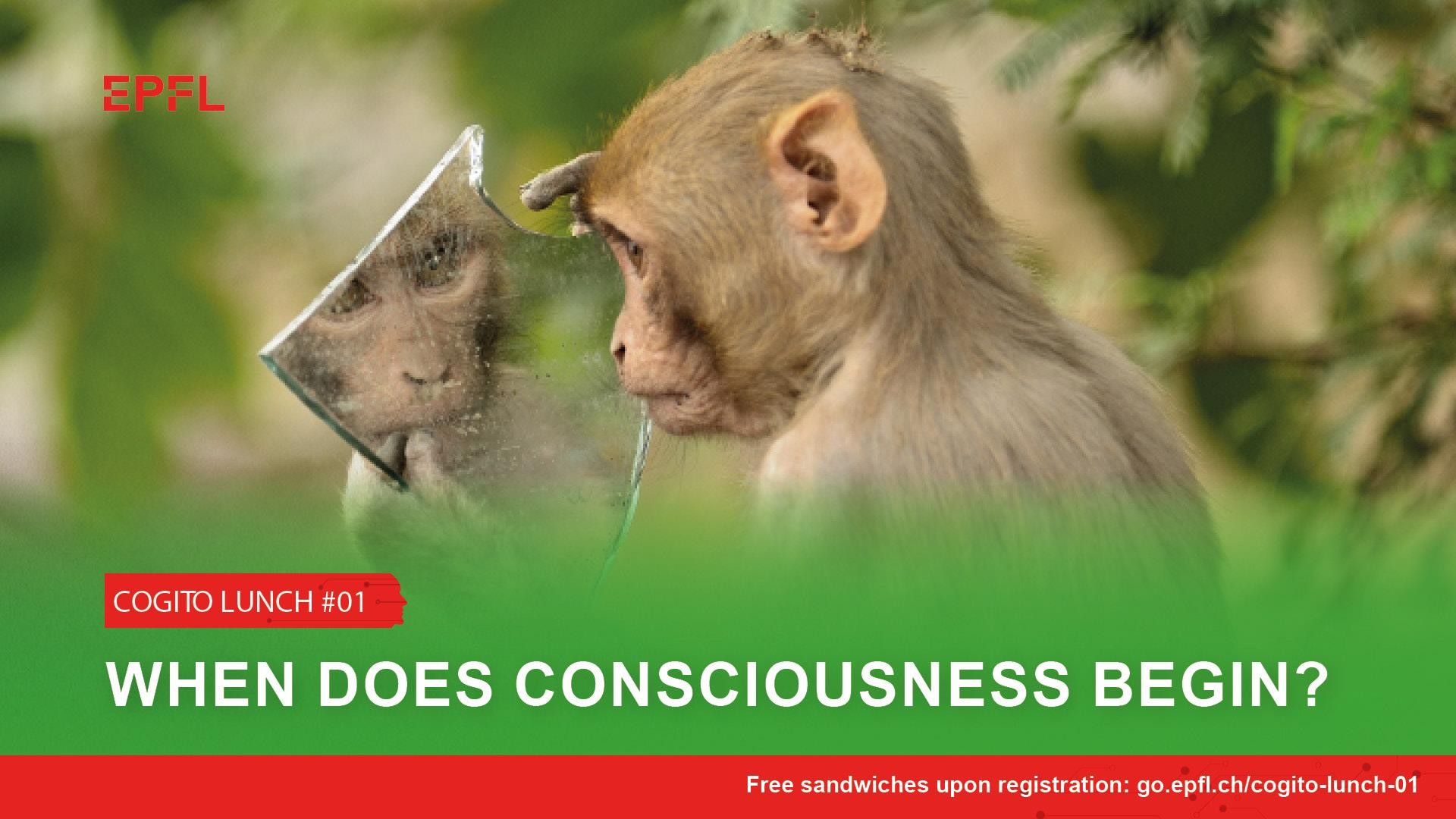
{ "count": 104, "next": "https://memento.epfl.ch/api/v1/mementos/8/events/?format=api&limit=10&offset=70&ordering=is_active", "previous": "https://memento.epfl.ch/api/v1/mementos/8/events/?format=api&limit=10&offset=50&ordering=is_active", "results": [ { "id": 72657, "title": "Sustainable Labs: Get Involved", "slug": "sustainable-labs-get-involved-12", "event_url": "https://memento.epfl.ch/event/sustainable-labs-get-involved-12", "visual_url": "https://memento.epfl.ch/image/33911/200x112.jpg", "visual_large_url": "https://memento.epfl.ch/image/33911/720x405.jpg", "visual_maxsize_url": "https://memento.epfl.ch/image/33911/max-size.jpg", "lang": "en", "start_date": "2026-10-29", "end_date": "2027-01-07", "start_time": "12:15:00", "end_time": "13:00:00", "description": "<br>\r\nThe <strong>EPFL Sustainable Labs team</strong> is pleased to welcome you to its recurring <strong>\"Sustainable Labs: Get Involved\"</strong> sessions. Held every week, alternating between <strong>Tuesdays and Thursdays</strong>, these sessions provide an opportunity for laboratories, platforms, centers, and units to receive guidance and support on implementing more sustainable laboratory practices.<br>\r\n<br>\r\nThe <strong>Sustainable Labs initiative</strong> is part of EPFL's <em>Climate & Sustainability Strategy 2030</em>, which aims to reduce greenhouse gas emissions by an average of <strong>40% compared to 2006/2019 levels</strong> and achieve <strong>climate neutrality by 2040</strong>.<br>\r\n<br>\r\n→<a href=\"https://www.epfl.ch/about/sustainability/sustainability/green-labs_draft_ag/\"> </a><strong><a href=\"https://www.epfl.ch/about/sustainability/sustainability/green-labs_draft_ag/\">Learn more about the EPFL Sustainable Labs initiative</a>.</strong><br>\r\n<br>\r\nResearch activities are a key lever for achieving these ambitious goals. However, while cutting-edge research drives innovation, it also carries a significant environmental footprint. Laboratories consume large amounts of energy, generate substantial quantities of plastic, chemical, and biological waste, and contribute considerably to greenhouse gas emissions. At EPFL, we are committed to understanding and reducing this impact. Through the development and deployment of the <strong>EPFL CO₂ Calculator</strong>, we help researchers measure, understand, and improve the environmental performance of their activities.<br>\r\n<br>\r\nFrom <strong>October 8 to December 17, 2026</strong>, the <strong>Sustainable Labs: Get Involved</strong> sessions will focus on training and supporting users in the use of the <strong>EPFL CO₂ Calculator</strong>. This tool enables laboratories, platforms, centers, and central units to estimate their carbon footprint, identify major emission hotspots, and support informed decision-making to reduce their environmental impact through targeted actions.<br>\r\n<br>\r\nHere are the planned sessions : \r\n<ul>\r\n\t<li>Thursday October 8th 12:15-13:00 (online) </li>\r\n\t<li>Tuesday October 13th 12:15-13:00 (MA A0 364)</li>\r\n\t<li>Thursday October 22th 12:15-13:00 (online) </li>\r\n\t<li>Tuesday October 27th 12:15-13:00 (MA A0 364)</li>\r\n\t<li>Thursday November 5th 12:15-13:00(online) </li>\r\n\t<li>Tuesday November 10th 12:15-13:00 (MA A0 364)</li>\r\n\t<li>Thursday November 19th 12:15-13:00 (online) </li>\r\n\t<li>Tuesday November 24th 12:15-13:00 (MA A0 364)</li>\r\n\t<li>Thursday December 3rd 12:15-13:00 (online) </li>\r\n\t<li>Tuesday December 8th 12:15-13:00 (MA A0 364)</li>\r\n\t<li>Thursday December 17th 12:15-13:00 (online) </li>\r\n</ul>\r\nSessions can be held in English and/ or French depending on the participants. <br>\r\n<br>\r\n→ Please register <a href=\"https://docs.google.com/forms/d/e/1FAIpQLSd7Cp6LevgtBLtsWIsKr2Ec_HPGjJgimmwEaGAN5U4M4-2rrg/viewform\">here</a>. For physical sessions, standing lunch will be provided!<br>\r\n<br>\r\nWhether you have questions about the EPFL CO₂ Calculator, need help interpreting your results, or would like advice on implementing more sustainable laboratory practices, our team will be happy to support you and answer your questions! <br>\r\n ", "image_description": "", "creation_date": "2026-09-23T10:53:52", "last_modification_date": "2026-09-23T10:53:51", "link_label": "", "link_url": "", "canceled": "True", "cancel_reason": "", "place_and_room": "MA A0 364", "url_place_and_room": "", "url_online_room": "https://epfl.zoom.us/j/63013630338", "spoken_languages": [ "https://memento.epfl.ch/api/v1/spoken_languages/1/?format=api", "https://memento.epfl.ch/api/v1/spoken_languages/2/?format=api" ], "speaker": "", "organizer": "Mai-Phuong Dinh", "contact": "[email protected] ", "is_internal": "True", "theme": "", "vulgarization": { "id": 1, "fr_label": "Tout public", "en_label": "General public" }, "registration": { "id": 3, "fr_label": "Entrée libre", "en_label": "Free" }, "keywords": "", "file": null, "icalendar_url": "https://memento.epfl.ch/event/export/121905/", "category": { "id": 15, "code": "FORM", "fr_label": "Formations internes", "en_label": "Internal trainings", "activated": true }, "academic_calendar_category": null, "domains": [], "mementos": [ "https://memento.epfl.ch/api/v1/mementos/1/?format=api", "https://memento.epfl.ch/api/v1/mementos/4/?format=api", "https://memento.epfl.ch/api/v1/mementos/5/?format=api", "https://memento.epfl.ch/api/v1/mementos/6/?format=api", "https://memento.epfl.ch/api/v1/mementos/8/?format=api", "https://memento.epfl.ch/api/v1/mementos/9/?format=api", "https://memento.epfl.ch/api/v1/mementos/79/?format=api" ] }, { "id": 72752, "title": "From cold rolling to recrystallization annealing: an experimental and modeling study of microstructure and texture evolution in a recycled Al-Mg-Si alloy", "slug": "from-cold-rolling-to-recrystallization-annealing-2", "event_url": "https://memento.epfl.ch/event/from-cold-rolling-to-recrystallization-annealing-2", "visual_url": "https://memento.epfl.ch/image/33966/200x112.jpg", "visual_large_url": "https://memento.epfl.ch/image/33966/720x405.jpg", "visual_maxsize_url": "https://memento.epfl.ch/image/33966/max-size.jpg", "lang": "en", "start_date": "2026-10-30", "end_date": "2026-10-30", "start_time": "17:00:00", "end_time": null, "description": "<p>Directeurs de thèse : Prof. R. Logé, Dr E. Cantergiani<br>\r\nProgramme doctoral en Manufacturing<br>\r\nThèse n° 11916<br>\r\n<br>\r\nPour participer à la soutenance publique, merci de contacter directement l’intervenant</p>", "image_description": "", "creation_date": "2026-10-02T13:40:27", "last_modification_date": "2026-10-02T13:40:28", "link_label": "", "link_url": "", "canceled": "False", "cancel_reason": "", "place_and_room": "MC A1 272", "url_place_and_room": "https://plan.epfl.ch/?room==MC%20A1%20272", "url_online_room": "", "spoken_languages": [], "speaker": "<strong>Yandong JING</strong>", "organizer": "", "contact": "<strong>Yandong JING</strong>", "is_internal": "False", "theme": "", "vulgarization": { "id": 1, "fr_label": "Tout public", "en_label": "General public" }, "registration": { "id": 3, "fr_label": "Entrée libre", "en_label": "Free" }, "keywords": "EDAM", "file": null, "icalendar_url": "https://memento.epfl.ch/event/export/122043/", "category": { "id": 12, "code": "SOUTE", "fr_label": "Soutenances de thèses", "en_label": "Thesis defenses", "activated": true }, "academic_calendar_category": null, "domains": [], "mementos": [ "https://memento.epfl.ch/api/v1/mementos/1/?format=api", "https://memento.epfl.ch/api/v1/mementos/6/?format=api", "https://memento.epfl.ch/api/v1/mementos/8/?format=api" ] }, { "id": 72772, "title": "EPFL BioEngineering Talks", "slug": "epfl-bioengineering-talks-12", "event_url": "https://memento.epfl.ch/event/epfl-bioengineering-talks-12", "visual_url": "https://memento.epfl.ch/image/33988/200x112.jpg", "visual_large_url": "https://memento.epfl.ch/image/33988/720x405.jpg", "visual_maxsize_url": "https://memento.epfl.ch/image/33988/max-size.jpg", "lang": "en", "start_date": "2026-11-02", "end_date": "2026-11-02", "start_time": "12:15:00", "end_time": "13:45:00", "description": "<p>Weekly BioEngineering Talks (Lunch Provided)<br>\r\n<br>\r\n<strong>INVITED SPEAKER:</strong><br>\r\n<strong>From single-molecule biophysics with Graphene Energy Transfer to Brownian DNA computing</strong><br>\r\n<strong><a href=\"https://tinnefeld.cup.uni-muenchen.de/publications/group-theses/https-tinnefeld-cup-uni-muenchen-de-members/philip-tinnefeld/\">Prof. Dr. Philip Tinnefeld</a>,</strong> LMU Munich<br>\r\nHost: <a href=\"https://people.epfl.ch/aleksandra.radenovic?lang=en\">Prof. Aleksandra Radenovic</a><br>\r\n<br>\r\n<u><strong>Abstract:</strong></u><br>\r\nGraphene-on-glass coverslips are an emerging microscopy platform as resonant energy transfer to graphene offers an axial ruler in the 5-40 nm range. I present single molecule biophysics experiments of protein/DNA interactions using Graphene Energy Transfer (GET) in combination with the discovery that dsDNA adopts a vertical orientation on graphene. Axial information of DNA structure and protein positions is deduced from GET-efficiency and xy-information is obtained e.g. by photon-efficient pMINFLUX revealing simultaneous bending and torsion of enzyme induced DNA conformations. Finally, I discuss how multi-color smFRET with dark quenchers probes states of DNA nanorobots and Brownian DNA computers that work close to the thermodynamic optimum.<br>\r\n<br>\r\n<u><strong>Bio:</strong></u><br>\r\nPhilip Tinnefeld is a Professor of Physical Chemistry at Ludwig-Maximilians-Universität München, leading a highly interdisciplinary NanoBioSciences research group that brings together molecular biology, biophysics, nanophotonics, and physical chemistry. He specialises in single-molecule detection and super-resolution microscopy, and he uses DNA origami to build modular nanoscale devices—such as force sensors, fluorescence amplifiers, and molecular robots—that can sense, compute, and respond autonomously. Under his leadership, the lab is also developing advanced biosensing platforms and imaging tools by combining DNA nanotechnology with 2D materials like graphene, pushing the frontiers of how we observe and control biological processes at the molecular level.<br>\r\n<br>\r\n<strong>STUDENT SPEAKER:</strong><br>\r\n<br>\r\n<strong>Understanding oxidative stress response in animals - a case study of the essential enzyme adenosylhomocysteinase, AHCY</strong><br>\r\n<strong><a href=\"https://people.epfl.ch/yong-qi.gao?lang=en\">Yong-Qi Gao</a>, </strong><a href=\"https://www.epfl.ch/labs/upzenk/\">Zenk Lab</a><br>\r\n<br>\r\n<br>\r\n------------------------------------------------------------------------------<br>\r\n<br>\r\n<strong>BioEngineering Talks mandatory EDBB Seminar Attendance (1st-Year PhD Students)</strong>\r\n</p><ul>\r\n\t<li> Attendance sheet to print <a class=\"text-link\" href=\"https://docs.google.com/document/d/1kusGxCFPAvWaRD8eUGEBkSVzD1ppMf1g/edit\" target=\"_blank\">HERE </a></li>\r\n</ul>\r\n<strong>The BioEngineering Student Seminar Series</strong> is an official course for which students can register and earn credits.<br>\r\n \r\n<ul>\r\n\t<li>Register <a class=\"text-link\" href=\"https://edu.epfl.ch/studyplan/fr/ecole_doctorale/biotechnologie-et-genie-biologique/coursebook/bioengineering-student-seminar-series-BIOENG-613\" target=\"_blank\">HERE</a></li>\r\n\t<li>Attendance sheet to print <a class=\"text-link\" href=\"https://docs.google.com/document/d/1ZGrPnt8LlLuWOApzx32s6L5UPPH8Hyoo/edit\" target=\"_blank\">HERE</a></li>\r\n</ul>\r\n<strong>General information:</strong><br>\r\nIn-person attendance is preferred to support your fellow students. Zoom is mainly for students on remote campuses; please notify <a class=\"text-link\" href=\"mailto:[email protected]\" target=\"_blank\">Fiorella Ghisays</a> in advance and join using your full name.<br>\r\nIf attending in person, have your sheet signed after the talk and keep the original, as no copy is retained.<br>\r\n ", "image_description": "", "creation_date": "2026-10-06T10:24:19", "last_modification_date": "2026-10-06T10:33:07", "link_label": "", "link_url": "", "canceled": "False", "cancel_reason": "", "place_and_room": "SV 1717", "url_place_and_room": "https://plan.epfl.ch/?room==SV%201717", "url_online_room": "https://epfl.zoom.us/j/68746410793", "spoken_languages": [ "https://memento.epfl.ch/api/v1/spoken_languages/2/?format=api" ], "speaker": "Invited Speaker and Student Speaker", "organizer": "Institute of Bioengineering", "contact": "<a href=\"mailto:[email protected]?subject=EPFL%20BioE%20Talks%20Series\">Fiorella Ghisays</a>, Institute of Bioengineering", "is_internal": "False", "theme": "", "vulgarization": { "id": 2, "fr_label": "Public averti", "en_label": "Informed public" }, "registration": { "id": 3, "fr_label": "Entrée libre", "en_label": "Free" }, "keywords": "", "file": "https://memento.epfl.ch/public/upload/files/BioEngineeringTalkMemento_u0lzmcg.jpg", "icalendar_url": "https://memento.epfl.ch/event/export/122074/", "category": { "id": 1, "code": "CONF", "fr_label": "Conférences - Séminaires", "en_label": "Conferences - Seminars", "activated": true }, "academic_calendar_category": null, "domains": [], "mementos": [ "https://memento.epfl.ch/api/v1/mementos/1/?format=api", "https://memento.epfl.ch/api/v1/mementos/5/?format=api", "https://memento.epfl.ch/api/v1/mementos/6/?format=api", "https://memento.epfl.ch/api/v1/mementos/8/?format=api", "https://memento.epfl.ch/api/v1/mementos/9/?format=api", "https://memento.epfl.ch/api/v1/mementos/111/?format=api", "https://memento.epfl.ch/api/v1/mementos/434/?format=api" ] }, { "id": 72396, "title": "Training \"Stay Away from Plagiarism\"", "slug": "training-stay-away-from-plagiarism-8", "event_url": "https://memento.epfl.ch/event/training-stay-away-from-plagiarism-8", "visual_url": "https://memento.epfl.ch/image/33647/200x112.jpg", "visual_large_url": "https://memento.epfl.ch/image/33647/720x405.jpg", "visual_maxsize_url": "https://memento.epfl.ch/image/33647/max-size.jpg", "lang": "en", "start_date": "2026-11-02", "end_date": "2026-11-02", "start_time": "14:00:00", "end_time": "16:00:00", "description": "<div class=\"all_text\"><strong>The aim of this workshop, is to understand the main principles of plagiarism in order to avoid it.</strong> <strong>To do so, we first would like to help participants getting the right habits of citation by experimenting various citation cases that may be encountered during the writing process of reports or publications, including thesis. </strong><br>\r\n<br>\r\nThen, we will show you more in depth how to use the similarity detection tool <a href=\"https://www.epfl.ch/campus/library/services-researchers/similarity-check/\">iThenticate</a>.<br>\r\n<br>\r\nAt the end of the workshop, you will be able to:\r\n<ul>\r\n\t<li>Understand the stakes of citation.</li>\r\n\t<li>Cite and reuse properly different types of content.</li>\r\n\t<li>Understand what incorrect referencing is and what that can mean to you.</li>\r\n\t<li>Use iThenticate to check your text and understand how to read the similarity report</li>\r\n</ul>\r\n<a href=\"https://bookwhen.com/fr/epfl_library/e/ev-srfyp-20261102140000\">Registration</a><br>\r\n<br>\r\nMore information about <a href=\"https://www.epfl.ch/campus/library/training/\">EPFL Library Training offer</a><br>\r\n </div>", "image_description": "", "creation_date": "2026-08-20T10:12:00", "last_modification_date": "2026-08-20T15:46:03", "link_label": "Registration", "link_url": "https://bookwhen.com/fr/epfl_library/e/ev-srfyp-20261102140000", "canceled": "False", "cancel_reason": "", "place_and_room": "GR A3 31", "url_place_and_room": "https://plan.epfl.ch/?room==GR%20A3%2031", "url_online_room": "", "spoken_languages": [ "https://memento.epfl.ch/api/v1/spoken_languages/2/?format=api" ], "speaker": "EPFL Library Training Team", "organizer": "EPFL Library", "contact": "[email protected]", "is_internal": "False", "theme": "", "vulgarization": { "id": 1, "fr_label": "Tout public", "en_label": "General public" }, "registration": { "id": 1, "fr_label": "Sur inscription", "en_label": "Registration required" }, "keywords": "", "file": null, "icalendar_url": "https://memento.epfl.ch/event/export/121516/", "category": { "id": 15, "code": "FORM", "fr_label": "Formations internes", "en_label": "Internal trainings", "activated": true }, "academic_calendar_category": null, "domains": [], "mementos": [ "https://memento.epfl.ch/api/v1/mementos/1/?format=api", "https://memento.epfl.ch/api/v1/mementos/3/?format=api", "https://memento.epfl.ch/api/v1/mementos/5/?format=api", "https://memento.epfl.ch/api/v1/mementos/6/?format=api", "https://memento.epfl.ch/api/v1/mementos/8/?format=api", "https://memento.epfl.ch/api/v1/mementos/269/?format=api", "https://memento.epfl.ch/api/v1/mementos/275/?format=api", "https://memento.epfl.ch/api/v1/mementos/291/?format=api" ] }, { "id": 72764, "title": "IMX Talks - Resolving Hierarchical Structure with X-ray scattering imaging", "slug": "imx-talks-resolving-hierarchical-structure-with-x", "event_url": "https://memento.epfl.ch/event/imx-talks-resolving-hierarchical-structure-with-x", "visual_url": "https://memento.epfl.ch/image/33978/200x112.jpg", "visual_large_url": "https://memento.epfl.ch/image/33978/720x405.jpg", "visual_maxsize_url": "https://memento.epfl.ch/image/33978/max-size.jpg", "lang": "en", "start_date": "2026-11-02", "end_date": "2026-11-02", "start_time": "16:30:00", "end_time": "17:30:00", "description": "<p>The function of many materials, from biological tissues to industrial polymers, depends on how their nanoscale building blocks are arranged and aligned within a macroscopic structure, which is essential to understand but difficult to resolve: established high-resolution techniques typically access only small sample volumes, limiting the ability to capture structural or biological variability across extended, heterogeneous samples.<br>\r\nSmall-angle X-ray scattering (SAXS) imaging probes local nanostructure by raster-scanning a focused synchrotron beam across a sample. This can be extended to resolve nanostructure orientation voxel-by-voxel in three dimensions in a method called SAXS tensor tomography, which we implement in our open-source software package Mumott. In this presentation, I will show how this approach, and its continued development, can be applied across different material systems.<br>\r\nFor injection-molded polymer packaging, SAXS imaging has resolved the layered anisotropic nanostructure important for its mechanical properties, and, combined with industrial processing simulations, the structure formation during thermal processing. Another example is bone, where resolving structure requires both three-dimensional information and sufficient sampling to capture biological variability. Combining 2D and 3D SAXS imaging, we studied regional differences in the human femoral neck, an anatomical site relevant to hip fractures, and, at higher resolution, resolved alternating chirality between neighboring lamellae within individual osteons, a structural feature proposed on mechanical grounds over a century ago.<br>\r\nThese examples illustrate how tensor tomography, extended beyond X-ray scattering to wide-angle diffraction and visible-light polarimetry, provides a route to resolving hierarchical structure across a wide range of material systems.<br>\r\n<br>\r\nBio:<strong> </strong>Marianne Liebi studied food science at ETH Zurich, where she also completed her PhD in 2013, followed by postdoctoral research at the Paul Scherrer Institute and MAX IV Laboratory, Lund. In 2017, she started her own research group at Chalmers University of Technology, Gothenburg, and was appointed in 2021 as tenure-track Assistant Professor at EPFL, where she heads the Laboratory for X-ray Characterization of Materials (cam-X) within the Institute of Materials, in a joint position with the Paul Scherrer Institute (PSI). Her research develops advanced X-ray and optical imaging techniques, centered on small-angle X-ray scattering (SAXS) in 2D and 3D, to resolve the hierarchical structure of materials ranging from fiber composites to pharmaceutical formulations and bone.</p>", "image_description": "", "creation_date": "2026-10-05T09:26:03", "last_modification_date": "2026-10-05T10:29:57", "link_label": "Website", "link_url": "https://www.psi.ch/de/lsc/people/marianne-liebi", "canceled": "False", "cancel_reason": "", "place_and_room": "BM 5202", "url_place_and_room": "https://plan.epfl.ch/?room==BM%205202", "url_online_room": "https://epfl.zoom.us/j/63884474245", "spoken_languages": [ "https://memento.epfl.ch/api/v1/spoken_languages/2/?format=api" ], "speaker": "Prof. Marianne Liebi, EPFL STI IMX CAM-X", "organizer": "Prof. Michele Ceriotti", "contact": "Prof. Michele Ceriotti", "is_internal": "False", "theme": "", "vulgarization": { "id": 1, "fr_label": "Tout public", "en_label": "General public" }, "registration": { "id": 3, "fr_label": "Entrée libre", "en_label": "Free" }, "keywords": "", "file": null, "icalendar_url": "https://memento.epfl.ch/event/export/122060/", "category": { "id": 1, "code": "CONF", "fr_label": "Conférences - Séminaires", "en_label": "Conferences - Seminars", "activated": true }, "academic_calendar_category": null, "domains": [], "mementos": [ "https://memento.epfl.ch/api/v1/mementos/8/?format=api", "https://memento.epfl.ch/api/v1/mementos/314/?format=api" ] }, { "id": 67104, "title": "SNSF Ambizione 2026: Call now open", "slug": "snsf-ambizione-2026-call-now-open", "event_url": "https://memento.epfl.ch/event/snsf-ambizione-2026-call-now-open", "visual_url": "https://memento.epfl.ch/image/28792/200x112.jpg", "visual_large_url": "https://memento.epfl.ch/image/28792/720x405.jpg", "visual_maxsize_url": "https://memento.epfl.ch/image/28792/max-size.jpg", "lang": "en", "start_date": "2026-11-03", "end_date": "2026-11-03", "start_time": null, "end_time": null, "description": "<ul>\r\n\t<li>The Swiss National Science Foundation (SNSF) awards <a href=\"https://www.snf.ch/en/N18L3oGWomTSSGkF/funding/careers/ambizione\">Ambizione</a> grants to outstanding <strong>postdoctoral researchers</strong> who intend to pursue a scientific or an academic career at a <strong>Swiss research institution</strong>. The purpose of the Ambizione grant is to help researchers build their scientific profile and become scientifically self-reliant at an early stage with an <strong>independent research project</strong>. Ambizione grants are open to researchers from <strong>all disciplines</strong>.<br>\r\n\t </li>\r\n\t<li><strong>Eligibility: </strong>1-4 years after doctoral exam + min. 1 year of postdoctoral research; <strong>Professors </strong>in permanent or temporary employment, with or without tenure track, are <strong>not eligible</strong>.</li>\r\n</ul>\r\n<strong> Important change in 2026: </strong><br>\r\n <strong>> </strong>Candidates must have a <strong>link with Switzerland</strong>: they must be of Swiss nationality, OR hold a degree from a Swiss higher education institution (master's degree, doctorate, medical diploma, FMH specialist title or equivalent), OR <strong>have carried out research or clinical work in a Swiss research institution for at least 12 months between the completion of their doctorate or medical diploma and the submission deadline.</strong><br>\r\n<br>\r\n<strong> > Each contact person</strong> (e.g. a professor at the selected research institution) <strong>can only support one applicant</strong>.<br>\r\n \r\n<ul>\r\n\t<li><strong>Funding:</strong> max.<strong> CHF 250K </strong>for max.<strong> 4 years </strong>(PhD or Postdoc salaries are not eligible costs) + applicant's salary.</li>\r\n</ul>\r\n<br>\r\n<br>\r\n<strong>Two upcoming infosessions: </strong>\r\n\r\n<ul>\r\n\t<li>SNSF infosession: 13 August 2026, 10:00-11:30am, register <a href=\"https://events.teams.microsoft.com/event/e83e9af0-fa72-4274-a505-e79ff22fbfca@d3df0f6b-32ad-4977-a262-b7727bdb4257\">here</a>.</li>\r\n\t<li>EPFL applicant Workshop: 15 September 2026, 11-12am, register <a href=\"https://forms.gle/WEdhTwJVxX3rMVoA9\">here</a>.</li>\r\n</ul>\r\n<br>\r\n<strong>How to get EPFL support?</strong><br>\r\nThe SNSF requires two separate letters from the research institution: a detailed confirmation letter and a general confirmation letter. These are obtained through an EPFL pre-application process:\r\n<ul>\r\n\t<li><strong>Identify a host professor</strong> who is ready to support and host you for the entire duration of the project;</li>\r\n\t<li><strong>Read the <a href=\"https://drive.google.com/drive/folders/1nCNLxzLc4qJ49mRafdomEgG1OceqvStW?usp=sharing\">EPFL toolkit</a></strong>: (with particular attention for the <strong><em>SNSF Call document</em></strong> and the document \"<strong><em>EPFL instructions</em></strong>\")</li>\r\n\t<li><strong>Contact your host institute and school</strong> to inquire about their internal deadlines and requirements if no information is available in \"<strong><em>EPFL instructions</em></strong>\";</li>\r\n\t<li><strong>Submit a pre-application</strong> to the EPFL Research Office (Note that internal deadlines are School/ Institute specific. The link to the EPFL pre-application platform is provided in the toolkit's document \"<em><strong>EPFL instructions</strong></em>\").</li>\r\n</ul>\r\n<strong>How to apply </strong>\r\n\r\n<ul>\r\n\t<li>1. Create an account now on <a href=\"https://www.mysnf.ch/login.aspx?returnurl=%2fdefault.aspx\">mySNF</a> and prepare your SNSF-format CV</li>\r\n\t<li>2. Obtain both signed support letters through the EPFL pre-application step</li>\r\n\t<li>3. Submit your SNSF application on mySNF, including both support letters.</li>\r\n</ul>\r\n<strong>Timeline of the call</strong>\r\n\r\n<ul>\r\n\t<li>Launch: 3 August 2026</li>\r\n\t<li>Deadline: 3 November 2026 at 17:00 C.E.T.</li>\r\n\t<li>Earliest start: 1 September 2027</li>\r\n\t<li>Latest start: 1 September 2028</li>\r\n</ul>\r\n<br>\r\n<strong>ReO Services</strong>\r\n\r\n<ul>\r\n\t<li>EPFL Toolkit</li>\r\n\t<li>EPFL applicant workshop (registration link higher up on this page)</li>\r\n\t<li><strong>Grant Writing</strong> services offered on a first-come-first-served basis.</li>\r\n\t<li>Mock interviews</li>\r\n</ul>\r\nFor any questions please contact <a href=\"mailto:[email protected]\">[email protected]</a>", "image_description": "", "creation_date": "2024-10-01T08:22:36", "last_modification_date": "2026-08-25T13:01:20", "link_label": "", "link_url": "", "canceled": "False", "cancel_reason": "", "place_and_room": "", "url_place_and_room": "", "url_online_room": "", "spoken_languages": [], "speaker": "", "organizer": "", "contact": "<a href=\"http://[email protected]\">Research Office</a>", "is_internal": "False", "theme": "", "vulgarization": { "id": 1, "fr_label": "Tout public", "en_label": "General public" }, "registration": { "id": 3, "fr_label": "Entrée libre", "en_label": "Free" }, "keywords": "", "file": null, "icalendar_url": "https://memento.epfl.ch/event/export/113668/", "category": { "id": 16, "code": "PROP", "fr_label": "Appel à proposition", "en_label": "Call for proposal", "activated": true }, "academic_calendar_category": null, "domains": [], "mementos": [ "https://memento.epfl.ch/api/v1/mementos/1/?format=api", "https://memento.epfl.ch/api/v1/mementos/3/?format=api", "https://memento.epfl.ch/api/v1/mementos/4/?format=api", "https://memento.epfl.ch/api/v1/mementos/5/?format=api", "https://memento.epfl.ch/api/v1/mementos/6/?format=api", "https://memento.epfl.ch/api/v1/mementos/8/?format=api", "https://memento.epfl.ch/api/v1/mementos/9/?format=api", "https://memento.epfl.ch/api/v1/mementos/140/?format=api", "https://memento.epfl.ch/api/v1/mementos/145/?format=api" ] }, { "id": 72658, "title": "Sustainable Labs: Get Involved", "slug": "sustainable-labs-get-involved-9", "event_url": "https://memento.epfl.ch/event/sustainable-labs-get-involved-9", "visual_url": "https://memento.epfl.ch/image/33911/200x112.jpg", "visual_large_url": "https://memento.epfl.ch/image/33911/720x405.jpg", "visual_maxsize_url": "https://memento.epfl.ch/image/33911/max-size.jpg", "lang": "en", "start_date": "2026-11-03", "end_date": "2027-01-12", "start_time": "12:15:00", "end_time": "13:00:00", "description": "<br>\r\nThe <strong>EPFL Sustainable Labs team</strong> is pleased to welcome you to its recurring <strong>\"Sustainable Labs: Get Involved\"</strong> sessions. Held every week, alternating between <strong>Tuesdays and Thursdays</strong>, these sessions provide an opportunity for laboratories, platforms, centers, and units to receive guidance and support on implementing more sustainable laboratory practices.<br>\r\n<br>\r\nThe <strong>Sustainable Labs initiative</strong> is part of EPFL's <em>Climate & Sustainability Strategy 2030</em>, which aims to reduce greenhouse gas emissions by an average of <strong>40% compared to 2006/2019 levels</strong> and achieve <strong>climate neutrality by 2040</strong>.<br>\r\n<br>\r\n→<a href=\"https://www.epfl.ch/about/sustainability/sustainability/green-labs_draft_ag/\"> </a><strong><a href=\"https://www.epfl.ch/about/sustainability/sustainability/green-labs_draft_ag/\">Learn more about the EPFL Sustainable Labs initiative</a>.</strong><br>\r\n<br>\r\nResearch activities are a key lever for achieving these ambitious goals. However, while cutting-edge research drives innovation, it also carries a significant environmental footprint. Laboratories consume large amounts of energy, generate substantial quantities of plastic, chemical, and biological waste, and contribute considerably to greenhouse gas emissions. At EPFL, we are committed to understanding and reducing this impact. Through the development and deployment of the <strong>EPFL CO₂ Calculator</strong>, we help researchers measure, understand, and improve the environmental performance of their activities.<br>\r\n<br>\r\nFrom <strong>October 8 to December 17, 2026</strong>, the <strong>Sustainable Labs: Get Involved</strong> sessions will focus on training and supporting users in the use of the <strong>EPFL CO₂ Calculator</strong>. This tool enables laboratories, platforms, centers, and central units to estimate their carbon footprint, identify major emission hotspots, and support informed decision-making to reduce their environmental impact through targeted actions.<br>\r\n<br>\r\nHere are the planned sessions : \r\n<ul>\r\n\t<li>Thursday October 8th 12:15-13:00 (online) </li>\r\n\t<li>Tuesday October 13th 12:15-13:00 (MA A0 364)</li>\r\n\t<li>Thursday October 22th 12:15-13:00 (online) </li>\r\n\t<li>Tuesday October 27th 12:15-13:00 (MA A0 364)</li>\r\n\t<li>Thursday November 5th 12:15-13:00(online) </li>\r\n\t<li>Tuesday November 10th 12:15-13:00 (MA A0 364)</li>\r\n\t<li>Thursday November 19th 12:15-13:00 (online) </li>\r\n\t<li>Tuesday November 24th 12:15-13:00 (MA A0 364)</li>\r\n\t<li>Thursday December 3rd 12:15-13:00 (online) </li>\r\n\t<li>Tuesday December 8th 12:15-13:00 (MA A0 364)</li>\r\n\t<li>Thursday December 17th 12:15-13:00 (online) </li>\r\n</ul>\r\nSessions can be held in English and/ or French depending on the participants. <br>\r\n<br>\r\n→ Please register <a href=\"https://docs.google.com/forms/d/e/1FAIpQLSd7Cp6LevgtBLtsWIsKr2Ec_HPGjJgimmwEaGAN5U4M4-2rrg/viewform\">here</a>. For physical sessions, standing lunch will be provided!<br>\r\n<br>\r\nWhether you have questions about the EPFL CO₂ Calculator, need help interpreting your results, or would like advice on implementing more sustainable laboratory practices, our team will be happy to support you and answer your questions! <br>\r\n ", "image_description": "", "creation_date": "2026-09-23T10:53:52", "last_modification_date": "2026-09-23T10:53:51", "link_label": "", "link_url": "", "canceled": "True", "cancel_reason": "", "place_and_room": "MA A0 364", "url_place_and_room": "", "url_online_room": "https://epfl.zoom.us/j/63013630338", "spoken_languages": [ "https://memento.epfl.ch/api/v1/spoken_languages/1/?format=api", "https://memento.epfl.ch/api/v1/spoken_languages/2/?format=api" ], "speaker": "", "organizer": "Mai-Phuong Dinh", "contact": "[email protected] ", "is_internal": "True", "theme": "", "vulgarization": { "id": 1, "fr_label": "Tout public", "en_label": "General public" }, "registration": { "id": 3, "fr_label": "Entrée libre", "en_label": "Free" }, "keywords": "", "file": null, "icalendar_url": "https://memento.epfl.ch/event/export/121906/", "category": { "id": 15, "code": "FORM", "fr_label": "Formations internes", "en_label": "Internal trainings", "activated": true }, "academic_calendar_category": null, "domains": [], "mementos": [ "https://memento.epfl.ch/api/v1/mementos/1/?format=api", "https://memento.epfl.ch/api/v1/mementos/4/?format=api", "https://memento.epfl.ch/api/v1/mementos/5/?format=api", "https://memento.epfl.ch/api/v1/mementos/6/?format=api", "https://memento.epfl.ch/api/v1/mementos/8/?format=api", "https://memento.epfl.ch/api/v1/mementos/9/?format=api", "https://memento.epfl.ch/api/v1/mementos/79/?format=api" ] }, { "id": 72469, "title": "Trust, Sensing, and Learning for Provable Multi-Robot Performance", "slug": "trust-sensing-and-learning-for-provable-multi-robo", "event_url": "https://memento.epfl.ch/event/trust-sensing-and-learning-for-provable-multi-robo", "visual_url": "https://memento.epfl.ch/image/33717/200x112.jpg", "visual_large_url": "https://memento.epfl.ch/image/33717/720x405.jpg", "visual_maxsize_url": "https://memento.epfl.ch/image/33717/max-size.jpg", "lang": "en", "start_date": "2026-11-05", "end_date": "2026-11-05", "start_time": "11:00:00", "end_time": "12:00:00", "description": "<p>Multi-robot systems are physically embodied networks — they sense, move, and communicate through the physical world. The bar for safe decision-making rises as these systems enter safety-critical, real-world settings where they must perform well under uncertainty. Our work shows that physicality is a resource against the two kinds of uncertainty they face: intentional (or adversarial), where data is manipulated by malicious agents, and natural, where aspects of the environment are simply unknown. Most of this talk concerns intentional uncertainty. Here, one way to exploit physicality is by using communication as a sensor. Because the signals robots exchange are difficult to forge, they carry evidence that can be cross-validated to yield a quantifiable likelihood that an agent's data is trustworthy. This is the foundation of cy-trust, in which stochastic observations of trust model an agent's trustworthiness probabilistically from physical rather than cryptographic evidence. Each neighbor's contribution is then weighted by its trust value. Under this framework, we show that consensus, distributed optimization, and other core coordination tasks admit almost-sure convergence with bounded deviation from their nominal performance, even when malicious agents exceed half of a node's connectivity, past the classical Byzantine bound. We support this finding with both theory and hardware experiments under adversarial attack. Against natural uncertainty, we show that real-time sensing can be folded into rollout-based reinforcement learning, where the same machinery reweights futures rather than neighbors. We apply this idea to routing a fleet of robots to stochastically appearing demand and, with Project CETI, to the first autonomous robotic rendezvous with sperm whales at sea. Finally, we preview some of our future work combining trust with long-horizon sequential decision-making, targeting planning that stays provably resilient when the data informing the plan may itself be corrupted.<br>\r\n<br>\r\n<em>Stephanie Gil is the John L. Loeb Associate Professor of Engineering and Applied Sciences at Harvard University and an Associate Faculty member of the Kempner Institute. Her research focuses on trust and coordination in multi-robot systems, at the intersection of robotics, communication, and learning. Her contributions have been recognized through the DARPA Young Faculty Award (2024), the Office of Naval Research Young Investigator Award (2021), and the National Science Foundation CAREER Award (2019). She was named a 2020 Sloan Research Fellow for her work at the intersection of robotics and communication. She earned her Ph.D. at CSAIL at MIT, specializing in multi-robot coordination and control, and her B.S. at Cornell University.</em></p>", "image_description": "", "creation_date": "2026-08-31T09:19:27", "last_modification_date": "2026-09-03T18:05:52", "link_label": "", "link_url": "", "canceled": "False", "cancel_reason": "", "place_and_room": "MED 2 1124", "url_place_and_room": "https://plan.epfl.ch/?room==MED%202%201124", "url_online_room": "https://epfl.zoom.us/j/64474989189", "spoken_languages": [ "https://memento.epfl.ch/api/v1/spoken_languages/2/?format=api" ], "speaker": "<a href=\"https://www.linkedin.com/in/stephanie-gil/\">Stephanie Gil</a>", "organizer": "<a href=\"https://www.epfl.ch/research/domains/robotics/\">EPFL Robotics Center</a>", "contact": "<a href=\"https://people.epfl.ch/anca.rusu\">Anca Rusu</a>", "is_internal": "False", "theme": "", "vulgarization": { "id": 2, "fr_label": "Public averti", "en_label": "Informed public" }, "registration": { "id": 3, "fr_label": "Entrée libre", "en_label": "Free" }, "keywords": "", "file": null, "icalendar_url": "https://memento.epfl.ch/event/export/121626/", "category": { "id": 1, "code": "CONF", "fr_label": "Conférences - Séminaires", "en_label": "Conferences - Seminars", "activated": true }, "academic_calendar_category": null, "domains": [], "mementos": [ "https://memento.epfl.ch/api/v1/mementos/1/?format=api", "https://memento.epfl.ch/api/v1/mementos/6/?format=api", "https://memento.epfl.ch/api/v1/mementos/8/?format=api", "https://memento.epfl.ch/api/v1/mementos/417/?format=api" ] }, { "id": 69614, "title": "Cogito Lunch #01: When Does Consciousness Begin?", "slug": "cogito-lunch-01-when-does-consciousness-begin", "event_url": "https://memento.epfl.ch/event/cogito-lunch-01-when-does-consciousness-begin", "visual_url": "https://memento.epfl.ch/image/31112/200x112.jpg", "visual_large_url": "https://memento.epfl.ch/image/31112/720x405.jpg", "visual_maxsize_url": "https://memento.epfl.ch/image/31112/max-size.jpg", "lang": "en", "start_date": "2026-11-05", "end_date": "2026-11-05", "start_time": "12:15:00", "end_time": "13:15:00", "description": "<p>We are pleased to invite you to the first Cogito Lunch event, a new series building on the tradition of LUNCHenPHILO / L’heure H, those philosophical interludes that have been part of some of our lunch breaks since 2021.<br>\r\n<br>\r\nOrganized by the Vice-Presidency for Education (VPE), these sessions aim to foster dialogue between experts from various disciplines and the campus community, particularly students. We hope, therefore, to explore ideas and questions that stimulate our imagination, challenge our sensibilities, and shed light on our fears and expectations. The discussions will be moderated by journalist Anne Laure Gannac. <br>\r\n<br>\r\n<strong>For the session on Thursday, November 5</strong>, we’ll tackle a question that is as fascinating as it is mind-boggling: “When does consciousness begin?” Neuroscience, machine learning, and the humanities will come together to try to answer it.<br>\r\n<br>\r\n<strong>The discussion is open with:</strong>\r\n</p><ul>\r\n\t<li><strong><a href=\"https://www.epfl.ch/labs/lpsy/team/herzog/\">Michael Herzog</a></strong>, Professor in behavioral and cognitive neuroscience, EPFL</li>\r\n\t<li><strong><a href=\"https://people.epfl.ch/amir.zamir\">Amir Zamir</a></strong>, Professor in AI and machine Learning, EPFL</li>\r\n\t<li><strong><a href=\"https://people.epfl.ch/andre.ourednik\">André Ourednik</a></strong>, Geographer, fiction writer, and lecturer at EPFL</li>\r\n</ul>\r\n<strong>Moderation:</strong> <a href=\"https://people.epfl.ch/anne-laure.gannac/?lang=fr\">Anne Laure Gannac</a>, journalist at the RTS.<br>\r\n<br>\r\nThis event can also be followed live or recorded on our <strong>YouTube</strong> channel.<br>\r\n<br>\r\n<iframe allow=\";\" allowfullscreen=\"\" frameborder=\"0\" height=\"360\" src=\"https://www.youtube.com/embed/rRbMx6qgTFE?rel=0\" width=\"640\"></iframe><br>\r\n<br>\r\n<a href=\"https://docs.google.com/forms/d/e/1FAIpQLSd2dMMm1l72aWl6XOmO2mFeXU9WRBAvafNVQdO6_USkCBNo-w/viewform?usp=header\"><strong>> Free lunch on registration</strong></a>", "image_description": "", "creation_date": "2025-08-20T16:41:38", "last_modification_date": "2026-10-07T14:32:26", "link_label": "Registration form", "link_url": "http://docs.google.com/forms/d/e/1FAIpQLScwbk8Www4ZqIXHyDpJW3iJ3GbNlDTTKVw8ZkyM_4w-PfyoLQ/viewform?usp=publish-editor", "canceled": "False", "cancel_reason": "", "place_and_room": "Rolex Learning Center", "url_place_and_room": "https://plan.epfl.ch/?room==RLC%20G1%20350", "url_online_room": "", "spoken_languages": [ "https://memento.epfl.ch/api/v1/spoken_languages/1/?format=api", "https://memento.epfl.ch/api/v1/spoken_languages/2/?format=api" ], "speaker": "<a href=\"https://www.epfl.ch/labs/lpsy/team/herzog/\">Michael Herzog</a>, Professor in behavioral and cognitive neuroscience, EPFL; <a href=\"https://people.epfl.ch/amir.zamir\">Amir Zamir</a>, Professor in AI and machine Learning, EPFL and <a href=\"https://people.epfl.ch/andre.ourednik\">André Ourednik</a>, Geographer, fiction writer, and lecturer at EPFL.", "organizer": "<a href=\"https://www.epfl.ch/education/programme-shs/\">EPFL Social Science and Humanities (SHS) Program</a>", "contact": "<a href=\"https://people.epfl.ch/virginie.martin-nunez\">Virginie Martin</a>", "is_internal": "False", "theme": "", "vulgarization": { "id": 1, "fr_label": "Tout public", "en_label": "General public" }, "registration": { "id": 1, "fr_label": "Sur inscription", "en_label": "Registration required" }, "keywords": "Philosophy, ethics, AI, humanities, machine learning", "file": null, "icalendar_url": "https://memento.epfl.ch/event/export/117350/", "category": { "id": 1, "code": "CONF", "fr_label": "Conférences - Séminaires", "en_label": "Conferences - Seminars", "activated": true }, "academic_calendar_category": null, "domains": [], "mementos": [ "https://memento.epfl.ch/api/v1/mementos/1/?format=api", "https://memento.epfl.ch/api/v1/mementos/2/?format=api", "https://memento.epfl.ch/api/v1/mementos/3/?format=api", "https://memento.epfl.ch/api/v1/mementos/6/?format=api", "https://memento.epfl.ch/api/v1/mementos/8/?format=api", "https://memento.epfl.ch/api/v1/mementos/21/?format=api", "https://memento.epfl.ch/api/v1/mementos/22/?format=api", "https://memento.epfl.ch/api/v1/mementos/27/?format=api", "https://memento.epfl.ch/api/v1/mementos/123/?format=api", "https://memento.epfl.ch/api/v1/mementos/140/?format=api", "https://memento.epfl.ch/api/v1/mementos/145/?format=api", "https://memento.epfl.ch/api/v1/mementos/162/?format=api", "https://memento.epfl.ch/api/v1/mementos/175/?format=api" ] }, { "id": 72397, "title": "Training \"Ethics in Research Data Management: Anonymization and Best Practices\"", "slug": "training-ethics-in-research-data-management-anon-5", "event_url": "https://memento.epfl.ch/event/training-ethics-in-research-data-management-anon-5", "visual_url": "https://memento.epfl.ch/image/33648/200x112.jpg", "visual_large_url": "https://memento.epfl.ch/image/33648/720x405.jpg", "visual_maxsize_url": "https://memento.epfl.ch/image/33648/max-size.jpg", "lang": "en", "start_date": "2026-11-05", "end_date": "2026-11-05", "start_time": "15:00:00", "end_time": "16:30:00", "description": "<div class=\"all_text\">\r\n<div class=\"all_text\"><strong>Ethical-driven practices in data management are crucial for maintaining research integrity, protecting privacy, and collaborate with research partners, and fostering trust in research outputs. </strong><br>\r\n<br>\r\nThis short training focuses on the practices of ethical data management and the adoption of anonymization techniques for compliance with data protection laws.<br>\r\nThrough interactive discussions and case studies, participants will learn to:\r\n<ul>\r\n\t<li>Address ethical challenges in data collection and management in compliance with Swiss and European laws</li>\r\n\t<li>Understand how anonymization techniques and responsible data handling can protect subjects’ privacy</li>\r\n\t<li>Strengthen research integrity by applying best practices in everyday data management workflows.</li>\r\n</ul>\r\nWith a dedicated Q&A session featuring the EPFL Research Ethics Compliance Officer<strong> </strong>and Senior Legal Counsel for Education and Research, you will also have the occasion to discuss the ethical and related technical dimensions of managing your research data.<br>\r\nWhile not mandatory, basic knowledge of Research Data Management is recommended: for an introductory training, please register for the workshop <a href=\"https://bookwhen.com/fr/epfl_library/e/ev-s9esg-20260903150000\">ABC of Research Data Management.</a><br>\r\n<br>\r\n<a href=\"https://bookwhen.com/fr/epfl_library/e/ev-swksv-20261105150000\">Registration</a><br>\r\n<br>\r\nMore information about <a href=\"https://www.epfl.ch/campus/library/training/\">EPFL Library Training offer</a></div>\r\n</div>", "image_description": "", "creation_date": "2026-08-20T10:18:36", "last_modification_date": "2026-08-27T16:22:39", "link_label": "Registration", "link_url": "https://bookwhen.com/fr/epfl_library/e/ev-swksv-20261105150000", "canceled": "False", "cancel_reason": "", "place_and_room": "AAC 0 08", "url_place_and_room": "https://plan.epfl.ch/?room==AAC%200%2008", "url_online_room": "", "spoken_languages": [ "https://memento.epfl.ch/api/v1/spoken_languages/2/?format=api" ], "speaker": "EPFL Library Research Data Team", "organizer": "EPFL Library", "contact": "[email protected]", "is_internal": "False", "theme": "", "vulgarization": { "id": 1, "fr_label": "Tout public", "en_label": "General public" }, "registration": { "id": 1, "fr_label": "Sur inscription", "en_label": "Registration required" }, "keywords": "", "file": null, "icalendar_url": "https://memento.epfl.ch/event/export/121518/", "category": { "id": 15, "code": "FORM", "fr_label": "Formations internes", "en_label": "Internal trainings", "activated": true }, "academic_calendar_category": null, "domains": [], "mementos": [ "https://memento.epfl.ch/api/v1/mementos/1/?format=api", "https://memento.epfl.ch/api/v1/mementos/3/?format=api", "https://memento.epfl.ch/api/v1/mementos/5/?format=api", "https://memento.epfl.ch/api/v1/mementos/6/?format=api", "https://memento.epfl.ch/api/v1/mementos/8/?format=api", "https://memento.epfl.ch/api/v1/mementos/145/?format=api", "https://memento.epfl.ch/api/v1/mementos/269/?format=api", "https://memento.epfl.ch/api/v1/mementos/275/?format=api", "https://memento.epfl.ch/api/v1/mementos/291/?format=api" ] } ] }