Event List
retrieve:
Return the details about the given Event id.
list:
List all Event objects.
GET /api/v1/events/?format=api&offset=150&ordering=-slug
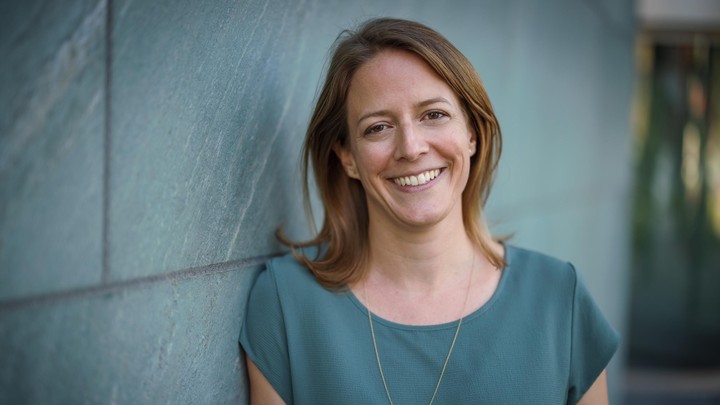
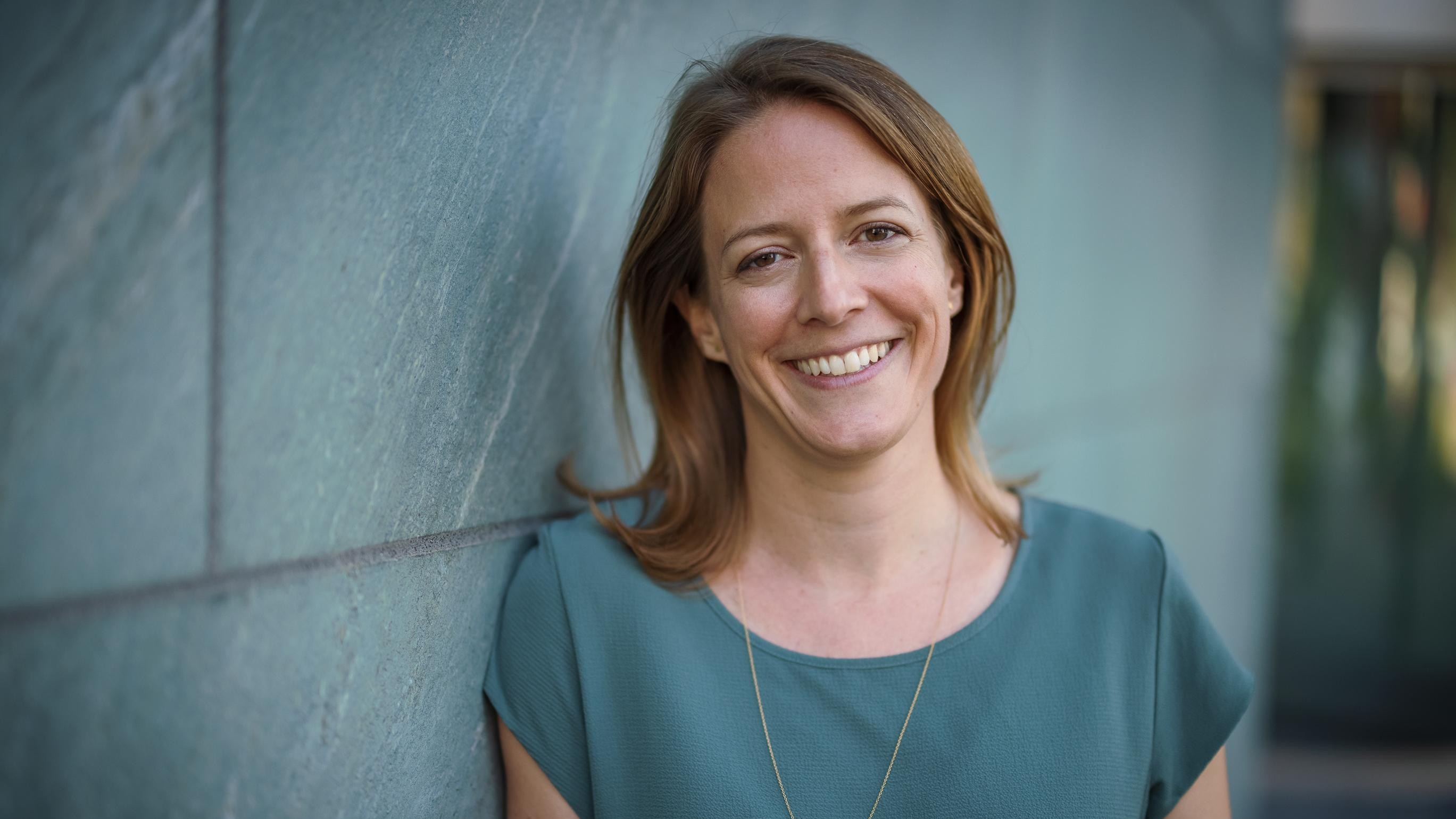
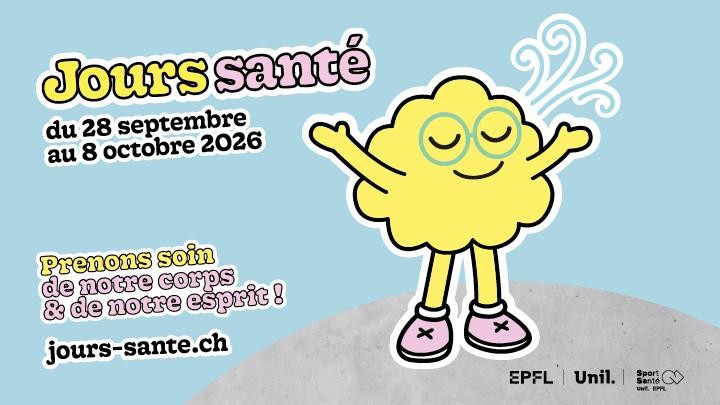
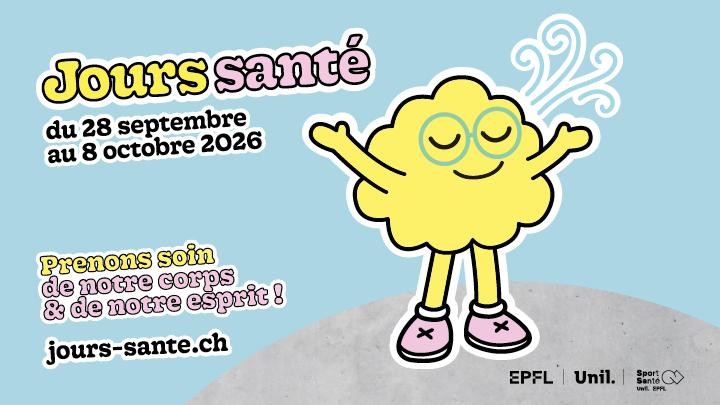
{ "count": 253, "next": "https://memento.epfl.ch/api/v1/events/?format=api&limit=10&offset=160&ordering=-slug", "previous": "https://memento.epfl.ch/api/v1/events/?format=api&limit=10&offset=140&ordering=-slug", "results": [ { "id": 72764, "title": "IMX Talks - Resolving Hierarchical Structure with X-ray scattering imaging", "slug": "imx-talks-resolving-hierarchical-structure-with-x", "event_url": "https://memento.epfl.ch/event/imx-talks-resolving-hierarchical-structure-with-x", "visual_url": "https://memento.epfl.ch/image/33978/200x112.jpg", "visual_large_url": "https://memento.epfl.ch/image/33978/720x405.jpg", "visual_maxsize_url": "https://memento.epfl.ch/image/33978/max-size.jpg", "lang": "en", "start_date": "2026-11-02", "end_date": "2026-11-02", "start_time": "16:30:00", "end_time": "17:30:00", "description": "<p>The function of many materials, from biological tissues to industrial polymers, depends on how their nanoscale building blocks are arranged and aligned within a macroscopic structure, which is essential to understand but difficult to resolve: established high-resolution techniques typically access only small sample volumes, limiting the ability to capture structural or biological variability across extended, heterogeneous samples.<br>\r\nSmall-angle X-ray scattering (SAXS) imaging probes local nanostructure by raster-scanning a focused synchrotron beam across a sample. This can be extended to resolve nanostructure orientation voxel-by-voxel in three dimensions in a method called SAXS tensor tomography, which we implement in our open-source software package Mumott. In this presentation, I will show how this approach, and its continued development, can be applied across different material systems.<br>\r\nFor injection-molded polymer packaging, SAXS imaging has resolved the layered anisotropic nanostructure important for its mechanical properties, and, combined with industrial processing simulations, the structure formation during thermal processing. Another example is bone, where resolving structure requires both three-dimensional information and sufficient sampling to capture biological variability. Combining 2D and 3D SAXS imaging, we studied regional differences in the human femoral neck, an anatomical site relevant to hip fractures, and, at higher resolution, resolved alternating chirality between neighboring lamellae within individual osteons, a structural feature proposed on mechanical grounds over a century ago.<br>\r\nThese examples illustrate how tensor tomography, extended beyond X-ray scattering to wide-angle diffraction and visible-light polarimetry, provides a route to resolving hierarchical structure across a wide range of material systems.<br>\r\n<br>\r\nBio:<strong> </strong>Marianne Liebi studied food science at ETH Zurich, where she also completed her PhD in 2013, followed by postdoctoral research at the Paul Scherrer Institute and MAX IV Laboratory, Lund. In 2017, she started her own research group at Chalmers University of Technology, Gothenburg, and was appointed in 2021 as tenure-track Assistant Professor at EPFL, where she heads the Laboratory for X-ray Characterization of Materials (cam-X) within the Institute of Materials, in a joint position with the Paul Scherrer Institute (PSI). Her research develops advanced X-ray and optical imaging techniques, centered on small-angle X-ray scattering (SAXS) in 2D and 3D, to resolve the hierarchical structure of materials ranging from fiber composites to pharmaceutical formulations and bone.</p>", "image_description": "", "creation_date": "2026-10-05T09:26:03", "last_modification_date": "2026-10-05T10:29:57", "link_label": "Website", "link_url": "https://www.psi.ch/de/lsc/people/marianne-liebi", "canceled": "False", "cancel_reason": "", "place_and_room": "BM 5202", "url_place_and_room": "https://plan.epfl.ch/?room==BM%205202", "url_online_room": "https://epfl.zoom.us/j/63884474245", "spoken_languages": [ "https://memento.epfl.ch/api/v1/spoken_languages/2/?format=api" ], "speaker": "Prof. Marianne Liebi, EPFL STI IMX CAM-X", "organizer": "Prof. Michele Ceriotti", "contact": "Prof. Michele Ceriotti", "is_internal": "False", "theme": "", "vulgarization": { "id": 1, "fr_label": "Tout public", "en_label": "General public" }, "registration": { "id": 3, "fr_label": "Entrée libre", "en_label": "Free" }, "keywords": "", "file": null, "icalendar_url": "https://memento.epfl.ch/event/export/122060/", "category": { "id": 1, "code": "CONF", "fr_label": "Conférences - Séminaires", "en_label": "Conferences - Seminars", "activated": true }, "academic_calendar_category": null, "domains": [], "mementos": [ "https://memento.epfl.ch/api/v1/mementos/8/?format=api", "https://memento.epfl.ch/api/v1/mementos/314/?format=api" ] }, { "id": 72538, "title": "IMX Colloquium - Unravelling how atomic motion takes place in molecules and materials", "slug": "imx-colloquium-unravelling-how-atomic-motion-tak-2", "event_url": "https://memento.epfl.ch/event/imx-colloquium-unravelling-how-atomic-motion-tak-2", "visual_url": "https://memento.epfl.ch/image/33789/200x112.jpg", "visual_large_url": "https://memento.epfl.ch/image/33789/720x405.jpg", "visual_maxsize_url": "https://memento.epfl.ch/image/33789/max-size.jpg", "lang": "en", "start_date": "2026-12-07", "end_date": "2026-12-07", "start_time": "13:15:00", "end_time": "14:15:00", "description": "", "image_description": "", "creation_date": "2026-09-08T11:44:57", "last_modification_date": "2026-09-08T11:45:30", "link_label": "Website", "link_url": "https://www.ch.cam.ac.uk/person/mr2102", "canceled": "False", "cancel_reason": "", "place_and_room": "MXF 1", "url_place_and_room": "https://plan.epfl.ch/?room==MXF%201", "url_online_room": "", "spoken_languages": [ "https://memento.epfl.ch/api/v1/spoken_languages/1/?format=api" ], "speaker": "Prof. Mariana Rossi, University of Cambridge, UK", "organizer": "Prof. Gregor Jotzu, Prof. Esther Amstad & Prof. Fabien Sorin", "contact": "Prof. Gregor Jotzu, Prof. Esther Amstad & Prof. Fabien Sorin", "is_internal": "False", "theme": "", "vulgarization": { "id": 1, "fr_label": "Tout public", "en_label": "General public" }, "registration": { "id": 3, "fr_label": "Entrée libre", "en_label": "Free" }, "keywords": "", "file": null, "icalendar_url": "https://memento.epfl.ch/event/export/121739/", "category": { "id": 1, "code": "CONF", "fr_label": "Conférences - Séminaires", "en_label": "Conferences - Seminars", "activated": true }, "academic_calendar_category": null, "domains": [], "mementos": [ "https://memento.epfl.ch/api/v1/mementos/8/?format=api", "https://memento.epfl.ch/api/v1/mementos/314/?format=api" ] }, { "id": 72685, "title": "IMX Colloquium - Towards life-inspired soft matter dynamics and functionalities", "slug": "imx-colloquium-towards-life-inspired-soft-matter-d", "event_url": "https://memento.epfl.ch/event/imx-colloquium-towards-life-inspired-soft-matter-d", "visual_url": "https://memento.epfl.ch/image/33987/200x112.jpg", "visual_large_url": "https://memento.epfl.ch/image/33987/720x405.jpg", "visual_maxsize_url": "https://memento.epfl.ch/image/33987/max-size.jpg", "lang": "en", "start_date": "2026-10-12", "end_date": "2026-10-12", "start_time": "13:15:00", "end_time": "14:15:00", "description": "<p>Biological systems have already paved several routes for bioinspired materials, e.g., for structural colours, wetting, adhesion, and mechanical properties. They have largely involved equilibrium or kinetically trapped properties. By contrast, biological systems allowing multifunctional properties are characteristically dissipatively and dynamically adaptive and incorporate homeostatic feedback mechanisms to regulate the dynamic states. They also typically use signal transduction to mediate the signal from the sensory elements to the responsive sites, unlike the classic man-made stimuli responsive materials. These concept suggest avenues towards more complex life-like functions in soft matter. Herein, optically driven hydrogel systems are presented to drive homeostatically controlled thermal oscillations and to mediate signal transduction via thermal intermediate signalling (1). On the other hand, biological magnetoreception in elasmobranch organisms involves electromagnetic induction (EMI) and suggests avenues for bioinspired electrical signal transductions. We show magnetic profile recognition of translocated magnetically encoded soft matter objects using electrical intermediate signaling by EMI and decoding the magnetic information with machine learning (2). Combination of high stiffness and promoted dynamics for self-healing has turned challenging to combine. Self-healing hydrogels, still combining high tensile stiffness close to that of skin were shown by using polymers upon nanoconfinement in 2D-nanosheet layered confinements (3). Finally, we show trainable actuations in bilayer gel actuators (4). Ever more complex responses can be created, such as mimicking the Pavlovian classical conditioning (5), all paving ways for growingly life-like functions for soft robotics and interfacing with biology.<br>\r\n<br>\r\n1. H. Zhang, H. Zeng, A. Eklund, H. Guo, A. Priimagi, O. Ikkala, Feedback-controlled hydrogels with homeostatic oscillations and dissipative signal transduction, <em>Nat. Nano</em>, <strong>17</strong>, 1303 (2022).<br>\r\n2. Z. Miao, X. Hu, K. Liu, S. Hu, G. Yan, H. Tan, O. Ikkala, Z. P. Lv, B. Peng, Bioinspired sensory transduction for magnetic profile recognition and encryption, <em>Adv. Mat.</em> <strong>38</strong> e15994 (2026).<br>\r\n3. C. Liang, V. Dudko, O. Khoruzhenko, X. Hong, Z.-P. Lv, J. Breu, O. Ikkala, H. Zhang, Stiff and self-healing hydrogels by polymer entanglements in co-planar nanoconfinement, <em>Nat. Mater.</em> <strong>24</strong>, 599 (2025).<br>\r\n4. S. Hu, Y. Fang, C. Liang, M. Turunen, O. Ikkala, H. Zhang, Thermally trainable dual network hydrogels, <em>Nat. Commun.</em>, <strong>14</strong>, 3717 (2023).<br>\r\n5. H. Zhang, H. Zeng, A. Priimagi, O. Ikkala, Programmable responsive hydrogels with classical conditioning algorithm, <em>Nat. Commun.</em>, <strong>10</strong>, 3267 (2019).</p>", "image_description": "", "creation_date": "2026-09-28T09:13:29", "last_modification_date": "2026-10-06T10:29:12", "link_label": "", "link_url": "", "canceled": "False", "cancel_reason": "", "place_and_room": "MXF 1", "url_place_and_room": "https://plan.epfl.ch/?room==MXF%201", "url_online_room": "", "spoken_languages": [ "https://memento.epfl.ch/api/v1/spoken_languages/2/?format=api" ], "speaker": "Prof. Olli Ikkala, Aalto University, Department of Applied Physics, Espoo, Finland", "organizer": "Prof. Gregor Jotzu, Prof. Esther Amstad & Prof. Fabien Sorin", "contact": "Prof. Gregor Jotzu, Prof. Esther Amstad & Prof. Fabien Sorin", "is_internal": "False", "theme": "", "vulgarization": { "id": 1, "fr_label": "Tout public", "en_label": "General public" }, "registration": { "id": 3, "fr_label": "Entrée libre", "en_label": "Free" }, "keywords": "", "file": null, "icalendar_url": "https://memento.epfl.ch/event/export/121946/", "category": { "id": 1, "code": "CONF", "fr_label": "Conférences - Séminaires", "en_label": "Conferences - Seminars", "activated": true }, "academic_calendar_category": null, "domains": [], "mementos": [ "https://memento.epfl.ch/api/v1/mementos/5/?format=api", "https://memento.epfl.ch/api/v1/mementos/8/?format=api", "https://memento.epfl.ch/api/v1/mementos/9/?format=api", "https://memento.epfl.ch/api/v1/mementos/314/?format=api" ] }, { "id": 72565, "title": "IMX Colloquium - Does H2O transmute to H2O2 or HO• + H• at the Air–Water Interface of Microscale Droplets / Bubbles?", "slug": "imx-colloquium-does-h2o-transmute-to-h2o2-or-ho--2", "event_url": "https://memento.epfl.ch/event/imx-colloquium-does-h2o-transmute-to-h2o2-or-ho--2", "visual_url": "https://memento.epfl.ch/image/33816/200x112.jpg", "visual_large_url": "https://memento.epfl.ch/image/33816/720x405.jpg", "visual_maxsize_url": "https://memento.epfl.ch/image/33816/max-size.jpg", "lang": "en", "start_date": "2026-10-26", "end_date": "2026-10-26", "start_time": "13:15:00", "end_time": "14:15:00", "description": "<p>Recent reports claim that hydrogen peroxide (H2O2) is spontaneously generated – without external energy input or catalyst – at the air–water interface of microdroplets1, bubbles2, and soap films3. Several mechanisms have been proposed to explain this phenomenon, including: (i) ultrahigh instantaneous electric fields at the air–water interface driving HO− à HO• + e− radicals from hydroxide ions; (ii) water’s comproportionation into H2O•+ and H2O•−; and (iii) partial dehydration of interfacial H+ and HO− followed by radical formation. In contrast, our laboratory experiments reveal that H2O2 formation is due to the reduction of dissolved O2 at water– solid interfaces, i.e., with no role for the air–water interface beyond O2 mass transport4-6. Based on these findings, I will present four diagnostic criteria against which any existing or future mechanistic proposal should be assessed. Our approach reconciles the claims of spontaneous H2O2 formation within established physical chemistry and extends naturally to other claims of anomalous microdroplet reactivity. <br>\r\n<br>\r\nReferences:<br>\r\n(1) Mehrgardi, M. A.; Mofidfar, M.; Zare, R. N. Sprayed Water Microdroplets Are Able to Generate Hydrogen Peroxide Spontaneously. Journal of the American Chemical Society 2022, 144 (17), 7606-7609. DOI: 10.1021/jacs.2c02890.<br>\r\n(2) Nami-Ana, S. F.; Mehrgardi, M. A.; Mofidfar, M.; Zare, R. N. Sustained Regeneration of Hydrogen Peroxide at the Water-Gas Interface of Electrogenerated Microbubbles on an Electrode Surface. Journal of the American Chemical Society 2024, 146 (46), 31945-31949. DOI: 10.1021/jacs.4c11422 From NLM PubMed-not-MEDLINE.<br>\r\n(3) Eldeeb, A. M.; Berbille, A.; Dick, J. E. No Microdroplets? No Problem. Soap Films Amplify the Interface and Produce Hydrogen Peroxide. Journal of the American Chemical Society 2025, 147 (37), 33325-33329. DOI: 10.1021/jacs.5c05887.<br>\r\n(4) Eatoo, M. A.; Mishra, H. Busting the myth of spontaneous formation of H2O2 at the air-water interface: contributions of the liquid-solid interface and dissolved oxygen exposed. Chemical Science 2024, 15 (9), 3093-3103. DOI: 10.1039/d3sc06534k From NLM PubMed-not-MEDLINE.<br>\r\n(5) Eatoo, M. A.; Wehbe, N.; Kharbatia, N.; Guo, X.; Mishra, H. Why do some metal ions spontaneously form nanoparticles in water microdroplets? Disentangling the contributions of the air-water interface and bulk redox chemistry. Chemical Science 2025, 16 (3), 1115-1125. DOI: 10.1039/d4sc03217a From NLM PubMed-not-MEDLINE.<br>\r\n(6) Eatoo, M. A.; Mishra, H. Disentangling the Roles of Dissolved Oxygen, Common Salts, and pH on Spontaneous Hydrogen Peroxide Production in Water: No O2, No H2O2. Journal of the American Chemical Society 2025, 147 (39), 35392-35400. DOI: 10.1021/jacs.5c09028.<br>\r\n<br>\r\nPapers:<br>\r\n- <a href=\"https://pubs.rsc.org/sc/article/15/9/3093/828007/Busting-the-myth-of-spontaneous-formation-of-H2O2\">Busting the myth of spontaneous formation of H2O2 at the air–water interface: contributions of the liquid–solid interface and dissolved oxygen exposed</a> <br>\r\n- <a href=\"https://doi.org/10.1021/jacs.5c09028\">Disentangling the Roles of Dissolved Oxygen, Common Salts, and pH on Spontaneous Hydrogen Peroxide Production in Water: No O2, No H2O2</a><br>\r\n<br>\r\nBio: Himanshu Mishra is a scientist-entrepreneur from King Abdullah University of Science and Technology (KAUST), Saudi Arabia. His team has significantly contributed to resolving scientific debates surrounding the spontaneous H2O2 formation in water microdroplets, the electrification at water-hydrophobe interfaces, and liquid–solid adhesion forces. Mishra’s team has also pioneered Carbosoil™ technology to transform desert soils for sustainable greening, food production, and carbon sequestration. His start-up Terraxy is now scaling up Carbosoil™ production to advance sustainability projects in the Middle East and beyond. Mishra’s efforts have been featured by the World Economic Forum, Geneva Inventions, and CNN (LINK).<br>\r\n </p>", "image_description": "", "creation_date": "2026-09-14T09:02:26", "last_modification_date": "2026-09-14T10:31:03", "link_label": "Website", "link_url": "https://interfaciallab.kaust.edu.sa/people/detail/himanshu-mishra-ph.d", "canceled": "False", "cancel_reason": "", "place_and_room": "MXF 1", "url_place_and_room": "https://plan.epfl.ch/?room==MXF%201", "url_online_room": "", "spoken_languages": [ "https://memento.epfl.ch/api/v1/spoken_languages/2/?format=api" ], "speaker": "Prof. Himanshu Mishra, King Abdullah University of Science and Technology (KAUST), Saudi Arabia", "organizer": "Prof. Gregor Jotzu, Prof. Esther Amstad & Prof. Fabien Sorin", "contact": "Prof. Gregor Jotzu, Prof. Esther Amstad & Prof. Fabien Sorin", "is_internal": "False", "theme": "", "vulgarization": { "id": 1, "fr_label": "Tout public", "en_label": "General public" }, "registration": { "id": 3, "fr_label": "Entrée libre", "en_label": "Free" }, "keywords": "", "file": null, "icalendar_url": "https://memento.epfl.ch/event/export/121776/", "category": { "id": 1, "code": "CONF", "fr_label": "Conférences - Séminaires", "en_label": "Conferences - Seminars", "activated": true }, "academic_calendar_category": null, "domains": [], "mementos": [ "https://memento.epfl.ch/api/v1/mementos/8/?format=api", "https://memento.epfl.ch/api/v1/mementos/314/?format=api" ] }, { "id": 72571, "title": "IMX Colloquium - Designer Quantum Materials from Carbon", "slug": "imx-colloquium-designer-quantum-materials-from-c-2", "event_url": "https://memento.epfl.ch/event/imx-colloquium-designer-quantum-materials-from-c-2", "visual_url": "https://memento.epfl.ch/image/33820/200x112.jpg", "visual_large_url": "https://memento.epfl.ch/image/33820/720x405.jpg", "visual_maxsize_url": "https://memento.epfl.ch/image/33820/max-size.jpg", "lang": "en", "start_date": "2026-11-09", "end_date": "2026-11-09", "start_time": "13:15:00", "end_time": "14:15:00", "description": "<p>Atomically precise carbon nanostructures offer a new route to quantum systems built from the bottom up. By combining molecular design, on-surface synthesis and scanning probe microscopy, we can control atomic structure, electronic states and magnetic interactions within the same platform.<br>\r\nIn this talk, I will follow the path from bottom-up synthesized graphene nanoribbons [1,2] to open-shell nanographenes [3] and designer quantum spin systems [4]. I will discuss how atomic structure can determine electronic topology and how molecular spins can be coupled into well-defined quantum chains. Recent examples include Haldane chains [4], alternating-exchange spin chains [5] and antiferromagnetic Heisenberg chains [6], where collective and fractional excitations can be probed directly at the atomic scale.<br>\r\nMore broadly, this work illustrates a materials-science strategy in which structure, functionality and interactions are programmed at the level of molecular building blocks. Rather than optimizing properties in an existing material, the aim is to design the material and its quantum behavior together. Atomically precise carbon nanostructures therefore provide a model platform for exploring how synthesis, structure and emergent functionality can be linked in a predictive way, with implications for the future design of low-dimensional electronic, magnetic and quantum materials.\r\n</p><ol>\r\n\t<li>J. Cai, P. Ruffieux, R. Jaafar, <em>et al.</em>, <em>Nature</em> <strong>466</strong>, 470–473 (2010).</li>\r\n\t<li>F. Xiang, Y. Gu, A. Kinikar, <em>et al.</em>, <em>Nat. Chem</em>. <strong>17</strong>, 1356–1363 (2025).</li>\r\n\t<li>S. Mishra, D. Beyer, K. Eimre, <em>et al</em>., <em>Nat. </em><em>Nanotechnol</em>. <strong>15</strong>, 22–28 (2020).</li>\r\n\t<li>S. Mishra, G. Catarina, F. Wu, <em>et al</em>., <em>Nature</em> <strong>598</strong>, 287–292 (2021).</li>\r\n\t<li>C. Zhao, G. Catarina, J.-J. Zhang, <em>et al</em>., <em>Nat. </em><em>Nanotechnol</em>. <strong>19</strong>, 1789-1795<strong> </strong>(2024).</li>\r\n\t<li>C. Zhao, L. Yang, J. C. G. Henriques, <em>et al</em>., <em>Nat. Mater.</em> <strong>24,</strong> 722–727 (2025).</li>\r\n</ol>\r\nBio: Roman Fasel is a leading scientist in the field of atomically precise carbon nanostructures and surface-based quantum materials. He received his Ph.D. in Physics from the University of Fribourg in 1996 and then carried out postdoctoral research at La Trobe University in Melbourne and the Fritz Haber Institute in Berlin before joining Empa. Today, he heads Empa’s nanotech@surfaces Laboratory and is Adjunct Professor at the University of Bern. He pioneered the bottom-up synthesis of graphene nanoribbons, establishing on-surface synthesis as a major new direction in nanoscience, and has since extended this work to topological states, open-shell nanographenes and quantum spin chains.", "image_description": "", "creation_date": "2026-09-14T10:43:28", "last_modification_date": "2026-09-14T10:43:41", "link_label": "Website", "link_url": "https://www.empa.ch/web/s205/roman-fasel", "canceled": "False", "cancel_reason": "", "place_and_room": "MXF 1", "url_place_and_room": "https://plan.epfl.ch/?room==MXF%201", "url_online_room": "", "spoken_languages": [ "https://memento.epfl.ch/api/v1/spoken_languages/2/?format=api" ], "speaker": "Prof. Roman Fasel, EMPA, Zürich", "organizer": "Prof. Gregor Jotzu, Prof. Esther Amstad & Prof. Fabien Sorin", "contact": "Prof. Gregor Jotzu, Prof. Esther Amstad & Prof. Fabien Sorin", "is_internal": "False", "theme": "", "vulgarization": { "id": 1, "fr_label": "Tout public", "en_label": "General public" }, "registration": { "id": 3, "fr_label": "Entrée libre", "en_label": "Free" }, "keywords": "", "file": null, "icalendar_url": "https://memento.epfl.ch/event/export/121785/", "category": { "id": 1, "code": "CONF", "fr_label": "Conférences - Séminaires", "en_label": "Conferences - Seminars", "activated": true }, "academic_calendar_category": null, "domains": [], "mementos": [ "https://memento.epfl.ch/api/v1/mementos/8/?format=api", "https://memento.epfl.ch/api/v1/mementos/314/?format=api" ] }, { "id": 72750, "title": "How Adding Neurons Reshapes the Geometry of Loss Landscapes: Consequences for Trainability and the Structure of Learned Solutions", "slug": "how-adding-neurons-reshapes-the-geometry-of-loss-2", "event_url": "https://memento.epfl.ch/event/how-adding-neurons-reshapes-the-geometry-of-loss-2", "visual_url": "https://memento.epfl.ch/image/33964/200x112.jpg", "visual_large_url": "https://memento.epfl.ch/image/33964/720x405.jpg", "visual_maxsize_url": "https://memento.epfl.ch/image/33964/max-size.jpg", "lang": "en", "start_date": "2026-10-30", "end_date": "2026-10-30", "start_time": "17:00:00", "end_time": null, "description": "<p>Thesis Directors: Prof. W. Gerstner, Dr J. M. Brea<br>\r\nNeuroscience doctoral program<br>\r\nThesis Nr. 11317<br>\r\n<br>\r\nTo take part in the public defense, please contact directly the speaker</p>", "image_description": "", "creation_date": "2026-10-02T13:33:49", "last_modification_date": "2026-10-02T13:33:54", "link_label": "", "link_url": "", "canceled": "False", "cancel_reason": "", "place_and_room": "BM 5202", "url_place_and_room": "https://plan.epfl.ch/?room==BM%205202", "url_online_room": "", "spoken_languages": [], "speaker": "<strong>Flavio MARTINELLI</strong>", "organizer": "", "contact": "<strong>Flavio MARTINELLI</strong>", "is_internal": "False", "theme": "", "vulgarization": { "id": 1, "fr_label": "Tout public", "en_label": "General public" }, "registration": { "id": 3, "fr_label": "Entrée libre", "en_label": "Free" }, "keywords": "EDNE", "file": null, "icalendar_url": "https://memento.epfl.ch/event/export/122040/", "category": { "id": 12, "code": "SOUTE", "fr_label": "Soutenances de thèses", "en_label": "Thesis defenses", "activated": true }, "academic_calendar_category": null, "domains": [], "mementos": [ "https://memento.epfl.ch/api/v1/mementos/1/?format=api", "https://memento.epfl.ch/api/v1/mementos/6/?format=api", "https://memento.epfl.ch/api/v1/mementos/9/?format=api" ] }, { "id": 58136, "title": "Holcim Stiftung | Advanced Postdoctoral Fellowship in any discipline", "slug": "holcim-stiftung-advanced-postdoctoral-fellowship-9", "event_url": "https://memento.epfl.ch/event/holcim-stiftung-advanced-postdoctoral-fellowship-9", "visual_url": "https://memento.epfl.ch/image/20479/200x112.jpg", "visual_large_url": "https://memento.epfl.ch/image/20479/720x405.jpg", "visual_maxsize_url": "https://memento.epfl.ch/image/20479/max-size.jpg", "lang": "en", "start_date": "2026-10-31", "end_date": "2026-10-31", "start_time": null, "end_time": null, "description": "<p>The Holcim Stiftung offers grants to <strong>outstanding</strong> young scientists to carry out excellent research (fundamental, applied, PoC and/or market-oriented) and scientific teaching in <strong>any discipline and field </strong>in<strong> Switzerland</strong> in view of <strong>acquiring a lecturer grade qualification or similar.</strong><br>\r\n<br>\r\nPriority is given to projects:\r\n</p><ul>\r\n\t<li>with a positive social impact,</li>\r\n\t<li>exploring innovative methods, new perspectives or novel lines of questioning crucial to the advancement of science,</li>\r\n</ul>\r\n<strong>Who can apply </strong><em>(all following conditions must be filled)</em>. The applicant must:\r\n\r\n<ul>\r\n\t<li>have graduated from a university or equivalent institution of higher education (with a dissertation)</li>\r\n\t<li>furnish proof of suitable qualifications (e.g. publications)</li>\r\n\t<li>not be older than 35</li>\r\n\t<li><strong>wish to pursue scientific teaching and research work with a view to acquiring a lecturer grade qualification or similar.</strong></li>\r\n</ul>\r\n<strong>Funding & Duration:</strong>\r\n\r\n<ul>\r\n\t<li>Eligible costs: the <strong>applicant’s salary and social charges</strong> based on SNSF salary scale (usually between CHF 90’000 and 120’000 p.a.).</li>\r\n</ul>\r\n\r\n<ul>\r\n\t<li>The funding does NOT cover:</li>\r\n</ul>\r\n\r\n<ol>\r\n\t<li>the financing of regular studies, an additional course of study, a dissertation or a postdoc posting</li>\r\n\t<li>projects solely for the pursuit of training in a new area (as opposed to further training in a field already established as a specialism of the candidate)</li>\r\n\t<li>attendance at congresses, symposia, etc.</li>\r\n\t<li>pure publication projects (printing costs)</li>\r\n\t<li>cost of material</li>\r\n\t<li>Salaries for project members</li>\r\n</ol>\r\n\r\n<ul>\r\n\t<li>Duration: usually between 24-36 months..</li>\r\n</ul>\r\n<strong>You can submit parallel requests for funding</strong> for your salary, but you must inform the Foundation at the proposal stage (<a href=\"https://www.holcim-stiftung.ch/en/holcim-stiftung/request-for-stipend\">online application form</a>) and if you receive other positive decisions.<br>\r\n<br>\r\n<strong>Deadlines</strong>: <strong>30 April</strong> and <strong>31 October</strong> (every year)<br>\r\nApplication:\r\n<ul>\r\n\t<li>Note: the Foundation does NOT accept informal requests.</li>\r\n\t<li><strong>Before you apply, contact the ReO to check your eligibility to conduct the project at EPFL.</strong></li>\r\n\t<li>Apply via the <a href=\"https://www.holcim-stiftung.ch/en/holcim-stiftung/request-for-stipend\">online application form</a>, joining your CV, publications, diploma, 2 letters of recommendations, among others.</li>\r\n</ul>\r\nDecision: within 1 month by the Board of Trustees<br>\r\nNote: The Foundation’s annual budget is CHF 500’000 (only 4-5 stipends are awarded per year).<br>\r\n<br>\r\n<strong>For further information</strong>, please have a look at the <a href=\"https://www.holcim-stiftung.ch/en/holcim-stiftung/implementation\">call webpage</a> and <a href=\"https://www.holcim-stiftung.ch/en/holcim-stiftung/implementation\">implementation regulations</a>", "image_description": "", "creation_date": "2021-11-26T10:01:23", "last_modification_date": "2026-09-08T12:11:30", "link_label": "", "link_url": "", "canceled": "False", "cancel_reason": "", "place_and_room": "", "url_place_and_room": "", "url_online_room": "", "spoken_languages": [], "speaker": "", "organizer": "", "contact": "<a href=\"mailto:[email protected]?subject=%5B%20Holcim%20Stiftung%20%7C%20Advanced%20Postdoctoral%20Fellowship%2FAssistant%20Professorship%20in%20any%20discipline%20%5D%20\">Research Office</a>", "is_internal": "False", "theme": "", "vulgarization": { "id": 1, "fr_label": "Tout public", "en_label": "General public" }, "registration": { "id": 3, "fr_label": "Entrée libre", "en_label": "Free" }, "keywords": "research funding", "file": null, "icalendar_url": "https://memento.epfl.ch/event/export/100381/", "category": { "id": 16, "code": "PROP", "fr_label": "Appel à proposition", "en_label": "Call for proposal", "activated": true }, "academic_calendar_category": null, "domains": [], "mementos": [ "https://memento.epfl.ch/api/v1/mementos/140/?format=api" ] }, { "id": 72612, "title": "High-Energy Radiation and Electromagnetic Signatures in Upward Lightning: Physical Insights from Multi-band Measurements", "slug": "high-energy-radiation-and-electromagnetic-signat-2", "event_url": "https://memento.epfl.ch/event/high-energy-radiation-and-electromagnetic-signat-2", "visual_url": "https://memento.epfl.ch/image/33857/200x112.jpg", "visual_large_url": "https://memento.epfl.ch/image/33857/720x405.jpg", "visual_maxsize_url": "https://memento.epfl.ch/image/33857/max-size.jpg", "lang": "en", "start_date": "2026-10-12", "end_date": "2026-10-12", "start_time": "16:30:00", "end_time": null, "description": "<p>Thesis Directors: Prof. F. Rachidi-Haeri, Prof. M. Rubinstein<br>\r\nPhysics doctoral program<br>\r\nThesis Nr. 11764</p>", "image_description": "", "creation_date": "2026-09-17T15:39:24", "last_modification_date": "2026-09-17T15:40:25", "link_label": "", "link_url": "", "canceled": "False", "cancel_reason": "", "place_and_room": "MED 0 1418", "url_place_and_room": "https://plan.epfl.ch/?room==MED%200%201418", "url_online_room": "", "spoken_languages": [], "speaker": "Toma Chaumont Behrs", "organizer": "", "contact": "Toma Chaumont Behrs", "is_internal": "False", "theme": "", "vulgarization": { "id": 1, "fr_label": "Tout public", "en_label": "General public" }, "registration": { "id": 3, "fr_label": "Entrée libre", "en_label": "Free" }, "keywords": "EDPY", "file": null, "icalendar_url": "https://memento.epfl.ch/event/export/121849/", "category": { "id": 12, "code": "SOUTE", "fr_label": "Soutenances de thèses", "en_label": "Thesis defenses", "activated": true }, "academic_calendar_category": null, "domains": [], "mementos": [ "https://memento.epfl.ch/api/v1/mementos/1/?format=api", "https://memento.epfl.ch/api/v1/mementos/5/?format=api", "https://memento.epfl.ch/api/v1/mementos/6/?format=api" ] }, { "id": 72259, "title": "Health Days 2026", "slug": "health-days-2026", "event_url": "https://memento.epfl.ch/event/health-days-2026", "visual_url": "https://memento.epfl.ch/image/33530/200x112.jpg", "visual_large_url": "https://memento.epfl.ch/image/33530/720x405.jpg", "visual_maxsize_url": "https://memento.epfl.ch/image/33530/max-size.jpg", "lang": "en", "start_date": "2026-09-28", "end_date": "2026-10-08", "start_time": null, "end_time": null, "description": "<p>UNIL+EPFL Health Days 2026 invite you to dedicate some time to your physical and mental well-being from 28 September to 8 October. Over the course of these two weeks, a wide range of inspiring <strong>conferences, workshops and activities</strong> will take place at various times throughout the day. Some events will be open to the general public and offered in French and/or English.<br>\r\n<br>\r\nMembers of the university community will be able to take advantage of the <strong>health screenings and assessments</strong> available at the Health Village, hosted during the first week on the EPFL campus and during the second week on the University of Lausanne campus. They will also have access to <strong>information stands</strong> run by services and partners committed to promoting a comprehensive, 360-degree approach to health and well-being.<br>\r\n<br>\r\nThe programme will be available at the end of August on the dedicated website: <a href=\"https://jours-sante.ch/.\"><strong>https://jours-sante.ch/</strong></a>.</p>", "image_description": "", "creation_date": "2026-07-20T15:54:23", "last_modification_date": "2026-07-20T15:58:58", "link_label": "Jours Santé", "link_url": "https://jours-sante.ch/", "canceled": "False", "cancel_reason": "", "place_and_room": "Rolex Learning Center et Unil-Amphipôle", "url_place_and_room": "", "url_online_room": "", "spoken_languages": [ "https://memento.epfl.ch/api/v1/spoken_languages/1/?format=api", "https://memento.epfl.ch/api/v1/spoken_languages/2/?format=api" ], "speaker": "", "organizer": "EPFL (VPH-WINC), Service Sport Santé Unil+EPFL (SSUE), Université de Lausanne", "contact": "<a href=\"mailto:[email protected]\">[email protected]</a>", "is_internal": "False", "theme": "", "vulgarization": { "id": 1, "fr_label": "Tout public", "en_label": "General public" }, "registration": { "id": 3, "fr_label": "Entrée libre", "en_label": "Free" }, "keywords": "santé, health, santé mentale, mental health, emotions, psychology, sophrologie, self-hypnose, mindfulness, aging", "file": null, "icalendar_url": "https://memento.epfl.ch/event/export/121300/", "category": { "id": 4, "code": "DIVERS", "fr_label": "Autres types d’événement", "en_label": "Miscellaneous", "activated": true }, "academic_calendar_category": null, "domains": [], "mementos": [ "https://memento.epfl.ch/api/v1/mementos/1/?format=api", "https://memento.epfl.ch/api/v1/mementos/3/?format=api", "https://memento.epfl.ch/api/v1/mementos/4/?format=api", "https://memento.epfl.ch/api/v1/mementos/5/?format=api", "https://memento.epfl.ch/api/v1/mementos/6/?format=api", "https://memento.epfl.ch/api/v1/mementos/8/?format=api", "https://memento.epfl.ch/api/v1/mementos/9/?format=api", "https://memento.epfl.ch/api/v1/mementos/21/?format=api", "https://memento.epfl.ch/api/v1/mementos/79/?format=api", "https://memento.epfl.ch/api/v1/mementos/145/?format=api", "https://memento.epfl.ch/api/v1/mementos/396/?format=api", "https://memento.epfl.ch/api/v1/mementos/425/?format=api" ] }, { "id": 72636, "title": "H∞boys and INDIans: Can they work together for flight control?", "slug": "hboys-and-indians-can-they-work-together-for-fligh", "event_url": "https://memento.epfl.ch/event/hboys-and-indians-can-they-work-together-for-fligh", "visual_url": "https://memento.epfl.ch/image/33880/200x112.jpg", "visual_large_url": "https://memento.epfl.ch/image/33880/720x405.jpg", "visual_maxsize_url": "https://memento.epfl.ch/image/33880/max-size.jpg", "lang": "en", "start_date": "2026-10-07", "end_date": "2026-10-07", "start_time": "11:00:00", "end_time": "12:00:00", "description": "<strong>Abstract</strong><br>\r\nSince the early days of aircraft autopilots, flight control law design has been dominated by gain scheduling: a family of linear controllers designed at trim points across the flight envelope and interpolated as the aerospace vehicle's operating condition changes. The approach is reliable and well understood, but it is also labor-intensive, requiring extensive linearization, controller interpolation, and lengthy re-tuning whenever the airframe or mission profile changes while its classical stability and performance guarantees hold only under restrictive assumptions.<br>\r\n<br>\r\n(Incremental) Nonlinear Dynamic Inversion — (I)NDI — emerged as an attractive alternative, first as full-state NDI in the 1980s–90s and later, in its incremental form, replacing much (though not all) of the reliance on an accurate onboard model with direct sensor feedback of angular acceleration. The result is a simple, largely envelope-independent control structure that (almost) eliminates the scheduling and interpolation burden. The price, however, is the loss of the a priori robustness guarantees that gain-scheduled designs, however cumbersome, were built to provide. Robust control theory, born in the same timeframe as NDI, offers exactly those guarantees, but has traditionally lived in a separate, frequency-domain world from INDI's incremental, time-domain philosophy.<br>\r\n<br>\r\nThis talk shows how the two could be brought closer or even work together. We present hybrid INDI architectures combining a sensor-based and a model-based inversion core and paired with an outer loop tuned via structured synthesis therefore combining the advantages of both worlds. We then generalize this bridge through a formal duality between (I)NDI and quasi-LPV control, unifying robust analysis and synthesis across both worlds and clarifying exactly where INDI's modularity is paid for in achievable robustness. These results are validated across various aerospace applications such as aircraft, space launchers and drones.<br>\r\n<br>\r\n<strong>Biography</strong><br>\r\n<br>\r\nDr. Spilios Theodoulis is an associate professor in the Aerospace GNC cluster within the Control & Simulation (C&S) section, at the Faculty of Aerospace Engineering (AE) of the Delft University of Technology (TU Delft). Before joining TU Delft, he spent fourteen years at the French-German Research Institute of Saint-Louis (ISL), where he was Deputy Head of the GNC department. He is the founder of the Aerospace dynamics and RObust Control (AEROCON) research group along with its advanced projects branch—the ∞-Lab, and also an adjunct professor at the University of Strasbourg, University of Paris-Saclay and Cranfield University teaching tensor-based flight dynamics and automatic (flight) control. He has been involved in the research and development of both civilian and defense projects with EU government agencies, industry and academia in the field of GNC for more than 20 years.<br>\r\n<br>\r\nHis research interests focus on two complementary fields. First, <em>modeling and flight dynamics</em> of complex aerospace systems, including uncertainty modeling and linear/nonlinear-parameter-varying dynamics. Second, (multivariable) <em>stability and</em> <em>control</em> systems spanning from robust/nonlinear control and analysis to control theory-inspired guidance algorithms. The algorithms developed are showcased in several classes of systems (including the facilities of the AE C&S section such as SIMONA, PH-LAB, etc.) such as civil and fighter aircraft, rotorcraft, drones, hypersonic vehicles, space launchers, as well as guided systems. He maintains active collaborations with leading research institutes, including ONERA, DLR, NLR, TNO, NASA, and ESA-ESTEC; academic partners such as ISAE-SUPAERO, Cranfield University, and NYU Abu Dhabi; and industrial partners including Dassault Aviation, Airbus Defence & Space, MBDA, Indra Deimos, PLD Space, Lockheed Martin Skunk Works, and others.<br>\r\n<br>\r\nHe is an Associate Fellow of the American Institute of Aeronautics and Astronautics (Class of 2023), co-recipient of both <em>1-Star</em> and <em>2-Star Innovation Awards</em> (2019) from MBDA, and his students have received (some) distinctions, including the best PhD award in the area of systems and control from the University of Strasbourg (2017). He also serves on various technical committees (AIAA GNC, IFAC Aerospace, CEAS GNC) as well as on the organizing and program conference committees related to the field of GNC (AIAA SciTech, IFAC WC/ACA, EuroGNC, etc.).<br>\r\n<br>\r\nHis most daunting challenge to date though, remains the robust stabilization of his two young daughters Iris and Hera, who are constantly reminding him that nature is neither linear nor time-invariant.<br>\r\n<br>\r\n<br>\r\n ", "image_description": "", "creation_date": "2026-09-22T11:05:26", "last_modification_date": "2026-09-22T16:45:19", "link_label": "", "link_url": "", "canceled": "False", "cancel_reason": "", "place_and_room": "ME C2 405", "url_place_and_room": "https://plan.epfl.ch/?room==ME%20C2%20405", "url_online_room": "", "spoken_languages": [ "https://memento.epfl.ch/api/v1/spoken_languages/2/?format=api" ], "speaker": "<a href=\"https://www.tudelft.nl/en/staff/s.theodoulis/\">Dr. Spilios Theodoulis, associate professor in the Aerospace GNC cluster within the Control & Simulation (C&S) section, at the Faculty of Aerospace Engineering (AE) of the Delft University of Technology (TUDelft), Netherlands</a>", "organizer": "Professor <a href=\"https://people.epfl.ch/alireza.karimi\">Alireza Karimi</a>", "contact": "[email protected]", "is_internal": "False", "theme": "", "vulgarization": { "id": 1, "fr_label": "Tout public", "en_label": "General public" }, "registration": { "id": 3, "fr_label": "Entrée libre", "en_label": "Free" }, "keywords": "", "file": null, "icalendar_url": "https://memento.epfl.ch/event/export/121878/", "category": { "id": 1, "code": "CONF", "fr_label": "Conférences - Séminaires", "en_label": "Conferences - Seminars", "activated": true }, "academic_calendar_category": null, "domains": [], "mementos": [ "https://memento.epfl.ch/api/v1/mementos/8/?format=api", "https://memento.epfl.ch/api/v1/mementos/15/?format=api" ] } ] }