Event List
retrieve:
Return the details about the given Event id.
list:
List all Event objects.
GET /api/v1/events/?format=api&offset=230&ordering=-event__id
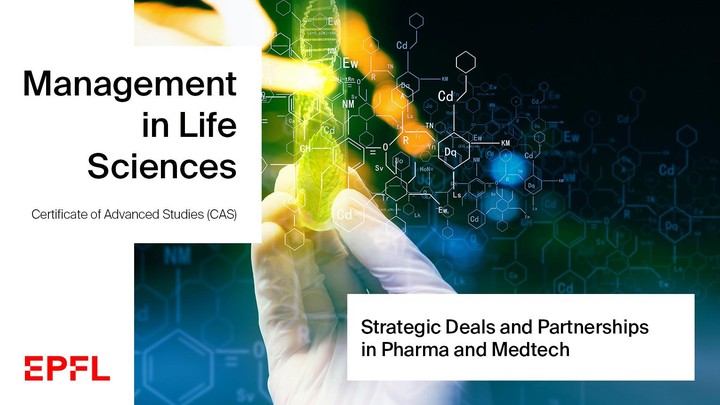
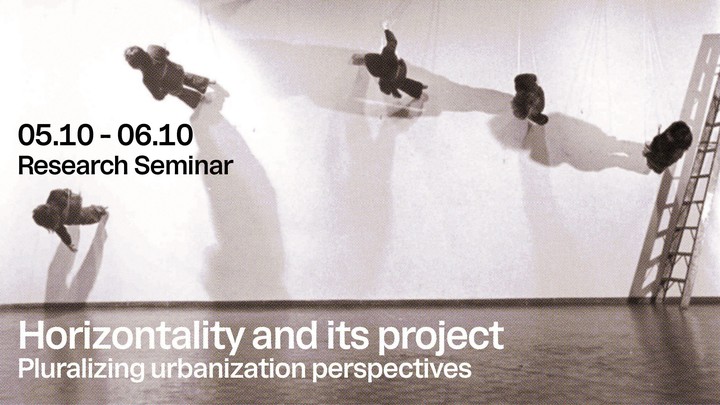
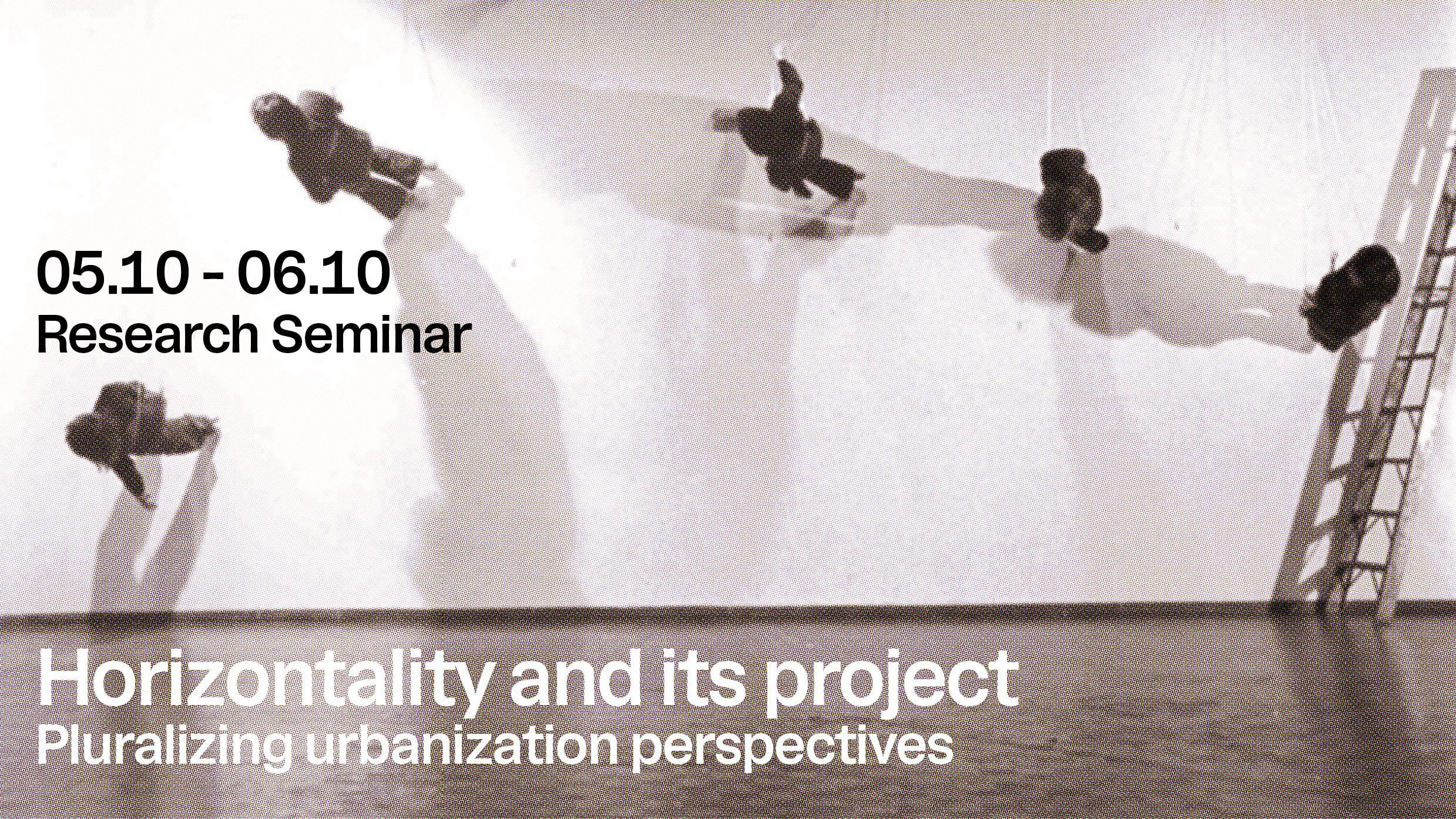
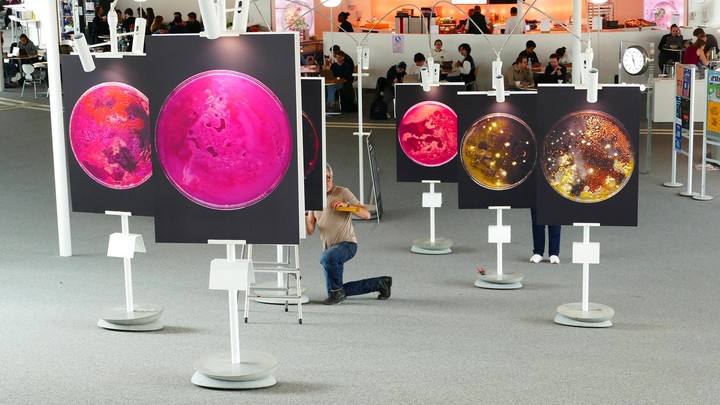
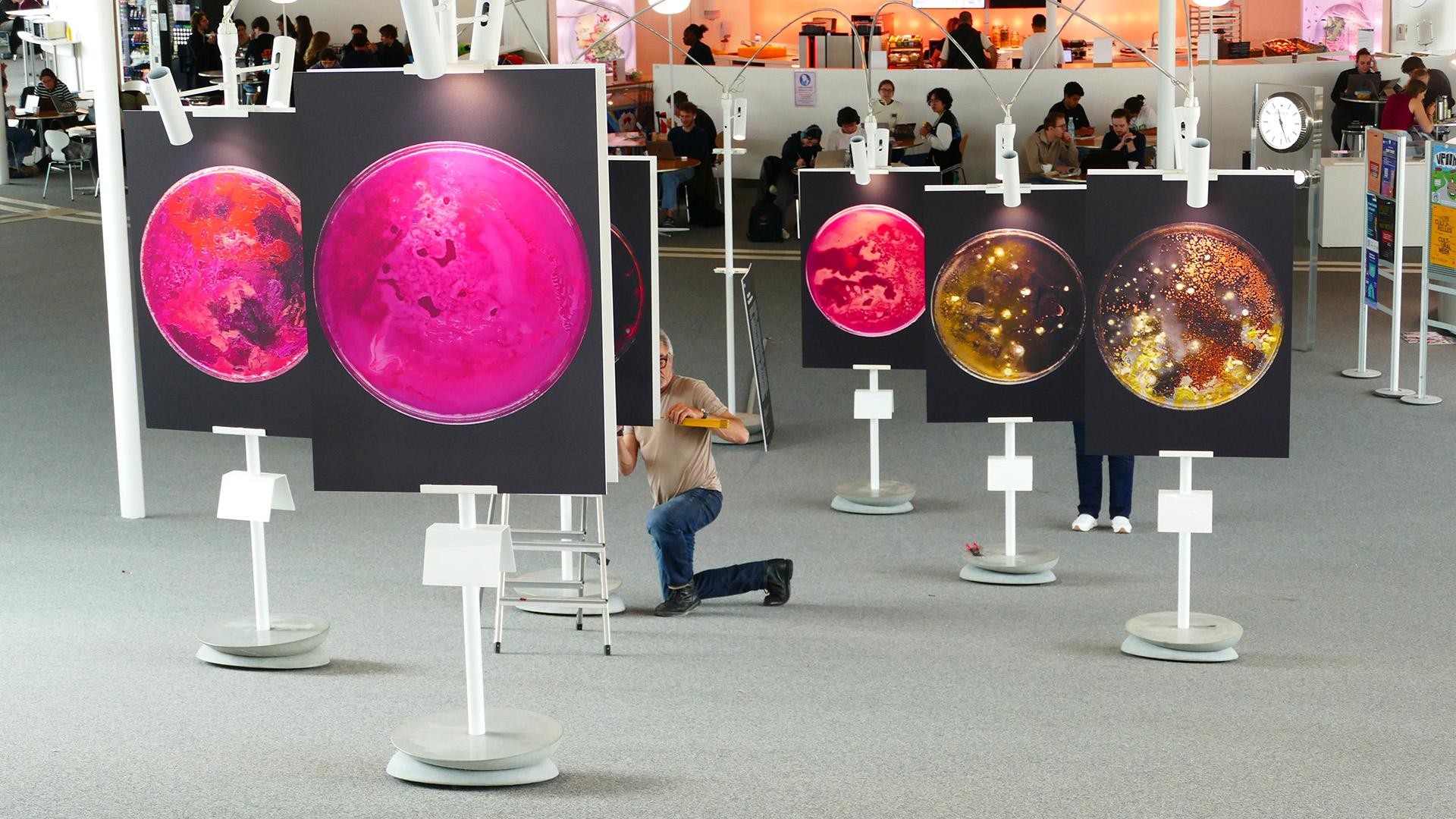
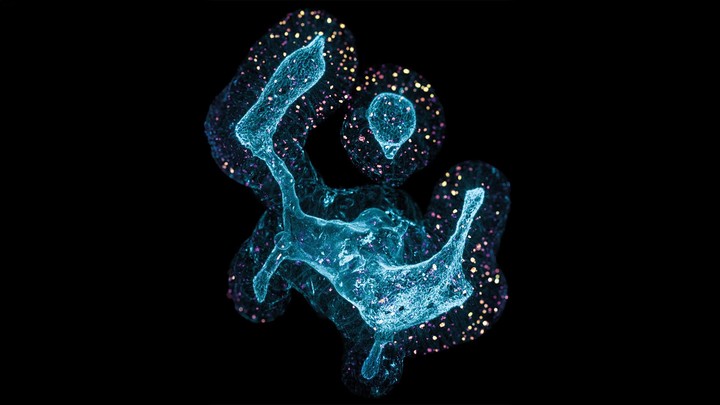
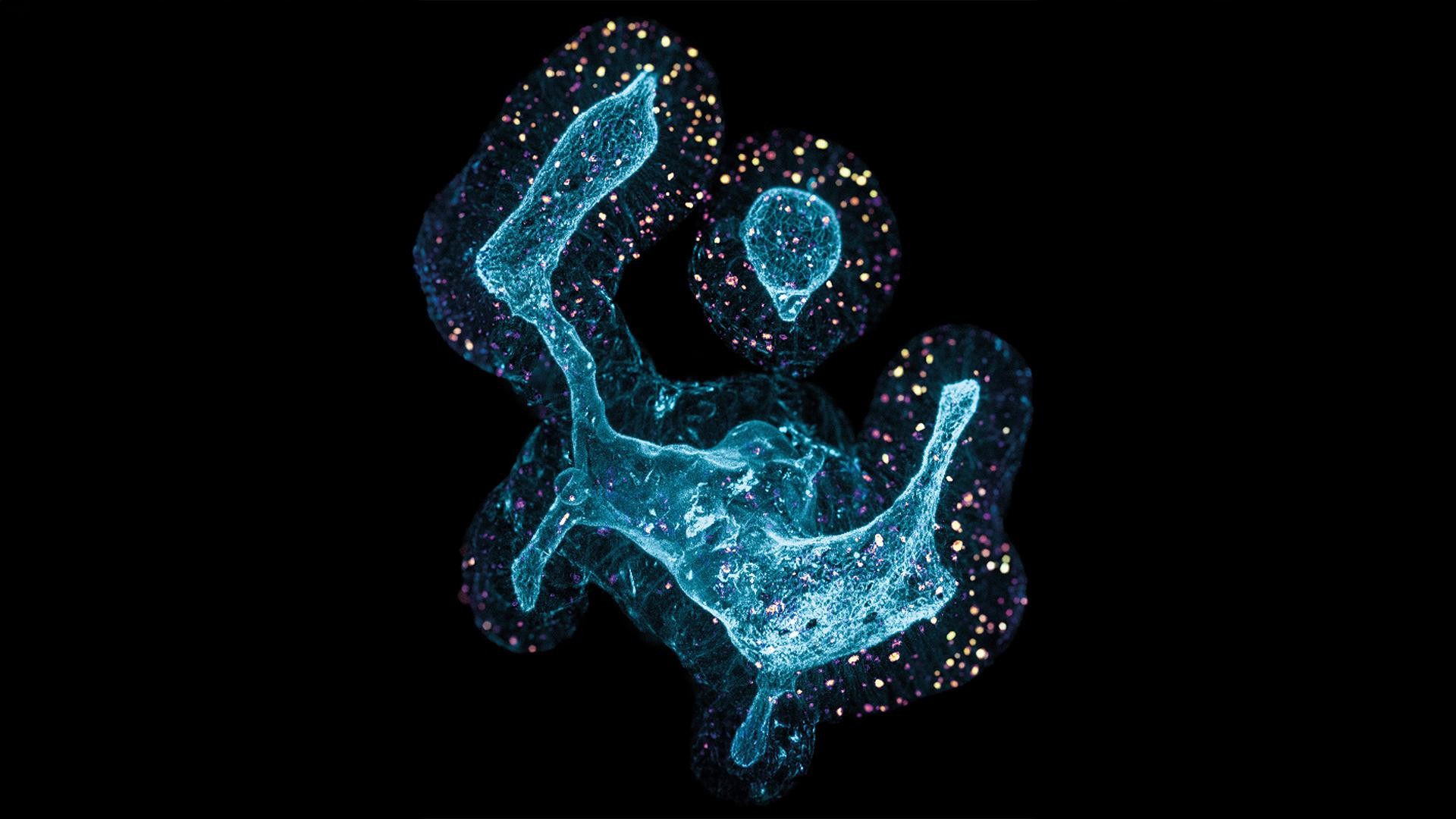
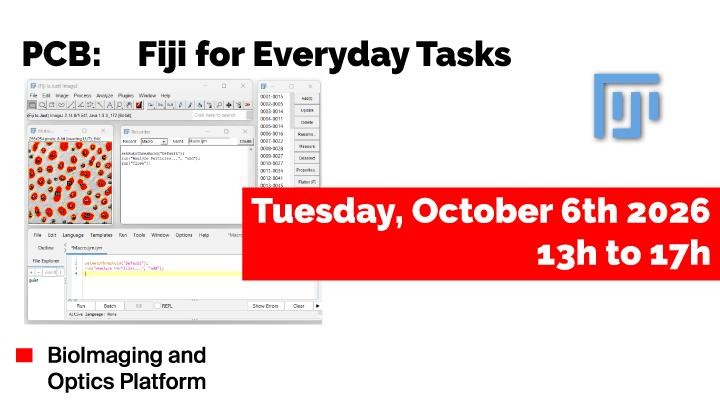
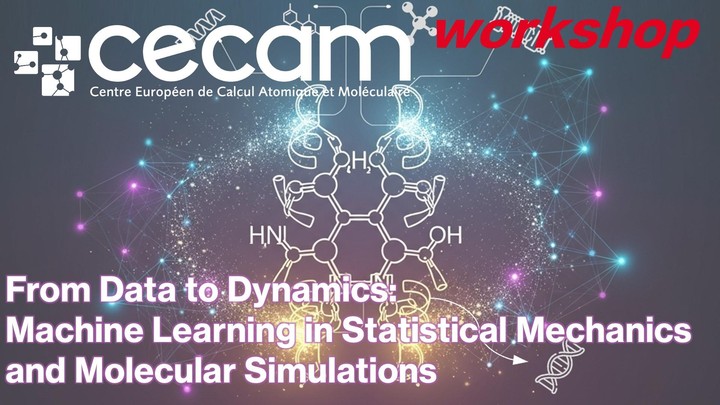
{ "count": 264, "next": "https://memento.epfl.ch/api/v1/events/?format=api&limit=10&offset=240&ordering=-event__id", "previous": "https://memento.epfl.ch/api/v1/events/?format=api&limit=10&offset=220&ordering=-event__id", "results": [ { "id": 71479, "title": "Strategic Deals and Partnerships in Pharma and Medtech [CAS Management in Life Sciences 2027]", "slug": "strategic-deals-and-partnerships-in-pharma-and-med", "event_url": "https://memento.epfl.ch/event/strategic-deals-and-partnerships-in-pharma-and-med", "visual_url": "https://memento.epfl.ch/image/32824/200x112.jpg", "visual_large_url": "https://memento.epfl.ch/image/32824/720x405.jpg", "visual_maxsize_url": "https://memento.epfl.ch/image/32824/max-size.jpg", "lang": "en", "start_date": "2027-01-26", "end_date": "2027-01-28", "start_time": null, "end_time": null, "description": "<strong>Module 1: \"Strategic Deals and Partnerships in Pharma and Medtech\"</strong><br>\r\n<br>\r\nDeals and Partnerships are the lifeblood of the life sciences industry due to the high cost, high risk and long duration of relying on organic growth. This module provides a framework for selecting the most appropriate partners; creating and executing the right types of deals (alliance, joint-venture, outsourcing); and identifying and avoiding potential pitfalls.<br>\r\n<br>\r\n*************<br>\r\n<br>\r\n<strong><u>About the CAS Managament in Life Sciences:</u><br>\r\nLeading multi-disciplinary projects in BioTech, MedTech and Pharma</strong><br>\r\n<br>\r\nThe world of therapeutic development is becoming increasingly complex. Competition is diversifying and innovating across industries, just as new regulations and multi-stakeholder engagements disrupt the competitive landscape. Challenge or opportunity? It is up to you!<br>\r\n<br>\r\nThis program explores the entire development process of therapeutic interventions, from initial planning all the way to commercialization, allowing our participants to deepen their expertise. They also learn the leadership qualities and management tools required to lead multi-disciplinary projects in Biotech, Medtech and Pharma ventures.<br>\r\n<br>\r\nThis Certificate of Advanced Studies (CAS) runs every year, from January to June at the EPFL Campus in Lausanne.\r\n<ul>\r\n\t<li>7 modules</li>\r\n\t<li>Flexible format</li>\r\n\t<li>Part-time</li>\r\n</ul>", "image_description": "", "creation_date": "2026-03-30T09:35:10", "last_modification_date": "2026-06-26T12:13:48", "link_label": "Webpage", "link_url": "http://go.epfl.ch/mls", "canceled": "False", "cancel_reason": "", "place_and_room": "ODY -1 0021", "url_place_and_room": "https://plan.epfl.ch/?room==ODY%20-1%200021", "url_online_room": "", "spoken_languages": [ "https://memento.epfl.ch/api/v1/spoken_languages/2/?format=api" ], "speaker": "", "organizer": "<a href=\"http://executive.epfl.ch\">EPFL Executive Education</a>", "contact": "[email protected]", "is_internal": "False", "theme": "", "vulgarization": { "id": 1, "fr_label": "Tout public", "en_label": "General public" }, "registration": { "id": 1, "fr_label": "Sur inscription", "en_label": "Registration required" }, "keywords": "Life Sciences", "file": null, "icalendar_url": "https://memento.epfl.ch/event/export/120217/", "category": { "id": 4, "code": "DIVERS", "fr_label": "Autres types d’événement", "en_label": "Miscellaneous", "activated": true }, "academic_calendar_category": null, "domains": [], "mementos": [ "https://memento.epfl.ch/api/v1/mementos/1/?format=api", "https://memento.epfl.ch/api/v1/mementos/3/?format=api", "https://memento.epfl.ch/api/v1/mementos/6/?format=api", "https://memento.epfl.ch/api/v1/mementos/437/?format=api" ] }, { "id": 71445, "title": "Horizontality and its project: Pluralizing urbanization perspectives", "slug": "horizontality-and-its-project-pluralizing-urbaniza", "event_url": "https://memento.epfl.ch/event/horizontality-and-its-project-pluralizing-urbaniza", "visual_url": "https://memento.epfl.ch/image/32793/200x112.jpg", "visual_large_url": "https://memento.epfl.ch/image/32793/720x405.jpg", "visual_maxsize_url": "https://memento.epfl.ch/image/32793/max-size.jpg", "lang": "en", "start_date": "2026-10-05", "end_date": "2026-10-06", "start_time": "09:00:00", "end_time": "13:00:00", "description": "<p>Ten years ago, EPFL's Laboratory of Urbanism proposed horizontality as a critical lens for urban theory and practice. Since then, the concept has grown substantially richer through theoretical traditions developed across Europe and beyond.<br>\r\nThis year's seminar revisits horizontality not as a closed paradigm, but as a mode of critical engagement with the socio-political, ecological, and economic processes of urbanization. It is approached as a historical, ideological, conceptual, and political question — one intersecting with territorial redistribution, accessibility, solidarity, and spatial justice amid deep socio-ecological transformation. Neither purely top-down nor bottom-up, horizontality invites reflection on spatial organization, territorial governance, and the conflicts shaping contemporary urbanization.<br>\r\nRather than repeating critiques of vertical power and growth-oriented urbanization, the seminar aims to pluralize perspectives on horizontality as an open concept — one capable of generating new rationalities and spatial imaginaries for future design and socio-political agendas.</p>", "image_description": "", "creation_date": "2026-03-24T15:19:40", "last_modification_date": "2026-09-09T10:12:37", "link_label": "", "link_url": "", "canceled": "False", "cancel_reason": "", "place_and_room": "CO 0 11", "url_place_and_room": "", "url_online_room": "https://epfl.zoom.us/j/64557144123?pwd=fIqeb7t5TTUgEPzDPJiwuT5BmNnf9R.1", "spoken_languages": [ "https://memento.epfl.ch/api/v1/spoken_languages/2/?format=api" ], "speaker": "Prof.Michiel Dehane, Prof.Catherine Maumi, Prof.Tom Avermaete Tommaso Pietropolli, Mose Cometta. Prof.Charles Waldheim, Prof.Dean Almy, Prof.Great de Block, Andrea Palmioli, Adria Carbonell Rabassa, Elvira Pietrobon, Nikos Katsikis, Prof.Luca Pattaroni, Prof.Milica Topalovic, Prof.Antonio Di Campli", "organizer": "Prof.Elena Cogato Lanza, Flore Guichot, Prof. Paola Vigano,", "contact": "[email protected]", "is_internal": "False", "theme": "", "vulgarization": { "id": 1, "fr_label": "Tout public", "en_label": "General public" }, "registration": { "id": 3, "fr_label": "Entrée libre", "en_label": "Free" }, "keywords": "Pluralizing urbanization, Horizontality, Territorial project", "file": null, "icalendar_url": "https://memento.epfl.ch/event/export/120175/", "category": { "id": 1, "code": "CONF", "fr_label": "Conférences - Séminaires", "en_label": "Conferences - Seminars", "activated": true }, "academic_calendar_category": null, "domains": [], "mementos": [ "https://memento.epfl.ch/api/v1/mementos/1/?format=api", "https://memento.epfl.ch/api/v1/mementos/4/?format=api", "https://memento.epfl.ch/api/v1/mementos/6/?format=api" ] }, { "id": 71387, "title": "Unearthed, by Rahel Oberhummer - Exhibition", "slug": "unearthed-by-rahel-oberhummer-exhibition", "event_url": "https://memento.epfl.ch/event/unearthed-by-rahel-oberhummer-exhibition", "visual_url": "https://memento.epfl.ch/image/32849/200x112.jpg", "visual_large_url": "https://memento.epfl.ch/image/32849/720x405.jpg", "visual_maxsize_url": "https://memento.epfl.ch/image/32849/max-size.jpg", "lang": "en", "start_date": "2026-05-07", "end_date": "2026-10-11", "start_time": "07:00:00", "end_time": "23:59:00", "description": "<p>Le projet <em>Unearthed</em> de l’artiste <a href=\"https://www.raheloberhummer.ch/\">Rahel Oberhummer</a> est une aventure visuelle et scientifique au cœur du développement de micro-organismes contenus dans le pergélisol de la montagne Muot da Barba Peider (Schafberg) en Engadine et collectés par l'Institut fédéral de recherches sur la forêt, la neige et le paysage (WSL). Cette collection préserve des micro-organismes provenant de régions menacées telles que les Alpes et l'Arctique et compte déjà plus de 2000 spécimens.<br>\r\n<br>\r\nL’artiste a sélectionné des levures, bactéries et champignons souvent vieux de 12’000 ans, qu’elle a cultivés dans son propre studio et photographiés tous les deux jours. Les différents micro-organismes sont déposés sur un fond d’agar pour qu’ils puissent se développer. Leur évolution est rapide et hasardeuse. La documentation est méthodique : plus de 13'300 photographies ont été prises représentant des instantanés de matière vivante.<br>\r\n<br>\r\nDeux séries de photographies ont été produites : l’une se concentre sur des monocultures, dans lesquelles une souche microbienne sélectionnée occupe une boîte de Pétri et se propage largement. En adaptant les méthodes d'inoculation et les milieux de culture, différentes impulsions sont déclenchées. La deuxième série fait cohabiter plusieurs organismes différents. La lutte pour les nutriments dans le milieu de culture ainsi que les symbioses qui peuvent se développer entre les microbes sont documentées. La pratique d’atelier se mêle à la pratique de laboratoire.<br>\r\n<br>\r\n<strong>L’exposition</strong><br>\r\n<br>\r\nL’exposition<em> Unearthed</em> présente 18 photographies de plusieurs micro-organismes différents évoluant dans les boîtes circulaires qui les abritent. Filaments, textures, entrelacs, pointillés, cercles produisent des configurations abstraites spectaculaires. Les couleurs enchantent et vivifient les formes en turbulente circulation et en constante métamorphose. Les photographies pointent le sublime de l’extraordinaire variété des cellules : la naissance du vivant.<br>\r\nLes photographies de Rahel Oberhummer révèlent deux nécessités indissociables : d’une part celle de comprendre le vivant même dans ses organismes les plus simples et d’autre part de le préserver. Parallèlement, il s’agit de créer des images qui manifestent la qualité visuelle des formes et des couleurs de ces micro-organismes. Notre rapport à la nature exige l’admiration de sa beauté. Aujourd’hui, des artistes comme Rahel Oberhummer s’engagent dans une double mission : participer activement à des processus scientifiques et créer des images sensibles tout autant que savantes.<br>\r\n<br>\r\n<strong>Collaborations</strong><br>\r\n<br>\r\nSérie photographique réalisée en collaboration avec l’Institut fédéral de recherches sur la forêt, la neige et le paysage (WSL). Unité : Biodiversité et écologie de la conservation.<br>\r\nDr. Beat Frey, Dr. Joel Rüthi, Dr. Ivano Brunner, Beat Stierli<br>\r\n<br>\r\n<strong>Eléments biographiques</strong><br>\r\n<br>\r\nRahel Oberhummer (*1991, Loèche-les-Bains) est diplômée de la HEAD, Genève. Elle a étudié aussi à la Royal Danish Academy of Fine Arts, Copenhague, à la Hochschule für Kunst und Design de Lucerne et au Billy Blue College of Design à Sydney. Au début de l’année 2026, elle a obtenu une résidence de trois mois à Hanoï, au Vietnam, dans le cadre d’un séjour de recherche soutenu par Pro Helvetia et accueilli par l’espace Exutoire. Elle vit et travaille à Vevey.<br>\r\nLa relation entre les structures sociales humaines et les formes de vie non humaines est au cœur de son approche artistique. Rahel Oberhummer se concentre sur les interactions subtiles entre les humains et l'environnement, avec une attention soutenue pour les écosystèmes dont nous dépendons et que nous mettons pourtant en danger. Des questions se posent, que l'artiste explore à travers une recherche scientifique autant qu’artistique.<br>\r\n<br>\r\n<a href=\"https://www.raheloberhummer.ch/\"><strong>>>> Site web de l'artiste Rahel Oberhummer</strong></a><br>\r\n<br>\r\n<strong>Vernissage</strong> le jeudi 7 mai 2026 à 18 :30 <br>\r\n<strong>Exposition visible jusqu’au 11 octobre 2026<br>\r\nHall du RLC / entrée libre</strong><br>\r\n<br>\r\n<u>Image</u> :<em> </em>Dioszegia patagonica 001, Pochonia/Metacordyceps chlamydosporia 205, Pseudogymnoascus pannorum 511, Potato Dextrose Agar with sepia ink, 2022.</p>", "image_description": "", "creation_date": "2026-03-16T17:17:43", "last_modification_date": "2026-05-26T15:56:40", "link_label": "", "link_url": "", "canceled": "False", "cancel_reason": "", "place_and_room": "Hall du Rolex Learning Center", "url_place_and_room": "https://plan.epfl.ch/?room==RLC%20G1%2094.12", "url_online_room": "", "spoken_languages": [], "speaker": "<a href=\"https://www.raheloberhummer.ch/\">Rahel Oberhummer, artiste</a>", "organizer": "Pôle Culture EPFL", "contact": "<a href=\"mailto:[email protected]\">Véronique Mauron Layaz</a>", "is_internal": "False", "theme": "", "vulgarization": { "id": 1, "fr_label": "Tout public", "en_label": "General public" }, "registration": { "id": 3, "fr_label": "Entrée libre", "en_label": "Free" }, "keywords": "", "file": null, "icalendar_url": "https://memento.epfl.ch/event/export/120096/", "category": { "id": 5, "code": "EXPO", "fr_label": "Expositions", "en_label": "Exhibitions", "activated": true }, "academic_calendar_category": null, "domains": [], "mementos": [ "https://memento.epfl.ch/api/v1/mementos/22/?format=api", "https://memento.epfl.ch/api/v1/mementos/6/?format=api" ] }, { "id": 71376, "title": "EPFL Latsis Symposium 2026: “Decoding the Cell: Modeling, Predicting, and Engineering Cellular States”", "slug": "epfl-latsis-symposium-2026-decoding-the-cell-model", "event_url": "https://memento.epfl.ch/event/epfl-latsis-symposium-2026-decoding-the-cell-model", "visual_url": "https://memento.epfl.ch/image/32724/200x112.jpg", "visual_large_url": "https://memento.epfl.ch/image/32724/720x405.jpg", "visual_maxsize_url": "https://memento.epfl.ch/image/32724/max-size.jpg", "lang": "en", "start_date": "2026-10-29", "end_date": "2026-10-30", "start_time": null, "end_time": null, "description": "<div class=\"ms-outlook-mobile-reference-message skipProofing\">The <strong>EPFL Latsis Symposium 2026<em>: “Decoding the Cell: Modeling, Predicting, and Engineering Cellular States”</em></strong> will be held on <strong>October 29-30, 2026</strong>, at the <strong>Olympic Museum in Lausanne</strong>.<br>\r\n<br>\r\nThis international gathering will bring together leading scientists in single-cell analysis, computational modeling, and cellular engineering to explore how recent breakthroughs in multi-omics technologies, predictive algorithms, and synthetic biology are reshaping our understanding of cellular function.<br>\r\n<br>\r\nThrough interdisciplinary talks and discussions, the symposium will spotlight advances in single-cell multi-modal data integration, predictive modeling of cell identity and behavior, and the engineering of synthetic cell states. By connecting researchers across experimental and computational domains, the event aims to establish new conceptual and technological frameworks for modeling and controlling cellular systems.<br>\r\n<br>\r\nHosted by EPFL, the symposium will foster scientific exchange, spark new collaborations, and accelerate progress toward next-generation cell-based therapies, disease models, and synthetic biological innovations.<br>\r\n<br>\r\nJoin us in Lausanne to connect with the global community shaping the future of cell understanding and engineering.<br>\r\n<br>\r\n<strong><a href=\"https://latsis2026.epfl.ch/event/1/\">Abstract submission deadline: September 15, 2026</a><br>\r\n<a href=\"https://latsis2026.epfl.ch/event/1/\">Registration deadline: September 30, 2026</a></strong><br>\r\n<br>\r\n<strong>CALL FOR ABSTRACTS IS OPEN</strong><br>\r\nA few reasons it is worth submitting an abstract:</div>\r\n\r\n<div>\r\n<ul>\r\n\t<li>Direct, in-depth conversations with attendees and our invited speakers</li>\r\n\t<li>A chance to network and spark new collaborations</li>\r\n\t<li>Ideal for sharing ongoing or preliminary results and getting early feedback</li>\r\n\t<li>Possibility to be selected for an abstract talk</li>\r\n\t<li>Eligible for our Best Poster Prize worth CHF 500, voted by symposium participants</li>\r\n</ul>\r\n</div>\r\n<strong>WHY ATTEND</strong>\r\n\r\n<ul>\r\n\t<li> World-class science - 11 invited experts, including speakers from Stanford, Cambridge, the Wellcome Sanger Institute, ETH Zurich, the Allen Institute, and other leading institutions</li>\r\n\t<li> Intimate format - a curated, discussion-driven programme with direct access to speakers</li>\r\n\t<li> Cross-disciplinary by design - connecting computational, experimental, and engineering approaches to cellular states</li>\r\n\t<li> Best poster prize - voted by participants</li>\r\n\t<li> A full conference experience - coffee breaks, lunches, dinner on Day 1, and complimentary access to the museum's exhibition at the close of the symposium</li>\r\n</ul>\r\n<strong>VENUE</strong><br>\r\nThe Olympic Museum is perched on the shores of Lake Geneva, with panoramic views of the Alps. It offers an exceptional setting for scientific exchange and networking.<br>\r\n<br>\r\n<strong>CONFIRMED SPEAKERS INCLUDE</strong>\r\n\r\n<ul>\r\n\t<li> <strong>Gray Camp </strong>- Roche Institute for Translational Bioengineering, Basel</li>\r\n\t<li> <strong> Barbara Engelhardt </strong>- Stanford University</li>\r\n\t<li> <strong>Jeremy Gunawardena</strong> - Pompeu Fabra University</li>\r\n\t<li> <strong>Muzlifah Haniffa </strong>- Wellcome Sanger Institute & University of Cambridge</li>\r\n\t<li><strong> Prisca Liberali</strong> - ETH Zurich & Friedrich Miescher Institute for Biomedical Research</li>\r\n\t<li> <strong> Steve Quake </strong>- Stanford University</li>\r\n\t<li> <strong>Susanne Rafelski</strong> - Allen Institute for Cell Science</li>\r\n\t<li> <strong> Kevin Tsia </strong>- University of Hong Kong</li>\r\n\t<li> <strong>Bo Wang </strong>- University Health Network & University of Toronto</li>\r\n</ul>\r\n<br>\r\n<em>We gratefully acknowledge the support of the Latsis International Foundation, Alithea Genomics, Cytosurge, 10x Genomics, and Stemcell Technologies, whose contributions help make this symposium possible.</em>", "image_description": "In a galaxy not so far, far away… Jakob J. Langer, Postdoctoral researcher, Lutolf Lab.", "creation_date": "2026-03-13T14:52:09", "last_modification_date": "2026-09-07T13:25:04", "link_label": "Registration & abstract submission", "link_url": "https://latsis2026.epfl.ch/event/1/", "canceled": "False", "cancel_reason": "", "place_and_room": "Olympic Museum", "url_place_and_room": "", "url_online_room": "", "spoken_languages": [ "https://memento.epfl.ch/api/v1/spoken_languages/2/?format=api" ], "speaker": "<a href=\"https://www.epfl.ch/labs/deplanckelab/latsis-symposium-2026/epfl-latsis-symposium-2026-invited-speakers/\">SPEAKERS</a>", "organizer": "LATSIS Symposium 2026 Organizing Committee:<br>\r\nProf. Bart Deplancke, Prof. Maria Brbić and Prof. Giovanni D’Angelo", "contact": "<a href=\"mailto:[email protected]\">[email protected]</a>", "is_internal": "False", "theme": "", "vulgarization": { "id": 2, "fr_label": "Public averti", "en_label": "Informed public" }, "registration": { "id": 1, "fr_label": "Sur inscription", "en_label": "Registration required" }, "keywords": "", "file": null, "icalendar_url": "https://memento.epfl.ch/event/export/120078/", "category": { "id": 1, "code": "CONF", "fr_label": "Conférences - Séminaires", "en_label": "Conferences - Seminars", "activated": true }, "academic_calendar_category": null, "domains": [], "mementos": [ "https://memento.epfl.ch/api/v1/mementos/8/?format=api", "https://memento.epfl.ch/api/v1/mementos/1/?format=api", "https://memento.epfl.ch/api/v1/mementos/111/?format=api", "https://memento.epfl.ch/api/v1/mementos/9/?format=api", "https://memento.epfl.ch/api/v1/mementos/416/?format=api", "https://memento.epfl.ch/api/v1/mementos/5/?format=api", "https://memento.epfl.ch/api/v1/mementos/6/?format=api", "https://memento.epfl.ch/api/v1/mementos/27/?format=api" ] }, { "id": 71039, "title": "Practical Course by BIOP : Fiji for Everyday Tasks", "slug": "practical-course-by-biop-fiji-for-everyday-task-15", "event_url": "https://memento.epfl.ch/event/practical-course-by-biop-fiji-for-everyday-task-15", "visual_url": "https://memento.epfl.ch/image/32430/200x112.jpg", "visual_large_url": "https://memento.epfl.ch/image/32430/720x405.jpg", "visual_maxsize_url": "https://memento.epfl.ch/image/32430/max-size.jpg", "lang": "en", "start_date": "2026-10-06", "end_date": "2026-10-06", "start_time": "13:00:00", "end_time": "17:00:00", "description": "<p>During this afternoon, you will work on hands-on exercises in Fiji for everyday tasks such as building your own macros, opening large datasets and image display tricks. More advanced topics, such as how to perform curve fitting, plotting line profiles, reslicing your data and batch processing, are also included. <br>\r\n <br>\r\nPlease feel free to suggest extra topics when you register. Depending on the replies, this will tailor the end of the day with some practicals ( for example : Colocalization, Tracking with Trackmate or cell detection with StarDist or Cellpose in Fiji ... )<br>\r\nWhile the course is of general use, the examples and applications are primarily relevant for those using light microscopy techniques.\r\n</p><ul>\r\n\t<li>There are 16 slots available, and participants will be selected on a first-come, first-served basis. </li>\r\n\t<li>The session is open to everyone from EPFL; the registration fee is waived.</li>\r\n\t<li>Unjustified/late cancellations (less than three working days before the course date) and no-shows will be charged a fee of CHF 250.</li>\r\n</ul>\r\n <br>\r\nWe look forward to seeing you there and encourage you to fill out the registration form for your preferred date as soon as possible.<br>\r\n <br>\r\nYour BIOP team", "image_description": "", "creation_date": "2026-02-05T13:06:12", "last_modification_date": "2026-09-02T10:25:07", "link_label": "Registration Form", "link_url": "https://forms.gle/USZ9WJS2z4gVtRwX8", "canceled": "False", "cancel_reason": "", "place_and_room": "TBD", "url_place_and_room": "", "url_online_room": "", "spoken_languages": [ "https://memento.epfl.ch/api/v1/spoken_languages/2/?format=api" ], "speaker": "<a href=\"https://people.epfl.ch/romain.guiet?lang=en\">Romain Guiet</a> , <a href=\"https://people.epfl.ch/remy.dornier?lang=en\">Rémy Dornier</a>", "organizer": "<a href=\"https://people.epfl.ch/arne.seitz\">Arne Seitz</a>", "contact": "<a href=\"https://people.epfl.ch/arne.seitz\">Arne Seitz</a>", "is_internal": "False", "theme": "", "vulgarization": { "id": 2, "fr_label": "Public averti", "en_label": "Informed public" }, "registration": { "id": 1, "fr_label": "Sur inscription", "en_label": "Registration required" }, "keywords": "Fiji , ImageJ , Image Analysis", "file": null, "icalendar_url": "https://memento.epfl.ch/event/export/119582/", "category": { "id": 15, "code": "FORM", "fr_label": "Formations internes", "en_label": "Internal trainings", "activated": true }, "academic_calendar_category": null, "domains": [], "mementos": [ "https://memento.epfl.ch/api/v1/mementos/8/?format=api", "https://memento.epfl.ch/api/v1/mementos/9/?format=api", "https://memento.epfl.ch/api/v1/mementos/284/?format=api", "https://memento.epfl.ch/api/v1/mementos/412/?format=api" ] }, { "id": 71001, "title": "Gestion de projet européen - Projets ERC et MSCA", "slug": "gestion-de-projet-europeen-projets-erc-et-msca-2", "event_url": "https://memento.epfl.ch/event/gestion-de-projet-europeen-projets-erc-et-msca-2", "visual_url": "https://memento.epfl.ch/image/32389/200x112.jpg", "visual_large_url": "https://memento.epfl.ch/image/32389/720x405.jpg", "visual_maxsize_url": "https://memento.epfl.ch/image/32389/max-size.jpg", "lang": "en", "start_date": "2026-11-26", "end_date": "2026-11-26", "start_time": "09:30:00", "end_time": "12:00:00", "description": "<p>Programmes-cadres européens de la recherche et de l’innovation.<br>\r\n<br>\r\nVotre laboratoire participe à un ou plusieurs projets européens et une de vos missions est d’en assurer une gestion efficace au niveaux administratif, financier et celui des ressources humaines ? Pour cela, il est important de prendre le temps de vous familiariser avec la structure de ces projets et avec certaines règles de gestion qui leurs sont spécifiques.<br>\r\n<br>\r\nCette formation vous propose de prendre connaissance des documents contractuels et de leur contenu qui est utile pour votre gestion. Les règles de gestion administrative, financière et RH seront présentées et discutées en se basant sur des cas pratiques.<br>\r\nLa formation permettra aussi aux participants de se familiariser avec le portail européen et la plateforme de reporting du SEFRI.<br>\r\n<br>\r\nIl est recommandé de suivre cette formation le plus tôt possible, idéalement vers le commencement du projet.</p>", "image_description": "", "creation_date": "2026-01-30T10:11:14", "last_modification_date": "2026-01-30T10:12:40", "link_label": "Inscription", "link_url": "https://epfl.eu.crossknowledge.com/site/m/public_training/565", "canceled": "False", "cancel_reason": "", "place_and_room": "", "url_place_and_room": "", "url_online_room": "", "spoken_languages": [ "https://memento.epfl.ch/api/v1/spoken_languages/1/?format=api" ], "speaker": "EU-Funding Team of the Research Office", "organizer": "KeepLearning", "contact": "[email protected]", "is_internal": "True", "theme": "", "vulgarization": { "id": 1, "fr_label": "Tout public", "en_label": "General public" }, "registration": { "id": 1, "fr_label": "Sur inscription", "en_label": "Registration required" }, "keywords": "", "file": null, "icalendar_url": "https://memento.epfl.ch/event/export/119525/", "category": { "id": 15, "code": "FORM", "fr_label": "Formations internes", "en_label": "Internal trainings", "activated": true }, "academic_calendar_category": null, "domains": [], "mementos": [ "https://memento.epfl.ch/api/v1/mementos/145/?format=api", "https://memento.epfl.ch/api/v1/mementos/431/?format=api", "https://memento.epfl.ch/api/v1/mementos/6/?format=api" ] }, { "id": 70957, "title": "From Data to Dynamics: Machine Learning in Statistical Mechanics and Molecular Simulations", "slug": "from-data-to-dynamics-machine-learning-in-statis-2", "event_url": "https://memento.epfl.ch/event/from-data-to-dynamics-machine-learning-in-statis-2", "visual_url": "https://memento.epfl.ch/image/32346/200x112.jpg", "visual_large_url": "https://memento.epfl.ch/image/32346/720x405.jpg", "visual_maxsize_url": "https://memento.epfl.ch/image/32346/max-size.jpg", "lang": "en", "start_date": "2026-10-14", "end_date": "2026-10-16", "start_time": null, "end_time": null, "description": "<p>You can apply to participate and find all the relevant information (speakers, abstracts, program,...) on the event website: <a href=\"https://www.cecam.org/workshop-details/from-data-to-dynamics-machine-learning-in-statistical-mechanics-and-molecular-simulations-1487\">https://www.cecam.org/workshop-details/from-data-to-dynamics-machine-learning-in-statistical-mechanics-and-molecular-simulations-1487</a>.<br>\r\n<br>\r\nRegistration is required to attend the full event, take part in the social activities and present a poster at the poster session (if any). However, the EPFL community is welcome to attend specific lectures without registration if the topic is of interest to their research. Do not hesitate to contact the <a href=\"mailto:[email protected]\">CECAM Event Manager</a> if you have any question.<br>\r\n<br>\r\n<strong>Description</strong><br>\r\nSince its introduction in the 1970s, molecular dynamics (MD) has become an indispensable computational microscope for studying complex biological systems at atomic resolution. It has enabled detailed investigations into protein folding, conformational dynamics, and ligand binding and unbinding. Over the past decade, increasing computational power has made microsecond-scale simulations routine, producing massive datasets that demand sophisticated analysis strategies [1]. Despite these advances, conventional MD simulations still face a fundamental limitation: many biologically relevant events occur over milliseconds to seconds—timescales largely inaccessible to standard MD.<br>\r\nTo bridge this gap, researchers increasingly turn to enhanced sampling techniques—such as metadynamics and umbrella sampling [2,3]—and coarse-grained (CG) modeling approaches [4]. These methods enable more comprehensive exploration of the system’s free energy landscape, yet their success critically depends on the selection of appropriate reaction coordinates or collective variables (CVs). CVs must capture the slowest, most functionally relevant motions to accurately reflect thermodynamic and kinetic behavior. However, identifying suitable CVs remains one of the field’s most challenging tasks, typically requiring domain expertise and iterative refinement [5, 6].<br>\r\nThis complexity has fueled growing interest in machine learning (ML) techniques, which are now transforming how MD simulations are analyzed, interpreted, and even conducted. ML methods have been applied to automate CV discovery, perform dimensionality reduction, build thermodynamic and kinetic models, and enhance sampling efficiency [7]. These models often employ artificial neural networks or graph neural networks to map high-dimensional molecular configurations—such as Cartesian coordinates or molecular descriptors—into low-dimensional representations suitable for analysis [8].<br>\r\nDepending on the structure and type of data, ML algorithms can be broadly categorized into supervised, unsupervised, and reinforcement learning paradigms [9]. Supervised learning uses labeled input-output pairs to predict properties such as molecular energies or binding affinities [10], while unsupervised learning enables the identification of latent features, such as CVs, directly from data [11].<br>\r\nA cornerstone of modern ML-driven simulation is the development of symmetry-aware molecular representations. The predictive power of ML models hinges on encoding physical symmetries—like rotation and translation—directly into the model. E(3)-equivariant neural networks have emerged as powerful tools for this purpose, significantly improving data efficiency and generalization in learning potential energy surfaces [12]. Ongoing research continues to explore the optimal balance between enforcing strict symmetry and retaining model flexibility.<br>\r\nMeanwhile, breakthroughs in structural prediction—most notably the advent of AlphaFold 3—have revolutionized how researchers obtain initial molecular configurations. AlphaFold now provides remarkably accurate models of not only proteins but also their complexes with nucleic acids, ions, and small-molecule ligands [13]. However, these are static snapshots. They cannot capture dynamic behaviors, allosteric transitions, or binding kinetics—areas where physics-based simulations remain indispensable. Initial benchmarks suggest that even state-of-the-art predictors still fall short in modeling protein dynamics and ranking ligand binding affinities, further emphasizing the role of MD [14].<br>\r\nTo address the dimensionality and sampling bottlenecks, unsupervised ML approaches such as time-lagged autoencoders have reframed CV identification as a data-driven task. More recently, generative models—including diffusion models and variational autoencoders—have emerged as a new frontier. These models can learn the full conformational landscape of biomolecules and enable enhanced sampling, in some cases eliminating the need for predefined CVs altogether [15].<br>\r\nOnce accurate structural models and CVs are established, ML can significantly improve the estimation of thermodynamic and kinetic properties. In drug discovery, for instance, predicting protein–ligand binding affinity remains a central challenge. ML potentials trained on quantum mechanical data can be combined with enhanced sampling to yield highly accurate free energy landscapes and binding kinetics—results previously unattainable due to computational limitations [16]. However, challenges in data quality, model interpretability, and transferability remain critical areas of ongoing investigation [17].<br>\r\nFinally, ML is driving a renaissance in CG modeling. Deep neural networks can now learn many-body CG potentials directly from all-atom simulations, capturing emergent properties and enhancing transferability [18]. These models open the door to longer, larger-scale simulations with greater physical accuracy.<br>\r\nIn this rapidly evolving context, it becomes imperative to critically assess both the promise and limitations of ML in biomolecular simulation. The excitement surrounding these developments must be tempered by careful validation and benchmarking. This workshop thus serves as a timely opportunity—especially for early-career researchers—to explore these cutting-edge methods, engage in constructive dialogue, and chart new directions in the application of machine learning to molecular dynamics and drug discovery.<br>\r\n <br>\r\n<strong>References</strong><br>\r\n<br>\r\n<a href=\"https://doi.org/10.1103/physrevlett.98.146401\" target=\"_blank\">[1] J. Behler, M. Parrinello, Phys. Rev. Lett., <strong>98</strong>, 146401 (2007)</a><br>\r\n<a href=\"https://doi.org/10.1016/j.sbi.2024.102972\" target=\"_blank\">[2] P. Sahrmann, G. Voth, Current Opinion in Structural Biology, <strong>90</strong>, 102972 (2025)</a><br>\r\n<a href=\"https://doi.org/10.1021/acs.jcim.2c01127\" target=\"_blank\">[3] K. Kříž, L. Schmidt, A. Andersson, M. Walz, D. van der Spoel, J. Chem. Inf. Model., <strong>63</strong>, 412-431 (2023)</a><br>\r\n<a href=\"https://doi.org/10.3389/fmolb.2022.899805\" target=\"_blank\">[4] K. Ahmad, A. Rizzi, R. Capelli, D. Mandelli, W. Lyu, P. Carloni, Front. Mol. Biosci., <strong>9</strong>, (2022)</a><br>\r\n<a href=\"https://doi.org/10.1146/annurev-physchem-083122-125941\" target=\"_blank\">[5] S. Mehdi, Z. Smith, L. Herron, Z. Zou, P. Tiwary, Annual Review of Physical Chemistry, <strong>75</strong>, 347-370 (2024)</a><br>\r\n<a href=\"https://doi.org/10.1101/2025.04.07.647682\" target=\"_blank\">[6] H. Zheng, H. Lin, A. Alade, J. Chen, E. Monroy, M. Zhang, J. Wang, AlphaFold3 in Drug Discovery: A Comprehensive Assessment of Capabilities, Limitations, and Applications, 2025</a><br>\r\n<a href=\"https://doi.org/10.1038/s41586-024-07487-w\" target=\"_blank\">[7] J. Abramson, J. Adler, J. Dunger, R. Evans, T. Green, A. Pritzel, O. Ronneberger, L. Willmore, A. Ballard, J. Bambrick, S. Bodenstein, D. Evans, C. Hung, M. O’Neill, D. Reiman, K. Tunyasuvunakool, Z. Wu, A. Žemgulytė, E. Arvaniti, C. Beattie, O. Bertolli, A. Bridgland, A. Cherepanov, M. Congreve, A. Cowen-Rivers, A. Cowie, M. Figurnov, F. Fuchs, H. Gladman, R. Jain, Y. Khan, C. Low, K. Perlin, A. Potapenko, P. Savy, S. Singh, A. Stecula, A. Thillaisundaram, C. Tong, S. Yakneen, E. Zhong, M. Zielinski, A. Žídek, V. Bapst, P. Kohli, M. Jaderberg, D. Hassabis, J. Jumper, Nature, <strong>630</strong>, 493-500 (2024)</a><br>\r\n[8] Fabian B. Fuchs, Daniel E. Worrall, Volker Fischer, Max Welling, NIPS'20: Proceedings of the 34th International Conference on Neural Information Processing Systems, Article No.: 166, Pages 1970 - 1981 (2020)<br>\r\n<a href=\"https://doi.org/10.1080/00268976.2020.1737742\" target=\"_blank\">[9] H. Sidky, W. Chen, A. Ferguson, Molecular Physics, <strong>118</strong>, (2020)</a><br>\r\n<a href=\"https://doi.org/10.1016/j.sbi.2019.12.016\" target=\"_blank\">[10] Y. Wang, J. Lamim Ribeiro, P. Tiwary, Current Opinion in Structural Biology, <strong>61</strong>, 139-145 (2020)</a><br>\r\n<a href=\"https://doi.org/10.1038/s41586-018-0337-2\" target=\"_blank\">[11] K. Butler, D. Davies, H. Cartwright, O. Isayev, A. Walsh, Nature, <strong>559</strong>, 547-555 (2018)</a><br>\r\n<a href=\"https://doi.org/10.1146/annurev-physchem-042018-052331\" target=\"_blank\">[12] F. Noé, A. Tkatchenko, K. Müller, C. Clementi, Annu. Rev. Phys. Chem., <strong>71</strong>, 361-390 (2020)</a><br>\r\n<a href=\"https://doi.org/10.1080/23746149.2021.2006080\" target=\"_blank\">[13] S. Kaptan, I. Vattulainen, Advances in Physics: X, <strong>7</strong>, (2022)</a><br>\r\n<a href=\"https://doi.org/10.1002/wcms.1455\" target=\"_blank\">[14] V. Limongelli, WIREs. Comput. Mol. Sci., <strong>10</strong>, (2020)</a><br>\r\n<a href=\"https://doi.org/10.1021/acs.chemrev.0c01195\" target=\"_blank\">[15] A. Glielmo, B. Husic, A. Rodriguez, C. Clementi, F. Noé, A. Laio, Chem. Rev., <strong>121</strong>, 9722-9758 (2021)</a><br>\r\n<a href=\"https://doi.org/10.1016/j.sbi.2018.11.005\" target=\"_blank\">[16] A. Pak, G. Voth, Current Opinion in Structural Biology, <strong>52</strong>, 119-126 (2018)</a><br>\r\n<a href=\"https://doi.org/10.1021/jacs.6b05602\" target=\"_blank\">[17] M. Lelimousin, V. Limongelli, M. Sansom, J. Am. Chem. Soc., <strong>138</strong>, 10611-10622 (2016)</a><br>\r\n<a href=\"https://doi.org/10.3390/e16010163\" target=\"_blank\">[18] C. Abrams, G. Bussi, Entropy, <strong>16</strong>, 163-199 (2013)</a>\r\n</p><div class=\"active tab-pane\"> </div>", "image_description": "", "creation_date": "2026-01-26T16:07:22", "last_modification_date": "2026-01-26T16:45:31", "link_label": "From Data to Dynamics: Machine Learning in Statistical Mechanics and Molecular Simulations", "link_url": "https://www.cecam.org/workshop-details/from-data-to-dynamics-machine-learning-in-statistical-mechanics-and-molecular-simulations-1487", "canceled": "False", "cancel_reason": "", "place_and_room": "Aula Magna, USI Lugano", "url_place_and_room": "https://www.desk.usi.ch/en/lugano-campus-map-access-facilities", "url_online_room": "", "spoken_languages": [ "https://memento.epfl.ch/api/v1/spoken_languages/2/?format=api" ], "speaker": "", "organizer": "<strong>Daniele Angioletti, </strong>Università della Svizzera Italiana (USI) ; <strong>Vincenzo Maria D'Amore, </strong>University of Naples \"Federico II\" ; <strong>Marco De Vivo, </strong>Istituto Italiano di Tecnologia ; <strong>Francesco Saverio Di Leva, </strong>University of Naples Federico II ; <strong>Vittorio Limongelli, </strong>Università della Svizzera Italiana USI Lugano ; <strong>Gregory Voth, </strong>University of Chicago", "contact": "<a href=\"mailto:[email protected]\"><strong>Cornelia Bujenita</strong></a>, CECAM Events and Operations Manager", "is_internal": "False", "theme": "", "vulgarization": { "id": 2, "fr_label": "Public averti", "en_label": "Informed public" }, "registration": { "id": 1, "fr_label": "Sur inscription", "en_label": "Registration required" }, "keywords": "", "file": null, "icalendar_url": "https://memento.epfl.ch/event/export/119454/", "category": { "id": 1, "code": "CONF", "fr_label": "Conférences - Séminaires", "en_label": "Conferences - Seminars", "activated": true }, "academic_calendar_category": null, "domains": [], "mementos": [ "https://memento.epfl.ch/api/v1/mementos/1/?format=api", "https://memento.epfl.ch/api/v1/mementos/5/?format=api", "https://memento.epfl.ch/api/v1/mementos/6/?format=api", "https://memento.epfl.ch/api/v1/mementos/8/?format=api", "https://memento.epfl.ch/api/v1/mementos/27/?format=api" ] }, { "id": 70956, "title": "G protein-coupled receptors functional dynamics revealed by experimental and computational structural data", "slug": "g-protein-coupled-receptors-functional-dynamics-re", "event_url": "https://memento.epfl.ch/event/g-protein-coupled-receptors-functional-dynamics-re", "visual_url": "https://memento.epfl.ch/image/32345/200x112.jpg", "visual_large_url": "https://memento.epfl.ch/image/32345/720x405.jpg", "visual_maxsize_url": "https://memento.epfl.ch/image/32345/max-size.jpg", "lang": "en", "start_date": "2026-10-07", "end_date": "2026-10-09", "start_time": null, "end_time": null, "description": "<p>You can apply to participate and find all the relevant information (speakers, abstracts, program,...) on the event website: <a href=\"https://www.cecam.org/workshop-details/g-protein-coupled-receptors-functional-dynamics-revealed-by-experimental-and-computational-structural-data-1488\">https://www.cecam.org/workshop-details/g-protein-coupled-receptors-functional-dynamics-revealed-by-experimental-and-computational-structural-data-1488</a>.<br>\r\n<br>\r\nRegistration is required to attend the full event, take part in the social activities and present a poster at the poster session (if any). However, the EPFL community is welcome to attend specific lectures without registration if the topic is of interest to their research. Do not hesitate to contact the <a href=\"mailto:[email protected]\">CECAM Event Manager</a> if you have any question.<br>\r\n<br>\r\n<strong>Description</strong><br>\r\n<br>\r\nG protein-coupled receptors (GPCRs) represent a vast and diverse class of transmembrane proteins that orchestrate a wide range of physiological processes by responding to both endogenous and exogenous ligands [1,2]. These receptors are essential to critical functions such as metabolism, immune regulation, neuronal signaling, and sensory perception - including vision and olfaction. Due to their physiological relevance and membrane accessibility, GPCRs are the targets of approximately 34% of all prescribed medications, accounting for nearly 27% of the global pharmaceutical market [3]. <br>\r\nDespite their pharmaceutical importance, key aspects of GPCR function remain elusive. The canonical activation model posits that agonist binding to the extracellular orthosteric site triggers allosteric changes - most notably, the outward displacement of transmembrane helices 5 (TM5) and 6 (TM6) on the intracellular side - ultimately leading to receptor activation [2-4]. However, recent evidence suggests a more nuanced mechanism. In several GPCRs, activation appears to involve cooperative engagement between the agonist and the G protein. For example, the G protein may disrupt an \"inactivating ionic lock\" - a salt bridge between TM3 and TM6 - while the agonist stabilizes the active conformation. In some receptors, this is complemented by the formation of an “activating ionic lock” between TM5 and TM6 [5-8]. These dual contributions are considered thermodynamically essential for full activation [7].<br>\r\nAdding further complexity, GPCR activity is regulated by conformational microswitches and finely tuned intra-protein interaction networks. These dynamic rearrangements are difficult to capture and often elude direct correlation with functional outcomes. Moreover, allosteric ligands - which bind sites distinct from the orthosteric pocket - are being increasingly identified [9-12], along with small molecules capable of biased signaling, i.e., preferential activation of specific intracellular pathways [11-13, 16, 17]. These findings reveal a rich and underexplored conformational landscape that governs GPCR signaling. In addition, native membrane components—such as lipids and interacting proteins, including GPCR oligomers—are known to significantly modulate receptor function [11, 18-22].<br>\r\nTo disentangle these intricacies, computational modeling has become indispensable, offering atomistic insight into GPCR conformational dynamics and mechanistic understanding [1-2, 7, 11, 14, 16–21, 23]. Nevertheless, key questions remain - particularly regarding the structural basis of biased signaling, strategies for leveraging allosteric networks in pharmacology, and the modulatory role of the lipid environment. Addressing these gaps is crucial for both fundamental biology and the rational design of next-generation GPCR-targeting drugs with improved selectivity and safety profiles. <br>\r\nThese scientific challenges form the foundation of our upcoming workshop, which will focus on the latest experimental and computational approaches for studying the functional dynamics of GPCRs. Given the profound health, economic, and societal implications of modulating these receptors with precision, we aim to strengthen the interdisciplinary nature of the event by increasing the representation of experimental research and integrating cutting-edge artificial intelligence applications into the program.<br>\r\nBuilding upon the success of the 2022 and 2024 editions - which led to new collaborations and a landmark publication in <em>Nature Reviews Drug Discovery</em> [24] - our goal is to further enhance communication and collaboration between experimentalists and theoreticians. The workshop will serve as a reference point for young scientists and students, offering a platform to interact with leading international experts. We are confident that this initiative will foster insightful discussions and contribute meaningfully to advancing the field of GPCR pharmacology.<br>\r\n<br>\r\n<strong>References</strong><br>\r\n<br>\r\n<a href=\"https://doi.org/10.1038/nrd.2017.229\" target=\"_blank\">[1] J. Smith, R. Lefkowitz, S. Rajagopal, Nat. Rev. Drug. Discov., <strong>17</strong>, 243-260 (2018)</a><br>\r\n<a href=\"https://doi.org/10.1038/s41573-024-01083-3\" target=\"_blank\">[2] P. Conflitti, E. Lyman, M. Sansom, P. Hildebrand, H. Gutiérrez-de-Terán, P. Carloni, T. Ansell, S. Yuan, P. Barth, A. Robinson, C. Tate, D. Gloriam, S. Grzesiek, M. Eddy, S. Prosser, V. Limongelli, Nat. Rev. Drug. Discov., <strong>24</strong>, 251-275 (2025)</a><br>\r\n<a href=\"https://doi.org/10.1038/s41589-024-01682-6\" target=\"_blank\">[3] L. Picard, A. Orazietti, D. Tran, A. Tucs, S. Hagimoto, Z. Qi, S. Huang, K. Tsuda, A. Kitao, A. Sljoka, R. Prosser, Nat. Chem. Biol., <strong>21</strong>, 71-79 (2024)</a><br>\r\n<a href=\"https://doi.org/10.1016/j.drudis.2020.10.006\" target=\"_blank\">[4] B. Huang, C. St. Onge, H. Ma, Y. Zhang, Drug Discovery Today, <strong>26</strong>, 189-199 (2021)</a><br>\r\n<a href=\"https://doi.org/10.1038/s41467-023-42082-z\" target=\"_blank\">[5] D. Di Marino, P. Conflitti, S. Motta, V. Limongelli, Nat. Commun., <strong>14</strong>, 6439 (2023)</a><br>\r\n<a href=\"https://doi.org/10.1016/j.ceb.2018.10.007\" target=\"_blank\">[6] G. Milligan, R. Ward, S. Marsango, Current Opinion in Cell Biology, <strong>57</strong>, 40-47 (2019)</a><br>\r\n<a href=\"https://doi.org/10.7554/elife.73901\" target=\"_blank\">[7] S. Huang, O. Almurad, R. Pejana, Z. Morrison, A. Pandey, L. Picard, M. Nitz, A. Sljoka, R. Prosser, eLife, <strong>11</strong>, (2022)</a><br>\r\n<a href=\"https://doi.org/10.1146/annurev-pharmtox-010919-023411\" target=\"_blank\">[8] A. Duncan, W. Song, M. Sansom, Annu. Rev. Pharmacol. Toxicol., <strong>60</strong>, 31-50 (2020)</a><br>\r\n<a href=\"https://doi.org/10.1038/s41467-025-60003-0\" target=\"_blank\">[9] A. Morales-Pastor, T. Miljuš, M. Dieguez-Eceolaza, T. Stępniewski, V. Ledesma-Martin, F. Heydenreich, T. Flock, B. Plouffe, C. Le Gouill, J. Duchaine, D. Sykes, C. Nicholson, E. Koers, W. Guba, A. Rufer, U. Grether, M. Bouvier, D. Veprintsev, J. Selent, Nat. Commun., <strong>16</strong>, 5265 (2025)</a><br>\r\n<a href=\"https://doi.org/10.1038/s41586-022-05588-y\" target=\"_blank\">[10] A. Faouzi, H. Wang, S. Zaidi, J. DiBerto, T. Che, Q. Qu, M. Robertson, M. Madasu, A. El Daibani, B. Varga, T. Zhang, C. Ruiz, S. Liu, J. Xu, K. Appourchaux, S. Slocum, S. Eans, M. Cameron, R. Al-Hasani, Y. Pan, B. Roth, J. McLaughlin, G. Skiniotis, V. Katritch, B. Kobilka, S. Majumdar, Nature, <strong>613</strong>, 767-774 (2022)</a><br>\r\n<a href=\"https://doi.org/10.1038/s41467-022-31652-2\" target=\"_blank\">[11] M. Wall, E. Hill, R. Huckstepp, K. Barkan, G. Deganutti, M. Leuenberger, B. Preti, I. Winfield, S. Carvalho, A. Suchankova, H. Wei, D. Safitri, X. Huang, W. Imlach, C. La Mache, E. Dean, C. Hume, S. Hayward, J. Oliver, F. Zhao, D. Spanswick, C. Reynolds, M. Lochner, G. Ladds, B. Frenguelli, Nat. Commun., <strong>13</strong>, 4150 (2022)</a><br>\r\n<a href=\"https://doi.org/10.1038/s41580-018-0049-3\" target=\"_blank\">[12] D. Wootten, A. Christopoulos, M. Marti-Solano, M. Babu, P. Sexton, Nat. Rev. Mol. Cell. Biol., <strong>19</strong>, 638-653 (2018)</a><br>\r\n<a href=\"https://doi.org/10.1038/s41594-017-0011-7\" target=\"_blank\">[13] D. Hilger, M. Masureel, B. Kobilka, Nat. Struct. Mol. Biol., <strong>25</strong>, 4-12 (2018)</a><br>\r\n<a href=\"https://doi.org/10.1038/s41467-025-57034-y\" target=\"_blank\">[14] D. Aranda-García, T. Stepniewski, M. Torrens-Fontanals, A. García-Recio, M. Lopez-Balastegui, B. Medel-Lacruz, A. Morales-Pastor, A. Peralta-García, M. Dieguez-Eceolaza, D. Sotillo-Nuñez, T. Ding, M. Drabek, C. Jacquemard, J. Jakowiecki, W. Jespers, M. Jiménez-Rosés, V. Jun-Yu-Lim, A. Nicoli, U. Orzel, A. Shahraki, J. Tiemann, V. Ledesma-Martin, F. Nerín-Fonz, S. Suárez-Dou, O. Canal, G. Pándy-Szekeres, J. Mao, D. Gloriam, E. Kellenberger, D. Latek, R. Guixà-González, H. Gutiérrez-de-Terán, I. Tikhonova, P. Hildebrand, M. Filizola, M. Babu, A. Di Pizio, S. Filipek, P. Kolb, A. Cordomi, T. Giorgino, M. Marti-Solano, J. Selent, Nat. Commun., <strong>16</strong>, 2020 (2025)</a><br>\r\n<a href=\"https://doi.org/10.1038/s41586-018-0259-z\" target=\"_blank\">[15] D. Thal, A. Glukhova, P. Sexton, A. Christopoulos, Nature, <strong>559</strong>, 45-53 (2018)</a><br>\r\n<a href=\"https://doi.org/10.1016/j.tips.2020.12.005\" target=\"_blank\">[16] L. Slosky, M. Caron, L. Barak, Trends in Pharmacological Sciences, <strong>42</strong>, 283-299 (2021)</a><br>\r\n<a href=\"https://doi.org/10.1016/j.apsb.2023.07.020\" target=\"_blank\">[17] C. Zhu, X. Lan, Z. Wei, J. Yu, J. Zhang, Acta Pharmaceutica Sinica B, <strong>14</strong>, 67-86 (2024)</a><br>\r\n<a href=\"https://doi.org/10.1016/j.chempr.2024.08.004\" target=\"_blank\">[18] V. D’Amore, P. Conflitti, L. Marinelli, V. Limongelli, Chem, <strong>10</strong>, 3678-3698 (2024)</a><br>\r\n<a href=\"https://doi.org/10.1038/s41557-023-01238-6\" target=\"_blank\">[19] A. Mafi, S. Kim, W. Goddard, Nat. Chem., <strong>15</strong>, 1127-1137 (2023)</a><br>\r\n<a href=\"https://doi.org/10.1038/s41594-024-01334-2\" target=\"_blank\">[20] H. Batebi, G. Pérez-Hernández, S. Rahman, B. Lan, A. Kamprad, M. Shi, D. Speck, J. Tiemann, R. Guixà-González, F. Reinhardt, P. Stadler, M. Papasergi-Scott, G. Skiniotis, P. Scheerer, B. Kobilka, J. Mathiesen, X. Liu, P. Hildebrand, Nat. Struct. Mol. Biol., <strong>31</strong>, 1692-1701 (2024)</a><br>\r\n<a href=\"https://doi.org/10.1016/j.cell.2015.04.043\" target=\"_blank\">[21] A. Manglik, T. Kim, M. Masureel, C. Altenbach, Z. Yang, D. Hilger, M. Lerch, T. Kobilka, F. Thian, W. Hubbell, R. Prosser, B. Kobilka, Cell, <strong>161</strong>, 1101-1111 (2015)</a><br>\r\n<a href=\"https://doi.org/10.1016/j.cell.2020.03.003\" target=\"_blank\">[22] M. Congreve, C. de Graaf, N. Swain, C. Tate, Cell, <strong>181</strong>, 81-91 (2020)</a><br>\r\n<a href=\"https://doi.org/10.1038/s41573-025-01139-y\" target=\"_blank\">[23] J. Lorente, A. Sokolov, G. Ferguson, H. Schiöth, A. Hauser, D. Gloriam, Nat. Rev. Drug. Discov., <strong>24</strong>, 458-479 (2025)</a><br>\r\n<a href=\"https://doi.org/10.1111/bph.16495\" target=\"_blank\">[24] M. Lopez‐Balastegui, T. Stepniewski, M. Kogut‐Günthel, A. Di Pizio, M. Rosenkilde, J. Mao, J. Selent, British. J. Pharmacology., <strong>182</strong>, 3211-3224 (2024)</a>\r\n</p><div class=\"active tab-pane\"> </div>", "image_description": "", "creation_date": "2026-01-26T16:00:31", "last_modification_date": "2026-01-26T16:45:08", "link_label": "G protein-coupled receptors functional dynamics revealed by experimental and computational structura", "link_url": "https://www.cecam.org/workshop-details/g-protein-coupled-receptors-functional-dynamics-revealed-by-experimental-and-computational-structural-data-1488", "canceled": "False", "cancel_reason": "", "place_and_room": "Aula Magna, USI Lugano", "url_place_and_room": "https://www.desk.usi.ch/en/lugano-campus-map-access-facilities", "url_online_room": "", "spoken_languages": [ "https://memento.epfl.ch/api/v1/spoken_languages/2/?format=api" ], "speaker": "", "organizer": "<strong>Vittorio Limongelli</strong>, Università della Svizzera Italiana USI Lugano ; <strong>Scott Prosser</strong>, University of Toronto ; <strong>Stefano Raniolo</strong>, Università della Svizzera Italiana ; <strong>Jana Selent</strong>, Hospital Del Mar Medical Research Institute", "contact": "<a href=\"mailto:[email protected]\"><strong>Cornelia Bujenita</strong></a>, CECAM Events and Operations Manager", "is_internal": "False", "theme": "", "vulgarization": { "id": 2, "fr_label": "Public averti", "en_label": "Informed public" }, "registration": { "id": 1, "fr_label": "Sur inscription", "en_label": "Registration required" }, "keywords": "", "file": null, "icalendar_url": "https://memento.epfl.ch/event/export/119453/", "category": { "id": 1, "code": "CONF", "fr_label": "Conférences - Séminaires", "en_label": "Conferences - Seminars", "activated": true }, "academic_calendar_category": null, "domains": [], "mementos": [ "https://memento.epfl.ch/api/v1/mementos/1/?format=api", "https://memento.epfl.ch/api/v1/mementos/5/?format=api", "https://memento.epfl.ch/api/v1/mementos/6/?format=api", "https://memento.epfl.ch/api/v1/mementos/8/?format=api", "https://memento.epfl.ch/api/v1/mementos/27/?format=api" ] }, { "id": 70883, "title": "ERC Consolidator Grants", "slug": "erc-consolidator-grants", "event_url": "https://memento.epfl.ch/event/erc-consolidator-grants", "visual_url": "https://memento.epfl.ch/image/32273/200x112.jpg", "visual_large_url": "https://memento.epfl.ch/image/32273/720x405.jpg", "visual_maxsize_url": "https://memento.epfl.ch/image/32273/max-size.jpg", "lang": "en", "start_date": "2027-01-12", "end_date": "2027-01-12", "start_time": null, "end_time": null, "description": "<strong>Call opening announced for 24 September, 2026<br>\r\n<br>\r\nAim</strong><br>\r\nFor excellent scientists to consolidate their research career in the framework of an ambitious research project, allowing for major scientific advancements.<br>\r\n<br>\r\n<strong>Funding & duration</strong><br>\r\nMax. EUR 2 Mio (including 25% overhead) for a period of max. 5 years (pro rata temporis for shorter project duration). Additional funding of up to 1 mio EUR (including 25% overhead) can be requested for well justified reasons. For applicants relocating to the EU or an Horizon Europe associated country, additional funding for up to 2 mio EUR can be requested.<br>\r\n<br>\r\n<strong>Eligibility</strong>\r\n<ul>\r\n\t<li>Applicants must be 5 – 15 years after their successful PhD defense (eligibility window from 1 January 2012 to 31 December 2021).</li>\r\n\t<li>Principal Investigators must commit a minimum of 40% of their working time to the project and a minimum of 50% of their working time in a European Member State or Associated Country.</li>\r\n\t<li>For applicants without professorship restrictions apply, contact <a href=\"mailto:[email protected]\">[email protected]</a> as soon as possible.</li>\r\n\t<li>Applicants must submit an EPFL commitment letter together with their project proposal.</li>\r\n\t<li>Proposals are submitted via the <a href=\"https://ec.europa.eu/info/funding-tenders/opportunities/portal/screen/opportunities/topic-details-tr/ERC-2027-COG?order=DESC&pageNumber=1&pageSize=50&sortBy=startDate&isExactMatch=true&status=31094501,31094502,31094503&programmePart=43108406&frameworkProgramme=43108390\">EU Funding & Tenders portal</a>.</li>\r\n</ul>\r\n<strong>Deadline for proposal submissions</strong><br>\r\n12 January 2027, 17:00 CET<br>\r\n<br>\r\n<strong>Support and information</strong>\r\n\r\n<ul>\r\n\t<li><a href=\"https://drive.google.com/drive/folders/1lkShwV3jJXi-LyiMn3f53faponTgZ51n\">EPFL toolkit</a> for the proposal preparation, including instructions on how to obtain the EPFL commitment letter. The toolkit will be finalised once the call is published.</li>\r\n\t<li>EPFL Information Session: 15 October 2026, 11:00 – 12:30 – <a href=\"https://forms.gle/Vh45VGpyMcaPsfTw9\">register now</a>!</li>\r\n\t<li>For proposal writing services and administrative assistance with the proposal preparation please contact <a href=\"mailto:[email protected]\">[email protected]</a>.</li>\r\n</ul>", "image_description": "", "creation_date": "2026-01-15T14:45:18", "last_modification_date": "2026-09-24T13:18:29", "link_label": "", "link_url": "", "canceled": "False", "cancel_reason": "", "place_and_room": "", "url_place_and_room": "", "url_online_room": "", "spoken_languages": [], "speaker": "", "organizer": "", "contact": "[email protected]", "is_internal": "False", "theme": "", "vulgarization": { "id": 1, "fr_label": "Tout public", "en_label": "General public" }, "registration": { "id": 3, "fr_label": "Entrée libre", "en_label": "Free" }, "keywords": "", "file": null, "icalendar_url": "https://memento.epfl.ch/event/export/119338/", "category": { "id": 16, "code": "PROP", "fr_label": "Appel à proposition", "en_label": "Call for proposal", "activated": true }, "academic_calendar_category": null, "domains": [], "mementos": [ "https://memento.epfl.ch/api/v1/mementos/140/?format=api" ] }, { "id": 70762, "title": "Agir sur le stress et l'anxiété: des clés pour le quotidien", "slug": "agir-sur-le-stress-et-l-anxiete-des-cles-pour-le-4", "event_url": "https://memento.epfl.ch/event/agir-sur-le-stress-et-l-anxiete-des-cles-pour-le-4", "visual_url": "https://memento.epfl.ch/image/32174/200x112.jpg", "visual_large_url": "https://memento.epfl.ch/image/32174/720x405.jpg", "visual_maxsize_url": "https://memento.epfl.ch/image/32174/max-size.jpg", "lang": "en", "start_date": "2026-10-07", "end_date": "2026-10-07", "start_time": "09:00:00", "end_time": "17:00:00", "description": "<p>Le stress et l’anxiété font aujourd’hui partie intégrante du quotidien, d’autant plus dans un cadre professionnel. Pression de performance, surcharge d’informations, incertitudes et distractions digitales, nous affectent toutes et tous. Lorsqu’ils deviennent chroniques, ces états impactent la santé mentale, le sommeil, la concentration, la motivation, les relations sociales et la qualité du travail.<br>\r\n<br>\r\nComprendre ces mécanismes, apprendre à les réguler, et surtout identifier ses propres déclencheurs et ressources devient alors essentiel pour évoluer dans un cadre professionnel et promouvoir un travail stable et une qualité de vie plus saine.<br>\r\n<br>\r\nCette formation vise à renforcer votre résilience, vous permettre d’identifier vos déclencheurs personnels, et d’activer des ressources internes et externes pour retrouver calme, clarté mentale et stabilité au quotidien.</p>", "image_description": "", "creation_date": "2026-01-05T10:27:31", "last_modification_date": "2026-01-12T09:12:58", "link_label": "Inscription", "link_url": "https://epfl.eu.crossknowledge.com/site/m/public_training/856", "canceled": "False", "cancel_reason": "", "place_and_room": "", "url_place_and_room": "", "url_online_room": "", "spoken_languages": [ "https://memento.epfl.ch/api/v1/spoken_languages/1/?format=api" ], "speaker": "Forrest van Uchelen", "organizer": "KeepLearning", "contact": "[email protected]", "is_internal": "True", "theme": "", "vulgarization": { "id": 1, "fr_label": "Tout public", "en_label": "General public" }, "registration": { "id": 1, "fr_label": "Sur inscription", "en_label": "Registration required" }, "keywords": "", "file": null, "icalendar_url": "https://memento.epfl.ch/event/export/119157/", "category": { "id": 15, "code": "FORM", "fr_label": "Formations internes", "en_label": "Internal trainings", "activated": true }, "academic_calendar_category": null, "domains": [], "mementos": [ "https://memento.epfl.ch/api/v1/mementos/145/?format=api", "https://memento.epfl.ch/api/v1/mementos/431/?format=api", "https://memento.epfl.ch/api/v1/mementos/6/?format=api" ] } ] }