retrieve:
Return the details about the given Event id.

list:
List all Event objects.

GET /api/v1/events/?format=api&offset=30&ordering=event__category
HTTP 200 OK
Allow: GET, HEAD, OPTIONS
Content-Type: application/json
Vary: Accept

{
    "count": 238,
    "next": "https://memento.epfl.ch/api/v1/events/?format=api&limit=10&offset=40&ordering=event__category",
    "previous": "https://memento.epfl.ch/api/v1/events/?format=api&limit=10&offset=20&ordering=event__category",
    "results": [
        {
            "id": 70824,
            "title": "MoRAT: Mathematics of Randomized linear Algebra Techniques - Summer School 2026",
            "slug": "morat-mathematics-of-randomized-linear-algebra-t-2",
            "event_url": "https://memento.epfl.ch/event/morat-mathematics-of-randomized-linear-algebra-t-2",
            "visual_url": "https://memento.epfl.ch/image/32231/200x112.jpg",
            "visual_large_url": "https://memento.epfl.ch/image/32231/720x405.jpg",
            "visual_maxsize_url": "https://memento.epfl.ch/image/32231/max-size.jpg",
            "lang": "en",
            "start_date": "2026-08-31",
            "end_date": "2026-09-04",
            "start_time": "10:00:00",
            "end_time": "12:00:00",
            "description": "<p>This summer school, organized by seven PhD students from EPFL and ETH Zurich, brings together leading researchers and postgraduate students. Participants will learn modern mathematical and probabilistic methods for linear algebra through lectures by experts in randomized numerical linear algebra. The program also includes networking opportunities with fellow participants, lecturers, and industry representatives.<br>\r\n<br>\r\nThe summer school takes place in a modern hotel in the middle of the historic lakeside town of Murten/Morat. Accommodation, food, and all other costs during the summer school will be covered. All participants are charged a small registration fee.<br>\r\n<br>\r\n<a href=\"http://morat2026.epfl.ch/registration\">Registrations</a> can be made until February 15 and are primarily open to doctoral students from the ETH domain, with limited exceptions for international and master’s students. It is possible to obtain 2 ECTS credits for attending MoRAT.</p>",
            "image_description": "",
            "creation_date": "2026-01-09T14:57:01",
            "last_modification_date": "2026-01-09T17:11:09",
            "link_label": "morat2026.epfl.ch",
            "link_url": "https://morat2026.epfl.ch/",
            "canceled": "False",
            "cancel_reason": "",
            "place_and_room": "Hotel Murtenhof & Krone",
            "url_place_and_room": "",
            "url_online_room": "",
            "spoken_languages": [
                "https://memento.epfl.ch/api/v1/spoken_languages/2/?format=api"
            ],
            "speaker": "Daniel Kressner (EPFL), Laura Grigori (EPFL/PSI), Alice Cortinovis (Università di Pisa), Afonso S. Bandeira (ETH Zurich), Yuji Nakatsukasa (Oxford), Hussam al Daas (Rutherford Appleton Laboratory)",
            "organizer": "<a href=\"http://morat2026.epfl.ch/organisers\">morat2026.epfl.ch/organisers</a>",
            "contact": "<a href=\"mailto:[email protected]\">[email protected]</a>",
            "is_internal": "False",
            "theme": "",
            "vulgarization": {
                "id": 1,
                "fr_label": "Tout public",
                "en_label": "General public"
            },
            "registration": {
                "id": 1,
                "fr_label": "Sur inscription",
                "en_label": "Registration required"
            },
            "keywords": "randomized numerical linear algebra, randomized algorithms, numerical analysis",
            "file": null,
            "icalendar_url": "https://memento.epfl.ch/event/export/119255/",
            "category": {
                "id": 1,
                "code": "CONF",
                "fr_label": "Conférences - Séminaires",
                "en_label": "Conferences - Seminars",
                "activated": true
            },
            "academic_calendar_category": null,
            "domains": [],
            "mementos": [
                "https://memento.epfl.ch/api/v1/mementos/288/?format=api",
                "https://memento.epfl.ch/api/v1/mementos/5/?format=api",
                "https://memento.epfl.ch/api/v1/mementos/6/?format=api",
                "https://memento.epfl.ch/api/v1/mementos/7/?format=api",
                "https://memento.epfl.ch/api/v1/mementos/246/?format=api",
                "https://memento.epfl.ch/api/v1/mementos/318/?format=api",
                "https://memento.epfl.ch/api/v1/mementos/27/?format=api"
            ]
        },
        {
            "id": 70833,
            "title": "EESS seminar talk on \"Biogeochemical Controls on Arsenic Methylation and Demethylation in Rice Paddy Soils\"",
            "slug": "eess-seminar-talk-on-biogeochemical-controls-on--2",
            "event_url": "https://memento.epfl.ch/event/eess-seminar-talk-on-biogeochemical-controls-on--2",
            "visual_url": "https://memento.epfl.ch/image/32237/200x112.jpg",
            "visual_large_url": "https://memento.epfl.ch/image/32237/720x405.jpg",
            "visual_maxsize_url": "https://memento.epfl.ch/image/32237/max-size.jpg",
            "lang": "en",
            "start_date": "2026-04-28",
            "end_date": "2026-04-28",
            "start_time": "12:15:00",
            "end_time": "13:15:00",
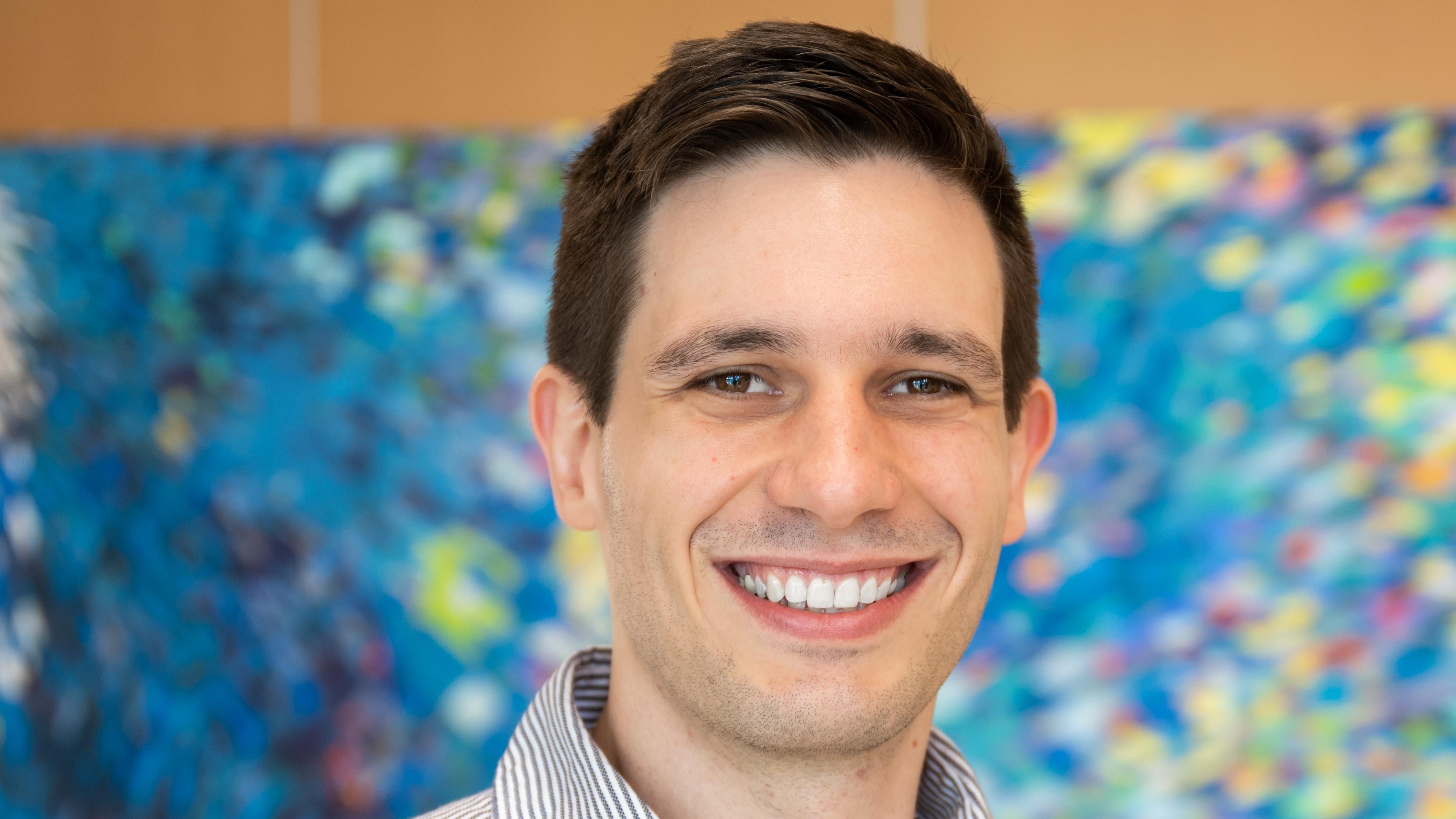
            "description": "<strong>Abstract:</strong>\r\n<div class=\"page\">\r\n<div class=\"layoutArea\">\r\n<div class=\"column\">Arsenic methylation and demethylation reactions influence arsenic speciation and fate in rice paddy soils, and understanding the balance between methylation and demethylation is important for assessing risks of arsenic toxicity in rice. Rice paddy soils are rich in organic carbon, and the conventional understanding has been that organic carbon enhances microbial arsenic methylation by fueling microbial activity.  This presentation will describe a series of recent investigations — spanning pure culture to greenhouse-scale experiments — that challenge this conceptual model.  First, the presentation will describe the role of carbon catabolite repression (CCR) in regulating cellular uptake and subsequent enzymatic methylation of arsenite.  A combination of biosensor, gene expression, and arsenic speciation analyses demonstrate that sugars lead to CCR and a decrease in arsenic methylation, while low molecular weight organic acids do not impact arsenite uptake.  The presentation will then examine couplings between methanogenesis and arsenic demethylation, wherein a greater abundance of methylotrophic carbon substrates (methanol, methylamines) promote arsenic demethylation by methanogens and limit the accumulation of methylated arsenic compounds.  A genome-resolved metatranscriptomic analysis of anaerobic soil slurry experiments resolved links between methylotrophic substrate utilization and arsenic demethylation, while greenhouse experiments showed that higher levels of methanogenesis in soils were associated with lower concentrations of methylated arsenic in rice grains. Taken together, these results provide a more nuanced understanding of how utilization of distinct carbon substrates impacts arsenic methylation-demethylation dynamics, and provides mechanistic insights into how paddy soil management practices influence arsenic speciation in rice.</div>\r\n</div>\r\n</div>\r\n<br>\r\n<br>\r\n<br>\r\n<strong>Biography:</strong>\r\n\r\n<div class=\"page\">\r\n<div class=\"layoutArea\">\r\n<div class=\"column\">Dr. Matthew Reid is an associate professor in the School of Civil and Environmental Engineering at Cornell University and directs the Biogeochemistry and Ecosystem Engineering Research Group. His research program focuses on biogeochemical element cycling in natural and nature-based systems with applications to water quality.  Research in the Reid Group spans physical scales and integrates mechanistic and molecular-level investigation with field-scale observation to build quantitative models for contaminant dynamics in complex biogeochemical systems. Dr. Reid's research has been recognized with early career awards from NSF and DOE. Dr. Reid was a postdoctoral scientist in the Environmental Microbiology Laboratory at EPFL, and completed his Ph.D. in Civil and Environmental Engineering at Princeton University.</div>\r\n</div>\r\n</div>",
            "image_description": "",
            "creation_date": "2026-01-12T14:34:48",
            "last_modification_date": "2026-02-25T14:38:54",
            "link_label": "",
            "link_url": "",
            "canceled": "False",
            "cancel_reason": "",
            "place_and_room": "GC B1 10",
            "url_place_and_room": "https://plan.epfl.ch/?room==GC%20B1%2010",
            "url_online_room": "https://epfl.zoom.us/j/69011077410",
            "spoken_languages": [
                "https://memento.epfl.ch/api/v1/spoken_languages/2/?format=api"
            ],
            "speaker": "Prof. <a href=\"https://www.engineering.cornell.edu/people/matthew-charles-reid/\">Matthew Reid</a>, Cornell University ",
            "organizer": "EESS - IIE",
            "contact": "Prof. Rizlan Latmani, <a href=\"https://www.epfl.ch/labs/eml/\">EML</a>",
            "is_internal": "True",
            "theme": "",
            "vulgarization": {
                "id": 1,
                "fr_label": "Tout public",
                "en_label": "General public"
            },
            "registration": {
                "id": 3,
                "fr_label": "Entrée libre",
                "en_label": "Free"
            },
            "keywords": "Arsenic, Methylation, Demethylation, Rice paddy soil, Carbon catabolite repression, Methanogenesis",
            "file": null,
            "icalendar_url": "https://memento.epfl.ch/event/export/119269/",
            "category": {
                "id": 1,
                "code": "CONF",
                "fr_label": "Conférences - Séminaires",
                "en_label": "Conferences - Seminars",
                "activated": true
            },
            "academic_calendar_category": null,
            "domains": [],
            "mementos": [
                "https://memento.epfl.ch/api/v1/mementos/110/?format=api",
                "https://memento.epfl.ch/api/v1/mementos/4/?format=api",
                "https://memento.epfl.ch/api/v1/mementos/44/?format=api"
            ]
        },
        {
            "id": 70859,
            "title": "Prototype Pavilion in Textile Reinforced Concrete with LC3 2026_ ENAC Summer Workshop",
            "slug": "prototype-pavilion-in-textile-reinforced-concret-3",
            "event_url": "https://memento.epfl.ch/event/prototype-pavilion-in-textile-reinforced-concret-3",
            "visual_url": "https://memento.epfl.ch/image/32250/200x112.jpg",
            "visual_large_url": "https://memento.epfl.ch/image/32250/720x405.jpg",
            "visual_maxsize_url": "https://memento.epfl.ch/image/32250/max-size.jpg",
            "lang": "en",
            "start_date": "2026-08-24",
            "end_date": "2026-09-04",
            "start_time": null,
            "end_time": null,
            "description": "<p>The project aims to further investigate the structural, architectural, environmental, and social dimensions of TRC and its applications, particularly in the context of a new Multi-Purpose Space for the Department of Architecture &amp; Interior Design Kenyatta University Campus, Nairobi, Kenya in collaboration with Urko Sanchez Architects. The space is intended to support academic, social, and experimental activities while serving as a living laboratory for sustainable and alternative construction methods. The pavilion should function not only as a usable academic space but also as a pedagogical tool, demonstrating climate-responsive design, material innovation, and adaptability over time. \r\n</p><div><br>\r\n<strong>CAN  BE TAKEN AS A PART FOR THE SC MINOR</strong></div>\r\n<br>\r\nOrganized by the ENAC EPF Lausanne in collaboration with LMC EPFL lab and Kenyatta University, Nairobi, Kenia.<br>\r\n<br>\r\n<em>Teaching team:</em><br>\r\nPatricia Guaita, architect and lecturer, ENAC-IA-ALICE<br>\r\nRaffael Baur, architect, External expert ENAC EPFL<br>\r\nDavid Fernandez Ordonez, Lecturer, ENAC SGC<br>\r\nEnrique Corres, Construction Assistant, ENAC SGC<br>\r\n<br>\r\n<em>Invited experts:</em><br>\r\nDr. Beatrice Malchiodi, Post Doc, LMC EPFL<br>\r\nJaime Velasco, Architect, architect and Lecturer in Department of Architecture &amp; Interior Design Kenyatta University Campus, Nairobi<br>\r\n<br>\r\n <br>\r\n<strong>EPFL Fribourg: 24 August - 04 Sept  2026</strong><br>\r\n <br>\r\n<strong>If you would like to register now, please send an email to </strong><strong><a href=\"mailto:[email protected]\">[email protected]</a></strong><br>\r\n<br>\r\n<img alt=\"\" height=\"868\" src=\"//memento.epfl.ch/public/upload/fckeditorimage/7a/dc/2b0d232e.jpg\" width=\"600\">",
            "image_description": "Summer workshop EPFL Fribourg 2025, photo: Nicolas Gemelli",
            "creation_date": "2026-01-14T13:38:32",
            "last_modification_date": "2026-01-30T11:31:06",
            "link_label": "",
            "link_url": "https://www.epfl.ch/schools/enac/education/fr/projeter-ensemble-fr/cours/enac-summer-workshops/a-prototype-pavillon-in-textile-reinforced-concrete-2/",
            "canceled": "False",
            "cancel_reason": "",
            "place_and_room": "EPFL Fribourg",
            "url_place_and_room": "",
            "url_online_room": "",
            "spoken_languages": [
                "https://memento.epfl.ch/api/v1/spoken_languages/1/?format=api",
                "https://memento.epfl.ch/api/v1/spoken_languages/2/?format=api"
            ],
            "speaker": "",
            "organizer": "Patricia Guaita, ENAC EPFL  Projecter Ensemble",
            "contact": " [email protected]    ",
            "is_internal": "True",
            "theme": "",
            "vulgarization": {
                "id": 1,
                "fr_label": "Tout public",
                "en_label": "General public"
            },
            "registration": {
                "id": 3,
                "fr_label": "Entrée libre",
                "en_label": "Free"
            },
            "keywords": "",
            "file": null,
            "icalendar_url": "https://memento.epfl.ch/event/export/119303/",
            "category": {
                "id": 1,
                "code": "CONF",
                "fr_label": "Conférences - Séminaires",
                "en_label": "Conferences - Seminars",
                "activated": true
            },
            "academic_calendar_category": null,
            "domains": [],
            "mementos": [
                "https://memento.epfl.ch/api/v1/mementos/8/?format=api",
                "https://memento.epfl.ch/api/v1/mementos/1/?format=api",
                "https://memento.epfl.ch/api/v1/mementos/4/?format=api",
                "https://memento.epfl.ch/api/v1/mementos/32/?format=api",
                "https://memento.epfl.ch/api/v1/mementos/6/?format=api"
            ]
        },
        {
            "id": 70876,
            "title": "Brown Bag Seminar in Finance",
            "slug": "brown-bag-seminar-in-finance-9",
            "event_url": "https://memento.epfl.ch/event/brown-bag-seminar-in-finance-9",
            "visual_url": "https://memento.epfl.ch/image/32266/200x112.jpg",
            "visual_large_url": "https://memento.epfl.ch/image/32266/720x405.jpg",
            "visual_maxsize_url": "https://memento.epfl.ch/image/32266/max-size.jpg",
            "lang": "en",
            "start_date": "2026-05-05",
            "end_date": "2026-05-05",
            "start_time": "12:15:00",
            "end_time": "13:15:00",
            "description": "",
            "image_description": "",
            "creation_date": "2026-01-15T11:20:12",
            "last_modification_date": "2026-01-15T11:20:12",
            "link_label": "",
            "link_url": "",
            "canceled": "False",
            "cancel_reason": "",
            "place_and_room": "UNIL, Extranef, room 126",
            "url_place_and_room": "",
            "url_online_room": "",
            "spoken_languages": [
                "https://memento.epfl.ch/api/v1/spoken_languages/2/?format=api"
            ],
            "speaker": "<a href=\"https://people.epfl.ch/giuseppe.matera\">Giuseppe Matera - SFI@EPFL PhD student</a> ",
            "organizer": "",
            "contact": "[email protected]",
            "is_internal": "False",
            "theme": "",
            "vulgarization": {
                "id": 2,
                "fr_label": "Public averti",
                "en_label": "Informed public"
            },
            "registration": {
                "id": 2,
                "fr_label": "Sur invitation",
                "en_label": "Invitation required"
            },
            "keywords": "",
            "file": null,
            "icalendar_url": "https://memento.epfl.ch/event/export/119329/",
            "category": {
                "id": 1,
                "code": "CONF",
                "fr_label": "Conférences - Séminaires",
                "en_label": "Conferences - Seminars",
                "activated": true
            },
            "academic_calendar_category": null,
            "domains": [],
            "mementos": [
                "https://memento.epfl.ch/api/v1/mementos/3/?format=api",
                "https://memento.epfl.ch/api/v1/mementos/116/?format=api",
                "https://memento.epfl.ch/api/v1/mementos/39/?format=api",
                "https://memento.epfl.ch/api/v1/mementos/105/?format=api"
            ]
        },
        {
            "id": 70877,
            "title": "Brown Bag Seminar in Finance",
            "slug": "brown-bag-seminar-in-finance-11",
            "event_url": "https://memento.epfl.ch/event/brown-bag-seminar-in-finance-11",
            "visual_url": "https://memento.epfl.ch/image/32267/200x112.jpg",
            "visual_large_url": "https://memento.epfl.ch/image/32267/720x405.jpg",
            "visual_maxsize_url": "https://memento.epfl.ch/image/32267/max-size.jpg",
            "lang": "en",
            "start_date": "2026-05-12",
            "end_date": "2026-05-12",
            "start_time": "12:15:00",
            "end_time": "13:15:00",
            "description": "",
            "image_description": "",
            "creation_date": "2026-01-15T11:26:18",
            "last_modification_date": "2026-01-15T11:26:18",
            "link_label": "",
            "link_url": "",
            "canceled": "False",
            "cancel_reason": "",
            "place_and_room": "UNIL, Extranef, room 126",
            "url_place_and_room": "",
            "url_online_room": "",
            "spoken_languages": [
                "https://memento.epfl.ch/api/v1/spoken_languages/2/?format=api"
            ],
            "speaker": "<a href=\"https://people.epfl.ch/federico.baldilanfranchi\">Federico Baldi Lanfranchi - SFI@EPFL PhD student</a>",
            "organizer": "",
            "contact": "[email protected]",
            "is_internal": "False",
            "theme": "",
            "vulgarization": {
                "id": 2,
                "fr_label": "Public averti",
                "en_label": "Informed public"
            },
            "registration": {
                "id": 2,
                "fr_label": "Sur invitation",
                "en_label": "Invitation required"
            },
            "keywords": "",
            "file": null,
            "icalendar_url": "https://memento.epfl.ch/event/export/119330/",
            "category": {
                "id": 1,
                "code": "CONF",
                "fr_label": "Conférences - Séminaires",
                "en_label": "Conferences - Seminars",
                "activated": true
            },
            "academic_calendar_category": null,
            "domains": [],
            "mementos": [
                "https://memento.epfl.ch/api/v1/mementos/3/?format=api",
                "https://memento.epfl.ch/api/v1/mementos/116/?format=api",
                "https://memento.epfl.ch/api/v1/mementos/39/?format=api",
                "https://memento.epfl.ch/api/v1/mementos/105/?format=api"
            ]
        },
        {
            "id": 70878,
            "title": "Brown Bag Seminar in Finance",
            "slug": "brown-bag-seminar-in-finance-12",
            "event_url": "https://memento.epfl.ch/event/brown-bag-seminar-in-finance-12",
            "visual_url": "https://memento.epfl.ch/image/32268/200x112.jpg",
            "visual_large_url": "https://memento.epfl.ch/image/32268/720x405.jpg",
            "visual_maxsize_url": "https://memento.epfl.ch/image/32268/max-size.jpg",
            "lang": "en",
            "start_date": "2026-05-19",
            "end_date": "2026-05-19",
            "start_time": "12:15:00",
            "end_time": "13:15:00",
            "description": "",
            "image_description": "",
            "creation_date": "2026-01-15T11:31:48",
            "last_modification_date": "2026-01-15T11:31:48",
            "link_label": "",
            "link_url": "",
            "canceled": "False",
            "cancel_reason": "",
            "place_and_room": "UNIL, Extranef, room 126",
            "url_place_and_room": "",
            "url_online_room": "",
            "spoken_languages": [
                "https://memento.epfl.ch/api/v1/spoken_languages/2/?format=api"
            ],
            "speaker": "<a href=\"https://business.columbia.edu/faculty/people/kairong-xiao\">Kairong Xiao - Columbia University</a>",
            "organizer": "",
            "contact": "[email protected]",
            "is_internal": "False",
            "theme": "",
            "vulgarization": {
                "id": 2,
                "fr_label": "Public averti",
                "en_label": "Informed public"
            },
            "registration": {
                "id": 2,
                "fr_label": "Sur invitation",
                "en_label": "Invitation required"
            },
            "keywords": "",
            "file": null,
            "icalendar_url": "https://memento.epfl.ch/event/export/119331/",
            "category": {
                "id": 1,
                "code": "CONF",
                "fr_label": "Conférences - Séminaires",
                "en_label": "Conferences - Seminars",
                "activated": true
            },
            "academic_calendar_category": null,
            "domains": [],
            "mementos": [
                "https://memento.epfl.ch/api/v1/mementos/3/?format=api",
                "https://memento.epfl.ch/api/v1/mementos/116/?format=api",
                "https://memento.epfl.ch/api/v1/mementos/39/?format=api",
                "https://memento.epfl.ch/api/v1/mementos/105/?format=api"
            ]
        },
        {
            "id": 70899,
            "title": "Challenges in modelling ion channels: simulations meet experiments",
            "slug": "challenges-in-modelling-ion-channels-simulations-m",
            "event_url": "https://memento.epfl.ch/event/challenges-in-modelling-ion-channels-simulations-m",
            "visual_url": "https://memento.epfl.ch/image/32288/200x112.jpg",
            "visual_large_url": "https://memento.epfl.ch/image/32288/720x405.jpg",
            "visual_maxsize_url": "https://memento.epfl.ch/image/32288/max-size.jpg",
            "lang": "en",
            "start_date": "2026-04-15",
            "end_date": "2026-04-17",
            "start_time": null,
            "end_time": null,
            "description": "<p>You can apply to participate and find all the relevant information (speakers, abstracts, program,...) on the event website: <a href=\"https://www.cecam.org/workshop-details/challenges-in-modelling-ion-channels-simulations-meet-experiments-1369\">https://www.cecam.org/workshop-details/challenges-in-modelling-ion-channels-simulations-meet-experiments-1369</a>.<br>\r\n<br>\r\nRegistration is required to attend the full event, take part in the social activities and present a poster at the poster session (if any).  However, the EPFL community is welcome to attend specific lectures without registration if the topic is of interest to their research. Do not hesitate to contact the <a href=\"mailto:[email protected]\">CECAM Event Manager</a> if you have any question.<br>\r\n<br>\r\n<strong>Description</strong><br>\r\n<br>\r\nThe human genome includes more than 300 genes coding for ion channel proteins, representing approximately 2% of the total number of genes. This abundance of ion channels highlights their critical role in numerous biological processes and their involvement in diseases, underscoring their importance as potential drug targets. Ion channels exert their biological roles through three main functional characteristics: the highly efficient selective conduction of ions; the capacity to open and close in response to chemical/physical stimuli (gating); and the decrease in conductance upon sustained stimuli (inactivation). In the last 20 years, the number of experimental atomic structures of ion channels has increased from a few units to hundreds, now including representative structures for most of the ion channel families. Simulations based on these experimental structures have significantly contributed to the current understanding of conduction, selectivity, gating, and inactivation [1-2]. Strengthening the quantitative agreement between simulations and experiments is now essential for advancing in this field. This effort is currently hampered by common issues in biomolecular simulations, such as the limited timescales for observing biologically relevant events and the sub-optimal accuracy of the underlying physical models. Both of these shortcomings are expected to be mitigated by recent methodological developments. For instance, atomic simulations of ion channels with polarizable force fields have been recently reported [3]. Lack of polarization is a well-known limitation of classical force fields, especially when describing ion-protein and ion-water interactions in a crowded environment like the pore cavity. Consequently, the usage of polarizable force fields is considered a promising strategy for improving the agreement with experimental data about ion conduction and selectivity. An alternative strategy for enhancing the model accuracy in critical channel regions is to combine molecular mechanics with quantum approaches. Thanks to the ever-increasing computational resources, now combined with advancements in codes for hybrid QM/MM models, this approach is becoming feasible for ion channel research [4]. Increasing computational resources, coupled with improved algorithms for accelerating rare events and potentially harnessing machine learning, are also opening new possibilities in the study of state transitions. Gating and inactivation events of ion channels are finally becoming accessible to atomic simulations, offering important insights into the mechanistic functioning of this important protein superfamily [5]. The proposed workshop will foster further developments in the field by bringing together leading scientists in the experimental methodologies and computational techniques used in ion channel research in a stimulating and collaborative environment.<br>\r\n <br>\r\n<strong>References</strong><br>\r\n<br>\r\n<a href=\"http://dx.doi.org/10.1021/acs.chemrev.8b00630\" target=\"_blank\">[1] E. Flood, C. Boiteux, B. Lev, I. Vorobyov, T. Allen, Chem. Rev., <strong>119</strong>, 7737-7832 (2019)</a><br>\r\n<a href=\"http://dx.doi.org/10.1080/23746149.2022.2080587\" target=\"_blank\">[2] C. Guardiani, F. Cecconi, L. Chiodo, G. Cottone, P. Malgaretti, L. Maragliano, M. Barabash, G. Camisasca, M. Ceccarelli, B. Corry, R. Roth, A. Giacomello, B. Roux, Advances in Physics: X, <strong>7</strong>, (2022)</a><br>\r\n<a href=\"http://dx.doi.org/10.1021/acs.jctc.0c00968\" target=\"_blank\">[3] V. Ngo, H. Li, A. MacKerell, T. Allen, B. Roux, S. Noskov, J. Chem. Theory Comput., <strong>17</strong>, 1726-1741 (2021)</a><br>\r\n<a href=\"http://dx.doi.org/10.1021/acs.jcim.2c01494\" target=\"_blank\">[4] F. Schackert, J. Biedermann, S. Abdolvand, S. Minniberger, C. Song, A. Plested, P. Carloni, H. Sun, J. Chem. Inf. Model., <strong>63</strong>, 1293-1300 (2023)</a><br>\r\n<a href=\"http://dx.doi.org/10.7554/elife.88403.1\" target=\"_blank\">[5] S. Pérez-Conesa, L. Delemotte, Free energy landscapes of KcsA inactivation, 2023</a></p>",
            "image_description": "",
            "creation_date": "2026-01-19T10:04:13",
            "last_modification_date": "2026-01-26T16:38:05",
            "link_label": "Challenges in modelling ion channels: simulations meet experiments",
            "link_url": "https://www.cecam.org/workshop-details/challenges-in-modelling-ion-channels-simulations-meet-experiments-1369",
            "canceled": "False",
            "cancel_reason": "",
            "place_and_room": "BCH 2103",
            "url_place_and_room": "https://plan.epfl.ch/?room==BCH%202103",
            "url_online_room": "",
            "spoken_languages": [
                "https://memento.epfl.ch/api/v1/spoken_languages/2/?format=api"
            ],
            "speaker": "",
            "organizer": "<strong>Simone Furini</strong>, Alma Mater Studiorum - University of Bologna ; <strong>Alberto Giacomello</strong>, Sapienza University of Rome ; <strong>Luca Maragliano</strong>, Polytechnic University of Marche ; <strong>Matteo Masetti</strong>, Alma Mater Studiorum - University of Bologna",
            "contact": "<a href=\"mailto:[email protected]\"><strong>Cornelia Bujenita</strong></a>, CECAM Events and Operations Manager",
            "is_internal": "False",
            "theme": "",
            "vulgarization": {
                "id": 2,
                "fr_label": "Public averti",
                "en_label": "Informed public"
            },
            "registration": {
                "id": 1,
                "fr_label": "Sur inscription",
                "en_label": "Registration required"
            },
            "keywords": "",
            "file": null,
            "icalendar_url": "https://memento.epfl.ch/event/export/119362/",
            "category": {
                "id": 1,
                "code": "CONF",
                "fr_label": "Conférences - Séminaires",
                "en_label": "Conferences - Seminars",
                "activated": true
            },
            "academic_calendar_category": null,
            "domains": [],
            "mementos": [
                "https://memento.epfl.ch/api/v1/mementos/1/?format=api",
                "https://memento.epfl.ch/api/v1/mementos/5/?format=api",
                "https://memento.epfl.ch/api/v1/mementos/6/?format=api",
                "https://memento.epfl.ch/api/v1/mementos/8/?format=api",
                "https://memento.epfl.ch/api/v1/mementos/27/?format=api"
            ]
        },
        {
            "id": 70900,
            "title": "FAIR Data Management of Theoretical Spectroscopy and Green’s Function Methods",
            "slug": "fair-data-management-of-theoretical-spectroscopy-a",
            "event_url": "https://memento.epfl.ch/event/fair-data-management-of-theoretical-spectroscopy-a",
            "visual_url": "https://memento.epfl.ch/image/32289/200x112.jpg",
            "visual_large_url": "https://memento.epfl.ch/image/32289/720x405.jpg",
            "visual_maxsize_url": "https://memento.epfl.ch/image/32289/max-size.jpg",
            "lang": "en",
            "start_date": "2026-04-20",
            "end_date": "2026-04-24",
            "start_time": null,
            "end_time": null,
            "description": "<p>You can apply to participate and find all the relevant information (speakers, abstracts, program,...) on the event website: <a href=\"https://www.cecam.org/workshop-details/fair-data-management-of-theoretical-spectroscopy-and-greens-function-methods-1377\">https://www.cecam.org/workshop-details/fair-data-management-of-theoretical-spectroscopy-and-greens-function-methods-1377</a>.<br>\r\n<br>\r\nRegistration is required to attend the full event, take part in the social activities and present a poster at the poster session (if any).  However, the EPFL community is welcome to attend specific lectures without registration if the topic is of interest to their research. Do not hesitate to contact the <a href=\"mailto:[email protected]\">CECAM Event Manager</a> if you have any question.<br>\r\n<br>\r\n<strong>Description</strong><br>\r\n<br>\r\nBig-data-driven methodologies have emerged as a fundamental paradigm of science, but require an enormous amount of resources to achieve their promised impact. The FAIR (Findable, Accessible, Interoperable, and Reusable) data principles [1] ensure that scientific data can be shared and reutilized, providing an efficient route for accumulating data and taking advantage of these powerful techniques. FAIR data management allows essential knowledge to be systematically extracted from data, accelerating discoveries and innovations across various domains [2]. Furthermore, open science is essential for the verifiability and reproducibility of results and has been a topic of major discussion over the last decade. In materials science, data-driven methodologies, coupled with the appropriate FAIR data management practices, are invaluable for the discovery of new materials due to the vast combinatorial space of chemical systems that emerge from the periodic table [3, 4]. Such methodologies have been successfully applied, e.g., to design and predict new materials with desired properties using ab-initio ground state simulations, i.e., data generated from Density Functional Theory (DFT) calculations [5]. However, there remains a critical gap in replicating this success in the context of other simulation frameworks. <br>\r\nTheoretical spectroscopy and Green's function method simulations [6, 7], including data simulated using the GW approximation, Time-Dependent Density Functional Theory (TDDFT), the Bethe-Salpeter equation (BSE), Dynamical Mean-Field Theory (DMFT), and Korringa-Kohn-Rostoker (KKR), pose especially difficult challenges in the context of FAIR data management. These simulations not only involve extensive computational resources and produce large datasets with associated complex workflows but are also executed using a large variety of public and in-house simulation software. At the same time, these methodologies are essential for understanding excited state properties of complex materials; they are more accurate than DFT calculations and provide better comparisons with experimental results since they incorporate excited states and electronic correlation effects in a more consistent manner [8]. <br>\r\nThere has recently been a number of individual efforts to improve the accessibility of  data produced by theoretical spectroscopy and Green’s function methods through the usage of publicly accessible databases. For example, the Computational Materials Repository (CMR) [9] contains several individual databases, amongst which the Computational 2D Materials Database (C2DB) [10] contains GW and BSE data for a specific set of parameters and properties. The MaterialsCloud [11] database has some individual datasets published for these methodologies, however there is not a clear data structure for them. The NIST-JARVIS [12] database has a specific app for BeyondDFT simulations with DMFT data, but only for a specific simulation code. By making datasets findable, these efforts aim to avoid redundant computations and thus build upon existing work more efficiently. While these efforts represent an important step in the right direction, they fall short of fully achieving their goal due to a continued lack of consistency (i.e., <em>interoperability</em>) between individual databases. Moreover, these self-managed databases typically lack the ability to store the complete provenance of the simulated workflow, which is essential to ensure reproducibility. <br>\r\nRecently, FAIRmat [13], a consortium of the German research data infrastructure (NFDI) association, was formed to construct a scalable data infrastructure for Materials Science that can be easily customized for individual communities. This infrastructure consists of a primary software and repository called NOMAD [14]—a free web-service that enables the organization, analysis, sharing, and publishing of materials science data. One of the tasks within FAIRmat’s scope is to build support for theoretical spectroscopy and Green’s function simulations within NOMAD. Support for several of these methodologies have now been successfully built, and there already exists over 10 000 entries in the NOMAD repository containing GW [15], BSE [16], and DMFT [17] data, along with the full provenance of the corresponding complex workflows. The next step to developing a FAIR data infrastructure for these methods is to tackle the interoperability problem.<br>\r\nInteroperability within this domain is extremely challenging due to the heterogeneous character of theoretical spectroscopy and Green’s function simulations. Consequently, the adoption of common structures (e.g., describing the Green’s function, the self-energy, or the dielectric function) is the key for improving interoperability. Thus, various members of the community, including method developers, materials and data scientists, and data management experts, must come together to reach a consensus on specific common data structures.<br>\r\n<br>\r\n<strong>References</strong><br>\r\n<br>\r\n<a href=\"https://cmr.fysik.dtu.dk/\" target=\"_blank\">[1] Computational Materials Repository (CMR) website</a><br>\r\n<a href=\"http://dx.doi.org/10.1038/s41467-024-48169-5\" target=\"_blank\">[2] S. Di Cataldo, P. Worm, J. Tomczak, L. Si, K. Held, Nat. Commun., <strong>15</strong>, 3952 (2024)</a><br>\r\n<a href=\"http://dx.doi.org/10.1103/physrevmaterials.8.013801\" target=\"_blank\">[3] F. Meng, B. Maurer, F. Peschel, S. Selcuk, M. Hybertsen, X. Qu, C. Vorwerk, C. Draxl, J. Vinson, D. Lu, Phys. Rev. Materials, <strong>8</strong>, 013801 (2024)</a><br>\r\n<a href=\"http://dx.doi.org/10.1021/acs.jctc.5b00453\" target=\"_blank\">[4] M. van Setten, F. Caruso, S. Sharifzadeh, X. Ren, M. Scheffler, F. Liu, J. Lischner, L. Lin, J. Deslippe, S. Louie, C. Yang, F. Weigend, J. Neaton, F. Evers, P. Rinke, J. Chem. Theory Comput., <strong>11</strong>, 5665-5687 (2015)</a><br>\r\n<a href=\"http://dx.doi.org/10.21105/joss.05388\" target=\"_blank\">[5] M. Scheidgen, L. Himanen, A. Ladines, D. Sikter, M. Nakhaee, Á. Fekete, T. Chang, A. Golparvar, J. Márquez, S. Brockhauser, S. Brückner, L. Ghiringhelli, F. Dietrich, D. Lehmberg, T. Denell, A. Albino, H. Näsström, S. Shabih, F. Dobener, M. Kühbach, R. Mozumder, J. Rudzinski, N. Daelman, J. Pizarro, M. Kuban, C. Salazar, P. Ondračka, H. Bungartz, C. Draxl, JOSS., <strong>8</strong>, 5388 (2023)</a><br>\r\n<a href=\"https://www.fairmat-nfdi.eu/fairmat/\" target=\"_blank\">[6] FAIRmat website</a><br>\r\n<a href=\"http://dx.doi.org/10.1038/s41524-020-00440-1\" target=\"_blank\">[7] K. Choudhary, K. Garrity, A. Reid, B. DeCost, A. Biacchi, A. Hight Walker, Z. Trautt, J. Hattrick-Simpers, A. Kusne, A. Centrone, A. Davydov, J. Jiang, R. Pachter, G. Cheon, E. Reed, A. Agrawal, X. Qian, V. Sharma, H. Zhuang, S. Kalinin, B. Sumpter, G. Pilania, P. Acar, S. Mandal, K. Haule, D. Vanderbilt, K. Rabe, F. Tavazza, npj. Comput. Mater., <strong>6</strong>, 173 (2020)</a><br>\r\n<a href=\"http://dx.doi.org/10.1038/s41597-020-00637-5\" target=\"_blank\">[8] L. Talirz, S. Kumbhar, E. Passaro, A. Yakutovich, V. Granata, F. Gargiulo, M. Borelli, M. Uhrin, S. Huber, S. Zoupanos, C. Adorf, C. Andersen, O. Schütt, C. Pignedoli, D. Passerone, J. VandeVondele, T. Schulthess, B. Smit, G. Pizzi, N. Marzari, Sci. Data., <strong>7</strong>, 299 (2020)</a><br>\r\n<a href=\"http://dx.doi.org/10.1088/2053-1583/aacfc1\" target=\"_blank\">[9] S. Haastrup, M. Strange, M. Pandey, T. Deilmann, P. Schmidt, N. Hinsche, M. Gjerding, D. Torelli, P. Larsen, A. Riis-Jensen, J. Gath, K. Jacobsen, J. Jørgen Mortensen, T. Olsen, K. Thygesen, 2D Mater., <strong>5</strong>, 042002 (2018)</a><br>\r\n<a href=\"http://dx.doi.org/10.1038/sdata.2016.18\" target=\"_blank\">[10] M. Wilkinson, M. Dumontier, I. Aalbersberg, G. Appleton, M. Axton, A. Baak, N. Blomberg, J. Boiten, L. da Silva Santos, P. Bourne, J. Bouwman, A. Brookes, T. Clark, M. Crosas, I. Dillo, O. Dumon, S. Edmunds, C. Evelo, R. Finkers, A. Gonzalez-Beltran, A. Gray, P. Groth, C. Goble, J. Grethe, J. Heringa, P. ’t Hoen, R. Hooft, T. Kuhn, R. Kok, J. Kok, S. Lusher, M. Martone, A. Mons, A. Packer, B. Persson, P. Rocca-Serra, M. Roos, R. van Schaik, S. Sansone, E. Schultes, T. Sengstag, T. Slater, G. Strawn, M. Swertz, M. Thompson, J. van der Lei, E. van Mulligen, J. Velterop, A. Waagmeester, P. Wittenburg, K. Wolstencroft, J. Zhao, B. Mons, Sci. Data., <strong>3</strong>, 160018 (2016)</a><br>\r\n<a href=\"https://www.sciencedirect.com/journal/comptes-rendus-physique/vol/10/issue/6\" target=\"_blank\">[11] L. Reining et al., Comptes Rendus Physique 10, 6 (2009)</a><br>\r\n<a href=\"http://dx.doi.org/10.1088/2516-1075/ad48ec\" target=\"_blank\">[12] V. Blum, R. Asahi, J. Autschbach, C. Bannwarth, G. Bihlmayer, S. Blügel, L. Burns, T. Crawford, W. Dawson, W. de Jong, C. Draxl, C. Filippi, L. Genovese, P. Giannozzi, N. Govind, S. Hammes-Schiffer, J. Hammond, B. Hourahine, A. Jain, Y. Kanai, P. Kent, A. Larsen, S. Lehtola, X. Li, R. Lindh, S. Maeda, N. Makri, J. Moussa, T. Nakajima, J. Nash, M. Oliveira, P. Patel, G. Pizzi, G. Pourtois, B. Pritchard, E. Rabani, M. Reiher, L. Reining, X. Ren, M. Rossi, H. Schlegel, N. Seriani, L. Slipchenko, A. Thom, E. Valeev, B. Van Troeye, L. Visscher, V. Vlcek, H. Werner, D. Williams-Young, T. Windus, Electron. Struct., (2024)</a><br>\r\n<a href=\"http://dx.doi.org/10.1038/s41597-023-02501-8\" target=\"_blank\">[13] L. Ghiringhelli, C. Baldauf, T. Bereau, S. Brockhauser, C. Carbogno, J. Chamanara, S. Cozzini, S. Curtarolo, C. Draxl, S. Dwaraknath, Á. Fekete, J. Kermode, C. Koch, M. Kühbach, A. Ladines, P. Lambrix, M. Himmer, S. Levchenko, M. Oliveira, A. Michalchuk, R. Miller, B. Onat, P. Pavone, G. Pizzi, B. Regler, G. Rignanese, J. Schaarschmidt, M. Scheidgen, A. Schneidewind, T. Sheveleva, C. Su, D. Usvyat, O. Valsson, C. Wöll, M. Scheffler, Sci. Data., <strong>10</strong>, 626 (2023)</a><br>\r\n<a href=\"http://dx.doi.org/10.1038/s41524-019-0221-0\" target=\"_blank\">[14] J. Schmidt, M. Marques, S. Botti, M. Marques, npj. Comput. Mater., <strong>5</strong>, 83 (2019)</a><br>\r\n<a href=\"http://dx.doi.org/10.1002/advs.201900808\" target=\"_blank\">[15] L. Himanen, A. Geurts, A. Foster, P. Rinke, Advanced Science, <strong>6</strong>, (2019)</a><br>\r\n<a href=\"http://dx.doi.org/10.1038/s41586-022-04501-x\" target=\"_blank\">[16] M. Scheffler, M. Aeschlimann, M. Albrecht, T. Bereau, H. Bungartz, C. Felser, M. Greiner, A. Groß, C. Koch, K. Kremer, W. Nagel, M. Scheidgen, C. Wöll, C. Draxl, Nature, <strong>604</strong>, 635-642 (2022)</a><br>\r\n<a href=\"http://dx.doi.org/10.1557/mrs.2018.208\" target=\"_blank\">[17] C. Draxl, M. Scheffler, MRS Bull., <strong>43</strong>, 676-682 (2018)</a></p>",
            "image_description": "",
            "creation_date": "2026-01-19T10:12:45",
            "last_modification_date": "2026-01-26T16:39:31",
            "link_label": "FAIR Data Management of Theoretical Spectroscopy and Green’s Function Methods",
            "link_url": "https://www.cecam.org/workshop-details/fair-data-management-of-theoretical-spectroscopy-and-greens-function-methods-1377",
            "canceled": "False",
            "cancel_reason": "",
            "place_and_room": "BCH 2103",
            "url_place_and_room": "https://plan.epfl.ch/?room==BCH%202103",
            "url_online_room": "",
            "spoken_languages": [
                "https://memento.epfl.ch/api/v1/spoken_languages/2/?format=api"
            ],
            "speaker": "",
            "organizer": "Fabio Caruso, University of Kiel ; Claudia Draxl, Humboldt-Universität zu Berlin ; Jose M. Pizarro, Bundesanstalt für Materialforschung Und -prüfung ; Patrick Rinke, Technical University Munich ; Joseph Rudzinski, Humboldt-Universität zu Berlin",
            "contact": "<a href=\"mailto:[email protected]\"><strong>Cornelia Bujenita</strong></a>, CECAM Events and Operations Manager",
            "is_internal": "False",
            "theme": "",
            "vulgarization": {
                "id": 2,
                "fr_label": "Public averti",
                "en_label": "Informed public"
            },
            "registration": {
                "id": 1,
                "fr_label": "Sur inscription",
                "en_label": "Registration required"
            },
            "keywords": "",
            "file": null,
            "icalendar_url": "https://memento.epfl.ch/event/export/119364/",
            "category": {
                "id": 1,
                "code": "CONF",
                "fr_label": "Conférences - Séminaires",
                "en_label": "Conferences - Seminars",
                "activated": true
            },
            "academic_calendar_category": null,
            "domains": [],
            "mementos": [
                "https://memento.epfl.ch/api/v1/mementos/1/?format=api",
                "https://memento.epfl.ch/api/v1/mementos/5/?format=api",
                "https://memento.epfl.ch/api/v1/mementos/6/?format=api",
                "https://memento.epfl.ch/api/v1/mementos/8/?format=api",
                "https://memento.epfl.ch/api/v1/mementos/27/?format=api"
            ]
        },
        {
            "id": 70901,
            "title": "Emergent dynamics of active colloids: chirality, non-reciprocity and memory",
            "slug": "emergent-dynamics-of-active-colloids-chirality-n-2",
            "event_url": "https://memento.epfl.ch/event/emergent-dynamics-of-active-colloids-chirality-n-2",
            "visual_url": "https://memento.epfl.ch/image/32290/200x112.jpg",
            "visual_large_url": "https://memento.epfl.ch/image/32290/720x405.jpg",
            "visual_maxsize_url": "https://memento.epfl.ch/image/32290/max-size.jpg",
            "lang": "en",
            "start_date": "2026-05-11",
            "end_date": "2026-05-13",
            "start_time": null,
            "end_time": null,
            "description": "<p>You can apply to participate and find all the relevant information (speakers, abstracts, program,...) on the event website: <a href=\"https://www.cecam.org/workshop-details/emergent-dynamics-of-active-colloids-chirality-non-reciprocity-and-memory-1496\">https://www.cecam.org/workshop-details/emergent-dynamics-of-active-colloids-chirality-non-reciprocity-and-memory-1496</a>.<br>\r\n<br>\r\nRegistration is required to attend the full event, take part in the social activities and present a poster at the poster session (if any).  However, the EPFL community is welcome to attend specific lectures without registration if the topic is of interest to their research. Do not hesitate to contact the <a href=\"mailto:[email protected]\">CECAM Event Manager</a> if you have any question.<br>\r\n<br>\r\n<strong>Description</strong><br>\r\n<br>\r\nBiological systems in Nature are intrinsically out-of-equilibrium to maintain their structural complexity and functional diversity. Similarly, out-of-equilibrium dissipative colloidal systems subjected to an external energy injection often develop nontrivial collective dynamics and self-organize into large scale structures, which are far more complex than their equilibrium counterparts [1-17]. The main sources of such emergent behavior are the many-body dissipative interactions between colloids (e. g. steric, electrostatic, magnetic), the external energy injection, and the coupling of particles dynamics through the fluid flow around them. Collective dynamics and self-organization in out-of-equilibrium colloidal systems (often termed as <em>active colloids</em>) is a rapidly growing area of research which led to the discovery of novel dynamic architectures and functionalities that are not generally available at equilibrium.<br>\r\n Colloidal systems have been the subject of intense research for a long time due to their ubiquitous technological applications. Colloidal particles display Brownian motion, size in the visible wavelength and dynamics in experimentally accessible timeframes (milliseconds to seconds) making them an attractive platform for the experiments and the computational modeling. The pair interactions between particles can be easily adjusted in strength and range by applying relatively small external fields. When driven by external forces or an internal energy source, colloids can mimic motile biological entities and can serve as a testbed for exploring the rich and complex physics of out-of-equilibrium systems. These dissipative colloidal structures utilize energy to generate and maintain structural complexity. Experiments and numerical simulations along this line of research have often revealed nontrivial collective dynamics and emergent large-scale structures [1-17]. With the proposed workshop we would like to provide a platform for discussing several new and important trends in this field of active colloidal materials, that is, chirality, non-reciprocity, and memory.<br>\r\nA recent hot trend in the field of active colloids explores the emergence of coherent motion and self-organization in systems with chirality [5-11]. Chirality is an intrinsic fundamental property of many natural and synthetic systems. Colloidal particles driven by external torques [12-18] constitute an ideal model system to investigate these phenomena since they avoid the inherent complexity of biological active matter. Spinning   particles dispersed in a fluid represent a special class of artificial active systems that inject vorticity at the microscopic level [19-25]. Dense collections of interacting spinning particles represent a chiral fluid [26], which breaks parity and time-reversal symmetries, and displays a novel viscosity feature called the odd viscosity and elasticity [27, 28]. The odd viscosity has been identified in interacting chiral spinners [29], and it led to remarkable effects such as production of flow perpendicular to the pressure [27], topological waves [30], or the emergence of edge currents [29]. Magnetic rollers dynamically assemble into a vortex under harmonic confinement, that spontaneously selects a sense of rotation and is capable of chirality switching [31,32]. Multiple motile vortices unbound from any confinement have been revealed in ensembles of magnetic rollers powered by a uniaxial field [33]. Oscillating chiral flows were generated when a roller liquid was coupled to fixed obstacles [34]. There has been an increasing effort to investigate collective phenomena in systems composed of    chiral active units [11, 35-40]. Synchronized self-assembled magnetic spinners at the liquid interface revealed structural transitions from liquid to nearly crystalline states and demonstrated reconfigurability coupled to a self-healing behavior [41]. Activity-induced synchronization leading to a mutual flocking, and chiral self- sorting has been observed in modeled ensembles of self-propelled circle swimmers [42]. Shape anisotropic particles powered by the Quincke phenomenon led to the realization of chiral rollers (similar to circle swimmers) with spontaneously selected handedness of their motion and activity-dependent curvature of trajectories [43].<br>\r\nAnother fast-developing direction in the field of non-equilibrium active and driven colloids is the realization of systems characterized by non-reciprocity of interactions or memory effects and how they can lead to emerging collective phenomena. Due to the intrinsic nonequilibrium nature of active systems, the couplings between particles often deviate from the standard form derivable from a Hamiltonian. One intriguing example is a time-delayed coupling involving a discrete delay time (or a distribution of such times). Such a situation arises, for example, through a delay in communication or sensing, and can be artificially created via a feedback loop [44]. Another topic attracting a lot of attention in the community is based on active systems with nonreciprocal couplings that can arise, for example, through chemotaxis or phoretic interactions between self-propelling colloids [45], or through predator-prey or vision-cone interactions [46,47] in macroscopic active systems. On the collective level, is now well established that non-reciprocity can induce new types of phase transitions [48] and patterns with broken time- and parity symmetry, including travelling patterns [49,50] and globally chiral motion without chirality of the individual constituents [51]. While many of these studies have been pursued only at a mean field-theoretical level, there is also an increasing interest in understanding corresponding particle-scale effects, that can only be accessed by numerical simulations [52] or corresponding experiments. For example, non-reciprocal interactions may generate new types of self-assembled systems able to learn and to produce transition between different shapes [53]. Establishing the precise connection between the different length and time scales is still an important challenge. Here, computer simulations are an indispensable tool.<br>\r\nMany standard models of active motion implicitly assume an inert (equilibrium) environment yielding instantaneous friction and noise. In contrast, several recent studies [54,19] explore the impact of retarded friction as it arises in viscoelastic environments made, e.g., of polymers, liquid crystals, or biological tissues [55-57]. An extreme case is time-delay [44]. From a theoretical and computational perspective, retarded friction or, more generally, non-Markovian dynamics, still provides a severe challenge. This concerns, e.g., the extraction (or modelling) of memory kernels, but also the actual solution of the coupled equations of motion, each being subject to history effects. As a consequence, only few studies on the emerging collective behavior of active particles with memory are currently available, including collective effects in systems of feedback-driven colloids [58] and pattern formation in a non-Newtonian active system [59]. Advancing numerical methods capable of treating memory effects will become more and more important in view of the recent experimental progress in this field. Experimentally, the memory effects in the system can be induced, e.g., by temporal activity modulations at intermediate timescales of the interactions in the colloidal ensemble [60]. Such modulations generate active particles with partial memory (at the particle level) of their motion from the previous activity cycles (either through partial depolarization or remnant hydrodynamic flows induced by the particle motion). Novel dynamic patterns (such as localized multiple vortices, flocks, pulsating lattices) has been revealed in ensembles of Quinke rollers [60,61]. When coupled to the fluid flows, active particle with memory can produce activity shockwaves [62]. Also, it has been recently demonstrated that active colloidal ensembles realized by Quinke rollers can effectively develop “ensemble memory”, where the information about the dynamic state of the system is distributed over the whole ensemble [63]. This information can be effectively exploited to command subsequent collective polar states of the active colloidal ensemble through activity cycling [63] and can pave the way toward direct applications in different technological fields related to microfluidics and microrobotics.<br>\r\nDeveloping fundamental understanding of the complex colloidal dynamics in systems driven out-of-equilibrium by external fields represents a significant theoretical and computational challenge as it involves multi-body interactions, the overlapping of length- and timescales, and the coupling of particle interactions with the fluid flow. Some of the features may be understood using phenomenological using continuum descriptions [21-23] Nevertheless, the microscopic mechanisms leading   to the dynamic self-assembly and their relations to the emergent behavior in active colloidal fluids with chirality, non-reciprocal interactions, and memory often remain unclear. <em>Computer simulations are practically the only method to theoretically investigate such questions. </em>However, modeling of the nonequilibrium dynamics presents a formidable computational challenge due to the complex many- body interactions and collective dynamics at different time and lengths scales. One of the main challenges is to properly account for the particle-fluid coupling. On a coarse-grained level, the fluid flow around colloids is modeled by molecular dynamics methods like Lattice-Boltzmann [64] and Multi Particle Collision Dynamics [65,66]. An alternative approach is to describe the colloidal dynamics by molecular dynamics simulation, or an amplitude equation (Ginzburg-Landau type equation) coupled to the Navier-Stokes equations describing large-scale time- averaged hydrodynamic flows induced by the colloids [67,68].<br>\r\n<br>\r\n<strong>Reference</strong><br>\r\n<br>\r\n[1]           B. A. Grzybowski and G. M. Whitesides, “Dynamic Aggregation of Chiral Spinners” Science 296, 718-721 (2002).<br>\r\n[2]            Y. Sumino, K. H. Nagai, Y. Shitaka, D. Tanaka, K. Yoshikawa, H. Chaté, K. Oiwa “Large-scale vortex        lattice emerging from collectively moving microtubules”, Nature 483, 448-452 (2012).<br>\r\n[3]           A Snezhko, I. Aranson, “Magnetic manipulation of self-assembled colloidal asters”, Nature Materials 10, 698-703 (2011).<br>\r\n[4]           A. P. Petrov, X.-L. Wu, and A. Libchaber, “Fast-Moving Bacteria Self-Organize into Active Two- Dimensional Crystals of Rotating Cells”, Phys. Rev. Lett. 114, 158102 (2015).<br>\r\n[5]           Bowick, M. J., Fakhri, N., Marchetti, M. C., &amp; Ramaswamy, S. “Symmetry, thermodynamics, and topology in active matter”, Phys. Rev. X, 12(1), 010501 (2022).<br>\r\n[6]           C. Scholz, A. Ldov, T. Pöschel, M. Engel, H. Löwen “Surfactants and rotelles in active chiral fluids” Science Advances 7 (16), eabf8998 (2021).<br>\r\n[7]           G. Kokot, S. Das, R. Winkler, G. Gompper, I. Aranson, and A. Snezhko, “Active turbulence in a gas of self- assembled spinners”, Proc. Nat. Acad. Sci. U.S.A. 114, 12870 (2017).<br>\r\n[8]           B. C. van Zuiden, J. Paulose, W. T. M. Irvine, D. Bartolo, and V. Vitelli, “Spatiotemporal order and emergent edge currents in active spinner materials” Proc. Natl Acad. Sci. USA 113, 12919 (2016).<br>\r\n[9]           C. Scholz, M. Engel, and T. Pöschel, “Rotating robots move collectively and self-organize” Nature Comm. 9, 931 (2018).<br>\r\n[10]        Han, M., Fruchart, M., Scheibner, C., Vaikuntanathan, S., De Pablo, J. J., Vitelli, V. “Fluctuating hydrodynamics of chiral active fluids”, Nature Physics, 17(11), 1260 (2021).<br>\r\n[11]        T.H Tan, A. Mietke, J. Li, Y Chen, H. Higinbotham, PJ Foster, S Gokhale, Fakhri, N, “Odd dynamics of living chiral crystals”, Nature 607, 287 (2022).<br>\r\n[12]     J. Dobnikar, A. Snezhko, A. Yethiraj, “Emergent colloidal dynamics in electromagnetic fields”, Soft Matter 9, 3693 (2013).<br>\r\n[13]     F. Ma, S. Wang, D. T. Wu and N. Wu, \"Electric-field–induced assembly and propulsion of chiral colloidal clusters\" Proc. Natl. Acad. Sci. U. S. A. 112, 6307–6312 (2015).<br>\r\n[14]     Z. Shen, A. Würger and J. S. Lintuvuori “Hydrodynamic self-assembly of active colloids: chiral spinners and dynamic crystals” Soft Matter, 15, 1508-1521 (2019).<br>\r\n[15]     P. Tierno, R. Muruganathan, and T. M. Fischer, “Viscoelasticity of Dynamically Self-Assembled Paramagnetic Colloidal Clusters”, Phys. Rev. Lett. 98, 028301 (2007).<br>\r\n[16]     Driscoll, M., Delmotte, B., Youssef, M., Sacanna, S., Donev, A., Chaikin, P., 2017, “Unstable fronts and motile structures formed by microrollers”, Nature Physics, 13, 375 (2017).<br>\r\n[17]     J. E. Martin, A. Snezhko, “Driving self-assembly and emergent dynamics in colloidal suspensions by time- dependent magnetic fields”, Rep. Prog. Phys. 76, 126601 (2013).<br>\r\n[18]     R. Di Leonardo, A. Buzas, L. Kelemen, G. Vizsnyiczai, L. Oroszi, and P. Ormos, “Hydrodynamic Synchronization of Light Driven Microrotors” Phys. Rev. Lett. 109, 034104 (2012).<br>\r\n[19]     N. Narinder, C. Bechinger and J. R. Gomez-Solano “Memory-Induced Transition from a Persistent Random Walk to Circular Motion for Achiral Microswimmers”, Phys. Rev. Lett. 121, 078003 (2018).<br>\r\n[20]     C. Lozano, J. Ruben Gomez-Solano and C. Bechinger “Active particles sense micromechanical properties of glasses” Nat. Materials, 18, 1118–1123 (2019).<br>\r\n[21]     M. C. Marchetti, J. F. Joanny, S. Ramaswamy, T. B. Liverpool, J. Prost, M. Rao, and R. Aditi Simha “Hydrodynamics of soft active matter” Reviews of Modern Physics 85 (3), 1143.<br>\r\n[22]     I. Llopis and I. Pagonabarraga, “Dynamic regimes of hydrodynamically coupled self-propelling particles” Europhys. Lett. 75, 999 (2006).<br>\r\n[23]     M. Leoni and T. B. Liverpool, “Dynamics and interactions of active rotors” Europhys. Lett. 92, 64004 (2010).<br>\r\n[24]     N. H. P. Nguyen, D. Klotsa, M. Engel, and S. C. Glotzer, “Emergent Collective Phenomena in a Mixture of Hard Shapes through Active Rotation” Phys. Rev. Lett. 112, 075701 (2014).<br>\r\n[25]     Z. Shen and J. S. Lintuvuori, “Hydrodynamic clustering and emergent phase separation of spherical spinners” Phys. Rev. Research 2, 013358 (2020).<br>\r\n[26]     D. Banerjee, A. Souslov, A. G. Abanov, and V. Vitelli, “Odd viscosity in chiral active fluids” Nature Comm. 8, 1573 (2017).<br>\r\n[27]     T. Markovich and T. C. Lubensky, “Odd viscosity in active matter: microscopic origin and 3D effects” Phys. Rev. Lett. 127, 048001 (2021).<br>\r\n[28]     C Scheibner, A Souslov, D Banerjee, P Surówka, W. Irvine, V Vitelli, “Odd elasticity”, Nature Physics 16, 475 (2020).<br>\r\n[29]     V. Soni, E. S. Bililign, S. Magkiriadou, S. Sacanna, D. Bartolo, M. J. Shelley, and W. T. M. Irvine, “The odd free surface flows of a colloidal chiral fluid” Nature Physics 15, 1188 (2019).<br>\r\n[30]     A. Souslov, K. Dasbiswas, M. Fruchart, S. Vaikuntanathan, and Vincenzo Vitelli, “Topological Waves in Fluids with Odd Viscosity” Phys. Rev. Lett. 122, 128001 (2019).<br>\r\n[31]     G. Kokot, A. Snezhko, “Manipulation of emergent vortices in swarms of magnetic rollers.” Nat. Commun. 9, 2344 (2018).<br>\r\n[32]     A. Kaiser, A. Snezhko, I. S. Aranson, “Flocking ferromagnetic colloids.” Sci. Adv. 3, e1601469 (2017).<br>\r\n[33]     K Han, G Kokot, O Tovkach, A Glatz, IS Aranson, A Snezhko, “Emergence of self-organized multivortex states in flocks of active rollers.” Proc. Nat. Acad. Sci. U. S. A. 117 (18), 9706-9711 (2020).<br>\r\n[34]     B. Zhang, B. Hilton, C. Short, A. Souslov, A. Snezhko, “Oscillatory chiral flows in confined active fluids with obstacles.” Phys. Rev. Res. 2, 043225 (2020).<br>\r\n[35]     S. Farhadi, S. Machaca, J. Aird, B. O. Torres Maldonado, S. Davis, P. E. Arratia, D. J. Durian, Dynamics and thermodynamics of air-driven active spinners. Soft Matter 14, 5588–5594 (2018).<br>\r\n[36]     C. Scholz, M. Engel, T. Pöschel, Rotating robots move collectively and self-organize. Nat. Commun. 9, 931 (2018).<br>\r\n[37]     A. M. Brooks, M. Tasinkevych, S. Sabrina, D. Velegol, A. Sen, K. J. M. Bishop, Shape-directed rotation of homogeneous micromotors via catalytic self-electrophoresis. Nat. Commun. 10, 495 (2019).<br>\r\n[38]     N. H. P. Nguyen, D. Klotsa, M. Engel, S. C. Glotzer, Emergent collective phenomena in a mixture of hard shapes through active rotation. Phys. Rev. Lett. 112, 075701 (2014).<br>\r\n[39]     Guo-Jun Liao, S.H.L. Klapp, \"Emergent vortices and phase separation in systems of chiral active particles with dipolar interactions\", Soft Matter, 2021, Advance Article (10.1039/d1sm00545f).<br>\r\n[40]     K. Yeo, E. Lushi, P. M. Vlahovska, Collective dynamics in a binary mixture of hydrodynamically coupled microrotors. Phys. Rev. Lett. 114, 188301 (2015).<br>\r\n[41]     K. Han, G. Kokot, S. Das, R. G. Winkler, G. Gompper, A. Snezhko, “Reconfigurable structure and tunable transport in synchronized active spinner materials.” Science advances 6 (12), eaaz8535 (2020).<br>\r\n[42]     D. Levis, I. Pagonabarraga, B. Liebchen, Activity induced synchronization: mutual flocking, chiral self- sorting. Phys. Rev. Res. 1, 023026 (2019).<br>\r\n[43]     B. Zhang, A. Sokolov, A.Snezhko, Reconfigurable emergent patterns in active chiral fluids. Nature Comm. 11,1-9 (2020).<br>\r\n[44]     X. Wang, P.-C. Chen, K. Kroy, V. Holubec, F. Cichos “Spontaneous vortex formation by microswimmers with retarded attractions”, Nature Comm. 14, 56 (2023).<br>\r\n[45]     R. Soto, R. Golestanian, “Self-Assembly of Catalytically Active Colloidal Molecules: Tailoring Activity Through Surface Chemistry”, Phys. Rev. Lett. 112, 068301 (2014).<br>\r\n[46]     L. Barberis, F. Peruani, “Large-Scale Patterns in a minimal cognitive flocking model: Incidental leaders, nematic patterns, and aggregates”, Phys. Rev. Lett. 117, 248001 (2016).<br>\r\n[47]     F. A. Lavergne, H. Wendehenne, T. Bäuerle, C. Bechinger, “Group formation and cohesion of active particles with visual perception–dependent motility” Science 364, 70 (2019).<br>\r\n[48]     S. A. M. Loos, S. H. L. Klapp, T. Martynec, “Long-Range Order and Directional Defect Propagation in the Nonreciprocal ?? Model with Vision Cone Interactions”, Phys. Rev. Lett. 130, 198301 (2023).<br>\r\n[49]     Z. You, A. Baskaran, M. C. Marchetti, “Nonreciprocity as a generic route to traveling states” PNAS 117, 19767 (2020).<br>\r\n[50]     S. Saha, J. Agudo-Canalejo, R. Golestanian, “Scalar Active Mixtures: The Nonreciprocal Cahn-Hilliard Model”, Phys. Rev. X 10, 041009 (2020).<br>\r\n[51]     M. Fruchart, R. Hanai, P. B. Littlewood,  V. Vitelli, “Nonreciprocal phase transitions” Nature 592, 363 (2021).<br>\r\n[52]     M. Knezevic, T. Welker, H. Stark, “Collective motion of active particles exhibiting non-reciprocal orientational interactions”, Sci. Rep. 12, 19437 (2022).<br>\r\n[53]     S. Osat, R. Golestanian, “Non-reciprocal multifarious self-organization”, Nature Nanotechnology 18, 79 (2023).<br>\r\n[54]     A. R. Sprenger, C. Bair, and H. Löwen, “Active Brownian motion with memory delay induced by a viscoelastic medium”, Phys. Rev. E 105, 044610 (2022).<br>\r\n[55]     J. Teran, L. Fauci, and M. Shelley, “Viscoelastic fluid response can increase the speed and efficiency of a free swimmer”, Phys. Rev. Lett. 104, 038101 (2010).<br>\r\n[56]     K. Yasuda, M. Kuroda, and S. Komura, “Reciprocal microswimmers in a viscoelastic fluid”, Phys. Fluids 32, 9 (2020).<br>\r\n[57]     G. Li, E. Lauga, and A. M. Ardekani, “Microswimming in viscoelastic fluids”, J. Nonnewton. Fluid Mech. 297, 104655 (2021).<br>\r\n[58]     R. Kopp and S.H.L. Klapp, “Spontaneous velocity alignment of Brownian particles with feedback-induced propulsion”, EPL, 143 (2023) 17002.<br>\r\n[59]     H. Reinken, A. Menzel, “Vortex Pattern Stabilization in Thin Films Resulting from Shear Thickening of Active Suspensions”, Phys. Rev. Lett. 132, 138301 (2024).<br>\r\n[60]     H. Karani, GE Pradillo, PM Vlahovska, Phys. Rev. Lett. 123 (20), 208002 (2019).<br>\r\n[61]     B. Zhang, A Snezhko, A Sokolov, Phys. Rev. Lett. 128 (1), 018004 (2022).<br>\r\n[62]     B. Zhang, A Glatz, IS Aranson, A Snezhko, Nature comm. 14 (1), 7050 (2023).<br>\r\n[63]     B. Zhang, H Yuan, A Sokolov, MO de la Cruz, A Snezhko, Nature Physics 18 (2), 154-159 (2022).<br>\r\n[64]        S. Chen, G.D. Doolen, “Lattice Boltzmann method for fluid flows”, Annu. Rev. Fluid Mech. 30, 329 (1998).<br>\r\n[65]     Brenner, H. and Nadim, A., “The Lorentz reciprocal theorem for micropolar fluids”, Journal of    Engineering Mathematics, 169–176 (1996).<br>\r\n[66]     A. Malevanets and R. Kapral, “Solute molecular dynamics in a mesoscale solvent”, J. Chem. Phys. 112, 7260 (2000).<br>\r\n[67]     G. Gompper, T. Ihle, D.M. Kroll, R.G. Winkler, “Multi-particle collision dynamics: A particle-based mesoscale simulation approach to the hydrodynamics of complex fluids”, Advances in Polymer Science 221, 1 (2009).<br>\r\n[68]     M. Belkin, A. Glatz, A. Snezhko, I. Aranson, “Model for dynamic self-assembled surface structures”, Phys. Rev. E 82 (R), 015301 (2010).<br>\r\n </p>",
            "image_description": "",
            "creation_date": "2026-01-19T10:25:40",
            "last_modification_date": "2026-01-26T16:41:11",
            "link_label": "Emergent dynamics of active colloids: chirality, non-reciprocity and memory",
            "link_url": "https://www.cecam.org/workshop-details/emergent-dynamics-of-active-colloids-chirality-non-reciprocity-and-memory-1496",
            "canceled": "False",
            "cancel_reason": "",
            "place_and_room": "BCH 2103",
            "url_place_and_room": "https://plan.epfl.ch/?room==BCH%202103",
            "url_online_room": "",
            "spoken_languages": [
                "https://memento.epfl.ch/api/v1/spoken_languages/2/?format=api"
            ],
            "speaker": "",
            "organizer": "<strong>Sabine Klapp</strong>, Technical University Berlin ; <strong>Alexey Snezhko</strong>, Argonne National Laboratory ; <strong>Pietro Tierno</strong>, University of Barcelona",
            "contact": "<a href=\"mailto:[email protected]\"><strong>Cornelia Bujenita</strong></a>, CECAM Events and Operations Manager",
            "is_internal": "False",
            "theme": "",
            "vulgarization": {
                "id": 2,
                "fr_label": "Public averti",
                "en_label": "Informed public"
            },
            "registration": {
                "id": 1,
                "fr_label": "Sur inscription",
                "en_label": "Registration required"
            },
            "keywords": "",
            "file": null,
            "icalendar_url": "https://memento.epfl.ch/event/export/119366/",
            "category": {
                "id": 1,
                "code": "CONF",
                "fr_label": "Conférences - Séminaires",
                "en_label": "Conferences - Seminars",
                "activated": true
            },
            "academic_calendar_category": null,
            "domains": [],
            "mementos": [
                "https://memento.epfl.ch/api/v1/mementos/1/?format=api",
                "https://memento.epfl.ch/api/v1/mementos/5/?format=api",
                "https://memento.epfl.ch/api/v1/mementos/6/?format=api",
                "https://memento.epfl.ch/api/v1/mementos/8/?format=api",
                "https://memento.epfl.ch/api/v1/mementos/27/?format=api"
            ]
        },
        {
            "id": 70903,
            "title": "lunch&LEARN:  Learning with AI: Designing AI Tutors that foster learning in robotics and CS courses",
            "slug": "lunchlearn-learning-with-ai-designing-ai-tutors-th",
            "event_url": "https://memento.epfl.ch/event/lunchlearn-learning-with-ai-designing-ai-tutors-th",
            "visual_url": "https://memento.epfl.ch/image/32313/200x112.jpg",
            "visual_large_url": "https://memento.epfl.ch/image/32313/720x405.jpg",
            "visual_maxsize_url": "https://memento.epfl.ch/image/32313/max-size.jpg",
            "lang": "en",
            "start_date": "2026-06-09",
            "end_date": "2026-06-09",
            "start_time": "12:15:00",
            "end_time": "13:00:00",
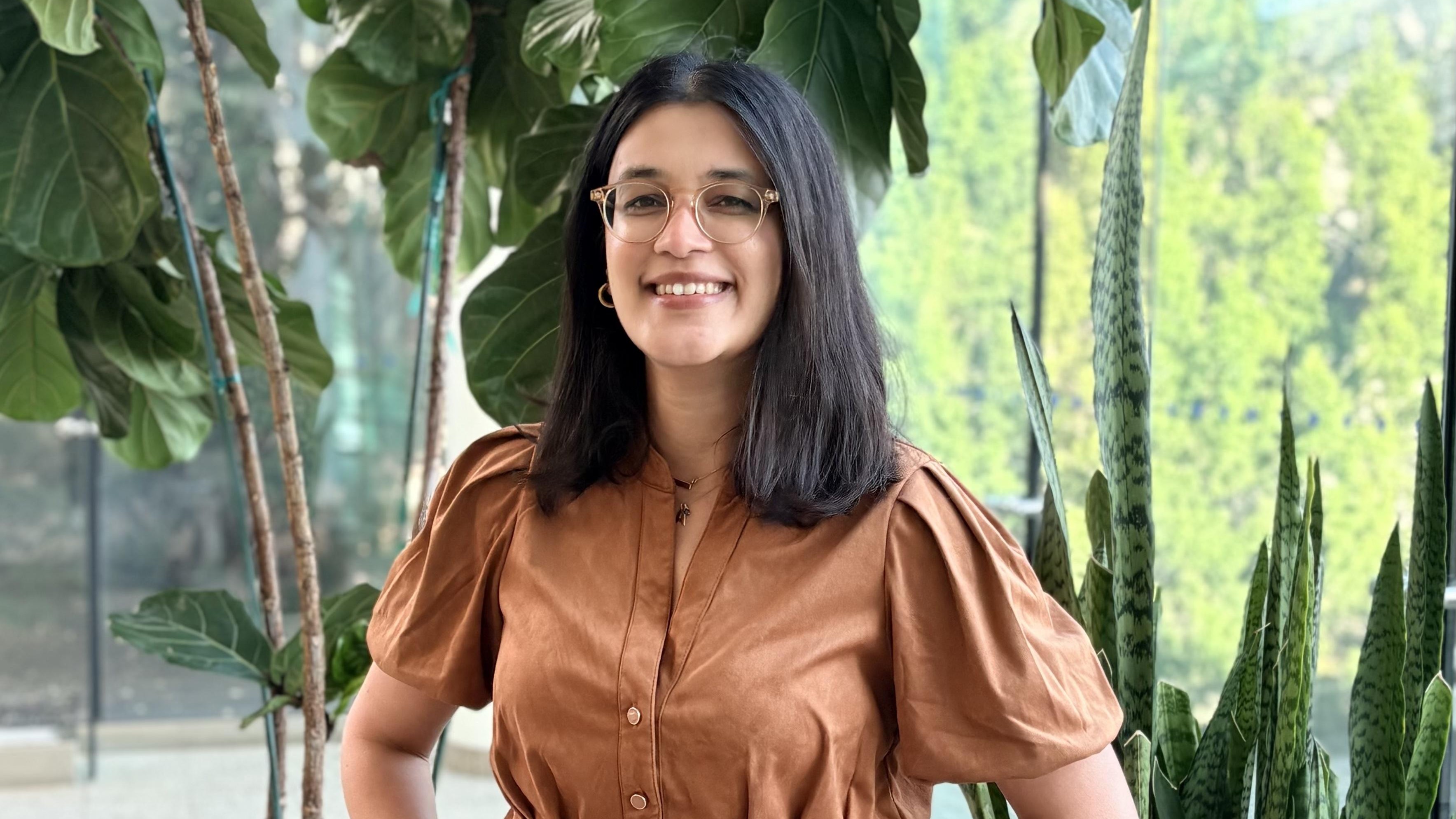
            "description": "<strong>// NEW DATE // This event has been rescheduled from 17 March to 9 June 2026!</strong><br>\r\n<br>\r\nHow can AI tutors be designed to support learning rather than shortcutting it?<br>\r\n<br>\r\nIn this presentation, Jérôme Brender (EPFL) will examine how undergraduate students learn with AI tutors in robotics and computer science courses.<br>\r\n<br>\r\nAcross multiple design iterations, he investigated how features such as course-grounded retrieval (RAG), Socratic questioning, and real-time prompt feedback, and debate chatbot, shape students’ engagement, prompting behavior, and learning outcomes.<br>\r\n<br>\r\nHis work focuses on how AI tutors can help students better understand course concepts and become more reflective and effective users of AI tools. The findings provide insights into designing AI tutors that foster critical thinking and support sustainable learning practices.",
            "image_description": "",
            "creation_date": "2026-01-21T13:49:42",
            "last_modification_date": "2026-03-10T14:15:23",
            "link_label": "Registration/zoom",
            "link_url": "https://epfl.zoom.us/meeting/register/4V57FBxZR-uhyymvvps-6g",
            "canceled": "False",
            "cancel_reason": "",
            "place_and_room": "ME B1 10",
            "url_place_and_room": "https://plan.epfl.ch/?room==ME%20B1%2010",
            "url_online_room": "https://epfl.zoom.us/meeting/register/4V57FBxZR-uhyymvvps-6g",
            "spoken_languages": [
                "https://memento.epfl.ch/api/v1/spoken_languages/2/?format=api"
            ],
            "speaker": "<a href=\"https://people.epfl.ch/jerome.brender?lang=en\">Jérôme Brender</a>",
            "organizer": "Center LEARN",
            "contact": "[email protected]",
            "is_internal": "True",
            "theme": "",
            "vulgarization": {
                "id": 2,
                "fr_label": "Public averti",
                "en_label": "Informed public"
            },
            "registration": {
                "id": 1,
                "fr_label": "Sur inscription",
                "en_label": "Registration required"
            },
            "keywords": "lunch&LEARN, Center LEARN, teaching, learning",
            "file": null,
            "icalendar_url": "https://memento.epfl.ch/event/export/119400/",
            "category": {
                "id": 1,
                "code": "CONF",
                "fr_label": "Conférences - Séminaires",
                "en_label": "Conferences - Seminars",
                "activated": true
            },
            "academic_calendar_category": null,
            "domains": [],
            "mementos": [
                "https://memento.epfl.ch/api/v1/mementos/416/?format=api",
                "https://memento.epfl.ch/api/v1/mementos/1/?format=api",
                "https://memento.epfl.ch/api/v1/mementos/3/?format=api",
                "https://memento.epfl.ch/api/v1/mementos/5/?format=api",
                "https://memento.epfl.ch/api/v1/mementos/6/?format=api",
                "https://memento.epfl.ch/api/v1/mementos/323/?format=api",
                "https://memento.epfl.ch/api/v1/mementos/8/?format=api",
                "https://memento.epfl.ch/api/v1/mementos/85/?format=api",
                "https://memento.epfl.ch/api/v1/mementos/65/?format=api",
                "https://memento.epfl.ch/api/v1/mementos/27/?format=api",
                "https://memento.epfl.ch/api/v1/mementos/417/?format=api"
            ]
        }
    ]
}