Event List
retrieve:
Return the details about the given Event id.
list:
List all Event objects.
GET /api/v1/events/?format=api&offset=40&ordering=-event__url_link
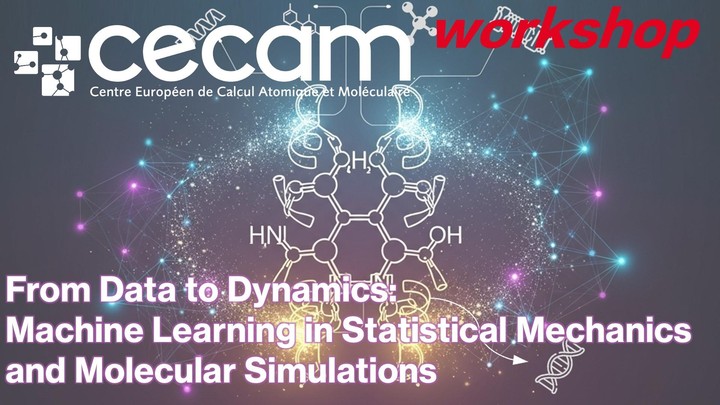
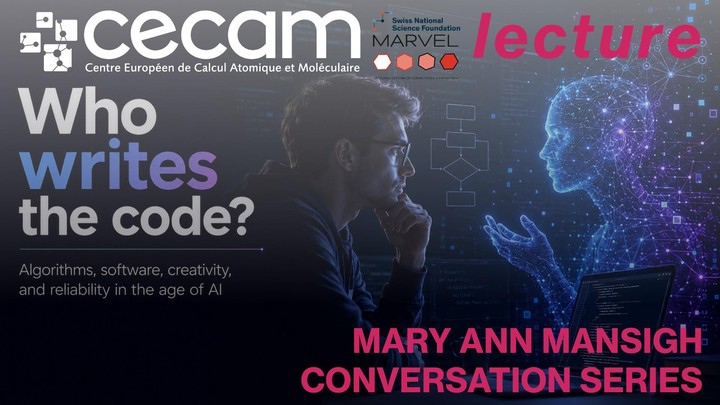
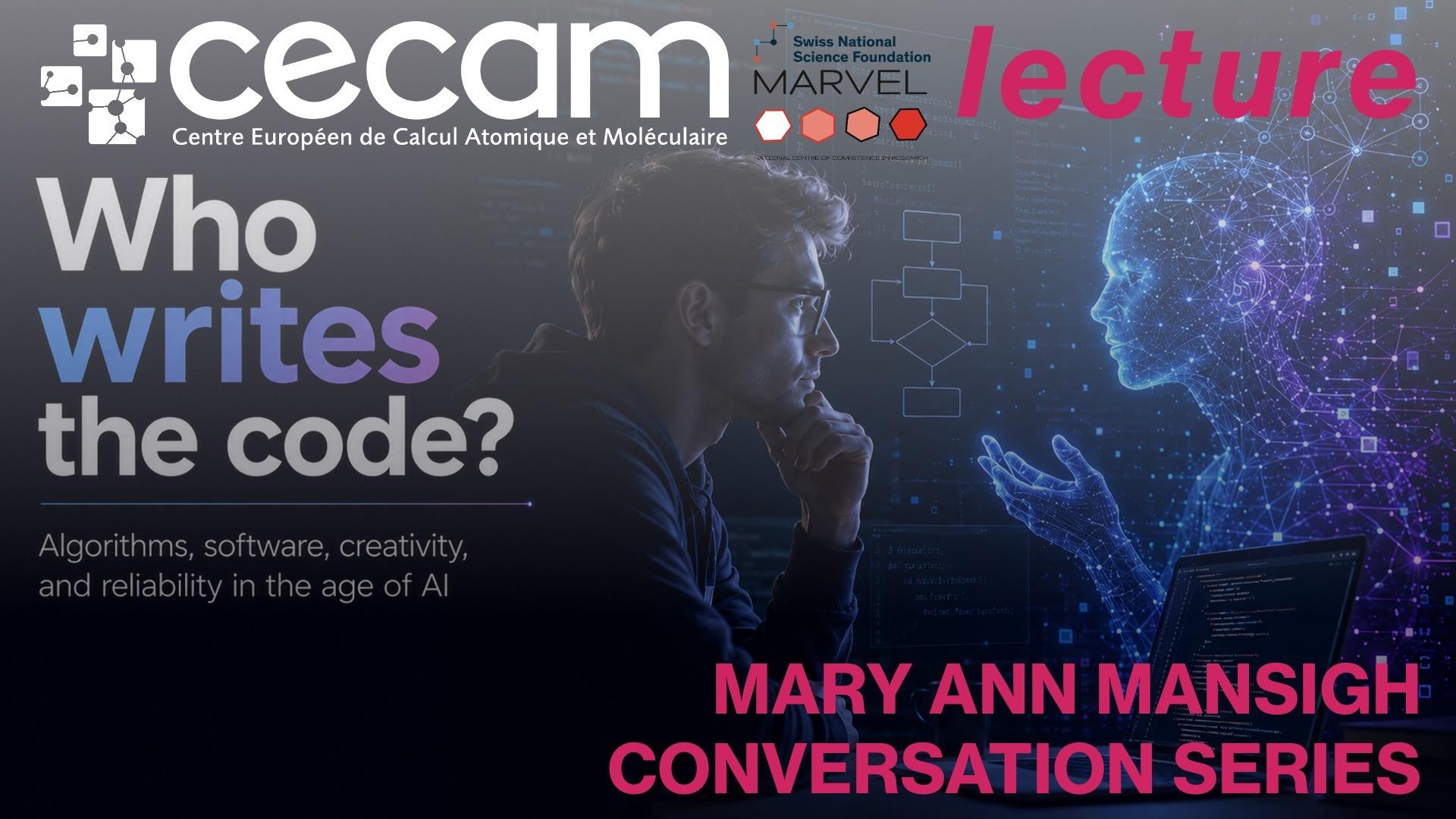
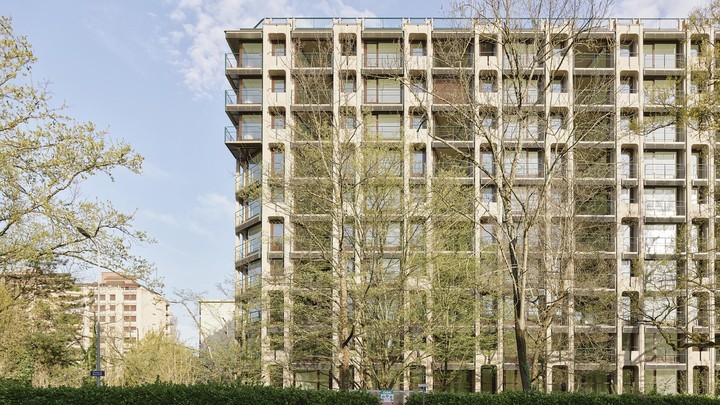
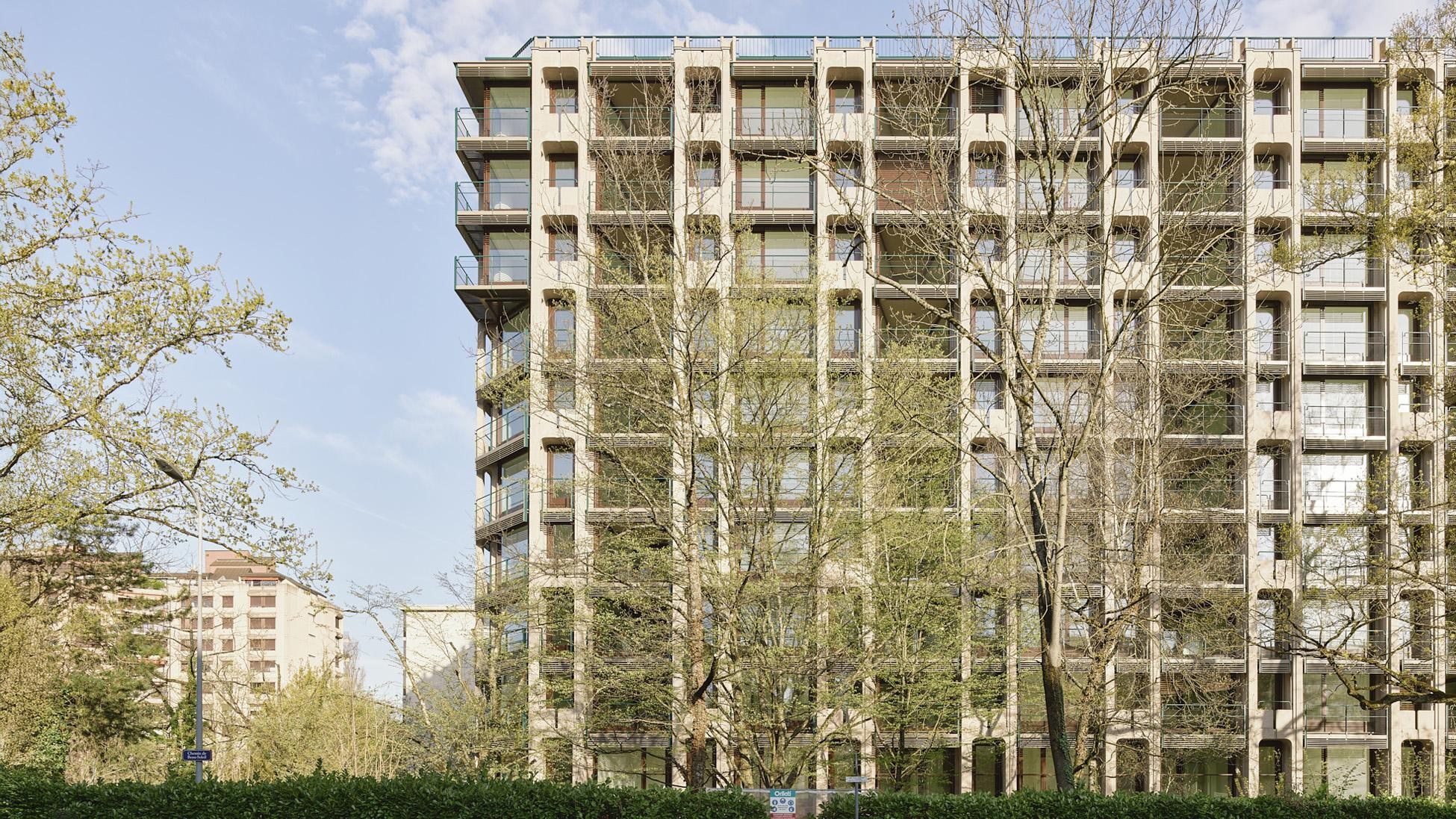
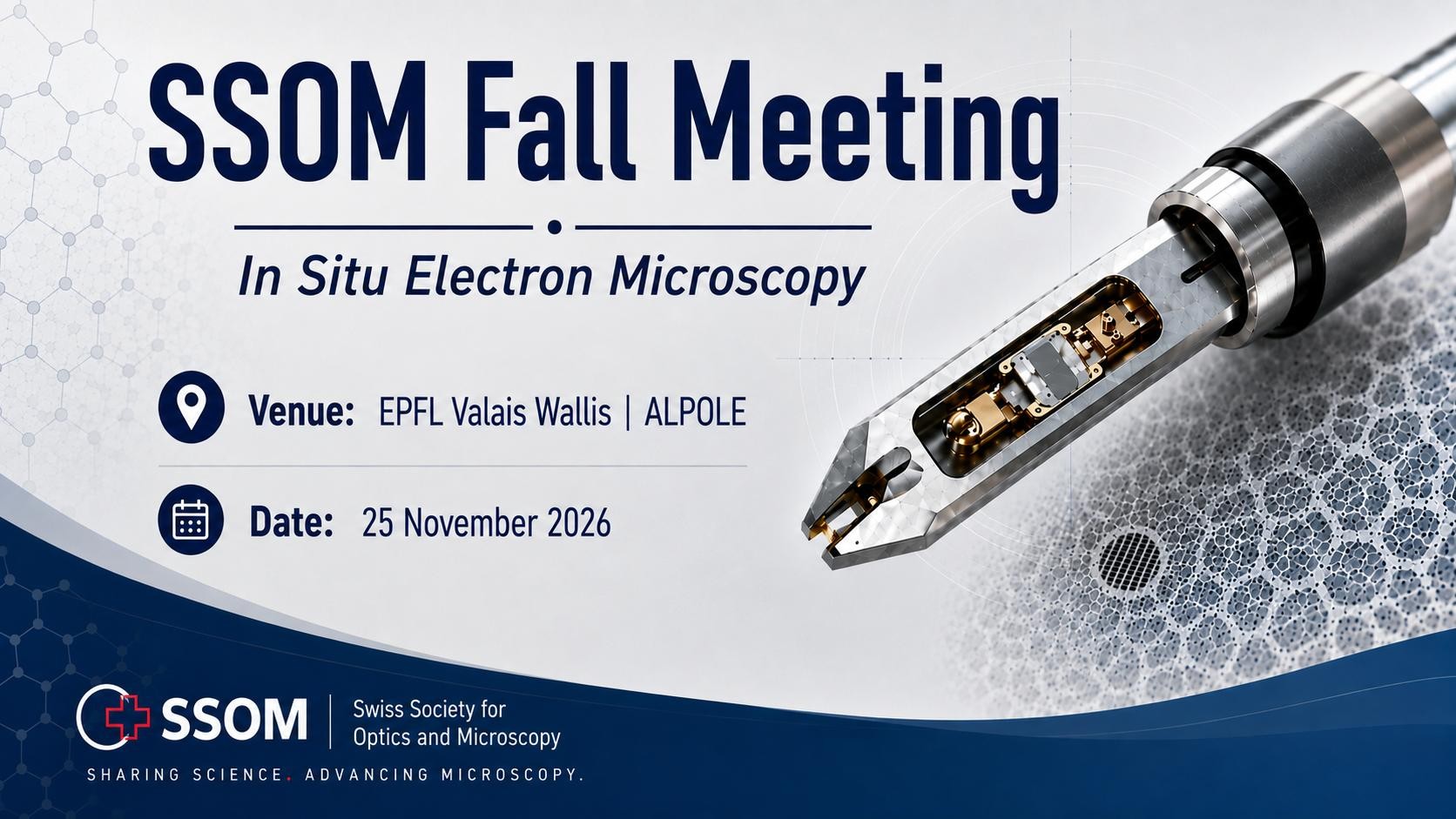
{ "count": 259, "next": "https://memento.epfl.ch/api/v1/events/?format=api&limit=10&offset=50&ordering=-event__url_link", "previous": "https://memento.epfl.ch/api/v1/events/?format=api&limit=10&offset=30&ordering=-event__url_link", "results": [ { "id": 72571, "title": "IMX Colloquium - Designer Quantum Materials from Carbon", "slug": "imx-colloquium-designer-quantum-materials-from-c-2", "event_url": "https://memento.epfl.ch/event/imx-colloquium-designer-quantum-materials-from-c-2", "visual_url": "https://memento.epfl.ch/image/33820/200x112.jpg", "visual_large_url": "https://memento.epfl.ch/image/33820/720x405.jpg", "visual_maxsize_url": "https://memento.epfl.ch/image/33820/max-size.jpg", "lang": "en", "start_date": "2026-11-09", "end_date": "2026-11-09", "start_time": "13:15:00", "end_time": "14:15:00", "description": "<p>Atomically precise carbon nanostructures offer a new route to quantum systems built from the bottom up. By combining molecular design, on-surface synthesis and scanning probe microscopy, we can control atomic structure, electronic states and magnetic interactions within the same platform.<br>\r\nIn this talk, I will follow the path from bottom-up synthesized graphene nanoribbons [1,2] to open-shell nanographenes [3] and designer quantum spin systems [4]. I will discuss how atomic structure can determine electronic topology and how molecular spins can be coupled into well-defined quantum chains. Recent examples include Haldane chains [4], alternating-exchange spin chains [5] and antiferromagnetic Heisenberg chains [6], where collective and fractional excitations can be probed directly at the atomic scale.<br>\r\nMore broadly, this work illustrates a materials-science strategy in which structure, functionality and interactions are programmed at the level of molecular building blocks. Rather than optimizing properties in an existing material, the aim is to design the material and its quantum behavior together. Atomically precise carbon nanostructures therefore provide a model platform for exploring how synthesis, structure and emergent functionality can be linked in a predictive way, with implications for the future design of low-dimensional electronic, magnetic and quantum materials.\r\n</p><ol>\r\n\t<li>J. Cai, P. Ruffieux, R. Jaafar, <em>et al.</em>, <em>Nature</em> <strong>466</strong>, 470–473 (2010).</li>\r\n\t<li>F. Xiang, Y. Gu, A. Kinikar, <em>et al.</em>, <em>Nat. Chem</em>. <strong>17</strong>, 1356–1363 (2025).</li>\r\n\t<li>S. Mishra, D. Beyer, K. Eimre, <em>et al</em>., <em>Nat. </em><em>Nanotechnol</em>. <strong>15</strong>, 22–28 (2020).</li>\r\n\t<li>S. Mishra, G. Catarina, F. Wu, <em>et al</em>., <em>Nature</em> <strong>598</strong>, 287–292 (2021).</li>\r\n\t<li>C. Zhao, G. Catarina, J.-J. Zhang, <em>et al</em>., <em>Nat. </em><em>Nanotechnol</em>. <strong>19</strong>, 1789-1795<strong> </strong>(2024).</li>\r\n\t<li>C. Zhao, L. Yang, J. C. G. Henriques, <em>et al</em>., <em>Nat. Mater.</em> <strong>24,</strong> 722–727 (2025).</li>\r\n</ol>\r\nBio: Roman Fasel is a leading scientist in the field of atomically precise carbon nanostructures and surface-based quantum materials. He received his Ph.D. in Physics from the University of Fribourg in 1996 and then carried out postdoctoral research at La Trobe University in Melbourne and the Fritz Haber Institute in Berlin before joining Empa. Today, he heads Empa’s nanotech@surfaces Laboratory and is Adjunct Professor at the University of Bern. He pioneered the bottom-up synthesis of graphene nanoribbons, establishing on-surface synthesis as a major new direction in nanoscience, and has since extended this work to topological states, open-shell nanographenes and quantum spin chains.", "image_description": "", "creation_date": "2026-09-14T10:43:28", "last_modification_date": "2026-09-14T10:43:41", "link_label": "Website", "link_url": "https://www.empa.ch/web/s205/roman-fasel", "canceled": "False", "cancel_reason": "", "place_and_room": "MXF 1", "url_place_and_room": "https://plan.epfl.ch/?room==MXF%201", "url_online_room": "", "spoken_languages": [ "https://memento.epfl.ch/api/v1/spoken_languages/2/?format=api" ], "speaker": "Prof. Roman Fasel, EMPA, Zürich", "organizer": "Prof. Gregor Jotzu, Prof. Esther Amstad & Prof. Fabien Sorin", "contact": "Prof. Gregor Jotzu, Prof. Esther Amstad & Prof. Fabien Sorin", "is_internal": "False", "theme": "", "vulgarization": { "id": 1, "fr_label": "Tout public", "en_label": "General public" }, "registration": { "id": 3, "fr_label": "Entrée libre", "en_label": "Free" }, "keywords": "", "file": null, "icalendar_url": "https://memento.epfl.ch/event/export/121785/", "category": { "id": 1, "code": "CONF", "fr_label": "Conférences - Séminaires", "en_label": "Conferences - Seminars", "activated": true }, "academic_calendar_category": null, "domains": [], "mementos": [ "https://memento.epfl.ch/api/v1/mementos/8/?format=api", "https://memento.epfl.ch/api/v1/mementos/314/?format=api" ] }, { "id": 72538, "title": "IMX Colloquium - Unravelling how atomic motion takes place in molecules and materials", "slug": "imx-colloquium-unravelling-how-atomic-motion-tak-2", "event_url": "https://memento.epfl.ch/event/imx-colloquium-unravelling-how-atomic-motion-tak-2", "visual_url": "https://memento.epfl.ch/image/33789/200x112.jpg", "visual_large_url": "https://memento.epfl.ch/image/33789/720x405.jpg", "visual_maxsize_url": "https://memento.epfl.ch/image/33789/max-size.jpg", "lang": "en", "start_date": "2026-12-07", "end_date": "2026-12-07", "start_time": "13:15:00", "end_time": "14:15:00", "description": "", "image_description": "", "creation_date": "2026-09-08T11:44:57", "last_modification_date": "2026-09-08T11:45:30", "link_label": "Website", "link_url": "https://www.ch.cam.ac.uk/person/mr2102", "canceled": "False", "cancel_reason": "", "place_and_room": "MXF 1", "url_place_and_room": "https://plan.epfl.ch/?room==MXF%201", "url_online_room": "", "spoken_languages": [ "https://memento.epfl.ch/api/v1/spoken_languages/1/?format=api" ], "speaker": "Prof. Mariana Rossi, University of Cambridge, UK", "organizer": "Prof. Gregor Jotzu, Prof. Esther Amstad & Prof. Fabien Sorin", "contact": "Prof. Gregor Jotzu, Prof. Esther Amstad & Prof. Fabien Sorin", "is_internal": "False", "theme": "", "vulgarization": { "id": 1, "fr_label": "Tout public", "en_label": "General public" }, "registration": { "id": 3, "fr_label": "Entrée libre", "en_label": "Free" }, "keywords": "", "file": null, "icalendar_url": "https://memento.epfl.ch/event/export/121739/", "category": { "id": 1, "code": "CONF", "fr_label": "Conférences - Séminaires", "en_label": "Conferences - Seminars", "activated": true }, "academic_calendar_category": null, "domains": [], "mementos": [ "https://memento.epfl.ch/api/v1/mementos/8/?format=api", "https://memento.epfl.ch/api/v1/mementos/314/?format=api" ] }, { "id": 70956, "title": "G protein-coupled receptors functional dynamics revealed by experimental and computational structural data", "slug": "g-protein-coupled-receptors-functional-dynamics-re", "event_url": "https://memento.epfl.ch/event/g-protein-coupled-receptors-functional-dynamics-re", "visual_url": "https://memento.epfl.ch/image/32345/200x112.jpg", "visual_large_url": "https://memento.epfl.ch/image/32345/720x405.jpg", "visual_maxsize_url": "https://memento.epfl.ch/image/32345/max-size.jpg", "lang": "en", "start_date": "2026-10-07", "end_date": "2026-10-09", "start_time": null, "end_time": null, "description": "<p>You can apply to participate and find all the relevant information (speakers, abstracts, program,...) on the event website: <a href=\"https://www.cecam.org/workshop-details/g-protein-coupled-receptors-functional-dynamics-revealed-by-experimental-and-computational-structural-data-1488\">https://www.cecam.org/workshop-details/g-protein-coupled-receptors-functional-dynamics-revealed-by-experimental-and-computational-structural-data-1488</a>.<br>\r\n<br>\r\nRegistration is required to attend the full event, take part in the social activities and present a poster at the poster session (if any). However, the EPFL community is welcome to attend specific lectures without registration if the topic is of interest to their research. Do not hesitate to contact the <a href=\"mailto:[email protected]\">CECAM Event Manager</a> if you have any question.<br>\r\n<br>\r\n<strong>Description</strong><br>\r\n<br>\r\nG protein-coupled receptors (GPCRs) represent a vast and diverse class of transmembrane proteins that orchestrate a wide range of physiological processes by responding to both endogenous and exogenous ligands [1,2]. These receptors are essential to critical functions such as metabolism, immune regulation, neuronal signaling, and sensory perception - including vision and olfaction. Due to their physiological relevance and membrane accessibility, GPCRs are the targets of approximately 34% of all prescribed medications, accounting for nearly 27% of the global pharmaceutical market [3]. <br>\r\nDespite their pharmaceutical importance, key aspects of GPCR function remain elusive. The canonical activation model posits that agonist binding to the extracellular orthosteric site triggers allosteric changes - most notably, the outward displacement of transmembrane helices 5 (TM5) and 6 (TM6) on the intracellular side - ultimately leading to receptor activation [2-4]. However, recent evidence suggests a more nuanced mechanism. In several GPCRs, activation appears to involve cooperative engagement between the agonist and the G protein. For example, the G protein may disrupt an \"inactivating ionic lock\" - a salt bridge between TM3 and TM6 - while the agonist stabilizes the active conformation. In some receptors, this is complemented by the formation of an “activating ionic lock” between TM5 and TM6 [5-8]. These dual contributions are considered thermodynamically essential for full activation [7].<br>\r\nAdding further complexity, GPCR activity is regulated by conformational microswitches and finely tuned intra-protein interaction networks. These dynamic rearrangements are difficult to capture and often elude direct correlation with functional outcomes. Moreover, allosteric ligands - which bind sites distinct from the orthosteric pocket - are being increasingly identified [9-12], along with small molecules capable of biased signaling, i.e., preferential activation of specific intracellular pathways [11-13, 16, 17]. These findings reveal a rich and underexplored conformational landscape that governs GPCR signaling. In addition, native membrane components—such as lipids and interacting proteins, including GPCR oligomers—are known to significantly modulate receptor function [11, 18-22].<br>\r\nTo disentangle these intricacies, computational modeling has become indispensable, offering atomistic insight into GPCR conformational dynamics and mechanistic understanding [1-2, 7, 11, 14, 16–21, 23]. Nevertheless, key questions remain - particularly regarding the structural basis of biased signaling, strategies for leveraging allosteric networks in pharmacology, and the modulatory role of the lipid environment. Addressing these gaps is crucial for both fundamental biology and the rational design of next-generation GPCR-targeting drugs with improved selectivity and safety profiles. <br>\r\nThese scientific challenges form the foundation of our upcoming workshop, which will focus on the latest experimental and computational approaches for studying the functional dynamics of GPCRs. Given the profound health, economic, and societal implications of modulating these receptors with precision, we aim to strengthen the interdisciplinary nature of the event by increasing the representation of experimental research and integrating cutting-edge artificial intelligence applications into the program.<br>\r\nBuilding upon the success of the 2022 and 2024 editions - which led to new collaborations and a landmark publication in <em>Nature Reviews Drug Discovery</em> [24] - our goal is to further enhance communication and collaboration between experimentalists and theoreticians. The workshop will serve as a reference point for young scientists and students, offering a platform to interact with leading international experts. We are confident that this initiative will foster insightful discussions and contribute meaningfully to advancing the field of GPCR pharmacology.<br>\r\n<br>\r\n<strong>References</strong><br>\r\n<br>\r\n<a href=\"https://doi.org/10.1038/nrd.2017.229\" target=\"_blank\">[1] J. Smith, R. Lefkowitz, S. Rajagopal, Nat. Rev. Drug. Discov., <strong>17</strong>, 243-260 (2018)</a><br>\r\n<a href=\"https://doi.org/10.1038/s41573-024-01083-3\" target=\"_blank\">[2] P. Conflitti, E. Lyman, M. Sansom, P. Hildebrand, H. Gutiérrez-de-Terán, P. Carloni, T. Ansell, S. Yuan, P. Barth, A. Robinson, C. Tate, D. Gloriam, S. Grzesiek, M. Eddy, S. Prosser, V. Limongelli, Nat. Rev. Drug. Discov., <strong>24</strong>, 251-275 (2025)</a><br>\r\n<a href=\"https://doi.org/10.1038/s41589-024-01682-6\" target=\"_blank\">[3] L. Picard, A. Orazietti, D. Tran, A. Tucs, S. Hagimoto, Z. Qi, S. Huang, K. Tsuda, A. Kitao, A. Sljoka, R. Prosser, Nat. Chem. Biol., <strong>21</strong>, 71-79 (2024)</a><br>\r\n<a href=\"https://doi.org/10.1016/j.drudis.2020.10.006\" target=\"_blank\">[4] B. Huang, C. St. Onge, H. Ma, Y. Zhang, Drug Discovery Today, <strong>26</strong>, 189-199 (2021)</a><br>\r\n<a href=\"https://doi.org/10.1038/s41467-023-42082-z\" target=\"_blank\">[5] D. Di Marino, P. Conflitti, S. Motta, V. Limongelli, Nat. Commun., <strong>14</strong>, 6439 (2023)</a><br>\r\n<a href=\"https://doi.org/10.1016/j.ceb.2018.10.007\" target=\"_blank\">[6] G. Milligan, R. Ward, S. Marsango, Current Opinion in Cell Biology, <strong>57</strong>, 40-47 (2019)</a><br>\r\n<a href=\"https://doi.org/10.7554/elife.73901\" target=\"_blank\">[7] S. Huang, O. Almurad, R. Pejana, Z. Morrison, A. Pandey, L. Picard, M. Nitz, A. Sljoka, R. Prosser, eLife, <strong>11</strong>, (2022)</a><br>\r\n<a href=\"https://doi.org/10.1146/annurev-pharmtox-010919-023411\" target=\"_blank\">[8] A. Duncan, W. Song, M. Sansom, Annu. Rev. Pharmacol. Toxicol., <strong>60</strong>, 31-50 (2020)</a><br>\r\n<a href=\"https://doi.org/10.1038/s41467-025-60003-0\" target=\"_blank\">[9] A. Morales-Pastor, T. Miljuš, M. Dieguez-Eceolaza, T. Stępniewski, V. Ledesma-Martin, F. Heydenreich, T. Flock, B. Plouffe, C. Le Gouill, J. Duchaine, D. Sykes, C. Nicholson, E. Koers, W. Guba, A. Rufer, U. Grether, M. Bouvier, D. Veprintsev, J. Selent, Nat. Commun., <strong>16</strong>, 5265 (2025)</a><br>\r\n<a href=\"https://doi.org/10.1038/s41586-022-05588-y\" target=\"_blank\">[10] A. Faouzi, H. Wang, S. Zaidi, J. DiBerto, T. Che, Q. Qu, M. Robertson, M. Madasu, A. El Daibani, B. Varga, T. Zhang, C. Ruiz, S. Liu, J. Xu, K. Appourchaux, S. Slocum, S. Eans, M. Cameron, R. Al-Hasani, Y. Pan, B. Roth, J. McLaughlin, G. Skiniotis, V. Katritch, B. Kobilka, S. Majumdar, Nature, <strong>613</strong>, 767-774 (2022)</a><br>\r\n<a href=\"https://doi.org/10.1038/s41467-022-31652-2\" target=\"_blank\">[11] M. Wall, E. Hill, R. Huckstepp, K. Barkan, G. Deganutti, M. Leuenberger, B. Preti, I. Winfield, S. Carvalho, A. Suchankova, H. Wei, D. Safitri, X. Huang, W. Imlach, C. La Mache, E. Dean, C. Hume, S. Hayward, J. Oliver, F. Zhao, D. Spanswick, C. Reynolds, M. Lochner, G. Ladds, B. Frenguelli, Nat. Commun., <strong>13</strong>, 4150 (2022)</a><br>\r\n<a href=\"https://doi.org/10.1038/s41580-018-0049-3\" target=\"_blank\">[12] D. Wootten, A. Christopoulos, M. Marti-Solano, M. Babu, P. Sexton, Nat. Rev. Mol. Cell. Biol., <strong>19</strong>, 638-653 (2018)</a><br>\r\n<a href=\"https://doi.org/10.1038/s41594-017-0011-7\" target=\"_blank\">[13] D. Hilger, M. Masureel, B. Kobilka, Nat. Struct. Mol. Biol., <strong>25</strong>, 4-12 (2018)</a><br>\r\n<a href=\"https://doi.org/10.1038/s41467-025-57034-y\" target=\"_blank\">[14] D. Aranda-García, T. Stepniewski, M. Torrens-Fontanals, A. García-Recio, M. Lopez-Balastegui, B. Medel-Lacruz, A. Morales-Pastor, A. Peralta-García, M. Dieguez-Eceolaza, D. Sotillo-Nuñez, T. Ding, M. Drabek, C. Jacquemard, J. Jakowiecki, W. Jespers, M. Jiménez-Rosés, V. Jun-Yu-Lim, A. Nicoli, U. Orzel, A. Shahraki, J. Tiemann, V. Ledesma-Martin, F. Nerín-Fonz, S. Suárez-Dou, O. Canal, G. Pándy-Szekeres, J. Mao, D. Gloriam, E. Kellenberger, D. Latek, R. Guixà-González, H. Gutiérrez-de-Terán, I. Tikhonova, P. Hildebrand, M. Filizola, M. Babu, A. Di Pizio, S. Filipek, P. Kolb, A. Cordomi, T. Giorgino, M. Marti-Solano, J. Selent, Nat. Commun., <strong>16</strong>, 2020 (2025)</a><br>\r\n<a href=\"https://doi.org/10.1038/s41586-018-0259-z\" target=\"_blank\">[15] D. Thal, A. Glukhova, P. Sexton, A. Christopoulos, Nature, <strong>559</strong>, 45-53 (2018)</a><br>\r\n<a href=\"https://doi.org/10.1016/j.tips.2020.12.005\" target=\"_blank\">[16] L. Slosky, M. Caron, L. Barak, Trends in Pharmacological Sciences, <strong>42</strong>, 283-299 (2021)</a><br>\r\n<a href=\"https://doi.org/10.1016/j.apsb.2023.07.020\" target=\"_blank\">[17] C. Zhu, X. Lan, Z. Wei, J. Yu, J. Zhang, Acta Pharmaceutica Sinica B, <strong>14</strong>, 67-86 (2024)</a><br>\r\n<a href=\"https://doi.org/10.1016/j.chempr.2024.08.004\" target=\"_blank\">[18] V. D’Amore, P. Conflitti, L. Marinelli, V. Limongelli, Chem, <strong>10</strong>, 3678-3698 (2024)</a><br>\r\n<a href=\"https://doi.org/10.1038/s41557-023-01238-6\" target=\"_blank\">[19] A. Mafi, S. Kim, W. Goddard, Nat. Chem., <strong>15</strong>, 1127-1137 (2023)</a><br>\r\n<a href=\"https://doi.org/10.1038/s41594-024-01334-2\" target=\"_blank\">[20] H. Batebi, G. Pérez-Hernández, S. Rahman, B. Lan, A. Kamprad, M. Shi, D. Speck, J. Tiemann, R. Guixà-González, F. Reinhardt, P. Stadler, M. Papasergi-Scott, G. Skiniotis, P. Scheerer, B. Kobilka, J. Mathiesen, X. Liu, P. Hildebrand, Nat. Struct. Mol. Biol., <strong>31</strong>, 1692-1701 (2024)</a><br>\r\n<a href=\"https://doi.org/10.1016/j.cell.2015.04.043\" target=\"_blank\">[21] A. Manglik, T. Kim, M. Masureel, C. Altenbach, Z. Yang, D. Hilger, M. Lerch, T. Kobilka, F. Thian, W. Hubbell, R. Prosser, B. Kobilka, Cell, <strong>161</strong>, 1101-1111 (2015)</a><br>\r\n<a href=\"https://doi.org/10.1016/j.cell.2020.03.003\" target=\"_blank\">[22] M. Congreve, C. de Graaf, N. Swain, C. Tate, Cell, <strong>181</strong>, 81-91 (2020)</a><br>\r\n<a href=\"https://doi.org/10.1038/s41573-025-01139-y\" target=\"_blank\">[23] J. Lorente, A. Sokolov, G. Ferguson, H. Schiöth, A. Hauser, D. Gloriam, Nat. Rev. Drug. Discov., <strong>24</strong>, 458-479 (2025)</a><br>\r\n<a href=\"https://doi.org/10.1111/bph.16495\" target=\"_blank\">[24] M. Lopez‐Balastegui, T. Stepniewski, M. Kogut‐Günthel, A. Di Pizio, M. Rosenkilde, J. Mao, J. Selent, British. J. Pharmacology., <strong>182</strong>, 3211-3224 (2024)</a>\r\n</p><div class=\"active tab-pane\"> </div>", "image_description": "", "creation_date": "2026-01-26T16:00:31", "last_modification_date": "2026-01-26T16:45:08", "link_label": "G protein-coupled receptors functional dynamics revealed by experimental and computational structura", "link_url": "https://www.cecam.org/workshop-details/g-protein-coupled-receptors-functional-dynamics-revealed-by-experimental-and-computational-structural-data-1488", "canceled": "False", "cancel_reason": "", "place_and_room": "Aula Magna, USI Lugano", "url_place_and_room": "https://www.desk.usi.ch/en/lugano-campus-map-access-facilities", "url_online_room": "", "spoken_languages": [ "https://memento.epfl.ch/api/v1/spoken_languages/2/?format=api" ], "speaker": "", "organizer": "<strong>Vittorio Limongelli</strong>, Università della Svizzera Italiana USI Lugano ; <strong>Scott Prosser</strong>, University of Toronto ; <strong>Stefano Raniolo</strong>, Università della Svizzera Italiana ; <strong>Jana Selent</strong>, Hospital Del Mar Medical Research Institute", "contact": "<a href=\"mailto:[email protected]\"><strong>Cornelia Bujenita</strong></a>, CECAM Events and Operations Manager", "is_internal": "False", "theme": "", "vulgarization": { "id": 2, "fr_label": "Public averti", "en_label": "Informed public" }, "registration": { "id": 1, "fr_label": "Sur inscription", "en_label": "Registration required" }, "keywords": "", "file": null, "icalendar_url": "https://memento.epfl.ch/event/export/119453/", "category": { "id": 1, "code": "CONF", "fr_label": "Conférences - Séminaires", "en_label": "Conferences - Seminars", "activated": true }, "academic_calendar_category": null, "domains": [], "mementos": [ "https://memento.epfl.ch/api/v1/mementos/1/?format=api", "https://memento.epfl.ch/api/v1/mementos/5/?format=api", "https://memento.epfl.ch/api/v1/mementos/6/?format=api", "https://memento.epfl.ch/api/v1/mementos/8/?format=api", "https://memento.epfl.ch/api/v1/mementos/27/?format=api" ] }, { "id": 70957, "title": "From Data to Dynamics: Machine Learning in Statistical Mechanics and Molecular Simulations", "slug": "from-data-to-dynamics-machine-learning-in-statis-2", "event_url": "https://memento.epfl.ch/event/from-data-to-dynamics-machine-learning-in-statis-2", "visual_url": "https://memento.epfl.ch/image/32346/200x112.jpg", "visual_large_url": "https://memento.epfl.ch/image/32346/720x405.jpg", "visual_maxsize_url": "https://memento.epfl.ch/image/32346/max-size.jpg", "lang": "en", "start_date": "2026-10-14", "end_date": "2026-10-16", "start_time": null, "end_time": null, "description": "<p>You can apply to participate and find all the relevant information (speakers, abstracts, program,...) on the event website: <a href=\"https://www.cecam.org/workshop-details/from-data-to-dynamics-machine-learning-in-statistical-mechanics-and-molecular-simulations-1487\">https://www.cecam.org/workshop-details/from-data-to-dynamics-machine-learning-in-statistical-mechanics-and-molecular-simulations-1487</a>.<br>\r\n<br>\r\nRegistration is required to attend the full event, take part in the social activities and present a poster at the poster session (if any). However, the EPFL community is welcome to attend specific lectures without registration if the topic is of interest to their research. Do not hesitate to contact the <a href=\"mailto:[email protected]\">CECAM Event Manager</a> if you have any question.<br>\r\n<br>\r\n<strong>Description</strong><br>\r\nSince its introduction in the 1970s, molecular dynamics (MD) has become an indispensable computational microscope for studying complex biological systems at atomic resolution. It has enabled detailed investigations into protein folding, conformational dynamics, and ligand binding and unbinding. Over the past decade, increasing computational power has made microsecond-scale simulations routine, producing massive datasets that demand sophisticated analysis strategies [1]. Despite these advances, conventional MD simulations still face a fundamental limitation: many biologically relevant events occur over milliseconds to seconds—timescales largely inaccessible to standard MD.<br>\r\nTo bridge this gap, researchers increasingly turn to enhanced sampling techniques—such as metadynamics and umbrella sampling [2,3]—and coarse-grained (CG) modeling approaches [4]. These methods enable more comprehensive exploration of the system’s free energy landscape, yet their success critically depends on the selection of appropriate reaction coordinates or collective variables (CVs). CVs must capture the slowest, most functionally relevant motions to accurately reflect thermodynamic and kinetic behavior. However, identifying suitable CVs remains one of the field’s most challenging tasks, typically requiring domain expertise and iterative refinement [5, 6].<br>\r\nThis complexity has fueled growing interest in machine learning (ML) techniques, which are now transforming how MD simulations are analyzed, interpreted, and even conducted. ML methods have been applied to automate CV discovery, perform dimensionality reduction, build thermodynamic and kinetic models, and enhance sampling efficiency [7]. These models often employ artificial neural networks or graph neural networks to map high-dimensional molecular configurations—such as Cartesian coordinates or molecular descriptors—into low-dimensional representations suitable for analysis [8].<br>\r\nDepending on the structure and type of data, ML algorithms can be broadly categorized into supervised, unsupervised, and reinforcement learning paradigms [9]. Supervised learning uses labeled input-output pairs to predict properties such as molecular energies or binding affinities [10], while unsupervised learning enables the identification of latent features, such as CVs, directly from data [11].<br>\r\nA cornerstone of modern ML-driven simulation is the development of symmetry-aware molecular representations. The predictive power of ML models hinges on encoding physical symmetries—like rotation and translation—directly into the model. E(3)-equivariant neural networks have emerged as powerful tools for this purpose, significantly improving data efficiency and generalization in learning potential energy surfaces [12]. Ongoing research continues to explore the optimal balance between enforcing strict symmetry and retaining model flexibility.<br>\r\nMeanwhile, breakthroughs in structural prediction—most notably the advent of AlphaFold 3—have revolutionized how researchers obtain initial molecular configurations. AlphaFold now provides remarkably accurate models of not only proteins but also their complexes with nucleic acids, ions, and small-molecule ligands [13]. However, these are static snapshots. They cannot capture dynamic behaviors, allosteric transitions, or binding kinetics—areas where physics-based simulations remain indispensable. Initial benchmarks suggest that even state-of-the-art predictors still fall short in modeling protein dynamics and ranking ligand binding affinities, further emphasizing the role of MD [14].<br>\r\nTo address the dimensionality and sampling bottlenecks, unsupervised ML approaches such as time-lagged autoencoders have reframed CV identification as a data-driven task. More recently, generative models—including diffusion models and variational autoencoders—have emerged as a new frontier. These models can learn the full conformational landscape of biomolecules and enable enhanced sampling, in some cases eliminating the need for predefined CVs altogether [15].<br>\r\nOnce accurate structural models and CVs are established, ML can significantly improve the estimation of thermodynamic and kinetic properties. In drug discovery, for instance, predicting protein–ligand binding affinity remains a central challenge. ML potentials trained on quantum mechanical data can be combined with enhanced sampling to yield highly accurate free energy landscapes and binding kinetics—results previously unattainable due to computational limitations [16]. However, challenges in data quality, model interpretability, and transferability remain critical areas of ongoing investigation [17].<br>\r\nFinally, ML is driving a renaissance in CG modeling. Deep neural networks can now learn many-body CG potentials directly from all-atom simulations, capturing emergent properties and enhancing transferability [18]. These models open the door to longer, larger-scale simulations with greater physical accuracy.<br>\r\nIn this rapidly evolving context, it becomes imperative to critically assess both the promise and limitations of ML in biomolecular simulation. The excitement surrounding these developments must be tempered by careful validation and benchmarking. This workshop thus serves as a timely opportunity—especially for early-career researchers—to explore these cutting-edge methods, engage in constructive dialogue, and chart new directions in the application of machine learning to molecular dynamics and drug discovery.<br>\r\n <br>\r\n<strong>References</strong><br>\r\n<br>\r\n<a href=\"https://doi.org/10.1103/physrevlett.98.146401\" target=\"_blank\">[1] J. Behler, M. Parrinello, Phys. Rev. Lett., <strong>98</strong>, 146401 (2007)</a><br>\r\n<a href=\"https://doi.org/10.1016/j.sbi.2024.102972\" target=\"_blank\">[2] P. Sahrmann, G. Voth, Current Opinion in Structural Biology, <strong>90</strong>, 102972 (2025)</a><br>\r\n<a href=\"https://doi.org/10.1021/acs.jcim.2c01127\" target=\"_blank\">[3] K. Kříž, L. Schmidt, A. Andersson, M. Walz, D. van der Spoel, J. Chem. Inf. Model., <strong>63</strong>, 412-431 (2023)</a><br>\r\n<a href=\"https://doi.org/10.3389/fmolb.2022.899805\" target=\"_blank\">[4] K. Ahmad, A. Rizzi, R. Capelli, D. Mandelli, W. Lyu, P. Carloni, Front. Mol. Biosci., <strong>9</strong>, (2022)</a><br>\r\n<a href=\"https://doi.org/10.1146/annurev-physchem-083122-125941\" target=\"_blank\">[5] S. Mehdi, Z. Smith, L. Herron, Z. Zou, P. Tiwary, Annual Review of Physical Chemistry, <strong>75</strong>, 347-370 (2024)</a><br>\r\n<a href=\"https://doi.org/10.1101/2025.04.07.647682\" target=\"_blank\">[6] H. Zheng, H. Lin, A. Alade, J. Chen, E. Monroy, M. Zhang, J. Wang, AlphaFold3 in Drug Discovery: A Comprehensive Assessment of Capabilities, Limitations, and Applications, 2025</a><br>\r\n<a href=\"https://doi.org/10.1038/s41586-024-07487-w\" target=\"_blank\">[7] J. Abramson, J. Adler, J. Dunger, R. Evans, T. Green, A. Pritzel, O. Ronneberger, L. Willmore, A. Ballard, J. Bambrick, S. Bodenstein, D. Evans, C. Hung, M. O’Neill, D. Reiman, K. Tunyasuvunakool, Z. Wu, A. Žemgulytė, E. Arvaniti, C. Beattie, O. Bertolli, A. Bridgland, A. Cherepanov, M. Congreve, A. Cowen-Rivers, A. Cowie, M. Figurnov, F. Fuchs, H. Gladman, R. Jain, Y. Khan, C. Low, K. Perlin, A. Potapenko, P. Savy, S. Singh, A. Stecula, A. Thillaisundaram, C. Tong, S. Yakneen, E. Zhong, M. Zielinski, A. Žídek, V. Bapst, P. Kohli, M. Jaderberg, D. Hassabis, J. Jumper, Nature, <strong>630</strong>, 493-500 (2024)</a><br>\r\n[8] Fabian B. Fuchs, Daniel E. Worrall, Volker Fischer, Max Welling, NIPS'20: Proceedings of the 34th International Conference on Neural Information Processing Systems, Article No.: 166, Pages 1970 - 1981 (2020)<br>\r\n<a href=\"https://doi.org/10.1080/00268976.2020.1737742\" target=\"_blank\">[9] H. Sidky, W. Chen, A. Ferguson, Molecular Physics, <strong>118</strong>, (2020)</a><br>\r\n<a href=\"https://doi.org/10.1016/j.sbi.2019.12.016\" target=\"_blank\">[10] Y. Wang, J. Lamim Ribeiro, P. Tiwary, Current Opinion in Structural Biology, <strong>61</strong>, 139-145 (2020)</a><br>\r\n<a href=\"https://doi.org/10.1038/s41586-018-0337-2\" target=\"_blank\">[11] K. Butler, D. Davies, H. Cartwright, O. Isayev, A. Walsh, Nature, <strong>559</strong>, 547-555 (2018)</a><br>\r\n<a href=\"https://doi.org/10.1146/annurev-physchem-042018-052331\" target=\"_blank\">[12] F. Noé, A. Tkatchenko, K. Müller, C. Clementi, Annu. Rev. Phys. Chem., <strong>71</strong>, 361-390 (2020)</a><br>\r\n<a href=\"https://doi.org/10.1080/23746149.2021.2006080\" target=\"_blank\">[13] S. Kaptan, I. Vattulainen, Advances in Physics: X, <strong>7</strong>, (2022)</a><br>\r\n<a href=\"https://doi.org/10.1002/wcms.1455\" target=\"_blank\">[14] V. Limongelli, WIREs. Comput. Mol. Sci., <strong>10</strong>, (2020)</a><br>\r\n<a href=\"https://doi.org/10.1021/acs.chemrev.0c01195\" target=\"_blank\">[15] A. Glielmo, B. Husic, A. Rodriguez, C. Clementi, F. Noé, A. Laio, Chem. Rev., <strong>121</strong>, 9722-9758 (2021)</a><br>\r\n<a href=\"https://doi.org/10.1016/j.sbi.2018.11.005\" target=\"_blank\">[16] A. Pak, G. Voth, Current Opinion in Structural Biology, <strong>52</strong>, 119-126 (2018)</a><br>\r\n<a href=\"https://doi.org/10.1021/jacs.6b05602\" target=\"_blank\">[17] M. Lelimousin, V. Limongelli, M. Sansom, J. Am. Chem. Soc., <strong>138</strong>, 10611-10622 (2016)</a><br>\r\n<a href=\"https://doi.org/10.3390/e16010163\" target=\"_blank\">[18] C. Abrams, G. Bussi, Entropy, <strong>16</strong>, 163-199 (2013)</a>\r\n</p><div class=\"active tab-pane\"> </div>", "image_description": "", "creation_date": "2026-01-26T16:07:22", "last_modification_date": "2026-01-26T16:45:31", "link_label": "From Data to Dynamics: Machine Learning in Statistical Mechanics and Molecular Simulations", "link_url": "https://www.cecam.org/workshop-details/from-data-to-dynamics-machine-learning-in-statistical-mechanics-and-molecular-simulations-1487", "canceled": "False", "cancel_reason": "", "place_and_room": "Aula Magna, USI Lugano", "url_place_and_room": "https://www.desk.usi.ch/en/lugano-campus-map-access-facilities", "url_online_room": "", "spoken_languages": [ "https://memento.epfl.ch/api/v1/spoken_languages/2/?format=api" ], "speaker": "", "organizer": "<strong>Daniele Angioletti, </strong>Università della Svizzera Italiana (USI) ; <strong>Vincenzo Maria D'Amore, </strong>University of Naples \"Federico II\" ; <strong>Marco De Vivo, </strong>Istituto Italiano di Tecnologia ; <strong>Francesco Saverio Di Leva, </strong>University of Naples Federico II ; <strong>Vittorio Limongelli, </strong>Università della Svizzera Italiana USI Lugano ; <strong>Gregory Voth, </strong>University of Chicago", "contact": "<a href=\"mailto:[email protected]\"><strong>Cornelia Bujenita</strong></a>, CECAM Events and Operations Manager", "is_internal": "False", "theme": "", "vulgarization": { "id": 2, "fr_label": "Public averti", "en_label": "Informed public" }, "registration": { "id": 1, "fr_label": "Sur inscription", "en_label": "Registration required" }, "keywords": "", "file": null, "icalendar_url": "https://memento.epfl.ch/event/export/119454/", "category": { "id": 1, "code": "CONF", "fr_label": "Conférences - Séminaires", "en_label": "Conferences - Seminars", "activated": true }, "academic_calendar_category": null, "domains": [], "mementos": [ "https://memento.epfl.ch/api/v1/mementos/1/?format=api", "https://memento.epfl.ch/api/v1/mementos/5/?format=api", "https://memento.epfl.ch/api/v1/mementos/6/?format=api", "https://memento.epfl.ch/api/v1/mementos/8/?format=api", "https://memento.epfl.ch/api/v1/mementos/27/?format=api" ] }, { "id": 72608, "title": "MAMCS : Who writes the code? Algorithms, software, creativity, and reliability in the age of AI", "slug": "mamcs-who-writes-the-code-algorithms-software-cr-2", "event_url": "https://memento.epfl.ch/event/mamcs-who-writes-the-code-algorithms-software-cr-2", "visual_url": "https://memento.epfl.ch/image/33852/200x112.jpg", "visual_large_url": "https://memento.epfl.ch/image/33852/720x405.jpg", "visual_maxsize_url": "https://memento.epfl.ch/image/33852/max-size.jpg", "lang": "en", "start_date": "2026-10-27", "end_date": "2026-10-27", "start_time": "15:00:00", "end_time": "18:00:00", "description": "<p>The Mary Ann Mansigh Conversation series focuses of non-strictly technical topics of cultural interest for the simulation and modelling community. The format reflects the informative and informal nature of these sessions, with talks introducing the subject followed by a conversation between the speakers and the audience.<br>\r\nThe lecture series \"<a href=\"https://www.cecam.org/lectures-categories/mary-ann-mansigh-series\">Mary Ann Mansigh Conversation series</a>\" is co-organized by CECAM (<a href=\"https://www.cecam.org/lectures-categories/www.cecam.org\">https://www.cecam.org</a>) and MARVEL (<a href=\"http://nccr-marvel.ch/\" target=\"_blank\">http://nccr-marvel.ch/</a>) at EPFL.<br>\r\n<br>\r\n<strong>Tuesday October 27, 2026, 15:00-18:00 CET</strong><br>\r\n<br>\r\nArtificial intelligence is changing how algorithms are conceived, how software is written, and how its outputs are verified. This conversation takes stock of where the field of simulation and modelling stands today and opens a discussion on future directions and best practices — how to safeguard reliability and scientific creativity, how to adapt notions of authorship and ownership for AI-assisted code, and how to preserve and ideally enhance the rich commercial and academic software ecosystem that has driven the growth of computational science in research and development.<br>\r\n<br>\r\n<strong>We invite submissions for contributed talks. If you would like to propose a contribution, please submit your abstract using this <a href=\"https://forms.gle/AXmRQWYvYY3g9wPWA\" rel=\"noopener noreferrer\" target=\"_blank\">form</a>. Deadline October 13, 2026.</strong><br>\r\n<br>\r\nThe conversation will take place at EPFL, in <a href=\"https://plan.epfl.ch/?room==BCH%202103\" target=\"_blank\">room BCH 2103</a> and online.<br>\r\n<br>\r\nZoom link <a href=\"https://epfl.zoom.us/j/68443642155?pwd=ZPjdZw2KmHzeQ9Pu376iLb0OyMXCV8.1\">https://epfl.zoom.us/j/68443642155?pwd=ZPjdZw2KmHzeQ9Pu376iLb0OyMXCV8.1</a><br>\r\n<br>\r\n<strong>Tentative program</strong><br>\r\n15:00 Welcome and introduction<br>\r\n15:10 Georg Kresse, University of Vienna, Austria<br>\r\n15:30 Miguel Marques Ruhr, University Bochum, Germany<br>\r\n15:50 Michele Ceriotti, EPFL, Switzerland<br>\r\n16:10 Short break<br>\r\n16:20 Contributed speaker 1<br>\r\n16:35 Contributed speaker 2<br>\r\n16:50 Contributed speaker 3<br>\r\n17:05 Discussion<br>\r\n17:30 Apero for in person participants<br>\r\n<br>\r\n<strong>Previous CECAM and MARVEL lectures can be found at</strong><br>\r\n<a contenteditable=\"false\" href=\"http://www.materialscloud.org/learn/sections/Btmngu/marvel-events\" target=\"_blank\" title=\"http://www.materialscloud.org/learn/sections/Btmngu/marvel-events\">https://www.materialscloud.org/learn/sections/Btmngu/marvel-events</a><br>\r\n<a contenteditable=\"false\" href=\"http://www.cecam.org/lectures\" target=\"_blank\" title=\"http://www.cecam.org/lectures\">https://www.cecam.org/lectures</a></p>", "image_description": "", "creation_date": "2026-09-17T11:29:02", "last_modification_date": "2026-09-17T11:39:28", "link_label": "Mary Ann Mansigh Conversation Series", "link_url": "https://www.cecam.org/lecture-details/who-writes-code-algorithms-software-creativity-and-reliability-age-ai", "canceled": "False", "cancel_reason": "", "place_and_room": "BCH 2103", "url_place_and_room": "https://plan.epfl.ch/?room==BCH%202103", "url_online_room": "https://epfl.zoom.us/j/68443642155?pwd=ZPjdZw2KmHzeQ9Pu376iLb0OyMXCV8.1", "spoken_languages": [ "https://memento.epfl.ch/api/v1/spoken_languages/2/?format=api" ], "speaker": "", "organizer": "CECAM ; MARVEL", "contact": "<a href=\"mailto:[email protected]\"><strong>Cornelia Bujenita</strong></a>, CECAM Events & Operations Manager", "is_internal": "False", "theme": "", "vulgarization": { "id": 2, "fr_label": "Public averti", "en_label": "Informed public" }, "registration": { "id": 3, "fr_label": "Entrée libre", "en_label": "Free" }, "keywords": "", "file": null, "icalendar_url": "https://memento.epfl.ch/event/export/121841/", "category": { "id": 1, "code": "CONF", "fr_label": "Conférences - Séminaires", "en_label": "Conferences - Seminars", "activated": true }, "academic_calendar_category": null, "domains": [], "mementos": [ "https://memento.epfl.ch/api/v1/mementos/1/?format=api", "https://memento.epfl.ch/api/v1/mementos/5/?format=api", "https://memento.epfl.ch/api/v1/mementos/6/?format=api", "https://memento.epfl.ch/api/v1/mementos/8/?format=api" ] }, { "id": 72622, "title": "BMI Distinguished Seminar // Gisella Vetere: From Memory Consolidation to Generalization: The Dynamic Evolution of Memory Engrams", "slug": "bmi-distinguished-seminar-gisella-vetere-from-memo", "event_url": "https://memento.epfl.ch/event/bmi-distinguished-seminar-gisella-vetere-from-memo", "visual_url": "https://memento.epfl.ch/image/33867/200x112.jpg", "visual_large_url": "https://memento.epfl.ch/image/33867/720x405.jpg", "visual_maxsize_url": "https://memento.epfl.ch/image/33867/max-size.jpg", "lang": "en", "start_date": "2026-10-28", "end_date": "2026-10-28", "start_time": "12:15:00", "end_time": "13:15:00", "description": "<p>Memories are not static representations but evolve over time through consolidation and their progressive reorganization across distributed brain networks. This process allows memories to remain persistent while also becoming sufficiently flexible to guide behavior in novel situations. In this seminar, Gisella Vetere will discuss how memory engrams are reorganized from learning to remote recall and how distinct neuronal ensembles contribute to the balance between memory specificity and generalization. Combining activity-dependent neuronal tagging, circuit manipulations, and brain-wide analyses, her research seeks to uncover how memories are transformed over time and how these transformations shape adaptive—and potentially maladaptive—behavior.<br>\r\n </p>", "image_description": "", "creation_date": "2026-09-18T13:21:09", "last_modification_date": "2026-09-22T14:03:25", "link_label": "Web page", "link_url": "https://veterelab.weebly.com/", "canceled": "False", "cancel_reason": "", "place_and_room": "SV 1717", "url_place_and_room": "https://plan.epfl.ch/?room==SV%201717", "url_online_room": "https://epfl.zoom.us/j/64813563657", "spoken_languages": [ "https://memento.epfl.ch/api/v1/spoken_languages/2/?format=api" ], "speaker": "Gisella Vetere, ESPCI, Paris, France", "organizer": "BMI SV Host: Johannes Gräff", "contact": "[email protected]", "is_internal": "False", "theme": "", "vulgarization": { "id": 2, "fr_label": "Public averti", "en_label": "Informed public" }, "registration": { "id": 3, "fr_label": "Entrée libre", "en_label": "Free" }, "keywords": "", "file": null, "icalendar_url": "https://memento.epfl.ch/event/export/121862/", "category": { "id": 1, "code": "CONF", "fr_label": "Conférences - Séminaires", "en_label": "Conferences - Seminars", "activated": true }, "academic_calendar_category": null, "domains": [], "mementos": [ "https://memento.epfl.ch/api/v1/mementos/1/?format=api", "https://memento.epfl.ch/api/v1/mementos/6/?format=api", "https://memento.epfl.ch/api/v1/mementos/9/?format=api", "https://memento.epfl.ch/api/v1/mementos/19/?format=api", "https://memento.epfl.ch/api/v1/mementos/88/?format=api" ] }, { "id": 72702, "title": "Forum des transitions urbaines 2027 / LAST", "slug": "forum-des-transitions-urbaines-2027-last", "event_url": "https://memento.epfl.ch/event/forum-des-transitions-urbaines-2027-last", "visual_url": "https://memento.epfl.ch/image/33927/200x112.jpg", "visual_large_url": "https://memento.epfl.ch/image/33927/720x405.jpg", "visual_maxsize_url": "https://memento.epfl.ch/image/33927/max-size.jpg", "lang": "en", "start_date": "2027-09-03", "end_date": "2027-09-03", "start_time": "08:45:00", "end_time": "16:20:00", "description": "<p>Entitled \"From abundance to resilience?\", the <a href=\"https://transitionsurbaines.ch/\" rel=\"noopener\" target=\"_blank\">Forum des transitions urbaines</a> will be held on September 3, 2027 in the Auditorium of Microcity, a branch of the EPFL in Neuchâtel (Switzerland). Organized jointly by the Ecoparc Association and the <a href=\"https://www.epfl.ch/labs/last/\">Laboratory of Architecture and Sustainable Technologies (LAST)</a> of the Ecole polytechnique fédérale de Lausanne (EPFL), in partnership with the journal espazium, the biennial event will approach this crucial theme for our built environment from different angles.<br>\r\n<br>\r\n<a href=\"https://transitionsurbaines.ch\">online registration</a></p>", "image_description": "Immeuble Normandie, Genève © Ariel Huber", "creation_date": "2026-09-29T08:31:38", "last_modification_date": "2026-10-02T11:09:39", "link_label": "Forum des transitions urbaines", "link_url": "https://transitionsurbaines.ch", "canceled": "False", "cancel_reason": "", "place_and_room": "MC A1 272", "url_place_and_room": "https://plan.epfl.ch/?room==MC%20A1%20272", "url_online_room": "", "spoken_languages": [ "https://memento.epfl.ch/api/v1/spoken_languages/1/?format=api" ], "speaker": "à venir", "organizer": "<a href=\"https://www.epfl.ch/labs/last/\">Laboratory of Architecture and Sustainable Technologies (LAST)</a>", "contact": "<a href=\"mailto:[email protected]\">Martine Laprise</a>", "is_internal": "False", "theme": "", "vulgarization": { "id": 1, "fr_label": "Tout public", "en_label": "General public" }, "registration": { "id": 1, "fr_label": "Sur inscription", "en_label": "Registration required" }, "keywords": "ville, résilience, architecture, urbanisme, durabilité, transition, post carbone, sobriété", "file": "https://memento.epfl.ch/public/upload/files/FTU27flyerA5web_BRt9mAA.pdf", "icalendar_url": "https://memento.epfl.ch/event/export/121978/", "category": { "id": 1, "code": "CONF", "fr_label": "Conférences - Séminaires", "en_label": "Conferences - Seminars", "activated": true }, "academic_calendar_category": null, "domains": [], "mementos": [ "https://memento.epfl.ch/api/v1/mementos/1/?format=api", "https://memento.epfl.ch/api/v1/mementos/4/?format=api", "https://memento.epfl.ch/api/v1/mementos/6/?format=api", "https://memento.epfl.ch/api/v1/mementos/59/?format=api" ] }, { "id": 72466, "title": "SSOM Fall Meeting | In Situ Microscopy: Recent Developments", "slug": "ssom-fall-meeting-in-situ-microscopy-recent-develo", "event_url": "https://memento.epfl.ch/event/ssom-fall-meeting-in-situ-microscopy-recent-develo", "visual_url": "https://memento.epfl.ch/image/33714/200x112.jpg", "visual_large_url": "https://memento.epfl.ch/image/33714/720x405.jpg", "visual_maxsize_url": "https://memento.epfl.ch/image/33714/max-size.jpg", "lang": "en", "start_date": "2026-11-25", "end_date": "2026-11-25", "start_time": "10:00:00", "end_time": "14:00:00", "description": "<p>The <strong><a href=\"https://ssom.ch/en\">SSOM</a> Fall Meeting 2026</strong> will bring together researchers and microscopy specialists for a focused day dedicated to <strong>recent developments in <em>in situ</em> elecron microscopy</strong>.<br>\r\n<br>\r\nThe meeting will feature invited talks highlighting advances in instrumentation, methodologies, and applications of <em>in situ</em> electron microscopy, providing an opportunity to exchange ideas, discuss emerging approaches, and connect with colleagues from across the microscopy community.<br>\r\n<br>\r\nThe scientific programme will be followed by a visit to the <strong><a href=\"http://www.cpps-vs.ch/home\">CPPS</a> (Centre Pédagogique Prévention Séisme)</strong>, offering participants an additional opportunity to discover a unique facility in Valais.<br>\r\n<br>\r\n<sub><em>Registration required</em></sub><br>\r\n<br>\r\n<br>\r\n<strong>Programme</strong><br>\r\n<br>\r\n<strong>10:00</strong> | Welcome coffee<br>\r\n<strong>10:20</strong> | Opening remarks<br>\r\n<strong>10:30</strong> | Talk by <strong>Dr. Rolf Erni (EMPA)</strong><br>\r\n<strong>11:00</strong> | Talk by <strong>Dr. Thomas LaGrange (EPFL)</strong><br>\r\n<strong>11:20</strong> | Talk by <strong>Dr. Robin Schäublin (ETHZ)</strong><br>\r\n<strong>11:40</strong> | Lunch & coffee<br>\r\n<strong>13:20</strong> | Talk by <strong>Dr. Milivoj Plodinec (ETHZ)</strong><br>\r\n<strong>13:40</strong> | Closing remarks<br>\r\n<strong>14:00</strong> | Visit to <strong>CPPS</strong></p>", "image_description": "", "creation_date": "2026-08-28T13:26:33", "last_modification_date": "2026-09-08T09:22:06", "link_label": "Registration link", "link_url": "https://ssom.clubdesk.com/fall_meeting2026", "canceled": "False", "cancel_reason": "", "place_and_room": "ALPOLE - EPFL Valais Wallis", "url_place_and_room": "", "url_online_room": "", "spoken_languages": [ "https://memento.epfl.ch/api/v1/spoken_languages/2/?format=api" ], "speaker": "", "organizer": "<strong>Swiss Society for Optics and Microscopy (SSOM)</strong>", "contact": "<a href=\"mailto:[email protected]?subject=SSOM%20Memento\">Emad Oveisi</a>", "is_internal": "False", "theme": "", "vulgarization": { "id": 2, "fr_label": "Public averti", "en_label": "Informed public" }, "registration": { "id": 1, "fr_label": "Sur inscription", "en_label": "Registration required" }, "keywords": "In Situ, Electron Microscopy, Swiss Society for Optics and Microscopy (SSOM)", "file": null, "icalendar_url": "https://memento.epfl.ch/event/export/121621/", "category": { "id": 1, "code": "CONF", "fr_label": "Conférences - Séminaires", "en_label": "Conferences - Seminars", "activated": true }, "academic_calendar_category": null, "domains": [], "mementos": [ "https://memento.epfl.ch/api/v1/mementos/1/?format=api", "https://memento.epfl.ch/api/v1/mementos/6/?format=api", "https://memento.epfl.ch/api/v1/mementos/110/?format=api" ] }, { "id": 72664, "title": "SiDoQu-2027 Conference", "slug": "sidoqu-2027-conference-4", "event_url": "https://memento.epfl.ch/event/sidoqu-2027-conference-4", "visual_url": "https://memento.epfl.ch/image/33896/200x112.jpg", "visual_large_url": "https://memento.epfl.ch/image/33896/720x405.jpg", "visual_maxsize_url": "https://memento.epfl.ch/image/33896/max-size.jpg", "lang": "en", "start_date": "2027-02-22", "end_date": "2027-02-25", "start_time": null, "end_time": null, "description": "<p>The <strong>SiDoQu 2027</strong> <em>Conference on Precision Doping for Quantum and Nanoelectronic Devices</em> aims to bring together researchers across disciplines to explore emerging strategies for controlling dopants at the nanoscale, with the long-term vision of enabling silicon-based quantum technologies.</p>", "image_description": "Monte-Verità, © Alessandro Della Bella", "creation_date": "2026-09-24T12:01:42", "last_modification_date": "2026-09-24T12:01:56", "link_label": "SiDoQu-2027 website", "link_url": "https://sidoqu-2027.epfl.ch", "canceled": "False", "cancel_reason": "", "place_and_room": "Monte-Verità", "url_place_and_room": "", "url_online_room": "", "spoken_languages": [ "https://memento.epfl.ch/api/v1/spoken_languages/2/?format=api" ], "speaker": "", "organizer": "", "contact": "Arnaud Bertsch, Juergen Brugger", "is_internal": "False", "theme": "", "vulgarization": { "id": 2, "fr_label": "Public averti", "en_label": "Informed public" }, "registration": { "id": 1, "fr_label": "Sur inscription", "en_label": "Registration required" }, "keywords": "", "file": null, "icalendar_url": "https://memento.epfl.ch/event/export/121916/", "category": { "id": 1, "code": "CONF", "fr_label": "Conférences - Séminaires", "en_label": "Conferences - Seminars", "activated": true }, "academic_calendar_category": null, "domains": [], "mementos": [ "https://memento.epfl.ch/api/v1/mementos/279/?format=api" ] }, { "id": 72276, "title": "SiDoQu-2027 Conference", "slug": "sidoqu-2027-conference-2", "event_url": "https://memento.epfl.ch/event/sidoqu-2027-conference-2", "visual_url": "https://memento.epfl.ch/image/33544/200x112.jpg", "visual_large_url": "https://memento.epfl.ch/image/33544/720x405.jpg", "visual_maxsize_url": "https://memento.epfl.ch/image/33544/max-size.jpg", "lang": "en", "start_date": "2027-02-22", "end_date": "2027-02-25", "start_time": null, "end_time": null, "description": "<p>The <strong>SiDoQu 2027</strong> <em>Conference on Precision Doping for Quantum and Nanoelectronic Devices</em> aims to bring together researchers across disciplines to explore emerging strategies for controlling dopants at the nanoscale, with the long-term vision of enabling silicon-based quantum technologies.</p>", "image_description": "Monte-Verità, © Alessandro Della Bella", "creation_date": "2026-07-24T11:08:26", "last_modification_date": "2026-07-28T11:24:47", "link_label": "SiDoQu-2027 website", "link_url": "https://sidoqu-2027.epfl.ch", "canceled": "False", "cancel_reason": "", "place_and_room": "Monte-Verità", "url_place_and_room": "", "url_online_room": "", "spoken_languages": [ "https://memento.epfl.ch/api/v1/spoken_languages/2/?format=api" ], "speaker": "", "organizer": "", "contact": "Arnaud Bertsch, Juergen Brugger", "is_internal": "False", "theme": "", "vulgarization": { "id": 2, "fr_label": "Public averti", "en_label": "Informed public" }, "registration": { "id": 1, "fr_label": "Sur inscription", "en_label": "Registration required" }, "keywords": "", "file": null, "icalendar_url": "https://memento.epfl.ch/event/export/121327/", "category": { "id": 1, "code": "CONF", "fr_label": "Conférences - Séminaires", "en_label": "Conferences - Seminars", "activated": true }, "academic_calendar_category": null, "domains": [], "mementos": [ "https://memento.epfl.ch/api/v1/mementos/5/?format=api", "https://memento.epfl.ch/api/v1/mementos/8/?format=api", "https://memento.epfl.ch/api/v1/mementos/296/?format=api", "https://memento.epfl.ch/api/v1/mementos/377/?format=api", "https://memento.epfl.ch/api/v1/mementos/389/?format=api" ] } ] }