Event List
retrieve:
Return the details about the given Event id.
list:
List all Event objects.
GET /api/v1/events/?format=api&ordering=-event__url_place_and_room
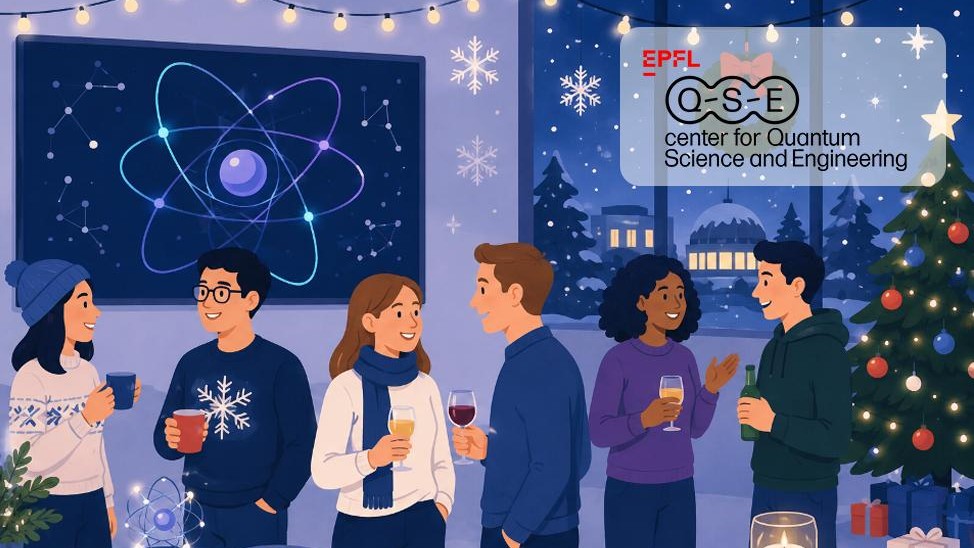
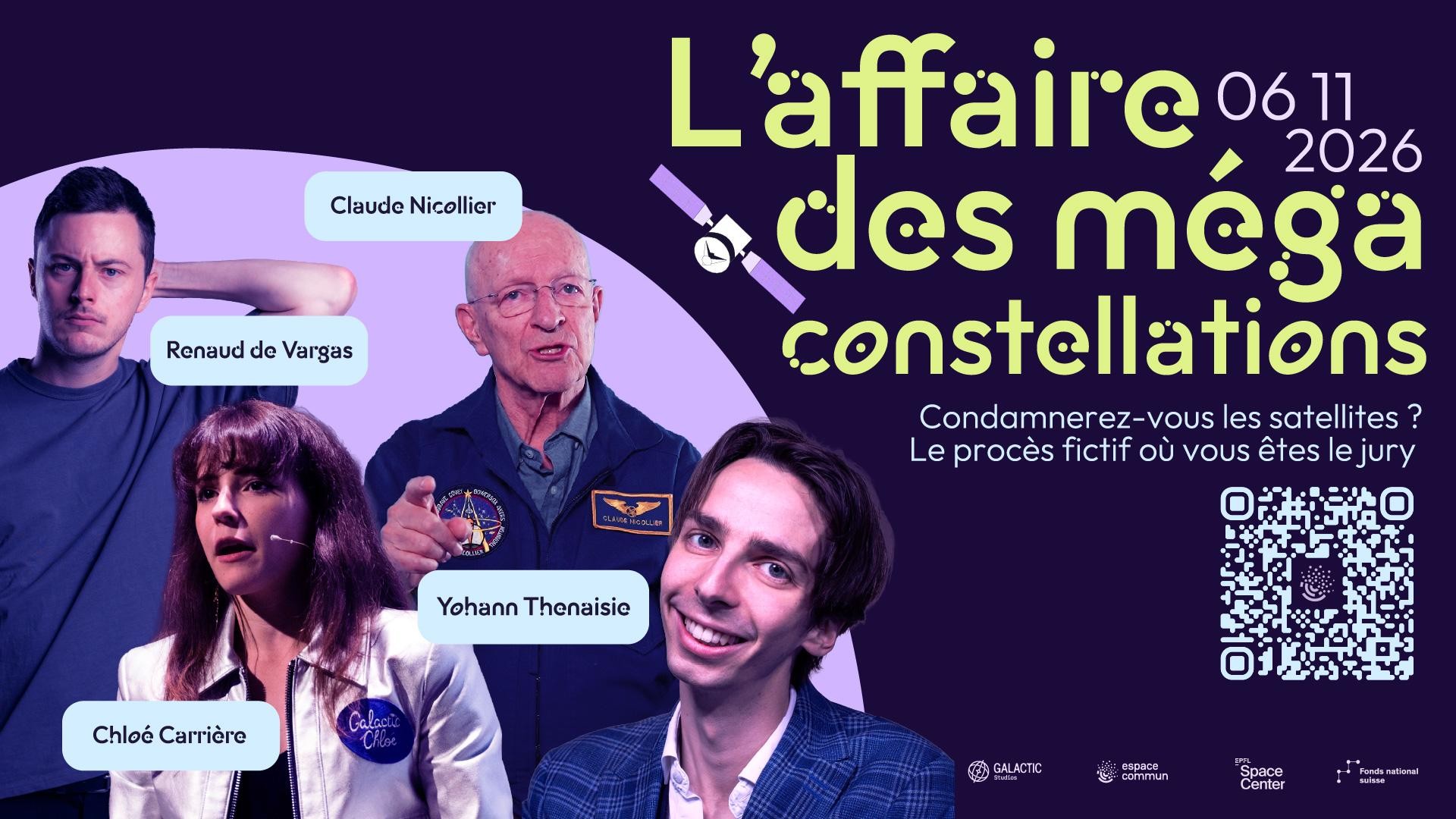
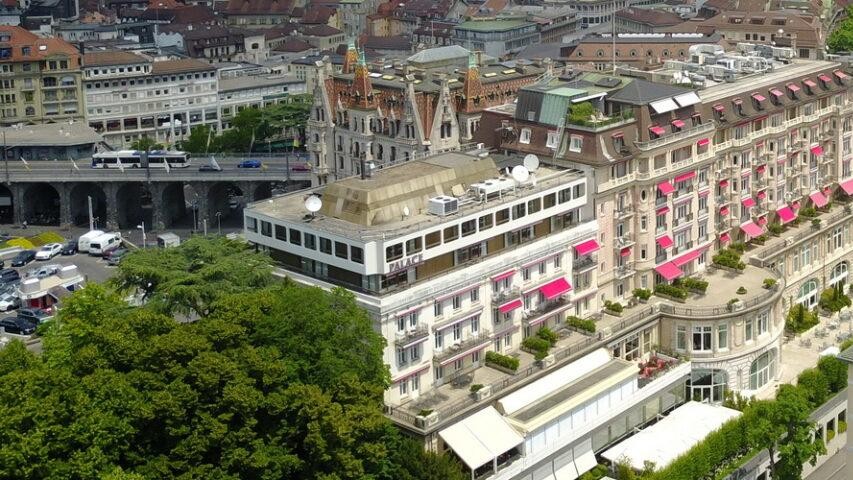
{ "count": 266, "next": "https://memento.epfl.ch/api/v1/events/?format=api&limit=10&offset=10&ordering=-event__url_place_and_room", "previous": null, "results": [ { "id": 71854, "title": "Coding Club for Girls in Zug", "slug": "coding-club-for-girls-in-zug-9", "event_url": "https://memento.epfl.ch/event/coding-club-for-girls-in-zug-9", "visual_url": "https://memento.epfl.ch/image/33176/200x112.jpg", "visual_large_url": "https://memento.epfl.ch/image/33176/720x405.jpg", "visual_maxsize_url": "https://memento.epfl.ch/image/33176/max-size.jpg", "lang": "en", "start_date": "2026-11-14", "end_date": "2026-11-28", "start_time": "09:30:00", "end_time": "16:00:00", "description": "<p>Eine App programmieren? Ein Computerspiel erfinden? Eine Animation gestalten?<br>\r\nWenn dich eines dieser Dinge interessiert, bist du hier am richtigen Ort! Tausche und teile deine Ideen, lerne zu programmieren und entdecke Informatikberufe.<br>\r\n<br>\r\nDie <a href=\"https://www.epfl.ch/education/education-and-science-outreach/de/jugendliche/coding-club/\">Coding Club for Girls</a> Workshops sind für Mädchen im Alter von 11 bis 15 Jahren und die Teilnahme ist kostenlos. Ab der Teilnahme an vier Workshops pro Jahr wird eine Teilnahmebestätigung ausgehändigt. <br>\r\n<br>\r\n<strong>Ort:</strong> Kantonsschule, Zug<br>\r\n<br>\r\n<strong>Datum und Zeit:</strong><br>\r\n<strong>14. November 2026 : 09:30 bis 12:00 oder 13:30 bis 16:00 Uhr // Schildkröte in Python<br>\r\n28. November 2026 : 09:30 bis 12:00 oder 13:30 bis 16:00 Uhr // Mit Computern chatten</strong><br>\r\n<br>\r\nDie Inhalte der Workshops sind untenstehend beschrieben.<br>\r\n<br>\r\n<strong>Bedingungen</strong>\r\n</p><ul>\r\n\t<li>Gratis</li>\r\n\t<li><a href=\"https://forms.gle/WJT3oz5RCnWXZsQq6\">Anmeldung unter diesem Link </a></li>\r\n\t<li><a href=\"https://www.epfl.ch/education/education-and-science-outreach/de/teilnahmebedingungen/\">Allgemeine Teilnahmebedingungen EPFL - SPS Aktivitäten</a> </li>\r\n</ul>\r\n<strong>Workshops:</strong><br>\r\n<br>\r\n<strong>Schildkröte in Python - 14. November 2026</strong><br>\r\nLerne die Python-Programmiersprache kennen die in vielen Bereichen angewendet wird. Dank der “Turtle” die in Python zur Verfügung steht, verwandelt Codierlinien in schöne Zeichnungen und dir somit erlaubt diese Sprache zu verstehen.<br>\r\n<br>\r\n<strong>Mit Computern chatten - 28. November 2026</strong><br>\r\nComputer haben ihre eigene Sprache. Dank diesem Workshop wirst du lernen, mit einem Mikro-Computer zu kommunizieren, damit er macht, was du möchtest! Hilf uns einfache Programme zu debuggen und ein Spiel für zwei Spielerinnen zu entwerfen. <br>\r\n<br>\r\n<a href=\"https://forms.gle/WJT3oz5RCnWXZsQq6\"><strong>Anmeldung</strong></a><br>\r\n ", "image_description": "", "creation_date": "2026-05-12T16:19:34", "last_modification_date": "2026-05-19T09:39:04", "link_label": "Anmeldung", "link_url": "https://forms.gle/WJT3oz5RCnWXZsQq6", "canceled": "False", "cancel_reason": "", "place_and_room": "Kantonsschule, Lüssiweg 24, 6302 Zug", "url_place_and_room": "https://www.zg.ch/behoerden/direktion-fur-bildung-und-kultur/ksz", "url_online_room": "", "spoken_languages": [ "https://memento.epfl.ch/api/v1/spoken_languages/3/?format=api" ], "speaker": "", "organizer": "<a href=\"https://www.epfl.ch/education/education-and-science-outreach/fr/index-fr-html/promotion-des-sciences/\">A</a><a href=\"https://www.epfl.ch/education/education-and-science-outreach/de/wissenschaftsfoerderung/\">bteilung für Wissenschaftsförderung (SPS) der EPFL</a> ", "contact": "[email protected] ", "is_internal": "False", "theme": "", "vulgarization": { "id": 1, "fr_label": "Tout public", "en_label": "General public" }, "registration": { "id": 1, "fr_label": "Sur inscription", "en_label": "Registration required" }, "keywords": "Coding Club for Girls, Deutsch, SPS, Jugendliche, Zug, ZG", "file": null, "icalendar_url": "https://memento.epfl.ch/event/export/120728/", "category": { "id": 18, "code": "YOUTHSCIENCE", "fr_label": "Activités scientifiques pour les jeunes", "en_label": "Sciences Activities for Youth", "activated": true }, "academic_calendar_category": null, "domains": [], "mementos": [ "https://memento.epfl.ch/api/v1/mementos/1/?format=api", "https://memento.epfl.ch/api/v1/mementos/6/?format=api", "https://memento.epfl.ch/api/v1/mementos/27/?format=api", "https://memento.epfl.ch/api/v1/mementos/170/?format=api" ] }, { "id": 72546, "title": "AI Sovereignty: Charting Switzerland's Path Amid US and Chinese AI Dominance", "slug": "ai-sovereignty-charting-switzerland-s-path-amid-us", "event_url": "https://memento.epfl.ch/event/ai-sovereignty-charting-switzerland-s-path-amid-us", "visual_url": "https://memento.epfl.ch/image/33796/200x112.jpg", "visual_large_url": "https://memento.epfl.ch/image/33796/720x405.jpg", "visual_maxsize_url": "https://memento.epfl.ch/image/33796/max-size.jpg", "lang": "en", "start_date": "2026-11-10", "end_date": "2026-11-10", "start_time": "09:30:00", "end_time": "18:30:00", "description": "<p>As the global AI landscape consolidates around US and Chinese dominance, every nation outside this duopoly faces an urgent question: how can countries retain meaningful control over a technology increasingly expected to shape their economic competitiveness, national security, and societal resilience? From the viability of sovereign cloud architectures and open-weight foundation models to the governance mechanisms needed to ensure AI systems reflect Swiss values and legal frameworks, this conference brings together industry leaders, researchers, legal experts, policymakers, and civil society actors to assess the concrete levers of AI sovereignty and work toward actionable recommendations for a Swiss sovereign AI strategy.<br>\r\n </p>", "image_description": "", "creation_date": "2026-09-09T09:11:31", "last_modification_date": "2026-09-09T09:29:19", "link_label": "Registration", "link_url": "https://cryptpad.c4dt.org/form/#/2/form/view/Oj6W6+IN0bU7CIOcib5YRtxeuP5DRn1Z0hrR8bviLZw/", "canceled": "False", "cancel_reason": "", "place_and_room": "Starling Hotel", "url_place_and_room": "https://www.starling-hotel-lausanne.com/contact-location", "url_online_room": "https://c4dt.epfl.ch/c4dt-conference-on-ai-sovereignty/", "spoken_languages": [ "https://memento.epfl.ch/api/v1/spoken_languages/2/?format=api" ], "speaker": "Antoine Bosselut (Professor, Natural Language Processing Laboratory NLP, EPFL) Rachid Guerraoui (Professor, Distributed Computing Laboratory DCL, EPFL) Robert West, (Professor, Data Science in AI Laboratory DLAB, EPFL) Carsten Maple (Professor of Cyber Systems Engineering, University of Warwick, UK) Lam Kwok Yan (Professor, Nanyang Technological University, Singapore) Céline Castets-Renard (Full Professor of Law FDEF University of Luxembourg / ANITI Chair / EU AI Expert Scientific Panel @AI Office European Commission AI Act); Cristian Canton (Associate Director, Barcelona Supercomputing Center, Spain) Yves Pitton (Chief Business Solutions Officer and Executive Board Member, ELCA) Wallyson Lemes de Oliveira, Chief AI Officer, Giotto.ai, Yaniv Benhamou (Professor of Digital Law, University of Geneva)", "organizer": "This event is organized by the Center for Digital Trust (C4DT), EPFL.", "contact": "Viollier David, [email protected]", "is_internal": "False", "theme": "", "vulgarization": { "id": 2, "fr_label": "Public averti", "en_label": "Informed public" }, "registration": { "id": 1, "fr_label": "Sur inscription", "en_label": "Registration required" }, "keywords": "Sovereignty, Governance, Competitiveness", "file": null, "icalendar_url": "https://memento.epfl.ch/event/export/121747/", "category": { "id": 1, "code": "CONF", "fr_label": "Conférences - Séminaires", "en_label": "Conferences - Seminars", "activated": true }, "academic_calendar_category": null, "domains": [], "mementos": [ "https://memento.epfl.ch/api/v1/mementos/1/?format=api", "https://memento.epfl.ch/api/v1/mementos/6/?format=api", "https://memento.epfl.ch/api/v1/mementos/145/?format=api", "https://memento.epfl.ch/api/v1/mementos/442/?format=api" ] }, { "id": 72547, "title": "AI Sovereignty: Charting Switzerland's Path Amid US and Chinese AI Dominance", "slug": "ai-sovereignty-charting-switzerland-s-path-amid--2", "event_url": "https://memento.epfl.ch/event/ai-sovereignty-charting-switzerland-s-path-amid--2", "visual_url": "https://memento.epfl.ch/image/33796/200x112.jpg", "visual_large_url": "https://memento.epfl.ch/image/33796/720x405.jpg", "visual_maxsize_url": "https://memento.epfl.ch/image/33796/max-size.jpg", "lang": "en", "start_date": "2026-11-11", "end_date": "2026-11-11", "start_time": "09:30:00", "end_time": "18:30:00", "description": "<p>As the global AI landscape consolidates around US and Chinese dominance, every nation outside this duopoly faces an urgent question: how can countries retain meaningful control over a technology increasingly expected to shape their economic competitiveness, national security, and societal resilience? From the viability of sovereign cloud architectures and open-weight foundation models to the governance mechanisms needed to ensure AI systems reflect Swiss values and legal frameworks, this conference brings together industry leaders, researchers, legal experts, policymakers, and civil society actors to assess the concrete levers of AI sovereignty and work toward actionable recommendations for a Swiss sovereign AI strategy.<br>\r\n </p>", "image_description": "", "creation_date": "2026-09-09T09:11:31", "last_modification_date": "2026-09-09T09:11:31", "link_label": "Registration", "link_url": "https://cryptpad.c4dt.org/form/#/2/form/view/Oj6W6+IN0bU7CIOcib5YRtxeuP5DRn1Z0hrR8bviLZw/", "canceled": "True", "cancel_reason": "", "place_and_room": "Starling Hotel", "url_place_and_room": "https://www.starling-hotel-lausanne.com/contact-location", "url_online_room": "https://c4dt.epfl.ch/c4dt-conference-on-ai-sovereignty/", "spoken_languages": [ "https://memento.epfl.ch/api/v1/spoken_languages/2/?format=api" ], "speaker": "Antoine Bosselut (Professor, Natural Language Processing Laboratory NLP, EPFL) Rachid Guerraoui (Professor, Distributed Computing Laboratory DCL, EPFL) Robert West, (Professor, Data Science in AI Laboratory DLAB, EPFL) Carsten Maple (Professor of Cyber Systems Engineering, University of Warwick, UK) Lam Kwok Yan (Professor, Nanyang Technological University, Singapore) Céline Castets-Renard (Full Professor of Law FDEF University of Luxembourg / ANITI Chair / EU AI Expert Scientific Panel @AI Office European Commission AI Act); Cristian Canton (Associate Director, Barcelona Supercomputing Center, Spain) Yves Pitton (Chief Business Solutions Officer and Executive Board Member, ELCA) Wallyson Lemes de Oliveira, Chief AI Officer, Giotto.ai, Yaniv Benhamou (Professor of Digital Law, University of Geneva)", "organizer": "This event is organized by the Center for Digital Trust (C4DT), EPFL.", "contact": "Viollier David, [email protected]", "is_internal": "False", "theme": "", "vulgarization": { "id": 2, "fr_label": "Public averti", "en_label": "Informed public" }, "registration": { "id": 1, "fr_label": "Sur inscription", "en_label": "Registration required" }, "keywords": "Sovereignty, Governance, Competitiveness", "file": null, "icalendar_url": "https://memento.epfl.ch/event/export/121748/", "category": { "id": 1, "code": "CONF", "fr_label": "Conférences - Séminaires", "en_label": "Conferences - Seminars", "activated": true }, "academic_calendar_category": null, "domains": [], "mementos": [ "https://memento.epfl.ch/api/v1/mementos/1/?format=api", "https://memento.epfl.ch/api/v1/mementos/6/?format=api", "https://memento.epfl.ch/api/v1/mementos/145/?format=api", "https://memento.epfl.ch/api/v1/mementos/442/?format=api" ] }, { "id": 72623, "title": "QSE Center Winter Apéro", "slug": "qse-center-winter-apero", "event_url": "https://memento.epfl.ch/event/qse-center-winter-apero", "visual_url": "https://memento.epfl.ch/image/33868/200x112.jpg", "visual_large_url": "https://memento.epfl.ch/image/33868/720x405.jpg", "visual_maxsize_url": "https://memento.epfl.ch/image/33868/max-size.jpg", "lang": "en", "start_date": "2026-12-01", "end_date": "2026-12-01", "start_time": "16:00:00", "end_time": "19:30:00", "description": "<p>An opportunity to celebrate the end of the year and share quantum research at EPFL with one another and the larger community. The event will include short lectures on topics in quantum for the general community, optional lab visits, and food and drinks!<br>\r\n<br>\r\n<strong>Full program and registration available in October</strong></p>", "image_description": "", "creation_date": "2026-09-18T13:38:13", "last_modification_date": "2026-09-18T13:43:46", "link_label": "", "link_url": "", "canceled": "False", "cancel_reason": "", "place_and_room": "Starling Hotel", "url_place_and_room": "https://www.starling-hotel-lausanne.com", "url_online_room": "", "spoken_languages": [], "speaker": "", "organizer": "QSE Center", "contact": "[email protected] ", "is_internal": "False", "theme": "", "vulgarization": { "id": 1, "fr_label": "Tout public", "en_label": "General public" }, "registration": { "id": 3, "fr_label": "Entrée libre", "en_label": "Free" }, "keywords": "", "file": null, "icalendar_url": "https://memento.epfl.ch/event/export/121863/", "category": { "id": 1, "code": "CONF", "fr_label": "Conférences - Séminaires", "en_label": "Conferences - Seminars", "activated": true }, "academic_calendar_category": null, "domains": [], "mementos": [ "https://memento.epfl.ch/api/v1/mementos/1/?format=api", "https://memento.epfl.ch/api/v1/mementos/2/?format=api", "https://memento.epfl.ch/api/v1/mementos/3/?format=api", "https://memento.epfl.ch/api/v1/mementos/5/?format=api", "https://memento.epfl.ch/api/v1/mementos/6/?format=api", "https://memento.epfl.ch/api/v1/mementos/8/?format=api", "https://memento.epfl.ch/api/v1/mementos/145/?format=api", "https://memento.epfl.ch/api/v1/mementos/191/?format=api", "https://memento.epfl.ch/api/v1/mementos/318/?format=api", "https://memento.epfl.ch/api/v1/mementos/389/?format=api", "https://memento.epfl.ch/api/v1/mementos/442/?format=api" ] }, { "id": 71805, "title": "Coding Club for Girls in St. Gallen", "slug": "coding-club-for-girls-in-st-gallen-8", "event_url": "https://memento.epfl.ch/event/coding-club-for-girls-in-st-gallen-8", "visual_url": "https://memento.epfl.ch/image/33173/200x112.jpg", "visual_large_url": "https://memento.epfl.ch/image/33173/720x405.jpg", "visual_maxsize_url": "https://memento.epfl.ch/image/33173/max-size.jpg", "lang": "en", "start_date": "2026-11-18", "end_date": "2026-11-25", "start_time": "13:30:00", "end_time": "16:00:00", "description": "<p>Eine App programmieren? Ein Computerspiel erfinden? Eine Animation gestalten?<br>\r\nWenn dich eines dieser Dinge interessiert, bist du hier am richtigen Ort! Tausche und teile deine Ideen, lerne zu programmieren und entdecke Informatikberufe.<br>\r\n<br>\r\nDie <a href=\"https://www.epfl.ch/education/education-and-science-outreach/de/jugendliche/coding-club/\">Coding Club for Girls</a> Workshops sind für Mädchen im Alter von 11 bis 15 Jahren und die Teilnahme ist kostenlos. Ab der Teilnahme an vier Workshops pro Jahr wird eine Teilnahmebestätigung ausgehändigt. <br>\r\n<br>\r\n<strong>Ort:</strong> Smartfeld, St. Gallen<br>\r\n<br>\r\n<strong>Datum und Zeit:</strong><br>\r\n<strong>Mittwoch, 18. November 2026: 13:30 bis 16:00 Uhr // Hello 3D World</strong><br>\r\n<strong>Mittwoch, 25. November 2026 : 13:30 bis 16:00 Uhr // Webdesignerin</strong><br>\r\n<br>\r\nDie Inhalte der Workshops sind untenstehend beschrieben.<br>\r\n<br>\r\n<strong>Bedingungen</strong>\r\n</p><ul>\r\n\t<li>Gratis</li>\r\n\t<li><a href=\"https://forms.gle/Bk4vieCLDPepMSL37\">Anmeldung unter diesem Link </a></li>\r\n\t<li><a href=\"https://www.epfl.ch/education/education-and-science-outreach/de/teilnahmebedingungen/\">Allgemeine Teilnahmebedingungen EPFL - SPS Aktivitäten</a> </li>\r\n</ul>\r\n<strong>Workshops:<br>\r\nHello 3D World - Mittwoch, 18. November 2026</strong><br>\r\nWie denkst du wurden die Figuren und Kulissen in den Filmen Shrek, Cars, Ice Age oder Kung Fu Panda gestaltet? Beim Entwerfen und Animieren von 3D-Objekten kannst Du wie im richtigen Animationsstudio gleichzeitig in die Rolle einer Künstlerin und einer Informatikerin schlüpfen. Du wirst dreidimensionale Objekte rund um das Thema Wald gestalten und in einem zweiten Schritt deiner Fantasie freien Lauf lassen und deine eigenen 3D-Objekte entwerfen!<br>\r\n<br>\r\n<strong>Webdesignerin - Mittwoch, 25. November 2026</strong><br>\r\nEntdecke den Hintergrund einer Webseite und entwerfe deine eigene von A bis Z mit derselben Sprache wie die Profis! An diesem Workshop wirst du mit HTML vertraut und wirst verstehen, wie Webseiten gestaltet wurden und wie weit du selbst gehen kannst.<br>\r\n<br>\r\n<a href=\"https://forms.gle/Bk4vieCLDPepMSL37\"><strong>Anmeldung</strong></a><br>\r\n ", "image_description": "", "creation_date": "2026-05-05T13:35:21", "last_modification_date": "2026-05-19T08:53:13", "link_label": "Anmeldung", "link_url": "https://forms.gle/Bk4vieCLDPepMSL37", "canceled": "False", "cancel_reason": "", "place_and_room": "Smartfeld, St. Gallen", "url_place_and_room": "https://www.smartfeld.ch/kontakt/", "url_online_room": "", "spoken_languages": [ "https://memento.epfl.ch/api/v1/spoken_languages/3/?format=api" ], "speaker": "", "organizer": "<a href=\"https://www.epfl.ch/education/education-and-science-outreach/fr/index-fr-html/promotion-des-sciences/\">A</a><a href=\"https://www.epfl.ch/education/education-and-science-outreach/de/wissenschaftsfoerderung/\">bteilung für Wissenschaftsförderung (SPS) der EPFL</a> ", "contact": "<a href=\"mailto:[email protected]\">[email protected]</a>", "is_internal": "False", "theme": "", "vulgarization": { "id": 1, "fr_label": "Tout public", "en_label": "General public" }, "registration": { "id": 1, "fr_label": "Sur inscription", "en_label": "Registration required" }, "keywords": "Coding Club for Girls, Deutsch, SPS, Jugendliche, St. Gallen, SG", "file": null, "icalendar_url": "https://memento.epfl.ch/event/export/120659/", "category": { "id": 18, "code": "YOUTHSCIENCE", "fr_label": "Activités scientifiques pour les jeunes", "en_label": "Sciences Activities for Youth", "activated": true }, "academic_calendar_category": null, "domains": [], "mementos": [ "https://memento.epfl.ch/api/v1/mementos/1/?format=api", "https://memento.epfl.ch/api/v1/mementos/6/?format=api", "https://memento.epfl.ch/api/v1/mementos/27/?format=api", "https://memento.epfl.ch/api/v1/mementos/170/?format=api" ] }, { "id": 72451, "title": "L'Affaire des Méga-constellations", "slug": "l-affaire-des-mega-constellations", "event_url": "https://memento.epfl.ch/event/l-affaire-des-mega-constellations", "visual_url": "https://memento.epfl.ch/image/33699/200x112.jpg", "visual_large_url": "https://memento.epfl.ch/image/33699/720x405.jpg", "visual_maxsize_url": "https://memento.epfl.ch/image/33699/max-size.jpg", "lang": "en", "start_date": "2026-11-06", "end_date": "2026-11-06", "start_time": "20:00:00", "end_time": "22:00:00", "description": "<strong>L'espace s'invite au tribunal! Les satellites sauveront-ils le monde ou le rendront-ils invivable? C'est à VOUS d'en décider.</strong><br>\r\n <br>\r\nRejoignez le public qui officiera comme jurés de « L'Affaire des Méga-constellations », un tribunal fictif et participatif où l'accusé n'est autre qu'un concept: les méga-constellations de satellites. L’événement mêlera humour, improvisation, vulgarisation scientifique et participation citoyenne, autour d'une question centrale : les satellites sauveront-ils le monde… ou le rendront-ils invivable?<br>\r\n <br>\r\nAvec <a href=\"https://www.instagram.com/renauddevargas/?hl=fr\">Renaud de Vargas</a> dans le rôle du Juge impartial, Chloé Carrière à la défense, Yohann Thenaisie à l'accusation, des expert-e-s de la durabilité et du spatial pour témoins et l’astronaute Claude Nicollier en guest star cosmique !<br>\r\nMise en scène: Claire Nicolas / Musique: Loris Gomboso<br>\r\n <br>\r\nPour en savoir plus sur le projet, qui est à la base de cet événement et initié par l'<a href=\"https://space.epfl.ch/\">EPFL Space Center</a> et <a href=\"https://galactic-studios.ch/\">Galactic Studios</a>, avec le soutien du FNS: <a href=\"https://espace-commun.ch/\">Espace Commun</a>", "image_description": "Bannière L'Affaire des Méga-constellations", "creation_date": "2026-08-26T16:05:13", "last_modification_date": "2026-09-03T14:20:39", "link_label": "Billetterie", "link_url": "https://infomaniak.events/fr-ch/shop/espace-commun-K5SBZADWWJ", "canceled": "False", "cancel_reason": "", "place_and_room": "Casino de Montbenon - salle Paderewski, Lausanne", "url_place_and_room": "https://www.lausanne.ch/vie-pratique/loisirs/salles-et-refuges/casino-montbenon", "url_online_room": "", "spoken_languages": [ "https://memento.epfl.ch/api/v1/spoken_languages/1/?format=api" ], "speaker": "", "organizer": "<a href=\"https://space.epfl.ch/\">EPFL Space Center</a>, <a href=\"https://galactic-studios.ch/\">Galactic Studios</a>", "contact": "Lucie Ryser", "is_internal": "False", "theme": "", "vulgarization": { "id": 1, "fr_label": "Tout public", "en_label": "General public" }, "registration": { "id": 1, "fr_label": "Sur inscription", "en_label": "Registration required" }, "keywords": "mega-constellation, satellite, durabilité spatiale", "file": null, "icalendar_url": "https://memento.epfl.ch/event/export/121600/", "category": { "id": 9, "code": "MANIF", "fr_label": "Événements festifs et culturels", "en_label": "Cultural events", "activated": true }, "academic_calendar_category": null, "domains": [], "mementos": [ "https://memento.epfl.ch/api/v1/mementos/1/?format=api", "https://memento.epfl.ch/api/v1/mementos/3/?format=api", "https://memento.epfl.ch/api/v1/mementos/5/?format=api", "https://memento.epfl.ch/api/v1/mementos/6/?format=api", "https://memento.epfl.ch/api/v1/mementos/8/?format=api", "https://memento.epfl.ch/api/v1/mementos/21/?format=api", "https://memento.epfl.ch/api/v1/mementos/22/?format=api", "https://memento.epfl.ch/api/v1/mementos/79/?format=api", "https://memento.epfl.ch/api/v1/mementos/145/?format=api", "https://memento.epfl.ch/api/v1/mementos/179/?format=api", "https://memento.epfl.ch/api/v1/mementos/442/?format=api" ] }, { "id": 72271, "title": "EcoCloud Annual Event", "slug": "ecocloud-annual-event-8", "event_url": "https://memento.epfl.ch/event/ecocloud-annual-event-8", "visual_url": "https://memento.epfl.ch/image/33542/200x112.jpg", "visual_large_url": "https://memento.epfl.ch/image/33542/720x405.jpg", "visual_maxsize_url": "https://memento.epfl.ch/image/33542/max-size.jpg", "lang": "en", "start_date": "2026-10-08", "end_date": "2026-10-08", "start_time": "08:15:00", "end_time": "18:30:00", "description": "<p>The EPFL EcoCloud Center is proud to invite you to the <a data-auth=\"NotApplicable\" data-linkindex=\"2\" href=\"https://ecocloud.epfl.ch/ecocloud-annual-event-program/\" title=\"https://ecocloud.epfl.ch/ecocloud-annual-event-program/\">Annual Event 2026</a>.<br>\r\n<br>\r\nOnce again we will be welcoming you to <a data-auth=\"NotApplicable\" data-linkindex=\"3\" href=\"https://www.lausanne-palace.ch/en/hotel/access/\" title=\"https://www.lausanne-palace.ch/en/hotel/access/\">Lausanne Palace</a>.<br>\r\n<br>\r\nThe Event will feature a keynote presentation:\r\n</p><ul>\r\n\t<li>Prof. Ayse K. Coskun Mitra (Boston University):<br>\r\n\t<a data-auth=\"NotApplicable\" data-linkindex=\"4\" href=\"https://ecocloud.epfl.ch/mcevents/keynote-ayse/\" title=\"https://ecocloud.epfl.ch/mcevents/keynote-ayse/\">AI Data Centers as Flexible Loads. Rethinking Power and Performance</a></li>\r\n</ul>\r\nThere will then be the three following sessions:\r\n\r\n<ul>\r\n\t<li>Hardware and software sustainable co-design</li>\r\n\t<li>Technologies for sustainable systems</li>\r\n\t<li>EcoCloud Experimental Data Center Facility</li>\r\n</ul>\r\nThe day will conclude with a poster session and a networking event.<br>\r\n<br>\r\nUseful links:<br>\r\n<a href=\"https://ecocloud.epfl.ch/ecocloud-annual-event-program/\">Program</a><br>\r\n<a href=\"https://indico.epfl.ch/event/28/registrations/19/\">Registration</a>", "image_description": "", "creation_date": "2026-07-24T08:46:12", "last_modification_date": "2026-07-24T08:46:12", "link_label": "Official Page", "link_url": "https://ecocloud.epfl.ch/event/ecocloud-annual-event/", "canceled": "False", "cancel_reason": "", "place_and_room": "Lausanne Palace", "url_place_and_room": "https://www.lausanne-palace.ch/en/welcome-page", "url_online_room": "", "spoken_languages": [ "https://memento.epfl.ch/api/v1/spoken_languages/2/?format=api" ], "speaker": "Prof. Giovanni De Micheli, Prof. Ayse K. Coskun (Boston University), Dr. Javier Picorel (Huawei), Dr. William Simon (IBM, alumnus IEL/ESL), Dr. Eugene van Rooyen (Eaton), Dr. Dimitri Voisin (BladeSENSE), Maurizio Miozza (GemaTEG), Frank Michaud (Cisco), Dr. Xavier Ouvrard (EcoCloud).", "organizer": "<a href=\"mailto:[email protected]?subject=EcoCloud%20Annual%20Event%202026\">Valérie Locca</a>", "contact": "<a href=\"mailto:[email protected]?subject=EcoCloud%20Annual%20Event%202026\">Valérie Locca</a>", "is_internal": "False", "theme": "", "vulgarization": { "id": 2, "fr_label": "Public averti", "en_label": "Informed public" }, "registration": { "id": 1, "fr_label": "Sur inscription", "en_label": "Registration required" }, "keywords": "", "file": null, "icalendar_url": "https://memento.epfl.ch/event/export/121321/", "category": { "id": 1, "code": "CONF", "fr_label": "Conférences - Séminaires", "en_label": "Conferences - Seminars", "activated": true }, "academic_calendar_category": null, "domains": [], "mementos": [ "https://memento.epfl.ch/api/v1/mementos/1/?format=api", "https://memento.epfl.ch/api/v1/mementos/6/?format=api", "https://memento.epfl.ch/api/v1/mementos/8/?format=api", "https://memento.epfl.ch/api/v1/mementos/247/?format=api", "https://memento.epfl.ch/api/v1/mementos/345/?format=api", "https://memento.epfl.ch/api/v1/mementos/416/?format=api" ] }, { "id": 70956, "title": "G protein-coupled receptors functional dynamics revealed by experimental and computational structural data", "slug": "g-protein-coupled-receptors-functional-dynamics-re", "event_url": "https://memento.epfl.ch/event/g-protein-coupled-receptors-functional-dynamics-re", "visual_url": "https://memento.epfl.ch/image/32345/200x112.jpg", "visual_large_url": "https://memento.epfl.ch/image/32345/720x405.jpg", "visual_maxsize_url": "https://memento.epfl.ch/image/32345/max-size.jpg", "lang": "en", "start_date": "2026-10-07", "end_date": "2026-10-09", "start_time": null, "end_time": null, "description": "<p>You can apply to participate and find all the relevant information (speakers, abstracts, program,...) on the event website: <a href=\"https://www.cecam.org/workshop-details/g-protein-coupled-receptors-functional-dynamics-revealed-by-experimental-and-computational-structural-data-1488\">https://www.cecam.org/workshop-details/g-protein-coupled-receptors-functional-dynamics-revealed-by-experimental-and-computational-structural-data-1488</a>.<br>\r\n<br>\r\nRegistration is required to attend the full event, take part in the social activities and present a poster at the poster session (if any). However, the EPFL community is welcome to attend specific lectures without registration if the topic is of interest to their research. Do not hesitate to contact the <a href=\"mailto:[email protected]\">CECAM Event Manager</a> if you have any question.<br>\r\n<br>\r\n<strong>Description</strong><br>\r\n<br>\r\nG protein-coupled receptors (GPCRs) represent a vast and diverse class of transmembrane proteins that orchestrate a wide range of physiological processes by responding to both endogenous and exogenous ligands [1,2]. These receptors are essential to critical functions such as metabolism, immune regulation, neuronal signaling, and sensory perception - including vision and olfaction. Due to their physiological relevance and membrane accessibility, GPCRs are the targets of approximately 34% of all prescribed medications, accounting for nearly 27% of the global pharmaceutical market [3]. <br>\r\nDespite their pharmaceutical importance, key aspects of GPCR function remain elusive. The canonical activation model posits that agonist binding to the extracellular orthosteric site triggers allosteric changes - most notably, the outward displacement of transmembrane helices 5 (TM5) and 6 (TM6) on the intracellular side - ultimately leading to receptor activation [2-4]. However, recent evidence suggests a more nuanced mechanism. In several GPCRs, activation appears to involve cooperative engagement between the agonist and the G protein. For example, the G protein may disrupt an \"inactivating ionic lock\" - a salt bridge between TM3 and TM6 - while the agonist stabilizes the active conformation. In some receptors, this is complemented by the formation of an “activating ionic lock” between TM5 and TM6 [5-8]. These dual contributions are considered thermodynamically essential for full activation [7].<br>\r\nAdding further complexity, GPCR activity is regulated by conformational microswitches and finely tuned intra-protein interaction networks. These dynamic rearrangements are difficult to capture and often elude direct correlation with functional outcomes. Moreover, allosteric ligands - which bind sites distinct from the orthosteric pocket - are being increasingly identified [9-12], along with small molecules capable of biased signaling, i.e., preferential activation of specific intracellular pathways [11-13, 16, 17]. These findings reveal a rich and underexplored conformational landscape that governs GPCR signaling. In addition, native membrane components—such as lipids and interacting proteins, including GPCR oligomers—are known to significantly modulate receptor function [11, 18-22].<br>\r\nTo disentangle these intricacies, computational modeling has become indispensable, offering atomistic insight into GPCR conformational dynamics and mechanistic understanding [1-2, 7, 11, 14, 16–21, 23]. Nevertheless, key questions remain - particularly regarding the structural basis of biased signaling, strategies for leveraging allosteric networks in pharmacology, and the modulatory role of the lipid environment. Addressing these gaps is crucial for both fundamental biology and the rational design of next-generation GPCR-targeting drugs with improved selectivity and safety profiles. <br>\r\nThese scientific challenges form the foundation of our upcoming workshop, which will focus on the latest experimental and computational approaches for studying the functional dynamics of GPCRs. Given the profound health, economic, and societal implications of modulating these receptors with precision, we aim to strengthen the interdisciplinary nature of the event by increasing the representation of experimental research and integrating cutting-edge artificial intelligence applications into the program.<br>\r\nBuilding upon the success of the 2022 and 2024 editions - which led to new collaborations and a landmark publication in <em>Nature Reviews Drug Discovery</em> [24] - our goal is to further enhance communication and collaboration between experimentalists and theoreticians. The workshop will serve as a reference point for young scientists and students, offering a platform to interact with leading international experts. We are confident that this initiative will foster insightful discussions and contribute meaningfully to advancing the field of GPCR pharmacology.<br>\r\n<br>\r\n<strong>References</strong><br>\r\n<br>\r\n<a href=\"https://doi.org/10.1038/nrd.2017.229\" target=\"_blank\">[1] J. Smith, R. Lefkowitz, S. Rajagopal, Nat. Rev. Drug. Discov., <strong>17</strong>, 243-260 (2018)</a><br>\r\n<a href=\"https://doi.org/10.1038/s41573-024-01083-3\" target=\"_blank\">[2] P. Conflitti, E. Lyman, M. Sansom, P. Hildebrand, H. Gutiérrez-de-Terán, P. Carloni, T. Ansell, S. Yuan, P. Barth, A. Robinson, C. Tate, D. Gloriam, S. Grzesiek, M. Eddy, S. Prosser, V. Limongelli, Nat. Rev. Drug. Discov., <strong>24</strong>, 251-275 (2025)</a><br>\r\n<a href=\"https://doi.org/10.1038/s41589-024-01682-6\" target=\"_blank\">[3] L. Picard, A. Orazietti, D. Tran, A. Tucs, S. Hagimoto, Z. Qi, S. Huang, K. Tsuda, A. Kitao, A. Sljoka, R. Prosser, Nat. Chem. Biol., <strong>21</strong>, 71-79 (2024)</a><br>\r\n<a href=\"https://doi.org/10.1016/j.drudis.2020.10.006\" target=\"_blank\">[4] B. Huang, C. St. Onge, H. Ma, Y. Zhang, Drug Discovery Today, <strong>26</strong>, 189-199 (2021)</a><br>\r\n<a href=\"https://doi.org/10.1038/s41467-023-42082-z\" target=\"_blank\">[5] D. Di Marino, P. Conflitti, S. Motta, V. Limongelli, Nat. Commun., <strong>14</strong>, 6439 (2023)</a><br>\r\n<a href=\"https://doi.org/10.1016/j.ceb.2018.10.007\" target=\"_blank\">[6] G. Milligan, R. Ward, S. Marsango, Current Opinion in Cell Biology, <strong>57</strong>, 40-47 (2019)</a><br>\r\n<a href=\"https://doi.org/10.7554/elife.73901\" target=\"_blank\">[7] S. Huang, O. Almurad, R. Pejana, Z. Morrison, A. Pandey, L. Picard, M. Nitz, A. Sljoka, R. Prosser, eLife, <strong>11</strong>, (2022)</a><br>\r\n<a href=\"https://doi.org/10.1146/annurev-pharmtox-010919-023411\" target=\"_blank\">[8] A. Duncan, W. Song, M. Sansom, Annu. Rev. Pharmacol. Toxicol., <strong>60</strong>, 31-50 (2020)</a><br>\r\n<a href=\"https://doi.org/10.1038/s41467-025-60003-0\" target=\"_blank\">[9] A. Morales-Pastor, T. Miljuš, M. Dieguez-Eceolaza, T. Stępniewski, V. Ledesma-Martin, F. Heydenreich, T. Flock, B. Plouffe, C. Le Gouill, J. Duchaine, D. Sykes, C. Nicholson, E. Koers, W. Guba, A. Rufer, U. Grether, M. Bouvier, D. Veprintsev, J. Selent, Nat. Commun., <strong>16</strong>, 5265 (2025)</a><br>\r\n<a href=\"https://doi.org/10.1038/s41586-022-05588-y\" target=\"_blank\">[10] A. Faouzi, H. Wang, S. Zaidi, J. DiBerto, T. Che, Q. Qu, M. Robertson, M. Madasu, A. El Daibani, B. Varga, T. Zhang, C. Ruiz, S. Liu, J. Xu, K. Appourchaux, S. Slocum, S. Eans, M. Cameron, R. Al-Hasani, Y. Pan, B. Roth, J. McLaughlin, G. Skiniotis, V. Katritch, B. Kobilka, S. Majumdar, Nature, <strong>613</strong>, 767-774 (2022)</a><br>\r\n<a href=\"https://doi.org/10.1038/s41467-022-31652-2\" target=\"_blank\">[11] M. Wall, E. Hill, R. Huckstepp, K. Barkan, G. Deganutti, M. Leuenberger, B. Preti, I. Winfield, S. Carvalho, A. Suchankova, H. Wei, D. Safitri, X. Huang, W. Imlach, C. La Mache, E. Dean, C. Hume, S. Hayward, J. Oliver, F. Zhao, D. Spanswick, C. Reynolds, M. Lochner, G. Ladds, B. Frenguelli, Nat. Commun., <strong>13</strong>, 4150 (2022)</a><br>\r\n<a href=\"https://doi.org/10.1038/s41580-018-0049-3\" target=\"_blank\">[12] D. Wootten, A. Christopoulos, M. Marti-Solano, M. Babu, P. Sexton, Nat. Rev. Mol. Cell. Biol., <strong>19</strong>, 638-653 (2018)</a><br>\r\n<a href=\"https://doi.org/10.1038/s41594-017-0011-7\" target=\"_blank\">[13] D. Hilger, M. Masureel, B. Kobilka, Nat. Struct. Mol. Biol., <strong>25</strong>, 4-12 (2018)</a><br>\r\n<a href=\"https://doi.org/10.1038/s41467-025-57034-y\" target=\"_blank\">[14] D. Aranda-García, T. Stepniewski, M. Torrens-Fontanals, A. García-Recio, M. Lopez-Balastegui, B. Medel-Lacruz, A. Morales-Pastor, A. Peralta-García, M. Dieguez-Eceolaza, D. Sotillo-Nuñez, T. Ding, M. Drabek, C. Jacquemard, J. Jakowiecki, W. Jespers, M. Jiménez-Rosés, V. Jun-Yu-Lim, A. Nicoli, U. Orzel, A. Shahraki, J. Tiemann, V. Ledesma-Martin, F. Nerín-Fonz, S. Suárez-Dou, O. Canal, G. Pándy-Szekeres, J. Mao, D. Gloriam, E. Kellenberger, D. Latek, R. Guixà-González, H. Gutiérrez-de-Terán, I. Tikhonova, P. Hildebrand, M. Filizola, M. Babu, A. Di Pizio, S. Filipek, P. Kolb, A. Cordomi, T. Giorgino, M. Marti-Solano, J. Selent, Nat. Commun., <strong>16</strong>, 2020 (2025)</a><br>\r\n<a href=\"https://doi.org/10.1038/s41586-018-0259-z\" target=\"_blank\">[15] D. Thal, A. Glukhova, P. Sexton, A. Christopoulos, Nature, <strong>559</strong>, 45-53 (2018)</a><br>\r\n<a href=\"https://doi.org/10.1016/j.tips.2020.12.005\" target=\"_blank\">[16] L. Slosky, M. Caron, L. Barak, Trends in Pharmacological Sciences, <strong>42</strong>, 283-299 (2021)</a><br>\r\n<a href=\"https://doi.org/10.1016/j.apsb.2023.07.020\" target=\"_blank\">[17] C. Zhu, X. Lan, Z. Wei, J. Yu, J. Zhang, Acta Pharmaceutica Sinica B, <strong>14</strong>, 67-86 (2024)</a><br>\r\n<a href=\"https://doi.org/10.1016/j.chempr.2024.08.004\" target=\"_blank\">[18] V. D’Amore, P. Conflitti, L. Marinelli, V. Limongelli, Chem, <strong>10</strong>, 3678-3698 (2024)</a><br>\r\n<a href=\"https://doi.org/10.1038/s41557-023-01238-6\" target=\"_blank\">[19] A. Mafi, S. Kim, W. Goddard, Nat. Chem., <strong>15</strong>, 1127-1137 (2023)</a><br>\r\n<a href=\"https://doi.org/10.1038/s41594-024-01334-2\" target=\"_blank\">[20] H. Batebi, G. Pérez-Hernández, S. Rahman, B. Lan, A. Kamprad, M. Shi, D. Speck, J. Tiemann, R. Guixà-González, F. Reinhardt, P. Stadler, M. Papasergi-Scott, G. Skiniotis, P. Scheerer, B. Kobilka, J. Mathiesen, X. Liu, P. Hildebrand, Nat. Struct. Mol. Biol., <strong>31</strong>, 1692-1701 (2024)</a><br>\r\n<a href=\"https://doi.org/10.1016/j.cell.2015.04.043\" target=\"_blank\">[21] A. Manglik, T. Kim, M. Masureel, C. Altenbach, Z. Yang, D. Hilger, M. Lerch, T. Kobilka, F. Thian, W. Hubbell, R. Prosser, B. Kobilka, Cell, <strong>161</strong>, 1101-1111 (2015)</a><br>\r\n<a href=\"https://doi.org/10.1016/j.cell.2020.03.003\" target=\"_blank\">[22] M. Congreve, C. de Graaf, N. Swain, C. Tate, Cell, <strong>181</strong>, 81-91 (2020)</a><br>\r\n<a href=\"https://doi.org/10.1038/s41573-025-01139-y\" target=\"_blank\">[23] J. Lorente, A. Sokolov, G. Ferguson, H. Schiöth, A. Hauser, D. Gloriam, Nat. Rev. Drug. Discov., <strong>24</strong>, 458-479 (2025)</a><br>\r\n<a href=\"https://doi.org/10.1111/bph.16495\" target=\"_blank\">[24] M. Lopez‐Balastegui, T. Stepniewski, M. Kogut‐Günthel, A. Di Pizio, M. Rosenkilde, J. Mao, J. Selent, British. J. Pharmacology., <strong>182</strong>, 3211-3224 (2024)</a>\r\n</p><div class=\"active tab-pane\"> </div>", "image_description": "", "creation_date": "2026-01-26T16:00:31", "last_modification_date": "2026-01-26T16:45:08", "link_label": "G protein-coupled receptors functional dynamics revealed by experimental and computational structura", "link_url": "https://www.cecam.org/workshop-details/g-protein-coupled-receptors-functional-dynamics-revealed-by-experimental-and-computational-structural-data-1488", "canceled": "False", "cancel_reason": "", "place_and_room": "Aula Magna, USI Lugano", "url_place_and_room": "https://www.desk.usi.ch/en/lugano-campus-map-access-facilities", "url_online_room": "", "spoken_languages": [ "https://memento.epfl.ch/api/v1/spoken_languages/2/?format=api" ], "speaker": "", "organizer": "<strong>Vittorio Limongelli</strong>, Università della Svizzera Italiana USI Lugano ; <strong>Scott Prosser</strong>, University of Toronto ; <strong>Stefano Raniolo</strong>, Università della Svizzera Italiana ; <strong>Jana Selent</strong>, Hospital Del Mar Medical Research Institute", "contact": "<a href=\"mailto:[email protected]\"><strong>Cornelia Bujenita</strong></a>, CECAM Events and Operations Manager", "is_internal": "False", "theme": "", "vulgarization": { "id": 2, "fr_label": "Public averti", "en_label": "Informed public" }, "registration": { "id": 1, "fr_label": "Sur inscription", "en_label": "Registration required" }, "keywords": "", "file": null, "icalendar_url": "https://memento.epfl.ch/event/export/119453/", "category": { "id": 1, "code": "CONF", "fr_label": "Conférences - Séminaires", "en_label": "Conferences - Seminars", "activated": true }, "academic_calendar_category": null, "domains": [], "mementos": [ "https://memento.epfl.ch/api/v1/mementos/1/?format=api", "https://memento.epfl.ch/api/v1/mementos/5/?format=api", "https://memento.epfl.ch/api/v1/mementos/6/?format=api", "https://memento.epfl.ch/api/v1/mementos/8/?format=api", "https://memento.epfl.ch/api/v1/mementos/27/?format=api" ] }, { "id": 70957, "title": "From Data to Dynamics: Machine Learning in Statistical Mechanics and Molecular Simulations", "slug": "from-data-to-dynamics-machine-learning-in-statis-2", "event_url": "https://memento.epfl.ch/event/from-data-to-dynamics-machine-learning-in-statis-2", "visual_url": "https://memento.epfl.ch/image/32346/200x112.jpg", "visual_large_url": "https://memento.epfl.ch/image/32346/720x405.jpg", "visual_maxsize_url": "https://memento.epfl.ch/image/32346/max-size.jpg", "lang": "en", "start_date": "2026-10-14", "end_date": "2026-10-16", "start_time": null, "end_time": null, "description": "<p>You can apply to participate and find all the relevant information (speakers, abstracts, program,...) on the event website: <a href=\"https://www.cecam.org/workshop-details/from-data-to-dynamics-machine-learning-in-statistical-mechanics-and-molecular-simulations-1487\">https://www.cecam.org/workshop-details/from-data-to-dynamics-machine-learning-in-statistical-mechanics-and-molecular-simulations-1487</a>.<br>\r\n<br>\r\nRegistration is required to attend the full event, take part in the social activities and present a poster at the poster session (if any). However, the EPFL community is welcome to attend specific lectures without registration if the topic is of interest to their research. Do not hesitate to contact the <a href=\"mailto:[email protected]\">CECAM Event Manager</a> if you have any question.<br>\r\n<br>\r\n<strong>Description</strong><br>\r\nSince its introduction in the 1970s, molecular dynamics (MD) has become an indispensable computational microscope for studying complex biological systems at atomic resolution. It has enabled detailed investigations into protein folding, conformational dynamics, and ligand binding and unbinding. Over the past decade, increasing computational power has made microsecond-scale simulations routine, producing massive datasets that demand sophisticated analysis strategies [1]. Despite these advances, conventional MD simulations still face a fundamental limitation: many biologically relevant events occur over milliseconds to seconds—timescales largely inaccessible to standard MD.<br>\r\nTo bridge this gap, researchers increasingly turn to enhanced sampling techniques—such as metadynamics and umbrella sampling [2,3]—and coarse-grained (CG) modeling approaches [4]. These methods enable more comprehensive exploration of the system’s free energy landscape, yet their success critically depends on the selection of appropriate reaction coordinates or collective variables (CVs). CVs must capture the slowest, most functionally relevant motions to accurately reflect thermodynamic and kinetic behavior. However, identifying suitable CVs remains one of the field’s most challenging tasks, typically requiring domain expertise and iterative refinement [5, 6].<br>\r\nThis complexity has fueled growing interest in machine learning (ML) techniques, which are now transforming how MD simulations are analyzed, interpreted, and even conducted. ML methods have been applied to automate CV discovery, perform dimensionality reduction, build thermodynamic and kinetic models, and enhance sampling efficiency [7]. These models often employ artificial neural networks or graph neural networks to map high-dimensional molecular configurations—such as Cartesian coordinates or molecular descriptors—into low-dimensional representations suitable for analysis [8].<br>\r\nDepending on the structure and type of data, ML algorithms can be broadly categorized into supervised, unsupervised, and reinforcement learning paradigms [9]. Supervised learning uses labeled input-output pairs to predict properties such as molecular energies or binding affinities [10], while unsupervised learning enables the identification of latent features, such as CVs, directly from data [11].<br>\r\nA cornerstone of modern ML-driven simulation is the development of symmetry-aware molecular representations. The predictive power of ML models hinges on encoding physical symmetries—like rotation and translation—directly into the model. E(3)-equivariant neural networks have emerged as powerful tools for this purpose, significantly improving data efficiency and generalization in learning potential energy surfaces [12]. Ongoing research continues to explore the optimal balance between enforcing strict symmetry and retaining model flexibility.<br>\r\nMeanwhile, breakthroughs in structural prediction—most notably the advent of AlphaFold 3—have revolutionized how researchers obtain initial molecular configurations. AlphaFold now provides remarkably accurate models of not only proteins but also their complexes with nucleic acids, ions, and small-molecule ligands [13]. However, these are static snapshots. They cannot capture dynamic behaviors, allosteric transitions, or binding kinetics—areas where physics-based simulations remain indispensable. Initial benchmarks suggest that even state-of-the-art predictors still fall short in modeling protein dynamics and ranking ligand binding affinities, further emphasizing the role of MD [14].<br>\r\nTo address the dimensionality and sampling bottlenecks, unsupervised ML approaches such as time-lagged autoencoders have reframed CV identification as a data-driven task. More recently, generative models—including diffusion models and variational autoencoders—have emerged as a new frontier. These models can learn the full conformational landscape of biomolecules and enable enhanced sampling, in some cases eliminating the need for predefined CVs altogether [15].<br>\r\nOnce accurate structural models and CVs are established, ML can significantly improve the estimation of thermodynamic and kinetic properties. In drug discovery, for instance, predicting protein–ligand binding affinity remains a central challenge. ML potentials trained on quantum mechanical data can be combined with enhanced sampling to yield highly accurate free energy landscapes and binding kinetics—results previously unattainable due to computational limitations [16]. However, challenges in data quality, model interpretability, and transferability remain critical areas of ongoing investigation [17].<br>\r\nFinally, ML is driving a renaissance in CG modeling. Deep neural networks can now learn many-body CG potentials directly from all-atom simulations, capturing emergent properties and enhancing transferability [18]. These models open the door to longer, larger-scale simulations with greater physical accuracy.<br>\r\nIn this rapidly evolving context, it becomes imperative to critically assess both the promise and limitations of ML in biomolecular simulation. The excitement surrounding these developments must be tempered by careful validation and benchmarking. This workshop thus serves as a timely opportunity—especially for early-career researchers—to explore these cutting-edge methods, engage in constructive dialogue, and chart new directions in the application of machine learning to molecular dynamics and drug discovery.<br>\r\n <br>\r\n<strong>References</strong><br>\r\n<br>\r\n<a href=\"https://doi.org/10.1103/physrevlett.98.146401\" target=\"_blank\">[1] J. Behler, M. Parrinello, Phys. Rev. Lett., <strong>98</strong>, 146401 (2007)</a><br>\r\n<a href=\"https://doi.org/10.1016/j.sbi.2024.102972\" target=\"_blank\">[2] P. Sahrmann, G. Voth, Current Opinion in Structural Biology, <strong>90</strong>, 102972 (2025)</a><br>\r\n<a href=\"https://doi.org/10.1021/acs.jcim.2c01127\" target=\"_blank\">[3] K. Kříž, L. Schmidt, A. Andersson, M. Walz, D. van der Spoel, J. Chem. Inf. Model., <strong>63</strong>, 412-431 (2023)</a><br>\r\n<a href=\"https://doi.org/10.3389/fmolb.2022.899805\" target=\"_blank\">[4] K. Ahmad, A. Rizzi, R. Capelli, D. Mandelli, W. Lyu, P. Carloni, Front. Mol. Biosci., <strong>9</strong>, (2022)</a><br>\r\n<a href=\"https://doi.org/10.1146/annurev-physchem-083122-125941\" target=\"_blank\">[5] S. Mehdi, Z. Smith, L. Herron, Z. Zou, P. Tiwary, Annual Review of Physical Chemistry, <strong>75</strong>, 347-370 (2024)</a><br>\r\n<a href=\"https://doi.org/10.1101/2025.04.07.647682\" target=\"_blank\">[6] H. Zheng, H. Lin, A. Alade, J. Chen, E. Monroy, M. Zhang, J. Wang, AlphaFold3 in Drug Discovery: A Comprehensive Assessment of Capabilities, Limitations, and Applications, 2025</a><br>\r\n<a href=\"https://doi.org/10.1038/s41586-024-07487-w\" target=\"_blank\">[7] J. Abramson, J. Adler, J. Dunger, R. Evans, T. Green, A. Pritzel, O. Ronneberger, L. Willmore, A. Ballard, J. Bambrick, S. Bodenstein, D. Evans, C. Hung, M. O’Neill, D. Reiman, K. Tunyasuvunakool, Z. Wu, A. Žemgulytė, E. Arvaniti, C. Beattie, O. Bertolli, A. Bridgland, A. Cherepanov, M. Congreve, A. Cowen-Rivers, A. Cowie, M. Figurnov, F. Fuchs, H. Gladman, R. Jain, Y. Khan, C. Low, K. Perlin, A. Potapenko, P. Savy, S. Singh, A. Stecula, A. Thillaisundaram, C. Tong, S. Yakneen, E. Zhong, M. Zielinski, A. Žídek, V. Bapst, P. Kohli, M. Jaderberg, D. Hassabis, J. Jumper, Nature, <strong>630</strong>, 493-500 (2024)</a><br>\r\n[8] Fabian B. Fuchs, Daniel E. Worrall, Volker Fischer, Max Welling, NIPS'20: Proceedings of the 34th International Conference on Neural Information Processing Systems, Article No.: 166, Pages 1970 - 1981 (2020)<br>\r\n<a href=\"https://doi.org/10.1080/00268976.2020.1737742\" target=\"_blank\">[9] H. Sidky, W. Chen, A. Ferguson, Molecular Physics, <strong>118</strong>, (2020)</a><br>\r\n<a href=\"https://doi.org/10.1016/j.sbi.2019.12.016\" target=\"_blank\">[10] Y. Wang, J. Lamim Ribeiro, P. Tiwary, Current Opinion in Structural Biology, <strong>61</strong>, 139-145 (2020)</a><br>\r\n<a href=\"https://doi.org/10.1038/s41586-018-0337-2\" target=\"_blank\">[11] K. Butler, D. Davies, H. Cartwright, O. Isayev, A. Walsh, Nature, <strong>559</strong>, 547-555 (2018)</a><br>\r\n<a href=\"https://doi.org/10.1146/annurev-physchem-042018-052331\" target=\"_blank\">[12] F. Noé, A. Tkatchenko, K. Müller, C. Clementi, Annu. Rev. Phys. Chem., <strong>71</strong>, 361-390 (2020)</a><br>\r\n<a href=\"https://doi.org/10.1080/23746149.2021.2006080\" target=\"_blank\">[13] S. Kaptan, I. Vattulainen, Advances in Physics: X, <strong>7</strong>, (2022)</a><br>\r\n<a href=\"https://doi.org/10.1002/wcms.1455\" target=\"_blank\">[14] V. Limongelli, WIREs. Comput. Mol. Sci., <strong>10</strong>, (2020)</a><br>\r\n<a href=\"https://doi.org/10.1021/acs.chemrev.0c01195\" target=\"_blank\">[15] A. Glielmo, B. Husic, A. Rodriguez, C. Clementi, F. Noé, A. Laio, Chem. Rev., <strong>121</strong>, 9722-9758 (2021)</a><br>\r\n<a href=\"https://doi.org/10.1016/j.sbi.2018.11.005\" target=\"_blank\">[16] A. Pak, G. Voth, Current Opinion in Structural Biology, <strong>52</strong>, 119-126 (2018)</a><br>\r\n<a href=\"https://doi.org/10.1021/jacs.6b05602\" target=\"_blank\">[17] M. Lelimousin, V. Limongelli, M. Sansom, J. Am. Chem. Soc., <strong>138</strong>, 10611-10622 (2016)</a><br>\r\n<a href=\"https://doi.org/10.3390/e16010163\" target=\"_blank\">[18] C. Abrams, G. Bussi, Entropy, <strong>16</strong>, 163-199 (2013)</a>\r\n</p><div class=\"active tab-pane\"> </div>", "image_description": "", "creation_date": "2026-01-26T16:07:22", "last_modification_date": "2026-01-26T16:45:31", "link_label": "From Data to Dynamics: Machine Learning in Statistical Mechanics and Molecular Simulations", "link_url": "https://www.cecam.org/workshop-details/from-data-to-dynamics-machine-learning-in-statistical-mechanics-and-molecular-simulations-1487", "canceled": "False", "cancel_reason": "", "place_and_room": "Aula Magna, USI Lugano", "url_place_and_room": "https://www.desk.usi.ch/en/lugano-campus-map-access-facilities", "url_online_room": "", "spoken_languages": [ "https://memento.epfl.ch/api/v1/spoken_languages/2/?format=api" ], "speaker": "", "organizer": "<strong>Daniele Angioletti, </strong>Università della Svizzera Italiana (USI) ; <strong>Vincenzo Maria D'Amore, </strong>University of Naples \"Federico II\" ; <strong>Marco De Vivo, </strong>Istituto Italiano di Tecnologia ; <strong>Francesco Saverio Di Leva, </strong>University of Naples Federico II ; <strong>Vittorio Limongelli, </strong>Università della Svizzera Italiana USI Lugano ; <strong>Gregory Voth, </strong>University of Chicago", "contact": "<a href=\"mailto:[email protected]\"><strong>Cornelia Bujenita</strong></a>, CECAM Events and Operations Manager", "is_internal": "False", "theme": "", "vulgarization": { "id": 2, "fr_label": "Public averti", "en_label": "Informed public" }, "registration": { "id": 1, "fr_label": "Sur inscription", "en_label": "Registration required" }, "keywords": "", "file": null, "icalendar_url": "https://memento.epfl.ch/event/export/119454/", "category": { "id": 1, "code": "CONF", "fr_label": "Conférences - Séminaires", "en_label": "Conferences - Seminars", "activated": true }, "academic_calendar_category": null, "domains": [], "mementos": [ "https://memento.epfl.ch/api/v1/mementos/1/?format=api", "https://memento.epfl.ch/api/v1/mementos/5/?format=api", "https://memento.epfl.ch/api/v1/mementos/6/?format=api", "https://memento.epfl.ch/api/v1/mementos/8/?format=api", "https://memento.epfl.ch/api/v1/mementos/27/?format=api" ] }, { "id": 71803, "title": "Coding Club for Girls in Basel", "slug": "coding-club-for-girls-in-basel-9", "event_url": "https://memento.epfl.ch/event/coding-club-for-girls-in-basel-9", "visual_url": "https://memento.epfl.ch/image/33172/200x112.jpg", "visual_large_url": "https://memento.epfl.ch/image/33172/720x405.jpg", "visual_maxsize_url": "https://memento.epfl.ch/image/33172/max-size.jpg", "lang": "en", "start_date": "2026-10-31", "end_date": "2026-11-21", "start_time": "09:30:00", "end_time": "16:00:00", "description": "<p>Eine App programmieren? Ein Computerspiel erfinden? Eine Animation gestalten?<br>\r\nWenn dich eines dieser Dinge interessiert, bist du hier am richtigen Ort! Tausche und teile deine Ideen, lerne zu programmieren und entdecke Informatikberufe.<br>\r\n<br>\r\nDie <a href=\"https://www.epfl.ch/education/education-and-science-outreach/de/jugendliche/coding-club/\">Coding Club for Girls</a> Workshops sind für Mädchen im Alter von 11 bis 15 Jahren und die Teilnahme ist kostenlos. Ab der Teilnahme an vier Workshops pro Jahr wird eine Teilnahmebestätigung ausgehändigt. <br>\r\n<br>\r\n<strong>Ort:</strong> Brunnmatt - Schule, Basel<br>\r\n<br>\r\n<strong>Datum und Zeit:</strong><br>\r\n<strong>31. Oktober 2026 : 09:30 bis 12:00 oder 13:30 bis 16:00 Uhr // GameDesign<br>\r\n07. November 2026 : 09:30 bis 12:00 oder 13:30 bis 16:00 Uhr // Pixel Art<br>\r\n14. November 2026 : 09:30 bis 12:00 oder 13:30 bis 16:00 Uhr // Scratch-me<br>\r\n21. November 2026 : 09:30 bis 12:00 oder 13:30 bis 16:00 Uhr // Schildkröte in Python</strong><br>\r\nDie Inhalte der Workshops sind untenstehend beschrieben.<br>\r\n<br>\r\n<strong>Bedingungen</strong>\r\n</p><ul>\r\n\t<li>Gratis</li>\r\n\t<li><a href=\"https://forms.gle/RmtySRRtMtQrZRcMA\">Anmeldung unter diesem Link </a></li>\r\n\t<li><a href=\"https://www.epfl.ch/education/education-and-science-outreach/de/teilnahmebedingungen/\">Allgemeine Teilnahmebedingungen EPFL - SPS Aktivitäten</a> </li>\r\n</ul>\r\n<strong>Workshops:</strong><br>\r\n<strong>GameDesign - Samstag, 31. Oktober 2026</strong><br>\r\nErlebe neue Abenteuer mit unserem Lieblingskater! Egal ob du Anfängerin oder bereits Scratch-Expertin bist, es warten neuen Aufgaben auf dich! <br>\r\n<br>\r\n<strong>Pixel Art - Samstag, 07. November 2026</strong><br>\r\nEntdecke zwei neue Programmiersprachen, JavaScript und HTML, indem du deine eigenen pixelisierten Kunstwerke gestaltest. Du wirst mit deinem Zeichenprogramm auch ein Rätselspiel für zwei Spielerinnen entwickeln.<br>\r\n<br>\r\n<strong>Scratch-me - Samstag, 14. November 2026</strong><br>\r\nEinführung in die Programmierlogik mit der Konzeption von Animationen, Spielen und vieles mehr! Codieren ist wie eine neue Sprache lernen. Worte zu kennen bedeutet nicht unbedingt, die Sprache zu beherrschen. Man muss die Worte auch in der richtigen Reihenfolge platzieren können. Bei diesem Workshop lernt ihr Scratch, eine vereinfachte Programmiersprache, die sich in der Form von Blöcken präsentiert, die man richtig zusammenstellen muss.<br>\r\n<br>\r\n<strong>Schildkröte in Python - Samstag, 21. November 2026</strong><br>\r\nEinführung in die Programmierlogik mit der Konzeption von Animationen, Spielen und vieles mehr! Codieren ist wie eine neue Sprache lernen. Worte zu kennen bedeutet nicht unbedingt, die Sprache zu beherrschen. Man muss die Worte auch in der richtigen Reihenfolge platzieren können. Bei diesem Workshop lernt ihr Scratch, eine vereinfachte Programmiersprache, die sich in der Form von Blöcken präsentiert, die man richtig zusammenstellen muss.<br>\r\n<br>\r\n<a href=\"https://forms.gle/RmtySRRtMtQrZRcMA\"><strong>Anmeldung</strong></a><br>\r\n ", "image_description": "", "creation_date": "2026-05-05T13:26:11", "last_modification_date": "2026-08-04T10:11:43", "link_label": "Anmeldung", "link_url": "https://forms.gle/RmtySRRtMtQrZRcMA", "canceled": "False", "cancel_reason": "", "place_and_room": "Schule Brunnmatt, Ingelsteinweg 6 · 4053 Basel", "url_place_and_room": "https://www.bing.com/maps/search?mepi=0%7E%7EEmbedded%7EAddress_Link&ty=18&v=2&sV=1&FORM=MPSRPL&q=Brunnmatt-Schule&ss=id.ypid%3AYN47136F006BD8BCD1&ppois=47.53946304321289_7.592767715454102_Brunnmatt-Schule_YN47136F006BD8BCD1%7E&cp=47.539463%7E7.592768&lvl=11&style=r", "url_online_room": "", "spoken_languages": [ "https://memento.epfl.ch/api/v1/spoken_languages/3/?format=api" ], "speaker": "", "organizer": "<a href=\"https://www.epfl.ch/education/education-and-science-outreach/fr/index-fr-html/promotion-des-sciences/\">A</a><a href=\"https://www.epfl.ch/education/education-and-science-outreach/de/wissenschaftsfoerderung/\">bteilung für Wissenschaftsförderung (SPS) der EPFL</a> ", "contact": "[email protected] ", "is_internal": "False", "theme": "", "vulgarization": { "id": 1, "fr_label": "Tout public", "en_label": "General public" }, "registration": { "id": 1, "fr_label": "Sur inscription", "en_label": "Registration required" }, "keywords": "Coding Club for Girls, Deutsch, SPS, Jugendliche, Basel, BS, BL", "file": null, "icalendar_url": "https://memento.epfl.ch/event/export/120656/", "category": { "id": 18, "code": "YOUTHSCIENCE", "fr_label": "Activités scientifiques pour les jeunes", "en_label": "Sciences Activities for Youth", "activated": true }, "academic_calendar_category": null, "domains": [], "mementos": [ "https://memento.epfl.ch/api/v1/mementos/1/?format=api", "https://memento.epfl.ch/api/v1/mementos/6/?format=api", "https://memento.epfl.ch/api/v1/mementos/27/?format=api", "https://memento.epfl.ch/api/v1/mementos/170/?format=api" ] } ] }