Event List
retrieve:
Return the details about the given Event id.
list:
List all Event objects.
GET /api/v1/events/?format=api&offset=170&ordering=-title
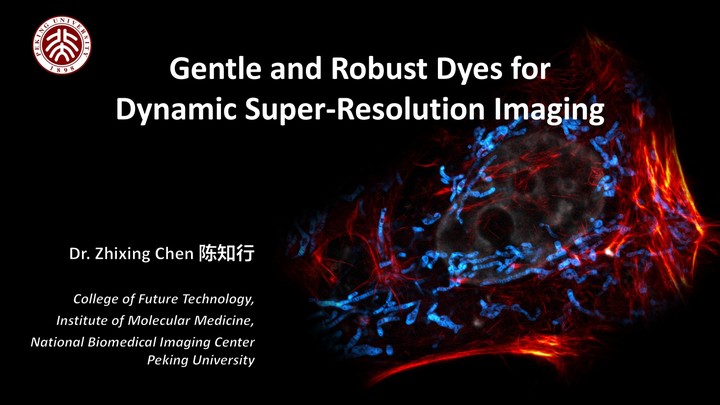
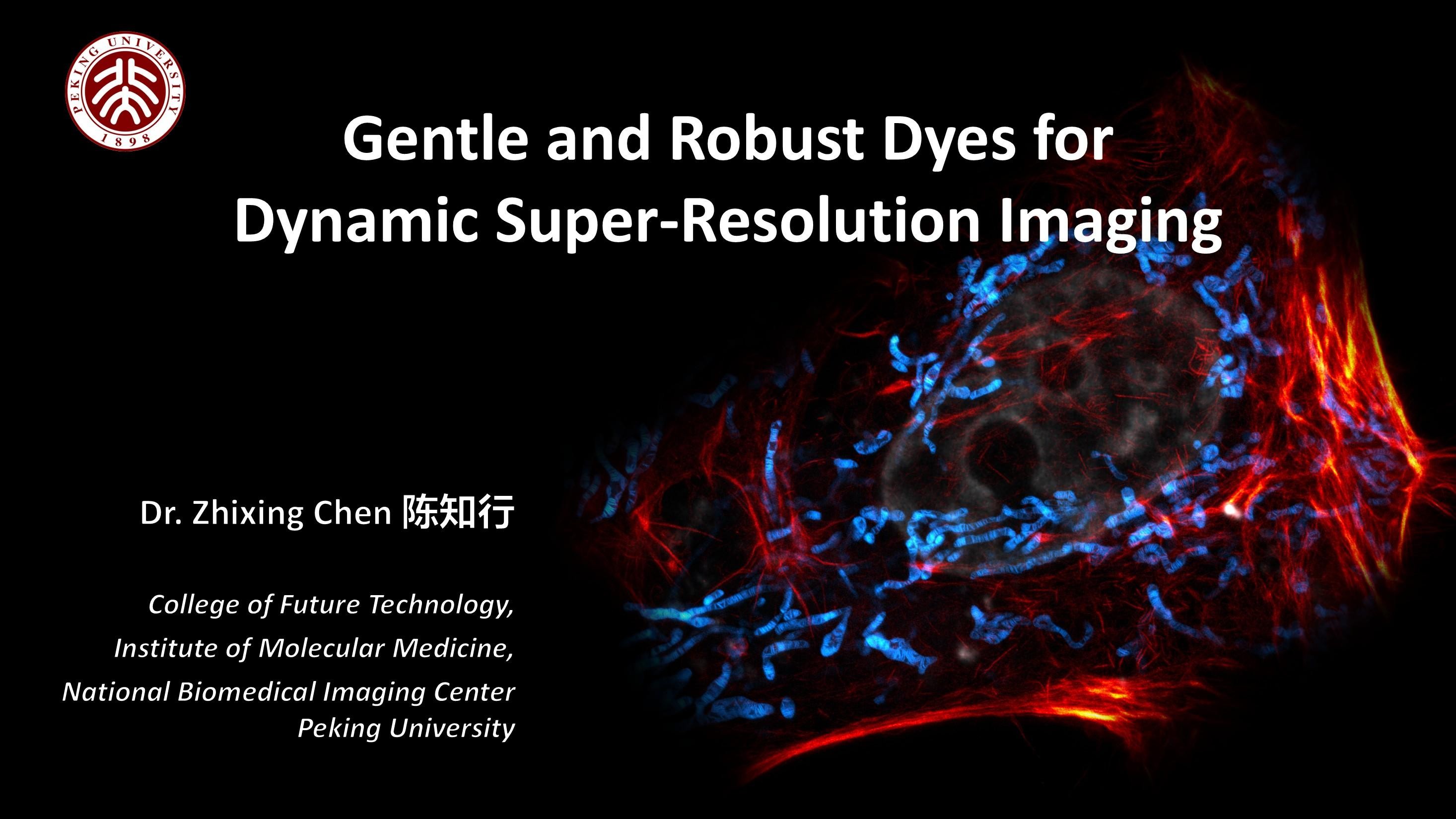
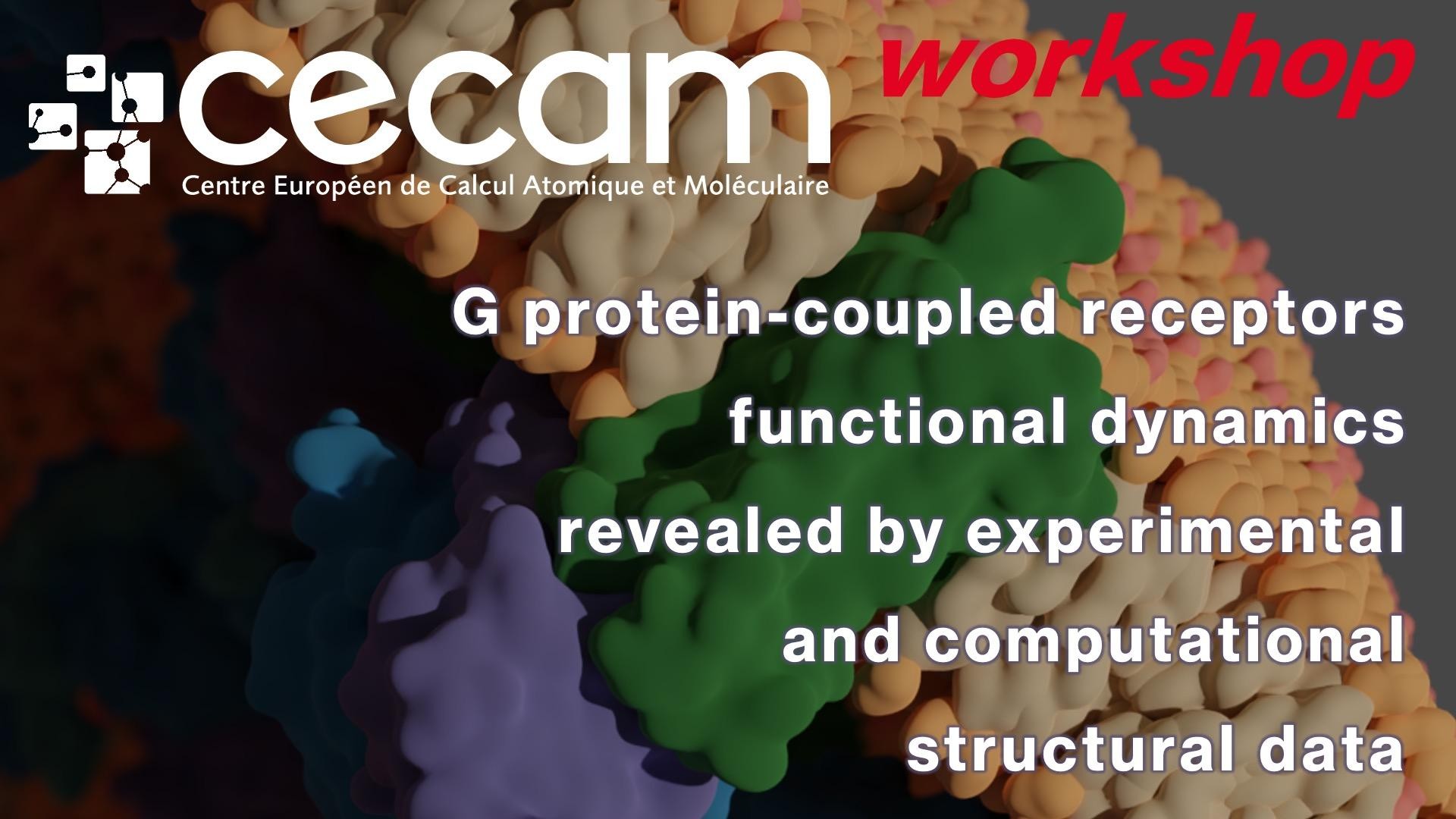
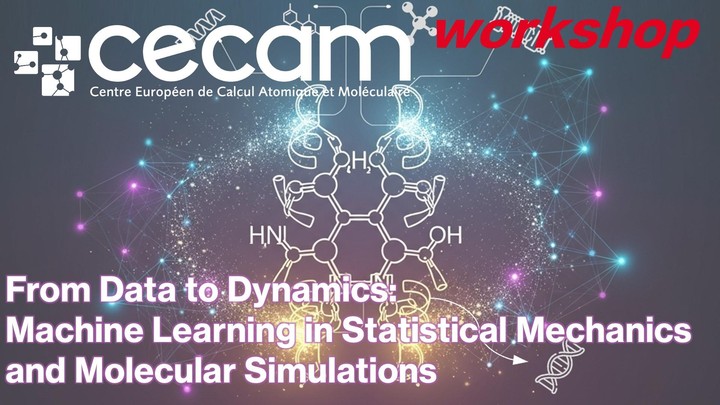
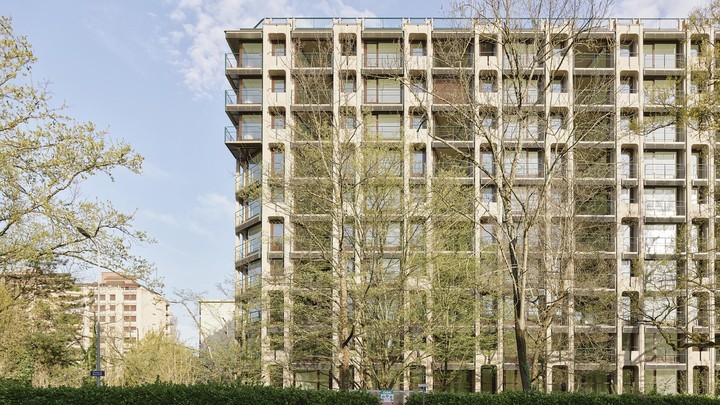
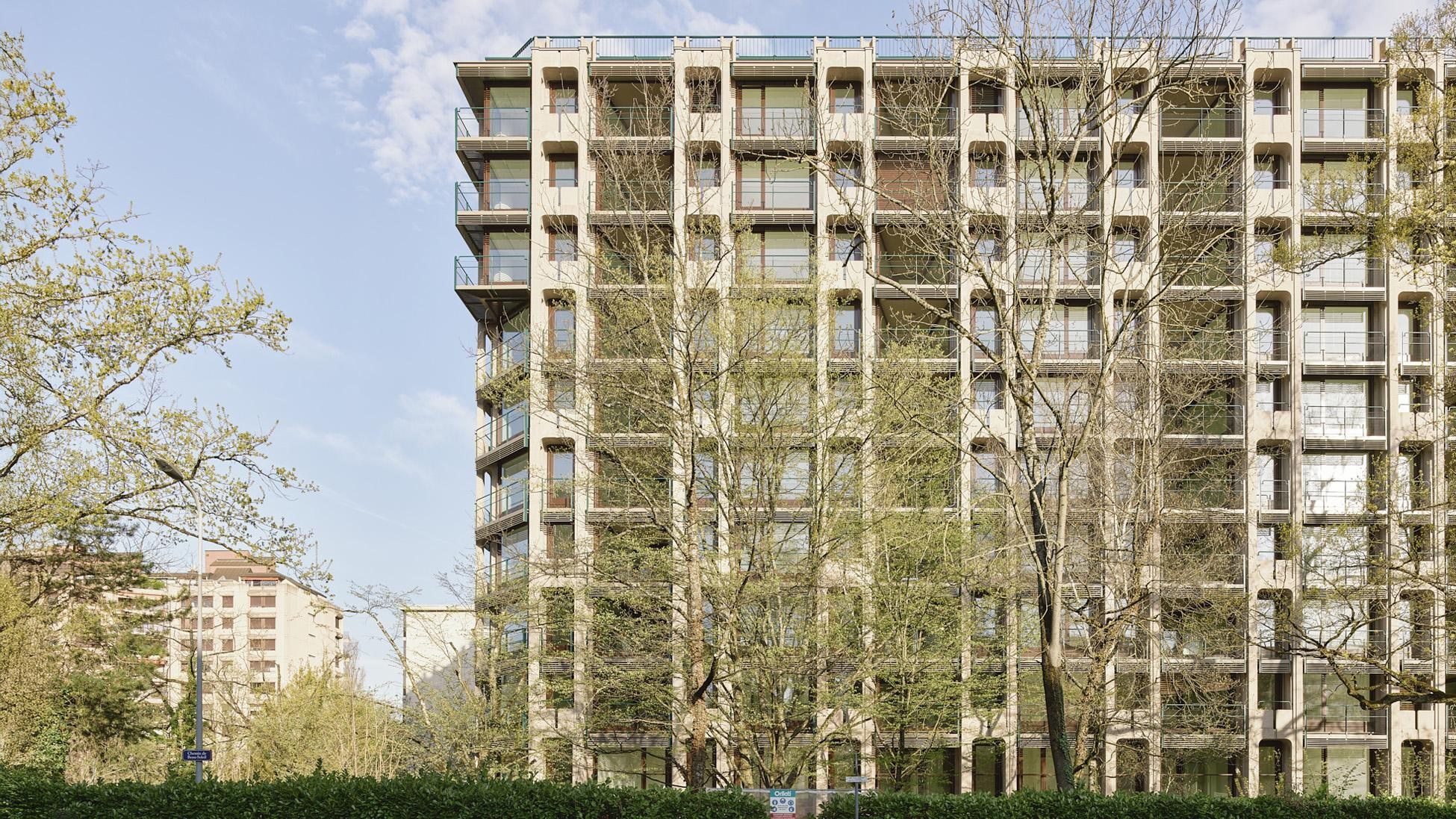
{ "count": 264, "next": "https://memento.epfl.ch/api/v1/events/?format=api&limit=10&offset=180&ordering=-title", "previous": "https://memento.epfl.ch/api/v1/events/?format=api&limit=10&offset=160&ordering=-title", "results": [ { "id": 70542, "title": "Gestion des achats à l'EPFL - Procédures marchés publics", "slug": "gestion-des-achats-a-l-epfl-procedures-marches--14", "event_url": "https://memento.epfl.ch/event/gestion-des-achats-a-l-epfl-procedures-marches--14", "visual_url": "https://memento.epfl.ch/image/31986/200x112.jpg", "visual_large_url": "https://memento.epfl.ch/image/31986/720x405.jpg", "visual_maxsize_url": "https://memento.epfl.ch/image/31986/max-size.jpg", "lang": "en", "start_date": "2026-10-06", "end_date": "2026-10-06", "start_time": "14:00:00", "end_time": "16:00:00", "description": "<p>Cette formation de 2 heures a pour but d'informer les collaborateurs.trices potentiellement engagé(e)s dans des projets d’acquisitions supérieurs à 150 kCHF des règles et des procédures à suivre.<br>\r\n<br>\r\nVue synthétique de la formation:\r\n</p><ul>\r\n\t<li>Présentation de la fonction Achats à l’EPFL</li>\r\n\t<li>Contexte légal</li>\r\n\t<li>Procédures marchés publics</li>\r\n</ul>\r\nPublic cible: Tout.e collaborateur.trice impliqué.e dans un projet d’acquisition de biens ou services dont le montant global est supérieur à 150 kCHF (Chef(e)s de projets, Professeur(e)s, Assistant(e)s Admin etc.).", "image_description": "", "creation_date": "2025-11-24T12:14:26", "last_modification_date": "2026-08-27T15:30:56", "link_label": "Inscription", "link_url": "https://epfl.eu.crossknowledge.com/site/m/public_training/833", "canceled": "True", "cancel_reason": "Lack of participant", "place_and_room": "", "url_place_and_room": "", "url_online_room": "", "spoken_languages": [ "https://memento.epfl.ch/api/v1/spoken_languages/1/?format=api" ], "speaker": "Binôme d'acheteurs du Service Achats", "organizer": "KeepLearning", "contact": "[email protected]", "is_internal": "True", "theme": "", "vulgarization": { "id": 1, "fr_label": "Tout public", "en_label": "General public" }, "registration": { "id": 1, "fr_label": "Sur inscription", "en_label": "Registration required" }, "keywords": "", "file": null, "icalendar_url": "https://memento.epfl.ch/event/export/118813/", "category": { "id": 15, "code": "FORM", "fr_label": "Formations internes", "en_label": "Internal trainings", "activated": true }, "academic_calendar_category": null, "domains": [], "mementos": [ "https://memento.epfl.ch/api/v1/mementos/6/?format=api", "https://memento.epfl.ch/api/v1/mementos/145/?format=api", "https://memento.epfl.ch/api/v1/mementos/431/?format=api" ] }, { "id": 71001, "title": "Gestion de projet européen - Projets ERC et MSCA", "slug": "gestion-de-projet-europeen-projets-erc-et-msca-2", "event_url": "https://memento.epfl.ch/event/gestion-de-projet-europeen-projets-erc-et-msca-2", "visual_url": "https://memento.epfl.ch/image/32389/200x112.jpg", "visual_large_url": "https://memento.epfl.ch/image/32389/720x405.jpg", "visual_maxsize_url": "https://memento.epfl.ch/image/32389/max-size.jpg", "lang": "en", "start_date": "2026-11-26", "end_date": "2026-11-26", "start_time": "09:30:00", "end_time": "12:00:00", "description": "<p>Programmes-cadres européens de la recherche et de l’innovation.<br>\r\n<br>\r\nVotre laboratoire participe à un ou plusieurs projets européens et une de vos missions est d’en assurer une gestion efficace au niveaux administratif, financier et celui des ressources humaines ? Pour cela, il est important de prendre le temps de vous familiariser avec la structure de ces projets et avec certaines règles de gestion qui leurs sont spécifiques.<br>\r\n<br>\r\nCette formation vous propose de prendre connaissance des documents contractuels et de leur contenu qui est utile pour votre gestion. Les règles de gestion administrative, financière et RH seront présentées et discutées en se basant sur des cas pratiques.<br>\r\nLa formation permettra aussi aux participants de se familiariser avec le portail européen et la plateforme de reporting du SEFRI.<br>\r\n<br>\r\nIl est recommandé de suivre cette formation le plus tôt possible, idéalement vers le commencement du projet.</p>", "image_description": "", "creation_date": "2026-01-30T10:11:14", "last_modification_date": "2026-01-30T10:12:40", "link_label": "Inscription", "link_url": "https://epfl.eu.crossknowledge.com/site/m/public_training/565", "canceled": "False", "cancel_reason": "", "place_and_room": "", "url_place_and_room": "", "url_online_room": "", "spoken_languages": [ "https://memento.epfl.ch/api/v1/spoken_languages/1/?format=api" ], "speaker": "EU-Funding Team of the Research Office", "organizer": "KeepLearning", "contact": "[email protected]", "is_internal": "True", "theme": "", "vulgarization": { "id": 1, "fr_label": "Tout public", "en_label": "General public" }, "registration": { "id": 1, "fr_label": "Sur inscription", "en_label": "Registration required" }, "keywords": "", "file": null, "icalendar_url": "https://memento.epfl.ch/event/export/119525/", "category": { "id": 15, "code": "FORM", "fr_label": "Formations internes", "en_label": "Internal trainings", "activated": true }, "academic_calendar_category": null, "domains": [], "mementos": [ "https://memento.epfl.ch/api/v1/mementos/145/?format=api", "https://memento.epfl.ch/api/v1/mementos/431/?format=api", "https://memento.epfl.ch/api/v1/mementos/6/?format=api" ] }, { "id": 72749, "title": "Gentle and Robust Dyes for Dynamic Super-Resolution Imaging", "slug": "gentle-and-robust-dyes-for-dynamic-super-resolutio", "event_url": "https://memento.epfl.ch/event/gentle-and-robust-dyes-for-dynamic-super-resolutio", "visual_url": "https://memento.epfl.ch/image/33977/200x112.jpg", "visual_large_url": "https://memento.epfl.ch/image/33977/720x405.jpg", "visual_maxsize_url": "https://memento.epfl.ch/image/33977/max-size.jpg", "lang": "en", "start_date": "2026-10-12", "end_date": "2026-10-12", "start_time": "14:15:00", "end_time": "15:15:00", "description": "<strong>Abstract:</strong><br>\r\n<br>\r\nLive-cell imaging technology is advancing into the era of dynamic super-resolution imaging of organelles and specific proteins, placing new demands on the optical properties of fluorescent probes. Traditional live-cell fluorescent probes face two critical technical challenges:\r\n<ol>\r\n\t<li>How to make fluorescent probes brighter and more photostable.</li>\r\n\t<li>How to make fluorescent probes gentler to minimize the photodamage of organelles.</li>\r\n</ol>\r\nBased on the fundamental principles of photochemistry and biochemistry, we have developed a new generation of live-cell imaging probes that far surpass traditional probes in brightness, photostability, and biocompatibility. These probes enable long-term super-resolution imaging of mitochondria, insulin vesicle secretion, plasma membrane dynamics, lysosomes, and more. Our representative achievements include: The PK Mito and PK Zinc dye series, widely used in mitochondrial and insulin secretion imaging. The BD series of novel fluorophores, in conjunction with self-labeling tags, offer general protein labeling strategies with superior optical properties compared to fluorescent proteins.<br>\r\n<br>\r\n==================================================<br>\r\n<br>\r\n<strong>Brief Biography:<br>\r\n<br>\r\nDr. Zhixing Chen, Associate Professor</strong><br>\r\n<strong>College of Future Technology</strong><br>\r\n<strong>Peking University</strong><br>\r\n<br>\r\nDr. Zhixing Chen is a tenured associate professor at the College of Future Technology, Peking University. He received his BS from Tsinghua University in 2008 and his PhD from Columbia University in 2014. He subsequently completed postdoctoral training at Columbia University in 2015 and at Stanford University from 2016 to 2018.<br>\r\nThe Chen Lab at Peking University was established in 2018. The lab endeavors to integrate chemistry and biochemistry to develop new imaging tools with high brightness, specificity, and biocompatibility, with the goal of advancing bioimaging technologies and enabling new approaches in cell biology, metabolism, and biophysics.<br>\r\n<br>\r\n<strong>Website: </strong><a href=\"https://zhixingchenlab.mysxl.cn/\"><strong>https://zhixingchenlab.mysxl.cn/</strong></a>", "image_description": "", "creation_date": "2026-10-02T11:35:36", "last_modification_date": "2026-10-05T09:25:14", "link_label": "", "link_url": "", "canceled": "False", "cancel_reason": "", "place_and_room": "BM 5202", "url_place_and_room": "https://plan.epfl.ch/?baselayer_ref=grp_backgrounds&dim_floor=5&dim_lang=fr&lang=fr&map_x=2532981&map_y=1152490&map_zoom=12&room=%3DBM%205202&tree_group_layers_centres_nevralgiques=information_epfl%2Cguichet_etudiants&tree_group_layers_commerces_et_services=&tree_group_layers_enseignement=&tree_group_layers_mobilite_acces_grp=metro&tree_groups=centres_nevralgiques_grp%2Cmobilite_acces_grp%2Crestauration_et_commerces_grp%2Censeignement%2Cservices_campus_grp%2Cequipements_grp&tree_group_layers_centres_nevralgiques_grp=&tree_group_layers_restauration_et_commerces_grp=&tree_group_layers_services_campus_grp=information_epfl&tree_group_layers_equipements_grp=", "url_online_room": "", "spoken_languages": [ "https://memento.epfl.ch/api/v1/spoken_languages/2/?format=api" ], "speaker": "<strong><a href=\"https://zhixingchenlab.mysxl.cn/\">Dr. Zhixing Chen, Associate Professor,</a> College of Future Technology, Peking University</strong>", "organizer": "<a href=\"https://www.epfl.ch/labs/leb/professor-manley/\">Prof. Suliana Manley</a>, <a href=\"https://www.epfl.ch/labs/leb/\">Laboratory of Experimental Biophysics</a>", "contact": "<a href=\"mailto:[email protected]\">Qian Wang, Administrative Assistant for LEB</a>", "is_internal": "False", "theme": "", "vulgarization": { "id": 1, "fr_label": "Tout public", "en_label": "General public" }, "registration": { "id": 3, "fr_label": "Entrée libre", "en_label": "Free" }, "keywords": "", "file": null, "icalendar_url": "https://memento.epfl.ch/event/export/122038/", "category": { "id": 1, "code": "CONF", "fr_label": "Conférences - Séminaires", "en_label": "Conferences - Seminars", "activated": true }, "academic_calendar_category": null, "domains": [], "mementos": [ "https://memento.epfl.ch/api/v1/mementos/5/?format=api", "https://memento.epfl.ch/api/v1/mementos/8/?format=api", "https://memento.epfl.ch/api/v1/mementos/9/?format=api" ] }, { "id": 72745, "title": "Generative Artificial Intelligence for Accelerating Materials Discovery", "slug": "generative-artificial-intelligence-for-accelerat-2", "event_url": "https://memento.epfl.ch/event/generative-artificial-intelligence-for-accelerat-2", "visual_url": "https://memento.epfl.ch/image/33960/200x112.jpg", "visual_large_url": "https://memento.epfl.ch/image/33960/720x405.jpg", "visual_maxsize_url": "https://memento.epfl.ch/image/33960/max-size.jpg", "lang": "en", "start_date": "2026-11-27", "end_date": "2026-11-27", "start_time": "15:00:00", "end_time": null, "description": "<p>Thesis Director: Prof. Ph. Schwaller,<br>\r\nChemistry and Chemical Engineering doctoral program<br>\r\nThesis Nr. 11943<br>\r\n<br>\r\nTo take part in the public defense, please contact directly the speaker</p>", "image_description": "", "creation_date": "2026-10-01T19:43:58", "last_modification_date": "2026-10-01T19:43:59", "link_label": "", "link_url": "", "canceled": "False", "cancel_reason": "", "place_and_room": "CM 1 4", "url_place_and_room": "https://plan.epfl.ch/?room==CM%201%204", "url_online_room": "https://epfl.zoom.us/j/66541265867?pwd=7w9G38oGbpRC8F0eWZyRE9yhD8pvgW.1", "spoken_languages": [], "speaker": "<a href=\"mailto:[email protected]\"><strong>Junwu CHEN</strong></a>", "organizer": "", "contact": "<a href=\"mailto:[email protected]\"><strong>Junwu CHEN</strong></a>", "is_internal": "False", "theme": "", "vulgarization": { "id": 1, "fr_label": "Tout public", "en_label": "General public" }, "registration": { "id": 3, "fr_label": "Entrée libre", "en_label": "Free" }, "keywords": "EDCH", "file": null, "icalendar_url": "https://memento.epfl.ch/event/export/122032/", "category": { "id": 12, "code": "SOUTE", "fr_label": "Soutenances de thèses", "en_label": "Thesis defenses", "activated": true }, "academic_calendar_category": null, "domains": [], "mementos": [ "https://memento.epfl.ch/api/v1/mementos/1/?format=api", "https://memento.epfl.ch/api/v1/mementos/5/?format=api", "https://memento.epfl.ch/api/v1/mementos/6/?format=api" ] }, { "id": 70956, "title": "G protein-coupled receptors functional dynamics revealed by experimental and computational structural data", "slug": "g-protein-coupled-receptors-functional-dynamics-re", "event_url": "https://memento.epfl.ch/event/g-protein-coupled-receptors-functional-dynamics-re", "visual_url": "https://memento.epfl.ch/image/32345/200x112.jpg", "visual_large_url": "https://memento.epfl.ch/image/32345/720x405.jpg", "visual_maxsize_url": "https://memento.epfl.ch/image/32345/max-size.jpg", "lang": "en", "start_date": "2026-10-07", "end_date": "2026-10-09", "start_time": null, "end_time": null, "description": "<p>You can apply to participate and find all the relevant information (speakers, abstracts, program,...) on the event website: <a href=\"https://www.cecam.org/workshop-details/g-protein-coupled-receptors-functional-dynamics-revealed-by-experimental-and-computational-structural-data-1488\">https://www.cecam.org/workshop-details/g-protein-coupled-receptors-functional-dynamics-revealed-by-experimental-and-computational-structural-data-1488</a>.<br>\r\n<br>\r\nRegistration is required to attend the full event, take part in the social activities and present a poster at the poster session (if any). However, the EPFL community is welcome to attend specific lectures without registration if the topic is of interest to their research. Do not hesitate to contact the <a href=\"mailto:[email protected]\">CECAM Event Manager</a> if you have any question.<br>\r\n<br>\r\n<strong>Description</strong><br>\r\n<br>\r\nG protein-coupled receptors (GPCRs) represent a vast and diverse class of transmembrane proteins that orchestrate a wide range of physiological processes by responding to both endogenous and exogenous ligands [1,2]. These receptors are essential to critical functions such as metabolism, immune regulation, neuronal signaling, and sensory perception - including vision and olfaction. Due to their physiological relevance and membrane accessibility, GPCRs are the targets of approximately 34% of all prescribed medications, accounting for nearly 27% of the global pharmaceutical market [3]. <br>\r\nDespite their pharmaceutical importance, key aspects of GPCR function remain elusive. The canonical activation model posits that agonist binding to the extracellular orthosteric site triggers allosteric changes - most notably, the outward displacement of transmembrane helices 5 (TM5) and 6 (TM6) on the intracellular side - ultimately leading to receptor activation [2-4]. However, recent evidence suggests a more nuanced mechanism. In several GPCRs, activation appears to involve cooperative engagement between the agonist and the G protein. For example, the G protein may disrupt an \"inactivating ionic lock\" - a salt bridge between TM3 and TM6 - while the agonist stabilizes the active conformation. In some receptors, this is complemented by the formation of an “activating ionic lock” between TM5 and TM6 [5-8]. These dual contributions are considered thermodynamically essential for full activation [7].<br>\r\nAdding further complexity, GPCR activity is regulated by conformational microswitches and finely tuned intra-protein interaction networks. These dynamic rearrangements are difficult to capture and often elude direct correlation with functional outcomes. Moreover, allosteric ligands - which bind sites distinct from the orthosteric pocket - are being increasingly identified [9-12], along with small molecules capable of biased signaling, i.e., preferential activation of specific intracellular pathways [11-13, 16, 17]. These findings reveal a rich and underexplored conformational landscape that governs GPCR signaling. In addition, native membrane components—such as lipids and interacting proteins, including GPCR oligomers—are known to significantly modulate receptor function [11, 18-22].<br>\r\nTo disentangle these intricacies, computational modeling has become indispensable, offering atomistic insight into GPCR conformational dynamics and mechanistic understanding [1-2, 7, 11, 14, 16–21, 23]. Nevertheless, key questions remain - particularly regarding the structural basis of biased signaling, strategies for leveraging allosteric networks in pharmacology, and the modulatory role of the lipid environment. Addressing these gaps is crucial for both fundamental biology and the rational design of next-generation GPCR-targeting drugs with improved selectivity and safety profiles. <br>\r\nThese scientific challenges form the foundation of our upcoming workshop, which will focus on the latest experimental and computational approaches for studying the functional dynamics of GPCRs. Given the profound health, economic, and societal implications of modulating these receptors with precision, we aim to strengthen the interdisciplinary nature of the event by increasing the representation of experimental research and integrating cutting-edge artificial intelligence applications into the program.<br>\r\nBuilding upon the success of the 2022 and 2024 editions - which led to new collaborations and a landmark publication in <em>Nature Reviews Drug Discovery</em> [24] - our goal is to further enhance communication and collaboration between experimentalists and theoreticians. The workshop will serve as a reference point for young scientists and students, offering a platform to interact with leading international experts. We are confident that this initiative will foster insightful discussions and contribute meaningfully to advancing the field of GPCR pharmacology.<br>\r\n<br>\r\n<strong>References</strong><br>\r\n<br>\r\n<a href=\"https://doi.org/10.1038/nrd.2017.229\" target=\"_blank\">[1] J. Smith, R. Lefkowitz, S. Rajagopal, Nat. Rev. Drug. Discov., <strong>17</strong>, 243-260 (2018)</a><br>\r\n<a href=\"https://doi.org/10.1038/s41573-024-01083-3\" target=\"_blank\">[2] P. Conflitti, E. Lyman, M. Sansom, P. Hildebrand, H. Gutiérrez-de-Terán, P. Carloni, T. Ansell, S. Yuan, P. Barth, A. Robinson, C. Tate, D. Gloriam, S. Grzesiek, M. Eddy, S. Prosser, V. Limongelli, Nat. Rev. Drug. Discov., <strong>24</strong>, 251-275 (2025)</a><br>\r\n<a href=\"https://doi.org/10.1038/s41589-024-01682-6\" target=\"_blank\">[3] L. Picard, A. Orazietti, D. Tran, A. Tucs, S. Hagimoto, Z. Qi, S. Huang, K. Tsuda, A. Kitao, A. Sljoka, R. Prosser, Nat. Chem. Biol., <strong>21</strong>, 71-79 (2024)</a><br>\r\n<a href=\"https://doi.org/10.1016/j.drudis.2020.10.006\" target=\"_blank\">[4] B. Huang, C. St. Onge, H. Ma, Y. Zhang, Drug Discovery Today, <strong>26</strong>, 189-199 (2021)</a><br>\r\n<a href=\"https://doi.org/10.1038/s41467-023-42082-z\" target=\"_blank\">[5] D. Di Marino, P. Conflitti, S. Motta, V. Limongelli, Nat. Commun., <strong>14</strong>, 6439 (2023)</a><br>\r\n<a href=\"https://doi.org/10.1016/j.ceb.2018.10.007\" target=\"_blank\">[6] G. Milligan, R. Ward, S. Marsango, Current Opinion in Cell Biology, <strong>57</strong>, 40-47 (2019)</a><br>\r\n<a href=\"https://doi.org/10.7554/elife.73901\" target=\"_blank\">[7] S. Huang, O. Almurad, R. Pejana, Z. Morrison, A. Pandey, L. Picard, M. Nitz, A. Sljoka, R. Prosser, eLife, <strong>11</strong>, (2022)</a><br>\r\n<a href=\"https://doi.org/10.1146/annurev-pharmtox-010919-023411\" target=\"_blank\">[8] A. Duncan, W. Song, M. Sansom, Annu. Rev. Pharmacol. Toxicol., <strong>60</strong>, 31-50 (2020)</a><br>\r\n<a href=\"https://doi.org/10.1038/s41467-025-60003-0\" target=\"_blank\">[9] A. Morales-Pastor, T. Miljuš, M. Dieguez-Eceolaza, T. Stępniewski, V. Ledesma-Martin, F. Heydenreich, T. Flock, B. Plouffe, C. Le Gouill, J. Duchaine, D. Sykes, C. Nicholson, E. Koers, W. Guba, A. Rufer, U. Grether, M. Bouvier, D. Veprintsev, J. Selent, Nat. Commun., <strong>16</strong>, 5265 (2025)</a><br>\r\n<a href=\"https://doi.org/10.1038/s41586-022-05588-y\" target=\"_blank\">[10] A. Faouzi, H. Wang, S. Zaidi, J. DiBerto, T. Che, Q. Qu, M. Robertson, M. Madasu, A. El Daibani, B. Varga, T. Zhang, C. Ruiz, S. Liu, J. Xu, K. Appourchaux, S. Slocum, S. Eans, M. Cameron, R. Al-Hasani, Y. Pan, B. Roth, J. McLaughlin, G. Skiniotis, V. Katritch, B. Kobilka, S. Majumdar, Nature, <strong>613</strong>, 767-774 (2022)</a><br>\r\n<a href=\"https://doi.org/10.1038/s41467-022-31652-2\" target=\"_blank\">[11] M. Wall, E. Hill, R. Huckstepp, K. Barkan, G. Deganutti, M. Leuenberger, B. Preti, I. Winfield, S. Carvalho, A. Suchankova, H. Wei, D. Safitri, X. Huang, W. Imlach, C. La Mache, E. Dean, C. Hume, S. Hayward, J. Oliver, F. Zhao, D. Spanswick, C. Reynolds, M. Lochner, G. Ladds, B. Frenguelli, Nat. Commun., <strong>13</strong>, 4150 (2022)</a><br>\r\n<a href=\"https://doi.org/10.1038/s41580-018-0049-3\" target=\"_blank\">[12] D. Wootten, A. Christopoulos, M. Marti-Solano, M. Babu, P. Sexton, Nat. Rev. Mol. Cell. Biol., <strong>19</strong>, 638-653 (2018)</a><br>\r\n<a href=\"https://doi.org/10.1038/s41594-017-0011-7\" target=\"_blank\">[13] D. Hilger, M. Masureel, B. Kobilka, Nat. Struct. Mol. Biol., <strong>25</strong>, 4-12 (2018)</a><br>\r\n<a href=\"https://doi.org/10.1038/s41467-025-57034-y\" target=\"_blank\">[14] D. Aranda-García, T. Stepniewski, M. Torrens-Fontanals, A. García-Recio, M. Lopez-Balastegui, B. Medel-Lacruz, A. Morales-Pastor, A. Peralta-García, M. Dieguez-Eceolaza, D. Sotillo-Nuñez, T. Ding, M. Drabek, C. Jacquemard, J. Jakowiecki, W. Jespers, M. Jiménez-Rosés, V. Jun-Yu-Lim, A. Nicoli, U. Orzel, A. Shahraki, J. Tiemann, V. Ledesma-Martin, F. Nerín-Fonz, S. Suárez-Dou, O. Canal, G. Pándy-Szekeres, J. Mao, D. Gloriam, E. Kellenberger, D. Latek, R. Guixà-González, H. Gutiérrez-de-Terán, I. Tikhonova, P. Hildebrand, M. Filizola, M. Babu, A. Di Pizio, S. Filipek, P. Kolb, A. Cordomi, T. Giorgino, M. Marti-Solano, J. Selent, Nat. Commun., <strong>16</strong>, 2020 (2025)</a><br>\r\n<a href=\"https://doi.org/10.1038/s41586-018-0259-z\" target=\"_blank\">[15] D. Thal, A. Glukhova, P. Sexton, A. Christopoulos, Nature, <strong>559</strong>, 45-53 (2018)</a><br>\r\n<a href=\"https://doi.org/10.1016/j.tips.2020.12.005\" target=\"_blank\">[16] L. Slosky, M. Caron, L. Barak, Trends in Pharmacological Sciences, <strong>42</strong>, 283-299 (2021)</a><br>\r\n<a href=\"https://doi.org/10.1016/j.apsb.2023.07.020\" target=\"_blank\">[17] C. Zhu, X. Lan, Z. Wei, J. Yu, J. Zhang, Acta Pharmaceutica Sinica B, <strong>14</strong>, 67-86 (2024)</a><br>\r\n<a href=\"https://doi.org/10.1016/j.chempr.2024.08.004\" target=\"_blank\">[18] V. D’Amore, P. Conflitti, L. Marinelli, V. Limongelli, Chem, <strong>10</strong>, 3678-3698 (2024)</a><br>\r\n<a href=\"https://doi.org/10.1038/s41557-023-01238-6\" target=\"_blank\">[19] A. Mafi, S. Kim, W. Goddard, Nat. Chem., <strong>15</strong>, 1127-1137 (2023)</a><br>\r\n<a href=\"https://doi.org/10.1038/s41594-024-01334-2\" target=\"_blank\">[20] H. Batebi, G. Pérez-Hernández, S. Rahman, B. Lan, A. Kamprad, M. Shi, D. Speck, J. Tiemann, R. Guixà-González, F. Reinhardt, P. Stadler, M. Papasergi-Scott, G. Skiniotis, P. Scheerer, B. Kobilka, J. Mathiesen, X. Liu, P. Hildebrand, Nat. Struct. Mol. Biol., <strong>31</strong>, 1692-1701 (2024)</a><br>\r\n<a href=\"https://doi.org/10.1016/j.cell.2015.04.043\" target=\"_blank\">[21] A. Manglik, T. Kim, M. Masureel, C. Altenbach, Z. Yang, D. Hilger, M. Lerch, T. Kobilka, F. Thian, W. Hubbell, R. Prosser, B. Kobilka, Cell, <strong>161</strong>, 1101-1111 (2015)</a><br>\r\n<a href=\"https://doi.org/10.1016/j.cell.2020.03.003\" target=\"_blank\">[22] M. Congreve, C. de Graaf, N. Swain, C. Tate, Cell, <strong>181</strong>, 81-91 (2020)</a><br>\r\n<a href=\"https://doi.org/10.1038/s41573-025-01139-y\" target=\"_blank\">[23] J. Lorente, A. Sokolov, G. Ferguson, H. Schiöth, A. Hauser, D. Gloriam, Nat. Rev. Drug. Discov., <strong>24</strong>, 458-479 (2025)</a><br>\r\n<a href=\"https://doi.org/10.1111/bph.16495\" target=\"_blank\">[24] M. Lopez‐Balastegui, T. Stepniewski, M. Kogut‐Günthel, A. Di Pizio, M. Rosenkilde, J. Mao, J. Selent, British. J. Pharmacology., <strong>182</strong>, 3211-3224 (2024)</a>\r\n</p><div class=\"active tab-pane\"> </div>", "image_description": "", "creation_date": "2026-01-26T16:00:31", "last_modification_date": "2026-01-26T16:45:08", "link_label": "G protein-coupled receptors functional dynamics revealed by experimental and computational structura", "link_url": "https://www.cecam.org/workshop-details/g-protein-coupled-receptors-functional-dynamics-revealed-by-experimental-and-computational-structural-data-1488", "canceled": "False", "cancel_reason": "", "place_and_room": "Aula Magna, USI Lugano", "url_place_and_room": "https://www.desk.usi.ch/en/lugano-campus-map-access-facilities", "url_online_room": "", "spoken_languages": [ "https://memento.epfl.ch/api/v1/spoken_languages/2/?format=api" ], "speaker": "", "organizer": "<strong>Vittorio Limongelli</strong>, Università della Svizzera Italiana USI Lugano ; <strong>Scott Prosser</strong>, University of Toronto ; <strong>Stefano Raniolo</strong>, Università della Svizzera Italiana ; <strong>Jana Selent</strong>, Hospital Del Mar Medical Research Institute", "contact": "<a href=\"mailto:[email protected]\"><strong>Cornelia Bujenita</strong></a>, CECAM Events and Operations Manager", "is_internal": "False", "theme": "", "vulgarization": { "id": 2, "fr_label": "Public averti", "en_label": "Informed public" }, "registration": { "id": 1, "fr_label": "Sur inscription", "en_label": "Registration required" }, "keywords": "", "file": null, "icalendar_url": "https://memento.epfl.ch/event/export/119453/", "category": { "id": 1, "code": "CONF", "fr_label": "Conférences - Séminaires", "en_label": "Conferences - Seminars", "activated": true }, "academic_calendar_category": null, "domains": [], "mementos": [ "https://memento.epfl.ch/api/v1/mementos/1/?format=api", "https://memento.epfl.ch/api/v1/mementos/5/?format=api", "https://memento.epfl.ch/api/v1/mementos/6/?format=api", "https://memento.epfl.ch/api/v1/mementos/8/?format=api", "https://memento.epfl.ch/api/v1/mementos/27/?format=api" ] }, { "id": 60190, "title": "Funding for PhD students carrying out Flavor research (Giract)", "slug": "funding-for-phd-students-carrying-out-flavor-res-3", "event_url": "https://memento.epfl.ch/event/funding-for-phd-students-carrying-out-flavor-res-3", "visual_url": "https://memento.epfl.ch/image/22360/200x112.jpg", "visual_large_url": "https://memento.epfl.ch/image/22360/720x405.jpg", "visual_maxsize_url": "https://memento.epfl.ch/image/22360/max-size.jpg", "lang": "en", "start_date": "2026-10-30", "end_date": "2026-10-30", "start_time": null, "end_time": null, "description": "<a href=\"https://www.giract.com/index.php\">GIRACT</a> is the leading transnational <strong>business research and consultancy</strong> organization specializing in <strong>food ingredients, additives</strong> and related <strong>fine chemicals</strong> and <strong>technologies</strong>.<br>\r\n<br>\r\nThe consortium of seven industry sponsors aims to raise awareness of the industry and career opportunities in order to increase the flavor research talent pool in Europe. The 7 sponsoring companies are:\r\n<ul>\r\n\t<li>Ajinomoto</li>\r\n\t<li>Asahi Group Foods</li>\r\n\t<li>Givaudan</li>\r\n\t<li>Kerry</li>\r\n\t<li>Lallemand Bio-Ingredients</li>\r\n\t<li>Lesaffre</li>\r\n\t<li>PepsiCo</li>\r\n</ul>\r\nThis 17th edition is organised by Giract, in coordination with Andrea Cattaruzza, Director of AndCat Ltd and Professor Emeritus Andy Taylor of the University of Nottingham, UK.<br>\r\n<br>\r\nThe aim of the program is to promote innovative flavor research amongst PhD students across European universities and research institutes. PhD students enrolled in universities and research institutes in 35 European countries (European Union, Iceland, Norway, Russia, Serbia, Switzerland, Turkey, Ukraine and UK) are eligible to apply.<br>\r\n<br>\r\n<strong>Funding</strong>:\r\n\r\n<ul>\r\n\t<li><strong>6 Bursaries for 1<sup>st</sup>–year PhD students</strong> (EUR 3,000 each)<br>\r\n\tSix first year PhD students are eligible to win a bursary of <strong>EUR 3000, each</strong>. Additionally, these six students have the opportunity of <strong>visiting the laboratory of certain sponsor companies</strong> during the second year of their PhD studies, by using a part of their winning bursary amount for their travel and stay. This will enable them to obtain a first-hand view of an industry R&D centre.<br>\r\n\t </li>\r\n\t<li><strong>Best PhD thesis award </strong>(EUR 5,000).<br>\r\n\tOne final year PhD student is eligible to win an award of <strong>EUR 5000</strong>. The winner will also be<strong> invited to the Savory Flavor and Food Industry Conference</strong>, held in Geneva, Switzerland as a platform for the winning student to present his/her work to 'potential employers'.</li>\r\n</ul>\r\n<br>\r\n<strong>The program targets two different groups of PhD students:</strong>\r\n\r\n<ul>\r\n\t<li><strong>Group 1 (bursaries for 1<sup>st</sup>–year PhD students): </strong>students who are about to start their PhD studies</li>\r\n\t<li><strong>Group 2 </strong> <strong>(best PhD thesis award):</strong> students who are about to complete their PhD and hence will soon be examining opportunities for employment.</li>\r\n</ul>\r\n<br>\r\n<strong>This is translated into the following sub-objectives:</strong>\r\n\r\n<ul>\r\n\t<li>Publicise the attractions of flavor research so as to pull high calibre students into appropriate PhD courses and then into industry</li>\r\n\t<li><strong>For Group 1:</strong>\r\n\t<ul>\r\n\t\t<li>Award bursaries to 6 selected students who are planning to start their PhD studies in flavor science during the 2026-2027 academic year</li>\r\n\t\t<li>Give the 6 winning 1<sup>st</sup>–year PhD students the opportunity to visit the laboratory of sponsor companies during the second year of their PhD studies through use of part of their bursary for travel and accommodation costs.</li>\r\n\t</ul>\r\n\t</li>\r\n\t<li><strong>For Group 2:</strong>\r\n\t<ul>\r\n\t\t<li>Solicit and evaluate innovative flavor research projects amongst these students</li>\r\n\t\t<li>Offer the opportunity to the winning student to present his/her work to potential employers at the Annual Savory Flavor & Food Industry Conference, held in Geneva in the spring of each year.</li>\r\n\t</ul>\r\n\t</li>\r\n</ul>\r\n<br>\r\n<strong>Who can apply?</strong><br>\r\nYou are eligible to apply provided you are\r\n<ul>\r\n\t<li>enrolled as a PhD student in a European University/Institute in 35 European countries (European Union, Iceland, Norway, Russia, Serbia, Switzerland, Turkey, Ukraine and UK)</li>\r\n\t<li>a PhD student planning your research in areas relevant to flavor science, technology, processing, chemistry, etc. in a European University/Institute.</li>\r\n</ul>\r\n \r\n\r\n<div>\r\n<div class=\"x_elementToProof\">Please visit this <a data-original-title=\"https://www.giract.com/flavor-research-programme.php\" href=\"https://giract.com/flavor-research-programme.php\" id=\"LPlnk653289\" rel=\"nofollow\" title=\"https://www.giract.com/flavor-research-programme.php\"> webpage</a> for eligibility and application details.</div>\r\n</div>\r\n \r\n\r\n<div class=\"x_elementToProof\">\r\n<div class=\"x__EId_OWALinkPreview_2 x__EReadonly_1 x__EType_OWALinkPreview x__Entity\"> </div>\r\n</div>\r\n\r\n<div> </div>", "image_description": "", "creation_date": "2022-08-15T13:16:06", "last_modification_date": "2026-08-21T08:31:57", "link_label": "", "link_url": "", "canceled": "False", "cancel_reason": "", "place_and_room": "", "url_place_and_room": "", "url_online_room": "", "spoken_languages": [], "speaker": "", "organizer": "", "contact": "<a href=\"mailto:[email protected]?subject=Funding%20for%20PhD%20students%20carrying%20out%20Flavor%20research%20(Giract)\">Research Office</a>", "is_internal": "False", "theme": "", "vulgarization": { "id": 1, "fr_label": "Tout public", "en_label": "General public" }, "registration": { "id": 3, "fr_label": "Entrée libre", "en_label": "Free" }, "keywords": "", "file": null, "icalendar_url": "https://memento.epfl.ch/event/export/103592/", "category": { "id": 16, "code": "PROP", "fr_label": "Appel à proposition", "en_label": "Call for proposal", "activated": true }, "academic_calendar_category": null, "domains": [], "mementos": [ "https://memento.epfl.ch/api/v1/mementos/1/?format=api", "https://memento.epfl.ch/api/v1/mementos/140/?format=api" ] }, { "id": 72734, "title": "From Dimers to Maximal Surfaces in Minkowski Space R^{2,1}", "slug": "from-dimers-to-maximal-surfaces-in-minkowski-space", "event_url": "https://memento.epfl.ch/event/from-dimers-to-maximal-surfaces-in-minkowski-space", "visual_url": null, "visual_large_url": null, "visual_maxsize_url": null, "lang": "en", "start_date": "2026-10-07", "end_date": "2026-10-07", "start_time": "15:00:00", "end_time": null, "description": "<p>We discuss a class of graph embeddings into Minkowski space R^{2,2} = C^{1,1}, called t-surfaces, which arise in the study of the planar dimer model. A t-surface consists of a (perfect) t-embedding together with its associated origami map. Perfect t-embeddings were recently introduced as a key tool for proving that the gradient of the dimer height function converges to that of the Gaussian Free Field in a canonically associated metric, under suitable technical assumptions. After introducing the notion of a t-embedding, we will describe a construction of perfect t-embeddings for regular hexagons of the hexagonal lattice. In which the corresponding t-surfaces converge to space-like maximal surfaces in Minkowski space R^{2,1}. As a consequence, these constructions yield a new proof of convergence of fluctuations of the dimer height function to the Gaussian Free Field in the conformal structure induced by the limiting maximal surface.</p>", "image_description": "", "creation_date": "2026-10-01T16:38:56", "last_modification_date": "2026-10-01T16:38:56", "link_label": "", "link_url": "", "canceled": "False", "cancel_reason": "", "place_and_room": "CM 1 517", "url_place_and_room": "https://plan.epfl.ch/?room==CM%201%20517", "url_online_room": "", "spoken_languages": [ "https://memento.epfl.ch/api/v1/spoken_languages/2/?format=api" ], "speaker": "Marianna Russkikh", "organizer": "Prof. Martin Hairer", "contact": "Juliana Velasquez", "is_internal": "False", "theme": "", "vulgarization": { "id": 2, "fr_label": "Public averti", "en_label": "Informed public" }, "registration": { "id": 3, "fr_label": "Entrée libre", "en_label": "Free" }, "keywords": "", "file": null, "icalendar_url": "https://memento.epfl.ch/event/export/122018/", "category": { "id": 1, "code": "CONF", "fr_label": "Conférences - Séminaires", "en_label": "Conferences - Seminars", "activated": true }, "academic_calendar_category": null, "domains": [], "mementos": [ "https://memento.epfl.ch/api/v1/mementos/7/?format=api" ] }, { "id": 70957, "title": "From Data to Dynamics: Machine Learning in Statistical Mechanics and Molecular Simulations", "slug": "from-data-to-dynamics-machine-learning-in-statis-2", "event_url": "https://memento.epfl.ch/event/from-data-to-dynamics-machine-learning-in-statis-2", "visual_url": "https://memento.epfl.ch/image/32346/200x112.jpg", "visual_large_url": "https://memento.epfl.ch/image/32346/720x405.jpg", "visual_maxsize_url": "https://memento.epfl.ch/image/32346/max-size.jpg", "lang": "en", "start_date": "2026-10-14", "end_date": "2026-10-16", "start_time": null, "end_time": null, "description": "<p>You can apply to participate and find all the relevant information (speakers, abstracts, program,...) on the event website: <a href=\"https://www.cecam.org/workshop-details/from-data-to-dynamics-machine-learning-in-statistical-mechanics-and-molecular-simulations-1487\">https://www.cecam.org/workshop-details/from-data-to-dynamics-machine-learning-in-statistical-mechanics-and-molecular-simulations-1487</a>.<br>\r\n<br>\r\nRegistration is required to attend the full event, take part in the social activities and present a poster at the poster session (if any). However, the EPFL community is welcome to attend specific lectures without registration if the topic is of interest to their research. Do not hesitate to contact the <a href=\"mailto:[email protected]\">CECAM Event Manager</a> if you have any question.<br>\r\n<br>\r\n<strong>Description</strong><br>\r\nSince its introduction in the 1970s, molecular dynamics (MD) has become an indispensable computational microscope for studying complex biological systems at atomic resolution. It has enabled detailed investigations into protein folding, conformational dynamics, and ligand binding and unbinding. Over the past decade, increasing computational power has made microsecond-scale simulations routine, producing massive datasets that demand sophisticated analysis strategies [1]. Despite these advances, conventional MD simulations still face a fundamental limitation: many biologically relevant events occur over milliseconds to seconds—timescales largely inaccessible to standard MD.<br>\r\nTo bridge this gap, researchers increasingly turn to enhanced sampling techniques—such as metadynamics and umbrella sampling [2,3]—and coarse-grained (CG) modeling approaches [4]. These methods enable more comprehensive exploration of the system’s free energy landscape, yet their success critically depends on the selection of appropriate reaction coordinates or collective variables (CVs). CVs must capture the slowest, most functionally relevant motions to accurately reflect thermodynamic and kinetic behavior. However, identifying suitable CVs remains one of the field’s most challenging tasks, typically requiring domain expertise and iterative refinement [5, 6].<br>\r\nThis complexity has fueled growing interest in machine learning (ML) techniques, which are now transforming how MD simulations are analyzed, interpreted, and even conducted. ML methods have been applied to automate CV discovery, perform dimensionality reduction, build thermodynamic and kinetic models, and enhance sampling efficiency [7]. These models often employ artificial neural networks or graph neural networks to map high-dimensional molecular configurations—such as Cartesian coordinates or molecular descriptors—into low-dimensional representations suitable for analysis [8].<br>\r\nDepending on the structure and type of data, ML algorithms can be broadly categorized into supervised, unsupervised, and reinforcement learning paradigms [9]. Supervised learning uses labeled input-output pairs to predict properties such as molecular energies or binding affinities [10], while unsupervised learning enables the identification of latent features, such as CVs, directly from data [11].<br>\r\nA cornerstone of modern ML-driven simulation is the development of symmetry-aware molecular representations. The predictive power of ML models hinges on encoding physical symmetries—like rotation and translation—directly into the model. E(3)-equivariant neural networks have emerged as powerful tools for this purpose, significantly improving data efficiency and generalization in learning potential energy surfaces [12]. Ongoing research continues to explore the optimal balance between enforcing strict symmetry and retaining model flexibility.<br>\r\nMeanwhile, breakthroughs in structural prediction—most notably the advent of AlphaFold 3—have revolutionized how researchers obtain initial molecular configurations. AlphaFold now provides remarkably accurate models of not only proteins but also their complexes with nucleic acids, ions, and small-molecule ligands [13]. However, these are static snapshots. They cannot capture dynamic behaviors, allosteric transitions, or binding kinetics—areas where physics-based simulations remain indispensable. Initial benchmarks suggest that even state-of-the-art predictors still fall short in modeling protein dynamics and ranking ligand binding affinities, further emphasizing the role of MD [14].<br>\r\nTo address the dimensionality and sampling bottlenecks, unsupervised ML approaches such as time-lagged autoencoders have reframed CV identification as a data-driven task. More recently, generative models—including diffusion models and variational autoencoders—have emerged as a new frontier. These models can learn the full conformational landscape of biomolecules and enable enhanced sampling, in some cases eliminating the need for predefined CVs altogether [15].<br>\r\nOnce accurate structural models and CVs are established, ML can significantly improve the estimation of thermodynamic and kinetic properties. In drug discovery, for instance, predicting protein–ligand binding affinity remains a central challenge. ML potentials trained on quantum mechanical data can be combined with enhanced sampling to yield highly accurate free energy landscapes and binding kinetics—results previously unattainable due to computational limitations [16]. However, challenges in data quality, model interpretability, and transferability remain critical areas of ongoing investigation [17].<br>\r\nFinally, ML is driving a renaissance in CG modeling. Deep neural networks can now learn many-body CG potentials directly from all-atom simulations, capturing emergent properties and enhancing transferability [18]. These models open the door to longer, larger-scale simulations with greater physical accuracy.<br>\r\nIn this rapidly evolving context, it becomes imperative to critically assess both the promise and limitations of ML in biomolecular simulation. The excitement surrounding these developments must be tempered by careful validation and benchmarking. This workshop thus serves as a timely opportunity—especially for early-career researchers—to explore these cutting-edge methods, engage in constructive dialogue, and chart new directions in the application of machine learning to molecular dynamics and drug discovery.<br>\r\n <br>\r\n<strong>References</strong><br>\r\n<br>\r\n<a href=\"https://doi.org/10.1103/physrevlett.98.146401\" target=\"_blank\">[1] J. Behler, M. Parrinello, Phys. Rev. Lett., <strong>98</strong>, 146401 (2007)</a><br>\r\n<a href=\"https://doi.org/10.1016/j.sbi.2024.102972\" target=\"_blank\">[2] P. Sahrmann, G. Voth, Current Opinion in Structural Biology, <strong>90</strong>, 102972 (2025)</a><br>\r\n<a href=\"https://doi.org/10.1021/acs.jcim.2c01127\" target=\"_blank\">[3] K. Kříž, L. Schmidt, A. Andersson, M. Walz, D. van der Spoel, J. Chem. Inf. Model., <strong>63</strong>, 412-431 (2023)</a><br>\r\n<a href=\"https://doi.org/10.3389/fmolb.2022.899805\" target=\"_blank\">[4] K. Ahmad, A. Rizzi, R. Capelli, D. Mandelli, W. Lyu, P. Carloni, Front. Mol. Biosci., <strong>9</strong>, (2022)</a><br>\r\n<a href=\"https://doi.org/10.1146/annurev-physchem-083122-125941\" target=\"_blank\">[5] S. Mehdi, Z. Smith, L. Herron, Z. Zou, P. Tiwary, Annual Review of Physical Chemistry, <strong>75</strong>, 347-370 (2024)</a><br>\r\n<a href=\"https://doi.org/10.1101/2025.04.07.647682\" target=\"_blank\">[6] H. Zheng, H. Lin, A. Alade, J. Chen, E. Monroy, M. Zhang, J. Wang, AlphaFold3 in Drug Discovery: A Comprehensive Assessment of Capabilities, Limitations, and Applications, 2025</a><br>\r\n<a href=\"https://doi.org/10.1038/s41586-024-07487-w\" target=\"_blank\">[7] J. Abramson, J. Adler, J. Dunger, R. Evans, T. Green, A. Pritzel, O. Ronneberger, L. Willmore, A. Ballard, J. Bambrick, S. Bodenstein, D. Evans, C. Hung, M. O’Neill, D. Reiman, K. Tunyasuvunakool, Z. Wu, A. Žemgulytė, E. Arvaniti, C. Beattie, O. Bertolli, A. Bridgland, A. Cherepanov, M. Congreve, A. Cowen-Rivers, A. Cowie, M. Figurnov, F. Fuchs, H. Gladman, R. Jain, Y. Khan, C. Low, K. Perlin, A. Potapenko, P. Savy, S. Singh, A. Stecula, A. Thillaisundaram, C. Tong, S. Yakneen, E. Zhong, M. Zielinski, A. Žídek, V. Bapst, P. Kohli, M. Jaderberg, D. Hassabis, J. Jumper, Nature, <strong>630</strong>, 493-500 (2024)</a><br>\r\n[8] Fabian B. Fuchs, Daniel E. Worrall, Volker Fischer, Max Welling, NIPS'20: Proceedings of the 34th International Conference on Neural Information Processing Systems, Article No.: 166, Pages 1970 - 1981 (2020)<br>\r\n<a href=\"https://doi.org/10.1080/00268976.2020.1737742\" target=\"_blank\">[9] H. Sidky, W. Chen, A. Ferguson, Molecular Physics, <strong>118</strong>, (2020)</a><br>\r\n<a href=\"https://doi.org/10.1016/j.sbi.2019.12.016\" target=\"_blank\">[10] Y. Wang, J. Lamim Ribeiro, P. Tiwary, Current Opinion in Structural Biology, <strong>61</strong>, 139-145 (2020)</a><br>\r\n<a href=\"https://doi.org/10.1038/s41586-018-0337-2\" target=\"_blank\">[11] K. Butler, D. Davies, H. Cartwright, O. Isayev, A. Walsh, Nature, <strong>559</strong>, 547-555 (2018)</a><br>\r\n<a href=\"https://doi.org/10.1146/annurev-physchem-042018-052331\" target=\"_blank\">[12] F. Noé, A. Tkatchenko, K. Müller, C. Clementi, Annu. Rev. Phys. Chem., <strong>71</strong>, 361-390 (2020)</a><br>\r\n<a href=\"https://doi.org/10.1080/23746149.2021.2006080\" target=\"_blank\">[13] S. Kaptan, I. Vattulainen, Advances in Physics: X, <strong>7</strong>, (2022)</a><br>\r\n<a href=\"https://doi.org/10.1002/wcms.1455\" target=\"_blank\">[14] V. Limongelli, WIREs. Comput. Mol. Sci., <strong>10</strong>, (2020)</a><br>\r\n<a href=\"https://doi.org/10.1021/acs.chemrev.0c01195\" target=\"_blank\">[15] A. Glielmo, B. Husic, A. Rodriguez, C. Clementi, F. Noé, A. Laio, Chem. Rev., <strong>121</strong>, 9722-9758 (2021)</a><br>\r\n<a href=\"https://doi.org/10.1016/j.sbi.2018.11.005\" target=\"_blank\">[16] A. Pak, G. Voth, Current Opinion in Structural Biology, <strong>52</strong>, 119-126 (2018)</a><br>\r\n<a href=\"https://doi.org/10.1021/jacs.6b05602\" target=\"_blank\">[17] M. Lelimousin, V. Limongelli, M. Sansom, J. Am. Chem. Soc., <strong>138</strong>, 10611-10622 (2016)</a><br>\r\n<a href=\"https://doi.org/10.3390/e16010163\" target=\"_blank\">[18] C. Abrams, G. Bussi, Entropy, <strong>16</strong>, 163-199 (2013)</a>\r\n</p><div class=\"active tab-pane\"> </div>", "image_description": "", "creation_date": "2026-01-26T16:07:22", "last_modification_date": "2026-01-26T16:45:31", "link_label": "From Data to Dynamics: Machine Learning in Statistical Mechanics and Molecular Simulations", "link_url": "https://www.cecam.org/workshop-details/from-data-to-dynamics-machine-learning-in-statistical-mechanics-and-molecular-simulations-1487", "canceled": "False", "cancel_reason": "", "place_and_room": "Aula Magna, USI Lugano", "url_place_and_room": "https://www.desk.usi.ch/en/lugano-campus-map-access-facilities", "url_online_room": "", "spoken_languages": [ "https://memento.epfl.ch/api/v1/spoken_languages/2/?format=api" ], "speaker": "", "organizer": "<strong>Daniele Angioletti, </strong>Università della Svizzera Italiana (USI) ; <strong>Vincenzo Maria D'Amore, </strong>University of Naples \"Federico II\" ; <strong>Marco De Vivo, </strong>Istituto Italiano di Tecnologia ; <strong>Francesco Saverio Di Leva, </strong>University of Naples Federico II ; <strong>Vittorio Limongelli, </strong>Università della Svizzera Italiana USI Lugano ; <strong>Gregory Voth, </strong>University of Chicago", "contact": "<a href=\"mailto:[email protected]\"><strong>Cornelia Bujenita</strong></a>, CECAM Events and Operations Manager", "is_internal": "False", "theme": "", "vulgarization": { "id": 2, "fr_label": "Public averti", "en_label": "Informed public" }, "registration": { "id": 1, "fr_label": "Sur inscription", "en_label": "Registration required" }, "keywords": "", "file": null, "icalendar_url": "https://memento.epfl.ch/event/export/119454/", "category": { "id": 1, "code": "CONF", "fr_label": "Conférences - Séminaires", "en_label": "Conferences - Seminars", "activated": true }, "academic_calendar_category": null, "domains": [], "mementos": [ "https://memento.epfl.ch/api/v1/mementos/1/?format=api", "https://memento.epfl.ch/api/v1/mementos/5/?format=api", "https://memento.epfl.ch/api/v1/mementos/6/?format=api", "https://memento.epfl.ch/api/v1/mementos/8/?format=api", "https://memento.epfl.ch/api/v1/mementos/27/?format=api" ] }, { "id": 72752, "title": "From cold rolling to recrystallization annealing: an experimental and modeling study of microstructure and texture evolution in a recycled Al-Mg-Si alloy", "slug": "from-cold-rolling-to-recrystallization-annealing-2", "event_url": "https://memento.epfl.ch/event/from-cold-rolling-to-recrystallization-annealing-2", "visual_url": "https://memento.epfl.ch/image/33966/200x112.jpg", "visual_large_url": "https://memento.epfl.ch/image/33966/720x405.jpg", "visual_maxsize_url": "https://memento.epfl.ch/image/33966/max-size.jpg", "lang": "en", "start_date": "2026-10-30", "end_date": "2026-10-30", "start_time": "17:00:00", "end_time": null, "description": "<p>Directeurs de thèse : Prof. R. Logé, Dr E. Cantergiani<br>\r\nProgramme doctoral en Manufacturing<br>\r\nThèse n° 11916<br>\r\n<br>\r\nPour participer à la soutenance publique, merci de contacter directement l’intervenant</p>", "image_description": "", "creation_date": "2026-10-02T13:40:27", "last_modification_date": "2026-10-02T13:40:28", "link_label": "", "link_url": "", "canceled": "False", "cancel_reason": "", "place_and_room": "MC A1 272", "url_place_and_room": "https://plan.epfl.ch/?room==MC%20A1%20272", "url_online_room": "", "spoken_languages": [], "speaker": "<strong>Yandong JING</strong>", "organizer": "", "contact": "<strong>Yandong JING</strong>", "is_internal": "False", "theme": "", "vulgarization": { "id": 1, "fr_label": "Tout public", "en_label": "General public" }, "registration": { "id": 3, "fr_label": "Entrée libre", "en_label": "Free" }, "keywords": "EDAM", "file": null, "icalendar_url": "https://memento.epfl.ch/event/export/122043/", "category": { "id": 12, "code": "SOUTE", "fr_label": "Soutenances de thèses", "en_label": "Thesis defenses", "activated": true }, "academic_calendar_category": null, "domains": [], "mementos": [ "https://memento.epfl.ch/api/v1/mementos/1/?format=api", "https://memento.epfl.ch/api/v1/mementos/6/?format=api", "https://memento.epfl.ch/api/v1/mementos/8/?format=api" ] }, { "id": 72702, "title": "Forum des transitions urbaines 2027 / LAST", "slug": "forum-des-transitions-urbaines-2027-last", "event_url": "https://memento.epfl.ch/event/forum-des-transitions-urbaines-2027-last", "visual_url": "https://memento.epfl.ch/image/33927/200x112.jpg", "visual_large_url": "https://memento.epfl.ch/image/33927/720x405.jpg", "visual_maxsize_url": "https://memento.epfl.ch/image/33927/max-size.jpg", "lang": "en", "start_date": "2027-09-03", "end_date": "2027-09-03", "start_time": "08:45:00", "end_time": "16:20:00", "description": "<p>Entitled \"From abundance to resilience?\", the <a href=\"https://transitionsurbaines.ch/\" rel=\"noopener\" target=\"_blank\">Forum des transitions urbaines</a> will be held on September 3, 2027 in the Auditorium of Microcity, a branch of the EPFL in Neuchâtel (Switzerland). Organized jointly by the Ecoparc Association and the <a href=\"https://www.epfl.ch/labs/last/\">Laboratory of Architecture and Sustainable Technologies (LAST)</a> of the Ecole polytechnique fédérale de Lausanne (EPFL), in partnership with the journal espazium, the biennial event will approach this crucial theme for our built environment from different angles.<br>\r\n<br>\r\n<a href=\"https://transitionsurbaines.ch\">online registration</a></p>", "image_description": "Immeuble Normandie, Genève © Ariel Huber", "creation_date": "2026-09-29T08:31:38", "last_modification_date": "2026-10-02T11:09:39", "link_label": "Forum des transitions urbaines", "link_url": "https://transitionsurbaines.ch", "canceled": "False", "cancel_reason": "", "place_and_room": "MC A1 272", "url_place_and_room": "https://plan.epfl.ch/?room==MC%20A1%20272", "url_online_room": "", "spoken_languages": [ "https://memento.epfl.ch/api/v1/spoken_languages/1/?format=api" ], "speaker": "à venir", "organizer": "<a href=\"https://www.epfl.ch/labs/last/\">Laboratory of Architecture and Sustainable Technologies (LAST)</a>", "contact": "<a href=\"mailto:[email protected]\">Martine Laprise</a>", "is_internal": "False", "theme": "", "vulgarization": { "id": 1, "fr_label": "Tout public", "en_label": "General public" }, "registration": { "id": 1, "fr_label": "Sur inscription", "en_label": "Registration required" }, "keywords": "ville, résilience, architecture, urbanisme, durabilité, transition, post carbone, sobriété", "file": "https://memento.epfl.ch/public/upload/files/FTU27flyerA5web_BRt9mAA.pdf", "icalendar_url": "https://memento.epfl.ch/event/export/121978/", "category": { "id": 1, "code": "CONF", "fr_label": "Conférences - Séminaires", "en_label": "Conferences - Seminars", "activated": true }, "academic_calendar_category": null, "domains": [], "mementos": [ "https://memento.epfl.ch/api/v1/mementos/1/?format=api", "https://memento.epfl.ch/api/v1/mementos/4/?format=api", "https://memento.epfl.ch/api/v1/mementos/6/?format=api", "https://memento.epfl.ch/api/v1/mementos/59/?format=api" ] } ] }