
From Single Cells to Single Individuals: Learning from Heterogeneity in Cell Fate Decisions

Event details
| Date | 28.10.2026 |
| Hour | 12:00 › 13:00 |
| Speaker | Silvia Domcke, Assistant Professor, Department of Molecular Life Sciences, University of Zurich |
| Location | |
| Category | Conferences - Seminars |
| Event Language | English |
Abstract:
Biography:
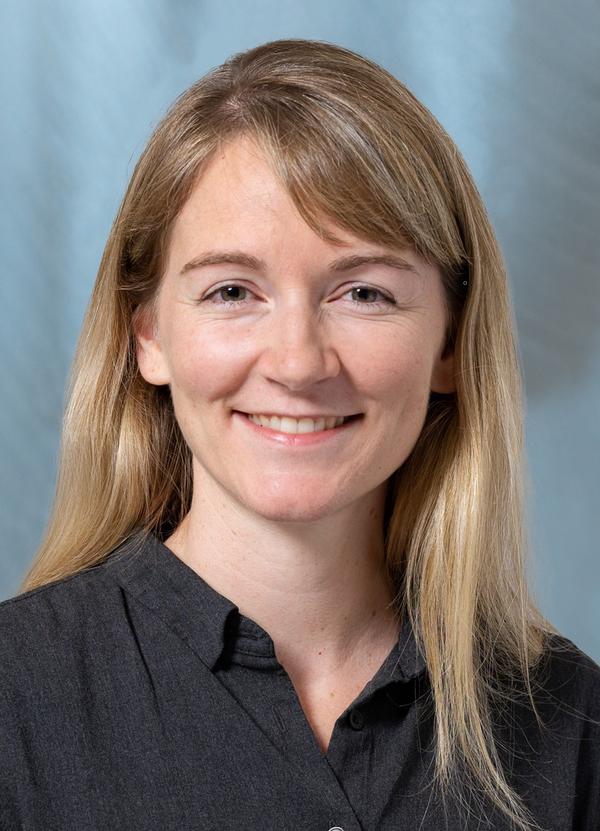
Silvia's lab at the University of Zurich is exploring how a cell's genome gives rise to diverse and dynamic cell identities, using a combination of mammalian cell culture models, genetic and epigenetic editing, single cell genomics, and computational approaches. Before starting her lab, Silvia led a team at a San Francisco biotech start-up, leveraging in vivo multiplexed perturbation methods for target discovery in complex diseases. In her postdoc at the University of Washington in Seattle, she developed and applied new methods to study cell type-specific gene regulation at scale and single cell resolution. During her PhD at the FMI in Basel, she investigated the role of DNA methylation in gene regulation.
Transcription factors (TFs) are key cell fate regulators. Combining CRISPR with single cell genomics readouts allows us to study their causal role in cell fate specification at scale, for both natural and novel cell state transitions.
To interrogate TF function in developmental cell fate specification, we perturbed all TFs in a mosaic embryoid body (EB) system and profiled cells by single-cell RNA-seq. While many perturbations appeared to strongly bias fate choice, cellular bottlenecks during EB differentiation sharply reduce clonal complexity and confound mosaic screens. We therefore developed a scalable platform in which each EB is monoclonally derived from a single barcoded stem cell. This approach allows us to better quantify the consequences of TF perturbations as well as study heterogeneity across “individuals” harboring the same genetic perturbation.
In an orthogonal approach, we leveraged CRISPRa to activate TFs that are normally not expressed, allowing us to interrogate their ability to reshape the gene expression and chromatin landscape. Whereas some TFs can initiate new accessibility on their own, others appear to partner with “co-TFs”. These dependencies shape which sites are used and which fates are reachable. Heterogeneity present in starting cell states lets us identify such TF interactions even in single-TF perturbation screens, offering a path to nominating functional combinations from an otherwise intractable combinatorial space.
Heterogeneity – from the single cell to the whole “individual” level – is thus both the main challenge and a key source of power in perturbation screens. Measuring and modeling it will be essential for understanding genotype-to-phenotype relationships and for predicting and engineering cell fate transitions in silico, in vitro and in vivo.
Silvia's lab at the University of Zurich is exploring how a cell's genome gives rise to diverse and dynamic cell identities, using a combination of mammalian cell culture models, genetic and epigenetic editing, single cell genomics, and computational approaches. Before starting her lab, Silvia led a team at a San Francisco biotech start-up, leveraging in vivo multiplexed perturbation methods for target discovery in complex diseases. In her postdoc at the University of Washington in Seattle, she developed and applied new methods to study cell type-specific gene regulation at scale and single cell resolution. During her PhD at the FMI in Basel, she investigated the role of DNA methylation in gene regulation.
Practical information
- General public
- Free
Organizer
- Prof. Bart Deplancke