Event List
retrieve:
Return the details about the given Event id.
list:
List all Event objects.
GET /api/v1/events/?format=api&offset=60&ordering=-description
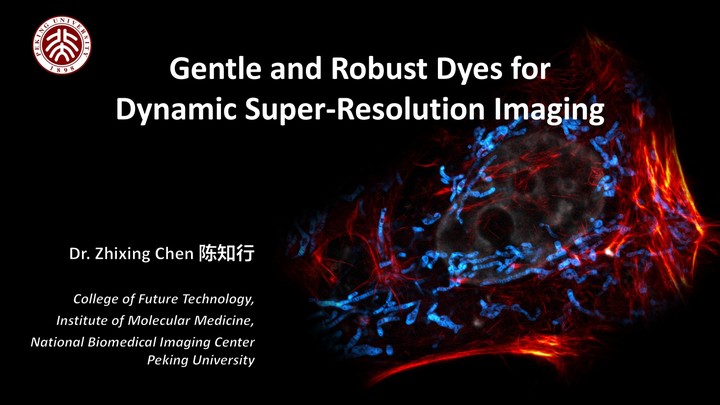
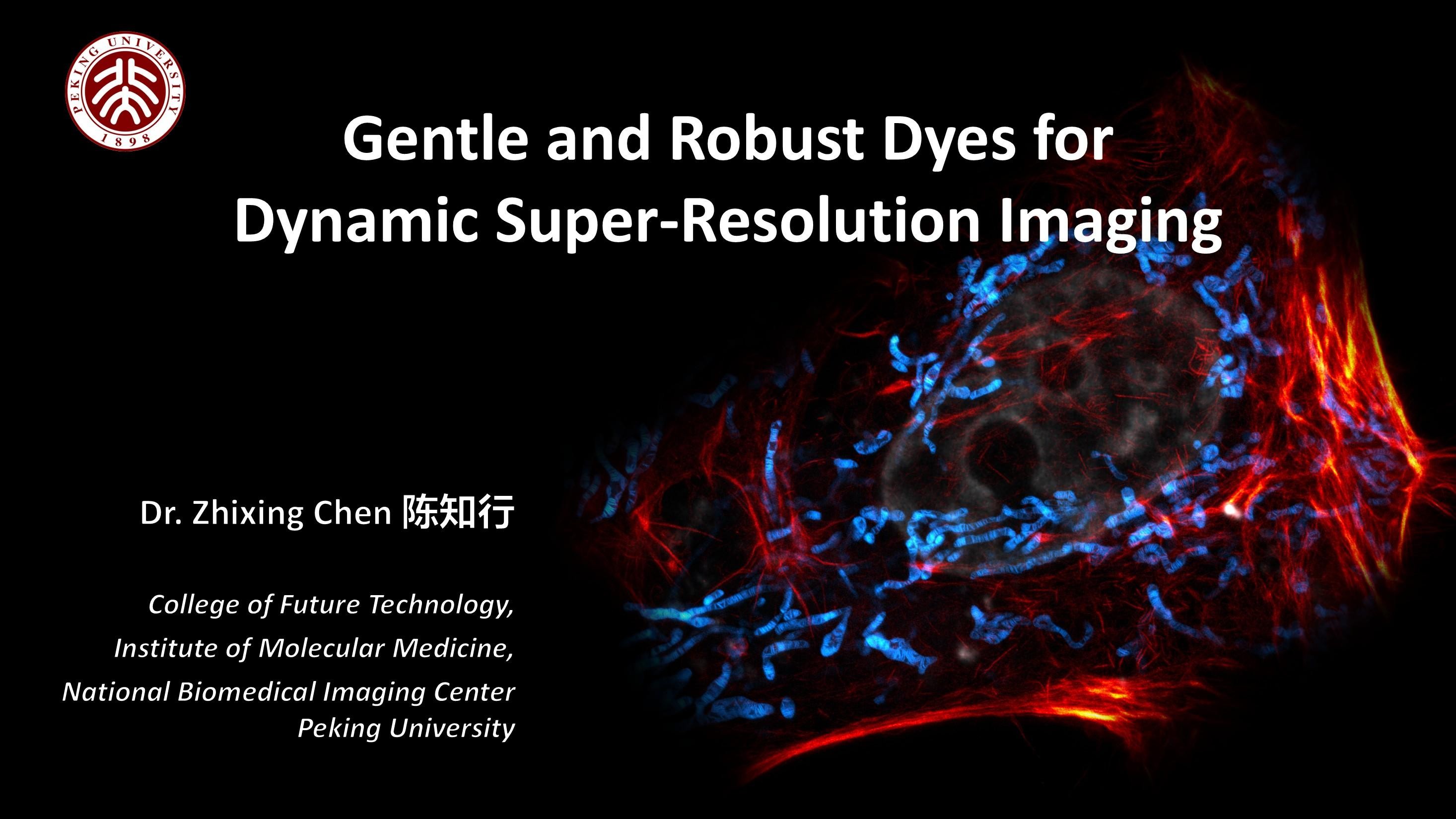
{ "count": 265, "next": "https://memento.epfl.ch/api/v1/events/?format=api&limit=10&offset=70&ordering=-description", "previous": "https://memento.epfl.ch/api/v1/events/?format=api&limit=10&offset=50&ordering=-description", "results": [ { "id": 72758, "title": "Safe Guaranteed Exploration for Non-linear Systems", "slug": "safe-guaranteed-exploration-for-non-linear-systems", "event_url": "https://memento.epfl.ch/event/safe-guaranteed-exploration-for-non-linear-systems", "visual_url": "https://memento.epfl.ch/image/33973/200x112.jpg", "visual_large_url": "https://memento.epfl.ch/image/33973/720x405.jpg", "visual_maxsize_url": "https://memento.epfl.ch/image/33973/max-size.jpg", "lang": "en", "start_date": "2026-12-04", "end_date": "2026-12-04", "start_time": "14:00:00", "end_time": "15:00:00", "description": "<strong>Abstract</strong>: <br>\r\nSafely exploring environments with a-priori unknown constraints is a fundamental challenge that restricts the autonomy of robots. While safety is paramount, guarantees on sufficient exploration are also crucial for ensuring autonomous task completion. To address these challenges, we propose a novel safe guaranteed exploration framework using optimal control, which achieves first-of-its-kind results: guaranteed exploration for non-linear systems with finite time sample complexity bounds, while being provably safe with arbitrarily high probability. The framework is general and applicable to many real-world scenarios with complex non-linear dynamics and unknown domains. For efficient implementation, we exploit goal-directed exploration, and receding-horizon replanning while preserving the framework’s guarantees, and demonstrate safe, efficient exploration in challenging unknown environments using a car model.<br>\r\n<br>\r\n<strong>Biography</strong>: <br>\r\nManish Prajapat earned his Ph.D. in reinforcement learning and control from ETH Zurich in May 2026. He was a Doctoral Fellow at the ETH AI Center working with Prof. Melanie Zeilinger and Prof. Andreas Krause. Previously, he earned his master’s degree in Robotics, Systems, and Control from ETH Zurich and was a visiting scholar at Caltech. He received his bachelor’s degree from the Indian Institute of Technology (IIT) Madras in 2017. At IIT Madras, he was honored as the Best Graduating Student (Co-curricular) in 2017 and received the Sivasailam Merit Prize for the best thesis. His research interests are sequential decision-making under complex scenarios, e.g., non-Markovian objectives, unknown constraints or unknown dynamics of non-linear systems.<br>\r\n<br>\r\n ", "image_description": "", "creation_date": "2026-10-02T16:39:32", "last_modification_date": "2026-10-02T16:47:13", "link_label": "", "link_url": "", "canceled": "False", "cancel_reason": "", "place_and_room": "ME C2 405", "url_place_and_room": "https://plan.epfl.ch/?room==ME%20C2%20405", "url_online_room": "https://epfl.zoom.us/j/69006439273", "spoken_languages": [ "https://memento.epfl.ch/api/v1/spoken_languages/2/?format=api" ], "speaker": "Dr Manish Prajapat Ph.D. reinforcement learning and control from <a href=\"https://control.ee.ethz.ch\">ETH Zurich</a>\r\n\r\n<a href=\"https://ieee.ch/chapters/control-systems-society/\">Winner of the IEEE CSS Young Author Best Journal Paper Award 2026</a>", "organizer": "<a href=\"https://people.epfl.ch/giancarlo.ferraritrecate\">Prof Giancarlo Ferrari Trecate</a> The seminar is sponsored by the Swiss chapter of the <a href=\"https://ieee.ch\">IEEE-CSS</a>", "contact": "[email protected]", "is_internal": "False", "theme": "", "vulgarization": { "id": 1, "fr_label": "Tout public", "en_label": "General public" }, "registration": { "id": 3, "fr_label": "Entrée libre", "en_label": "Free" }, "keywords": "", "file": null, "icalendar_url": "https://memento.epfl.ch/event/export/122052/", "category": { "id": 1, "code": "CONF", "fr_label": "Conférences - Séminaires", "en_label": "Conferences - Seminars", "activated": true }, "academic_calendar_category": null, "domains": [], "mementos": [ "https://memento.epfl.ch/api/v1/mementos/8/?format=api", "https://memento.epfl.ch/api/v1/mementos/15/?format=api", "https://memento.epfl.ch/api/v1/mementos/394/?format=api" ] }, { "id": 72531, "title": "Slip pulse earthquakes", "slug": "slip-pulse-earthquakes", "event_url": "https://memento.epfl.ch/event/slip-pulse-earthquakes", "visual_url": "https://memento.epfl.ch/image/33771/200x112.jpg", "visual_large_url": "https://memento.epfl.ch/image/33771/720x405.jpg", "visual_maxsize_url": "https://memento.epfl.ch/image/33771/max-size.jpg", "lang": "en", "start_date": "2026-10-12", "end_date": "2026-10-12", "start_time": "12:15:00", "end_time": "13:15:00", "description": "<strong>Abstract</strong>:<br>\r\nThe spatiotemporal dynamics of frictional systems, ranging from engineering interfaces in mechanical joints to tectonic faults that host earthquakes, are governed by the propagation of interfacial rupture. A prominent rupture mode is self-healing slip pulses, which feature a finite slipping zone. The physics of slip pulses is qualitatively different from their expanding crack-like counterparts, as they involve the interplay between leading-edge contact breakage and trailing-edge re-strengthening (healing). The latter is intrinsically related to generic properties of frictional interactions at contacting interfaces, absent in ordinary fracture of bulk materials. In this talk, I will review a recently developed theory of two-dimensional slip pulses, which revealed intriguing dynamical properties of slip pulses and provided extensive predictions for their spatiotemporal evolution. The theoretical predictions are supported by large-scale numerical simulations and, more recently, by extensive laboratory experiments. The implications and potential applications of the theory will be discussed as time permits. <br>\r\n<br>\r\n<strong>References</strong>:\r\n<ol>\r\n\t<li><a href=\"https://www.pnas.org/doi/10.1073/pnas.2309374120\" target=\"_blank\" title=\"open in new window\">The dynamics of unsteady frictional slip pulses</a> [PNAS 120, e2309374120 (2023)]</li>\r\n\t<li><a href=\"https://www.sciencedirect.com/science/article/pii/S0012821X26000142\" target=\"_blank\" title=\"open in a new window\">An equation of motion for unsteady frictional slip pulses</a> [EPSL 678, 119831 (2026)]</li>\r\n\t<li><a href=\"https://arxiv.org/abs/2608.26065\" target=\"_blank\" title=\"open in a new window\">Lab earthquakes confirm the theory of frictional slip pulses</a> [arXiv:2608.26065 (2026)]</li>\r\n</ol>\r\n<br>\r\n<strong>Biography:</strong><br>\r\nEran Bouchbinder is a Professor at Weizmann Institute of Science, Israel. He leads a theoretical physics group who studies various non-equilibrium phenomena in spatially extended systems, addressing basic problems in statistical physic, condensed-matter physics, biophysics, materials physics, and geophysics. His work also involves close collaborations with computational and experimental groups.<br>\r\n<br>\r\n ", "image_description": "", "creation_date": "2026-09-07T09:12:38", "last_modification_date": "2026-09-07T10:35:20", "link_label": "", "link_url": "", "canceled": "False", "cancel_reason": "", "place_and_room": "GC B1 10", "url_place_and_room": "", "url_online_room": "", "spoken_languages": [ "https://memento.epfl.ch/api/v1/spoken_languages/2/?format=api" ], "speaker": "Eran Bouchbinder, Professor at Weizmann Institute of Science, Israel", "organizer": "LSMS", "contact": "Prof. Jean-François Molinari", "is_internal": "False", "theme": "", "vulgarization": { "id": 2, "fr_label": "Public averti", "en_label": "Informed public" }, "registration": { "id": 3, "fr_label": "Entrée libre", "en_label": "Free" }, "keywords": "", "file": null, "icalendar_url": "https://memento.epfl.ch/event/export/121725/", "category": { "id": 1, "code": "CONF", "fr_label": "Conférences - Séminaires", "en_label": "Conferences - Seminars", "activated": true }, "academic_calendar_category": null, "domains": [], "mementos": [ "https://memento.epfl.ch/api/v1/mementos/435/?format=api" ] }, { "id": 72719, "title": "CDM Seminar: Scoring Rules for a Theory of AI", "slug": "cdm-seminar-scoring-rules-for-a-theory-of-ai", "event_url": "https://memento.epfl.ch/event/cdm-seminar-scoring-rules-for-a-theory-of-ai", "visual_url": "https://memento.epfl.ch/image/33936/200x112.jpg", "visual_large_url": "https://memento.epfl.ch/image/33936/720x405.jpg", "visual_maxsize_url": "https://memento.epfl.ch/image/33936/max-size.jpg", "lang": "en", "start_date": "2026-10-08", "end_date": "2026-10-08", "start_time": "14:00:00", "end_time": "15:15:00", "description": "<strong>Abstract</strong>:<br>\r\nScoring rules are foundational in decision theory and, therefore, are foundational for a developing theory of artificial intelligence. Just as simple models from decision theory provide context for understanding the decisions of complex humans, so too can they for complex AI systems. Bayesian decision theory considers an agent receiving a signal that is correlated with the state, choosing an action, and obtaining a payoff that depends on both the state and action. With Bayesian updating and the revelation principle, the signal becomes a posterior belief and the decision problem becomes a scoring rule. Given a scoring rule, baseline performance is the optimal score under the prior; benchmark performance is the optimal score under the posterior; and the optimal scoring rule — framed as a mechanism design problem — maximizes the difference between them. The talk reviews this theory and applies it to (a) evaluate prediction as a service, (b) behavioral experiments on human-AI decision making, (c) develop proper scoring rules for text (e.g. for training language models to hallucinate less).<br>\r\n<br>\r\n<br>\r\n<strong>Short bio:</strong><br>\r\nProf. Hartline’s research introduces design and analysis methodologies from computer science to understand and improve outcomes of economic, legal, and AI systems. Optimal behavior and outcomes in complex environments are complex and, therefore, should not be expected; instead, the theory of approximation can show that simple and natural behaviors are approximately optimal in complex environments. This approach is applied to auction theory and mechanism design in his graduate textbook Mechanism Design and Approximation which is under preparation.<br>\r\n<br>\r\nProf. Hartline received his Ph.D. in 2003 from the University of Washington under the supervision of Anna Karlin. He was a postdoctoral fellow at Carnegie Mellon University under the supervision of Avrim Blum; and subsequently a researcher at Microsoft Research in Silicon Valley. He joined Northwestern University in 2008 where he is a professor of computer science. He was on sabbatical at Harvard University in the Economics Department during the 2014 calendar year and visiting Microsoft Research, New England for the Spring of 2015. He was on sabbatical at Stanford University for the 2023-2024 academic year. He is visiting ENS Paris-Saclay during the 2026-2027 academic year.<br>\r\n<br>\r\nProf. Hartline is the director of Northwestern’s Online Markets Lab, he was a founding codirector of the Institute for Data, Econometrics, Algorithms, and Learning from 2019-2022, and is a cofounder of virtual conference organizing platform Virtual Chair.<br>\r\n ", "image_description": "", "creation_date": "2026-09-29T15:47:25", "last_modification_date": "2026-10-05T14:43:49", "link_label": "", "link_url": "", "canceled": "False", "cancel_reason": "", "place_and_room": "ODY 4 03", "url_place_and_room": "https://plan.epfl.ch/?room==ODY%204%2003", "url_online_room": "https://epfl.zoom.us/j/62755895565", "spoken_languages": [ "https://memento.epfl.ch/api/v1/spoken_languages/2/?format=api" ], "speaker": "<strong>Prof. Jason Hartline</strong> Northwestern University, Evanston, Illinois", "organizer": "<strong>Prof Andres Cristi</strong> ", "contact": "[email protected] ", "is_internal": "False", "theme": "", "vulgarization": { "id": 2, "fr_label": "Public averti", "en_label": "Informed public" }, "registration": { "id": 3, "fr_label": "Entrée libre", "en_label": "Free" }, "keywords": "", "file": null, "icalendar_url": "https://memento.epfl.ch/event/export/121999/", "category": { "id": 1, "code": "CONF", "fr_label": "Conférences - Séminaires", "en_label": "Conferences - Seminars", "activated": true }, "academic_calendar_category": null, "domains": [], "mementos": [ "https://memento.epfl.ch/api/v1/mementos/1/?format=api", "https://memento.epfl.ch/api/v1/mementos/3/?format=api", "https://memento.epfl.ch/api/v1/mementos/6/?format=api", "https://memento.epfl.ch/api/v1/mementos/38/?format=api" ] }, { "id": 72524, "title": "[CANCELLED] MechE Colloquium: Engineering Net-Zero Transport: From Future Fuels to Carbon and Emissions Management", "slug": "cancelled-meche-colloquium-engineering-net-zero-tr", "event_url": "https://memento.epfl.ch/event/cancelled-meche-colloquium-engineering-net-zero-tr", "visual_url": "https://memento.epfl.ch/image/33763/200x112.jpg", "visual_large_url": "https://memento.epfl.ch/image/33763/720x405.jpg", "visual_maxsize_url": "https://memento.epfl.ch/image/33763/max-size.jpg", "lang": "en", "start_date": "2026-10-13", "end_date": "2026-10-13", "start_time": "12:00:00", "end_time": "13:00:00", "description": "<strong>Abstract: </strong>Transport systems underpin modern society, yet remain among the most challenging sectors to decarbonise. Achieving net-zero transport requires coordinated action across energy carriers, carbon flows and mitigation of other pollutants. This talk presents a multiscale engineering framework for sustainable mobility, organised around three complementary pathways: <u>f</u>uel development (F), <u>g</u>reenhouse-gas management (G) and mitigating <u>h</u>armful emissions beyond CO<sub>2</sub> (H). First, using solar-driven CO<sub>2</sub> conversion as an example, I will show how the precise transport of light, heat and fluids enables the coordinated design of materials, devices and systems, maximising solar-to-fuel conversion efficiency. Second, I will explore on-board carbon capture for road and maritime transport, together with distributed carbon-removal networks that use existing vehicles, ventilation systems and transport infrastructure. Third, I will discuss particulate matter generated by brake and tyre wear, illustrating how materials engineering can balance filtration efficiency, pressure drop and energy demand. Finally, the talk considers how techno-economic assessment and the interplay between technology, business and policy can move laboratory innovations towards industrial deployment.<br>\r\n<br>\r\n<br>\r\n<strong>Biography: </strong>Dr Xiangkun (Elvis) Cao (<a href=\"https://profiles.imperial.ac.uk/elvis.cao\">https://profiles.imperial.ac.uk/elvis.cao</a>) is currently an Assistant Professor at Imperial College London, holding joint appointments in Mechanical Engineering and the Grantham Institute. Cao leads the Laboratory for Integrated Green Harvesting & Transport, the LIGHT Lab, which seeks to engineer the physical systems for a sustainable future. Before joining Imperial, Cao was a Schmidt Science Fellow at MIT, where he pursued integrated carbon capture and utilisation under the guidance of Professor Ted Sargent. He received his PhD in Mechanical Engineering from Cornell University, his MEng in Materials Engineering from McGill University, and dual bachelor’s degrees in Energy and Power Engineering and English Literature from Xi’an Jiaotong University. He has published more than 30 first- or corresponding-author papers in journals including <em>Joule</em>, <em>Matter</em>, <em>Device</em> and <em>Advanced Materials</em>. Cao was named one of MIT Technology Review’s 35 Innovators Under 35 globally in 2024 and was previously recognised in Forbes 30 Under 30 in Energy for North America. His other honours include the Alexander von Humboldt Foundation’s German Chancellor Fellowship, the Activate Fellowship, the MIT Climate & Energy Prize, the Global Young Investigator Award in Separation Science, and the Carbon Capture Future Star Award, among others.", "image_description": "", "creation_date": "2026-09-04T10:07:53", "last_modification_date": "2026-09-30T13:59:39", "link_label": "", "link_url": "", "canceled": "False", "cancel_reason": "", "place_and_room": "MED 0 1418", "url_place_and_room": "https://plan.epfl.ch/?room==MED%200%201418", "url_online_room": "https://epfl.zoom.us/j/61360740951", "spoken_languages": [ "https://memento.epfl.ch/api/v1/spoken_languages/2/?format=api" ], "speaker": "<a href=\"https://profiles.imperial.ac.uk/elvis.cao\">Prof. Xiangkun (Elvis) Cao</a>, <a href=\"https://www.imperial.ac.uk/grantham/\">The Grantham Institute for Climate Change</a>, <a href=\"https://www.imperial.ac.uk/natural-sciences/\">Faculty of Natural Sciences</a>, <a href=\"https://www.imperial.ac.uk/\">Imperial College London</a>", "organizer": "<a href=\"https://people.epfl.ch/zhengmao.lu\">Prof. Zhengmao Lu</a>", "contact": "<a href=\"mailto:[email protected]\">Institute of Mechanical Engineering</a>", "is_internal": "False", "theme": "", "vulgarization": { "id": 1, "fr_label": "Tout public", "en_label": "General public" }, "registration": { "id": 3, "fr_label": "Entrée libre", "en_label": "Free" }, "keywords": "MechE Colloquium: Engineering Net-Zero Transport: From Future Fuels to Carbon and Emissions Management", "file": null, "icalendar_url": "https://memento.epfl.ch/event/export/121715/", "category": { "id": 1, "code": "CONF", "fr_label": "Conférences - Séminaires", "en_label": "Conferences - Seminars", "activated": true }, "academic_calendar_category": null, "domains": [], "mementos": [ "https://memento.epfl.ch/api/v1/mementos/1/?format=api", "https://memento.epfl.ch/api/v1/mementos/6/?format=api", "https://memento.epfl.ch/api/v1/mementos/232/?format=api", "https://memento.epfl.ch/api/v1/mementos/270/?format=api" ] }, { "id": 72720, "title": "MechE Colloquium: Biomechanics and fluid dynamics of freshwater insects across walking, swimming, and flight", "slug": "meche-colloquium-biomechanics-and-fluid-dynamics-o", "event_url": "https://memento.epfl.ch/event/meche-colloquium-biomechanics-and-fluid-dynamics-o", "visual_url": "https://memento.epfl.ch/image/33937/200x112.jpg", "visual_large_url": "https://memento.epfl.ch/image/33937/720x405.jpg", "visual_maxsize_url": "https://memento.epfl.ch/image/33937/max-size.jpg", "lang": "en", "start_date": "2026-11-03", "end_date": "2026-11-03", "start_time": "12:00:00", "end_time": "13:00:00", "description": "<strong>Abstract: </strong>Many animals, including humans, can transition between multiple modes of locomotion between diverse environments (e.g., the transition from walking to swimming). Bimodality is common, but trimodality—that is, the ability to successfully navigate between aerial, aquatic, and terrestrial environments—is relatively rare. Multimodality is also challenging to achieve in engineered devices, vehicles, and robots; however, several animals are capable of regularly (and easily) traversing environmental boundaries. In this talk, we will outline several of the general adaptations that living organisms use to locomote between land, air, and water. We will then present recent work on the biomechanics and fluid dynamics of trimodal aquatic insects. These insects exhibit hybrid walking-swimming gaits when transitioning from land to shallow water; they also leverage surface tension, buoyancy, fluid drag, and aerodynamic forces to take off into flight directly from the water surface. They also display underwater agility, using their legs as paddles to propel themselves rapidly as they seek prey and/or escape from predators. They also have interesting morphological features to enable these transitions, including superhydrophobic wings and hemelytra, as well as dense setae lining the metathoracic legs. These bristle-like features create shape-morphing appendages for efficient swimming, and are also used to lever the insect’s body off the deforming water surface during takeoff. In this talk, we will present data from all three locomotor modes and discuss their implications for both fundamental biology and ecology as well as bioinspired engineering and technology development.<br>\r\n<br>\r\n<br>\r\n<strong>Biography: </strong>Dr. Margaret L. Byron is currently the Martin W. Trethewey Early Career Professor in Mechanical Engineering at Penn State University, and is a recipient of the NSF CAREER Award, the Beckman Young Investigator Award, and the American Chemical Society Doctoral New Investigator Award. She earned her B.S. in Mechanical and Aerospace Engineering from Princeton University in 2010 and her MS/PhD in Civil and Environmental Engineering from the University of California Berkeley in 2012/2015. She works at the interface of biology, physics, and engineering, with interests including the fluid dynamics of animal locomotion and the transport of irregularly shaped inertial particles in turbulent flows (including sediment, aggregates, and microplastics). She is currently on sabbatical at EPFL as a Visiting Professor in the UNFoLD lab.", "image_description": "", "creation_date": "2026-09-29T15:49:49", "last_modification_date": "2026-09-29T15:54:40", "link_label": "", "link_url": "", "canceled": "False", "cancel_reason": "", "place_and_room": "MED 0 1418", "url_place_and_room": "https://plan.epfl.ch/?room==MED%200%201418", "url_online_room": "https://epfl.zoom.us/j/61360740951", "spoken_languages": [ "https://memento.epfl.ch/api/v1/spoken_languages/2/?format=api" ], "speaker": "<a href=\"https://iee.psu.edu/people/margaret-byron\">Prof. Margaret Byron</a>, <a href=\"https://iee.psu.edu/home\">Institute of Energy and the Environment</a>, <a href=\"https://www.psu.edu/\">The Pennsylvania State University</a>", "organizer": "<a href=\"https://people.epfl.ch/karen.mulleners?lang=en\">Prof. Karen Mulleners</a>", "contact": "<a href=\"mailto:[email protected]\">Institute of Mechanical Engineering</a>", "is_internal": "False", "theme": "", "vulgarization": { "id": 1, "fr_label": "Tout public", "en_label": "General public" }, "registration": { "id": 3, "fr_label": "Entrée libre", "en_label": "Free" }, "keywords": "MechE Colloquium: Biomechanics and fluid dynamics of freshwater insects across walking, swimming, and flight", "file": null, "icalendar_url": "https://memento.epfl.ch/event/export/122000/", "category": { "id": 1, "code": "CONF", "fr_label": "Conférences - Séminaires", "en_label": "Conferences - Seminars", "activated": true }, "academic_calendar_category": null, "domains": [], "mementos": [ "https://memento.epfl.ch/api/v1/mementos/1/?format=api", "https://memento.epfl.ch/api/v1/mementos/6/?format=api", "https://memento.epfl.ch/api/v1/mementos/232/?format=api", "https://memento.epfl.ch/api/v1/mementos/270/?format=api" ] }, { "id": 72460, "title": "MechE Colloquium: Local Rheological Probes of Stress Heterogeneities in Active and Passive Fluids", "slug": "meche-colloquium-local-rheological-probes-of-stres", "event_url": "https://memento.epfl.ch/event/meche-colloquium-local-rheological-probes-of-stres", "visual_url": "https://memento.epfl.ch/image/33708/200x112.jpg", "visual_large_url": "https://memento.epfl.ch/image/33708/720x405.jpg", "visual_maxsize_url": "https://memento.epfl.ch/image/33708/max-size.jpg", "lang": "en", "start_date": "2026-10-27", "end_date": "2026-10-27", "start_time": "12:00:00", "end_time": "13:00:00", "description": "<strong>Abstract: </strong>In this talk I will discuss our recent results on the microscopic physical origins of shear thickening in two vastly different materials: colloidal suspensions and active gels. In the first part of my talk, I will introduce a method we have developed that allows us to resolve the spatial distribution of stresses in sheared soft-materials, known as Boundary Stress Microscopy. We have applied this technique to suspensions undergoing shear thickening. I will present our results on the existence of clearly defined dynamically localized regions of substantially increased stress that appear intermittently at stresses well above the applied stress. Surprisingly, we find that these spatially distinct and dynamic phases quantitatively account for the observed shear thickening seen in sheared colloidal dispersions (e.g. Oobleck). In the second part of my talk I will discuss our results on the rheology of active matter. Our system is composed of microtubules and kinesin motor proteins that self-assemble to form complexes that propel themselves through the fluid. What results is a dramatic alteration in the measured viscosity. I will provide a simple physical model that fits the rheological response with zero fitting parameters. <br>\r\n<br>\r\n<strong>Biography: </strong>Daniel Blair is a Professor of physics and a co-founding member of the Institute for Soft Matter Synthesis and Metrology I(SM)2 at Georgetown University. Prior to joining Georgetown in 2007, Professor Blair was a postdoctoral fellow at Harvard University in the Paulson School of Engineering and the Department of Physics. In 2009, he was awarded the NSF Career Award and has done pioneering work into the structure and rheology of soft and biological materials. His group has developed a variety of tools and techniques centered on quantitative 4D microscopy coupled with microfluidic and rheometric methods. ", "image_description": "Prof. Daniel Blair", "creation_date": "2026-08-27T16:32:32", "last_modification_date": "2026-09-29T12:28:07", "link_label": "Prof. Sangwoo Kim - MESOBIO", "link_url": "https://www.epfl.ch/labs/mesobio/", "canceled": "False", "cancel_reason": "", "place_and_room": "MED 0 1418", "url_place_and_room": "https://plan.epfl.ch/?room==MED%200%201418", "url_online_room": "https://epfl.zoom.us/j/61360740951", "spoken_languages": [ "https://memento.epfl.ch/api/v1/spoken_languages/2/?format=api" ], "speaker": "<a href=\"https://physics.georgetown.edu/daniel-blair/\">Prof. Daniel Blair</a>, <a href=\"https://physics.georgetown.edu/\">Department of Physics</a>, <a href=\"https://www.georgetown.edu/\">University of Georgetown</a>, USA", "organizer": "<a href=\"mailto:[email protected]?subject=MechE%20Colloquium%20-%20Daniel%20Blair\">MechE Colloquium</a>", "contact": "<a href=\"mailto:[email protected]?subject=MechE%20Colloquium%20-%20Daniel%20Blair\">Prof. Sangwoo Kim</a>", "is_internal": "False", "theme": "", "vulgarization": { "id": 1, "fr_label": "Tout public", "en_label": "General public" }, "registration": { "id": 3, "fr_label": "Entrée libre", "en_label": "Free" }, "keywords": "MechE Colloquium: Local Rheological Probes of Stress Heterogeneities in Active and Passive Fluids", "file": null, "icalendar_url": "https://memento.epfl.ch/event/export/121614/", "category": { "id": 1, "code": "CONF", "fr_label": "Conférences - Séminaires", "en_label": "Conferences - Seminars", "activated": true }, "academic_calendar_category": null, "domains": [], "mementos": [ "https://memento.epfl.ch/api/v1/mementos/1/?format=api", "https://memento.epfl.ch/api/v1/mementos/6/?format=api", "https://memento.epfl.ch/api/v1/mementos/8/?format=api", "https://memento.epfl.ch/api/v1/mementos/111/?format=api", "https://memento.epfl.ch/api/v1/mementos/232/?format=api", "https://memento.epfl.ch/api/v1/mementos/270/?format=api" ] }, { "id": 72749, "title": "Gentle and Robust Dyes for Dynamic Super-Resolution Imaging", "slug": "gentle-and-robust-dyes-for-dynamic-super-resolutio", "event_url": "https://memento.epfl.ch/event/gentle-and-robust-dyes-for-dynamic-super-resolutio", "visual_url": "https://memento.epfl.ch/image/33977/200x112.jpg", "visual_large_url": "https://memento.epfl.ch/image/33977/720x405.jpg", "visual_maxsize_url": "https://memento.epfl.ch/image/33977/max-size.jpg", "lang": "en", "start_date": "2026-10-12", "end_date": "2026-10-12", "start_time": "14:15:00", "end_time": "15:15:00", "description": "<strong>Abstract:</strong><br>\r\n<br>\r\nLive-cell imaging technology is advancing into the era of dynamic super-resolution imaging of organelles and specific proteins, placing new demands on the optical properties of fluorescent probes. Traditional live-cell fluorescent probes face two critical technical challenges:\r\n<ol>\r\n\t<li>How to make fluorescent probes brighter and more photostable.</li>\r\n\t<li>How to make fluorescent probes gentler to minimize the photodamage of organelles.</li>\r\n</ol>\r\nBased on the fundamental principles of photochemistry and biochemistry, we have developed a new generation of live-cell imaging probes that far surpass traditional probes in brightness, photostability, and biocompatibility. These probes enable long-term super-resolution imaging of mitochondria, insulin vesicle secretion, plasma membrane dynamics, lysosomes, and more. Our representative achievements include: The PK Mito and PK Zinc dye series, widely used in mitochondrial and insulin secretion imaging. The BD series of novel fluorophores, in conjunction with self-labeling tags, offer general protein labeling strategies with superior optical properties compared to fluorescent proteins.<br>\r\n<br>\r\n==================================================<br>\r\n<br>\r\n<strong>Brief Biography:<br>\r\n<br>\r\nDr. Zhixing Chen, Associate Professor</strong><br>\r\n<strong>College of Future Technology</strong><br>\r\n<strong>Peking University</strong><br>\r\n<br>\r\nDr. Zhixing Chen is a tenured associate professor at the College of Future Technology, Peking University. He received his BS from Tsinghua University in 2008 and his PhD from Columbia University in 2014. He subsequently completed postdoctoral training at Columbia University in 2015 and at Stanford University from 2016 to 2018.<br>\r\nThe Chen Lab at Peking University was established in 2018. The lab endeavors to integrate chemistry and biochemistry to develop new imaging tools with high brightness, specificity, and biocompatibility, with the goal of advancing bioimaging technologies and enabling new approaches in cell biology, metabolism, and biophysics.<br>\r\n<br>\r\n<strong>Website: </strong><a href=\"https://zhixingchenlab.mysxl.cn/\"><strong>https://zhixingchenlab.mysxl.cn/</strong></a>", "image_description": "", "creation_date": "2026-10-02T11:35:36", "last_modification_date": "2026-10-05T09:25:14", "link_label": "", "link_url": "", "canceled": "False", "cancel_reason": "", "place_and_room": "BM 5202", "url_place_and_room": "https://plan.epfl.ch/?baselayer_ref=grp_backgrounds&dim_floor=5&dim_lang=fr&lang=fr&map_x=2532981&map_y=1152490&map_zoom=12&room=%3DBM%205202&tree_group_layers_centres_nevralgiques=information_epfl%2Cguichet_etudiants&tree_group_layers_commerces_et_services=&tree_group_layers_enseignement=&tree_group_layers_mobilite_acces_grp=metro&tree_groups=centres_nevralgiques_grp%2Cmobilite_acces_grp%2Crestauration_et_commerces_grp%2Censeignement%2Cservices_campus_grp%2Cequipements_grp&tree_group_layers_centres_nevralgiques_grp=&tree_group_layers_restauration_et_commerces_grp=&tree_group_layers_services_campus_grp=information_epfl&tree_group_layers_equipements_grp=", "url_online_room": "", "spoken_languages": [ "https://memento.epfl.ch/api/v1/spoken_languages/2/?format=api" ], "speaker": "<strong><a href=\"https://zhixingchenlab.mysxl.cn/\">Dr. Zhixing Chen, Associate Professor,</a> College of Future Technology, Peking University</strong>", "organizer": "<a href=\"https://www.epfl.ch/labs/leb/professor-manley/\">Prof. Suliana Manley</a>, <a href=\"https://www.epfl.ch/labs/leb/\">Laboratory of Experimental Biophysics</a>", "contact": "<a href=\"mailto:[email protected]\">Qian Wang, Administrative Assistant for LEB</a>", "is_internal": "False", "theme": "", "vulgarization": { "id": 1, "fr_label": "Tout public", "en_label": "General public" }, "registration": { "id": 3, "fr_label": "Entrée libre", "en_label": "Free" }, "keywords": "", "file": null, "icalendar_url": "https://memento.epfl.ch/event/export/122038/", "category": { "id": 1, "code": "CONF", "fr_label": "Conférences - Séminaires", "en_label": "Conferences - Seminars", "activated": true }, "academic_calendar_category": null, "domains": [], "mementos": [ "https://memento.epfl.ch/api/v1/mementos/5/?format=api", "https://memento.epfl.ch/api/v1/mementos/8/?format=api", "https://memento.epfl.ch/api/v1/mementos/9/?format=api" ] }, { "id": 72221, "title": "Formation continue: Intégration du photovoltaïque à l’enveloppe du bâtiment: Conception, caractéristiques des produits et cadre réglementaire. Microcredential (MC) de 3 jours", "slug": "formation-continue-integration-du-photovoltaique-3", "event_url": "https://memento.epfl.ch/event/formation-continue-integration-du-photovoltaique-3", "visual_url": "https://memento.epfl.ch/image/33501/200x112.jpg", "visual_large_url": "https://memento.epfl.ch/image/33501/720x405.jpg", "visual_maxsize_url": "https://memento.epfl.ch/image/33501/max-size.jpg", "lang": "en", "start_date": "2026-11-06", "end_date": "2026-11-20", "start_time": null, "end_time": null, "description": "<strong>A qui le cours s’adresse-t-il ? </strong><br>\r\nCette formation continue Microcredential (MC) en <strong>photovoltaïque intégré aux bâtiments (BIPV)</strong> s’adresse principalement aux architectes, ingénieur-es, professionnel-les de la construction, gestionnaires de projets, ainsi qu’aux représentants-es d’instances cantonales ou communales et de la communauté académique. Que vous soyez actif-ve dans un bureau d’architecture, une entreprise de construction.<br>\r\n <br>\r\n<strong>Qu’allez-vous apprendre ?</strong><br>\r\nLe cours vise à équiper les professionnel-les expérimenté-es avec les compétences requises pour appliquer cette technologie dès les premières phases de conception ou de rénovation d’un bâtiment. Elle offre l’opportunité d’optimiser ce projet afin qu’il réponde efficacement aux enjeux climatiques et énergétiques actuels.\r\n<ul>\r\n\t<li>Comprendre les méthodes et techniques d’intégration des composants photovoltaïques à l’enveloppe des bâtiments, tant pour le neuf que pour l’existant</li>\r\n\t<li>Identifier les caractéristiques techniques, physiques et commerciales des différents produits photovoltaïques</li>\r\n\t<li>Connaître la réglementation, les dispositifs de soutien institutionnel et les normes de certification relatives à l’intégration photovoltaïque dans les bâtiments neufs et existants</li>\r\n</ul>\r\n<strong>Le micro-credential (MC)</strong> d’1 crédit ECTS en <strong>photovoltaïque intégré aux bâtiments (BIPV)</strong> se déroule sur 3 jours.\r\n\r\n<ul>\r\n\t<li><strong>Vendredi 6 novembre 2026</strong>, de 8h00 à 17h00<br>\r\n\tCampus UNIL-EPFL, Lausanne<br>\r\n\tApéro dînatoire (optionnel): de 17h00 à 19h00</li>\r\n\t<li><strong>Vendredi 13 novembre 2026</strong>, de 8h00 à 17h00<br>\r\n\tWorb (BE)</li>\r\n\t<li><strong>Vendredi 20 novembre 2026</strong>, de 8h00 à 18h00<br>\r\n\tCampus UNIL-EPFL, Lausanne</li>\r\n</ul>\r\n<strong>Délai d’inscription</strong><br>\r\n7 septembre 2026<br>\r\n <br>\r\n<strong>Pour plus d’informations et pour vous inscrire, consultez notre site web :</strong> <a href=\"http://https/www.formation-continue-unil-epfl.ch/formation/integration-photovoltaique/\"><strong>https://www.formation-continue-unil-epfl.ch/formation/integration-photovoltaique/</strong></a><br>\r\n<strong>ou contactez-nous à : </strong><a href=\"mailto:[email protected]?subject=Formation%20BIPV\"><strong>[email protected]</strong></a>", "image_description": "", "creation_date": "2026-07-09T16:25:45", "last_modification_date": "2026-07-09T16:29:34", "link_label": "Webpage", "link_url": "https://www.formation-continue-unil-epfl.ch/formation/integration-photovoltaique/", "canceled": "False", "cancel_reason": "", "place_and_room": "", "url_place_and_room": "", "url_online_room": "", "spoken_languages": [ "https://memento.epfl.ch/api/v1/spoken_languages/1/?format=api", "https://memento.epfl.ch/api/v1/spoken_languages/2/?format=api" ], "speaker": "", "organizer": "<a href=\"https://www.formation-continue-unil-epfl.ch/formation/integration-photovoltaique/\">UNIL / EPFL Formation continue</a> <a href=\"mailto:[email protected]?subject=Formation%20Continue%20BIPV\">Energy Center</a>", "contact": "<a href=\"mailto:[email protected]?subject=Formation%20continue%3A%20Int%C3%A9gration%20du%20photovolta%C3%AFque%20%C3%A0%20l%E2%80%99enveloppe%20du%20b%C3%A2timent%3A%20Conception%2C%20caract%C3%A9ristiques%20des%20produits%20et%20cadre%20r%C3%A9glementaire\"><strong>[email protected]</strong></a>", "is_internal": "False", "theme": "", "vulgarization": { "id": 2, "fr_label": "Public averti", "en_label": "Informed public" }, "registration": { "id": 1, "fr_label": "Sur inscription", "en_label": "Registration required" }, "keywords": "formation continue BIPV, formation photovoltaïque intégrée au bâtiment, cours photovoltaïque bâtiment, énergie solaire dans le bâtiment, formation ingénierie, formation énergie solaire, formation pour architectes, formation façade solaire, architecture photovoltaïque", "file": "https://memento.epfl.ch/public/upload/files/FormationIntegrationphotovoltaiqueNov2026.pdf", "icalendar_url": "https://memento.epfl.ch/event/export/121246/", "category": { "id": 4, "code": "DIVERS", "fr_label": "Autres types d’événement", "en_label": "Miscellaneous", "activated": true }, "academic_calendar_category": null, "domains": [], "mementos": [ "https://memento.epfl.ch/api/v1/mementos/4/?format=api", "https://memento.epfl.ch/api/v1/mementos/105/?format=api", "https://memento.epfl.ch/api/v1/mementos/135/?format=api" ] }, { "id": 72610, "title": "Meet the TTO - October 2026", "slug": "meet-the-tto-october-2026", "event_url": "https://memento.epfl.ch/event/meet-the-tto-october-2026", "visual_url": "https://memento.epfl.ch/image/33855/200x112.jpg", "visual_large_url": "https://memento.epfl.ch/image/33855/720x405.jpg", "visual_maxsize_url": "https://memento.epfl.ch/image/33855/max-size.jpg", "lang": "en", "start_date": "2026-10-15", "end_date": "2026-10-15", "start_time": "11:30:00", "end_time": "12:15:00", "description": "<strong>A monthly gathering with the Technology Transfer Office team in a relaxed and informal setting.</strong><br>\r\n<br>\r\nConnect with the team to explore intellectual property, strategies for creating commercial value from your academic work, and technology transfer practices.<br>\r\n<br>\r\nDiscussions may cover\r\n<ul>\r\n\t<li>the inventive aspects of your research,</li>\r\n\t<li>patenting and commercial potential,</li>\r\n\t<li>software and AI/ML use,</li>\r\n\t<li>training data,</li>\r\n\t<li>and licensing terms for startups and companies.</li>\r\n</ul>\r\n<strong>Access:</strong> Open to the EPFL community (startup excluded)<br>\r\n<br>\r\n<strong>Upcoming dates</strong>: 12 November, and 10 December 2026", "image_description": "", "creation_date": "2026-09-17T14:35:33", "last_modification_date": "2026-09-17T15:07:31", "link_label": "webpage", "link_url": "https://www.epfl.ch/research/technology-transfer/explore-ask-learn-with-your-tto/", "canceled": "False", "cancel_reason": "", "place_and_room": "KNOVA, Building J, 2nd floor, EPFL Innovation Park", "url_place_and_room": "https://plan.epfl.ch/?room==QIJ%202%20138", "url_online_room": "", "spoken_languages": [ "https://memento.epfl.ch/api/v1/spoken_languages/2/?format=api" ], "speaker": "", "organizer": "<a href=\"https://www.epfl.ch/research/technology-transfer/\">EPFL TTO</a>", "contact": "<a href=\"mailto:[email protected]\">Bea Arnold</a> & <a href=\"mailto:[email protected]\">Lucia Pavan</a>", "is_internal": "True", "theme": "", "vulgarization": { "id": 2, "fr_label": "Public averti", "en_label": "Informed public" }, "registration": { "id": 3, "fr_label": "Entrée libre", "en_label": "Free" }, "keywords": "intellectual property; IP; commercial value; technology transfer", "file": null, "icalendar_url": "https://memento.epfl.ch/event/export/121846/", "category": { "id": 15, "code": "FORM", "fr_label": "Formations internes", "en_label": "Internal trainings", "activated": true }, "academic_calendar_category": null, "domains": [], "mementos": [ "https://memento.epfl.ch/api/v1/mementos/1/?format=api", "https://memento.epfl.ch/api/v1/mementos/3/?format=api", "https://memento.epfl.ch/api/v1/mementos/4/?format=api", "https://memento.epfl.ch/api/v1/mementos/5/?format=api", "https://memento.epfl.ch/api/v1/mementos/6/?format=api", "https://memento.epfl.ch/api/v1/mementos/8/?format=api", "https://memento.epfl.ch/api/v1/mementos/9/?format=api", "https://memento.epfl.ch/api/v1/mementos/119/?format=api" ] }, { "id": 72747, "title": "2 Billion years of shelterin and t-loops: from telomere protection to tumor suppression", "slug": "2-billion-years-of-shelterin-and-t-loops-from-telo", "event_url": "https://memento.epfl.ch/event/2-billion-years-of-shelterin-and-t-loops-from-telo", "visual_url": "https://memento.epfl.ch/image/33962/200x112.jpg", "visual_large_url": "https://memento.epfl.ch/image/33962/720x405.jpg", "visual_maxsize_url": "https://memento.epfl.ch/image/33962/max-size.jpg", "lang": "en", "start_date": "2026-11-26", "end_date": "2026-11-26", "start_time": "12:15:00", "end_time": "13:15:00", "description": "<strong>A Lola and John Grace Distinguished Lecture in Cancer Research</strong>\r\n<div class=\"elementor-element elementor-element-98cefd8 elementor-widget elementor-widget-heading\">\r\n<div class=\"elementor-widget-container\">\r\n<div class=\"vita\">Dr. Titia de Lange received training in molecular biology and biochemistry at the University of Amsterdam. As an undergraduate, she did research in Richard Flavell’s lab at the MRC in Mill Hill, UK. She was a graduate student in Piet Borst’s lab in the Department of Biochemistry at the University of Amsterdam and moved with Borst to the Dutch Cancer Center where she first developed an interest in telomeres. After receiving her PhD in 1985, de Lange joined Harold Varmus at UCSF for postdoctoral studies. With Varmus, she isolated human telomeric DNA and was the first to show that human telomeres shorten during tumorigenesis. In 1990, she moved to the Rockefeller to take a position as a University Fellow and was appointed as Assistant Professor in 1991. She was promoted to Associate Professor in 1994 and to Professor in 1997. She currently is the Leon Hess Professor and the Director of the Anderson Center for Cancer Research at the Rockefeller University.<br>\r\n<br>\r\nShe is a member of EMBO, the US National Academy of Science, both Dutch Royal Academies, the American Academy of Arts and Sciences, the US National Academy of Medicine. She is an foreign member of the Royal Society of London and received honorary degrees from the University of Utrecht, the University of Chicago, and the University of Groningen.<br>\r\n<br>\r\nDe Lange’s awards include the inaugural Paul Marks Prize for Cancer Research in 2001, the Massachusetts General Hospital Cancer Center Prize, the Judd award from MSKCC, the AACR’s Charlotte Friend and G.H.A. Clowes Awards, the 2011 Vilcek Prize, the 2012 Vanderbilt Prize, the 2012 Dr. Heineken Prize for Biochemistry and Biophysics, the Breakthrough Prize in Life Sciences in 2013, the 2014 Canada Gairdner International Award, the 2018 Lewis S. Rosenstiel Award, and the 2024 Pezcoller AACR International Award.\r\n<div> </div>\r\n</div>\r\n</div>\r\n</div>\r\n\r\n<div class=\"elementor-element elementor-element-e552a16 elementor-widget elementor-widget-text-editor\">\r\n<div class=\"elementor-widget-container\"> </div>\r\n</div>", "image_description": "", "creation_date": "2026-10-02T09:46:26", "last_modification_date": "2026-10-02T10:44:54", "link_label": "", "link_url": "", "canceled": "False", "cancel_reason": "", "place_and_room": "SV 1717", "url_place_and_room": "https://plan.epfl.ch/?room==SV%201717", "url_online_room": "https://epfl.zoom.us/j/97039045251?pwd=WDFjUGV3Y1FxeG9rTUIrOGpiUXhLQT09", "spoken_languages": [ "https://memento.epfl.ch/api/v1/spoken_languages/2/?format=api" ], "speaker": "<strong>Dr Titia De Lange, </strong>Leon Hess Professor and Director, Anderson Center for Cancer Research, Rockefeller University, USA", "organizer": "Prof. Joachim Lingner", "contact": "Lisa Smith, ISREC Administrative Assistant", "is_internal": "True", "theme": "", "vulgarization": { "id": 2, "fr_label": "Public averti", "en_label": "Informed public" }, "registration": { "id": 3, "fr_label": "Entrée libre", "en_label": "Free" }, "keywords": "Grace Lecture, cancer", "file": null, "icalendar_url": "https://memento.epfl.ch/event/export/122035/", "category": { "id": 1, "code": "CONF", "fr_label": "Conférences - Séminaires", "en_label": "Conferences - Seminars", "activated": true }, "academic_calendar_category": null, "domains": [], "mementos": [ "https://memento.epfl.ch/api/v1/mementos/1/?format=api", "https://memento.epfl.ch/api/v1/mementos/6/?format=api", "https://memento.epfl.ch/api/v1/mementos/9/?format=api", "https://memento.epfl.ch/api/v1/mementos/26/?format=api" ] } ] }